Results by title
71 books match the query 'Social networks' and 10 start with c
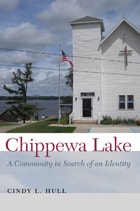
Chippewa Lake
A Community in Search of an IdentityCindy L. Hull
Michigan State University Press, 2012
Chippewa Lake is an idyllic waterfront community in north-central Michigan, popular with retirees and weekenders. The lake is surrounded by a rural farming community, but the area is facing a difficult transition as local demographics shift, and as it transforms from an agriculture-based economy to one that relies on wage labor. As farms have disappeared, local residents have employed a variety of strategies to adapt to a new economic structure. The community, meanwhile, has been indelibly affected by the advent of newcomers and retirees challenging the rural cultural values. An anthropologist with a background in sociology, Cindy L. Hull deftly weaves together oral accounts, historic documents, and participant surveys compiled from her nearly thirty years of living in the area to create a textured portrait of a community in flux.
Christian Networks in the Ottoman Empire
A Transnational HistoryYura Konstantinova
Central European University Press, 2024
Observers and historians continue to marvel at the diversity and complexity of the Ottoman Empire. This book explores the significant and multifaceted role that Orthodox Christian networks played in the sultan’s realm from the 17th century until WWI. These multi-ethnic, multi-lingual, and multi-confessional formations contributed fundamentally to the political, economic, social, and cultural development of the Empire as well as to its gradual disintegration.
Bringing together scholars from most Balkan countries, Christian Networks in the Ottoman Empire describes the variety of Orthodox Christian networks under Ottoman rule. The examples examined include commercial relations, intellectual networks, educational systems, religious dynamics, consular activities, and revolutionary movements, and involve Muslims and Christians, Romanians and Serbs, Bulgarians and Greeks, Albanians and Turks. The contributions show that the Christian populations and their elites were an integral part of Ottoman society.
The geographical spread of the formal and informal networks enriches our understanding of the terms ‘center’ and ‘periphery.’ They were either centered within the official Ottoman borders and extended their activities to other states and empires, or vice versa, located elsewhere, but also active in the Ottoman Empire. A common feature of these formations is their constant fluctuation, which enables a dynamic understanding of Ottoman history.
Civic Hopes and Political Realities
Immigrants, Community Organizations, and Political EngagementS. Karthick Ramakrishnan
Russell Sage Foundation, 2008

Civic Intimacies
Black Queer Improvisations on CitizenshipNiels van Doorn
Temple University Press, 2019
Black queer lives often exist outside conventional civic institutions and therefore have to explore alternative intimacies to experience a sense of belonging. Civic Intimacies examines how—and to what extent—these different forms of intimacy catalyze the values, aspirations, and collective flourishing of Black queer denizens of Baltimore. Niels van Doorn draws on 18 months of immersive ethnographic fieldwork for his innovative cross-disciplinary analysis of contemporary debates in political and cultural theory.
Van Doorn describes the way that these systematically marginalized communities improvise on citizenship not just to survive but also to thrive despite the proliferation of violence and insecurity in their lives. By reimagining citizenship as the everyday reparative work of building support structures, Civic Intimacies highlights the extent to which sex, kinship, memory, religious faith, and sexual health are rooted in collective practices that are deeply political. These systems sustain the lives of Black queer Baltimoreans who find themselves stuck in a city they cannot give up on—even though it has in many ways given up on them.
Connecting in College
How Friendship Networks Matter for Academic and Social SuccessJanice M. McCabe
University of Chicago Press, 2016
As McCabe and the students she talks to show, the friendships we forge in college are deeply meaningful, more meaningful than we often give them credit for. They can also vary widely. Some students have only one tight-knit group, others move between several, and still others seem to meet someone new every day. Some students separate their social and academic lives, while others rely on friendships to help them do better in their coursework. McCabe explores how these dynamics lead to different outcomes and how they both influence and are influenced by larger factors such as social and racial inequality. She then looks toward the future and how college friendships affect early adulthood, ultimately drawing her findings into a set of concrete solutions to improve student experiences and better guarantee success in college and beyond.

Contacts Desired
Gay and Lesbian Communications and Community, 1940s-1970sMartin Meeker
University of Chicago Press, 2006
Martin Meeker here argues that over the course of the twentieth century, a series of important innovations occurred in the networks that linked individuals to a larger social knowledge of homosexuality. He points to three key innovations in particular: the emergence of the homophile movement in the 1950s; the mass media treatments of homosexuals in the late 1950s and early 1960s; and the popularization of do-it-yourself publishing from the late 1940s to the 1970s, which offered bar guides, handmade magazines, and other materials that gay men and lesbians could use to seek one another out. In the process, Meeker unearths a treasure trove of archival materials that reveals how homosexuals played a crucial role in transforming the very structure of communications and urban communities since the postwar era.

Copts in Michigan
Eliot Dickinson
Michigan State University Press, 2008
The Copts, or Egyptian Christians, are a relatively small and tight-knit ethno-religious group, numbering perhaps three thousand people and living mostly in the Detroit metropolitan area. Since they began immigrating to Michigan in the mid-1960s, their community has grown exponentially.
Granted exceptional access to the Coptic community, Eliot Dickinson provides the first in- depth profile of this unique and remarkably successful immigrant group. Drawing on personal interviews to infuse the book with warmth and depth. Copts in Michigan offers readers a compelling view into this vibrant community.
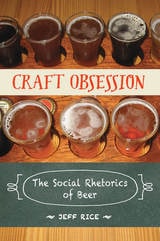
Craft Obsession
The Social Rhetorics of BeerJeff Rice
Southern Illinois University Press, 2016
Rice weaves together theories of writing, narrative, new media, and rhetoric with a personal story of his passion for craft beer. He identifies six key elements of social media rhetoric—anecdotes, repetition, aggregation, delivery, sharing, and imagery—and examines how each helps to transform small, personal experiences with craft into a more widespread movement. When shared via social media, craft anecdotes—such as the first time one had a beer—interrupt and repeat one another, building a sense of familiarity and identity among otherwise unconnected people. Aggregation, the practice of joining unlike items into one space, builds on this network identity, establishing a connection to particular brands or locations, both real and virtual. The public releases of craft beers are used to explore the concept of craft delivery, which involves multiple actors across multiple spaces and results in multiple meanings. Finally, Rice highlights how personal sharing operates within the community of craft beer enthusiasts, who share online images of acquiring, trading for, and consuming a wide variety of beers. These shared stories and images, while personal for each individual, reflect the dependence of craft on systems of involvement. Throughout, Rice relates and reflects on his own experience as a craft beer enthusiast and his participation via social media in these systems.
Both an objective scholarly study and an engaging personal narrative about craft beer, Craft Obsession provides valuable insights into digital writing, storytelling, and social media.

Crow-Omaha
New Light on a Classic Problem of Kinship AnalysisEdited by Thomas R. Trautmann and Peter M. Whiteley
University of Arizona Press, 2012
This volume examines the Crow-Omaha problem from a variety of perspectives—historical, linguistic, formalist, structuralist, culturalist, evolutionary, and phylogenetic. It focuses on the regions where Crow-Omaha systems occur: Native North America, Amazonia, West Africa, Northeast and East Africa, aboriginal Australia, northeast India, and the Tibeto-Burman area. The international roster of authors includes leading experts in their fields.
The book offers a state-of-the-art assessment of Crow-Omaha kinship and carries forward the work of the landmark volume Transformations of Kinship, published in 1998. Intended for students and scholars alike, it is composed of brief, accessible chapters that respect the complexity of the ideas while presenting them clearly. The work serves as both a new benchmark in the explanation of kinship systems and an introduction to kinship studies for a new generation of students.
Series Note: Formerly titled Amerind Studies in Archaeology, this series has recently been expanded and retitled Amerind Studies in Anthropology to incorporate a high quality and number of anthropology titles coming in to the series in addition to those in archaeology.
Cyberspaces Of Everyday Life
Mark Nunes
University of Minnesota Press, 2006
Cyberspaces of Everyday Life provides a critical framework for understanding how the Internet takes part in the production of social space. Mark Nunes draws on the spatial analysis work of Henri Lefebvre to make sense of cyberspace as a social product. Looking at online education, he explores the ways in which the Internet restructures the university. Nunes also examines social uses of the World Wide Web and illustrates the ways online communication alters the relation between the global and the local. He also applies Deleuzian theory to emphasize computer-mediated communications’ performative elements of spatial production.
Addressing the social and cultural implications of spam and anti-spam legislation, as well as how the burst Internet stock bubble and the Patriot Act have affected the relationship between networked spaces and daily living, Cyberspaces of Everyday Life sheds new light on the question of virtual space and its role in the offline world.
Mark Nunes is associate professor and chair of the English, Technical Communication, and Media Arts Department at Southern Polytechnic State University.