Results by title
260 books match the query 'Soviet Union' and 12 start with c

Changing Channels
Television and the Struggle for Power in RussiaEllen Mickiewicz
Duke University Press, 1999
Revised and expanded
During the tumultuous 1990s, as Russia struggled to shed the trappings of the Soviet empire, television viewing emerged as an enormous influence on Russian life. The number of viewers who routinely watch the nightly news in Russia matches the number of Americans who tune in to the Super Bowl, thus making TV coverage the prized asset for which political leaders intensely—and sometimes violently—compete. In this revised and expanded edition of Changing Channels, Ellen Mickiewicz provides many fascinating insights, describing the knowing ways in which ordinary Russians watch the news, skeptically analyze information, and develop strategies for dealing with news bias.
Covering the period from the state-controlled television broadcasts at the end of the Soviet Union through the attempted coup against Gorbachev, the war in Chechnya, the presidential election of 1996, and the economic collapse of 1998, Mickiewicz draws on firsthand research, public opinion surveys, and many interviews with key players, including Gorbachev himself. By examining the role that television has played in the struggle to create political pluralism in Russia, she reveals how this struggle is both helped and hindered by the barrage of information, advertisements, and media-created personalities that populate the airwaves. Perhaps most significantly, she shows how television has emerged as the sole emblem of legitimate authority and has provided a rare and much-needed connection from one area of this huge, crisis-laden country to the next.
This new edition of Changing Channels will be valued by those interested in Russian studies, politics, media and communications, and cultural studies, as well as general readers who desire an up-to-date view of crucial developments in Russia at the end of the twentieth century.
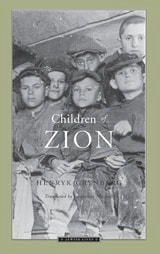
Children of Zion
Henryk Grynberg
Northwestern University Press, 1997
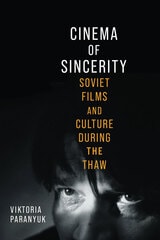
Cinema of Sincerity
Soviet Films and Culture During the ThawViktoria Paranyuk
University of Wisconsin Press, 2025
Using both theory and close readings of specific films produced in the Soviet Union during the Thaw, a period known for its relative political and cultural liberalization, Cinema of Sincerity treats sincerity as both a concept and an aesthetic strategy. Viktoria Paranyuk argues that Soviet cinema’s use of sincerity was a reworking of a trend in global cinema that sought to bridge the gap between reality and the filmed image. This period saw increased accessibility to world cinematic traditions, new voices in criticism, and, above all, the multigenerational effort in filmmaking that developed and thrived in centers outside Moscow. Paranyuk demonstrates how these changes allowed Soviet cinema to renew its visual language and use film as a space for collective self-examination.
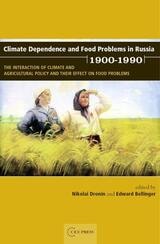
Climate Dependence and Food Problems in Russia, 1900-1990
The Interaction of Climate and Agricultural Policy and Their Effect on Food ProblemsNikolai M. Dronin
Central European University Press, 2006
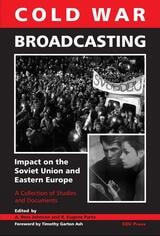
Cold War Broadcasting
Impact on the Soviet Union and Eastern EuropeR. Eugene Parta
Central European University Press, 2010
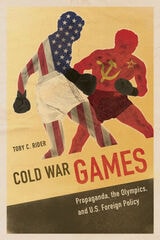
Cold War Games
Propaganda, the Olympics, and U.S. Foreign PolicyToby C Rider
University of Illinois Press, 2016
Drawing on newly declassified materials and archives, Toby C. Rider chronicles how the U.S. government used the Olympics to promote democracy and its own policy aims during the tense early phase of the Cold War. Rider shows how the government, though constrained by traditions against interference in the Games, eluded detection by cooperating with private groups, including secretly funded émigré organizations bent on liberating their home countries from Soviet control. At the same time, the United States utilized Olympic host cities as launching pads for hyping the American economic and political system. Behind the scenes, meanwhile, the government attempted clandestine manipulation of the International Olympic Committee. Rider also details the campaigns that sent propaganda materials around the globe as the United States mobilized culture in general, and sports in particular, to fight the communist threat.
Deeply researched and boldly argued, Cold War Games recovers an essential chapter in Olympic and postwar history.
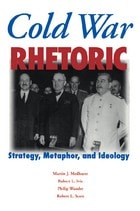
Cold War Rhetoric
Strategy, Metaphor, and IdeologyMartin J. Medhurst
Michigan State University Press, 1997
Cold War Rhetoric is the first book in over twenty years to bring a sustained rhetorical critique to bear on central texts of the Cold War. The rhetorical texts that are the subject of this book include speeches by Presidents Eisenhower and Kennedy, the Murrow- McCarthy confrontation on CBS, the speeches and writings of peace advocates, and the recurring theme of unAmericanism as it has been expressed in various media throughout the Cold War years. Each of the authors brings to his texts a particular approach to rhetorical criticism—strategic, metaphorical, or ideological. Each provides an introductory chapter on methodology that explains the assumptions and strengths of their particular approach.
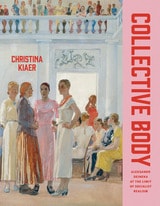
Collective Body
Aleksandr Deineka at the Limit of Socialist RealismChristina Kiaer
University of Chicago Press, 2024
Dislodging the avant-garde from its central position in the narrative of Soviet art, Collective Body presents painter Aleksandr Deineka’s haptic and corporeal version of Socialist Realist figuration as an alternate experimental aesthetic that, at its best, activates and organizes affective forces for collective ends. Christina Kiaer traces Deineka’s path from his avant-garde origins as the inventor of the proletarian body in illustrations for mass magazines after the revolution through his success as a state-sponsored painter of monumental, lyrical canvases during the Terror and beyond. In so doing, she demonstrates that Socialist Realism is best understood not as a totalitarian style but as a fiercely collective art system that organized art outside the market and formed part of the legacy of the revolutionary modernisms of the 1920s. Collective Body accounts for the way the art of the October Revolution continues to capture viewers’ imaginations by evoking the elation of collectivity, making viewers not just comprehend but truly feel socialism, and retaining the potential to inform our own art-into-life experiments within contemporary political art. Deineka figures in this study not as a singular master, in the spirit of a traditional monograph, but as a limit case of the system he inhabited and helped to create.
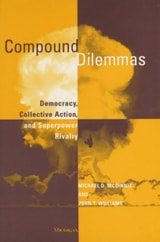
Compound Dilemmas
Democracy, Collective Action, and Superpower RivalryMichael Dean McGinnis and John T. Williams
University of Michigan Press, 2001
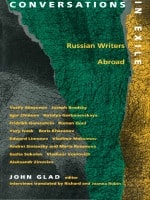
Conversations in Exile
Russian Writers AbroadJohn Glad, ed.
Duke University Press, 1993
Glad's introduction situates the three distinct waves of westward emigration in their historical and political framework. Organized by genre, the book begins with discussions with the older generation of writers and then moves on to more recent arrivals: the makers of fantasy and humor, the aesthetes, the moralists, and the realists. Each voice is compelling for its invaluable testimony--some reveal startling insights into the persecution of dissidents under Soviet rule while others address the relationship between creativity, writing, and conditions of exile. Taken together these interviews reveal the range of modern Russian writing and document the personalities and positions that have made Russian writers in emigration so diverse, experimental, and controversial.
The Writers: Vasily Aksyonov, Joseph Brodsky, Igor Chinnov, Natalya Goranevskaya, Frifrikh Gorensetin, Roman Goul, Yury Ivask, Boris Khazanov, Edward Liminov, Vladimir Makisimov, Andrei Siniavsky and Maria Rozanova, Sasha Sokolov, Vladimir Voinovich, Aleksandr Zinoviev
Excerpt
John Glad: You're a Russian poet but an American essayist. Does that bring on any measure of split personality? Do you think you are becoming less and less Russian?
Joseph Brodsky (recipient of 1987 Nobel Prize for Literature): That's not for me to say. As far as I'm concerned, in my inner self, inside, it feels quite natural. I think being a Russian poet and an American essayist is an ideal situation. It's all a matter of whether you have (a) the heart and (b) the brains to be able to do both. Sometimes I think I do. Sometimes I think I don't. Sometimes I think that one interferes with the other.
Corporeal Words
Mikhail Bakhtins Theology DiscourseAlexandar Mihailovic
Northwestern University Press, 1997
Czechoslovak Diplomacy and the Gulag
Deportation of Czechoslovak Citizens to the USSR and the Negotiation for their Repatriation, 1945-1953Milada Polisenská
Central European University Press, 2016