Results by title
870 books match the query 'Sports & Recreation' and 43 start with c
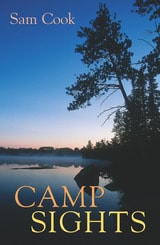
Camp Sights
Sam Cook
University of Minnesota Press, 2002
Unforgettable stories perfect for sharing around the campfire-now in paperback!
Camp Sights welcomes you to the intimate beauty of camps-quiet camps for fathers and daughters, familiar camps on a favorite lake with good friends, hunting camps with their rich histories and traditions, serene camps under the starry sky of a summer night, peaceful camps warmed by supper cooking on the stove.
You’ll experience the challenges and adventures of life in the North Woods-a chance encounter with Arctic wolves on Canada’s Ellesmere Island, a night on the Gods River on a canoe trip to Hudson Bay, a whiteout storm in the barren lands of the Northwest Territories. But you’ll also learn of the everyday pleasures of the outdoors-stories of steelhead fishing, deer and duck hunting, and unforgettable characters like canoe builder Joe Seliga, legendary trout fisherman Benny Larson, and Ely’s "Jackpine" Bob Cary.Throughout the book, Sam Cook offers insights into the subtleties of the natural world that all too often go unnoticed, inviting you to see your world anew.In 1976 Sam Cook trekked north from his native Kansas to work for an outfitter in the Superior-Quetico canoe country. Now, as the Duluth News-Tribune’s outdoors writer, he uses Duluth, Minnesota, as "base camp" for creating his humorous, powerful, and compassionate columns.
Canoe Country Camping
Wilderness Skills for the Boundary Waters and QueticoMichael Furtman
University of Minnesota Press, 2002
Canoe Country Camping is a complete, entertaining, and up-to-date guide that gives you the information you need for a safe and enjoyable canoe trip.
First-time campers will find answers to all their questions about where to go, how to pack, and what to do. Seasoned campers will find helpful tips to streamline their planning and make their next trip better than ever.
Prepare for all the challenges of the wilderness from the obvious to the unexpected. Michael Furtman, experienced Boundary Waters and Quetico canoeist, helps you: plan your adventure, pick your gear, pack for the portage, paddle efficiently, and prepare a comfortable camp.
Canoe Country Camping is chock full of handy checklists, helpful charts, and detailed drawings. Use it before you go. Take it along in your pack for quick reference. Then get out there with confidence, relax and enjoy your trip.
Canoe Country Wildlife
A Field Guide to the North Woods and Boundary WatersMark Stensaas
University of Minnesota Press, 2004
Warblers, wolves, and whirligig beetles—the creatures of the canoe countrywilderness come alive in Canoe Country Wildlife. In this read-aloud treasure, “Sparky” Stensaas, naturalist and storyteller, intrigues you with his tales of encounters with the forest inhabitants—from tiny toads to majestic moose.
Canoe Country Wildlife, a friendly field guide, introduces you to the wildlife you are most likely to see as you travel in the North Woods. It describes these creatures and their habits accurately so you’ll know where and when to look for them. Detailed line drawings illustrate each animal clearly so you’ll recognize what you’re seeing.
The book is filled with fascinating little-known facts: Did you know that wood frogs can freeze solid, only to live again? That loons can fly a hundred miles an hour? That chipmunks can carry seventy sunflower seeds in their cheeks?
Canoe Country Wildlife includes handy checklists to help you keep track of the critters you encounter, a calendar for you to record the natural events you witness, and activities—one for each animal—that will help both adults and children learn by discovery.
Carry Canoe Country Wildlife in your pack. Your trip will be more enjoyable and your memories will last forever. It’s a great gift for anyone who loves the outdoors.
Canyon, Mountain, Cloud
Absence and Longing in American ParksTyra A. Olstad
Oregon State University Press, 2021
Part memoir and part scholarly analysis of the psychological and societal dimensions of place-creation, Canyon, Mountain, Cloud details the author’s experiences working and living in Black Canyon of the Gunnison National Park, Denali National Park and Preserve, Adirondack State Park, and arctic Alaska. Along the way, Olstad explores canyons, climbs mountains, watches clouds, rafts rivers, searches for fossils, and protects rare and fragile vegetation. She learns and shares local natural and cultural histories, questions perceptions of “wilderness,” deepens her appreciation for wildness, and reshapes her understanding of self and self-in-place.
Anyone who has ever felt appreciation for wild places and who wants to think more deeply about individual and societal relationships with American parks and protected areas will find humor, fear, provocation, wonder, awe, and, above all, inspiration in these pages.
Canyoneering 2
Technical Loop Hikes in Southern UtahSteve Allen
University of Utah Press, 2002
Canyoneering 2: Technical Loop Hikes is a guide to seven, week-long backpack trips into some for the most unspoiled and least-visited areas in the Utah section of the Colorado Plateau. Every hike contains the four essentials of a great canyoneering route: spectacular canyons, intimate narrows, big views, and physical challenge. Although the routes are difficult, newcomers to the canyons will also find detailed information here that can be used to plan less demanding excursions. Hikes include Muddy Creek in the San Rafael Swell, Dirty Devil North, Dirty Devil South, Dark Canyon, White Canyon, Escalante East, and Escalante South. For experienced canyoneers.
Canyoneering 3
Loop Hikes in Utah’s EscalanteSteve Allen
University of Utah Press, 1997
Utah’s Escalante country: a vast jigsaw puzzle of desert canyons, draws, defiles, gorges, slots, and washes demarcating upland expanses of slickrock, benches, and ridges, above which stand towers, pinnacles, and peaks. Inhabited for centuries by the ancient Puebloans and now managed primarily by various federal agencies, it is a land of stark contrasts and unforgettable beauty.
This guide features 37 major hikes designed to satisfy any canyoneer from novice to expert, including 20 in the new Grand Staircase-Escalante National Monument. All hikes are designed as loops, eliminating the need to backtrack or car shuttle for those inclined to do the full routes. Dayhikers can choose routes from an hour to all day, backpackers will find multi-day hikes, and those who prefer charting their own course will also profit from the information here.
Aside from the detailed route descriptions, Canyoneering 3 describes 14 road sections plus side roads to ensure time will not be lost finding a trailhead in this often confusing country. Also included are sections on geology, history, equipment, and technical canyoneering. Thoroughly researched, this is now the most comprehensive guide to the wonderland of the Escalante.
Hikes include: Death Hollow; Sand Creek; Boulder Mail Trail; Big Flat Wash, the Escalante River, and the Bowington Road; Middle Boulder Creek; Upper Boulder Creek and Dry Hollow; Phipps Wash; Big Horn Canyon; The Escalante River and the Sand Slides; Red Breaks Canyon; Harris Wash; Egypt 3-The Slot; Lower Harris Wash; Fence Canyon, the Escalante River, and Twenty-five Mile Wash; Twenty-five Mile Wash, the Escalante River, and Scorpion Gulch; Spooky and Peek-a-Book Gulches-The Long Loop; Upper Brimstone Gulch-The Slot; Scorpion Gulch and the Scorpion Horse Trail; Peek-a-Boo and Spooky Gulches-The Standard Loop; Coyote Gulch; Stevens Canyon and the Waterpocket Fold; Stevens and Fold Canyons; The Pollywog Bench Area; Forty-mile Creek and Willow Gulch Everett Russ; Fifty-mile Creek; Sixty Point and Twilight Canyon; Llewellyn and Cottonwood Gulches; Davis Gulch; Clear Creek and the Cathedral in the Desert; Deer Creek; Steep Creek and Horse Canyon; The Gulch and Horse Canyon; Little Death Hollow and Wolverine Creek; Egg Canyon and Lamanite Arch; Silver Falls Creek and Choprock Canyon; Deer Point-An Ascent; Moody Creek Canyons
Canyoneering the Northern San Rafael Swell
Steve Allen
University of Utah Press, 2013
A second volume covering the southern portion of the San Rafael Swell is in preparation.
Cardinal Memories
Recollections from Baseball's Greatest FansEdited & Intro by Tina Wright
University of Missouri Press, 2000
Heralded by local and national media as perhaps baseball's most devoted followers, the lovers of St. Louis's legendary Redbirds have a special bond with their team. Cardinal Memories: Recollections from Baseball's Greatest Fans celebrates this relationship by focusing on the people in the stands. A collection of essays gathered from around the world, from St. Louis to Hong Kong, Cardinal Memories forms a history of the team the way it is best remembered—through the eyes and hearts of its fans.
By turns funny and poignant, these stories chronicle Cardinal teams and players from the Gashouse Gang to the Swifties, from El Birdos to Whiteyball and Big Mac. The bond between parent and child, the generosity of numerous players, and the power of a single game to unite thousands of people are only a few of the themes that run throughout this remarkable collection. Whether it's the tale of young fans clamoring at a bus stop for a glimpse of Stan the Man, a surprise gift from the "Mad Hungarian," or Mark McGwire's "71st" home run, these vignettes capture the joy, heartbreak, and passion of being a Cardinal fan.
Focusing on the game's emotional appeal, Cardinal Memories is about more than baseball—its evocative tales capture the game's deeper meanings and offer readers an affectionate slice of Americana. Transcending Cardinal country, these touching stories will appeal to baseball fans and sports enthusiasts everywhere.
Carry the Rock
Race, Football, and the Soul of an American CityJay Jennings
University of Arkansas Press, 2023
Carry the Rock tells the story of the dramatic ups and downs of a high school football season and reveals a city struggling with its legacy of racial discrimination and the complex issues of contemporary segregation. In the season Jennings masterfully chronicles, Cox finds his ideas sorely tested in his attempts to unify the team, and the result is an account brimming with humor, compassion, frustration, and honesty. What Friday Night Lights did for small-town Texas, Carry the Rock does for the urban South and for any place like Little Rock where sports, race, and community intersect.
Case Studies in Sport Diplomacy
Craig Esherick
FiT Publishing, 2017
The growing influence of sport has created a unique opportunity to build international relationships for a number of purposes, including cultural, economic, shared humanitarian, and increasingly, political diplomacy. Case Studies in Sport Diplomacy explores the influence and effectiveness of sport diplomacy in improving long-term relations between nations by opening a dialogue with international leaders, raising awareness of host countries and to bridging cultural differences, and in building international relationships through ambassadors that could increase trade and legislative agreements, and even bring peace to nations in conflict.
Authored by talented scholars from all over the world, many of whom served as sport diplomats, their unique perspective in each case sheds light on the ways in which sport diplomacy can succeed or falter in achieving strategic objectives between influential – and in some cases historically adversarial – countries.
A thoroughly intriguing look at sport diplomacy’s past and ongoing efforts to improve relations with countries such as Brazil, Russia, Iran and China, Case Studies in Sport Diplomacy brings to the forefront an area in which sport has been able to open up and increase opportunities to build relationships between people, communities, governments and countries.
Changing on the Fly
Hockey through the Voices of South Asian CanadiansCourtney Szto
Rutgers University Press, 2021
Hockey and multiculturalism are often noted as defining features of Canadian culture; yet, rarely are we forced to question the relationship and tensions between these two social constructs. This book examines the growing significance of hockey in Canada’s South Asian communities. The Hockey Night in Canada Punjabi broadcast serves as an entry point for a broader consideration of South Asian experiences in hockey culture based on field work and interviews conducted with hockey players, parents, and coaches in the Lower Mainland of British Columbia. This book seeks to inject more “color” into hockey’s historically white dominated narratives and representations by returning hockey culture to its multicultural roots. It encourages alternative and multiple narratives about hockey and cultural citizenship by asking which citizens are able to contribute to the webs of meaning that form the nation’s cultural fabric.
Changing the Playbook
How Power, Profit, and Politics Transformed College SportsHoward Chudacoff
University of Illinois Press, 2015
- the failed 1950 effort to pass a Sanity Code regulating payments to football players;
- the thorny racial integration of university sports programs;
- the boom in television money;
- the 1984 Supreme Court decision that settled who could control skyrocketing media revenues;
- Title IX's transformation of women's athletics;
- the cheating, eligibility, and recruitment scandals that tarnished college sports in the 1980s and 1990s;
- the ongoing controversy over paying student athletes a share of the enormous moneys harvested by schools and athletic departments.
A thought-provoking journey into the whos and whys of college sports history, Changing the Playbook reveals how the turning points of yesterday and today will impact tomorrow."
Cheating the Spread
Gamblers, Point Shavers, and Game Fixers in College Football and BasketballAlbert J. Figone
University of Illinois Press, 2012

Child's Play
Sport in Kids' WorldsMessner, Michael A
Rutgers University Press, 2016
Children and Play in the Holocaust
Games among the ShadowsGeorge Eisen
University of Massachusetts Press, 1988
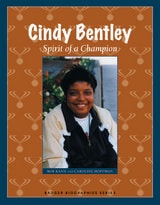
Cindy Bentley
Spirit of a ChampionBob Kann
Wisconsin Historical Society Press, 2010
With the encouragement of a teacher at Southern Center, Cindy realized she had a deep passion for sports, and the discipline to train and compete. She began participating in Special Olympics, and gained confidence as she worked with teammates to earn medals in tennis, track and field, and even snowshoeing. Chosen as a Global Messenger for the Special Olympics International in 2000, Cindy has had dinner at the White House with two different American presidents, traveled around the world, and given speeches in front of thousands of people.
In these pages, young readers will learn what gives Cindy her champion spirit, and why she gave away some of her gold medals. Today, Cindy is still competing in Special Olympics. She also continues to advocate for people with disabilities, and helped to start People First, a statewide organization that encourages those with disabilities to speak up for their rights.
Circling the Bases
Essays on the Challenges and Prospects of the Sports IndustryAuthored by Andrew Zimbalist
Temple University Press, 2010
In Circling the Bases, leading sports economist Andrew Zimbalist continues his discussion and analysis of the major issues and challenges confronting the sports industry in the second decade of the 21st century. Presenting a general overview of the sports business at both the college and professional levels, this volume places concerns such as the antitrust status of sports leagues, the stalled progress of gender equity in college sports, and the control of Performance Enhancing Drugs in historical context.
Zimbalist also provides a deeper understanding of how sports have fared and changed with the sharpening financial crisis and 2009 economic downturn—from the morphing role of salary caps and revenue distribution and the rapid escalation of college coaches' compensation to the financing of sports facilities and the economic impact of hosting the Olympic Games.
In Circling the Bases, Zimbalist continues to show how the business of sports is evolving and how the sports industry is becoming more closely linked with the corporate sector and thus more vulnerable to the vicissitudes of the U.S. and world economies. Zimbalist deftly shows how sports are facing the uncertainties of the future and what the implications are for sports fans, players, owners, and leagues.
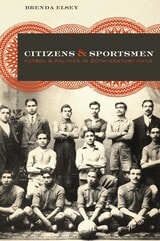
Citizens and Sportsmen
Fútbol and Politics in Twentieth-Century ChileBy Brenda Elsey
University of Texas Press, 2011
Fútbol, or soccer as it is called in the United States, is the most popular sport in the world. Millions of people schedule their lives and build identities around it. The World Cup tournament, played every four years, draws an audience of more than a billion people and provides a global platform for displays of athletic prowess, nationalist rhetoric, and commercial advertising. Fútbol is ubiquitous in Latin America, yet few academic histories of the sport exist, and even fewer focus on its relevance to politics in the region. To fill that gap, this book uses amateur fútbol clubs in Chile to understand the history of civic associations, popular culture, and politics.
In Citizens and Sportsmen, Brenda Elsey argues that fútbol clubs integrated working-class men into urban politics, connected them to parties, and served as venues of political critique. In this way, they contributed to the democratization of the public sphere. Elsey shows how club members debated ideas about class, ethnic, and gender identities, and also how their belief in the uniquely democratic nature of Chile energized state institutions even as it led members to criticize those very institutions. Furthermore, she reveals how fútbol clubs created rituals, narratives, and symbols that legitimated workers' claims to political subjectivity. Her case study demonstrates that the relationship between formal and informal politics is essential to fostering civic engagement and supporting democratic practices.

City Games
The Evolution of American Urban Society and the Rise of SportsSteven A. Riess
University of Illinois Press, 1989
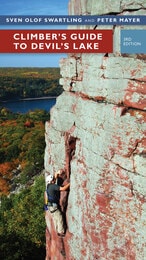
Climber’s Guide to Devil’s Lake
Sven Olof Swartling
University of Wisconsin Press, 2008
•a summary of the geologic and natural history of the Baraboo hills by Patricia K. Armstrong
•locations and updated descriptions of nearly 1,800 climbs
•landmark photographs from most major climbing areas
•GPS waypoints, map coordinates, altimeter readings, and approach information
•detailed diagrams locating climbing routes at most major climbing areas
•6 new diagrams, 5 new climbing areas, and 120 new routes
Climbing
Hil Malatino
Duke University Press, 2026
Coaching for the Inner Edge
Practical Sport Psychology for Coaches, Second EditionRobin S. Vealey
FiT Publishing, 2021
Coaches are continually searching for ways to gain the edge over their opponents. They work tirelessly to get their athletes in top physical condition, to develop their physical skills, and to implement successful routines and strategies for their teams. This physical training develops the athlete’s outer edge—the peak physical performance advantage over their opponents. But as most coaches realize, athletes also need an inner edge to perform successfully. This Inner Edge is the advantage that athletes cultivate within themselves by honing their mental skills, by learning to manage their energy in pressure situations and to focus effectively, despite distractions and obstacles.
This much anticipated second edition is a must read for anyone interested in improving sport performance. Dr. Vealey distills and applies the proven methods, updated techniques, and her own experience into a practical, engaging resource for coaches, trainers, and consultants. Drawing from the preeminent research literature of master coaches, innovative sport psychologists, and from her own practical experiences as a college basketball player, coach, sport psychology researcher and consultant, Dr Vealey defines how to develop the Inner Edge in athletes.
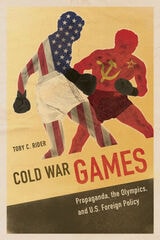
Cold War Games
Propaganda, the Olympics, and U.S. Foreign PolicyToby C Rider
University of Illinois Press, 2016
Drawing on newly declassified materials and archives, Toby C. Rider chronicles how the U.S. government used the Olympics to promote democracy and its own policy aims during the tense early phase of the Cold War. Rider shows how the government, though constrained by traditions against interference in the Games, eluded detection by cooperating with private groups, including secretly funded émigré organizations bent on liberating their home countries from Soviet control. At the same time, the United States utilized Olympic host cities as launching pads for hyping the American economic and political system. Behind the scenes, meanwhile, the government attempted clandestine manipulation of the International Olympic Committee. Rider also details the campaigns that sent propaganda materials around the globe as the United States mobilized culture in general, and sports in particular, to fight the communist threat.
Deeply researched and boldly argued, Cold War Games recovers an essential chapter in Olympic and postwar history.
Collective Chaos
A Roller Derby Team MemoirSamantha Tucker
Ohio University Press, 2023
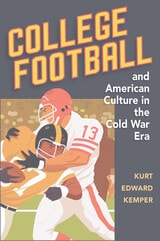
College Football and American Culture in the Cold War Era
Kurt Edward Kemper
University of Illinois Press, 2009
The Cold War era spawned a host of anxieties in American society, and in response, Americans sought cultural institutions that reinforced their sense of national identity and held at bay their nagging insecurities. They saw football as a broad, though varied, embodiment of national values. College teams in particular were thought to exemplify the essence of America: strong men committed to hard work, teamwork, and overcoming pain. Toughness and defiance were primary virtues, and many found in the game an idealized American identity.
In this book, Kurt Kemper charts the steadily increasing investment of American national ideals in the presentation and interpretation of college football, beginning with a survey of the college game during World War II. From the Army-Navy game immediately before Pearl Harbor, through the gradual expansion of bowl games and television coverage, to the public debates over racially integrated teams, college football became ever more a playing field for competing national ideals. Americans utilized football as a cultural mechanism to magnify American distinctiveness in the face of Soviet gains, and they positioned the game as a cultural force that embodied toughness, discipline, self-deprivation, and other values deemed crucial to confront the Soviet challenge.
Americans applied the game in broad strokes to define an American way of life. They debated and interpreted issues such as segregation, free speech, and the role of the academy in the Cold War. College Football and American Culture in the Cold War Era offers a bold new contribution to our understanding of Americans' assumptions and uncertainties regarding the Cold War.
College Knowledge for the Student Athlete
David Schoem and Shelly Kovacs
University of Michigan Press, 2011
This book was written to support the academic success of student athletes—whether at a large or small university or college, whether team or individual sport, whether women or men, whether on scholarship or not.
While all college students must learn to negotiate the complex transition from high school to college, student athletes face unique challenges, including the complicated set of regulations set out by the NCAA and individual conferences that determine eligibility. The current environment in college athletics makes it even more critical that student athletes understand what they need to do academically and how to avoid potential situations that could jeopardize their athletic careers.
College Knowledge for the Student Athlete is a road map and tour guide for a successful career as a student athlete. Tips are based on research and the authors’ experience, as well as the wisdom and advice of hundreds of former student athletes.
Coming On Strong
Gender and Sexuality in Women's SportSusan K. Cahn
University of Illinois Press, 2015
Conflict in the Great Outdoors
Toward Understanding and Managing for Diverse Sportsmen PreferencesHobson Bryan, Jr.
University of Alabama Press, 2008
Managing nature’s playground—where diversity meets design.
A major problem of outdoor recreation management addressed in Hobson Bryan’s Conflict in the Great Outdoors is the difficulty in identifying sportsmen subgroups having distinctive preferences and expectations as to the composition of the “quality” outdoor experience. Land-use managers and planners are faced with the problem of matching resources with more users having increasingly specific motivations. Bryan applies his theory of variations within a leisure activity by addressing what sportsmen do and why they do it in various activities such as mountain climbing, hunting, canoeing, skiing, and backpacking.
Contemporary Athletics and Ancient Greek Ideals
Daniel A. Dombrowski
University of Chicago Press, 2009
Despite their influence in our culture, sports inspire dramatically less philosophical consideration than such ostensibly weightier topics as religion, politics, or science. Arguing that athletic playfulness coexists with serious underpinnings, and that both demand more substantive attention, Daniel Dombrowski harnesses the insights of ancient Greek thinkers to illuminate contemporary athletics.
Dombrowski contends that the ideas of Plato, Aristotle, and Plotinus shed important light on issues—such as the pursuit of excellence, the concept of play, and the power of accepting physical limitations while also improving one’s body—that remain just as relevant in our sports-obsessed age as they were in ancient Greece. Bringing these concepts to bear on contemporary concerns, Dombrowski considers such questions as whether athletic competition can be a moral substitute for war, whether it necessarily constitutes war by other means, and whether it encourages fascist tendencies or ethical virtue. The first volume to philosophically explore twenty-first-century sport in the context of its ancient predecessor, Contemporary Athletics and Ancient Greek Ideals reveals that their relationship has great and previously untapped potential to inform our understanding of human nature.
Contesting Identities
Sports in American FilmAaron Baker
University of Illinois Press, 2003
Analysis of race, class and gender in American sports films
Since the earliest days of the silent era, American filmmakers have been drawn to the visual spectacle of sports and their compelling narratives of conflict, triumph, and individual achievement. In Contesting Identities Aaron Baker examines how these cinematic representations of sports and athletes have evolved over time--from The Pinch Hitter and Buster Keaton's College to White Men Can't Jump, Jerry Maguire, and Girlfight. He focuses on how identities have been constructed and transcended in American society since the early twentieth century.Whether depicting team or individual sports, these films return to that most American of themes, the master narrative of self-reliance. Baker shows that even as sports films tackle socially constructed identities like class, race, ethnicity, sexuality, and gender, they ultimately underscore transcendence of these identities through self-reliance.
Looking at films from almost every sporting genre--with a particular focus on movies about boxing, baseball, basketball, and football--Contesting Identities maps the complex cultural landscape depicted in American sports films and the ways in which stories about "subaltern" groups winning acceptance by the mainstream majority can serve to reinforce the values of that majority.
In addition to discussing the genre's recurring dramatic tropes, from the populist prizefighter to the hot-headed rebel to the "manly" female athlete, Baker also looks at the social and cinematic impacts of real-life sports figures from Jackie Robinson and Babe Didrikson Zaharias to Muhammad Ali and Michael Jordan.

Counseling and Psychological Services for College Student-Athletes
Second EditionMary Jo Loughran
FiT Publishing, 2019
Today's college student-athletes face a wide variety of stressors as they enter the increasingly demanding intercollegiate athletic environment. Counseling and Psychological Services for College Student-Athletes, Second Edition, weaves current research findings, practical examples, and best practices to provide undergraduate and graduate student readers with the necessary tools to effectively and ethically address these issues as future practitioners.
Expert chapter authors use their knowledge and experience to address collegiate student-athlete issues such as mental health, injury, race, gender, sexuality, and socioeconomic background, as well as ethical and professional considerations.
This updated second edition includes a case vignette at the beginning of each chapter to illustrate the key concepts and discussion questions to encourage thoughtful interaction with the material. New chapters have been added on student-athlete topics including developmental considerations, trauma, concussions, and internationality to assist in facilitating positive change in the lives of college student-athletes.
Cowgirls of the Rodeo
Pioneer Professional AthletesMary Lou LeCompte
University of Illinois Press, 1993
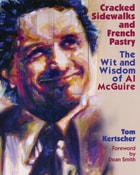
Cracked Sidewalks and French Pastry
The Wit and Wisdom of Al McGuireTom Kertscher
University of Wisconsin Press, 2002
Al McGuire was the Mark Twain of college basketball. Never was there a figure in the game so quoted and so quotable, on sports and on the human condition. This book collects more than a hundred of McGuire’s most colorful quotations, plus photographs from his life and career, in a tribute that is funny, poignant, and brimming with his streetwise sagacity.
McGuire, a brash and fiery New Yorker who grew up working in his parents’ saloon, played a rough and tumble game of basketball at St. John’s University and briefly in the NBA before entering the coaching ranks. He reached the pinnacle of his profession and gained national fame at Marquette University in Milwaukee, where in thirteen seasons he compiled a 295-80 record, appeared in nine NCAA tournaments, and won eighty-one home games in a row. He was a fine coach who cared deeply about his players and was beloved by his teams and fans alike, but his flamboyance and his mouth sometimes got him into trouble. The end of his coaching career captivated the nation: McGuire wept on the bench as his Marquette Warriors won the national title.
McGuire then began a ground-breaking career in network broadcasting, adding a zest and unconventionality that the college game had never seen. His sometimes bizarre and always entertaining commentary kept viewers tuned in even after the outcome of a lopsided game was a foregone conclusion. When Al McGuire died of leukemia in 2001, the sports world lost a true original.
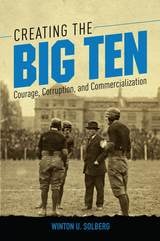
Creating the Big Ten
Courage, Corruption, and CommercializationWinton U Solberg
University of Illinois Press, 2018
Winton U. Solberg explores the relationship between higher education and collegiate football in the Big Ten's first fifty years. This formative era saw debates over eligibility and amateurism roil the sport. In particular, faculty concerned with academics clashed with coaches, university presidents, and others who played to win. Solberg follows the conference's successful early efforts to put the best interests of institutions and athletes first. Yet, as he shows, commercial concerns undid such work after World War I as sports increasingly eclipsed academics. By the 1940s, the Big Ten's impact on American sports was undeniable. It had shaped the development of intercollegiate athletics and college football nationwide while serving as a model for other athletic conferences.
Critical Hours
Search and Rescue in the White MountainsSandy Stott
University Press of New England, 2018
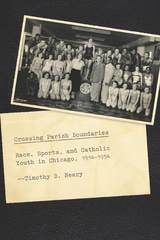
Crossing Parish Boundaries
Race, Sports, and Catholic Youth in Chicago, 1914-1954Timothy B. Neary
University of Chicago Press, 2016
In this book, Timothy B. Neary reveals the history of Bishop Bernard Sheil’s Catholic Youth Organization (CYO), which brought together thousands of young people of all races and religions from Chicago’s racially segregated neighborhoods to take part in sports and educational programming. Tens of thousands of boys and girls participated in basketball, track and field, and the most popular sport of all, boxing, which regularly filled Chicago Stadium with roaring crowds. The history of Bishop Sheil and the CYO shows a cosmopolitan version of American Catholicism, one that is usually overshadowed by accounts of white ethnic Catholics aggressively resisting the racial integration of their working-class neighborhoods. By telling the story of Catholic-sponsored interracial cooperation within Chicago, Crossing Parish Boundaries complicates our understanding of northern urban race relations in the mid-twentieth century.
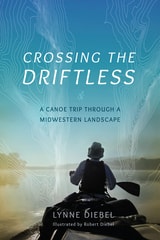
Crossing the Driftless
A Canoe Trip through a Midwestern LandscapeLynne Diebel
University of Wisconsin Press, 2015
Crossing the Driftless is both a traveler’s tale and an exploration of this dramatic environment, following the streams of geologic and human history. Lynne Diebel and her husband, Bob, crossed the Driftless Area by canoe, journeying 359 river miles (and six Mississippi River locks and five portages) from Faribault, Minnesota, where her family has a summer home on Cedar Lake, to their Wisconsin home in Stoughton, one block from the Yahara River. Traveling by river and portage, they paddled downstream on the Cannon and Mississippi rivers and upstream on the Wisconsin River, in the tradition of voyageurs. Lynne tells the story of their trip, but also the stories of the rivers they canoed and the many tributaries whose confluences they passed.
Finalist, Travel, Foreword Reviews IndieFab Book of the Year Awards
Honorable mention, Nonfiction book, Council for Wisconsin Writers
Winner, Recreation/Sports/Travel, Midwest Book Awards
Best books for public & secondary school libraries from university presses, American Library Association
Cubs' Fans Leadership Secrets
Learning to Win From a Cursed Team's ErrorsJohn Charles Kunich and Richard I. Lester
Parkhurst Brothers, Inc., 2009
Cubs fans have often focused on one or two star performers, to the detriment of the team's overall performance.
Stars have often been selfish and devoted to their own success. Leaders have toleratged them, often at a price
to the whole team. Effective leadership recognizes the dangers in this situation. Here's their antidote--in a
highly-readable book that's hot off the press! Foreword by bestselling-author Ken Blanchard.
Curling Capital
Winnipeg and the Roarin' Game, 1876 to 1988Morris Mott
University of Manitoba Press, 1989
Cut Time
An Education at the FightsCarlo Rotella
University of Chicago Press, 2005
Tracing the consequences of hurt and craft, the two central facts of boxing, Rotella reveals moving resonances between the worlds inside and outside the ropes. The brief, disastrous fistic career of one of his students pinpoints the moment when adulthood arrives; the hard-won insight of a fellow fan shows Rotella how to reckon with a car crash. Mismatches, resilience, pride, pain, and aging—Rotella's lessons from the ring extend far beyond the sport. In Cut Time, Rotella achieves the near-impossible: he makes the fight world relevant to us, whether we're fans or not.
"Cut Time should be read not just by fight aficionados but also by fans of intelligent nonfiction writing. . . . An absorbing read."—Sports Illustrated
"Just when you think it's all been written, a good writer takes a shining new look at an old subject and breathes life into it. . . . Rotella has preserved the blow-by-blow and the grandeur of another age but has somehow expanded the ring to include his own generation's proclivities and sensibility."—Los Angeles Times
Cy Young
A Baseball LifeReed Browning
University of Massachusetts Press, 2000
He was the winner of 511 major league baseball games, nearly a hundred more than any other pitcher. He threw three no-hitters, including the first perfect game in the new American League. He was among the original twelve players inducted into baseball's Hall of Fame, and his name is now attached to the game's most prestigious pitching award. Yet for all his accomplishments, Cy Young remains to most baseball fans a legendary but little known figure.
In this book, Reed Browning re-creates the life of Denton True “Cyclone” Young and places his story in the context of a rapidly changing turn-of-the-century America. Born in rural Ohio, the son of a Civil War veteran, Young learned his trade at a time when only underhand pitching was permitted. When he began his professional career in 1890, pitchers wore no gloves and stood five feet closer to the batter than they do today. By the time he retired in 1911, the game of baseball had evolved into its modern form and claimed unquestioned status as America's “national pastime.”
As Browning shows, Young's extraordinary mastery of his craft owed much to his ability to adapt to the changing nature of the game. Endowed with an exceptional fastball, he gradually developed a wide array of deliveries and pitches—all of which he could throw with astonishing control. Yet his success can also be attributed, at least in part, to the rustic values of loyalty, hard work, and fair play that he embraced and embodied, and for which he became renowned among baseball fans of his day.
Cy Young
An American Baseball HeroScott H. Longert
Ohio University Press, 2020
Cy Young was one of the hardest-throwing pitchers of all time. He recorded three no-hitters—including a perfect game—and accumulated more than 2,800 strikeouts on his way to the National Baseball Hall of Fame. Scott H. Longert uses Young’s life story to introduce middle-grade readers to the game, explaining balls, strikes, and outs in an easy-to-understand way. Longert narrates each season and each milestone game with an enthusiastic play-by-play that is sure to draw readers into the excitement on the field and in the crowd, fostering a better understanding of and a passion for baseball.
Baseball fans today know Cy Young’s name chiefly through the award given in his honor each year to the best pitcher in the National and the American Leagues. Denton True “Cyclone” Young won more than five hundred games over a career that spanned four decades, a record that no other major league pitcher has come close to matching. In addition to being the winningest pitcher in baseball history, he was also a kind, self-effacing, and generous man. Born into a farm family in rural Ohio, he never lost touch with the small-town values he grew up with.
Cycling Science
How Rider and Machine Work TogetherMax Glaskin
University of Chicago Press, 2012