Results by title
206 books match the query 'Study & Teaching' and 15 start with c

Capitalism, Colonisation and the Ecocide-Genocide Nexus
Martin Crook
University of London Press, 2024
This timely publication examines the drivers of ecologically induced genocide, in particular, how environmental destruction can lead to conditions that fundamentally threaten a social group’s cultural or physical existence. Focusing on the former British colonies of Kenya and Australia, both united by a discourse of developmentalism, this book draws attention to the critical role that ecological destruction has in the genocide of Indigenous and place-based peoples. The book synthesizes radical political ecology with a political-economic approach, illuminating the chain connection between the inherent genocidal and ecocidal properties of global capitalism, and how this connection intersects with settler and post-colonial structures. In exploring the genocidal effects of climate governance, the economic market for environmental rights, and energy extraction on Indigenous peoples in Kenya and Australia, the book also draws on original interviews to prioritize the lived experiences of the groups that have suffered structural violence and social harm. Fundamentally, Crook calls forward the political economy of genocide. As such, this important book deepens and enriches our knowledge of genocide, the eco-genocidal nature of colonization, and the capitalist mode of production that underpins developmentalism.
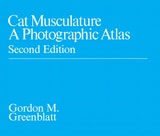
Cat Musculature
A Photographic AtlasGordon Greenblatt
University of Chicago Press, 1981
This series of brilliant photographs shows the dissection of the cat musculature. It is designed for use in conjunction with the third edition of Hyman's Comparative Vertebrate Anatomy, edited by Marvalee Wake, although it can be used with other textbooks. Every possible step has been taken to make the photographs easy to interpret and to follow. Reference indications to the Wake texts are included, and also concise data on the origin, insertion, and action of each muscle. The scale is such that in most cases no more than five muscles are shown per photograph, thus simplifying the task of visualizing the individual muscles. An invaluable aid for every student of cat anatomy.
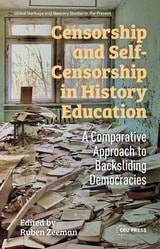
Censorship and Self-Censorship in History Education
A Comparative Approach to Backsliding DemocraciesRuben Zeeman
Central European University Press, 2026
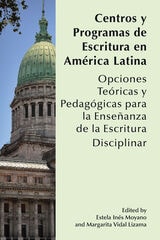
Centros y Programas de Escritura en América Latina
Opciones teóricas y pedagógicas para la enseñanza de la escritura disciplinarEstela Inés Moyano
University Press of Colorado, 2023
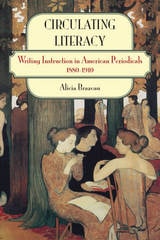
Circulating Literacy
Writing Instruction in American Periodicals, 1880-1910Alicia Brazeau
Southern Illinois University Press, 2016
Brazeau establishes how these magazines shared a common strategy in the construction of literacy identities by connecting a specific identity with a particular set of reading and writing practices. She explores how farm journals were preoccupied with the value of literacy as a tool for shaping community; considers how the Journal and the Bazar deployed distinctly different illustrations of literacy values for women; shows how the Journal and editor Edward Bok cast women as consumers and sellers of literacy; and looks at the ways in which Bazar editors urged readers to adopt habits of reading and writing that emphasized communal relationships among women. In Circulating Literacy, Brazeau speaks to, and connects, the important topics of rural studies, gender, professionalization, and literacy sponsorship and identity, arguing for the value of the study of periodicals as literacy education tools.
Citizen Science
Innovation in Open Science, Society and PolicyEdited by Susanne Hecker, Muki Haklay, Anne Bowser, Zen Makuch, Johannes Vogel, and Aletta Bonn
University College London, 2018
This book identifies and explains the role of citizen science within innovation in science and society, and as a vibrant and productive science-policy interface. The scope of this volume is global, geared towards identifying solutions and lessons to be applied across science, practice and policy. The chapters consider the role of citizen science in the context of the wider agenda of open science and open innovation and discuss progress towards responsible research and innovation, two of the most critical aspects of science today.
Collaborative Imagination
Earning Activism through Literacy EducationPaul Feigenbaum
Southern Illinois University Press, 2015
Processes of fighting unequal citizenship have historically prioritized literacy education, through which people envision universal first-class citizenship and devise practical methods for enacting this vision. In this important volume, literacy scholar Paul Feigenbaum explores how literacy education can facilitate activism in contemporary contexts in which underserved populations often remain consigned to second-class status despite official guarantees of equal citizenship. By conceiving of education as, in part, a process of understanding and grappling with adaptive and activist rhetorics, Feigenbaum explains, educators can direct people’s imaginations toward activism without running up against the conceptual problems so many scholars associate with critical pedagogy. Over time, this model of education expands people’s imaginations about what it means to be a good citizen, facilitates increased civic participation, and encourages collective destabilization of, rather than adaptation to, the structural inequalities of mainstream civic institutions. Feigenbaum offers detailed analyses of various locations and time periods inside, outside, and across the walls of formal education, including the Citizenship Schools and Freedom Schools rooted in the Civil Rights Movement of the 1950s and 1960s; the Algebra Project, a current practical-literacy network; and the Imagination Federation, a South Florida–based Earth-Literacy network. Considering both the history and the future of community literacy, Collaborative Imagination offers educators a powerful mechanism for promoting activism through their teaching and scholarship, while providing practical ideas for greater civic engagement among students.
Commentary for Academic Writing for Graduate Students, 3rd Ed.
Essential Tasks and SkillsJohn M. Swales & Christine B. Feak
University of Michigan Press, 2012
The Commentary for the third edition of this successful guide to writing has been revised and expanded in many ways to provide more support for instructors; this includes additional tasks for Units Two and Four to supplement the main text. However, the collegial tone established in previous Commentaries between Swales & Feak and instructors has been retained.
This volume contains commentaries on each of the eight units plus the two appendixes. The format for each unit includes
- a summary of the main points of the unit along with a list of topics covered.
- a synopsis of activities, divided into Language Focus sections and description of tasks.
- some general notes designed to capture the character of the unit, to indicate alternative activities, or to anticipate problems that may arise.
- detailed commentary and discussion of individual tasks, including model or sample answers where possible.
Commentary for Academic Writing for Graduate Students
Essential Tasks and SkillsChristine B. Feak and John M. Swales
University of Michigan Press, 2027
Now in its 4th edition, the Commentary for Academic Writing for Graduate Students remains an important companion text. Useful for instructors as well as students and scholars using Academic Writing for Graduate Students for self-study, the Commentary includes a synopsis of what each unit attempts to achieve, further discussion of certain points, and sample responses to the more controlled tasks. Many of the responses or model texts come directly from class discussion or from submitted homework, which students generously offered for inclusion. In response to numerous requests, the authors have expanded the number of teaching suggestions included at the end of each unit for this edition.
Communication Incompetencies
A Theory of Training Oral Performance BehaviorGerald M. Phillips
Southern Illinois University Press, 1991
Gerald M. Phillips draws on his twenty-five-year, five-thousand-client experience with the Pennsylvania State University Reticence Program to present a new theory of modification of “inept” communication behavior.
That experience has convinced Phillips that communication is arbitrary and rulebound rather than a process of inspiration. He demonstrates that communication problems can be described as errors that can be detected and classified in order to fit a remediation pattern. Regardless of the source of error, the remedy is to train the individual to avoid or eliminate errors—thus, orderly procedure will result in competent performance.
Inept communicators must be made aware of the obligations and constraints imposed by deep structures that require us to achieve a degree of formal order in our language, without which our discourse becomes incomprehensible.
Composition and the Rhetoric of Science
Engaging the Dominant DiscourseMichael J. Zerbe
Southern Illinois University Press, 2007

Contemporary Design Education in Australia
Creating Transdisciplinary FuturesEdited by Lisa Scharoun, Deanna Meth, Philip Crowther, et al.
Intellect Books, 2023
This book offers a range of approaches to teaching higher education design students to learn to design collaboratively and creatively, through transdisciplinary, multidisciplinary, cross-disciplinary, and interdisciplinary learning experiences. It highlights that the premise of traditional disciplinary silos does little to advance the competencies needed for contemporary design and non-linear career paths and emphasizes the importance of higher education being responsive to changes in society, including fluctuating market demands, economic variations, uncertainties, and globalization. Chapters highlight approaches that address this changing landscape, to meet student, industry, and societal needs and reflect a range of design education contexts in which the authors have taught, with a focus on experiences at the Queensland University of Technology (QUT), Brisbane, Australia, but also including collaborations and comparative discussions elsewhere in Australia and globally, including Europe, Asia, the Middle East, and the United States.
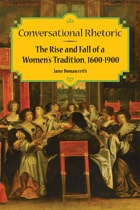
Conversational Rhetoric
The Rise and Fall of a Women's Tradition, 1600-1900Jane Donawerth
Southern Illinois University Press, 2011
Donawerth traces the development of women’s rhetorical theory through the voices of English and American women (and one much-translated French woman) over three centuries. She demonstrates how they cultivated theories of rhetoric centered on conversation that faded once women began writing composition textbooks for mixed-gender audiences in the latter part of the nineteenth century. She recovers and elucidates the importance of the theories in dialogues and defenses of women’s education by Bathsua Makin, Mary Astell, and Madeleine de Scudéry; in conduct books by Hannah More, Lydia Sigourney, and Eliza Farrar; in defenses of women’s preaching by Ellen Stewart, Lucretia Mott, Catherine Booth, and Frances Willard; and in elocution handbooks by Anna Morgan, Hallie Quinn Brown, Genevieve Stebbins, and Emily Bishop. In each genre, Donawerth explores facets of women’s rhetorical theory, such as the recognition of the gendered nature of communication in conduct books, the incorporation of the language of women’s rights in the defenses of women’s preaching, and the adaptation of sentimental culture to the cultivation of women’s bodies as tools of communication in elocution books.
Rather than a linear history, Conversational Rhetoric follows the starts, stops, and starting over in women’s rhetorical theory. It covers a broad range of women’s rhetorical theory in the Anglo-American world and places them in their social, rhetorical, and gendered historical contexts. This study adds women’s rhetorical theory to the rhetorical tradition, advances our understanding of women’s theories and their use of rhetoric, and offers a paradigm for analyzing the differences between men’s and women’s rhetoric from 1600 to 1900.

Coordinated Science Laboratory
75 Years of Multidisciplinary ExcellenceCoordinated Science Laboratory
University of Illinois Press, 2026
Published in honor of CSL’s seventy-fifth anniversary, this book reveals how the institution evolved into a rich research ecosystem that pursues a wide range of diverse projects. CSL’s work to date has given rise to dozens of startups, thousands of careers, and countless innovations in communications, robotics, computing, and other areas of science and technology. As the stories in this book show, CSL brings together diverse minds from across disciplines to solve some of the world’s most complex challenges. Indeed, the institution’s history is interwoven with the histories of industry, national security, and the familiar everyday technologies that connect and empower our world.
Creative Writing Pedagogies for the Twenty-First Century
Edited by Alexandria Peary and Tom C. Hunley
Southern Illinois University Press, 2015
Drawing primarily from the field of composition studies—a discipline rich with a wide range of established pedagogies—the contributors in this volume build on previous models to present fresh and inventive methods for the teaching of creative writing. Each chapter offers both a theoretical and a historical background for its respective pedagogical ideas, as well as practical applications for use in the classroom. This myriad of methods can be used either as a supplement to the customary workshop model or as stand-alone roadmaps to engage and reinvigorate the creative process for both students and teachers alike.
A fresh and inspiring collection of teaching methods, Creative Writing Pedagogies for the Twenty-First Century combines both conventional and cutting-edge techniques to expand the pedagogical possibilities in creative writing studies.