Results by title
13 books match the query 'Slaveholders'
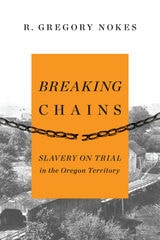
Breaking Chains
Slavery on Trial in the Oregon TerritoryR. Gregory Nokes
Oregon State University Press, 2013
In Breaking Chains, R. Gregory Nokes tells the story of the only slavery case adjudicated in Oregon’s pre-Civil War courts—Holmes v. Ford. Through the lens of this landmark case, Nokes explores the historical context of racism in Oregon and the West, reminding readers that there actually were slaves in Oregon, though relatively few in number.
Drawing on the court record, Nokes offers an intimate account of the relationship between a slave and his master from the slave’s point of view. He also explores the experiences of other slaves in early Oregon, examining attitudes toward race and revealing contradictions in the state’s history. Oregon was the only free state admitted to the union with a voter-approved constitutional clause banning African Americans and, despite the prohibition of slavery in the state, many in Oregon tolerated it and supported politicians who advocated for slavery, including Oregon’s first territorial governor.
Breaking Chains sheds light on a somber part of Oregon’s history, bringing the story of slavery in Oregon to a broader audience. The book will appeal to readers interested in Pacific Northwest history and in the history of slavery in the United States.
Moses and the Monster and Miss Anne
Carole C. Marks
University of Illinois Press, 2008
All three women lived for a time in close proximity on the Eastern Shore of Maryland, an isolated region that thrived on tobacco and then lost it, procured slaves and then lost them, and produced strong-minded women and then condemned them. Though they never actually met, and their backgrounds and beliefs differed drastically, these women's lives converged through their active experiences of the conflict over slavery in Maryland and beyond, the uncertainties of economic transformation, the struggles in the legal foundation of slavery and, most of all, the growing dispute in gender relations in America.
Throughout this book, Carole C. Marks gleans historical fact and sociological insight from the persistent myths and exaggerations that color the women's legacies, and she investigates the common roots and motivations of three remarkable figures who bucked the era's expectations for women. She also considers how each woman's public identity reflected changing ideas of domesticity and the public sphere, spirituality, and legal rights and limitations. Cannon, Carroll, and Tubman, each in her own way, passionately fought for the future of Maryland and the United States, and from these unique vantage points, Moses and the Monster and Miss Anne portrays the intersecting and conflicting forces of race, economics, and gender that threatened to rend a nation apart.
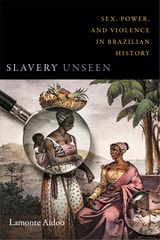
Slavery Unseen
Sex, Power, and Violence in Brazilian HistoryLamonte Aidoo
Duke University Press, 2018
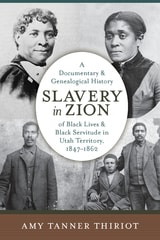
Slavery in Zion
A Documentary and Genealogical History of Black Lives and Black Servitude in Utah Territory, 1847-1862Amy Tanner Thiriot
University of Utah Press, 2022
Slavery in Zion has two major parts. The first section provides an introductory history, chapters on southern and western experiences, and information on life after emancipation. The second section is a biographical encyclopedia of names, relationships, and events. Although Slavery in Zion contains material applicable to legal history and the history of race and Mormonism, its most important contribution is as an archive of the experiences of Utah’s enslaved Black people, at last making their stories an integral part of the record of Utah and the American West—no longer forgotten or written out of history.
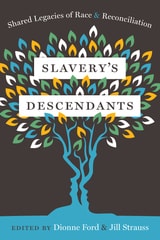
Slavery's Descendants
Shared Legacies of Race and ReconciliationJill Strauss
Rutgers University Press, 2019
Slavery’s Descendants brings together contributors from a variety of racial backgrounds, all members or associates of a national racial reconciliation organization called Coming to the Table, to tell their stories of dealing with America’s racial past through their experiences and their family histories. Some are descendants of slaveholders, some are descendants of the enslaved, and many are descendants of both slaveholders and slaves. What they all have in common is a commitment toward collective introspection, and a willingness to think critically about how the nation’s histories of oppression continue to ripple into the present, affecting us all.
The stories in Slavery’s Descendants deal with harrowing topics—rape, lynching, cruelty, shame—but they also describe acts of generosity, gratitude, and love. Together, they help us confront the legacy of slavery to reclaim a more complete picture of U.S. history, one cousin at a time.
Funding for the production of this book was provided by Furthermore, a program of the J. M. Kaplan Fund (https://www.furthermore.org).
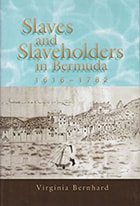
Slaves and Slaveholders in Bermuda, 1616-1782
Virginia Bernhard
University of Missouri Press, 1999
Slaves and Slaveholders in Bermuda, 1616-1782, offers a fresh perspective on the complex relationship between racism and slavery in the often overlooked second-oldest English colony in the New World. As the first blacks were brought onto the islands not specifically for slave labor, but for their expertise as pearl divers and cultivators of West Indies plants, Bermuda's racial history began to unfold much differently from that of the Caribbean islands or of the North American mainland.
Bermuda's history records the arrival of the first blacks, the first English law passed to control the behavior of the "Negroes," and the creation of ninety-nine-year indentures for black and Indian servants. When the inevitable reality of slavery took hold in Bermuda, slaveholders realized that they, like their slaves, were not free. Slavery dictated and strained the relationships between whites and blacks, but in this smallest of English colonies it differed from slavery elsewhere because of the uniquely close master-slave relations created by Bermuda's size and maritime economy.
At only twenty-one square miles in area, Bermuda saw slaves and slaveholders working and living closer together than in other societies. The emphasis on maritime pursuits offered slaves a degree of autonomy and a sense of identity unequaled in other English colonies. This groundbreaking history of Bermuda's slavery reveals fewer runaways, less-violent rebellions, and relatively milder punishments for offending slaves.
Bernhard delves into the origins of Bermuda's slavery, its peculiar nature, and its effects on blacks and whites. The study is based on archival research drawn from wills and inventories, laws and court cases, governors' reports and council minutes. Intended as an introduction to both the history of the islands and the rich sources for further research, this book will prove invaluable to scholars of slavery, as well as those interested in historical archaeology, anthropology, maritime history, and colonial history.
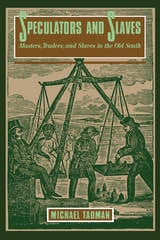
Speculators And Slaves
Masters, Traders, And Slaves In The Old SouthMichael Tadman
University of Wisconsin Press, 1996
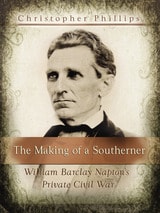
The Making of a Southerner
William Barclay Napton's Private Civil WarChristopher Phillips
University of Missouri Press, 2008
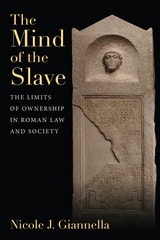
The Mind of the Slave
The Limits of Ownership in Roman Law and SocietyNicole J. Giannella
University of Michigan Press, 2026
In order to place Roman jurists in conversation with both technical and literary sources, Giannella grounds this study in philology and argues that conceptions of the mind of the slave were at the heart of legal and cultural debates about the nature of slavery and ownership. It also contributes to a wider debate about selfhood and autonomy, since philosophers often used the figure of the slave as a representation of humanity as its limits.
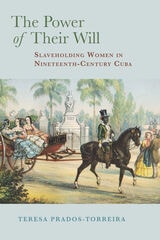
The Power of Their Will
Slaveholding Women in Nineteenth-Century CubaTeresa Prados-Torreira
University of Alabama Press, 2021
CHOICE OUTSTANDING ACADEMIC TITLE, 2022
“This fascinating book explores the unique circumstances of white slaveholding women in 19th-century Cuba and the enslaved peoples they controlled . . .This is a must read for scholars of the Caribbean and the African diaspora. Essential.” —CHOICE
In the early nineteenth century, while abolitionism was rising and the slave trade was declining in the Atlantic world, Spain used this opportunity to massively expand plantation slavery in Cuba. Between 1501 and 1866, more than 778,000 Africans were torn from their homelands and brought to work for the Cuban slaveholding class.
An understudied aspect of Cuban slaveholding society is the role of the white Cuban slave mistress (amas). The Power of Their Will: Slaveholding Women in Nineteenth-Century Cuba illuminates the interaction of female slaveholders and the enslaved during this time. Teresa Prados-Torreira shows, despite the lack of political power in a highly patriarchal society, Cuban women as property owners were instrumental in supporting the long duration of slavery, whether by enforcing the disciplining of the enslaved in the domestic sphere or helping to create the illusion of slavery as a humane institution. Thousands of Creole slaveholding women relied on slaves to lead a comfortable life. Even the subsistence of many poor women depended on the income derived from the hiring out of their enslaved.
In this accessible cultural history, culled from government documents, fiction, newspaper articles, traveler’s accounts, women’s wills, and archival research, Prados-Torreira coalesces a valuable narrative out of the often paradoxical and conflicting stories of the human bonds between the female owner and the enslaved. Narrative chapters, enlivened by vignettes, describe the daily life of slave mistresses in the main cities of Havana and Santiago and other towns, workings of sugar mills and coffee plantations, how slaveholding women coping with slave rebellions and wartime during the Ten Years’ War, and how personal relationships could occasionally affect the balance of power.
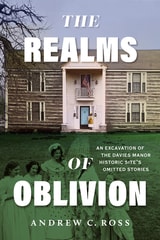
The Realms of Oblivion
An Excavation of the Davies Manor Historic Site's Omitted StoriesAndrew C. Ross
Vanderbilt University Press, 2024
Winner of the Tennessee History Book Award (Tennessee Historical Society and Tennessee Historical Commission), 2024
The Realms of Oblivion explores the complexities involved in reconciling competing versions of history, channeled through Davies Manor, a historic site near Memphis that once centered a wealthy slave-owning family’s sprawling cotton plantation. Interrogating the forces of memorialization that often go unquestioned in the stories we believe about ourselves and our communities, this book simultaneously tells an informative and engrossing bottom-up history—of the Davies family, of the Black families they enslaved and exploited across generations, and of Memphis and Shelby County—while challenging readers to consider just what upholds the survival of that history into the present day.
Written in an engaging and critical style, The Realms of Oblivion is grounded in a rich source base, ranging from nineteenth-century legal records to the personal papers of the Davies family to twentieth-century African American oral histories. Author Andrew C. Ross uses these sources to unearth the stark contrast between the version of Davies Manor’s history that was built out of nostalgia, and the version that records have proven to actually be true. As a result, Ross illuminates the ongoing need for a deep and honest reckoning with the history of the South and of the United States, on the part of both individuals and community institutions such as local historic sites and small museums.
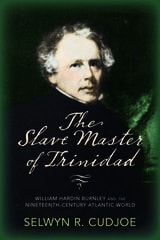
The Slave Master of Trinidad
William Hardin Burnley and the Nineteenth-Century Atlantic WorldSelwyn R. Cudjoe
University of Massachusetts Press, 2018
William Hardin Burnley (1780–1850) was the largest slave owner in Trinidad during the nineteenth century. Born in the United States to English parents, he settled on the island in 1802 and became one of its most influential citizens and a prominent agent of the British Empire. A central figure among elite and moneyed transnational slave owners, Burnley moved easily through the Atlantic world of the Caribbean, the United States, Great Britain, and Europe, and counted among his friends Alexis de Tocqueville, British politician Joseph Hume, and prime minister William Gladstone.
In this first full-length biography of Burnley, Selwyn R. Cudjoe chronicles the life of Trinidad's “founding father” and sketches the social and cultural milieu in which he lived. Reexamining the decades of transition from slavery to freedom through the lens of Burnley's life, The Slave Master of Trinidad demonstrates that the legacies of slavery persisted in the new post-emancipation society.
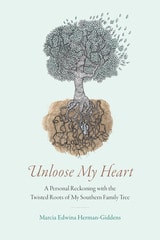
Unloose My Heart
A Personal Reckoning with the Twisted Roots of My Southern Family TreeMarcia Edwina Herman-Giddens
University of Alabama Press, 2023
A deeply personal memoir that unearths a family history of racism, slaveholding, and trauma as well as love and sparks of delight.
Marcia Herman’s family moved to Birmingham in 1946, when she was five years old, and settled in the steel-making city dense with smog and a rigid apartheid system. Marcia, a shy only child, struggled to fit in and understand this world, shadowed as it was by her mother’s proud antebellum heritage. In 1966, weary of Alabama’s toxic culture, Marcia and her young family left Birmingham and built a life in North Carolina.
Later in life, Herman-Giddens resumed a search to find out what she did not know about her family history. Unloose My Heart interweaves the story of her youth and coming of age in Birmingham during the Civil Rights Movement together with this quest to understand exactly who and what her maternal ancestors were and her obligations as a white woman within a broader sense of American family.
More than a memoir set against the backdrop of Jim Crow and the civil rights struggle, this is the work of a woman of conscience writing in the twenty-first century. Haunted by the past, Unloose My Heart is a journey of exploration and discovery, full of angst, sorrow, and yearning. Unearthing her forebears’ centuries-long embrace of plantation slavery, Herman-Giddens dug deeply to parse the arrogance and cruelty necessary to be a slaveholder and the trauma and fear that ripple out in its wake. All this forced her to scrutinize the impact of this legacy in her life, as well as her debt to the enslaved people who suffered and were exploited at her ancestors’ hands. But she also discovers lost connections, new cousins and friends, unexpected joys, and, eventually, a measure of peace in the process. With heartbreak, moments of grace, and an enduring sense of love, Unloose My Heart shines a light in the darkness and provides a model for a heartfelt reckoning with American history.