Results by title
102 books match the query 'Teachers' and 12 start with c
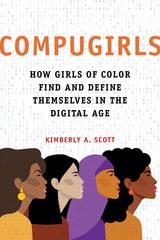
COMPUGIRLS
How Girls of Color Find and Define Themselves in the Digital AgeKimberly A. Scott
University of Illinois Press, 2021
Kimberly A. Scott explores this question and others as she details the National Science Foundation-funded enrichment project COMPUGIRLS. This groundbreaking initiative teaches tech skills to adolescent girls of color but, as importantly, offers a setting that emphasizes empowerment, community advancement, and self-discovery. Scott draws on her experience as an architect of COMPUGIRLS to detail the difficulties of translating participants' lives into a digital context while tracing how the program evolved. The dramatic stories of the participants show them blending newly developed technical and communication skills in ways designed to spark effective action and bring about important change.
A compelling merger of theory and storytelling, COMPUGIRLS provides a much-needed roadmap for understanding how girls of color can find and define their selves in today's digital age.
Considering Students, Teachers, and Writing Assessment, Vol 2
Emerging Theoretical and Pedagogical PracticeDiane Kelly-Riley
University Press of Colorado, 2024
Considering Students, Teachers, and Writing Assessment, Vol. 1
Technical and Political ContextsDiane Kelly-Riley
University Press of Colorado, 2024
Cops, Teachers, Counselors
Stories from the Front Lines of Public ServiceSteven Maynard-Moody and Michael Musheno
University of Michigan Press, 2003
Steven Maynard-Moody is Director of the Policy Research Institute and Professor of Public Administration at the University of Kansas.
Michael Musheno is Professor of Justice and Policy Studies at Lycoming College and Professor Emeritus of Justice Studies, Arizona State University.
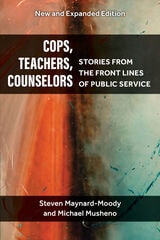
Cops, Teachers, Counselors
Stories from the Front Lines of Public ServiceSteven Maynard-Moody and Michael Musheno
University of Michigan Press, 2022
The new edition of Cops, Teachers, Counselors furthers the exploration of forces that shape the contours of frontline work. This line of inquiry is at the heart of street-level bureaucracy research, a field of study cutting across disciplines, including public administration, political science, social work, law and society, education, and criminal justice. The oft-cited 2003 edition pioneered a qualitative method of inquiry using workers’ own voices and storytelling about fairness in the delivery of services. This NSF-supported field research reveals the ways workers engage in moral judgments, more than implementing laws and policies, to account for their decisions and actions.
The new edition wraps an expanded framing around the original chapters, while maintaining a lively, approachable presentation style. It takes on a more enriched perspective of legality than the original, while retaining a focus on frontline work as a powerful source of cultural ordering. In addition to examining workers’ stories of encounters, attention is given to the agency of the governed during interactional moments, the power dynamics in play during both interpersonal and group encounters, and patterns of practice that converge across distinctive service domains. The original edition describes two narratives that shape frontline workers’ decisional judgments and the interplay between legality and morality: the state-agent and citizen-agent narratives. This edition adds the knowledge-agent narrative that stresses the importance of professional and field learning to decisional judgments.
The book examines routine encounters of cops, teachers, and counselors with diverse publics when questions of justice and fairness are at play. This new edition speaks to contemporary issues at a time when frontline workers gained broad recognition for their heroic contributions to communities during the Covid 19 pandemic, as well as sustained condemnation for their embodiment of the brutal expression of racialized state power in police actions. The authors conclude with a focus on the significance of place and trust in building social inclusion on the frontlines of public service.

Copyright Essentials for Librarians and Educators
American Library Association, 2000
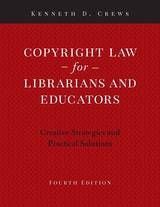
Copyright Law for Librarians and Educators
Creative Strategies and Practical SolutionsKenneth D. Crews
American Library Association, 2020
Copyright law never sleeps, making it imperative to keep abreast of the latest developments. Declared “an exemplary text that seals the standards for such books” (Managing Information), this newly revised and updated edition by respected copyright authority Crews offers timely insights and succinct guidance for LIS students, librarians, and educators alike. Readers will
- learn basic copyright definitions and key exceptions for education and library services;
- find information quickly with “key points” sidebars, legislative citations, and cross-references;
- get up to speed on fresh developments, such as how the recently signed Marrakesh Treaty expands access for people with disabilities and why the latest ruling in the Georgia State University case makes developing a fair use policy so important;
- understand the concept of fair use, with fresh interpretations of its many gray areas that will aid decision making;
- learn the current state of affairs regarding mass digitization, Creative Commons, classroom use and distance education, the Digital Millennium Copyright Act, and other important topics;
- receive guidance on setting up on a copyright service at a library, college, or university; and
- find many helpful checklists for navigating copyright in various situations.
This straightforward, easy-to-use guide provides the tools librarians and educators need to take control of their rights and responsibilities as copyright owners and users.
Copyright Law for Librarians and Educators
Creative Strategies and Practical SolutionsKenneth D. Crews
American Library Association, 2012
Copyright for Teachers and Librarians in the 21st Century
Rebecca P. Butler
American Library Association, 2011
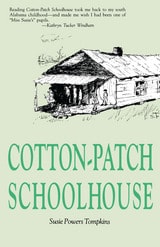
Cotton Patch Schoolhouse
Susie Powers Tompkins
University of Alabama Press, 1992
Step back into 1920s Alabama, where grit, laughter, and the red clay roads of the Black Belt shape one young woman’s unforgettable first year of teaching
Cotton-Patch Schoolhouse follows 18‑year‑old Susie Powers Tompkins as she takes on a one-room school with eight children, zero experience, and a Model T that’s always one mud puddle away from disaster. With warmth and wit, she discovers that the real curriculum is written not in textbooks—but in the faces, fears, and fierce hopes of her students.
In a world of cotton fields, nature walks, homemade art supplies, and potbellied stoves, Susie learns that teaching is as much about heart as it is about lessons. She navigates runaway love affairs, surprise pets (including an opinionated mouse), the hardships of rural poverty, and the extraordinary generosity of neighbors who have little but give much.
As contemporary readers grapple with educational inequities, rural depopulation, and renewed conversations about community, Cotton-Patch Schoolhouse feels strikingly fresh. It reminds us that creativity blooms under constraint, that relationships matter more than resources, and that small schools can make a big difference. Tompkins' memoir will delight lovers of Southern history, educators, memoir readers, rural studies enthusiasts, and anyone who enjoys heartfelt stories of resilience, community, and the transformative power of teaching
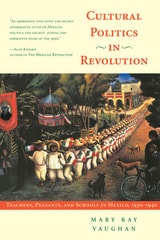
Cultural Politics in Revolution
Teachers, Peasants, and Schools in Mexico, 1930-1940Mary Kay Vaughan
University of Arizona Press, 1997
To show the significance of this facet of the Revolution, Mary Kay Vaughan analyzes the educational effort of the state during the 1930s, locating it within the broader sweep of Mexican history to illustrate how the government sought to nationalize and modernize rural society. Vaughan focuses on activities in rural schools, where central state policy makers, teachers, and people of the countryside came together to forge a national culture. She examines the cultural politics of schooling in four rural societies in the states of Sonora and Puebla that are representative of the peasant societies in revolutionary Mexico, and she shows how the state's program of socialist education became an arena for intense negotiations over power, culture, knowledge, rights, and gender practices. The real cultural revolution, Vaughan observes, lay not in the state's efforts at socialist education but in the dialogue between state and society that took place around this program. In the 1930s, rural communities carved out a space to preserve their local identities while the state succeeded in nurturing a multi-ethnic nationalism based on its promise of social justice and development.
Vaughan brings to her analysis a comparative understanding of peasant politics and educational history, extensive interviews, and a detailed examination of national, regional, and local archives to create an evocative and informative study of Mexican politics and society during modern Mexico's formative years. Cultural Politics in Revolution clearly shows that only by expanding the social arena in which culture was constructed and contested can we understand the Mexican Revolution's real achievements.

Curriculum Materials Collections and Centers
Legacies from the Past, Visions of the FutureRita Kohrman
Assoc of College & Research Libraries, 2012