Results by title
333 books match the query 'Television' and 24 start with c
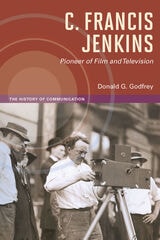
C. Francis Jenkins, Pioneer of Film and Television
Donald G. Godfrey
University of Illinois Press, 2014
This is the first biography of the important but long-forgotten American inventor Charles Francis Jenkins (1867-1934). Historian Donald G. Godfrey documents the life of Jenkins from his childhood in Indiana and early life in the West to his work as a prolific inventor whose productivity was cut short by an early death. Jenkins was an inventor who made a difference.
As one of America's greatest independent inventors, Jenkins's passion was to meet the needs of his day and the future. In 1895 he produced the first film projector able to show a motion picture on a large screen, coincidentally igniting the first film boycott among his Quaker viewers when the film he screened showed a woman's ankle. Jenkins produced the first American television pictures in 1923, and developed the only fully operating broadcast television station in Washington, D.C. transmitting to ham operators from coast to coast as well as programming for his local audience.
Godfrey's biography raises the profile of C. Francis Jenkins from his former place in the footnotes to his rightful position as a true pioneer of today's film and television. Along the way, it provides a window into the earliest days of both motion pictures and television as well as the now-vanished world of the independent inventor.
Camp TV
Trans Gender Queer Sitcom HistoryQuinlan Miller
Duke University Press, 2019

Changing Channels
Television and the Struggle for Power in RussiaEllen Mickiewicz
Duke University Press, 1999
Revised and expanded
During the tumultuous 1990s, as Russia struggled to shed the trappings of the Soviet empire, television viewing emerged as an enormous influence on Russian life. The number of viewers who routinely watch the nightly news in Russia matches the number of Americans who tune in to the Super Bowl, thus making TV coverage the prized asset for which political leaders intensely—and sometimes violently—compete. In this revised and expanded edition of Changing Channels, Ellen Mickiewicz provides many fascinating insights, describing the knowing ways in which ordinary Russians watch the news, skeptically analyze information, and develop strategies for dealing with news bias.
Covering the period from the state-controlled television broadcasts at the end of the Soviet Union through the attempted coup against Gorbachev, the war in Chechnya, the presidential election of 1996, and the economic collapse of 1998, Mickiewicz draws on firsthand research, public opinion surveys, and many interviews with key players, including Gorbachev himself. By examining the role that television has played in the struggle to create political pluralism in Russia, she reveals how this struggle is both helped and hindered by the barrage of information, advertisements, and media-created personalities that populate the airwaves. Perhaps most significantly, she shows how television has emerged as the sole emblem of legitimate authority and has provided a rare and much-needed connection from one area of this huge, crisis-laden country to the next.
This new edition of Changing Channels will be valued by those interested in Russian studies, politics, media and communications, and cultural studies, as well as general readers who desire an up-to-date view of crucial developments in Russia at the end of the twentieth century.
Changing Minds or Changing Channels?
Partisan News in an Age of ChoiceKevin Arceneaux and Martin Johnson
University of Chicago Press, 2013
Chaucer on Screen
Absence, Presence, and Adapting the Canterbury TalesEdited by Kathleen Coyne Kelly and Tison Pugh
The Ohio State University Press, 2016
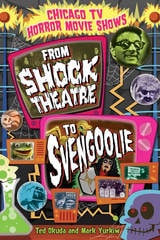
Chicago TV Horror Movie Shows
From Shock Theatre to SvengoolieTed Okuda and Mark Yurkiw
Southern Illinois University Press, 2007
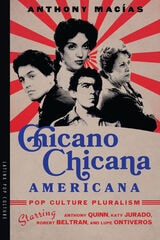
Chicano-Chicana Americana
Pop Culture Pluralism Starring Anthony Quinn, Katy Jurado, Robert Beltran, and Lupe OntiverosAnthony Macías
University of Arizona Press, 2023
Each biographical chapter analyzes an underappreciated actor, revealing their artistic contributions to U.S. common culture. Their long-shot careers tell a tale of players taking action with agency and fighting for screen time and equal opportunity despite disadvantages and differential treatment in Hollywood. These dynamic and complex individuals altered cinematic representations—and audience expectations—by surpassing stereotypes.
The book explores American national character by showing how ethnic Mexicans attained social and cultural status through fair, open competition without a radical realignment of political or economic structures. Their creative achievements demanded dignity and earned respect. Anthony Macías argues that these performances demonstrated a pop culture pluralism that subtly changed mainstream America, transforming it from the mythological past of the Wild West to the speculative future of science fiction.
Cinema Futures
Cain, Abel or Cable?: The Screen Arts in the Digital AgeEdited by Kay Hoffmann
Amsterdam University Press, 1998
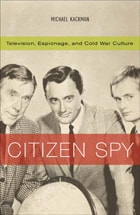
Citizen Spy
Television, Espionage, and Cold War CultureMichael Kackman
University of Minnesota Press, 2005
During the first decade of the Cold War, Hollywood developed such shows as I Led 3 Lives and Behind Closed Doors with the approval of federal intelligence agencies, even basing episodes on actual case files. These “documentary melodramas” were, Kackman argues, vehicles for the fledgling television industry to proclaim its loyalty to the government, and they came stocked with appeals to patriotism and anti-Communist vigilance.
As the rigid cultural logic of the Red Scare began to collapse, spy shows became more playful, self-referential, and even critical of the ideals professed in their own scripts. From parodies such as The Man from U.N.C.L.E. and Get Smart to the more complicated global and political situations of I Spy and Mission: Impossible, Kackman situates espionage television within the tumultuous culture of the civil rights and women’s movements and the war in Vietnam. Yet, even as spy shows introduced African-American and female characters, they continued to reinforce racial and sexual stereotypes.
Bringing these concerns to the political and cultural landscape of the twenty-first century, Kackman asserts that the roles of race and gender in national identity have become acutely contentious. Increasingly exclusive definitions of legitimate citizenship, heroism, and dissent have been evident through popular accounts of the Iraq war. Moving beyond a snapshot of television history, Citizen Spy provides a contemporary lens to analyze the nature—and implications—of American nationalism in practice.
Michael Kackman is assistant professor in Radio-Television-Film at the University of Texas, Austin.
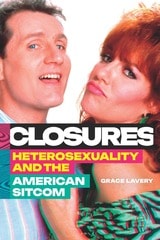
Closures
Heterosexuality and the American SitcomGrace Lavery
Duke University Press, 2024
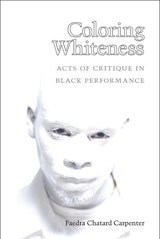
Coloring Whiteness
Acts of Critique in Black PerformanceFaedra Chatard Carpenter
University of Michigan Press, 2014

Columbo
A Rhetoric of Inquiry with Resistant RespondersChristyne Berzsenyi
Intellect Books, 2019
An analysis of the hit television series Columbo and the investigative methods of its eponymous main character.
In the iconic detective show, which aired from 1968 to 2003, Lieutenant Columbo was known for his Socratic method of rhetorical inquiry. Feigning ignorance and employing a barrage of questions about minute details, the detective enacts a persona of “antipotency,” or counter authoritativeness, to affect the villains' underestimation of his attention to inconsistencies, abductive reasoning, and rhetorical efficacy. In his predominantly dialogue-based investigations, Columbo exhausts his suspects by asking a battery of questions concerning all minor details of the case—an aggravating, tedious provocation for the killer trying to maintain innocence.
In this engaging interdisciplinary study, Christyne Berzsenyi explores the character and his influences, dissects his methods of investigation, and assesses the show’s enduring legacy in academia and popular culture. While critical and theoretical, the text is also accessible to interdisciplinary readers, practical in application, and amusing for Columbo buffs.
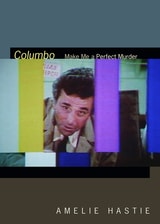
Columbo
Make Me a Perfect MurderAmelie Hastie
Duke University Press, 2024
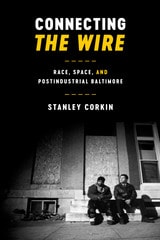
Connecting The Wire
Race, Space, and Postindustrial BaltimoreBy Stanley Corkin
University of Texas Press, 2017
Critically acclaimed as one of the best television shows ever produced, the HBO series The Wire (2002–2008) is a landmark event in television history, offering a raw and dramatically compelling vision of the teeming drug trade and the vitality of life in the abandoned spaces of the postindustrial United States. With a sprawling narrative that dramatizes the intersections of race, urban history, and the neoliberal moment, The Wire offers an intricate critique of a society riven by racism and inequality.
In Connecting The Wire, Stanley Corkin presents the first comprehensive, season-by-season analysis of the entire series. Focusing on the show’s depictions of the built environment of the city of Baltimore and the geographic dimensions of race and class, he analyzes how The Wire’s creator and showrunner, David Simon, uses the show to develop a social vision of its historical moment, as well as a device for critiquing many social “givens.” In The Wire’s gritty portrayals of drug dealers, cops, longshoremen, school officials and students, and members of the judicial system, Corkin maps a web of relationships and forces that define urban social life, and the lives of the urban underclass in particular, in the early twenty-first century. He makes a compelling case that, with its embedded history of race and race relations in the United States, The Wire is perhaps the most sustained and articulate exploration of urban life in contemporary popular culture.
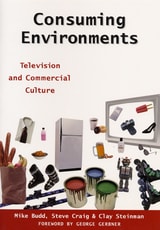
Consuming Environments
Television and Commercial CultureMichael Budd
Rutgers University Press, 1999
Whether we love it, hate it, or use it just to pass the time, most adults in the United States are watching more television than ever, up to four hours a day by some estimates. Our devotion to commercial television gives it unprecedented power in our lives.
Advertisers and television executives want us to spend as much time as we can in front of our sets, for it is access to our brains that they buy and sell. Yet the most important effect of television may be one that no one intends-accelerated destruction of the natural environment.
Consuming Environments explores how, with its portrayals of a world of simulated abundance, television has nurtured a culture of consumerism and overconsumption. The average person in the U.S. consumes more than twice the grain and ten times the oil of a citizen of Brazil or Indonesia. And people in less industrialized countries suffer while their resources are commandeered to support comfortable lifestyles in richer nations.
Using detailed examples illustrated with images from actual commercials, news broadcasts, and television shows, the authors demonstrate how ads and programs are put together in complex ways to manipulate viewers, and they offer specific ways to counteract the effects of TV and overconsumption's assault on the environment.
Consuming Environments
Television and Commercial CultureCraig, Steve
Rutgers University Press, 1999
Advertisers and television executives want us to spend as much time as we can in front of our sets, for it is access to our brains that they buy and sell. Yet the most important effect of television may be one that no one intends--accelerated destruction of the natural environment.
Consuming Environments explores how, with its portrayals of a world of simulated abundance, television has nurtured a culture of consumerism and overconsumption. The average person in the U.S. consumes more than twice the grain and ten times the oil of a citizen in Brazil or Indonesia. And people in less industrialized countries suffer while their resources are commandeered to support comfortable lifestyles in richer nations. Using detailed examples illustrated with images from actual commercials, news broadcasts, and television shows, the authors demonstrate how ads and programs are put together in complex ways to manipulate viewers, and they offer specific ways to counteract the effects of TV and overconsumption's assault on the environment.
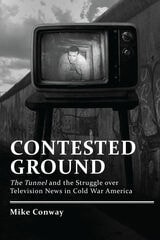
Contested Ground
The Tunnel and the Struggle over Television News in Cold War AmericaMike Conway
University of Massachusetts Press, 2019
It was not just The Tunnel's subject matter that sparked controversy, but the medium itself. The surprisingly fast ascendance of television news as the country's top choice for information threatened the self-defined supremacy of print journalism and the de facto cooperation of government officials and reporters on Cold War issues. In Contested Ground, Mike Conway argues that the production and reception of television news and documentaries during this period reveals a major upheaval in American news communications.
Cracked Coverage
Television News, The Anti-Cocaine Crusade, and the Reagan LegacyJimmie L. Reeves and Richard Campbell
Duke University Press, 1994
The authors persuasively argue, for example, that powder cocaine in the early Reagan years was understood and treated very differently on television and by the state than was crack cocaine, which was discovered by the news media in late 1985. In their critical analysis of 270 news stories broadcast between 1981 and 1988, Reeves and Campbell demonstrate a disturbing disparity between the earlier presentation of the middle- and upper-class "white" drug offender, for whom therapeutic recovery was an available option, and the subsequent news treatment of the inner-city "black" drug delinquent, often described as beyond rehabilitation and subject only to intensified strategies of law and order. Enlivened by provocative discussions of Nancy Reagan’s antidrug activism, the dramatic death of basketball star Len Bias, and the myth of the crack baby, the book argues that Reagan’s war on drugs was at heart a political spectacle that advanced the reactionary agenda of the New and Religious Right—an agenda that dismissed social problems grounded in economic devastation as individual moral problems that could simply be remedied by just saying "no."
Wide ranging and authoritative, Cracked Coverage: Television News, the Anti-Cocaine Crusade, and the Reagan Legacy is a truly interdisciplinary work that will attract readers across the humanities and social sciences in addition to students, scholars, journalists, and policy makers interested in the media and drug-related issues.
Cracked Coverage
Television News, The Anti-Cocaine Crusade, and the Reagan LegacyJimmie L. Reeves and Richard Campbell
Duke University Press, 0
The authors persuasively argue, for example, that powder cocaine in the early Reagan years was understood and treated very differently on television and by the state than was crack cocaine, which was discovered by the news media in late 1985. In their critical analysis of 270 news stories broadcast between 1981 and 1988, Reeves and Campbell demonstrate a disturbing disparity between the earlier presentation of the middle- and upper-class "white" drug offender, for whom therapeutic recovery was an available option, and the subsequent news treatment of the inner-city "black" drug delinquent, often described as beyond rehabilitation and subject only to intensified strategies of law and order. Enlivened by provocative discussions of Nancy Reagan’s antidrug activism, the dramatic death of basketball star Len Bias, and the myth of the crack baby, the book argues that Reagan’s war on drugs was at heart a political spectacle that advanced the reactionary agenda of the New and Religious Right—an agenda that dismissed social problems grounded in economic devastation as individual moral problems that could simply be remedied by just saying "no."
Wide ranging and authoritative, Cracked Coverage: Television News, the Anti-Cocaine Crusade, and the Reagan Legacy is a truly interdisciplinary work that will attract readers across the humanities and social sciences in addition to students, scholars, journalists, and policy makers interested in the media and drug-related issues.
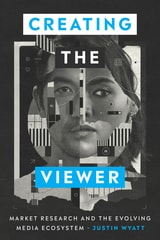
Creating the Viewer
Market Research and the Evolving Media EcosystemJustin Wyatt
University of Texas Press, 2024
A study of the largely hidden world of primary media market research and the different methods used to understand how the viewer is pictured in the industry.
The first book on the intersection between market research and media, Creating the Viewer takes a critical look at media companies’ studies of television viewers, the assumptions behind these studies, and the images of the viewer that are constructed through them. Justin Wyatt examines various types of market research, including talent testing, pilot testing, series maintenance, brand studies, and new show “ideation,” providing examples from a range of programming including news, sitcoms, reality shows, and dramas. He looks at brand studies for networks such as E!, and examines how the brands of individuals such as showrunner Ryan Murphy can be tested. Both an analytical and practical work, the book includes sample questionnaires and paths for study moderators and research analysts to follow. Drawn from over fifteen years of experience in research departments at various media companies, Creating the Viewer looks toward the future of media viewership, discussing how the concept of the viewer has changed in the age of streaming, how services such as Netflix view market research, and how viewers themselves can shift the industry through their media choices, behaviors, and activities.
Creativity, Culture and Commerce
Producing Australian Children’s Television with Public ValueAnna Potter
Intellect Books, 2015
Cult Television
Sara Gwenllian-Jones
University of Minnesota Press, 2004
Exploring the definition and appeal of cult TV from Emma Peel to Buffy
A television series is tagged with the label “cult” by the media, advertisers, and network executives when it is considered edgy or offbeat, when it appeals to nostalgia, or when it is considered emblematic of a particular subculture. By these criteria, almost any series could be described as cult. Yet certain programs exert an uncanny power over their fans, encouraging them to immerse themselves within a fictional world.
In Cult Television leading scholars examine such shows as The X-Files; The Avengers; Doctor Who, Babylon Five; Star Trek; Xena, Warrior Princess; and Buffy the Vampire Slayer to determine the defining characteristics of cult television and map the contours of this phenomenon within the larger scope of popular culture. Contributors: Karen Backstein; David A. Black, Seton Hall U; Mary Hammond, Open U; Nathan Hunt, U of Nottingham; Mark Jancovich; Petra Kuppers, Bryant College; Philippe Le Guern, U of Angers, France; Alan McKee; Toby Miller, New York U; Jeffrey Sconce, Northwestern U; Eva Vieth.
Cultural Citizenship
Cosmopolitanism, Consumerism, and Television in a Neoliberal AgeToby Miller
Temple University Press, 2006
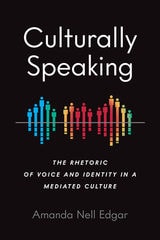
Culturally Speaking
The Rhetoric of Voice and Identity in a Mediated CultureAmanda Nell Edgar
The Ohio State University Press, 2019
Recent pieces by NPR, the BBC, and Forbes have called attention to the power of voice—positing that “your voice is the secret to getting hired” and that “voice can accelerate or hold back a career.” While it has become clearer that such things as pitch and intonation can be tied to assumptions about one’s gender, race/ethnicity, and class, studying voice as a socially constructed artifact carries with it unique challenges. In response, Culturally Speaking: The Rhetoric of Voice and Identity in a Mediated Culture presents an innovative approach to studying the spoken voice in media, showing how racial and gendered oppression bubble beneath the surface of American culture’s most recognized speaking voices, spreading invisible messages about which kinds of vocal identities are privileged and which kinds should be silenced.
Through her analysis of prominent voices in American culture—including Morgan Freeman, Tina Fey, Barack Obama, Adele, Dave Chappelle, Richard Pryor, and George Lopez—Amanda Nell Edgar argues that voices carry a residue of the particular cultural environments in which they are formed, and that these environments can be traced and analyzed to add a sonic dimension to our understanding of race and gender as rhetorically situated identities—pushing back against the often-unnoticed systems of sound-based discrimination.