Results by title
248 books match the query 'Theology' and 11 start with c
Cajetan on Sacred Doctrine
Hieromonk Gregory Hrynkiw
Catholic University of America Press, 2020
Christian Instruction; Admonition and Grace; The Christian Combat; Faith, Hope and Charity
Saint Augustine
Catholic University of America Press, 1950
Christianity and Process Thought
Spirituality for a Changing WorldJoseph A. Bracken
Templeton Press, 2006
“If someone were to ask,‘Where is God?’ how would you respond?”
Joseph A. Bracken, SJ, uses this question as a springboard to introduce the process-relational metaphysics of Alfred North Whitehead and other process theologians as he tries to reconcile the sometimes-conflicting views of traditional Christian doctrines and the modern scientific world. To present this material in an accessible manner to a wider audience, Bracken reworks Whitehead’s “model” of the God-world relationship, showing that God is involved in an ongoing, ever-changing relationship with humans and other . He also discusses the work of other contemporary theologians to help Christians come to terms with their role in our multi-dimensional pluralistic society.
Bracken examines divine and human creativity, the collective power of good and evil, divine providence and human freedom, prayer, altruism, and the basic question, “What is truth?” He shows how Whitehead&rsqio;s process thought approach to these issues can in fact "harmonize" traditional Christian beliefs and contemporary culture, benefiting both faith and reason.
Understanding the God-world relationship subtly influences our attitude toward ourselves, toward other human beings, and indeed toward all of God’s creatures, says Bracken. His revision of Whitehead's metaphysical vision in terms of a cosmic community shows how modern views of the world and God can be accepted and kept in balance with the traditional biblical views found in the Christian faith and how this balance can help Christians make better choices in a world shaped both by contemporary natural science and by traditional Christian spirituality.
“If we truly believe that in God we live and move and have our being and that as a result we share with the divine persons in a deeply communitarian way of life together with all of God’s creatures, we may be more readily inclined to make the periodic sacrifice of personal self-interest so as to pursue the higher good of sustained life in community. In the end, it is simply a matter of seeing the ‘bigger picture,’ realizing what life is ultimately all about.”
Cognitive Science, Religion, and Theology
From Human Minds to Divine MindsJustin L. Barrett
Templeton Press, 2011

Companion Spirits
More-Than-Secular Journeys in More-Than-Human WorldsMayanthi L. Fernando
Duke University Press, 2027
Confronting Vulnerability
The Body and the Divine in Rabbinic EthicsJonathan Wyn Schofer
University of Chicago Press, 2010
While imparting their ethical lessons, rabbinic texts often employ vivid images of death, aging, hunger, defecation, persecution, and drought. In Confronting Vulnerability, Jonathan Wyn Schofer carefully examines these texts to find out why their creators thought that human vulnerability was such a crucial tool for instructing students in the development of exemplary behavior.
These rabbinic texts uphold virtues such as wisdom and compassion, propound ideal ways of responding to others in need, and describe the details of etiquette. Schofer demonstrates that these pedagogical goals were achieved through reminders that one’s time on earth is limited and that God is the ultimate master of the world. Consciousness of death and of divine accounting guide students to live better lives in the present. Schofer’s analysis teaches us much about rabbinic pedagogy in late antiquity and also provides inspiration for students of contemporary ethics. Despite their cultural distance, these rabbinic texts challenge us to develop theories and practices that properly address our frailties rather than denying them.
Contemporary Catholic Approaches to the People, State, and Land of Israel
Gavin D'Costa
Catholic University of America Press, 2021
Continuing the Quest for Morality Truly Christian, Truly African
The Achievement of Paulinus Odozor, C,S,Sp.Maurice Ashley Agbaw-Ebai
St. Augustine's Press, 2025
Paulinus Ikechukwu Odozor is among the preeminent moral theologians of our time. He has reached the pinnacle of his profession after serving more than two decades as a professor of theology at the University of Notre Dame. Among African theologians, he stands at the forefront of the generation that came of age in the early postconciliar period. Fr. Odozor’s work in Morality Truly Christian, Truly African: Foundational, Methodological, and Theological Considerations (2014) has become a classic in the field of Catholic moral theology. His contribution to reuniting moral theology to dogmatics is a key element to processing the contention in theological scholarship in the wake of Vatican II and the shifting of the socio-economic global landscape. Understanding the influence of theologians such as Richard McCormick, Charles Curran, and Edward Schillebeeckx, Fr. Odozor, he is unable to ignore the work of John Paul II, Joseph Ratzinger, Joseph Boyle, and John Cavadini as essential to the age of renewal in the field of moral theology.
The essays in this volume highlight the fruits of Fr. Odozor's ability to move between the spheres of moral and dogmatic theology, and his particular treatment of the nature of God, ecclesiology, and interreligious dialogue. He is a theologian who is rightly positioned within a postconciliar moral theological context, and his thought is critical as we enter a new era in the Church that no longer takes Vatican II as its reference point––that is, the Church is reorienting toward the future, in continuity but seeking to discern what lies ahead. Claiming postconciliar theologians shared basic agreement regarding the mission of the Church, within the foggy contention among pre- and postconciliar moral theologians Odozor sees a legitimate albeit complex connection. Fr. Odozor's appreciation for Humanae Vitae and Veritatis Splendor is clear, and his fidelity to seeing issues like contraception as a "God question" and representing the concerns and voices of Africa make him an indispensable leader of the Church in this field of study. His mission to "bring Africa to the University of Notre Dame, and Notre Dame to Africa," has been more successful than former dean John Cavadini expected: African theology is no longer separated from the wider world thanks to this partnership and Fr. Odozor's acumen to establish moral theology's stature in the wider field.
Contributions include: Maurice Agbaw-Ebai, "Ratzinger's Theological Anthropology in Conversation with Aspects of Paulinus Odozor's Understanding of the Human Person in Christ"; Raymond Olusesan Aina, MSP, "Paulinus Ikechukwu Odozor’s Unfinished Quest for a Truly African and Christian Moral Theology of Marriage"; Anthony Akinwale, OP, "Politics, the Common Good and Holiness"; Melanie Susan Barrett, "Aquinas, Balthasar, and African Tradition: Christian Conversion of Individuals and Cultures"; Jana M. Bennett, "The Importance of Anamnesis for Moral Life"; John Berkman, "Abominations and Absolute Prohibitions: Killing the Innocent According to Anscombe and Odozor"; John C. Cavadini, "African Theology and a Classical Theory of Inculturation"; David A. Clairmont, "Catholic Comparative Theological Ethics: Elements of an Approach to Tradition, Ethics, and Dialogue (with Odozor and Clooney, in the Church)"; David Elliot, "The Legacy of the African Church Fathers to St. Thomas Aquinas’ Account of Virtue Growth and Spiritual Practice"; Dennis Kasule, "Facing Up to the Challenge of Moral Formation in African Catechumenates Today: Drawing on African Catechumenates of the Past and Paulinus Odozor’s Seven Guidelines for Inculteration"; Matthew Levering, "Natural Law in Bénézet Bujo, Paulinus Odozor, and Stephen L. Brock"; Tegha Afuhwi Nji, "Paulinus Odozor and Joseph Ratzinger on the Question of Moral Objectivity: A Morality Truly African and Truly Christian?"; Emmanuel Ojeifo, "African and Christian: Black Sanctity and the Future of African Catholicism"; Bede Ukwuije, C.S.Sp., "Trinitarian Conception of God as Basis for an African Christian Ethics"; Paulinus Odozor, C.S.Sp., "Continuing the Quest for a Morality Truly Christian and African."
Corporeal Words
Mikhail Bakhtins Theology DiscourseAlexandar Mihailovic
Northwestern University Press, 1997
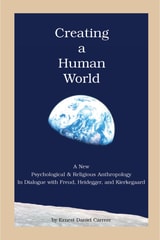
Creating a Human World
A New Psychological and Religious Anthropology In Dialogue with Freud, Heidegger, and KierkegaardErnest Daniel Carrere
University of Scranton Press, 2006
Carrere elucidates the paradoxical spiritual truth that salvation lies not in an escape from humanity, but in embracing it. An interdisciplinary tour de force, this book will appeal to anyone interested in philosophy, psychology, religion, or cultural anthropology.
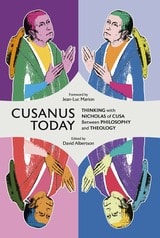
Cusanus Today
Thinking with Nicholas of Cusa Between Philosophy and TheologyDavid C. Albertson
Catholic University of America Press, 2024