Results by title
124 books match the query 'Twenty - First Century' and 10 start with c
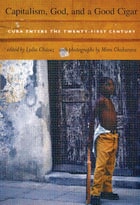
Capitalism, God, and a Good Cigar
Cuba Enters the Twenty-first CenturyLydia Chávez, ed.
Duke University Press, 2005
Based on reporting by journalists, writers, and documentary filmmakers since 2001, each of the essays collected here covers a particular dimension of contemporary Cuban society, revealing what it is like to have lived, for more than a decade, suspended between communism and capitalism. There are pieces on hip hop musicians, fiction writing and censorship, the state of ballet and the performing arts, and the role of computers and the Internet. Other essays address the shrinking yet still sizeable numbers of true believers in the promise of socialist revolution, the legendary cigar industry, the changing state of religion, the significance of the recent influx of money and people from Spain, and the tensions between recent Cuban emigrants and previous generations of exiles. Including more than seventy striking documentary photographs of Cuba’s people, countryside, and city streets, this richly illustrated collection offers keen, even-handed insights into the abundant ironies of life in Cuba today.
Contributors. Juliana Barbassa, Ana Campoy, Mimi Chakarova, Lydia Chávez, John Coté, Julian Foley, Angel González, Megan Lardner, Ezequiel Minaya, Daniela Mohor, Archana Pyati, Alicia Roca, Olga R. Rodríguez, Bret Sigler, Annelise Wunderlich
Caring for Immigrants in the Twenty-First Century
Local Hospitals, Global HealthSusan E. Bell
Rutgers University Press, 2027
In Permeable Hospitals, medical sociologist Susan E. Bell makes an original contribution to understanding a complex and urgent global health issue – caring for an increasingly diverse and mobile patient population. Bell identifies the twenty-first-century hospital as the center of a complex network of social and health care interactions among patients and medical communities that are distinguished by transnational movement. She examines how culture and language are negotiated during face-to-face interactions in outpatient visits at one Maine hospital and shows how caring is done for refugee and immigrant patients. To capture this process, Bell advances a new theoretical framework, that twenty-first-century hospitals are nodes in transnational social networks. During appointments, temporary combinations of people, objects, practices, and ideas assemble at the hospital and disperse at the appointment’s end. Because the interactions take place in a teaching hospital, the thinking that underlies diagnosis and treatment is made explicit and evaluated in backstage teaching areas where residents report about their patients to senior physicians. Bell's landmark book is based on a qualitative study that included nine months at the hospital observing interactions among adult New Mainer patients and clinicians, interpreters, and staff.
Central American Migrations in the Twenty-First Century
Edited by Mauricio Espinoza, Miroslava Arely Rosales Vásquez, and Ignacio Sarmiento
University of Arizona Press, 2023
Central American Migrations in the Twenty-First Century tackles head-on the way Central America has been portrayed as a region profoundly marked by the migration of its people. Through an intersectional approach, this volume demonstrates how the migration experience is complex and affected by gender, age, language, ethnicity, social class, migratory status, and other variables. Contributors carefully examine a broad range of topics, including forced migration, deportation and outsourcing, intraregional displacements, the role of social media, and the representations of human mobility in performance, film, and literature. The volume establishes a productive dialogue between humanities and social sciences scholars, and it paves the way for fruitful future discussions on the region’s complex migratory processes.
Contributors
Guillermo Acuña
Andrew Bentley
Fiore Bran-Aragón
Tiffanie Clark
Mauricio Espinoza
Hilary Goodfriend
Leda Carolina Lozier
Judith Martínez
Alicia V. Nuñez
Miroslava Arely Rosales Vásquez
Manuel Sánchez Cabrera
Ignacio Sarmiento
Gracia Silva
Carolina Simbaña González
María Victoria Véliz
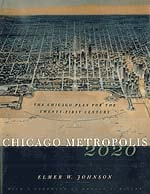
Chicago Metropolis 2020
The Chicago Plan for the Twenty-First CenturyElmer W. Johnson
University of Chicago Press, 2001
Nearly a century later, Chicago, like all cities, faces similar dilemmas: how to reconcile privatism with public control, growth with restraint, wealth with poverty, and beauty with industry. And as it did a hundred years ago with the Burnham Plan, the Commercial Club has sponsored a wholly contemporary plan for the city's future development. Written by Elmer W. Johnson, a lawyer and civic leader, Chicago Metropolis 2020 is a guide for those in all spheres of influence who are working to make cities economically and socially vigorous while addressing the greatest problems modern metropolises face. While Burnham's plan primarily addressed architecture and spatial planning, Chicago Metropolis 2020 addresses all facets of urban life, from public education to suburban sprawl, from transportation to social and economic segregation, with the expressed goal of continuing Chicago's tradition of renewal and foresight.
Chicago Metropolis 2020 is an ambitious and necessary plan for a major city at the turn of the century. In scope and execution, it aims at nothing less than economic vibrancy, quality of life, and equity of opportunity.
Composition in the Twenty-First Century
Crisis and ChangeEdited by Lynn Z. Bloom, Donald A. Daiker, and Edward M. White
Southern Illinois University Press, 1997
Despite its pervasiveness and its significance, composition has an unstable status within the curriculum. Writing programs and writing faculty are besieged by academic, political, and financial concerns that have not been well understood or addressed.
At many institutions, composition functions paradoxically as both the gateway to academic success and as the gatekeeper, reducing access to academic work and opportunity for those with limited facility in English. Although writing programs are expected to provide services that range from instruction in correct grammar to assisting—or resisting—political correctness, expanding programs and shrinking faculty get caught in the crossfire. The bottom line becomes the firing line as forces outside the classroom determine funding and seek to define what composition should do.
In search of that definition, the contributors ask and answer a series of specific and salient questions: What implications—intellectual, political, and institutional—will forces outside the classroom have on the quality and delivery of composition in the twenty-first century? How will faculty and administrators identify and address these issues? What policies and practices ought we propose for the century to come?
This book features sixteen position papers by distinguished scholars and researchers in composition and rhetoric; most of the papers are followed by invited responses by other notable compositionists. In all, twenty-five contributors approach composition from a wide variety of contemporary perspectives: rhetorical, historical, social, cultural, political, intellectual, economic, structural, administrative, and developmental. They propose solutions applicable to pedagogy, research, graduate training of composition teachers, academic administration, and public and social policy. In a very real sense, then, this is the only book to offer a map to the future of composition.
Conflict Resolution in the Twenty-first Century
Principles, Methods, and ApproachesJacob Bercovitch and Richard Jackson
University of Michigan Press, 2009
Conflict Resolution in the Twenty-first Centuryis not only an essential introduction for students and scholars, it is a must-have guide for the men and women entrusted with creating stability and security in our changing world.
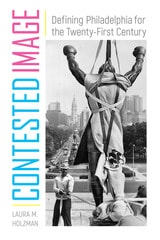
Contested Image
Defining Philadelphia for the Twenty-First CenturyLaura M. Holzman
Temple University Press, 2019
Thomas Eakins’ 1875 painting, The Gross Clinic, the Rocky Statue, andthe Barnes Foundation are all iconic in Philadelphia for different reasons. But around the year 2000, this painting, this sculpture, and this entire art collection, respectively, generated extended—and heated—controversies about the “appropriate” location for each item. Contested Image revisits the debates that surrounded these works of visual culture and how each item changed through acts of reception—through the ways that viewers looked at, talked about, and used these objects to define their city.
Laura Holzman investigates the negotiations and spirited debates that affected the city of Philadelphia’s identity and its public image. She considers how the region’s cultural resources reshaped the city’s reputation as well as delves into discussions about official efforts to boost local spirit. In tracking these “contested images,” Holzman illuminates the messy process of public envisioning of place and the ways in which public dialogue informs public meaning of both cities themselves and the objects of urban identity.
Creative Writing Pedagogies for the Twenty-First Century
Edited by Alexandria Peary and Tom C. Hunley
Southern Illinois University Press, 2015
Drawing primarily from the field of composition studies—a discipline rich with a wide range of established pedagogies—the contributors in this volume build on previous models to present fresh and inventive methods for the teaching of creative writing. Each chapter offers both a theoretical and a historical background for its respective pedagogical ideas, as well as practical applications for use in the classroom. This myriad of methods can be used either as a supplement to the customary workshop model or as stand-alone roadmaps to engage and reinvigorate the creative process for both students and teachers alike.
A fresh and inspiring collection of teaching methods, Creative Writing Pedagogies for the Twenty-First Century combines both conventional and cutting-edge techniques to expand the pedagogical possibilities in creative writing studies.
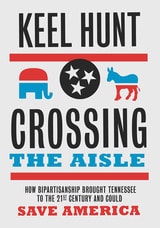
Crossing the Aisle
How Bipartisanship Brought Tennessee to the Twenty-First Century and Could Save AmericaKeel Hunt
Vanderbilt University Press, 2018
The Tennessee story, as the Pulitzer Prize–winning author Jon Meacham observes in his foreword to this book, offers striking examples of bipartisan cooperation on many policy fronts—and a mode of governing that provides lessons for America in this frustrating era of partisan stalemate.
For more on Crossing the Aisle and author Keel Hunt, visit KeelHunt.com.
Crossing the Aisle
How Bipartisanship Brought Tennessee to the Twenty-First Century and Could Save AmericaKeel Hunt
Vanderbilt University Press, 2018
The Tennessee story, as the Pulitzer Prize–winning author Jon Meacham observes in his foreword to this book, offers striking examples of bipartisan cooperation on many policy fronts—and a mode of governing that provides lessons for America in this frustrating era of partisan stalemate.
For more on Crossing the Aisle and author Keel Hunt, visit KeelHunt.com.