Results by title
73 books match the query 'Urban policy' and 10 start with c
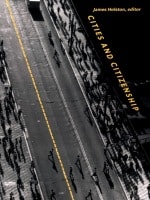
Cities and Citizenship
James Holston, ed.
Duke University Press, 1998
Just as relations between nations are changing in the current phase of global capitalism, so too are relations between nations and cities. Written by internationally prominent scholars, the essays in Cities and Citizenship propose that “place” remains fundamental to these changes and that cities are crucial places for the development of new alignments of local and global identity. Through case studies from Africa, Europe, Latin America, and North America, the volume shows how cities make manifest national and transnational realignments of citizenship and how they generate new possibilities for democratic politics that transform people as citizens. Previously published as a special issue of Public Culture that won the 1996 Best Single Issue of a Journal Award from the Professional/Scholarly Publishing Division of the Association of American Publishers, the collection showcases a photo essay by Cristiano Mascaro, as well as two new essays by James Holston and Thomas Bender.
Cities and Citizenship will interest students and scholars of anthropology, geography, sociology, planning, and urban studies, as well as globalization and political science.
Contributors. Arjun Appadurai, Etienne Balibar, Thomas Bender, Teresa P. R. Caldeira, Mamadou Diouf, Dilip Parameshwar Gaonkar, James Holston, Marco Jacquemet, Christopher Kamrath, Cristiano Mascaro, Saskia Sassen, Michael Watts, Michel Wieviorka
Cities in the Anthropocene
New Ecology and Urban PoliticsIhnji Jon
Pluto Press, 2021
Climate change is real, and extreme weather events are its physical manifestations. These extreme events affect how we live and work in cities, and subsequently the way we design, plan, and govern them. Taking action ‘for the environment’ is not only a moral imperative; instead, it is activated by our everyday experience in the city.
Based on the author’s site visits and interviews in Darwin (Australia), Tulsa (Oklahoma), Cleveland (Ohio), and Cape Town (South Africa), this book tells the story of how cities can lead a transformative pro-environment politics.
National governments often fail to make binding agreements that bring about radical actions for the environment. This book shows how cities, as local sites of mobilizing a collective, political agenda, can be frontiers for activating the kind of environmental politics that appreciates the role of ‘nature’ in the everyday functioning of our urban life.
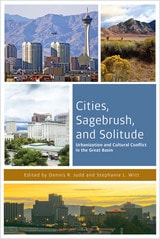
Cities, Sagebrush, and Solitude
Urbanization and Cultural Conflict in the Great BasinDennis R. Judd
University of Nevada Press, 2015
The blooming of cities in a fragile desert region poses a host of environmental challenges. The policies required to manage their impact, however, often collide with an entrenched political culture that has long resisted cooperative or governmental effort. The alchemical mixture of three ingredients--cities, aridity, and a libertarian political outlook--makes the Great Basin a compelling place to study. This book addresses a pressing question: are large cities ultimately sustainable in such a fragile environment?
Citizens of Fear
Urban Violence in Latin AmericaRotker, Susana
Rutgers University Press, 2004
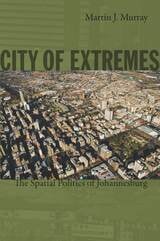
City of Extremes
The Spatial Politics of JohannesburgMartin J. Murray
Duke University Press, 2011
Combining insights from urban studies, cultural geography, and urban sociology with extensive research in South Africa, Murray reflects on the implications of Johannesburg’s dual character as a city of fortified enclaves that proudly displays the ostentatious symbols of global integration and the celebrated “enterprise culture” of neoliberal design, and as the “miasmal city” composed of residual, peripheral, and stigmatized zones characterized by signs of a new kind of marginality. He suggests that the “global cities” paradigm is inadequate to understanding the historical specificity of cities in the Global South, including the colonial mining town turned postcolonial megacity of Johannesburg.
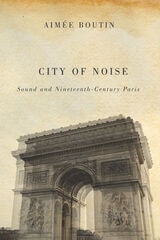
City of Noise
Sound and Nineteenth-Century ParisAimee Boutin
University of Illinois Press, 2015
Aimée Boutin tours the sonic space that orchestrated the different, often conflicting sound cultures that defined the street ambience of Paris. Mining accounts that range from guidebooks to verse, Boutin braids literary, cultural, and social history to reconstruct a lost auditory environment. Throughout, impressions of street noise shape writers' sense of place and perception of modern social relations. As Boutin shows, the din of the Cris contrasted economic abundance with the disparities of the capital, old and new traditions, and the vibrancy of street commerce with an increasing bourgeois demand for quiet. In time, peddlers who provided the soundtrack for Paris's narrow streets yielded to modernity, with its taciturn shopkeepers and wide-open boulevards, and the fading songs of the Cris became a dirge for the passing of old ways.
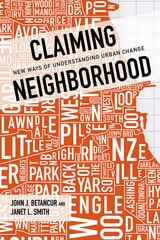
Claiming Neighborhood
New Ways of Understanding Urban ChangeJohn Betancur
University of Illinois Press, 2016
As the authors show, a diverse collection of people including urban policy experts, elected officials, investors, resident leaders, institutions, community-based organizations, and many others compete to control how neighborhoods change and are characterized. Betancur and Smith argue that neighborhoods have become sites of consumption and spaces to be consumed. Discourse is used to add and subtract value from them. The romanticized image of "the neighborhood" exaggerates or obscures race and class struggles while celebrating diversity and income mixing. Scholars and policy makers must reexamine what sustains this image and the power effects produced in order to explain and govern urban space more equitably.
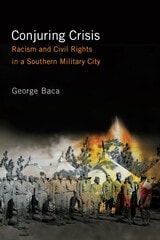
Conjuring Crisis
Racism and Civil Rights in a Southern Military CityBaca, George
Rutgers University Press, 2010
In the 1990s at Fort Bragg and Fayetteville, North Carolina, the city's dominant political coalition of white civic and business leaders had lost control of the city council. Amid accusations of racism in the police department, two white council members joined black colleagues in support of the NAACP's demand for an investigation. George Baca's ethnographic research reveals how residents and politicians transformed an ordinary conflict into a "crisis" that raised the specter of chaos and disaster. He explores new territory by focusing on the broader intersection of militarization, urban politics, and civil rights.
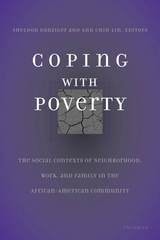
Coping With Poverty
The Social Contexts of Neighborhood, Work, and Family in the African-American CommunitySheldon Danziger and Ann Chih Lin, Editors
University of Michigan Press, 2000