Results by title
195 books match the query 'Utah' and 17 start with c
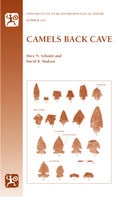
Camels Back Cave
Anthropological Paper 125Dave N. Schmitt
University of Utah Press, 2005
University of Utah Anthropological Paper No. 125
Camels Back Cave is in an isolated limestone ridge on the southern edge of the Great Salt Lake Desert. Recent archaeological investigations there have exposed a series of stratified deposits spanning the entire Holocene era (10,000 BP–present), deposits that show intermittent human occupations dating back through the past 7,600 years. Most human visits to the cave were brief—many likely representing overnight stays—and visitors did not dig pits or move sediment. As a result, fieldworkers were able to recognize and remove thirty-three stratigraphic horizons; radiocarbon analysis provided a pristine, high-resolution chronological sequence of human use. The brevity of visits and the undisturbed nature of the deposits also allowed researchers to identify portions of eight “living surfaces” where they exposed and mapped artifacts and ecofacts across contiguous blocks of units.
Aside from presenting model field techniques, this volume provides new and unique information on regional Holocene climates and biotic communities, cave taphonomy and small mammal hunting, as well as updated human chronologies for Great Basin occupation.
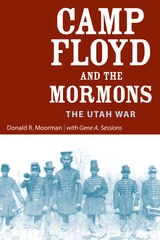
Camp Floyd and the Mormons
The Utah WarDonald R Moorman
University of Utah Press, 1992
Camp Floyd and the Mormons traces the history of the sojourn of “Johnston’s Army” in Utah Territory from the beginning of the Utah War in 1857 through the abandonment of Camp Floyd in Cedar Valley west of Utah Lake at the outbreak of the Civil War. The book describes the relationship between the invading army and the local Mormon population, gives an account of Indian affairs in Utah, and describes the activities of federal officials in Utah during that volatile period.
Completed posthumously by Gene Sessions, Moorman’s colleague at Weber State University, Camp Floyd and the Mormons is a comprehensive analysis of the history of frontier Utah as a decade of isolation ended and confrontations with the United States government began. Moorman had unprecedented access to materials in the LDS Church Archives on subjects ranging from the Mountain Meadows Massacre to the Mormon responses to the presence of the army in Utah from 1858 through 1861.
First published by the University of Utah Press in 1992, this reprint edition includes a new introduction by Gene Sessions in which he recounts Moorman’s research adventures during the 1960s "in the bowels of the old Church Administration Building, where Joseph Fielding Smith and A. Will Lund watched over the contents of the archives like wide-eyed mother hens."
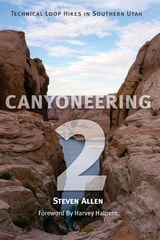
Canyoneering 2
Technical Loop Hikes in Southern UtahSteve Allen
University of Utah Press, 2002
Canyoneering 2: Technical Loop Hikes is a guide to seven, week-long backpack trips into some for the most unspoiled and least-visited areas in the Utah section of the Colorado Plateau. Every hike contains the four essentials of a great canyoneering route: spectacular canyons, intimate narrows, big views, and physical challenge. Although the routes are difficult, newcomers to the canyons will also find detailed information here that can be used to plan less demanding excursions. Hikes include Muddy Creek in the San Rafael Swell, Dirty Devil North, Dirty Devil South, Dark Canyon, White Canyon, Escalante East, and Escalante South. For experienced canyoneers.
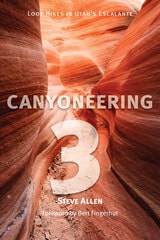
Canyoneering 3
Loop Hikes in Utah’s EscalanteSteve Allen
University of Utah Press, 1997
Utah’s Escalante country: a vast jigsaw puzzle of desert canyons, draws, defiles, gorges, slots, and washes demarcating upland expanses of slickrock, benches, and ridges, above which stand towers, pinnacles, and peaks. Inhabited for centuries by the ancient Puebloans and now managed primarily by various federal agencies, it is a land of stark contrasts and unforgettable beauty.
This guide features 37 major hikes designed to satisfy any canyoneer from novice to expert, including 20 in the new Grand Staircase-Escalante National Monument. All hikes are designed as loops, eliminating the need to backtrack or car shuttle for those inclined to do the full routes. Dayhikers can choose routes from an hour to all day, backpackers will find multi-day hikes, and those who prefer charting their own course will also profit from the information here.
Aside from the detailed route descriptions, Canyoneering 3 describes 14 road sections plus side roads to ensure time will not be lost finding a trailhead in this often confusing country. Also included are sections on geology, history, equipment, and technical canyoneering. Thoroughly researched, this is now the most comprehensive guide to the wonderland of the Escalante.
Hikes include: Death Hollow; Sand Creek; Boulder Mail Trail; Big Flat Wash, the Escalante River, and the Bowington Road; Middle Boulder Creek; Upper Boulder Creek and Dry Hollow; Phipps Wash; Big Horn Canyon; The Escalante River and the Sand Slides; Red Breaks Canyon; Harris Wash; Egypt 3-The Slot; Lower Harris Wash; Fence Canyon, the Escalante River, and Twenty-five Mile Wash; Twenty-five Mile Wash, the Escalante River, and Scorpion Gulch; Spooky and Peek-a-Book Gulches-The Long Loop; Upper Brimstone Gulch-The Slot; Scorpion Gulch and the Scorpion Horse Trail; Peek-a-Boo and Spooky Gulches-The Standard Loop; Coyote Gulch; Stevens Canyon and the Waterpocket Fold; Stevens and Fold Canyons; The Pollywog Bench Area; Forty-mile Creek and Willow Gulch Everett Russ; Fifty-mile Creek; Sixty Point and Twilight Canyon; Llewellyn and Cottonwood Gulches; Davis Gulch; Clear Creek and the Cathedral in the Desert; Deer Creek; Steep Creek and Horse Canyon; The Gulch and Horse Canyon; Little Death Hollow and Wolverine Creek; Egg Canyon and Lamanite Arch; Silver Falls Creek and Choprock Canyon; Deer Point-An Ascent; Moody Creek Canyons
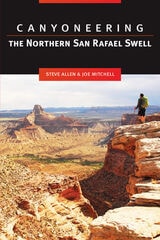
Canyoneering the Northern San Rafael Swell
Steve Allen
University of Utah Press, 2013
A second volume covering the southern portion of the San Rafael Swell is in preparation.
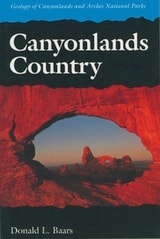
Canyonlands Country
Geology of Canyonlands and Arches National ParksDonald L. Baars
University of Utah Press, 1993
An easy-to-read geological history of the amazing red rock landscapes in southeastern Utah.
Towering red buttes, plunging canyon walls, domes, pinnacles, spires, ten thousand strangely carved forms—what visitor hasn’t marveled at the land of rock in southeastern Utah that is Canyonlands Country?
Canyonlands Country offers a unique geological history of this awesome landscape, in language understandable by the non-geologist. The story is as strange and fascinating as the land itself. Each exposed rock layer has a different geologic history: one is a stream deposit, another is an ancient field of dunes, another was deposited by shallow tropic seas. The Green and Colorado Rivers began carving canyons thirty million years ago, but to understand such relatively recent events Canyonlands Country takes us on a journey of two billion years.
Tours include Arches National Park, Island in the Sky, Needles District, The Maze and Elaterite Basin, Labyrinth and Stillwater Canyons, Meander Canyon, and Cataract Canyon.
Carbon County, USA
Miners for Democracy in Utah and the WestChristian Wright
University of Utah Press, 2019
Drawing on a variety of primary sources, Wright provides evidence for organized labor’s continuing significance and value while effectively illuminating its mounting frustrations during a relatively recent chapter in the history of Utah and the United States.
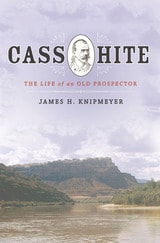
Cass Hite
The Life of an Old ProspectorJames H. Knipmeyer
University of Utah Press, 2016
Despite this notoriety, no one has written a full-length, scholarly account of Hite’s life. This biography fills that void, detailing Hite’s story from his birth in central Illinois in 1845 to his death in Glen Canyon in 1914. It corrects some of the long-accepted stories about Hite and puts others in their proper perspective, while revealing new information. Scores of photographs and excerpts from Hite’s own writing further illuminate this colorful prospector’s life.
Cedar Mesa
A Place Where Spirits DwellText by David Petersen; Photographs by Branson Reynolds
University of Arizona Press, 2002
Chaco and After in the Northern San Juan
Excavations at the Bluff Great HouseCatherine M. Cameron
University of Arizona Press, 2009
Bluff’s massive great house, great kiva, and earthen berms are described and compared to other great houses in the northern Chaco region. Those assessments support intriguing new ideas about the Chaco region and the effect of the collapse of Chaco Canyon on “outlying” great houses.
New insights from the Bluff Great House clarify the construction and use of great houses during the Chaco era and trace the history of great houses in the generations after Chaco’s decline. An innovative comparative study of the northern and southern portions of the Chaco world (the northern San Juan area around Bluff and the Cibola area around Zuni) leads to new ideas about population aggregation and regional abandonment in the Southwest. Appendixes present details and descriptions of artifacts recovered from Bluff: ceramics, projectile points, pollen analyses, faunal remains, bone tools, ornaments, and more.
This book is one of only a handful of reports on Chacoan great houses in the northern San Juan region. It provides an in-depth study of the Chaco era and clarifies the relationship of “outlying” great houses to Chaco Canyon. Research at the Bluff Great House begins to answer key questions about the nature of Chaco and its region, and the history of the northern San Juan in the Chaco and post-Chaco worlds.
Chasing Good Sense
A Boy's Life on the FrontierHomer McCarty and Coralie McCarty Beyers
University of Utah Press, 2018
In the spirit of Huck Finn, Buck embarks on adventures and mischief with his loyal friend, Earl. Naïve, eager, and inquisitive, he seeks to make sense of his world. McCarty’s portrayal of the period is often humorous, capturing the intimacy of place and family through a young boy’s eyes.
McCarty completed this work in 1948. Had it not been for a series of fortuitous events and the dedication of his granddaughters, including Coralie Beyers, these pages would have been lost. Thanks to her efforts, her grandfather’s lively, entertaining book is now available for readers to relish and enjoy.
Coal in our Veins
A Personal JourneyErin Ann Thomas
Utah State University Press, 2012
In Coal in Our Veins, Erin Thomas employs historical research, autobiography, and journalism to intertwine the history of coal, her ancestors' lives mining coal, and the societal and environmental impacts of the United States' dependency on coal as an energy source. In the first part of her book, she visits Wales, native ground of British coal mining and of her emigrant ancestors. The Thomases' move to the coal region of Utah—where they witnessed the Winter Quarters and Castle Gate mine explosions, two of the worst mining disasters in American history—and the history of coal development in Utah form the second part.
Then Thomas investigates coal mining and communities in West Virginia, near her East Coast home, looking at the Sago Mine collapse and more widespread impacts of mining, including population displacement, mountain top removal, coal dust dispersal, and stream pollution, flooding, and decimation. The book's final part moves from Washington D.C.—and an examination of coal, CO2, and national energy policy—back to Utah, for a tour of a coal mine, and a consideration of the Crandall Canyon mine cave-in, back to Wales and the closing of the oldest operating deep mine in the world and then to a look at energy alternatives, especially wind power, in West Virginia and Pennsylvania.
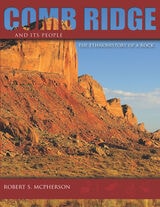
Comb Ridge and Its People
The Ethnohistory of a RockRobert McPherson
Utah State University Press, 2009
West of the Four Corners and east of the Colorado River, in southeastern Utah, a unique one-hundred-mile-long, two-hundred-foot-high, serrated cliff cuts the sky. Whether viewed as barrier wall or sheltering sanctuary, Comb Ridge has helped define life and culture in this region for thousands of years. Today, the area it crosses is still relatively remote, though an important part of a scenic complex of popular tourist destinations that includes Natural Bridges National Monument and Grand Gulch just to the west, Glen Canyon National Recreation Area and Lake Powell a bit farther west, Canyonlands National Park to the north, Hovenweep National Monument to the east, and the San Juan River and Monument Valley to the south. Prehistorically Comb Ridge split an intensively used Ancient Puebloan homeland. It later had similar cultural—both spiritual and practical—significance to Utes, Paiutes, and Navajos and played a crucial role in the history of European American settlement. To tell the story of this rock that is unlike any other rock in the world and the diverse people whose lives it has affected, Robert S. McPherson, author of multiple books on Navajos and on the Four Corners region, draws on the findings of a major, federally funded project to research the cultural history of Comb Ridge. He carries the story forward to contention over present and future uses of Comb Ridge and the spectacular country surrounding it.
The book is the winner of the 2009 Utah Book Award for Nonfiction.
Cowboy Cave
UUAP 104Jesse D. Jennings
University of Utah Press, 1980

Cowboying
a tough job in a hard landJames H Beckstead
University of Utah Press, 1991
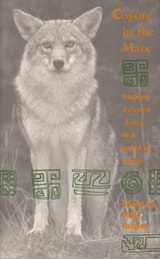
Coyote In The Maze
Peter Quigley
University of Utah Press, 1999
The works of Edward Abbey have been well known to general readers since the 1960’s. This volume, the first comprehensive collection of literary criticism devoted to the entire challenging corpus of Abbey’s fiction and nonfiction, couldn’t be more timely or significant.
From the perspective of his scholarly critics in Western American literature and environmental studies Ed Abbey is, in a word, problematic. As Peter Quigley, volume editor, comments, "The title of this collection refers to a number of references within Abbey’s work. The maze is a place of myriad canyons, of wonder, and a place where the desperadoes in The Monkey Wrench Gang could lose the authorities. The coyote refers to the slippery figure in Native American myth, a figure, known to Abbey, that always eluded definition an could slip out of every trap set to catch him." In this long-awaited anthology, eighteen intrepid scholars have chosen to ignore the coyote’s reputation, tracking Abbey in one masterful and illuminating essay after another through the canyons of anarchist politics, philosophy, feminist literary criticism, post-structuralism, and rhetoric, as well as nature and environmental theory and activism.
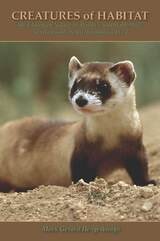
Creatures Of Habitat
The Changing Nature of Wildlife and Wild Places in Utah and the Intermountain WestMark Gerard Hengesbaugh
Utah State University Press, 2001
From flying squirrels on high wooded plateaus to hanging gardens in redrock canyons, the Intermountain West is home to some of the world's rarest and most fascinating animals and plants. Creatures of Habitat details many unique but little-known talents of this region's strange and wonderful wild inhabitants and descibes their connections with native environments. For example, readers will learn about the pronghorn antelope's supercharged cardiovascular system, a brine shrimp-powered shorebird that each year flies nonstop from the Great Salt Lake to Central Argentina, and a rare mustard plant recently discovered on Mount Ogden. Emphasizing how increasing loss and degradation of habitat hinders native species' survival, Mark Gerard Hengesbaugh discusses what is happening to wildlife and wild places and what is being done about it.
Well illustrated, this book has habitat maps, pen-and-ink illustrations, and fifty photos of wildlife and wild places selected by photo editor Dan Miller. Also included are guides to wildlife viewing and lists of Utah species, including those considered sensitive, threatened, or endangered.