99 books match the query 'Vietnam' and 6 start with c
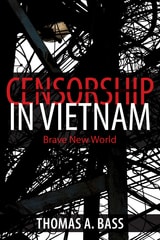
cover of Censorship in Vietnam: Brave New World

Censorship in Vietnam

Brave New World

Thomas A. Bass

University of Massachusetts Press, 2017

What does censorship do to a culture? How do censors justify their work? What are the mechanisms by which censorship—and self-censorship—alter people's sense of time and memory, truth and reality? Thomas Bass faced these questions when The Spy Who Loved Us, his account of the famous Time magazine journalist and double agent Pham Xuan An, was published in a Vietnamese edition. When the book finally appeared in 2014, after five years of negotiations with Vietnamese censors, more than four hundred passages had been altered or cut from the text.

After the book was published, Bass flew to Vietnam to meet his censors, at least the half dozen who would speak with him. In Censorship in Vietnam, he describes these meetings and examines how censorship works, both in Vietnam and elsewhere in the world. An exemplary piece of investigative reporting, Censorship in Vietnam opens a window into the country today and shows us the precarious nature of intellectual freedom in a world governed by suppression.
[more]
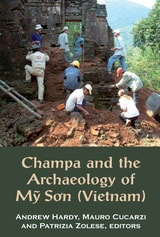
cover of Champa and the Archaeology of M? So'n (Vietnam)

Champa and the Archaeology of M? So'n (Vietnam)

Edited by Andrew Hardy, Mauro Cucarzi, and Patrizia Zolese

National University of Singapore Press, 2009
The kings of ancient Champa, a civilization located in the central region of today's Vietnam, started building sacred temples in a circular valley more than 1500 years ago. The monuments, now known by the Vietnamese name M? So'n, were discovered by nineteenth-century colonial soldiers and first studied by the French architect Henri Parmentier. Bombed during the Vietnam War, the ruins of the brick towers, decorated with exquisite carvings and sculptures, were designated as a UNESCO World Cultural Heritage site in 1999. An Italian team has worked at the site for the last ten years, doing archaeological research and restoration work in cooperation with Vietnamese specialists. This book is the first published volume based on their efforts. The opening section consists of historical, anthropological and architectural studies of the civilization of Champa. The remainder of the book presents an unusually intimate and extensively illustrated portrait of the archaeologists' research and restoration work at M? So'n. While this book is important for specialists and students of the history and archaeology of Champa and Southeast Asia, it also tells a fascinating story that will appeal to general readers and visitors to this exceptional archaeological site.
[more]
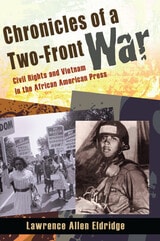
cover of Chronicles of a Two-Front War: Civil Rights and Vietnam in the African American Press

Chronicles of a Two-Front War

Civil Rights and Vietnam in the African American Press

Lawrence Allen Eldridge

University of Missouri Press, 2011

During the Vietnam War, young African Americans fought to protect the freedoms of Southeast Asians and died in disproportionate numbers compared to their white counterparts. Despite their sacrifices, black Americans were unable to secure equal rights at home, and because the importance of the war overshadowed the civil rights movement in the minds of politicians and the public, it seemed that further progress might never come.  For many African Americans, the bloodshed, loss, and disappointment of war became just another chapter in the history of the civil rights movement.  Lawrence Allen Eldridge explores this two-front war, showing how the African American press grappled with the Vietnam War and its impact on the struggle for civil rights.
Written in a clear narrative style, Chronicles of a Two-Front War is the first book to examine coverage of the Vietnam War by black news publications, from the Gulf of Tonkin incident in August 1964 to the final withdrawal of American ground forces in the spring of 1973 and the fall of Saigon in the spring of 1975.

Eldridge reveals how the black press not only reported the war but also weighed its significance in the context of the civil rights movement.
The author researched seventeen African American newspapers, including the Chicago Defender, the Baltimore Afro-American, and the New Courier, and two magazines, Jet and Ebony.  He augmented the study with a rich array of primary sources—including interviews with black journalists and editors, oral history collections, the personal papers of key figures in the black press, and government documents, including those from the presidential libraries of Lyndon Johnson, Richard Nixon, and Gerald Ford—to trace the ups and downs of U.S. domestic and wartime policy especially as it related to the impact of the war on civil rights.

Eldridge examines not only the role of reporters during the war, but also those of editors, commentators, and cartoonists. Especially enlightening is the research drawn from extensive oral histories by prominent journalist Ethel Payne, the first African American woman to receive the title of war correspondent. She described a widespread practice in black papers of reworking material from major white papers without providing proper credit, as the demand for news swamped the small budgets and limited staffs of African American papers.  The author analyzes both the strengths of the black print media and the weaknesses in their coverage.

The black press ultimately viewed the Vietnam War through the lens of African American experience, blaming the war for crippling LBJ’s Great Society and the War on Poverty.  Despite its waning hopes for an improved life, the black press soldiered on.
[more]
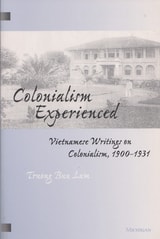
cover of Colonialism Experienced: Vietnamese Writings on Colonialism, 1900-1931

Colonialism Experienced

Vietnamese Writings on Colonialism, 1900-1931

Truong Buu Lam

University of Michigan Press, 2000
The first three decades of the twentieth century in late-colonial Vietnam -- the period that also marked the transition between the dominant Confucian and nascent Western worldviews -- generated an abundance of political literature in that country. The documents from this transitional era belong to a variety of genres: propaganda pamphlets, open letters to government officials, texts for private or clandestine classrooms, manifestos of political or cultural organizations, columns from newspapers, public proclamations, petitions to international agencies, and poems. Whether from the old or the new era, however, they all expressed an opinion on the colonial status of their country. Scholar Truong Buu Lam has collected twenty of these documents, all written between 1900 and 1931, into an anthology which captures the spirit of the conflicting ideologies and the political struggles of this time. Written originally in Vietnamese, French, or classical Chinese, the documents have been translated into English by Lam and given individual introductions in an effort to clarify their historical contexts most accurately. Lam also provides a lengthy overview of the contemporary scene at the time of the writings to further illuminate the grander themes tying the writings together. In Vietnam, all of these writings are well-known texts, quoted in every publication that examines the period under consideration; yet, to the best of our knowledge, few have been reproduced in their entirety and none has ever been translated into English. This translation marks an important addition to the fields of Southeast Asian and colonial studies and will be welcomed by historians, political scientists, and anthropologists alike.
[more]
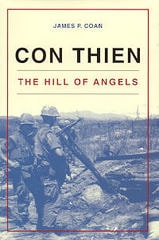
cover of Con Thien: The Hill of Angels

Con Thien

The Hill of Angels

James P. Coan

University of Alabama Press, 2007

Holding the Hill of Angels: A Marine’s Fight for Survival at the DMZ.

Throughout much of 1967, a remote United States Marine firebase only two miles from the demilitarized zone (DMZ) captured the attention of the world’s media. That artillery-scarred outpost was the linchpin of the so-called McNamara Line intended to deter incursions into South Vietnam by the North Vietnamese Army. As such, the fighting along this territory was particularly intense and bloody, and the body count rose daily.

Con Thien combines James P. Coan’s personal experiences with information taken from archives, interviews with battle participants, and official documents to construct a powerful story of the daily life and combat on the red clay bulls-eye known as "The Hill of Angels." As a tank platoon leader in Alpha Company, 3d Tank Battalion, 3d Marine Division, Coan was stationed at Con Thien for eight months during his 1967-68 service in Vietnam and witnessed much of the carnage.

Con Thien was heavily bombarded by enemy artillery with impunity because it was located in politically sensitive territory and the U.S. government would not permit direct armed response from Marine tanks. Coan, like many other soldiers, began to feel as though the government was as much the enemy as the NVA, yet he continued to fight for his country with all that he had. In his riveting memoir, Coan depicts the hardships of life in the DMZ and the ineffectiveness of much of the U.S. military effort in Vietnam.
 

[more]
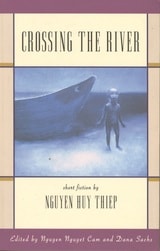
cover of Crossing the River: Short Fiction by Nguyen Huy Thiep

Crossing the River

Short Fiction by Nguyen Huy Thiep

Nguyen Huy Thiep

Northwestern University Press, 2002

Crossing the River presents a wide range of Nguyen Huy Thiep's short fiction, both realistic stories in contemporary settings and retellings of folk myths that serve as contemporary parables. When Thiep's stories first appeared in the 1980s, they set off a chain of debate, not only within intellectual and political circles, but also within the society at large. Typically, the struggles of his characters were about survival, not survival in the context of war or revolution, but survival in the context of the emotional and psychological strength it takes to live within the harsh confines of post-war Vietnamese society. Thiep captured the emotional quality of Vietnamese life in a way no other author had done, and his importance can be recognized today by his enormous influence on younger writers.

[more]