Results by title
1297 books match the query 'Women authors' and 73 start with c
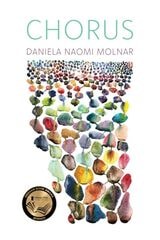
CHORUS
Daniela Naomi Molnar
Omnidawn, 2022
At a time of simultaneous isolation and interconnection, this book is an inquiry into the edges of the self. Pushing back on capitalist messages of individuality, CHORUS instead seeks the multifaceted self that engages with the radical diversity that characterizes any healthy ecosystem or society. Moving between a remote canyon in New Mexico, the Pacific Northwest, New York City, the virtual world, the past, and the unstable future, the author asks, “Whose afterimage am I?”
The sprawling, celebratory, mourning chorus of this book is the sum of many voices; the words of other writers, poets, and artists are interwoven with the author’s words. This is a celebration of language’s capacity to supersede bodily limits, mortality, and existential loneliness. Daniela Naomi Molnar’s chorus encompasses violence, love, empathy, fear, a burning planet, a pandemic, heartbreak, desire, joy, and grief. Rather than seeking resolution, these poems look through the lens of a fragmented self, dwelling in plurality, discord, and harmony.
CHORUS is the winner of Omnidawn’s 1st /2nd Book Prize, judged by Kazim Ali.
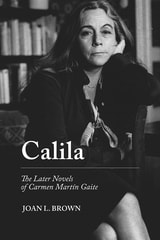
Calila
The Later Novels of Carmen Martín GaiteJoan L. Brown
Bucknell University Press, 2021
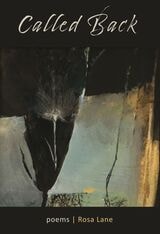
Called Back
Rosa Lane
Tupelo Press, 2024
In bold tribute with a title utilizing the last two words Emily Dickinson wrote, Rosa Lane’s Called Back converses with one of our greatest poets in theatrical monologue—decoding secrets amid the blatant. Evoked by epigraphs selected from Dickinson’s work, Lane’s poems, through her I-speaker, reveal the extraordinary to be found in the ordinary and speak to the struggle of sexual orientation, otherness, and the challenges of living in a Calvinistic socioreligious world of oughts and noughts as evidenced in Dickinson’s poems. From sapphic eroticism and subsequent pangs of nonbelonging to tacking next life as a welcome reprieve, poems in Called Back create a de novo dot-connecting lyrical narrative.
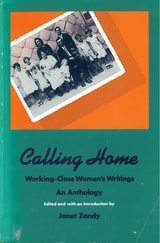
Calling Home
Working-Class Women's WritingsZandy, Janet
Rutgers University Press, 1990
The geography of home, identity, parents, sex, motherhood, the dominance of the job, the overlapping of private and public worlds, the promise of solidarity and community are a few of the themes of this book. Here is a chorus of working class women's voices: Sandra Cisneros, Barbara Garson, Meridel Le Sueur, Tillie Olsen, Barbara Smith, Endesha I. M. Holland, Mother Jones, Nellie Wong, Agnes Smedley, Bobbie Louise Hawkins, Sharon Doubiago, Carol Tarlen, Hazel Hall, Margaret Randall, Judy Grahn, and many others!
The aesthetic impulse is shaped by class, but not limited to one ruling class. What connects these writers is a collective consciousness, a class, which rejects bondage and lays claim to liberation through all the possibilities of language. Calling Home is illustrated with family photographs as well as images of working women by professional photographers.
Cameo Blue
Carolyn Guinzio
Carnegie Mellon University Press, 2026
Cameo Blue is a spiritual topography, recording the traces of people in their environments, natural and otherwise, and the portents, memories, and signs they use to navigate their path or understand the precipices they face. Lush with color, weather, and imagery, some poems are driven by breathless conjecture, or propelled by the acute observation that often comes with shock, when time stands still and a camera flash reveals the gap between external and internal, hope and fear, past and future. Other poems cross physical and emotional space more quietly, with a narrative voice like the intimate whisper of a secret podcast. The collection is its own immersive environment for the reader to fall into, with poems that take on a talismanic quality, laden with haunted characters, resonant objects, and occult signs.
Can I Finish, Please?
Catherine Bowman
Four Way Books, 2016
Candlefish
PoemsElizabeth Chapman
University of Arkansas Press, 2004
The candlefish, enormous schools of which enter the Pacific Northwest’s rivers in the spring, is so rich with oil that when supplied with a wick it can be used as a candle. Thus creatures of the water become transformed into instruments of fire and spirit, ultimately transcending this world.
Written as the author begins to navigate the second half of life, Candlefish unfolds along multiple lines of narrative and reflection. Each poem is rendered from experience and made incandescent by the spark of the author’s intellect and insight.
Whether tending the flower beds, skinnydipping on her birthday, conversing with a grown daughter, or bringing inside the teacup her husband can no longer carry, Elizabeth Biller Chapman distills each moment to its most vital components and makes them luminous with the necessity and surprise of relation.
Elizabeth Biller Chapman’s candlefish gracefully swim toward the pierced horizon all of us must face and are transformed by imaginative compassion as the book develops, season by season, from summer to spring.
Cannibal Writes
Eating Others in Caribbean and Indian Ocean Women's WritingNjeri Githire
University of Illinois Press, 2014
In Cannibal Writes, Njeri Githire concentrates on the gendered and sexualized dimensions of these visceral metaphors of consumption in works by women writers from Haiti, Jamaica, Mauritius, and elsewhere. Employing theoretical analysis and insightful readings of English- and French-language texts, she explores the prominence of alimentary-related tropes and their relationship to sexual consumption, writing, global geopolitics and economic dynamics, and migration. As she shows, the use of cannibalism in particular as a central motif opens up privileged modes for mediating historical and sociopolitical issues.
Ambitiously comparative, Cannibal Writes ranges across the works of well-known and lesser known writers to tie together two geographic and cultural spaces that have much in common but are seldom studied in parallel.
Carbon 14
Ann Deagon
University of Massachusetts Press, 1974
Ann Deagon first began writing poetry “vigorously” in 1970, “in some kind of forty-year-old renaissance.” Since then her poems have been published widely and have been received numerous awards.
“When I came to forty
that three-headed dog love death and poetry
took me in its teeth and shook me…”
Carbon 14 is the result, a counterpoint of serious and ironic excavations into the mythic and the personal past of a middle-aged woman. Although these poems have grown from her lifelong involvement in the Classics and are basically classical in their structure and concentration, their strength is not academic.
Ann Deagon's poems interweave past and present, person, place, and event, with unexpected and often violent insights. In “The Sybil's Bath,” for example, the sacrifice of a young girl to a god leads to unprecedented counterviolence and to questions which are both contemporary and absolute.
According to Deagon, “All identity is in some sense a translation from the Greek: it cannot be defined except with hyphens. The meaning hovers precisely at the hyphen.” in Carbon 14 Deagon proclaims her identity as poet-woman, woman-teacher, teacher-poet.
Care at the End of the World
Dreaming of Infrastructure in Crip-of-Color WritingJina B. Kim
Duke University Press, 2025
Caribbean Women Writers
Essays from the First International ConferenceSelwyn R. Cudjoe
University of Massachusetts Press, 1990

Cases of Circumstantial Evidence
Janet Lewis
Ohio University Press, 2013
This is the first digital version of Cases of Circumstantial Evidence, a collection of three historical novels by noted American writer Janet Lewis. For the first time, these works have been brought together in a single edition, each with a new introduction by Kevin Haworth:
The Wife of Martin Guerre
Based on a notorious trial in sixteenth-century France, The Wife of Martin Guerre follows Bertrande de Rois and her lost-and-returned husband through a tale of impersonation, conspiracy, and small-town intrigue. Their fascinating story has also inspired a bestselling historical study and two films, including The Return of Martin Guerre.
The Trial of Sören Qvist
Although set in seventeenth-century Denmark, The Trial of Sören Qvist has a contemporary feel and has been praised for its intriguing plot and for Lewis’s powerful writing. In this second novel in the Cases of Circumstantial Evidence, Lewis recounts the story of a murder, an investigation, and a pious town pastor who confesses to the crime, driven perhaps more by a recognition of his own moral flaws than by guilt for the acts of which he stood accused.
The Ghost of Monsieur Scarron
The court of Louis XIV and a modest Paris street provide the incongruous settings for this tale of a humble bookbinder, his wife, and the young craftsman who seduces her and blackmails her husband into covering up a terrible crime. This third and last case of circumstantial evidence bristles with character, the smell of blood, and considerable suspense against a backdrop of national political unrest in the cruel and dingy Paris of the seventeenth century.
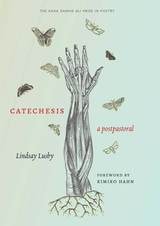
Catechesis
A PostpastoralLindsay Lusby
University of Utah Press, 2019
“A girl has two choices: / to be a tree or / to be the forest.” Catechesis combines Grimm fairy tales with horror movies and the Book of Revelation to construct a vision of the dangers and apocalyptic transformations inherent in girlhood. This lyric lore, which includes curious diagrams and collages of the botanical and the anatomical, contains hidden instructions to prepare girls for the hazards ahead.
In retelling lore alongside other Grimm-style stories, the poet turns horror classics The Silence of the Lambs and Alien into macabre fairy tales in their own right. Herein lurks violence and decay, but also a wild, overgrown beauty. Mothers and fathers are as much a part of this treacherous landscape as the carnivorous flora and shape-shifting fauna—and their effects are just as devastating. Framing all of this within biblical language and motifs gives these fabulist poems an ominous sense of urgency. Catechesis is a hybrid collection of textual and visual poems that examine belief and obsession. It explores how beauty leads to danger and danger births another kind of beauty, in a cycle of creation and destruction.
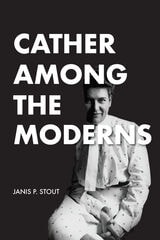
Cather Among the Moderns
Janis P. Stout
University of Alabama Press, 2019
A masterful study by a preeminent scholar that situates Cather as a visionary practitioner of literary modernism
Willa Cather is often pegged as a regionalist, a feminine and domestic writer, or a social realist. In Cather Among the Moderns, Janis P. Stout firmly situates Cather as a visionary practitioner of literary modernism, something other scholars have hinted at but rarely affirmed. Stout presents Cather on a large, dramatic stage among a sizable cast of characters and against a brightly lit social and historical backdrop, invoking numerous figures and instances from the broad movement in the arts and culture that we call modernism.
Early on, Stout addresses the matter of gender. The term “cross-dresser” has often been applied to Cather, but Stout sees Cather’s identity as fractured or ambiguous, a reading that links her firmly to early twentieth-century modernity. Later chapters take up topics of significance both to Cather and to twentieth-century American modernists, including shifting gender roles, World War I’s devastation of social and artistic norms, and strains in racial relations. She explores Cather’s links to a small group of modernists who, after the war, embraced life in New Mexico, a destination of choice for many artists, and which led to two of Cather’s most fully realized modernist novels, The Professor’s House and Death Comes for the Archbishop.
The last chapter addresses Cather’s place within modernism. Stout first places her in relation to Ezra Pound and T. S. Eliot with their shared ties to tradition even while making, sometimes startling, innovations in literary form, then showing parallels with William Faulkner with respect to economic disparity and social injustice.
Cauterized
Laura Apol
Michigan State University Press, 2024
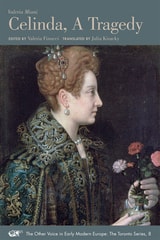
Celinda, A Tragedy
A Bilingual EditionValeria Miani
Iter Press, 2010
—Virginia Cox
Professor of Italian, New York University
Cell Traffic
New and Selected PoemsHeid E. Erdrich
University of Arizona Press, 2012
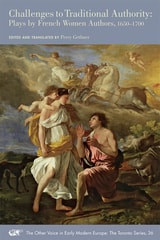
Challenges to Traditional Authority
Plays by French Women Authors, 1650-1700Françoise Pascal, Mary-Catherine Desjardins, Antoinette Deshoulières, and Catherine Durand
Iter Press, 2015
Chamber after Chamber
Saara Myrene Raappana
University of Massachusetts Press, 2024
Chamber after Chamber is about what fractures, fixes, and refills the hearts of two girls as they grow into women. A loose narrative in three sections, the poems follow a speaker and her cousin through their hardscrabble, backwoods childhood to their separation—both physical and emotional—as adults. From the make-believe apocalypses and cut-and-paste valentines of elementary school to the stadium-seating classrooms and multiplexes of southern China, our speaker tries to leave the shame and dysfunction of her family behind. In China, she begins to see America—and herself—clearly for the first time, and in doing so discovers that both her cousin and her country are inextricably woven into
[her body] part that never sleeps the blood
and chambered meat that’s like a rock squeezed
in a fist rapping its knuckles
on the sweet door of the body.

Changing Our Own Words
Cheryl A. Wall
Rutgers University Press, 1991
Changing the Subject
Writing Women across the African DiasporaK. Merinda Simmons
The Ohio State University Press, 2014
The starting point for this study is the nineteenth-century Caribbean narrative The History of Mary Prince (1831). Simmons puts Prince’s narrative in conversation with three twentieth-century novels: Zora Neale Hurston’s Their Eyes Were Watching God, Gloria Naylor’s Mama Day, and Maryse Condé’s I, Tituba, Black Witch of Salem. She incorporates autobiography theory to shift the critical focus from the object of study—slave histories—to the ways people talk about those histories and to the guiding interests of such discourses. In its reframing of women’s migration narratives, Simmons’s study unsettles theoretical certainties and disturbs the very notion of a cohesive diaspora.
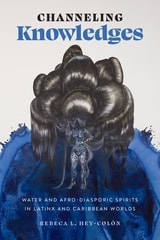
Channeling Knowledges
Water and Afro-Diasporic Spirits in Latinx and Caribbean WorldsRebeca L. Hey-Colón
University of Texas Press, 2023
2024 Honorable Mention, Isis Duarte Book Prize, Haiti/ Dominican Republic section, Latin American Studies Association
How water enables Caribbean and Latinx writers to reconnect to their pasts, presents, and futures.
Water is often tasked with upholding division through the imposition of geopolitical borders. We see this in the construction of the Rio Grande/Río Bravo on the US-Mexico border, as well as in how the Caribbean Sea and the Pacific Ocean are used to delineate the limits of US territory. In stark contrast to this divisive view, Afro-diasporic religions conceive of water as a place of connection; it is where spiritual entities and ancestors reside, and where knowledge awaits.
Departing from the premise that water encourages confluence through the sustainment of contradiction, Channeling Knowledges fathoms water’s depth and breadth in the work of Latinx and Caribbean creators such as Mayra Santos-Febres, Rita Indiana, Gloria Evangelina Anzaldúa, and the Border of Lights collective. Combining methodologies from literary studies, anthropology, history, and religious studies, Rebeca L. Hey-Colón’s interdisciplinary study traces how Latinx and Caribbean cultural production draws on systems of Afro-diasporic worship—Haitian Vodou, La 21 División (Dominican Vodou), and Santería/Regla de Ocha—to channel the power of water, both salty and sweet, in sustaining connections between past, present, and not-yet-imagined futures.
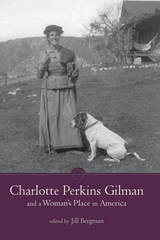
Charlotte Perkins Gilman and a Woman's Place in America
Edited by Jill Bergman
University of Alabama Press, 2017
Charlotte Perkins Gilman and a Woman’s Place in America is a pioneering collection that probes how depictions of space, confinement, and liberation establish both the difficulty and necessity of female empowerment. Turning Victorian notions of propriety and a woman’s place on its ear, this finely crafted essay collection studies Gilman’s writings and the manner in which they push back against societal norms and reject male-dominated confines of space.
The contributors present fascinating and innovative readings of some of Gilman’s most significant works. By examining the settings in “The Yellow Wallpaper” and Herland, for example, the volume analyzes Gilman’s construction of place, her representations of male dominance and female subjugation, and her analysis of the rules and obligations that women feel in conforming to their assigned place: the home.
Additionally, this volume delineates female resistance to this conformity. Contributors highlight how Gilman’s narrators often choose resistance over obedient captivity, breaking free of the spaces imposed upon them in order to seek or create their own habitats. Through biographical interpretations of Gilman’s work that focus on the author’s own renouncement of her “natural” role of wife and mother, contributors trace her relocation to the American West in an attempt to appropriate the masculinized spaces of work and social organization.
Engaging, well-researched, and deftly written, the essays in this collection will appeal to scholars of Gilman, literature, and gender issues alike.
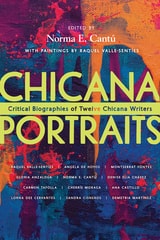
Chicana Portraits
Critical Biographies of Twelve Chicana WritersEdited by Norma E. Cantú; With paintings by Raquel Valle-Sentíes
University of Arizona Press, 2023
Artist Raquel Valle-Sentíes’s portraits bring visual dimension, while essays delve deeply into the authors’ lives for details that inform their literary, artistic, feminist, and political trajectories and sensibilities. The collection brilliantly intersects artistic visual and literary cultural productions, allowing complex themes to emerge, such as the fragility of life, sexism and misogyny, Chicana agency and forging one’s own path, the struggles of becoming a writer and battling self-doubt, economic instability, and political engagement and activism.
Arranged chronologically by birth order of the authors, the book can be read cover to cover for a genealogical overview, or scholars and general readers can easily jump in at any point and read about an individual author, regardless of the chronology.
Biographies included in this work include Raquel Valle-Sentíes, Angela de Hoyos, Montserrat Fontes, Gloria E. Anzaldúa, Norma E. Cantú, Denise Elia Chávez, Carmen Tafolla, Cherríe Moraga, Ana Castillo, Lorna Dee Cervantes, Sandra Cisneros, and Demetria Martínez.
Contributors
Cordelia E. Barrera
Mary Pat Brady
Norma E. Cantú
María Jesus Castro Dopacio
Carlos Nicolás Flores
Myrriah Gómez
Maria Magdalena Guerra de Charur
Gabriella Gutiérrez y Muhs
Georgina Guzmán
Cristina Herrera
María Esther Quintana
Eliza Rodríguez y Gibson
Meagan Solomon
Lourdes Torres
Raquel Valle-Sentíes
Jen Yáñez-Alaniz
Chicana Ways
Conversations With Ten Chicana WritersKarin Rosa Ikas
University of Nevada Press, 2001
Chick Lit 2
No Chick VicsChris Mazza, Jeffrey DeShell, and Elisabeth Sheffield
University of Alabama Press, 1996
Chick-Lit 2: No Chick Vics features new work by Rikki Ducornet, Eurydice, Elizabeth Graver, Ursule Molinaro, and fourteen other witty and deadly serious writers.
Chick-Lit 2 discovers new and alternative voices in women’s fiction whose stories do not involve trauma that comes from the outside. As Mazza writes in her introduction, “Sexual assaults and harassments and injurious poor body images do exist and have waged a war on women (the American Medical Association says so). But for this book, I was interested in seeing what action(s) women characters can incite on their own, whether bad or good, hopeful or dead-end, progressive or destructive.”

Children of the Albatross
Anaïs Nin
Ohio University Press, 1959
Children of the Albatross is divided into two sections: “The Sealed Room” focuses on the dancer Djuna and a set of characters, chiefly male, who surround her; “The Café” brings together a cast of characters already familiar to Nin’s readers, but it is their meeting place that is the focal point of the story.
As always, in Children of the Albatross, Nin’s writing is inseparable from her life. From Djuna’s story, told in “The Sealed Room” through hints and allusions, hazy in their details and chronology, the most important event to emerge is her father’s desertion (like Nin’s) when she was sixteen. By rejecting realistic writing for the experience and intuitions she drew from her diary, Nin was able to forge a novelistic style emphasizing free association, spontaneity, and improvisation, a technique that finds its parallel in the jazz music performed at the café where Nin’s characters meet.
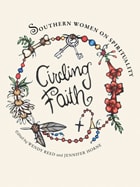
Circling Faith
Southern Women on SpiritualityWendy Reed
University of Alabama Press, 2012
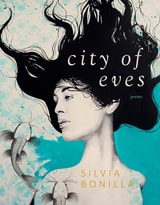
City of Eves
PoemsSilvia Bonilla
University of Arizona Press, 2026
Sonia and her two best friends grow up on the urban coast of Ecuador, sharing cigarettes, school uniforms, and a determination to overcome their circumstances even if the price to pay is exile. Full of fantasies and curiosity, the friends navigate hunger at home, absent parents, and religious pressures as they help each other through the pleasures and traumas of adolescence. As their desire for something greater changes from dreams into actions, they pursue escape routes that hover between choice and compulsion: forced marriages, early widowhood, and a death-haunted migration to the United States. Even in the throes of escape, the constraints of their reality always lie waiting.
Subtle and unsparing, Bonilla’s lyrical poems capture the wild inner horizons and vivid embodiment of youth as it shades into the reflective poignance of maturity marked by disappointment, compromise, and loss. Despite this, it is memories of deep friendship, bonded through shared understanding and aspiration, that lingers. Looking back on her life, Sonia recalls the courage and vitality of girls determined to shape their own futures: “We lifted Coca-Cola bottles to the / opened granadilla of our mouths.”
Civil Bound
Myung Mi Kim
Omnidawn, 2019
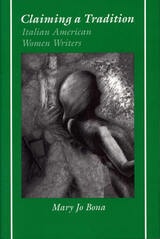
Claiming a Tradition
Italian American Women WritersMary Jo Bona
Southern Illinois University Press, 1999
Bona discusses the novels in pairs according to their focus on Italian American life. She first examines the traditions of italianitá (a flavor of things Italian) that inform and enhance works of fiction. The novelists in that tradition were Mari Tomasi (Like Lesser Gods, 1949) and Marion Benasutti (No Steady Job for Papa, 1966).
Bona then turns to later novels that highlight the Italian American belief in the family's honor and reputation. Conflicts between generations, specifically between autocratic fathers and their children, are central to Octavia Waldo's 1961 A Cup of the Sun and Josephine Gattuso Hendin's 1988 The Right Thing to Do.
Even when writers choose to steer away from the familial focus, Bona notes, their developmental narratives trace the reintegration of characters suffering from a crisis of cultural identity. Relating the characters' struggles to their relationship to the family, Bona examines Diana Cavallo's 1961 A Bridge of Leaves and Dorothy Bryant's 1978 Miss Giardino.
Bona then discusses two innovative novels— Helen Barolini's 1979 Umbertina and Tina De Rosa's 1980 Paper Fish— both of which feature a granddaughter who invokes her grandmother, a godparent figure. Through Barolini's feminist and De Rosa's modernist perspectives, both novels present a young girl developing artistically.
Closing with a discussion of the contemporary terrain Italian American women traverse, Bona examines such topics as sexual identity when it meets cultural identity and the inclusion of italianitá when Italian American identity is not central to the story. Italian American women writers, she concludes, continue in the 1980s and 1990s to focus on the interplay between cultural identity and women's development.
Claribel Alegría and Central American Literature
Critical EssaysSandra M. Boschetto-Sandoval
Ohio University Press, 1993
These essays examine the multifaceted work of the Central American author whom Latin American literary historians consider precursor of “cultural dialogism” in poetry and fiction. As poet, essayist, journalist, novelist, and writer of “quasi–testimonio,” Alegría’s multiple discourses transgress the boundaries between traditional and postmodern political theories and practices. Her work reveals an allegory of relation and negotiation between “intelligentsia” and subaltern peoples as well as the need for a more socially extensive literature, not exclusive of more elite “magical literatures.”
The essays in the fist section frame Alegría’s discourses within sociohistorical, political, and literary contexts in order to illuminate the author’s singular place in the literary and political history of Central America. The essays in the second section engage in a feminist dialogic in which the reader encounters various critical validations and valorizations of Alegría’s many female voices. The third section involves the reader in the pursuit of extratextual or extraliterary resonances in Alegría’s work.
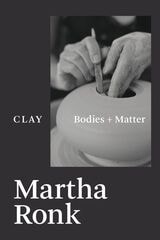
Clay
Martha Ronk
Omnidawn, 2025
The poems in Clay look to the process of forming clay on a potter’s wheel to examine our sense of touch and texture, emptiness, fragility, and the nature of time. Martha Ronk moves through the steps of creating a pot that must be formed, dried, bisque-fired, glazed, and fired again. This practice is paralleled in Ronk’s process-oriented language that addresses how we read texture and color, the ways history and landscapes appear in glazes, Mimbres bowls that covered the faces of the dead, and Giorgio Morandi’s still life paintings of ceramic forms.
For Ronk, pottery raises questions about the value of repetition, inevitable failure, and how we may become one with matter. As the potter’s hands ache and age, the bowl seems to age as it slumps or breaks. Clay includes observations from other potters and writers as well as small photographs of pots.
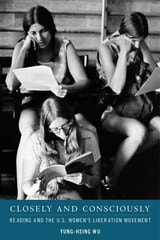
Closely and Consciously
Reading and the US Women's Liberation MovementYung-Hsing Wu
University of Massachusetts Press, 2024
The significant archive of writing that came out of the women’s liberation movement in the United States, from 1965 to 1980, speaks to the value activists placed on reading as an act that is at once personal and yet also about the collective good. Yung-Hsing Wu examines the importance of reading—personal, professional, vocational, aesthetic, and always political—and how the act itself brought a host of women, each with their own history with the movement, into relation, and into a belief in that relation. The value given to reading can be seen in the ways feminists pursued media representation; in consciousness-raising (CR) groups including shared reading in their meetings; in women opening bookstores, developing newsletters, establishing journals, and starting presses; and in corporate publishers pursuing feminist fiction.
Closely and Consciously crisscrosses distinct print spheres, including newsletters and periodicals produced by feminist cells and consciousness-raising groups, feminist presses seeking to articulate their visions for women’s writing, the emergence of feminist literary criticism in first-time monographs and newly established journals, personal and editorial correspondence, press records, and the publishing histories of bestsellers that testified to the increasingly broad popularity of women’s writing. Uniting all these disparate activists and media outlets, and providing crucial relationality, was reading. With a mix of close readings and archival research, Wu unpacks and interprets this central act of reading and why it matters during a crucial moment of feminist history.
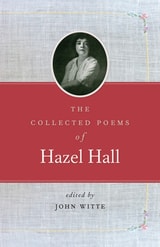
Collected Poems of Hazel Hall, The
Hazel Hall
Oregon State University Press, 2020
Confined to a wheelchair since childhood, Hall viewed life from the window of an upper room in her family’s house in Portland, Oregon. To better observe passersby on the sidewalk, she positioned a small mirror on her windowsill. Hall was an accomplished seamstress; her fine needlework helped to support the family and provided a vivid body of imagery for her precisely crafted, often gorgeously embellished poems.
Hall’s writings convey the dark undertones of the lives of working women in the early twentieth century, while bringing into focus her own private, reclusive life—her limited mobility, her isolation and loneliness, her gifts with needlework and words. In his updated introduction to this volume, John Witte examines Hall’s brief and brilliant career and highlights her remarkably modern sensibilities. In a new afterword, Anita Helle considers Hall’s work in an era when modes of literary historical recovery have been widened and expanded—and what that means in the afterlife of Hazel Hall.
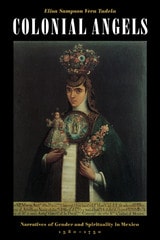
Colonial Angels
Narratives of Gender and Spirituality in Mexico, 1580-1750By Elisa Sampson Vera Tudela
University of Texas Press, 2000
Spain's attempt to establish a "New Spain" in Mexico never fully succeeded, for Spanish institutions and cultural practices inevitably mutated as they came in contact with indigenous American outlooks and ways of life. This original, interdisciplinary book explores how writing by and about colonial religious women participated in this transformation, as it illuminates the role that gender played in imposing the Spanish empire in Mexico.
The author argues that the New World context necessitated the creation of a new kind of writing. Drawing on previously unpublished writings by and about nuns in the convents of Mexico City, she investigates such topics as the relationship between hagiography and travel narratives, male visions of the feminine that emerge from the reworking of a nun's letters to her confessor into a hagiography, the discourse surrounding a convent's trial for heresy by the Inquisition, and the reports of Spanish priests who ministered to noble Indian women. This research rounds out colonial Mexican history by revealing how tensions between Spain and its colonies played out in the local, daily lives of women.
Colonial Strangers
Women Writing the End of the British EmpireLassner, Phyllis
Rutgers University Press, 2004
Drawing on memoirs, fiction, reportage, and film adaptations, Colonial Strangers explores the critical perspectives of writers who correct prevailing stereotypes of British women as agents of imperialism. They also question their own participation in British claims of moral righteousness and British politics of cultural exploitation. These authors take center stage in debates about connections between the racist ideologies of the Third Reich and the British Empire.
Colonial Strangers reveals how the literary responses of key artists represent not only compelling reading, but also a necessary intervention in colonial and postcolonial debates and the canons of modern British fiction.
Coloring Locals
Racial Formation in Katie Chopin's "Youth's Companion" StoriesBonnie James Shaker
University of Iowa Press, 2003
Chopin's canonical status as a feminist rebel and reformer conflicts with the fact that one of her most supportive publishers throughout her life was the Youth's Companion, a juvenile periodical whose thoroughly orthodox “family values” contributed to its success as the longest-running and, at one time, most widely circulating periodical in nineteenth-century America. Not surprisingly, Chopin’s Youth’s Companion stories differ from her canonical texts in that they embrace and advance ideals of orthodox white femininity and masculinity. Rather than viewing these two representations as being at odds with each other, Bonnie Shaker asserts that Chopin's endorsement of conventional gender norms is done in the service of a second political agenda beyond her feminism, one that can help the reader appreciate nuances of identity construction previously misunderstood or overlooked in the body of her work.
Come Again?
Alyssa N. Moore
University of Chicago Press, 2026
In this formally inventive debut collection, a speaker continuously shapeshifts through roles, forms, and characters.
Alyssa N. Moore’s Come Again? conjures a series of otherworldly scenarios in which reinvention becomes a form of resistance and a method to escape the snares of a modern existence to which we contribute but cannot control. Throughout these surreal and absurdist poems, an untethered consciousness is continuously reincarnated and dragged through various personae—including the Volunteer, the Eternal Counselor, the Streetcleaner, and the Architect—to find “what exactly to do with a willing body.” For example, in “The Volunteer,” a visual sequence, the book’s shapeshifting narrator is dropped into a formless expanse and expected to perform. As we move through the collection, the speaker’s perception morphs rapidly. From wage worker to computer programmer to sexbot to God, they collide over and over with the boundaries of the world. With each shift, the speaker guides us through a series of darkly comic set pieces that are, in turns, cinematic and slapstick as they seek a solid home base from which to “reject the emptiness that’s inherited.”
Moore’s facility with poetic form, use of image and text, and play between irony and sincerity make Come Again? a bold collection that defies the customary and conventional, instead forging new worlds of continual remaking.
Come Buy, Come Buy
Shopping and the Culture of Consumption in Victorian Women’s WritingKrista Lysack
Ohio University Press, 2008
From the 1860s through the early twentieth century, Great Britain saw the rise of the department store and the institutionalization of a gendered sphere of consumption. Come Buy, Come Buy considers representations of the female shopper in British women’s writing and demonstrates how women’s shopping practices are materialized as forms of narrative, poetic, and cultural inscription, showing how women writers emphasize consumerism as productive of pleasure rather than the condition of seduction or loss. Krista Lysack examines works by Christina Rossetti, Mary Elizabeth Braddon, George Eliot, and Michael Field, as well as the suffragette newspaper Votes for Women, in order to challenge the dominant construction of Victorian femininity as characterized by self-renunciation and the regulation of appetite.
Come Buy, Come Buy considers not only literary works, but also a variety of archival sources (shopping guides, women’s fashion magazines, household management guides, newspapers, and advertisements) and cultural practices (department store shopping, shoplifting and kleptomania, domestic economy, and suffragette shopkeeping). With this wealth of sources, Lysack traces a genealogy of the woman shopper from dissident domestic spender to aesthetic connoisseur, from curious shop-gazer to political radical.
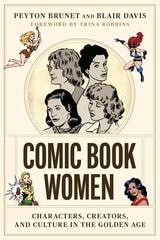
Comic Book Women
Characters, Creators, and Culture in the Golden AgeBy Peyton Brunet and Blair Davis; foreword by Trina Robbins
University of Texas Press, 2022
2023 Ray and Pat Browne Best Single Work by One or More Authors in Popular and American Culture, Popular and American Culture Association (PACA) / Popular Culture Association (PCA)
2023 Ray and Pat Browne Best Edited Reference/Primary Source Work in Popular Culture Award (Honorable Mention), Popular and American Culture Association (PACA) / Popular Culture Association (PCA)
2023 Peter C. Rollins Book Award, Southwest Texas Popular Culture and American Culture Associations (SWPACA)
A revisionist history of women's pivotal roles as creators of and characters in comic books.
The history of comics has centered almost exclusively on men. Comics historians largely describe the medium as one built by men telling tales about male protagonists, neglecting the many ways in which women fought for legitimacy on the page and in publishers’ studios. Despite this male-dominated focus, women played vital roles in the early history of comics. The story of how comic books were born and how they evolved changes dramatically when women like June Tarpé Mills and Lily Renée are placed at the center rather than at the margins of this history, and when characters such as the Black Cat, Patsy Walker, and Señorita Rio are analyzed.
Comic Book Women offers a feminist history of the golden age of comics, revising our understanding of how numerous genres emerged and upending narratives of how male auteurs built their careers. Considering issues of race, gender, and sexuality, the authors examine crime, horror, jungle, romance, science fiction, superhero, and Western comics to unpack the cultural and industrial consequences of how women were represented across a wide range of titles by publishers like DC, Timely, Fiction House, and others. This revisionist history reclaims the forgotten work done by women in the comics industry and reinserts female creators and characters into the canon of comics history.
Coming to Light
American Women Poets in the Twentieth CenturyDiane Wood Middlebrook and Marilyn Yalom, Editors
University of Michigan Press, 1985
Common Disaster
PoemsM. Cynthia Cheung
Acre Books, 2025
As a front-line physician, M. Cynthia Cheung started writing poetry during the worst days of the COVID-19 pandemic. Her remarkable debut collection, Common Disaster, chronicles these experiences. Confronting not just the coronavirus but also war crimes and the death of loved ones, Cheung shows us that the pandemic is only one of many disasters we hold in common. In poems that look to both the past and future, she takes a stand against the extinction of self and memory, challenging the violence of erasure.
The period covered by the book is geologic and vast. It examines present-day evidence of ancient human activity and natural history, including the Lascaux caves, asteroid craters, tar pits, and Viking ruins. The poems include ghazals, thoughtful free verse, and work that takes up the page in reframing classical Chinese oracular texts to situate the pain of a doctor in crisis.
As a physician-poet, Cheung asks us to see beyond the every day to the devastating truths about the human condition.

Communication and Women's Friendships
Parallels and Intersections in Literature and LifeJanet Doubler Ward
University of Wisconsin Press, 1993
Complete Poems. A Bilingual Edition
Pernette du Guillet
Iter Press, 2010
This first complete English edition provides a fully-annotated bilingual text and a fresh perspective from which to appreciate the originality and beauty of this poetry.
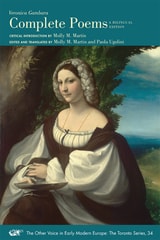
Complete Poems
A Bilingual EditionVeronica Gambara
Iter Press, 2014
Concordance to the Letters of Emily Dickinson
Cynthia MacKenzie
University Press of Colorado, 2000
The similarities between the letters and the poems makes the typical concordance search for the poet's thematically significant words and biographical references particularly relevant. Tracing Dickinson's thoughts through her correspondence complements the ideas within her poetry and thus provides a more comprehensive insight into the poet's personal and artistic development. The concordance will facilitate an understanding of words or concepts that may be obscure in the poetry by itself. Research into Dickinson's problematic style, characterized by gaps, disjunctions, and ellipses, will be greatly enhanced.
By listing Dickinson's words together with their contexts and frequencies, the concordance provides the scholar with the ability to answer confidently questions of a statistical or stylistic nature. Finally, one of the most important functions of this concordance is to provide scholar, student, and general reader alike with endless opportunities to make exciting and unexpected discoveries by way of browsing.
Conquest of the New Word
Experimental Fiction and Translation in the AmericasBy Johnny Payne
University of Texas Press, 1993
Latin American fiction won great acclaim in the United States during the 1960s, when many North American writers and critics felt that our national writing had reached a low ebb. In this study of experimental fiction from both Americas, Johnny Payne argues that the North American reception of the "boom" in Latin American fiction distorted the historical grounding of this writing, erroneously presenting it as mainly an exotic "magical realism." He offers new readings that detail the specific, historical relation between experimental fiction and various authors' careful, deliberate deformations and reformations of the political rhetoric of the modern state.
Payne juxtaposes writers from Argentina and Uruguay with North American authors, setting up suggestive parallels between the diverse but convergent practices of writers on both continents. He considers Nelson Marra in conjunction with Donald Barthelme and Gordon Lish; Teresa Porzecanski with Harry Mathews; Ricardo Piglia with John Barth; Silvia Schmid and Manuel Puig with Fanny Howe and Lydia Davis; and Jorge Luis Borges and Luisa Valenzuela with William Burroughs and Kathy Acker.
With this innovative, dual-continent approach, Conquest of the New Word will be of great interest to everyone working in Latin American literature, women's studies, translation studies, creative writing, and cultural theory.
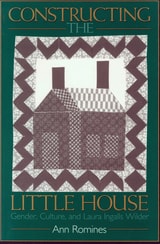
Constructing the Little House
Gender, Culture, and Laura Ingalls WilderAnn Romines
University of Massachusetts Press, 1997
Ann Romines interweaves personal observation with scholarly analysis to address these questions. Writing from a feminist perspective and drawing on resources of gender studies, cultural studies, and new historicist reading, she examines both the content of the novels and the process of their creation. She explores the relationship between mother and daughter working as collaborative authors and calls into question our assumptions about plot, juvenile fiction, and constructions of gender on the nineteenth-century frontier and in the Depression years when the Little House books were written.
This is a book that will appeal both to scholars and to general readers who might welcome an engaging and accessible companion volume to the Little House novels.
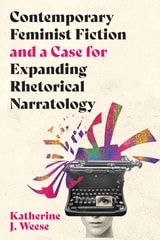
Contemporary Feminist Fiction and a Case for Expanding Rhetorical Narratology
Katherine J. Weese
The Ohio State University Press, 2025
Examining Ali Smith’s The Accidental and Hotel World, Barbara Kingsolver’s The Poisonwood Bible, Toni Morrison’s Beloved, Kate Atkinson’s A God in Ruins and Life After Life, and Ruth Ozeki’s A Tale for the Time Being, Weese demonstrates how various narratological theories inform rather than compete with one another. Through an expanded rhetorical poetics, including a refined version of James Phelan’s MTS (mimetic, thematic, synthetic) model, she reframes post-postmodern theorists’ concerns with communicative function through a narratological lens to make the case that exploring the rhetorical function of unnatural devices challenges and extends the claims of narrow metamodern readings.