Results by title
22279 books match the query 'Social Science' and 1700 start with c

Chinese Cinema
Identity, Power, and GlobalizationEdited by Jeff Kyong-McClain, Russell Meeuf, and Jing Jing Chang
Hong Kong University Press, 2022
In Chinese Cinema: Identity, Power, and Globalization, a variety of scholars explore the history, aesthetics, and politics of Chinese cinema as the Chinese film industry grapples with its place as the second-largest film industry in the world. Exploring the various ways that Chinese cinema engages with global politics, market forces, and film cultures, this edited volume places Chinese cinema against an array of contexts informing the contours of Chinese cinema today. The book also demonstrates that Chinese cinema in the global context is informed by the intersections and tensions found in Chinese and world politics, national and international co-productions, the local and global in representing Chineseness, and the lived experiences of social and political movements versus screened politics in Chinese film culture.
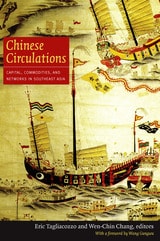
Chinese Circulations
Capital, Commodities, and Networks in Southeast AsiaEric Tagliacozzo and Wen-Chin Chang, eds.
Duke University Press, 2011
Contributors. Leonard Blussé, Wen-Chin Chang, Lucille Chia, Bien Chiang, Nola Cooke, Jean DeBernardi, C. Patterson Giersch, Takeshi Hamashita, Kwee Hui Kian, Li Tana, Lin Man-houng, Masuda Erika, Adam McKeown, Anthony Reid , Sun Laichen, Heather Sutherland, Eric Tagliacozzo, Carl A. Trocki, Wang Gungwu, Kevin Woods, Wu Xiao
Chinese Communist Materials at the Bureau of Investigation Archives, Taiwan
Peter Donovan, Carl E. Dorris, and Lawrence R. Sullivan
University of Michigan Press, 1976
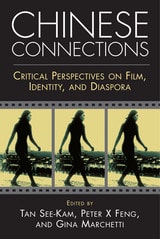
Chinese Connections
Critical Perspectives on Film, Identity, and DiasporaGina Marchetti
Temple University Press, 2009
Chinese Connections is a valuable new anthology that provides a prismatic look at the cross-fertilization between Chinese film and global popular culture. Leading film scholars consider the influence of world cinema on China-related and Chinese-related cinema over the last five decades. Highlighting the neglected connections between Chinese films and American and European cinema, the editors and contributors examine popular works such as Ang Lee’s The Hulk and Olivier Assayas’ Irma Vep to show the nexus of international film production and how national, political, social and sexual identities are represented in the Chinese diaspora.
With talent flowing back and forth between East and West, Chinese Connections explores how issues of immigration, class, race and economic displacement are viewed on a global level, ultimately providing a greater understanding of the impact of Chinese filmmaking at home and abroad.
Contributors include: Grace An, Aaron Anderson, Chris Berry, Evans Chan, Li-Mei Chang, Frances Gateward, Andrew Grossman, Peter Hitchcock, Chuck Kleinhans, Jenny Kwok Wah Lau, Helen Leung, Aaron Magnan-Park, Gayle Wald, Esther C.M. Yau, Emilie Yueh-yu Yeh, Xuelin Zhou and the editors.
Chinese Domestic Politics and Foreign Policy in the 1970s
Allen S. Whiting
University of Michigan Press, 1979
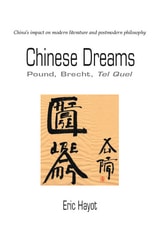
Chinese Dreams
Pound, Brecht, Tel QuelEric Hayot
University of Michigan Press, 2011
China’s profound influence on the avant-garde in the 20th century was nowhere more apparent than in the work of Ezra Pound, Bertolt Brecht, and the writers associated with the Parisian literary journal Tel quel. Chinese Dreams explores the complex, intricate relationship between various “Chinas”—as texts—and the nation/culture known simply as “China”—their context—within the work of these writers. Eric Hayot calls into question the very means of representing otherness in the history of the West and ultimately asks if it might be possible to attend to the political meaning of imagining the other, while still enjoying the pleasures and possibilities of such dreaming. The latest edition of this critically acclaimed book includes a new preface by the author.
“Lucid and accessible . . . an important contribution to the field of East-West comparative studies, Asian studies, and modernism.”
—Comparative Literature Studies
“Instead of trying to decipher the indecipherable ‘China’ in Western literary texts and critical discourses, Hayot chose to show us why and how ‘China’ has remained, and will probably always be, an enchanting, ever-elusive dream. His approach is nuanced and refreshing, his analysis rigorous and illuminating.”
—Michelle Yeh, University of California, Davis
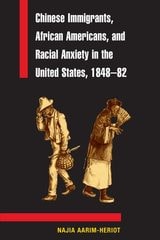
Chinese Immigrants, African Americans, and Racial Anxiety in the United States, 1848-82
Najia Aarim-Heriot
University of Illinois Press, 2003
The “Chinese question” and the “Negro problem” were bound up with one another in nineteenth-century America. Indeed, the negative stereotypes, exclusionary laws, and incendiary rhetoric employed against both populations bore striking similarities.
Najia Aarim-Heriot forcefully demonstrates that the anti-Chinese sentiment behind the passage of the Chinese Exclusion Act of 1882 is inseparable from the racial double standards applied by mainstream white society toward white and nonwhite groups during the same period. Aarim-Heriot argues that previous studies on American Sinophobia have overemphasized the resentment labor organizations felt toward incoming Chinese workers. As a result, scholars have overlooked the broader ways in which the growing nation sought to define and unify itself through the exclusion and oppression of nonwhite peoples.
A challenge to traditional approaches to Chinese American history, Chinese immigrants, African Americans, and Racial Anxiety in the United States, 1848–82 offers a holistic examination of American Sinophobia and the racialization of national immigration policies.
Chinese Marriages in Transition
From Patriarchy to New FamilismXiaoling Shu
Rutgers University Press, 2023
This book is freely available in an open access edition thanks to TOME (Toward an Open Monograph Ecosystem)— a collaboration of the Association of American Universities, the Association of University Presses, and the Association of Research Libraries—and the generous support of the University of California, Davis. Learn more at the TOME website, available at: openmonographs.org.
Download the open access book here.
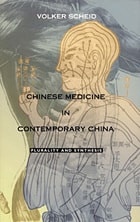
Chinese Medicine in Contemporary China
Plurality and SynthesisVolker Scheid
Duke University Press, 2002
Scheid, a medical anthropologist and practitioner of Chinese medicine in practice since 1983, has produced an ethnography that accepts plurality as an intrinsic and nonreducible aspect of medical practice. It has been widely noted that a patient visiting ten different practitioners of Chinese medicine may receive ten different prescriptions for the same complaint, yet many of these various treatments may be effective. In attempting to illuminate the plurality in Chinese medical practice, Scheid redefines-and in some cases abandons-traditional anthropological concepts such as tradition, culture, and practice in favor of approaches from disciplines such as science and technology studies, social psychology, and Chinese philosophy. As a result, his book sheds light not only on Chinese medicine but also on the Western academic traditions used to examine it and presents us with new perspectives from which to deliberate the future of Chinese medicine in a global context.
Chinese Medicine in Contemporary China is the product of two decades of research including numerous interviews and case studies. It will appeal to a western academic audience as well as practitioners of Chinese medicine and other interested medical professionals, including those from western biomedicine.
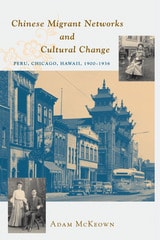
Chinese Migrant Networks and Cultural Change
Peru, Chicago, and Hawaii 1900-1936Adam McKeown
University of Chicago Press, 2001
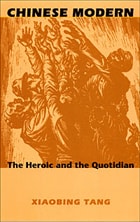
Chinese Modern
The Heroic and the QuotidianXiaobing Tang
Duke University Press, 2000
Tang uncovers crucial clues to modern Chinese literary and cultural practices through readings of Wu Jianren’s 1906 novel The Sea of Regret and works by canonical writers Lu Xun, Ding Ling, and Ba Jin. For the midcentury, he broadens his investigation by considering theatrical, cinematic, and visual materials in addition to literary texts. His reading of the 1963 play The Young Generation reveals the anxiety and terror underlying the exhilarating new socialist life portrayed on the stage. This play, enormously influential when it first appeared, illustrates the utopian vision of China’s lyrical age and its underlying discontents—both of which are critical for understanding late-twentieth-century China. Tang closes with an examination of post–Cultural Revolution nostalgia for the passion of the lyrical age.
Throughout Chinese Modern Tang suggests a historical and imaginative affinity between apparently separate literatures and cultures. He thus illuminates not only Chinese modernity but also the condition of modernity as a whole, particularly in light of the postmodern recognition that the market and commodity culture are both angel and devil.
This elegantly written volume will be invaluable to students of China, Asian studies, literary criticism, and cultural studies, as well as to readers who study modernity.

Chinese Modernism in the Era of Reforms
Cultural Fever, Avant-Garde Fiction, and the New Chinese CinemaXudong Zhang
Duke University Press, 1997
In examining the aesthetic and philosophical formulations of the New Era’s intellectual elites, Zhang first analyzes the intense cultural and intellectual debates, known as the “Great Cultural Discussion” or “Cultural Fever” that took place in Chinese urban centers in the mid- and late 1980s. Chinese literary modernism is then explored, specifically in relation to Deng Xiaoping’s sweeping reforms and with a focus on the changing literary sensibility and avant-garde writers such as Yu Hua, Ge Fei, and Su Tong. Lastly, Zhang looks at the the making of New Chinese Cinema and films such as Yellow Earth, Horse Thief, and King of the Children—films through which Fifth Generation filmmakers first developed a style independent from socialist realism. By tracing the origins and contemporary elaboration of the idea of Chinese modernism, Zhang identifies the discourse of modernism as one of the decisive formal articulations of the social dynamism and cultural possibilities of post-Mao China.
Capturing the historical experience and the cultural vision of China during a crucial decade in its emergence as a world power, Chinese Modernism in the Era of Reforms will interest students and scholars of modernism, Chinese literature and history, film studies, and cultural studies.
Chinese Paintings in Chinese Publications, 1956–1968
An Annotated Bibliography and Index to the PaintingsEllen Johnston Laing
University of Michigan Press, 1969

Chinese Popular Culture and the State, Volume 9
Jing Wang, ed.
Duke University Press, 0
Contributors. Tani E. Barlow, Dai Jinhua, Judith Farquhar, David S. G. Goodman, James L. Hevia, Li Hsiaoti, Ralph Litzinger, Eric Kit-Wa Ma, Jonathan Scott Noble, Jing Wang
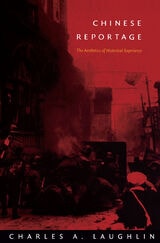
Chinese Reportage
The Aesthetics of Historical ExperienceCharles A. Laughlin
Duke University Press, 2002
Laughlin traces the roots of reportage (or baogao wenxue) to the travel literature of the Qing Dynasty but shows that its flourishing was part of the growth of Chinese communism in the twentieth century. In a modern Asian context critical of capitalism and imperialism, reportage offered the promise of radicalizing writers through a new method of literary practice and the hope that this kind of writing could in turn contribute to social revolution and China’s national self-realization. Chinese Reportage explores the wide range of social engagement depicted in this literature: witnessing historic events unfolding on city streets; experiencing brutal working conditions in 1930s Shanghai factories; struggling in the battlefields and trenches of the war of resistance against Japan, the civil war, and the Korean war; and participating in revolutionary rural, social, and economic transformation. Laughlin’s close readings emphasize the literary construction of social space over that of character and narrative structure, a method that brings out the critique of individualism and humanism underlying the genre’s aesthetics.
Chinese Reportage recaptures a critical aspect of leftist culture in China with far-reaching implications for historians and sociologists as well as literary scholars.
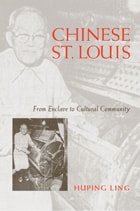
Chinese St Louis
From Enclave To Cultural CommunityHuping Ling
Temple University Press, 2004
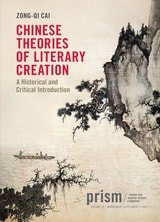
Chinese Theories of Literary Creation
A Historical and Critical IntroductionZong-qi Cai, issue editor
Duke University Press, 2024
Chinese Theories of Theater and Performance from Confucius to the Present
Edited and Translated by Faye Chunfang Fei
University of Michigan Press, 2002
The writings collected here treat the origins, aesthetic principles, and functions of theater. Some are virtual manuals on playwriting and performance techniques; some describe the practices, conditions, and government policies concerning theatrical performance. Many of the selections forcefully dispute the myth that Chinese theater is valuable in performance but lacking in literature--the fact is that there is an equal, if not more prominent, emphasis on theme and content. What emerges from the writings in Chinese Theories of Theater and Performance from Confucius to the Present is a highly evolved and sophisticated aesthetic.
The texts are enhanced by Faye C. Fei's extensive introductions and annotative notes that provide essential background and contextual information. She has provided accurate and engagingly written translations of the texts, making the majority of them available in English for the first time. The anthology will appeal to teachers and students of theater and performance, artists interested in Chinese theater and arts, and scholars and historians of Asia. Literary critics, aestheticians, philosophers, and social scientists will also find the volume of interest, since Chinese conceptions of the theater and performance are closely connected to China's general outlook on the humanities.
Faye C. Fei is Assistant Professor of Dramatic Arts, Macalester College.
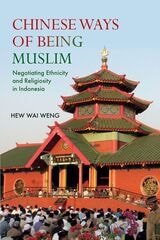
Chinese Ways of Being Muslim
Negotiating Ethnicity and Religiosity in IndonesiaHew Wai Weng
National University of Singapore Press, 2018
Chinese and Japanese Music-Dramas
J. I. Crump and William P. Malm, Editors
University of Michigan Press, 1975
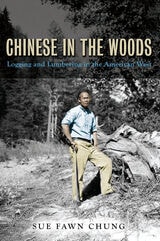
Chinese in the Woods
Logging and Lumbering in the American WestSue Fawn Chung
University of Illinois Press, 2015
Chineseness across Borders
Renegotiating Chinese Identities in China and the United StatesAndrea Louie
Duke University Press, 2004
Louie focuses on “In Search of Roots,” a program that takes young Chinese American adults of Cantonese descent to visit their ancestral villages in China’s Guangdong province. Through ethnographic interviews and observation, Louie examines the experiences of Chinese Americans both during village visits in China and following their participation in the program, which she herself took part in as an intern and researcher. She presents a vivid portrait of two populations who, though connected through family ties generations back, are meeting for the first time in the context of a rapidly changing contemporary China. Louie situates the participants’ and hosts’ shifting understandings of China and Chineseness within the context of transnational flows of people, media, goods, and money; China’s political and economic policies; and the racial and cultural politics of the United States.
Chino
Anti-Chinese Racism in Mexico, 1880-1940Jason Oliver Chang
University of Illinois Press, 2017
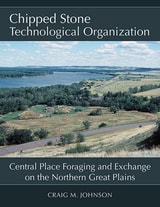
Chipped Stone Technological Organization
Central Place Foraging and Exchange on the Northern Great PlainsCraig M. Johnson
University of Utah Press, 2019
Central place foraging theory, through the field processing model, posits that the farther a source material is from the central living area, the more it will be processed before it is transported back, to avoid hauling heavy, nonusable parts on long trips. Johnson’s data support this theory and demonstrate that this model applies not only to nomadic hunter-gatherers but also to semisedentary farmer-hunters. His results also indicate that toolstone usage creates distinctive spatial patterns along the Missouri River, largely related to village distance from the sources. This is best illustrated with Knife River flint, which gradually declines in popularity downriver from its source in west-central North Dakota but increases in central South Dakota because of exchange.
Chipped Stone Tools in Formative Oaxaca, Mexico
Their Procurement, Production and UseWilliam J. Parry
University of Michigan Press, 1987

Chippewa Lake
A Community in Search of an IdentityCindy L. Hull
Michigan State University Press, 2012
Chippewa Lake is an idyllic waterfront community in north-central Michigan, popular with retirees and weekenders. The lake is surrounded by a rural farming community, but the area is facing a difficult transition as local demographics shift, and as it transforms from an agriculture-based economy to one that relies on wage labor. As farms have disappeared, local residents have employed a variety of strategies to adapt to a new economic structure. The community, meanwhile, has been indelibly affected by the advent of newcomers and retirees challenging the rural cultural values. An anthropologist with a background in sociology, Cindy L. Hull deftly weaves together oral accounts, historic documents, and participant surveys compiled from her nearly thirty years of living in the area to create a textured portrait of a community in flux.
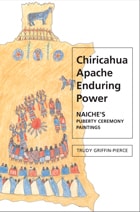
Chiricahua Apache Enduring Power
Naiche's Puberty Ceremony PaintingsTrudy Griffin-Pierce, foreword by J. Jefferson Reid and Stephanie M. Whittlesey
University of Alabama Press, 2006
A gripping story of the cultural resilience of the descendants of Geronimo and Cochise
This book reveals the conflicting meanings of power held by the federal government and the Chiricahua Apaches throughout their history of interaction. When Geronimo and Naiche, son of Cochise, surrendered in 1886, their wartime exploits came to an end, but their real battle for survival was only beginning. Throughout their captivity in Florida, Alabama, and Oklahoma, Naiche kept alive Chiricahua spiritual power by embodying it in his beautiful hide paintings of the Girl’s Puberty Ceremony—a ritual at the very heart of tribal cultural life and spiritual strength.
This narrative is a tribute to the Chiricahua people, who survive today, despite military efforts to annihilate them, government efforts to subjugate them, and social efforts to destroy their language and culture. Although federal policy makers brought to bear all the power at their command, they failed to eradicate Chiricahua spirit and identity nor to convince them that their lower status was just part of the natural social order. Naiche, along with many other Chiricahuas, believed in another kind of power. Although not known to have Power of his own in the Apache sense, Naiche’s paintings show that he believed in a vital source of spiritual strength. In a very real sense, his paintings were visual prayers for the continuation of the Chiricahua people. Accessible to individuals for many purposes, Power helped the Chiricahuas survive throughout their history.
Griffin-Pierce explores Naiche’s artwork through the lens of current anthropological theory on power, hegemony, resistance, and subordination. As she retraces the Chiricahua odyssey during 27 years of incarceration and exile by visiting their internment sites, she reveals how the Power was with them throughout their dark period. As it was when the Chiricahua warriors and their families struggled to stay alive, Power remains the centering focus for contemporary Chiricahua Apaches. Although never allowed to return to their beloved homeland, not only are the Chiricahua Apaches surviving today, they are keeping their traditions alive and their culture strong and vital.
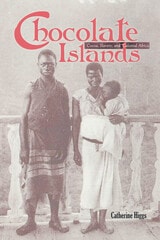
Chocolate Islands
Cocoa, Slavery, and Colonial AfricaCatherine Higgs
Ohio University Press, 2012
In Chocolate Islands: Cocoa, Slavery, and Colonial Africa, Catherine Higgs traces the early-twentieth-century journey of the Englishman Joseph Burtt to the Portuguese colony of São Tomé and Príncipe—the chocolate islands—through Angola and Mozambique, and finally to British Southern Africa. Burtt had been hired by the chocolate firm Cadbury Brothers Limited to determine if the cocoa it was buying from the islands had been harvested by slave laborers forcibly recruited from Angola, an allegation that became one of the grand scandals of the early colonial era. Burtt spent six months on São Tomé and Príncipe and a year in Angola. His five-month march across Angola in 1906 took him from innocence and credulity to outrage and activism and ultimately helped change labor recruiting practices in colonial Africa.
This beautifully written and engaging travel narrative draws on collections in Portugal, the United Kingdom, and Africa to explore British and Portuguese attitudes toward work, slavery, race, and imperialism. In a story still familiar a century after Burtt’s sojourn, Chocolate Islands reveals the idealism, naivety, and racism that shaped attitudes toward Africa, even among those who sought to improve the conditions of its workers.

Chocolate Islands
Cocoa, Slavery, and Colonial AfricaCatherine Higgs
Ohio University Press, 0
This beautifully written and engaging travel narrative draws on collections in Portugal, the United Kingdom, and Africa to explore British and Portuguese attitudes toward work, slavery, race, and imperialism. In a story still familiar a century after Burtt’s sojourn, Chocolate Islands reveals the idealism, naivety, and racism that shaped attitudes toward Africa, even among those who sought to improve the conditions of its workers.
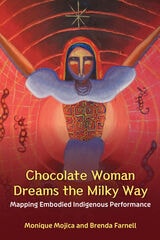
Chocolate Woman Dreams the Milky Way
Mapping Embodied Indigenous PerformanceMonique Mojica and Brenda Farnell
University of Michigan Press, 2023
Co-authored with anthropologist Brenda Farnell, the book challenges the divide between artist and scholar, and addresses the many levels of cultural, disciplinary, and linguistic translations required to achieve this. Placing the complex intellect inherent to Indigenous Knowledges at its center, the book engages Indigenous performance theory, and concepts that link body, land, and story, such as terra nullius/corpus nullius, mapping, pattern literacy, land literacy, and movement literacy. Enhanced by contributions from other artists and scholars, the book challenges Eurocentric ideologies about what counts as “performance” and what is required from an “audience,” as well as long-standing body-mind dualisms.
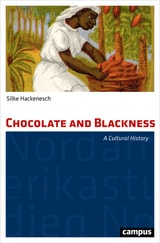
Chocolate and Blackness
A Cultural HistorySilke Hackenesch
Campus Verlag, 2017
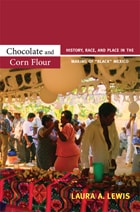
Chocolate and Corn Flour
History, Race, and Place in the Making of "Black" MexicoLaura A. Lewis
Duke University Press, 2012
Drawing on more than a decade of fieldwork, Lewis offers a richly detailed and subtle ethnography of the lives and stories of the people of San Nicolás, including community residents who have migrated to the United States. San Nicoladenses, she finds, have complex attitudes toward blackness—as a way of identifying themselves and as a racial and cultural category. They neither consider themselves part of an African diaspora nor deny their heritage. Rather, they acknowledge their hybridity and choose to identify most deeply with their community.
Chocolate on Trial
Slavery, Politics, and the Ethics of BusinessLowell J. Satre
Ohio University Press, 2005
Chocolate on Trial: Cadbury, Slavery and the Economics of Virtue in Imperial Britain gives a lively and highly readable account of the events surrounding the libel trial in which Cadbury Bros. Ltd. sued the London Standard, following the newspaper's accusation that the firm was hypocritical in its use of slave-grown cocoa. As compelling now as at the turn of the previous century, the issues probed by Lowell J. Satre give invaluable historical background to contemporary issues of business ethics, corporate social responsibility, and globalization. The story Satre tells illuminates what a stubbornly persistent institution slavery was and shows how Cadbury, a company with a well-regarded brand name and logo, endured ethical dilemmas and challenges to its record for social responsibility. Chocolate on Trial brings to life the age-old conflict between economic interests and the value of human life.
Satre illuminates the stubborn persistence of the institution of slavery and shows how Cadbury, a company with a well-regarded brand name from the nineteenth century, faced ethical dilemmas and challenges to its record for social responsibility. Chocolate on Trial brings to life the age-old conflict between economic interests and regard for the dignity of human life.

Chocolate, Strawberry, and Vanilla
A History Of American Ice CreamAnne Cooper Funderburg
University of Wisconsin Press, 1995
Chocolate, Strawberry, and Vanilla traces the evolution of ice cream from a rarity to an everyday indulgence. It covers the genesis of ice cream in America, the invention of the hand-cranked ice cream freezer, the natural ice industry, the beginnings of wholesale ice cream manufacturing, and the origins of the ice cream soda, sundae, cone, sandwich, and bar. It also recounts the histories of many brands, including Dairy Queen, Good Humor, Eskimo Pie, Ben and Jerry's, Baskin-Robbins, and Haagen-Dazs. This history of ice cream reflects and reveals changes in social customs, diet and nutrition, class distinctions, leisure activities, and everyday life.
Chocolate
Pathway to the GodsMeredith L. Dreiss and Sharon Edgar Greenhill
University of Arizona Press, 2008
Although it didn’t receive its Western scientific name, Theobroma cacao—“food of the gods”—until the eighteenth century, the cacao tree has been at the center of Mesoamerican mythology for thousands of years. Not only did this “chocolate tree” produce the actual seeds from which chocolate was extracted but it was also symbolically endowed with cosmic powers that enabled a dialogue between humans and their gods. From the pre-Columbian images included in this sumptuous book, we are able to see for ourselves the importance of chocolate to the Maya, Aztecs, Olmecs, Mixtecs, and Zapotecs who grew, produced, traded, and fought over the prized substance.
Through archaeological and other ethnohistoric research, the authors of this fascinating book document the significance of chocolate—to gods, kings, and everyday people—over several millennia. The illustrations allow us to envision the many ancient uses of this magical elixir: in divination ceremonies, in human sacrifices, and even in ball games. And as mythological connections between cacao trees, primordial rainforests, and biodiversity are unveiled, our own quest for ecological balance is reignited. In demonstrating the extraordinary value of chocolate in Mesoamerica, the authors provide new reasons—if any are needed—to celebrate this wondrous concoction.
Choctaw Prophecy
A Legacy for the FutureTom Mould
University of Alabama Press, 2002
Explores the power and artistry of prophecy among the Mississippi Band of Choctaw Indians, who use predictions about the future to interpret the world around them
This book challenges the common assumption that American Indian prophecy was an anomaly of the 18th and 19th centuries that resulted from tribes across the continent reacting to the European invasion. Tom Mould’s study of the contemporary prophetic traditions of the Mississippi Band of Choctaw Indians reveals a much larger system of prophecy that continues today as a vibrant part of the oral tradition.
Mould shows that Choctaw prophecy is more than a prediction of the future; it is a way to unite the past, present, and future in a moral dialogue about how one should live. Choctaw prophecy, he argues, is stable and continuous; it is shared in verbal discourse, inviting negotiation on the individual level; and, because it is a tradition of all the people, it manifests itself through myriad visions with many themes. In homes, casinos, restaurants, laundromats, day care centers, and grocery stores, as well as in ceremonial and political situations, people discuss current events and put them into context with traditional stories that govern the culture. In short, recitation is widely used in everyday life as a way to interpret, validate, challenge, and create the world of the Choctaw speaker.
Choctaw Prophecy stands as a sound model for further study into the prophetic traditions of not only other American Indian tribes but also communities throughout the world. Weaving folklore and oral tradition with ethnography, this book will be useful to academic and public libraries as well as to scholars and students of southern Indians and the modern South.

Choices Women Make
Agency in Domestic Violence, Assisted Reproduction, and Sex WorkCarisa R. Showden
University of Minnesota Press, 2010
In Showden’s analysis, women’s agency emerges as an individual and social construct, rooted in concrete experience, complex and changing over time. She traces the development and deployment of agency, illustrating how it plays out in the messy workings of imperfect lives. In a series of case studies, she considers women within situations of intimate partner violence, reproductive decision making, and sex work such as prostitution and pornography. Each narrative offers insight into how women articulate their self-understanding and political needs in relation to the pressures they confront.
Showden’s understanding of women’s agency ultimately leads her to review possible policy and legal interventions that could improve the conditions within which agency develops and that could positively enhance women’s ability to increase and exercise their political and personal options.
Choke Points
Logistics Workers Disrupting the Global Supply ChainEdited by Jake Alimahomed-Wilson and Immanuel Ness
Pluto Press, 2017
This is the global supply chain, and, if the chain is broken, capitalism grinds to a halt. This book looks at case studies across the world to uncover a network of resistance by these workers who, despite their importance, often face vast exploitation and economic violence.
Experiencing first hand wildcat strikes, organised blockades and boycotts, the authors explore a diverse range of case studies, from South China dockworkers to the transformation of the port of Piraeus in Greece, and from the Southern California logistics sector, to dock and logistical workers in Chile and unions in Turkey.
Chol (Mayan) Folktales
A Collection of Stories from the Modern Maya of Southern MexicoNicholas A. Hopkins
University Press of Colorado, 2016
The rich Chol oral narrative tradition is represented by eleven stories, each printed in the original language of the storytellers with parallel English translations and accompanied by a brief introduction that provides the relevant cultural and mythological background. Included with eight of the stories is a link to an audio clip of the tale told aloud in the Chol language. In addition, Chol (Mayan) Folktales introduces a model for the analysis of narratives that can be used to demonstrate the existence of a tradition of storytelling applicable to other Maya lore, including Classic period hieroglyphic texts.
Creating a nuanced sense of the Mayan oral tradition and revealing a highly structured literary style, this collection provides insight into contemporary Maya culture as well as a greater understanding of Classic period society. It will be of interest to students and scholars of folklore and literature and to anthropologists and linguists.
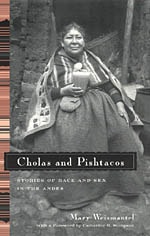
Cholas and Pishtacos
Stories of Race and Sex in the AndesMary Weismantel
University of Chicago Press, 2001
Cholas and Pishtacos are two provocative characters from South American popular culture—a sensual mixed-race woman and a horrifying white killerwho show up in everything from horror stories and dirty jokes to romantic novels and travel posters. In this elegantly written book, these two figures become vehicles for an exploration of race, sex, and violence that pulls the reader into the vivid landscapes and lively cities of the Andes. Weismantel's theory of race and sex begins not with individual identity but with three forms of social and economic interaction: estrangement, exchange, and accumulation. She maps the barriers that separate white and Indian, male and female-barriers that exist not in order to prevent exchange, but rather to exacerbate its inequality.
Weismantel weaves together sources ranging from her own fieldwork and the words of potato sellers, hotel maids, and tourists to classic works by photographer Martin Chambi and novelist José María Arguedas. Cholas and Pishtacos is also an enjoyable and informative introduction to a relatively unknown region of the Americas.
Choosing Ethnicity, Negotiating Race
Korean Adoptees in AmericaMia Tuan
Russell Sage Foundation, 2011
Choosing Homes, Choosing Schools
Annette Lareau
Russell Sage Foundation, 2014
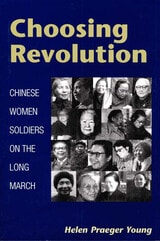
Choosing Revolution
Chinese Women Soldiers on the Long MarchHelen Praeger Young
University of Illinois Press, 2001
Enormously rich in detail, Young's Choosing Revolution reveals the complex interplay between women's experiences and the official, almost mythic version of the Long March. In addition to their riveting stories of the march itself, Young's subjects reveal much about what it meant in China to grow up female and, in many cases, poor during the first decades of the twentieth century. In speaking about the work they did and how they adapted to the demands of being a soldier, these women--both educated individuals who were well-known leaders and illiterate peasants--reveal the Long March as only one of many segments of the revolutionary paths they chose.
Against a background of diverse perspectives on the Long March, Young presents the experiences of four women in detail: one who brought her infant daughter with her on the Long March, one who gave birth during the march, one who was a child participant, and one who attended medical school during the march. Young also includes the stories of three women who did not finish the Long March. Her unique record of ordinary women in revolutionary circumstances reveals the tenacity and resilience that led these individuals far beyond the limits of most Chinese women's lives.
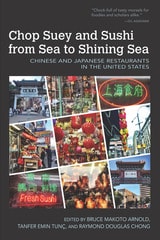
Chop Suey and Sushi from Sea to Shining Sea
Chinese and Japanese Restaurants in the United StatesBruce Makoto Arnold
University of Arkansas Press, 2018
The essays in Chop Suey and Sushi from Sea to Shining Sea fill gaps in the existing food studies by revealing and contextualizing the hidden, local histories of Chinese and Japanese restaurants in the United States.
The writer of these essays show how the taste and presentation of Chinese and Japanese dishes have evolved in sweat and hardship over generations of immigrants who became restaurant owners, chefs, and laborers in the small towns and large cities of America. These vivid, detailed, and sometimes emotional portrayals reveal the survival strategies deployed in Asian restaurant kitchens over the past 150 years and the impact these restaurants have had on the culture, politics, and foodways of the United States.
Some of these authors are family members of restaurant owners or chefs, writing with a passion and richness that can only come from personal investment, while others are academic writers who have painstakingly mined decades of archival data to reconstruct the past. Still others offer a fresh look at the amazing continuity and domination of the “evil Chinaman” stereotype in the “foreign” world of American Chinatown restaurants. The essays include insights from a variety of disciplines, including history, sociology, anthropology, ethnography, economics, phenomenology, journalism, food studies, and film and literary criticism.
Chop Suey and Sushi from Sea to Shining Sea not only complements the existing scholarship and exposes the work that still needs to be done in this field, but also underscores the unique and innovative approaches that can be taken in the field of American food studies.
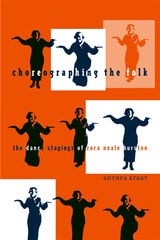
Choreographing the Folk
The Dance Stagings of Zora Neale HurstonAnthea Kraut
University of Minnesota Press, 2008
Recovers an important dimension of the work of the renowned African American artist
While Zora Neale Hurston and her 1937 novel Their Eyes Were Watching God have become widely celebrated, she was also a prolific stage director and choreographer. In the 1930s Hurston produced theatrical concerts that depicted a day in the life of a railroad work camp in Florida and featured a rousing Bahamian Fire Dance as the dramatic finale. In Choreographing the Folk, Anthea Kraut traces the significance and influence of Hurston’s little-known choreographic work.
Hurston’s concerts were concrete illustrations of the “real Negro art theatre” she was eager to establish, and they compellingly demonstrate how she used the arena of performance to advance a nuanced understanding of the black diaspora. Her version of the Fire Dance was staged in a variety of venues during the 1930s. In its multiple representations, Kraut asserts, the dance raised critical issues about ownership, artistry, and authenticity. Choreographing the Folk argues for the significance of Hurston’s choreography, and with perceptiveness, sensitivity, and originality, Kraut illuminates the important and often-contested place of black folk dance in American culture.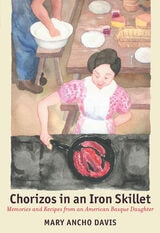
Chorizos in an Iron Skillet
Memories and Recipes from an American Basque DaughterMary Ancho Davis
University of Nevada Press, 2001
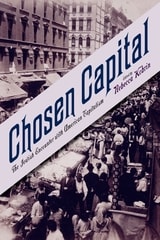
Chosen Capital
The Jewish Encounter with American CapitalismKobrin, Rebecca
Rutgers University Press, 2012
Surveying such diverse topics as Jews’ participation in the real estate industry, the liquor industry, and the scrap metal industry, as well as Jewish political groups and unions bent on reforming American capital, such as the American Labor Party and the International Ladies’ Garment Workers’ Union, contributors to this volume provide a new prism through which to view the Jewish encounter with America. The volume also lays bare how American capitalism reshaped Judaism itself by encouraging the mass manufacturing and distribution of foods like matzah and the transformation of synagogue cantors into recording stars. These essays force us to rethink not only the role Jews played in American economic development but also how capitalism has shaped Jewish life and Judaism over the course of the twentieth century.
Contributors:
Marni Davis, Georgia State University
Phyllis Dillon, independent documentary producer, textile conservator, museum curator
Andrew Dolkart, Columbia University
Andrew Godley, Henley Business School, University of Reading
Jonathan Karp, executive director, American Jewish Historical Society
Daniel Katz, Empire State College, State University of New York
Ira Katznelson, Columbia University
David S. Koffman, New York University
Eli Lederhendler, Hebrew University, Jerusalem
Jonathan Z. S. Pollack, University of Wisconsin—Madison
Jonathan D. Sarma, Brandeis University
Jeffrey Shandler, Rutgers University
Daniel Soyer, Fordham University
Chosen Women and Inka Statecraft
Bioarchaeology, Gender, and Foodways at SaqsaywamanBethany L. Turner
University of Alabama Press, 2026
A bioarchaeological study of chosen women’s labor, identity, and health in the Inka ceremonial center of Saqsaywaman
Chosen Women and Inka Statecraft illuminates the intersections between foodways, diet, gender, and power in the expansive Inka ceremonial complex of Saqsaywaman, Peru. Bioarchaeologist Bethany L. Turner weaves together geochemical and osteological research techniques to create osteobiographies for people who were likely special servants to the Inka royalty in the heart of the vast empire. These skeletal individuals, interred in a special cemetery atop Saqsaywaman, date to the fifteenth and sixteenth centuries and were previously excavated by Peruvian archaeologists.
By weaving her own data together with existing archaeological, osteological, and ethnohistoric studies of Saqsaywaman, Turner opens a rare window into everyday life among the aqllakuna, “chosen women” who grew, prepared, and served food and drink to the Inka elite. She argues that the embodied experiences of these individuals underscore the ways in which they were “made performative artifacts of Inka statecraft.” This statecraft was based on reciprocity, “to feed and be fed,” and the lived experiences of the people who lived under it left telltale signs in their bones and teeth. An important finding is that the aqllakuna, who prepared lavish feasts and heroic quantities of the finest maize beer, chicha, were likely not consuming it. However, they showed poor dental health as a result of chewing the maize to process it during brewing. This significant oral decay likely made them susceptible to chronic diseases and may have shortened their lives. Turner also asserts that the aqllakuna at Saqsaywaman included individuals whose skeletons were estimated to have been male but who likely performed feminine roles, reflecting the fluidity of gendered duality in indigenous Andean cosmology. In Chosen Women and Inka Statecraft, archaeologists, anthropologists, Andeanists, and food scholars will find new ways to consider life in the Inka past.
Christian America and the Kingdom of God
Richard T. Hughes
University of Illinois Press, 2012
Christian Converts and Social Protests in Meiji Japan
Irwin Scheiner
University of Michigan Press, 2002