Results by title
1116 books match the query 'Africa' and 65 start with c
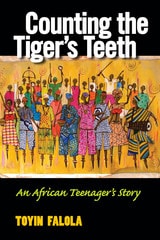
Counting the Tiger's Teeth
An African Teenager's StoryToyin Falola
University of Michigan Press, 2016
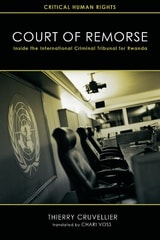
Court of Remorse
Inside the International Criminal Tribunal for RwandaThierry Cruvellier
University of Wisconsin Press, 2010
Fascinated by the Tribunal’s rich complexities, journalist Thierry Cruvellier came back day after day to watch the proceedings, spending more time there than any other outside observer. Gradually he gained the confidence of the victims, defendants, lawyers, and judges. Drawing on interviews with these protagonists and his close observations of their interactions, Cruvellier takes readers inside the courtroom to witness the motivations, mechanisms, and manipulations of justice as it unfolded on the stage of high-stakes, global politics. It is this ground-level view that makes his account so valuable—and so absorbing. A must-read for those who want to understand the dynamics of international criminal tribunals, Court of Remorse reveals both the possibilities and the challenges of prosecuting human rights violations.
Best Books for General Audiences, selected by the American Association for School Libraries and the Public Library Association
Best Books for High Schools, selected by the American Association for School Libraries
Creating Germans Abroad
Cultural Policies and National Identity in NamibiaDaniel Joseph Walther
Ohio University Press, 2002
When World War I brought an end to German colonial rule in Namibia, much of the German population stayed on. The German community, which had managed to deal with colonial administration, faced new challenges when the region became a South African mandate under the League of Nations in 1919. One of these was the issue of Germanness, which ultimately resulted in public conversations and expressions of identity.
In Creating Germans Abroad, Daniel Walther examines this discourse and provides striking new insights into the character of the German populace in both Germany and its former colony, Southwest Africa, known today as Namibia. In addition to German colonialism, Walther considers issues of race, class, and gender and the activities of minority groups. He offers new perspectives on German cultural and national identity during the Empire, the Weimar Republic, and the Third Reich.
In a larger context, Creating Germans Abroad acts as a model for investigating the strategies and motivations of groups and individuals engaged in national or ethnic engineering and demonstrates how unforeseen circumstances can affect the nature and outcome of these endeavors.
Creating the Creole Island
Slavery in Eighteenth-Century MauritiusMegan Vaughan
Duke University Press, 2005
Combining archival research with an engaging literary style, Vaughan juxtaposes extensive analysis of court records with examinations of the logs of slave ships and of colonial correspondence and travel accounts. The result is a close reading of life on the island, power relations, colonialism, and the process of cultural creolization. Vaughan brings to light complexities of language, sexuality, and reproduction as well as the impact of the French Revolution. Illuminating a crucial period in the history of Mauritius, Creating the Creole Island is a major contribution to the historiography of slavery, colonialism, and creolization across the Indian Ocean.

Creole Medievalism
Colonial France and Joseph Bédier’s Middle AgesMichelle R. Warren
University of Minnesota Press, 2010
In Creole Medievalism, Michelle Warren demonstrates that Bédier's relationship to this multicultural and economically peripheral colony motivates his nationalism in complex ways. Simultaneously proud of his French heritage and nostalgic for the island, Bédier defends French sovereignty based on an ambivalent resistance to his creole culture. Warren shows that in the early twentieth century, influential intellectuals from Réunion helped define the new genre of the "colonial novel," adopting a pro-colonial spirit that shaped both medieval and Francophone studies. Probing the work of a once famous but little understood cultural figure, Creole Medievalism illustrates how postcolonial France and Réunion continue to grapple with histories too varied to meet expectations of national unity.
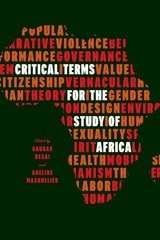
Critical Terms for the Study of Africa
Edited by Gaurav Desai and Adeline Masquelier
University of Chicago Press, 2018
Written by a distinguished group of scholars, the essays compiled in this volume take stock of African studies today and look toward a future beyond its fraught intellectual and political past. Each essay discusses one of our most critical terms for talking about Africa, exploring the trajectory of its development while pushing its boundaries. Editors Gaurav Desai and Adeline Masquelier balance the choice of twenty-five terms between the expected and the unexpected, calling for nothing short of a new mapping of the scholarly field. The result is an essential reference that will challenge assumptions, stimulate lively debate, and make the past, present, and future of African Studies accessible to students and teachers alike.
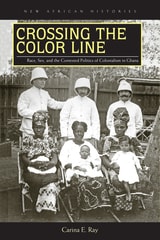
Crossing the Color Line
Race, Sex, and the Contested Politics of Colonialism in GhanaCarina E. Ray
Ohio University Press, 2015
Winner of the 2017 Aidoo-Snyder Book Prize
Winner of the 2016 American Historical Association’s Wesley-Logan Prize in African diaspora
Finalist for the 2016 Fage and Oliver Prize from the African Studies Association of the UK
Interracial sex mattered to the British colonial state in West Africa. In Crossing the Color Line, Carina E. Ray goes beyond this fact to reveal how Ghanaians shaped and defined these powerfully charged relations. The interplay between African and European perspectives and practices, argues Ray, transformed these relationships into key sites for consolidating colonial rule and for contesting its hierarchies of power. With rigorous methodology and innovative analyses, Ray brings Ghana and Britain into a single analytic frame to show how intimate relations between black men and white women in the metropole became deeply entangled with those between black women and white men in the colony in ways that were profoundly consequential.
Based on rich archival evidence and original interviews, the book moves across different registers, shifting from the micropolitics of individual disciplinary cases brought against colonial officers who “kept” local women to transatlantic networks of family, empire, and anticolonial resistance. In this way, Ray cuts to the heart of how interracial sex became a source of colonial anxiety and nationalist agitation during the first half of the twentieth century.
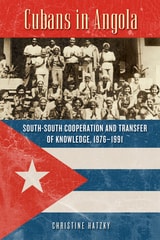
Cubans in Angola
South-South Cooperation and Transfer of Knowledge, 1976–1991Christine Hatzky
University of Wisconsin Press, 2015
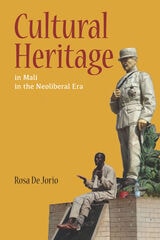
Cultural Heritage in Mali in the Neoliberal Era
Rosa De Jorio
University of Illinois Press, 2016
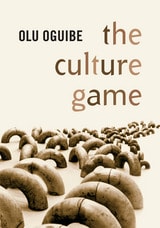
Culture Game
Olu Oguibe
University of Minnesota Press, 2004
An acclaimed artist and cultural provocateur reveals the hidden biases of the contemporary art world
In self-congratulatory tones of tolerance and open-mindedness, the Western gatekeepers of the contemporary art world—gallery owners and museum curators, patrons and promoters—take great pains to demonstrate their inclusive vision of world culture. They highlight the Latin American show mounted “a few years ago” or the African works featured in a recent exhibition of non-Western artists. Non-Western artists soon discover that this veneer of liberalism masks an array of unwritten, unspoken, and unseemly codes and quotas dictating the acquisition and exhibition of their works and the success of their careers. In past decades, cultural institutions and the critical establishment in the West resisted difference; today, they are obsessed with exoticism. Both attitudes reflect firmly entrenched prejudices that prescribe the rules of what Nigerian-born artist, curator, and scholar Olu Oguibe terms the “culture game.”
In the celebrated, controversial essays gathered here, Oguibe exposes the disparities and inconsistencies of the reception and treatment afforded Western and non-Western artists; the obstacles that these contradictions create for non-Western and minority artists, especially those who live and practice in the Western metropolis; and the nature and peculiar concerns of contemporary non-Western art as it deals with the ramifications and residues of the colonial encounter as well as its own historical and cultural past. Ranging from the impact of the West’s appetite for difference on global cultural relations and the existence of a digital Third World to the African redefinition of modernity, Oguibe’s uncompromising and unapologetic criticism provides a uniquely global vision of contemporary art and culture.
Culture and Liberation
Exile Writings, 1966–1985Alex La Guma
Seagull Books, 2020
This volume spans La Guma’s political and literary life in exile through accounts of his travels to Algeria, Lebanon, Vietnam, Soviet Central Asia, and elsewhere, along with his critical assessments of Paul Robeson, Nadine Gordimer, Maxim Gorky, Alexander Solzhenitsyn, and Pablo Neruda, among other writers. The first dedicated collection of La Guma’s exile writing, Culture and Liberation restores an overlooked dimension of his life and work, while opening a window on a wider world of cultural and political struggles in Africa, Asia, and Latin America during the second half of the twentieth century.
Culture in Chaos
An Anthropology of the Social Condition in WarStephen C. Lubkemann
University of Chicago Press, 2007
Lubkemann focuses on how Ndau social networks were fragmented by wartime displacement and the profound effect this had on gender relations. Demonstrating how wartime migration and post-conflict return were shaped by social struggles and interests that had little to do with the larger political reasons for the war, Lubkemann contests the assumption that wartime migration is always involuntary. His critical reexamination of displacement and his engagement with broader theories of agency and social change will be of interest to anthropologists, political scientists, historians, and demographers, and to anyone who works in a war zone or with refugees and migrants.
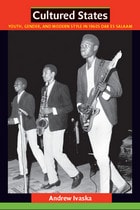
Cultured States
Youth, Gender, and Modern Style in 1960s Dar es SalaamAndrew Ivaska
Duke University Press, 2011
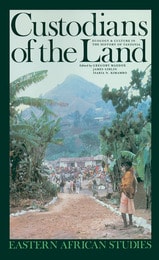
Custodians of the Land
Ecology and Culture in the History of TanzaniaGregory H. Maddox
Ohio University Press, 1995
Farming and pastoral societies inhabit ever-changing environments. This relationship between environment and rural culture, politics and economy in Tanzania is the subject of this volume which will be valuable in reopening debates on Tanzanian history.
In his conclusion, Isaria N. Kimambo, a founding father of Tanzanian history, reflects on the efforts of successive historians to strike a balance between external causes of change and local initiative in their interpretations of Tanzanian history.
He shows that nationalist and Marxist historians of Tanzanian history, understandably preoccupied through the first quarter-century of the country's post-colonial history with the impact of imperialism and capitalism on East Africa, tended to overlook the initiatives taken by rural societies to transform themselves.
Yet there is good reason for historians to think about the causes of change and innovation in the rural communities of Tanzania, because farming and pastoral people have constantly changed as they adjusted to shifting environmental conditions.
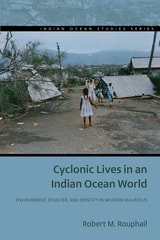
Cyclonic Lives in an Indian Ocean World
Environment, Disaster, and Identity in Modern MauritiusRobert M. Rouphail
Ohio University Press, 0
Disasters as historical processes shaping identity, governance, and diasporic memory in colonial and postcolonial Mauritius
In a world marked by increasingly destructive ecological and meteorological upheavals, Cyclonic Lives in an Indian Ocean World offers a historical analysis of how these catastrophes shape people’s understanding of themselves, their collective history, and their relationship to the institutions that govern them. An examination of cyclonic disasters in the multiethnic Indian Ocean island of Mauritius throws into stark relief how deep histories of diasporic identity formation, of imperial governance, and of the informal practices of racial difference making graft onto how everyday people interpret these moments of loss and the futures that emerge in their wake.
Cyclonic Lives shows that disasters are not only events; they are also processes through which people evaluate and rethink the most elemental social and cultural categories that give meaning to their lives. Beginning in the late nineteenth century and continuing until the early postcolonial era, this book tracks, for example, how Mauritians of African descent integrated these disasters into broader collective histories and memories of the Indian Ocean slave trade, how Hindu Indo-Mauritians understood cyclones’ ecological effects as material elements to be accounted for in a broader Hindu diasporic space, and how the late colonial and early postcolonial state built infrastructures—material, conceptual, and financial—to mitigate the threats posed by these storms and ensure their own long-term durability.
The increasing political, social, and economic instability that climate change has already triggered demands that humanists develop analytical geographies and methodologies that shed light on how power can modulate in asymmetrical ways at moments of crisis. If there is one central takeaway from this historical study of this small island in a big ocean, it is that catastrophic events are not things that merely happen to people; they are processes that remake them.