Results by title
1218 books match the query 'African Americans' and 65 start with c
Crime and Punishment in the Jim Crow South
Edited by Amy Louise Wood and Natalie J. Ring
University of Illinois Press, 2019
In this collection, Amy Louise Wood and Natalie J. Ring present nine groundbreaking essays about the carceral system and its development over time. Topics range from activism against police brutality to the peculiar path of southern prison reform to the fraught introduction of the electric chair. The essays tell nuanced stories of rapidly changing state institutions, political leaders who sought to manage them, and African Americans who appealed to the regulatory state to protect their rights.
Contributors: Pippa Holloway, Tammy Ingram, Brandon T. Jett, Seth Kotch, Talitha L. LeFlouria, Vivien Miller, Silvan Niedermeier, K. Stephen Prince, and Amy Louise Wood
Crisis of Conscience
Arkansas Methodists and the Civil Rights StruggleJames T. Clemons
Butler Center for Arkansas Studies, 2007
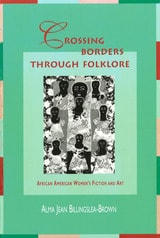
Crossing Borders through Folklore
African American Women's Fiction and ArtAlma Jean Billingslea-Brown
University of Missouri Press, 1999
Examining works by Toni Morrison, Paule Marshall, Faith Ringgold, and Betye Saar, this innovative book frames black women's aesthetic sensibilities across art forms. Investigating the relationship between vernacular folk culture and formal expression, this study establishes how each of the four artists engaged the identity issues of the 1960s and used folklore as a strategy for crossing borders in the works they created during the following two decades.
As a dynamic, open-ended process, folklore historically has enabled African-descended people to establish differential identity, resist dominance, and affirm group solidarity. This book documents the use of expressive forms of folklore in the fiction of Morrison and Marshall and the use of material forms of folklore in the visual representations of Ringgold and Saar. Offering a conceptual paradigm of a folk aesthetic to designate the practices these women use to revise and reverse meanings—especially meanings imposed on images such as Aunt Jemima and Sambo—Crossing Borders through Folklore explains how these artists locate sites of intervention and reconnection. From these sites, in keeping with the descriptive and prescriptive formulations for art during the sixties, Morrison, Marshall, Ringgold, and Saar articulate new dimensions of consciousness and creatively theorize identity.
Crossing Borders through Folklore is a significant and creative contribution to scholarship in both established and still- emerging fields. This volume also demonstrates how recent theorizing across scholarly disciplines has created elastic metaphors that can be used to clarify a number of issues. Because of its interdisciplinary approach, this study will appeal to students and scholars in many fields, including African American literature, art history, women's studies, diaspora studies, and cultural studies.
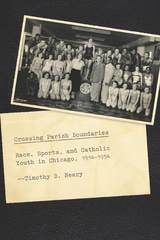
Crossing Parish Boundaries
Race, Sports, and Catholic Youth in Chicago, 1914-1954Timothy B. Neary
University of Chicago Press, 2016
In this book, Timothy B. Neary reveals the history of Bishop Bernard Sheil’s Catholic Youth Organization (CYO), which brought together thousands of young people of all races and religions from Chicago’s racially segregated neighborhoods to take part in sports and educational programming. Tens of thousands of boys and girls participated in basketball, track and field, and the most popular sport of all, boxing, which regularly filled Chicago Stadium with roaring crowds. The history of Bishop Sheil and the CYO shows a cosmopolitan version of American Catholicism, one that is usually overshadowed by accounts of white ethnic Catholics aggressively resisting the racial integration of their working-class neighborhoods. By telling the story of Catholic-sponsored interracial cooperation within Chicago, Crossing Parish Boundaries complicates our understanding of northern urban race relations in the mid-twentieth century.
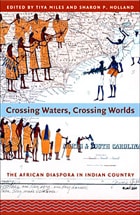
Crossing Waters, Crossing Worlds
The African Diaspora in Indian CountryTiya Miles and Sharon P. Holland, eds.
Duke University Press, 2006
Essays range from a close reading of the 1838 memoirs of a black and Native freewoman to an analysis of how Afro-Native intermarriage has impacted the identities and federal government classifications of certain New England Indian tribes. One contributor explores the aftermath of black slavery in the Choctaw and Chickasaw nations, highlighting issues of culture and citizenship. Another scrutinizes the controversy that followed the 1998 selection of a Miss Navajo Nation who had an African American father. A historian examines the status of Afro-Indians in colonial Mexico, and an ethnographer reflects on oral histories gathered from Afro-Choctaws. Crossing Waters, Crossing Worlds includes evocative readings of several of Toni Morrison’s novels, interpretations of plays by African American and First Nations playwrights, an original short story by Roberta J. Hill, and an interview with the Creek poet and musician Joy Harjo. The Native American scholar Robert Warrior develops a theoretical model for comparative work through an analysis of black and Native intellectual production. In his afterword, he reflects on the importance of the critical project advanced by this volume.
Contributors. Jennifer D. Brody, Tamara Buffalo, David A. Y. O. Chang, Robert Keith Collins, Roberta J. Hill, Sharon P. Holland, ku'ualoha ho’omnawanui, Deborah E. Kanter, Virginia Kennedy, Barbara Krauthamer, Tiffany M. McKinney, Melinda Micco, Tiya Miles, Celia E. Naylor, Eugene B. Redmond, Wendy S. Walters, Robert Warrior
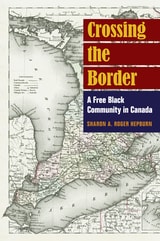
Crossing the Border
A Free Black Community in CanadaSharon A. Roger Hepburn
University of Illinois Press, 2007
How formerly enslaved people found freedom and built community in Ontario
In 1849, the Reverend William King and fifteen once-enslaved people he had inherited founded the Canadian settlement of Buxton on Ontario land set aside for sale to Blacks. Though initially opposed by some neighboring whites, Buxton grew into a 700-person agricultural community that supported three schools, four churches, a hotel, a lumber mill, and a post office.
Sharon A. Roger Hepburn tells the story of the settlers from Buxton’s founding of through its first decades of existence. Buxton welcomed Black men, woman, and children from all backgrounds to live in a rural setting that offered benefits of urban life like social contact and collective security. Hepburn’s focus on social history takes readers inside the lives of the people who built Buxton and the hundreds of settlers drawn to the community by the chance to shape new lives in a country that had long represented freedom from enslavement.
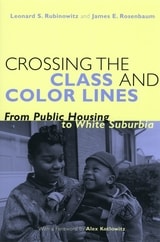
Crossing the Class and Color Lines
From Public Housing to White SuburbiaLeonard S. Rubinowitz and James E. Rosenbaum
University of Chicago Press, 2000
"This book's history of Chicago public housing should be required reading for anyone interested in social policy in the United States."—Jens Ludwig, Social Service Review
"[The authors'] work is rightly cited as one of the important precedents in the field. . . . This is a remarkable, unassailable accomplishment and this book is an important record of their scholarly contribution."—John M. Goering, Ethnic and Racial Studies
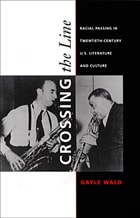
Crossing the Line
Racial Passing in Twentieth-Century U.S. Literature and CultureGayle Wald
Duke University Press, 2000
Wald begins her reading of twentieth-century passing narratives by analyzing works by African American writers James Weldon Johnson, Jessie Fauset, and Nella Larsen, showing how they use the “passing plot” to explore the negotiation of identity, agency, and freedom within the context of their protagonists' restricted choices. She then examines the 1946 autobiography Really the Blues, which details the transformation of Milton Mesirow, middle-class son of Russian-Jewish immigrants, into Mezz Mezzrow, jazz musician and self-described “voluntary Negro.” Turning to the 1949 films Pinky and Lost Boundaries, which imagine African American citizenship within class-specific protocols of race and gender, she interrogates the complicated representation of racial passing in a visual medium. Her investigation of “post-passing” testimonials in postwar African American magazines, which strove to foster black consumerism while constructing “positive” images of black achievement and affluence in the postwar years, focuses on neglected texts within the archives of black popular culture. Finally, after a look at liberal contradictions of John Howard Griffin’s 1961 auto-ethnography Black Like Me, Wald concludes with an epilogue that considers the idea of passing in the context of the recent discourse of “color blindness.”
Wald’s analysis of the moral, political, and theoretical dimensions of racial passing makes Crossing the Line important reading as we approach the twenty-first century. Her engaging and dynamic book will be of particular interest to scholars of American studies, African American studies, cultural studies, and literary criticism.
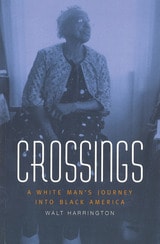
Crossings
A White Man's Journey Into Black AmericaWalt Harrington
University of Missouri Press, 1999
One day in the dentist's office journalist Walt Harrington heard a casual racist joke that left him enraged. Married to a black woman, Harrington is the father of two biracial children. His experience in the dentist's office made him realize not only that the joke was about his own children but also that he really knew very little about what it was like to be a black person in America.
After this rude awakening, Harrington set off on a twenty- five-thousand-mile journey through black America, talking with scores of black and white people along the way, including an old sharecropper, a city police chief, a jazz trumpeter, a convicted murderer, a welfare mother, and a corporate mogul. In Crossings, winner of the Gustavus Myers Award for the Study of Human Rights, he relates what he learned as he listened.
Crossroads Modernism
Descent And Emergence In African-American Literary CultureEdward M. Pavlic
University of Minnesota Press, 2002
An essential reconsideration of black literature and culture and its response to modernity
In the African American encounter with modernism, all was not confrontation. Rather, as Edward M. Pavli´c demonstrates here, African American artists negotiated the intersection of high modernism in Europe and American discourse to fashion their own distinctive response to American modernity. A deft repositioning of black literature and culture, Pavli´c’s book re-envisions the potentials and dilemmas where the different traditions of modernism meet and firmly establishes African American modernism at this cultural crossroads.
Offering new insights into the work of a variety of African American artists—including Ralph Ellison, Richard Wright, Zora Neale Hurston, James Baldwin, Toni Morrison, Robert Hayden, David Bradley, Yusef Komunyakaa, Romare Bearden, and John Coltrane—Pavli´c explores the complex ways in which key modernist philosophical ideas and creative techniques have informed black culture. Crossroads Modernism also provides an in-depth look at how West African cultural legacies are brought to bear in the structure of a truly African American modernist creative process. The book brings to light two interrelated strains of black modernism: Afro-Modernism, which employs established modernist concerns and conceits to illuminate internal and psychological experience; and Diasporic Modernism, which places greater emphasis on shared cultural space and builds on traditions rooted in West African cultures.Whereas much has been said about the (generally racist) use of "blackness" in constituting modernism, Crossroads Modernism is the first book to expose the key role that modernism has played in the constitution of "blackness" in African-American aesthetics. In light of this work, canonical texts in African American literature can no longer be read as devoid of their own singular contribution to international modernism.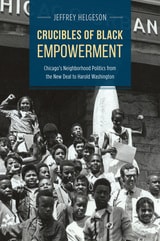
Crucibles of Black Empowerment
Chicago's Neighborhood Politics from the New Deal to Harold WashingtonJeffrey Helgeson
University of Chicago Press, 2014
In Crucibles of Black Empowerment, Jeffrey Helgeson recounts the rise of African American political power and activism from the 1930s onward, revealing how it was achieved through community building. His book tells stories of the housewives who organized their neighbors, building tradesmen who used connections with federal officials to create opportunities in a deeply discriminatory employment sector, and the social workers, personnel managers, and journalists who carved out positions in the white-collar workforce. Looking closely at black liberal politics at the neighborhood level in Chicago, Helgeson explains how black Chicagoans built the networks that eventually would overthrow the city’s seemingly invincible political machine.
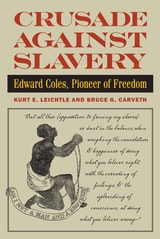
Crusade Against Slavery
Edward Coles, Pioneer of FreedomKurt E. Leichtle and Bruce G. Carveth
Southern Illinois University Press, 2011
Rejecting slavery from a young age, Coles's early wishes to free his family's slaves initially were stymied by legal, practical, and family barriers. Instead he went to Washington, D.C., where his work in the White House was a life-changing blend of social glitter, secretarial drudge, and distasteful political patronage. Returning home, he researched places where he could live out his ideals. After considerable planning and preparation, he left his family's Virginia tobacco plantation in 1819 and started the long trip west to Edwardsville, Illinois, pausing along the Ohio River on an emotional April morning to free his slaves and offer each family 160 acres of Illinois land of their own. Some continued to work for Coles, while others were left to find work for themselves. This book revisits the lives of the slaves Coles freed, including a noted preacher and contributor to the founding of what is now the second-oldest black Baptist organization in America.
Crusade Against Slavery details Coles's struggles with frontier life and his surprise run and election to the office of Illinois governor as well as his continuing antislavery activities. At great personal cost, he led the effort to block a constitutional convention that would have legalized slavery in the state, which resulted in an acrimonious civil suit brought on by his political enemies, who claimed he violated the law by not issuing a bond of emancipation for his slaves. Although initially convicted by a partisan jury, Coles was vindicated when the Illinois Supreme Court overturned the decisions of the lower courts. Through the story of Coles's moral and legal battles against slavery, Leichtle and Carveth unearth new perspectives on an institution that was on unsure footing yet strongly ingrained in the business interests at the economic base of the fledgling state.
In 1831, after less than a decade in Illinois-and after losing a bid for Congress-Coles left for Philadelphia, where he remained in correspondence with Madison about the issue of slavery. Drawing on previous incomplete treatments of Coles's life, including his own short memoir, Crusade Against Slavery includes the first published analysis of Madison's failure to free his slaves despite his plans to do so through his will and a fascinating exploration of Coles's struggle to understand Madison's inability to live up to the ideals both men shared.
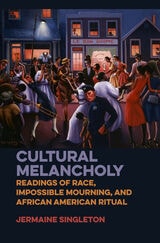
Cultural Melancholy
Readings of Race, Impossible Mourning, and African American RitualJermaine Singleton
University of Illinois Press, 2015
Singleton develops the concept of "cultural melancholy" as a response to scholarship that calls for the separation of critical race studies and psychoanalysis, excludes queer theoretical approaches from readings of African American literatures and cultures, and overlooks the status of racialized performance culture as a site of serious academic theorization. In doing so, he weaves critical race studies, psychoanalysis, queer theory, and performance studies into conversation to uncover a host of hidden dialogues—psychic and social, personal and political, individual and collective—for the purpose of promoting a culture of racial grieving, critical race consciousness, and collective agency.
Wide-ranging and theoretically bold, Cultural Melancholy counteracts the racial legacy effects that plague our twenty-first century multiculture.
Culture Concept
Writing and Difference in the Age of RealismMichael A. Elliott
University of Minnesota Press, 2002
Examines the prehistory of the American struggle to address cultural difference.
"Culture" is a term we commonly use to explain the differences in our ways of living. In this book Michael A. Elliott returns to the moment this usage was first articulated, tracing the concept of culture to the writings-folktales, dialect literature, local color sketches, and ethnographies-that provided its intellectual underpinnings in turn-of-the-century America.
The Culture Concept explains how this now-familiar definition of "culture" emerged during the late nineteenth century through the intersection of two separate endeavors that shared a commitment to recording group-based difference-American literary realism and scientific ethnography. Elliott looks at early works of cultural studies as diverse as the conjure tales of Charles Chesnutt, the Ghost Dance ethnography of James Mooney, and the prose narrative of the Omaha anthropologist-turned-author Francis La Flesche. His reading of these works-which struggle to find appropriate theoretical and textual tools for articulating a less chauvinistic understanding of human difference-is at once a recovery of a lost connection between American literary realism and ethnography and a productive inquiry into the usefulness of the culture concept as a critical tool in our time and times to come.
Cutting a Figure
Fashioning Black PortraitureRichard J. Powell
University of Chicago Press, 2009
Powell forcefully supports this argument with evidence drawn from a survey of nineteenth-century portraits, in-depth case studies of the postwar fashion model Donyale Luna and the contemporary portraitist Barkley L. Hendricks, and insightful analyses of images created since the late 1970s. Along the way, he discusses major artists—such as Frédéric Bazille, John Singer Sargent, James Van Der Zee, and David Hammons—alongside such overlooked producers of black visual culture as the Tonka and Nike corporations. Combining previously unpublished images with scrupulous archival research, Cutting a Figure illuminates the ideological nature of the genre and the centrality of race and cultural identity in understanding modern and contemporary portraiture.