Results by title
744 books match the query 'Culture' and 104 start with c
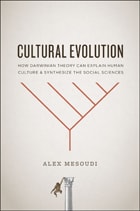
Cultural Evolution
How Darwinian Theory Can Explain Human Culture and Synthesize the Social SciencesAlex Mesoudi
University of Chicago Press, 2011
Cultural Histories of the Material World
Peter N. Miller, Editor
University of Michigan Press, 2013
All across the humanities fields there is a new interest in materials and materiality. This is the first book to capture and study the “material turn” in the humanities from all its varied perspectives. Cultural Histories of the Material World brings together top scholars from all these different fields—from Art History, Anthropology, Archaeology, Classics, Folklore, History, History of Science, Literature, Philosophy—to offer their vision of what cultural history of the material world looks like and attempt to show how attention to materiality can contribute to a more precise historical understanding of specific times, places, ways, and means. The result is a spectacular kaleidoscope of future possibilities and new perspectives.

Cultural Marxism in Postwar Britain
History, the New Left, and the Origins of Cultural StudiesDennis Dworkin
Duke University Press, 1997
Limited to neither a single discipline nor a particular intellectual figure, this book comprehensively views British cultural Marxism in terms of the dialogue between historians and the originators of cultural studies and in its relationship to the new left and feminist movements. From the contributions of Eric Hobsbawm, Christopher Hill, Rodney Hilton, Sheila Rowbotham, Catherine Hall, and E. P. Thompson to those of Perry Anderson, Barbara Taylor, Raymond Williams, Dick Hebdige, and Stuart Hall, Dworkin examines the debates over issues of culture and society, structure and agency, experience and ideology, and theory and practice. The rise, demise, and reorganization of journals such as The Reasoner, The New Reasoner, Universities and Left Review, New Left Review, Past and Present, are also part of the history told in this volume. In every instance, the focus of Dworkin’s attention is the intellectual work seen in its political context. Cultural Marxism in Postwar Britain captures the excitement and commitment that more than one generation of historians, literary critics, art historians, philosophers, and cultural theorists have felt about an unorthodox and critical tradition of Marxist theory.
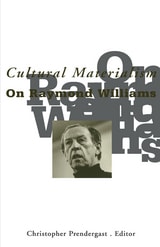
Cultural Materialism
On Raymond WilliamsChristopher Prendergast
University of Minnesota Press, 1995
"Raymond Williams was the last of the great European male revolutionary socialist intellectuals born before the end of the age of Europe (1492-1945)."-Cornel West
The work of Raymond Williams is of seminal importance in rethinking the idea of culture. He is widely regarded as one of the founding figures of international cultural studies. In tribute to his legacy, this edited volume is devoted to his theories of cultural materialism and is the most substantial and wide-ranging collection of essays on his work to be offered since his death in 1988. For all readers grappling with Williams's complex legacy, this volume is not to be missed.Contributors include Stanley Aronowitz, Graduate School, CUNY; John Brenkman, Baruch College, CUNY; Peter de Bolla, Cambridge University; Catherine Gallagher, University of California, Berkeley; Stephen Heath, University of California, Santa Cruz; John Higgins, University of Cape Town; Peter Hitchcock, Baruch College, CUNY; Cora Kaplan, Rutgers University; David Lloyd, University of California, Berkeley; Robert Miklitsch, Ohio University; Michael Moriarty, Cambridge University; Morag Shiach, Queen Mary and Westfield College, University of London; David Simpson, University of Colorado, Boulder; Gillian Skirrow; Kenneth Surin, Duke University; Paul Thomas, University of California, Berkeley; Gauri Viswanathan, Columbia University; and Cornel West, Harvard University.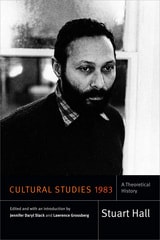
Cultural Studies 1983
A Theoretical HistoryStuart Hall
Duke University Press, 2016
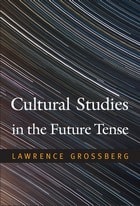
Cultural Studies in the Future Tense
Lawrence Grossberg
Duke University Press, 2010
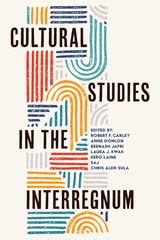
Cultural Studies in the Interregnum
Edited by Robert F. Carley, Anne Donlon, Beenash Jafri, Laura J. Kwak, Eero Laine, SAJ, and Chris Alen Sula
Temple University Press, 2025
Covering queer and feminist studies, critical disability studies, and critical race and ethnic studies, the essays in Cultural Studies in the Interregnum reflect on our shared political pasts and futures. Using examples ranging from media and literature to sex work, policing, and university systems, this exciting volume probes what cultural studies means in moments of social transformation.
Contributors include: Sean Johnson Andrews, C.M. Kaliko Baker, Mary Tuti Baker, James Bliss, Jorge E. Cuéllar, John R. Decker, Brian Dolber, Candace Fujikane, Evyn Lê Espiritu Gandhi, Chris Hall, Rachel Lim, Alexis Pauline Gumbs, Anna Karthika, Manu Karuka, Najwa Mayer, Kyle Mays, Andrew Ó Baoill, Yumi Pak, Therí A. Pickens, Sami Schalk, Leanne Betasamosake Simpson, Tia Trafford, and the editors
Culture In The Plural
Michel De Certeau
University of Minnesota Press, 1997
Culture and Agriculture
An Anthropological Study of a Corn Belt CountyHorace Miner
University of Michigan Press, 1949
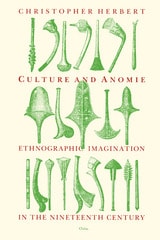
Culture and Anomie
Ethnographic Imagination in the Nineteenth CenturyChristopher Herbert
University of Chicago Press, 1991
Making wide reference to twentieth-century anthropologists from Malinowski and Benedict to Evans-Pritchard, Geertz, and Lévi-Strauss as well as to nineteenth-century social theorists like Tylor, Spencer, Mill, and Arnold, Herbert stresses the philosophically dubious, unstable character that has clung to the "culture" idea and embarrassed its exponents even as it was developing into a central principle of interpretation.
In a series of detailed studies ranging from political economy to missionary ethnography, Mayhew, and Trollope's fiction, Herbert then focuses on the intellectual and historical circumstances that gave to "culture" the appearance of a secure category of scientific analysis despite its apparent logical incoherence. What he describes is an intimate relationship between the idea of culture and its antithesis, the myth or fantasy of a state of boundless human desire—a conception that binds into a single tradition of thought such seemingly incompatible writers as John Wesley, who called this state original sin, and Durkheim, who gave it its technical name in sociology: anomie.
Methodologically provocative and rich in unorthodox conclusions, Culture and Anomie will be of interest not only to specialists in nineteenth-century literature and intellectual history, but also to readers across the wide range of fields in which the concept of culture plays a determining role.
Culture and Content in French
Frameworks for Innovative CurriculaAurélie Chevant-Aksoy
Lever Press, 2022

Culture and Contestation in the New Century
Edited by Marc James Léger
Intellect Books, 2011
A series of essays by internationally known artists, scholars, and critics in the growing field of cultural theory, Culture and Contestation in the New Century examines the conditions of cultural production in the first decade of the twenty-first century. With an emphasis on how current neoliberal policies have affected institutions of cultural production and dissemination, it emphasizes the ensuing changes to critical theory. The contributors here are among the most respected scholars in art, art criticism, and cultural studies, and this powerful analysis poses important questions about cultural democracy and social change.
Culture and Economy
The Shaping of Capitalism in Eastern AsiaTimothy Brook and Hy Van Luong, Editors
University of Michigan Press, 1999
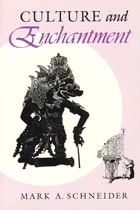
Culture and Enchantment
Mark A. Schneider
University of Chicago Press, 1993
For interpretive disciplines, Schneider suggests, meaning often behaves behaves as mysteriously as the apparitions pursued by centuries ago by natural philosophers. He demonstrates this using two case studies from anthropology: Clifford Geertz's description of Balinese cockfights and Yoruba statuary, and Claude Levi-Strauss's analyses of myths. These provide a basis for actively engaging disputes over the meaning and interpretation of culture.
Culture and Enchantment will appeal to an interdisciplinary audience in anthropology, sociology, history, history and sociology of science, culture studies, and literary theory. Schneider's provocative arguments will make this book a fulcrum in the continuing debate over the nature and prospects of cultural inquiry.
Culture and Global Change
Social Perceptions of Deforestation in the Lacandona Rain Forest in MexicoLourdes Arizpe, Fernanda Paz, and Margarita Velazquez
University of Michigan Press, 1996
The authors of this compelling book argue that before suitable solutions can be found to pressing environmental problems, we need a way to gather information on the human dimensions of global changes. How do small and everyday individual actions add up to the intricate networks of global interactions? What are our rights and responsibilities as humans toward the planet and its natural resources?
The Lacandon rain forest in Mexico provides a vivid example of an environmental challenge that will demand the concerted efforts of many different groups, and not only technical solutions, to resolve successfully. Using data taken largely from in-depth interviews with landowners, farm workers, cattle raisers, housewives, professionals, and civil servants, the authors draw a rich portrait of the varied perceptions and positions these groups and individuals hold. At issue are the social, rather than psychological, bases of their perspectives.
Culture and Global Change offers a model for how the social sciences, and anthropology in particular, can lead the way in developing comprehensive understandings of the interrelationships between groups at the local, regional, and international levels that affect perceptions of the environment and thus the viability of solutions. It is required reading for anthropologists and environmental activists alike.
Lourdes Arizpe is Assistant Director-General for Culture, UNESCO. Fernanda Paz and Margarita Vel´zquez work for the Centro Regional de Investigaciones Multidisciplinarias, Universidad Nacional Autonoma de México.

Culture and Human Nature
Theoretical Papers of Melford E. SpiroMelford E. Spiro
University of Chicago Press, 1987
This volume of Spiro's major theoretical writings concentrates on theories of culture and human nature, functional analysis, and religion. Spiro argues that important dimensions of the human family are the same everywhere and that a theory of human nature is both possible and necessary. He discusses religious beliefs, analyzing not only their structures but also the ways such beliefs are held and the meanings attributed to them. This analysis, Spiro shows, can be done most successfully by means of a theory of the human family, of infant and child development and socialization, of panhuman unconscious processes, and of universal psychodynamic constellations such as the Oedipus complex.

Culture and Identity in Early Modern Europe (1500-1800)
Essays in Honor of Natalie Zemon DavisBarbara B. Diefendorf and Carla Hesse, Editors
University of Michigan Press, 1993
Culture and Language at Crossed Purposes
The Unsettled Records of American SettlementJerome McGann
University of Chicago Press, 2022
Classic American literature, Jerome McGann argues, is haunted by the betrayal of seventeenth- and eighteenth-century Indian treaties—“a stunned memory preserved in the negative spaces of the treaty records.” A noted scholar of the “textual conditions” of literature, McGann investigates canonical works from the colonial period, including the Arbella sermon and key writings of William Bradford, John Winthrop, Anne Bradstreet, Cotton Mather’s Magnalia, Benjamin Franklin’s celebrated treaty folios and Autobiography, and Thomas Jefferson’s Notes on the State of Virginia. These are highly practical, purpose-driven works—the record of Enlightenment dreams put to the severe test of dangerous conditions. McGann suggests that the treaty-makers never doubted the unsettled character of what they were prosecuting, and a similar conflicted ethos pervades these works. Like the treaty records, they deliberately test themselves against stringent measures of truth and accomplishment and show a distinctive consciousness of their limits and failures. McGann’s book is ultimately a reminder of the public importance of truth and memory—the vocational commitments of humanist scholars and educators.
Culture and Liberation
Exile Writings, 1966–1985Alex La Guma
Seagull Books, 2020
This volume spans La Guma’s political and literary life in exile through accounts of his travels to Algeria, Lebanon, Vietnam, Soviet Central Asia, and elsewhere, along with his critical assessments of Paul Robeson, Nadine Gordimer, Maxim Gorky, Alexander Solzhenitsyn, and Pablo Neruda, among other writers. The first dedicated collection of La Guma’s exile writing, Culture and Liberation restores an overlooked dimension of his life and work, while opening a window on a wider world of cultural and political struggles in Africa, Asia, and Latin America during the second half of the twentieth century.
Culture and Money in the Nineteenth Century
Abstracting EconomicsDaniel Bivona
Ohio University Press, 2016
Since the 1980s, scholars have made the case for examining nineteenth-century culture—particularly literary output—through the lens of economics. In Culture and Money in the Nineteenth Century: Abstracting Economics, two luminaries in the field of Victorian studies, Daniel Bivona and Marlene Tromp, have collected contributions from leading thinkers that push New Economic Criticism in new and exciting directions.
Spanning the Americas, India, England, and Scotland, this volume adopts an inclusive, global view of the cultural effects of economics and exchange. Contributors use the concept of abstraction to show how economic thought and concerns around money permeated all aspects of nineteenth-century culture, from the language of wills to arguments around the social purpose of art.
The characteristics of investment and speculation; the fraught symbolic and practical meanings of paper money to the Victorians; the shifting value of goods, services, and ideas; the evolving legal conceptualizations of artistic ownership—all of these, contributors argue, are essential to understanding nineteenth-century culture in Britain and beyond.
Contributors: Daniel Bivona, Suzanne Daly, Jennifer Hayward, Aeron Hunt, Roy Kreitner, Kathryn Pratt Russell, Cordelia Smith, and Marlene Tromp.
Culture and Political Crisis in Vienna
Christian Socialism in Power, 1897-1918John W. Boyer
University of Chicago Press, 1995
Boyer argues that understanding the unprecedented success that this dissident bourgeois political group had in transforming the basic tenets of political life is crucial to understanding the history of the Central European state and the ways in which it was slowly undermined by popular electoral politics. The movement's efforts to save the Austrian Empire by trying to create an economically integrated but ethnically pluralistic state are particularly enlightening today in the shadow of ethnic violence in Sarajevo, where began the end of the Austrian Empire in 1914.
The most comprehensive account of any mass political movement in late-nineteenth century Central Europe, this two- volume work is crucial reading for anyone interested in Hapsburg history, German history or the history of social democracy.
Culture and Power
The Sociology of Pierre BourdieuDavid Swartz
University of Chicago Press, 1997
David Swartz focuses on a central theme in Bourdieu's work—the complex relationship between culture and power—and explains that sociology for Bourdieu is a mode of political intervention. Swartz clarifies Bourdieu's difficult concepts, noting where they have been misinterpreted by critics and where they have fallen short in resolving important analytical issues. The book also shows how Bourdieu has synthesized his theory of practices and symbolic power from Durkheim, Marx, and Weber, and how his work was influenced by Sartre, Levi-Strauss, and Althusser.
Culture and Power is the first book to offer both a sympathetic and critical examination of Bourdieu's work and it will be invaluable to social scientists as well as to a broader audience in the humanities.
Culture and Practical Reason
Marshall Sahlins
University of Chicago Press, 1978
Culture and Resource Conflict
Why Meanings MatterDouglas L. Medin
Russell Sage Foundation, 2006
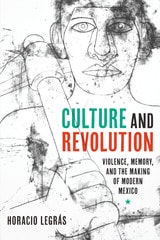
Culture and Revolution
Violence, Memory, and the Making of Modern MexicoBy Horacio Legrás
University of Texas Press, 2017
In the twenty years of postrevolutionary rule in Mexico, the war remained fresh in the minds of those who participated in it, while the enigmas of the revolution remained obscured. Demonstrating how textuality helped to define the revolution, Culture and Revolution examines dozens of seemingly ahistorical artifacts to reveal the radical social shifts that emerged in the war’s aftermath.
Presented thematically, this expansive work explores radical changes that resulted from postrevolution culture, including new internal migrations; a collective imagining of the future; popular biographical narratives, such as that of the life of Frida Kahlo; and attempts to create a national history that united indigenous and creole elite society through literature and architecture. While cultural production in early twentieth-century Mexico has been well researched, a survey of the common roles and shared tasks within the various forms of expression has, until now, been unavailable. Examining a vast array of productions, including popular festivities, urban events, life stories, photographs, murals, literature, and scientific discourse (including fields as diverse as anthropology and philology), Horacio Legrás shows how these expressions absorbed the idiosyncratic traits of the revolutionary movement.
Tracing the formation of modern Mexico during the 1920s and 1930s, Legrás also demonstrates that the proliferation of artifacts—extending from poetry and film production to labor organization and political apparatuses—gave unprecedented visibility to previously marginalized populations, who ensured that no revolutionary faction would unilaterally shape Mexico’s historical process during these formative years.
Culture and Value
Ludwig Wittgenstein
University of Chicago Press, 1980
Throughout his life, Ludwig Wittgenstein reliably set down his thoughts in notebooks. This volume offers a selection of the most interesting and important of the remarks from those notebooks that deal with matters other than technical philosophical issues. In these pages, Wittgenstein reflects on religion, the work of philosophy, genius, music, architecture, and much more. Peter Winch's translation of Wittgenstein's remarks on culture and value presents all entries chronologically, with the German text alongside the English and a subject index for reference.

Culture and Well-Being
Anthropological Approaches to Freedom and Political EthicsAlberto Corsin Jimenez
Pluto Press, 2008
This book takes a critical look at the notion of well-being by examining what well-being means, or could mean, to people living in a number of different regions including Sudan, Nepal, Papua New Guinea, India, Sierra Leone, and the UK.
The contributors take issue with some of the assumptions behind Western concepts of well-being. They explore what characterizes a "good life" and how this idea has been affected by globalization and neoliberalism.
The book makes a major contribution to social theory by presenting new analytical models that make sense of the changing shapes of people's life and ethical values.
Culture and the Course of Human Evolution
Gary Tomlinson
University of Chicago Press, 2018
Tomlinson offers a new model for understanding this period in our emergence, one based on analysis of advancing human cultures in an evolution that was simultaneously cultural and biological—a biocultural evolution. He places front and center the emergence of culture and the human capacities to create it, in a fashion that expands the conceptual framework of recent evolutionary theory. His wide-ranging vision encompasses arguments on the development of music, modern technology, and metaphysics. At the heart of these developments, he shows, are transformations in our species’ particular knack for signmaking. With its innovative synthesis of humanistic and scientific ideas, this book will be an essential text.
Culture and the Evolutionary Process
Robert Boyd and Peter J. Richerson
University of Chicago Press, 1985

Culture and the Law, Volume 100
Gaurav Desai
Duke University Press, 0
Culture and the Question of Rights
Forests, Coasts, and Seas in Southeast AsiaCharles Zerner, ed.
Duke University Press, 2003
Calling for radical redefinitions of development and ownership and for new understandings of the translation of culture and rights in politically dangerous contexts—natural resource frontiers—this volume links social injustice and the degradation of Southeast Asian environments. Charles Zerner and his colleagues show how geographical areas once viewed as wild and undeveloped are actually cultural artifacts shaped by complex interactions with human societies. Drawing on richly varied sources of evidence and interpretation—from trance dances, court proceedings, tree planting patterns, marine and forest rituals, erotic poems, and codifications of customary law, Culture and the Question of Rights reveals the ironies, complexities, and histories of contemporary communities’ struggles to retain their gardens, forests, fishing territories, and graveyards. The contributors examine how these cultural activities work to both construct and to lay claim to nature. These essays open up new avenues for negotiating indigenous rights against a background of violence, proliferating markets, and global ideas of biodiversity and threatened habitat.
Contributors. Jane Atkinson, Don Brenneis, Stephanie Fried, Nancy Peluso, Marina Roseman, Anna Tsing, Charles Zerner
Culture as Judicial Evidence
Expert Testimony in Latin AmericaEdited by Leila Rodriguez
University of Minnesota Press, 2020
Culture as Judicial Evidence in Latin America summarizes the current state of this work in six countries: Mexico, Costa Rica, Peru, Chile, Colombia, and Uruguay, and lays out the challenges and dilemmas involved in the creation and use of cultural expert testimony. Organized into three sections, the book advances a framework for the use of cultural evidence, and presents readers with nine case studies based on trials in six individual countries. These countries have implemented legal reform, constitutional amendments and the adoption of international legislation to create the legal frameworks that enable this new form of legal evidence to be admissible in Latin American courts. The contributing authors are cultural anthropologists with vast experience researching the impact of cultural expert witness testimony. A forward-looking final section examines the dilemmas and challenges of this work that remain to be solved.
Culture as Politics
Selected WritingsPluto Press, 2017
Culture in Chaos
An Anthropology of the Social Condition in WarStephen C. Lubkemann
University of Chicago Press, 2007
Lubkemann focuses on how Ndau social networks were fragmented by wartime displacement and the profound effect this had on gender relations. Demonstrating how wartime migration and post-conflict return were shaped by social struggles and interests that had little to do with the larger political reasons for the war, Lubkemann contests the assumption that wartime migration is always involuntary. His critical reexamination of displacement and his engagement with broader theories of agency and social change will be of interest to anthropologists, political scientists, historians, and demographers, and to anyone who works in a war zone or with refugees and migrants.
Culture in the Anteroom
The Legacies of Siegfried KracauerEdited by Gerd Gemünden and Johannes von Moltke
University of Michigan Press, 2012
Culture in the Anteroom introduces an English-speaking readership to the full range of Siegfried Kracauer's work as novelist, architect, journalist, sociologist, historian, exile critic, and theorist of visual culture. This interdisciplinary anthology---including pieces from Miriam Bratu Hansen, Andreas Huyssen, Noah Isenberg, Lutz Koepnick, Eric Rentschler, and Heide Schlüpmann---brings together literary and film scholars, historians and art historians, sociologists, and architects to address the scope and current relevance of a body of work dedicated to investigating all aspects of modernism and modernity. The contributors approach Kracauer's writings from a variety of angles, some by placing them in dialogue with his contemporaries in Weimar Germany and the New York Intellectuals of the 1940s and '50s; others by exploring relatively unknown facets of Kracauer's oeuvre by considering his contributions to architectural history, the history of radio as well as other new media, and museum and exhibition culture.
Culture in the Marketplace
Gender, Art, and Value in the American SouthwestMolly H. Mullin
Duke University Press, 2001
Drawing on fiction, memoirs, journalistic accounts, and extensive interviews with artists, collectors, and dealers, Mullin shows how anthropological notions of culture were used to valorize Indian art and create a Southwest Indian art market. By turning their attention to Indian affairs and art in Santa Fe, New Mexico, she argues, these women escaped the gender restrictions of their eastern communities and found ways of bridging public and private spheres of influence. Tourism, in turn, became a means of furthering this cultural colonization. Mullin traces the development of aesthetic worth as it was influenced not only by politics and profit but also by gender, class, and regional identities, revealing how notions of “culture” and “authenticity” are fundamentally social ones. She also shows how many of the institutions that the early patrons helped to establish continue to play an important role in the contemporary market for American Indian art.
This book will appeal to audiences in cultural anthropology, art history, American studies, women’s studies, and cultural history.
Culture of Class
Radio and Cinema in the Making of a Divided Argentina, 1920-1946Matthew B. Karush
Duke University Press, 2012
Culture of Da'wa
Preaching in the Modern WorldEdited by Itzchak Weismann and Jamil Malik
University of Utah Press, 2020
This book provides the first in-depth, wide-scope treatment of da’wa. A term difficult to translate, da’wa covers a semantic field ranging from the call or invitation to Islam, to religious preaching and proselytizing, to the mission and message of Islam. Historically da’wa has been directed outward to nonbelievers, but in modern times it has turned increasingly inward to “straying” Muslims. While the media and many scholars have focused on extremism and militant groups that have raised the banner of jihad, this volume argues that da’wa, not jihad, forms the backbone of modern Islamic politics and religiosity, and that the study of da’wa is essential for understanding contemporary Islamic politics as well as jihadist activity. Contributors represent a variety of approaches and come from a range of academic, religious, and national backgrounds. In these essays, they analyze the major discourses of da’wa, their embodiment in the major Islamic movements of the twentieth century, and their transformation into new forms of activism through the media, the state, and jihadi groups—including al-Qaeda and ISIS—in the twenty-first century.
Culture of Empire
American Writers, Mexico, and Mexican Immigrants, 1880–1930By Gilbert G. González
University of Texas Press, 2003
A history of the Chicano community cannot be complete without taking into account the United States' domination of the Mexican economy beginning in the late nineteenth and early twentieth centuries, writes Gilbert G. González. For that economic conquest inspired U.S. writers to create a "culture of empire" that legitimated American dominance by portraying Mexicans and Mexican immigrants as childlike "peons" in need of foreign tutelage, incapable of modernizing without Americanizing, that is, submitting to the control of U.S. capital. So powerful was and is the culture of empire that its messages about Mexicans shaped U.S. public policy, particularly in education, throughout the twentieth century and even into the twenty-first.
In this stimulating history, Gilbert G. González traces the development of the culture of empire and its effects on U.S. attitudes and policies toward Mexican immigrants. Following a discussion of the United States' economic conquest of the Mexican economy, González examines several hundred pieces of writing by American missionaries, diplomats, business people, journalists, academics, travelers, and others who together created the stereotype of the Mexican peon and the perception of a "Mexican problem." He then fully and insightfully discusses how this misinformation has shaped decades of U.S. public policy toward Mexican immigrants and the Chicano (now Latino) community, especially in terms of the way university training of school superintendents, teachers, and counselors drew on this literature in forming the educational practices that have long been applied to the Mexican immigrant community.
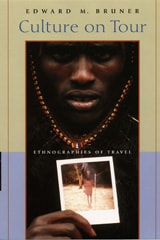
Culture on Tour
Ethnographies of TravelEdward M. Bruner
University of Chicago Press, 2004
Synthesizing more than twenty years of research in cultural tourism, Culture on Tour analyzes a remarkable variety of tourist productions, ranging from safari excursions in Kenya and dance dramas in Bali to an Abraham Lincoln heritage site in Illinois. Bruner examines each site in all its particularity, taking account of global and local factors, as well as the multiple perspectives of the various actors—the tourists, the producers, the locals, and even the anthropologist himself. The collection will be essential to those in the field as well as to readers interested in globalization and travel.
Culture, Chronology and the Chalcolithic
J. Lovell
Council for British Research in the Levant, 2011
Culture, Class, and Politics in Modern Appalachia
Essays in Honor of Ronald L. LewisEdited by Jennifer Egolf, Ken Fones-Wolf, and Louis C. Martin
West Virginia University Press, 2009
Culture, Class, and Politics in Modern Appalachia takes stock of the field of Appalachian studies as it explores issues still at the center of its scholarship: culture, industrialization, the labor movement, and twentieth-century economic and political failure and their social impact. A new generation of scholars continues the work of Appalachian studies’ pioneers, exploring the diversity and complexity of the region and its people. Labor migrations from around the world transformed the region during its critical period of economic growth. Collective struggles over occupational health and safety, the environment, equal rights, and civil rights challenged longstanding stereotypes. Investigations of political and economic power and the role of social actors and social movements in Appalachian history add to the foundational work that demonstrates a dynamic and diverse region.

Culture, Ethnicity, and Justice in the South
The Southern Anthropological Society, 1968-1971Southern Anthropological Southern Anthropological Society
University of Alabama Press, 2004
An important anthology putting the leading topics in Southern anthropology in the context of the 1960s
Proceedings of the Southern Anthropological Society:
No. 1, Essays on Medical Anthropology (1968), edited by Thomas Weaver, with contributions by Frank J. Essene, Thomas Weaver, Charles Hudson, Helen Phillips, Hazel Hitson Weidman, Dorothea C. Leighton, Nora F. Cline, Peter Goethals, Berton H. Kaplan, Alice H. Murphree, John G. Peck, and Gianna Hochstein
No. 2, Urban Anthropology: Research Perspectives and Strategies (1968, edited by Elizabeth M. Eddy, with contributions by Charles Hudson, Elizabeth M. Eddy, Conrad M. Arensberg, Charles H. Fairbanks, H. W. Hutchinson, Anthony Leeds, Hans C. Buechler, Brian M. de Toit, Emilio Willems, Michael D. Olien, and John Gulick
No. 3, Concepts and Assumptions in Contemporary Anthropology (1969), edited by Stephen A. Tyler, with contributions by Charles Hudson, Stephen A. Tyler, Eric R. Wolf, Ann Fischer, E. Pendleton Banks, Munro S. Edmonson, Francis E. Johnston, William G. Haag, Arden R. King, and Jan Brukman
No. 4, The Not So Solid South: Anthropological Studies in a Regional Subculture (1971), edited by J. Kenneth Morland, with contributions by Charles Hudson, J. Kenneth Morland, Helen Phillips Keber, Jared Harper, Edward E. Knipe, Helen M. Lewis, Milton B. Newton Jr., Ronald J. Duncan, John Gordon, H. Eugene Hodges, William L. Partridge, Max E. Stanton, Robert Sayers, James L. Peacock, and Christopher Crocker
No. 5, Red, White, and Black: Symposium on Indians in the Old South (1971), edited by Charles M. Hudson, with contributions by Charles Hudson, Louis De Vorsey Jr., William S. Pollitzer, Mary R. Haas, David J. Hally, Charles H. Fairbanks, F. N. Boney, Joseph L. Brent III, William S. Willis Jr., John H. Peterson Jr., and Charles Crowe.
Originally distributed by the University of Georgia Press, are all combined herein with a historical overview in the new introduction by Miles Richardson and with a new index to the complete anthology.

Culture, Genre, and Literary Vocation
Selected Essays on American LiteratureMichael Davitt Bell
University of Chicago Press, 2000
Throughout, Bell revisits issues of genre with an eye toward the unexpected details of authors' lives, and invites us to reconsider the hidden functions that terms such as "romanticism" and "realism" served for authors and their critics. Whether tracing the demands of the market or the expectations of readers, Bell examines the intimate relationship between literary production and culture; each essay closely links the milieu in which American writers worked with the trajectory of their storied careers.

Culture, Globalization and the World-System
Contemporary Conditions for the Representation of IdentityAnthony D. King
University of Minnesota Press, 1997
A foundational work in the study of the globalization of culture.
First published in 1991, Culture, Globalization and the World-System is one of the inaugural books discussing the increasing tendency of cultural practices to cross national boundaries. Now widely available in the United States for the first time and updated with a new preface, these influential essays by a distinguished group of scholars and cultural critics lay the groundwork for a vital and exciting new field of inquiry.
Culture, Globalization and the World-System views culture through different prisms and categories—including race, gender, ethnicity, class, and nation. The contributors consider how socially organized systems of meaning are produced and represented. Drawing from sociology, art history, film studies, and anthropology, these essays—many of them representing their authors’ only treatment of globalization—provide paradigms for understanding cultures and the representation of identity in “the world as a single place.” Contributors: Barbara Abou-El-Haj, SUNY, Binghamton; Janet Abu-Lughod, New School for Social Research; Stuart Hall, Open U, UK; Ulf Hannerz, U of Stockholm, Sweden; Roland Robertson, U of Pittsburgh; John Tagg, SUNY, Binghamton; Maureen Turim, U of Florida, Gainesville; Immanuel Wallerstein, SUNY, Binghamton; Janet Wolff, U of Rochester.
Culture, Power, Place
Explorations in Critical AnthropologyAkhil Gupta and James Ferguson, eds.
Duke University Press, 1997
This collection of both new and well-known essays begins by critically exploring the concepts of locality and community; first, as they have had an impact on contemporary global understandings of displacement and mobility, and, second, as they have had a part in defining identity and subjectivity itself. With sites of discussion ranging from a democratic Spain to a Puerto Rican barrio in North Philadelphia, from Burundian Hutu refugees in Tanzania to Asian landscapes in rural California, from the silk factories of Hangzhou to the long-sought-after home of the Palestinians, these essays examine the interplay between changing schemes of categorization and the discourses of difference on which these concepts are based. The effect of the placeless mass media on our understanding of place—and the forces that make certain identities viable in the world and others not—are also discussed, as are the intertwining of place-making, identity, and resistance as they interact with the meaning and consumption of signs. Finally, this volume offers a self-reflective look at the social and political location of anthropologists in relation to the questions of culture, power, and place—the effect of their participation in what was once seen as their descriptions of these constructions. Contesting the classical idea of culture as the shared, the agreed upon, and the orderly, Culture, Power, Place is an important intervention in the disciplines of anthropology and cultural studies.
Contributors. George E. Bisharat, John Borneman, Rosemary J. Coombe, Mary M. Crain, James Ferguson, Akhil Gupta, Kristin Koptiuch, Karen Leonard, Richard Maddox, Lisa H. Malkki, John Durham Peters, Lisa Rofel
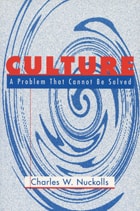
Culture
A Problem That Cannot Be SolvedCharles W. Nuckolls
University of Wisconsin Press, 1998
French historian Alexis de Tocqueville observed that the conflict between the ideals of individualism and community defines American culture. In this groundbreaking new work, anthropologist Charles Nuckolls discovers that every culture consists of such paradoxes, thus making culture a problem that cannot be solved. He does, however, find much creative tension in these unresolvable opposites.
Nuckolls presents three fascinating case studies that demonstrate how values often are expressed in the organization of social roles. First he treats the Micronesian Ifaluks’ opposition between cooperation and self-gratification by examining the nature versus nurture debate. Nuckolls then shifts to the values of community and individual adventure by looking at the conflicts in the identities of public figures in Oklahoma. Finally, he investigates the cultural significance in the diagnostic system and practices of psychiatry in the United States. Nuckolls asserts that psychiatry treats genders differently, assigning dependence to women and independence to men and, in some cases, diagnoses the extreme forms of these values as disorders.
Nuckolls elaborates on the theory of culture that he introduced in his previous book, The Cultural Dialectics of Knowledge and Desire, which proposed that the desire to resolve conflicts is central to cultural knowledge. In Culture: A Problem that Cannot Be Solved, Nuckolls restores the neglected social science concept of values, which addresses both knowledge and motivation. As a result, he brings together cognition and psychoanalysis, as well as sociology and psychology, in his study of cultural processes.
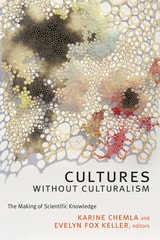
Cultures without Culturalism
The Making of Scientific KnowledgeKarine Chemla and Evelyn Fox Keller, editors
Duke University Press, 2017
Contributors. Bruno Belhoste, Karine Chemla, Caroline Ehrhardt, Fa-ti Fan,Kenji Ito, Evelyn Fox Keller, Guillaume Lachenal, Donald MacKenzie, Mary S. Morgan, Nancy J. Nersessian, David Rabouin, Hans-Jörg Rheinberger, Claude Rosental, Koen Vermeir

Curators and Culture
The Museum Movement in America, 1740-1870Joel J. Orosz
University of Alabama Press, 1990
Tracing the birth of American museums and the curators who shaped a nation’s cultural identity.
As they formed their pioneer museums, these men were guided not so much by European examples, but rather by the imperatives of the American democratic culture, including the Enlightenment, the simultaneous decline of the respectability and rise of the middle classes, the Age of Egalitarianism, and the advent of professionalism in the sciences. Thus the pre-1870 American museum was neither the frivolous sideshow some critics have imagined, nor the enclave for elitists that others have charged. Instead, the proprietors displayed serious motives and egalitarian aspirations.
The conflicting demands for popular education on the one hand and professionalism on the other were a continuing source of tension in American museums after about 1835, but by 1870 the two claims had synthesized into a rough parity. This synthesis, the "American Compromise," has remained the basic model of museums in America down to the present. Thus, by 1870, the form of the modern American museum as an institution which simultaneously provides popular education and promotes scholarly research was completely developed.
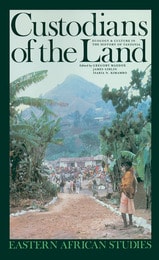
Custodians of the Land
Ecology and Culture in the History of TanzaniaGregory H. Maddox
Ohio University Press, 1995
Farming and pastoral societies inhabit ever-changing environments. This relationship between environment and rural culture, politics and economy in Tanzania is the subject of this volume which will be valuable in reopening debates on Tanzanian history.
In his conclusion, Isaria N. Kimambo, a founding father of Tanzanian history, reflects on the efforts of successive historians to strike a balance between external causes of change and local initiative in their interpretations of Tanzanian history.
He shows that nationalist and Marxist historians of Tanzanian history, understandably preoccupied through the first quarter-century of the country's post-colonial history with the impact of imperialism and capitalism on East Africa, tended to overlook the initiatives taken by rural societies to transform themselves.
Yet there is good reason for historians to think about the causes of change and innovation in the rural communities of Tanzania, because farming and pastoral people have constantly changed as they adjusted to shifting environmental conditions.