Results by title
1038 books match the query 'Economic conditions' and 93 start with c
Clearing the Coastline
The Nineteenth-Century Ecological & Cultural Transformations of Cape CodMatthew McKenzie
University Press of New England, 2011

Coastal Ecosystems and Economic Strategies at Cerro Azul, Peru
The Study of a Late Intermediate KingdomEdited by Joyce Marcus
University of Michigan Press, 2016
Coastal Lives
Nature, Capital, and the Struggle for Artisanal Fisheries in PeruMaximilian Viatori and Héctor Bombiella
University of Arizona Press, 2019
In Coastal Lives, Maximilian Viatori and Héctor Bombiella argue that this has not made Peru’s fisheries more sustainable. Through a fine-grained ethnographic and historical account of Lima’s fisheries, the authors reveal that new government regimes of entrepreneurial agency have placed overwhelming burdens on the city’s impoverished artisanal fishers to demonstrate that they are responsible producers and have created failures that can be used to justify closing these fishers’ traditional use areas and to deny their historically sanctioned rights. The result is a critical examination of how neoliberalized visions of nature and individual responsibility work to normalize the dispossessions that have enabled ongoing capital accumulation at the cost of growing social dislocations and ecological degradation.
The authors’ innovative approach to the politics of constructing and degrading coastal lives will interest a wide range of scholars in cultural anthropology, environmental humanities, and Latin American studies, as well as policymakers and anyone concerned with inequality, global food systems, and multispecies ecologies.
Coffee and Conflict in Colombia, 1886-1910
Charles W. Bergquist
Duke University Press, 1978
Collision Course
Economic Change, Criminal Justice Reform, and Work in AmericaKathleen Auerhahn
Rutgers University Press, 2022
Recently, a widespread consensus has emerged that the era of “mass incarceration” is at an end, reflected in a declining prison population. Criminal justice reforms such as diversion and problem-solving courts, a renewed focus on reentry, and drug policy reform have as their goal keeping more individuals with justice system involvement out of prisons, in the community and subsequently in the labor force, which lacks the capacity to accommodate these additional would-be workers. This poses significant problems for criminal justice practice, which relies heavily on employment as a signal of offenders’ intentions to live a law-abiding lifestyle. The diminished capacity of the economy to utilize the labor of all who have historically been expected to work presents significant challenges for American society. Work, in the American ethos is the marker of success, masculinity and how one “contributes to society.” What are the consequences of ignoring these converging structural trends? This book examines these potential consequences, the meaning of work in American society, and suggests alternative redistributive and policy solutions to avert the collision course of these economic and criminal justice policy trends.
Colonial Debts
The Case of Puerto RicoRocío Zambrana
Duke University Press, 2021
Colonial Meltdown
Northern Nigeria in the Great DepressionMoses E. Ochonu
Ohio University Press, 2009
Historians of colonial Africa have largely regarded the decade of the Great Depression as a period of intense exploitation and colonial inactivity. In Colonial Meltdown, Moses E. Ochonu challenges this conventional interpretation by mapping the determined, at times violent, yet instructive responses of Northern Nigeria’s chiefs, farmers, laborers, artisans, women, traders, and embryonic elites to the British colonial mismanagement of the Great Depression. Colonial Meltdown explores the unraveling of British colonial power at a moment of global economic crisis.
Ochonu shows that the economic downturn made colonial exploitation all but impossible and that this dearth of profits and surpluses frustrated the colonial administration which then authorized a brutal regime of grassroots exactions and invasive intrusions. The outcomes were as harsh for Northern Nigerians as those of colonial exploitation in boom years.
Northern Nigerians confronted colonial economic recovery measures and their agents with a variety of strategies. Colonial Meltdown analyzes how farmers, women, laborers, laid-off tin miners, and NorthernNigeria’s emergent elite challenged and rebelled against colonial economic recovery schemes with evasive trickery, defiance, strategic acts of revenge, and criminal self-help and, in the process, exposed the weak underbelly of the colonial system.
Combined with the economic and political paralysis of colonial bureaucrats in the face of crisis, these African responses underlined the fundamental weakness of the colonial state, the brittleness of its economicmission, and the limits of colonial coercion and violence. This atmosphere of colonial collapse emboldened critics of colonial policies who went on to craft the rhetorical terms on which the anticolonial struggle of the post–World War II period was fought out.
In the current climate of global economic anxieties, Ochonu’s analysis will enrich discussions on the transnational ramifications of economic downturns. It will also challenge the pervasive narrative of imperial economic success.
Colonial Racial Capitalism
Susan Koshy, Lisa Marie Cacho, Jodi A. Byrd, and Brian Jordan Jefferson, editors
Duke University Press, 2022
Contributors. Joanne Barker, Jodi A. Byrd, Lisa Marie Cacho, Michael Dawson, Iyko Day, Ruth Wilson Gilmore, Alyosha Goldstein, Cheryl I. Harris, Kimberly Kay Hoang, Brian Jordan Jefferson, Susan Koshy, Marisol LeBrón, Jodi Melamed, Laura Pulido

Colonial Search For A Southern Eden
Louis B. Wright
University of Alabama Press, 2008
European imperialists began to dream of other kinds of wealth besides gold in the New World
The Colonial Search for a Southern Eden compiles three insightful lectures delivered by renowned historian Louis B. Wright at the Dancy Foundation in 1951. Wright explores the 17th‑century English colonial vision for the American South—not as a gold rush, but as a fertile terrain primed for economic prosperity through well‑planned plantations and commercial crops.
Across its concise 75 pages, Wright charts the transformation of settlers’ aspirations—from hopes of quick wealth to cultivated visions of tobacco, silk, sugar, and cotton plantations meant to create a utopian "Southern Eden". These were carefully cultivated not just for their profitability but to establish structured, enduring societies complementary to English economic goals.
Wright—a Guggenheim Fellow, Benjamin Franklin Medalist, and former director of the Folger Shakespeare Library—brings scholarly precision and elegant prose to this study, making it accessible to both historians and general readers. Publishers and reviewers have praised it as “extremely interesting and well written,” highlighting its focused yet comprehensive interpretation of colonial Southern motivations and their long-term implications. This work stands as a pivotal contribution to early American economic and colonial history—offering a nuanced understanding of how idealistic and ideological goals shaped plantation culture and southern development in the Atlantic colonies.
With its concise structure and authoritative voice, The Colonial Search for a Southern Eden is ideal for historians, students, and enthusiasts seeking to understand the ideological underpinnings of colonial Southern society.
Colonialism in the Congo Basin, 1880–1940
Samuel H. Nelson
Ohio University Press, 1993
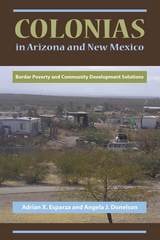
Colonias in Arizona and New Mexico
Border Poverty and Community Development SolutionsAdrian X. Esparza and Angela J. Donelson
University of Arizona Press, 2008
Beginning with an examination of the origins of border region settlement and the emergence of colonias in southern Arizona and New Mexico in the late 1800s, the book then turns to an assessment of current social, economic, and housing conditions. The authors also examine how Mexico’s recent economic crises and U.S. immigration and border security policies have shaped the quality of life in colonias, and they evaluate recent community development initiatives. By examining the challenges and successes of these recent efforts, the authors are able to provide a generalized plan for community development. Balancing analyses of these communities with a review of the positive steps taken to improve the quality of life of their inhabitants, Colonias in Arizona and New Mexico is an indispensable tool for anyone interested in public policy or immigration issues.
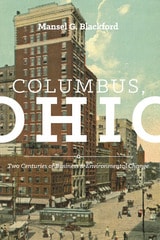
Columbus, Ohio
Two Centuries of Business and Environmental ChangeMansel G. Blackford
The Ohio State University Press, 2016
Precisely because they lived in a midsize, midwestern city, Columbus residents could learn from the earlier experiences of their counterparts in older, larger coastal metropolises, and then go beyond them. Not having large sunk costs in pre-existing water systems, Columbus residents could, for instance, develop new, world-class, state-of-the-art methods for treating water and sewage, steps essential for urban expansion. Columbus, Ohio explores how city residents approached urban challenges—especially economic and environmental ones—and how they solved them.
Columbus, Ohio: Two Centuries of Business and Environmental Change concludes that scholars and policy makers need to pay much more attention to environmental issues in the shaping of cities, and that they need to look more closely at what midwestern metropolises accomplished, as opposed to simply examining coastal cities.
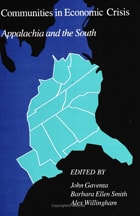
Communities In Economic Crisis
edited by John Gaventa, Barbara Ellen Smith and Alex Willingham
Temple University Press, 1990
Hard times are no stranger to the people of Appalachia and the South. Earlier books have documented the low wages of the textile industry, boom-and-bust cycles of coal mining, and debt peonage of Southern agriculture that have established a heritage of poverty that endures. This book is a unique collection of essays by people who are actively involved in the efforts to challenge economic injustice in these regions and to empower the residents to build democratic alternatives.
In the series Labor and Social Change, edited by Paula Rayman and Carmen Sirianni.
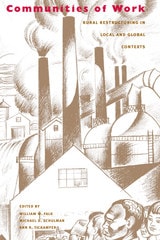
Communities of Work
Rural Restructuring in Local and Global ContextsWilliam W. Falk
Ohio University Press, 2003
The image of rural America portrayed in this illuminating study is one that is vibrant, regionally varied, and sometimes heroic. Communities of Work focuses on the ways in which rural people and places are affected by political, social, and economic forces far outside their control and how they sustain themselves and their communities in response.
Bringing together the two fundamental concepts of community—where the relationships and practices of daily life occur—and work, in which an elementary exchange occurs, Communities of Work bridges several fields of study. Presented here is the contextual and embedded nature of social relations and the complexity involved in understanding them. Through the use of multiple case studies, the authors apply diverse theories and methods in seeking an integrated outcome, one captured by “communities of work.”
Beginning with a description of the broad changes in work and economic activities across the United States, ranging from the Ohio River Valley to a western boomtown, the book shifts its focus to the interplay of work, family, and local networks in time and place. Activities range from fishing in the Mississippi Delta to farming and family life in the Midwest. The authors then highlight how rural people and places respond to extra-local, increasingly global forces in settings as diverse as rural South Carolina and Wisconsin.
A certain communitarian theme runs through Communities of Work. It is about people and communities not merely reacting, but instead responding in ways that reflect their local culture, while being cognizant of the larger world within which they live.
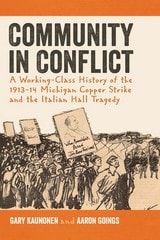
Community in Conflict
A Working-class History of the 1913-14 Michigan Copper Strike and the Italian Hall TragedyGary Kaunonen
Michigan State University Press, 2013
A mirror of great changes that were occurring on the national labor rights scene, the 1913–14 Michigan Copper Strike was a time of unprecedented social upheaval in Michigan’s Upper Peninsula. With organized labor taking an aggressive stance against the excesses of unfettered capitalism, the stage was set for a major struggle between labor and management. The Michigan Copper Strike received national attention and garnered the support of luminaries in organized labor like Mother Jones, John Mitchell, Clarence Darrow, and Charles Moyer. The hope of victory was overshadowed, however, by violent incidents like the shooting of striking workers and their family members, and the bitterness of a community divided. No other event came to symbolize or memorialize the strike more than the Italian Hall tragedy, in which dozens of workers and working-class children died. In Community in Conflict, the efforts of working people to gain a voice on the job and in their community through their unions, and the efforts of employers to crush those unions, take center stage. Previously untapped historical sources such as labor spy reports, union newspapers, coded messages, and artifacts shine new light on this epic, and ultimately tragic, period in American labor history.

Competing Memories
The Legacy of Arkansas's Civil WarMark Christ
Butler Center for Arkansas Studies, 2016
Between 2011 and 2015, Arkansas commemorated the 150th anniversary of the American Civil War with re-enactments, lectures, placement of historical markers, and a wide variety of other events that were collectively attended by more than 375,000 people. While the sesquicentennial commemoration highlighted the Civil War events that occurred in the state and honored the people who experienced the war in Arkansas, the question of the war’s significance to modern Arkansas remained.
Competing Memories: The Legacy of Arkansas’s Civil War collects the proceedings of the final seminar sponsored by the Arkansas Civil War Sesquicentennial Commission, which sought to define the lasting impact that the nation’s deadliest conflict had on the state by bringing together some of the state’s leading historians.
In these essays, Thomas A. DeBlack explores the post-war lives of both Union and Confederate soldiers who played prominent roles in Civil War Arkansas. Cherisse Jones-Branch delves into the lives of black Arkansans during the war and Reconstruction. Jeannie Whayne discusses the many ways the Civil War affected the state’s economic development, while Kelly Houston Jones investigates the Civil War’s impact on Arkansas women. Mary Jane Warde examines the devastating effects of the Civil War on Native Americans in Arkansas and the Indian Territory. Elliott West scrutinizes Civil War Arkansas from a continental perspective, and Carl Moneyhon considers the evolution of how we remember the Civil War.
Together, the essays in Competing Memories: The Legacy of Arkansas’s Civil War provide a compelling account of how America’s bloodiest war continues to affect Arkansas and its people today.
Competing Norms
State Regulations and Local Praxis in sub-Saharan AfricaEdited by Mamadou Diawara and Ute Röschenthaler
Campus Verlag, 2016
Confronting Historical Paradigms
Peasants, Labor, And The Capitalist World SystemFrederick Cooper
University of Wisconsin Press, 1993
Confronting Historical Paradigms argues that confrontation with major paradigms of world history has marked the fields of African and Latin American history during the last quarter-century, and that the process has dramatically restructured historical and theoretical understanding of peasantries, labor, and the capitalist world system. Moreover, it maintains, the intellectual reverberations within and across the African and Latin American fields constitute a challenging and underappreciated counterpoint to laments that contemporary historical knowledge has suffered a splintering so extreme that it undermines larger dialogue and meaning.
The authors, in their substantive essays, synthesize, order, and evaluate the significance of the enormous resonating literatures that have come to exist for Africa and Latin America on the themes of the capitalist world system, labor, and peasantries. They historicize these literatures by analyzing an entire cycle of critical dialogue and confrontation with historical paradigms and the professional upheavals that accompanied them. They review the initial confrontations with frameworks of historical knowledge that erupted in the 1960s and the early 1970s; the emergence of new “dissident” paradigms; the outpouring of subsequent scholarship on peasants, labor, and capitalism that began to unravel the newly proposed paradigms by the 1980s and 1990s; and the outlines of the new interpretive frameworks that tended to displace both the “traditional” and “early dissident” paradigms. They also suggest possible outlines of a new cycle of “Third World” confrontations with paradigm, anchored in themes such as gender and ethnicity.
Confronting Historical Paradigms employs a historicized awareness of intellectual networks, conversations, and history–theory dialogues. The result is a critical analysis and synthetic presentation of substantive advances that have preoccupied scholarship on Africa and Latin America in recent decades and a powerful challenge to notions that “new” fields of history have ended up destroying intellectual coherence and community.

Conservation Is Our Government Now
The Politics of Ecology in Papua New GuineaPaige West
Duke University Press, 2006
West reveals how every aspect of the Crater Mountain Wildlife Management Area—including ideas of space, place, environment, and society—was socially produced, created by changing configurations of ideas, actions, and material relations not only in Papua New Guinea but also in other locations around the world. Complicating many of the assumptions about nature, culture, and development underlying contemporary conservation efforts, Conservation Is Our Government Now demonstrates the unique capacity of ethnography to illuminate the relationship between the global and the local, between transnational processes and individual lives.

Conservative Counterrevolution
Challenging Liberalism in 1950s MilwaukeeTula A. Connell
University of Illinois Press, 2016
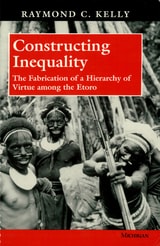
Constructing Inequality
The Fabrication of a Hierarchy of Virtue among the EtoroRaymond C. Kelly
University of Michigan Press, 1993

Consumption Intensified
The Politics of Middle-Class Daily Life in BrazilMaureen O'Dougherty
Duke University Press, 2002
With the supports of middle-class living threatened—job security, quality education, home ownership, savings, ease of consumption—the means and meaning of “middle class” were thrown into question. The sector thus redefined itself through both class- and race-based claims of moral and cultural superiority and through privileged consumption, a definition the media underscored by continually addressing middle-class Brazilians as consumers—or rather, as consumers denied. In these times, adults became more flexible in employment, and put stakes in their children’s expensive private education. They engaged in elaborate comparison shopping, stockpiling of goods, and financial strategizing. Ongoing desire for distinction and “first- world” modernity prompted these Brazilians to buy foreign goods through contraband, thereby defying state protectionist policy. Discontented with the constraints of the national economy, they welcomed neoliberalism.
By uncovering connections between culture and politics, O’Dougherty complicates understandings of the middle class as a social group and category. Illuminating the intricate relation between identity and local and global consumption, her work will be welcomed by students and scholars in anthropology and Latin American studies, and those interested in consumption, popular culture, politics, and globalization.

Consumption and Violence
Radical Protest in Cold-War West GermanyAlexander Sedlmaier
University of Michigan Press, 2014
Containing the Poor
The Mexico City Poor House, 1774-1871Silvia Marina Arrom
Duke University Press, 2001
For a nation that had traditionally regarded the needy as having the undisputed right to receive alms and whose affluent citizens felt duty-bound to dispense them, the experiment was doomed from the start, explains Arrom. She uses deep archival research to reveal that—much to policymakers’ dismay—the Poor House became an orphanage largely because the government had underestimated the embeddedness of this moral economy of begging. While tracing the course of an eventful century that also saw colonialism give way to republicanism in Mexico, Arrom links the Poor House’s transformation with other societal factors as well, such as Mexican women’s increasing impact on social welfare policies.
With poverty, begging, and homelessness still rampant in much of Latin America today, this study of changing approaches to social welfare will be particularly valuable to student and scholars of Mexican and Latin American society and history, as well as those engaged in the study of social and welfare policy.
Continually Working
Black Women, Community Intellectualism, and Economic Justice in Postwar MilwaukeeCrystal Marie Moten
Vanderbilt University Press, 2023
Moten emphasizes the ways in which Black women transformed the urban landscape by simultaneously occupying spaces from which they had been historically excluded and creating their own spaces. Black women refused to be marginalized within the historically white and middle‑class Milwaukee Young Women's Christian Association (MYWCA), an association whose mission centered on supporting women in urban areas. Black women forged interracial relationships within this organization and made it, not without much conflict and struggle, one of the most socially progressive organizations in the city. When Black women could not integrate historically white institutions, they created their own. They established financial and educational institutions, such as Pressley School of Beauty Culture, which beautician Mattie Pressley DeWese opened in 1946 as a result of segregation in the beauty training industry. This school served economic, educational, and community development purposes as well as created economic opportunities for Black women. Historically and contemporarily, Milwaukee has been and is still known as one of the most segregated cities in the nation. Black women have always contested urban inequality, by making space for themselves and others on the margins. In so doing, they have transformed both the urban landscape and urban history.

Control and Crisis in Colonial Kenya
The Dialectic of DominationBruce Berman
Ohio University Press, 1990
This history of the political economy of Kenya is the first full length study of the development of the colonial state in Africa.
Professor Berman argues that the colonial state was shaped by the contradictions between maintaining effective political control with limited coercive force and ensuring the profitable articulation of metropolitan and settler capitalism with African societies.
This dialectic of domination resulted in both the uneven transformation of indigenous societies and in the reconstruction of administrative control in the inter-war period.
The study traces the evolution of the colonial state from its skeletal beginnings in the 1890s to the complex bureaucracy of the post-1945 era which managed the growing integration of the colony with international capital. These contradictions led to the political crisis of the Mau Mau emergency in 1952 and to the undermining of the colonial state.
The book is based on extensive primary sources including numerous interviews with Kenyan and British participants. The analysis moves from the micro-level of the relationship of the District Commissioners and the African population to the macro-level of the state and the political economy of colonialism.
Professor Berman uses the case of Kenya to make a sophisticated contribution to the theory of the state and to the understanding of the dynamics of the development of modern African political and economic institutions.
Cooperation and Community
Economy and Society in OaxacaBy Jeffrey H. Cohen
University of Texas Press, 2000
In the villages and small towns of Oaxaca, Mexico, as in much of rural Latin America, cooperation among neighbors is essential for personal and community survival. It can take many forms, from godparenting to sponsoring fiestas, holding civic offices, or exchanging agricultural or other kinds of labor. This book examines the ways in which the people of Santa Ana del Valle practice these traditional cooperative and reciprocal relationships and also invent new relationships to respond to global forces of social and economic change at work within their community.
Based on fieldwork he conducted in this Zapotec-speaking community between 1992 and 1996, Jeffrey Cohen describes continuities in the Santañeros' practices of cooperation, as well as changes resulting from transnational migration, tourism, increasing educational opportunities, and improved communications. His nuanced portrayal of the benefits and burdens of cooperation is buttressed by the words of many villagers who explain why and how they participate-or not-in reciprocal family and community networks. This rich ethnographic material offers a working definition of community created in and through cooperative relationships.
Coping With Poverty
The Social Contexts of Neighborhood, Work, and Family in the African-American CommunitySheldon Danziger and Ann Chih Lin, Editors
University of Michigan Press, 2000
Cotton City
Urban Development in Antebellum MobileHarriet E. Amos Doss
University of Alabama Press, 2001
The exploration of the North-South relationship and the growth of of antebellum Mobile.
Cotton City offers a compelling exploration of Mobile, Alabama’s transformation into a thriving urban center during the antebellum period. Historian Harriet E. Amos examines how economic ambition, civic planning, and the cotton trade shaped the city’s development between 1819 and 1861. Through detailed archival research, Amos reveals how Mobile’s leaders sought to modernize infrastructure, expand commerce, and assert the city’s regional importance—all while navigating the tensions of slavery, class, and Southern identity.
This richly contextualized study highlights the interplay between urban growth and the broader forces of the Southern economy, making Cotton City a vital contribution to the histories of the American South, urbanization, and antebellum society.
Countering Development
Indigenous Modernity and the Moral ImaginationDavid D. Gow
Duke University Press, 2008
Through ethnographic fieldwork conducted annually in Cauca from 1995 through 2002, Gow compares the development plans of the three communities, looking at both the planning processes and the plans themselves. In so doing, he demonstrates that there is no single indigenous approach to development and modernity. He describes differences in how each community defined and employed the concept of culture, how they connected a concern with culture to economic and political reconstruction, and how they sought to assert their own priorities while engaging with the existing development resources at their disposal. Ultimately, Gow argues that the moral vision advanced by the indigenous movement, combined with the growing importance attached to human rights, offers a fruitful way to think about development: less as a process of integration into a rigidly defined modernity than as a critical modernity based on a radical politics of inclusive citizenship.

Crafting Selves
Power, Gender, and Discourses of Identity in a Japanese WorkplaceDorinne K. Kondo
University of Chicago Press, 1990
"Kondo's work is significant because she goes beyond disharmony, insisting on complexity. Kondo shows that inequalities are not simply oppressive-they are meaningful ways to establish identities."—Nancy Rosenberger, Journal of Asian Studies

Crafting Tradition
The Making and Marketing of Oaxacan Wood CarvingsBy Michael Chibnik
University of Texas Press, 2003
Since the mid-1980s, whimsical, brightly colored wood carvings from the Mexican state of Oaxaca have found their way into gift shops and private homes across the United States and Europe, as Western consumers seek to connect with the authenticity and tradition represented by indigenous folk arts. Ironically, however, the Oaxacan wood carvings are not a traditional folk art. Invented in the mid-twentieth century by non-Indian Mexican artisans for the tourist market, their appeal flows as much from intercultural miscommunication as from their intrinsic artistic merit.
In this beautifully illustrated book, Michael Chibnik offers the first in-depth look at the international trade in Oaxacan wood carvings, including their history, production, marketing, and cultural representations. Drawing on interviews he conducted in the carving communities and among wholesalers, retailers, and consumers, he follows the entire production and consumption cycle, from the harvesting of copal wood to the final purchase of the finished piece. Along the way, he describes how and why this "invented tradition" has been promoted as a "Zapotec Indian" craft and explores its similarities with other local crafts with longer histories. He also fully discusses the effects on local communities of participating in the global market, concluding that the trade in Oaxacan wood carvings is an almost paradigmatic case study of globalization.
Creating a New World Economy
Forces of Change and Plans for Actionedited by Gerald Epstein, Julie Graham and Jessica Nembhard, foreword by Samuel Bowles
Temple University Press, 1993
Creating the Land of the Sky
Tourism and Society in Western North CarolinaRichard D. Starnes
University of Alabama Press, 2005
A sophisticated inquiry into tourism's social and economic power across the South.
In the early 19th century, planter families from South Carolina, Georgia, and eastern North Carolina left their low-country estates during the summer to relocate their households to vacation homes in the mountains of western North Carolina. Those unable to afford the expense of a second home relaxed at the hotels that emerged to meet their needs. This early tourist activity set the stage for tourism to become the region's New South industry. After 1865, the development of railroads and the bugeoning consumer culture led to the expansion of tourism across the whole region.
Richard Starnes argues that western North Carolina benefited from the romanticized image of Appalachia in the post-Civil War American consciousness. This image transformed the southern highlands into an exotic travel destination, a place where both climate and culture offered visitors a myriad of diversions. This depiction was futher bolstered by partnerships between state and federal agencies, local boosters, and outside developers to create the atrtactions necessary to lure tourists to the region.
As tourism grew, so did the tension between leaders in the industry and local residents. The commodification of regional culture, low-wage tourism jobs, inflated land prices, and negative personal experiences bred no small degree of animosity among mountain residents toward visitors. Starnes's study provides a better understanding of the significant role that tourism played in shaping communities across the South.
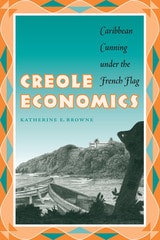
Creole Economics
Caribbean Cunning under the French FlagBy Katherine E. Browne
University of Texas Press, 2004
What do the trickster Rabbit, slave descendants, off-the-books economies, and French citizens have to do with each other? Plenty, says Katherine Browne in her anthropological investigation of the informal economy in the Caribbean island of Martinique. She begins with a question: Why, after more than three hundred years as colonial subjects of France, did the residents of Martinique opt in 1946 to integrate fully with France, the very nation that had enslaved their ancestors? The author suggests that the choice to decline sovereignty reflects the same clear-headed opportunism that defines successful, crafty, and illicit entrepreneurs who work off the books in Martinique today.
Browne draws on a decade of ethnographic fieldwork and interview data from all socioeconomic sectors to question the common understanding of informal economies as culture-free, survival strategies of the poor. Anchoring her own insights to longer historical and literary views, the author shows how adaptations of cunning have been reinforced since the days of plantation slavery. These adaptations occur, not in spite of French economic and political control, but rather because of it. Powered by the "essential tensions" of maintaining French and Creole identities, the practice of creole economics provides both assertion of and refuge from the difficulties of being dark-skinned and French.
This powerful ethnographic study shows how local economic meanings and plural identities help explain work off the books. Like creole language and music, creole economics expresses an irreducibly complex blend of historical, contemporary, and cultural influences.

Crisis and Capitalism in Contemporary Argentine Cinema
Joanna Page
Duke University Press, 2009
Page focuses particularly on films associated with New Argentine Cinema, but she also discusses highly experimental films and genre movies that borrow from the conventions of crime thrillers, Westerns, and film noir. She analyzes films that have received wide international recognition alongside others that have rarely been shown outside Argentina. What unites all the films she examines is their attention to shifts in subjectivity provoked by political or economic conditions and events. Page emphasizes the paradoxes arising from the circulation of Argentine films within the same global economy they so often critique, and she argues that while Argentine cinema has been intent on narrating the collapse of the nation-state, it has also contributed to the nation’s reconstruction. She brings the films into dialogue with a broader range of issues in contemporary film criticism, including the role of national and transnational film studies, theories of subjectivity and spectatorship, and the relationship between private and public spheres.

Crude Chronicles
Indigenous Politics, Multinational Oil, and Neoliberalism in EcuadorSuzana Sawyer
Duke University Press, 2004
Through her rich ethnography of indigenous marches, demonstrations, occupations, and negotiations, Sawyer tracks the growing sophistication of indigenous politics as Indians subverted, re-deployed, and, at times, capitulated to the dictates and desires of a transnational neoliberal logic. At the same time, she follows the multiple maneuvers and discourses that the multinational corporation and the Ecuadorian state used to circumscribe and contain indigenous opposition. Ultimately, Sawyer reveals that indigenous struggles over land and oil operations in Ecuador were as much about reconfiguring national and transnational inequality—that is, rupturing the silence around racial injustice, exacting spaces of accountability, and rewriting narratives of national belonging—as they were about the material use and extraction of rain-forest resources.
Cul de Sac
Patrimony, Capitalism, and Slavery in French Saint-DominguePaul Cheney
University of Chicago Press, 2017
Focusing on correspondence between the Ferronnayses and their plantation managers, Cul de Sac proposes that the Caribbean plantation system, with its reliance on factory-like production processes and highly integrated markets, was a particularly modern expression of eighteenth-century capitalism. But it rested on a foundation of economic and political traditionalism that stymied growth and adaptation. The result was a system heading toward collapse as planters, facing a series of larger crises in the French empire, vainly attempted to rein in the inherent violence and instability of the slave society they had built. In recovering the lost world of the French Antillean plantation, Cul de Sac ultimately reveals how the capitalism of the plantation complex persisted not as a dynamic source of progress, but from the inertia of a degenerate system headed down an economic and ideological dead end.

Cultural Logics and Global Economies
Maya Identity in Thought and PracticeBy Edward F. Fischer
University of Texas Press, 2002
A Choice Outstanding Academic Book, 2002
As ideas, goods, and people move with increasing ease and speed across national boundaries and geographic distances, the economic changes and technological advances that enable this globalization are also paradoxically contributing to the balkanization of states, ethnic groups, and special interest movements. Exploring how this process is playing out in Guatemala, this book presents an innovative synthesis of the local and global factors that have led Guatemala's indigenous Maya peoples to assert and defend their cultural identity and distinctiveness within the dominant Hispanic society.
Drawing on recent theories from cognitive studies, interpretive ethnography, and political economy, Edward F. Fischer looks at individual Maya activists and local cultures, as well as changing national and international power relations, to understand how ethnic identities are constructed and expressed in the modern world. At the global level, he shows how structural shifts in international relations have opened new venues of ethnic expression for Guatemala's majority Maya population. At the local level, he examines the processes of identity construction in two Kaqchikel Maya towns, Tecpán and Patzún, and shows how divergent local norms result in different conceptions and expressions of Maya-ness, which nonetheless share certain fundamental similarities with the larger pan-Maya project. Tying these levels of analysis together, Fischer argues that open-ended Maya "cultural logics" condition the ways in which Maya individuals (national leaders and rural masses alike) creatively express their identity in a rapidly changing world.
Culture and Economy
The Shaping of Capitalism in Eastern AsiaTimothy Brook and Hy Van Luong, Editors
University of Michigan Press, 1999
Culture, Class, and Politics in Modern Appalachia
Essays in Honor of Ronald L. LewisEdited by Jennifer Egolf, Ken Fones-Wolf, and Louis C. Martin
West Virginia University Press, 2009
Culture, Class, and Politics in Modern Appalachia takes stock of the field of Appalachian studies as it explores issues still at the center of its scholarship: culture, industrialization, the labor movement, and twentieth-century economic and political failure and their social impact. A new generation of scholars continues the work of Appalachian studies’ pioneers, exploring the diversity and complexity of the region and its people. Labor migrations from around the world transformed the region during its critical period of economic growth. Collective struggles over occupational health and safety, the environment, equal rights, and civil rights challenged longstanding stereotypes. Investigations of political and economic power and the role of social actors and social movements in Appalachian history add to the foundational work that demonstrates a dynamic and diverse region.
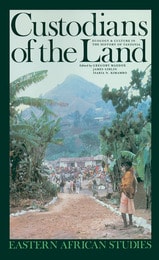
Custodians of the Land
Ecology and Culture in the History of TanzaniaGregory H. Maddox
Ohio University Press, 1995
Farming and pastoral societies inhabit ever-changing environments. This relationship between environment and rural culture, politics and economy in Tanzania is the subject of this volume which will be valuable in reopening debates on Tanzanian history.
In his conclusion, Isaria N. Kimambo, a founding father of Tanzanian history, reflects on the efforts of successive historians to strike a balance between external causes of change and local initiative in their interpretations of Tanzanian history.
He shows that nationalist and Marxist historians of Tanzanian history, understandably preoccupied through the first quarter-century of the country's post-colonial history with the impact of imperialism and capitalism on East Africa, tended to overlook the initiatives taken by rural societies to transform themselves.
Yet there is good reason for historians to think about the causes of change and innovation in the rural communities of Tanzania, because farming and pastoral people have constantly changed as they adjusted to shifting environmental conditions.
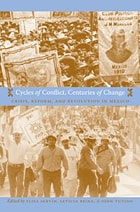
Cycles of Conflict, Centuries of Change
Crisis, Reform, and Revolution in MexicoElisa Servín, Leticia Reina, and John Tutino, eds.
Duke University Press, 2007
Leading Mexicanists—historians and social scientists from Mexico, the United States, and Europe—examine the three fin-de-siècle eras of crisis. They focus on the role of the country’s communities in advocating change from the eighteenth century to the present. They compare Mexico’s revolutions of 1810 and 1910 and consider whether there might be a twenty-first-century recurrence or whether a globalizing, urbanizing, and democratizing world has so changed Mexico that revolution is improbable. Reflecting on the political changes and social challenges of the late twentieth century, the contributors ask if a democratic transition is possible and, if so, whether it is sufficient to address twenty-first-century demands for participation and justice.
Contributors. Antonio Annino, Guillermo de la Peña, François-Xavier Guerra, Friedrich Katz, Alan Knight, Lorenzo Meyer, Leticia Reina, Enrique Semo, Elisa Servín, John Tutino, Eric Van Young