Results by title
944 books match the query 'Indians of North America' and 58 start with c
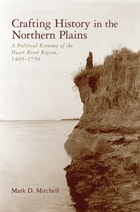
Crafting History in the Northern Plains
A Political Economy of the Heart River Region, 1400–1750Mark D. Mitchell
University of Arizona Press, 2013
Crime and Social Justice in Indian Country
Edited by Marianne O. Nielsen and Karen Jarratt-Snider
University of Arizona Press, 2018
Crime and Social Justice in Indian Country calls to attention the need for culturally appropriate research protocols and critical discussions of social and criminal justice in Indian Country. The contributors come from the growing wave of Native American as well as non-Indigenous scholars who employ these methods. They reflect on issues in three key areas: crime, social justice, and community responses to crime and justice issues. Topics include stalking, involuntary sterilization of Indigenous women, border-town violence, Indian gaming, child welfare, and juvenile justice. These issues are all rooted in colonization; however, the contributors demonstrate how Indigenous communities are finding their own solutions for social justice, sovereignty, and self-determination.
Thanks to its focus on community responses that exemplify Indigenous resilience, persistence, and innovation, this volume will be valuable to those on the ground working with Indigenous communities in public and legal arenas, as well as scholars and students. Crime and Social Justice in Indian Country shows the way forward for meaningful inclusions of Indigenous peoples in their own justice initiatives.
Contributors
Alisse Ali-Joseph
William G. Archambeault
Cheryl Redhorse Bennett
Danielle V. Hiraldo
Lomayumptewa K. Ishii
Karen Jarratt-Snider
Eileen Luna-Firebaugh
Anne Luna-Gordinier
Marianne O. Nielsen
Linda M. Robyn
Criminal Justice in Native America
Edited by Marianne O. Nielsen and Robert A. Silverman
University of Arizona Press, 2009
Each of the fourteen chapters of Criminal Justice in Native America was commissioned specifically for this volume. Contributors—many of whom are Native Americans—rank among the top scholars in their fields. Some of the chapters treat broad subjects, including crime, police, courts, victimization, corrections, and jurisdiction. Others delve into more specific topics, including hate crimes against Native Americans, state-corporate crimes against Native Americans, tribal peacemaking, and cultural stresses of police officers. Separate chapters are devoted to women and juveniles.
The well-known scholar Marianne Nielsen provides a context-setting introduction, in which she addresses the history of the legal treatment of Native Americans in the United States as well as a provocative conclusion that details important issues for current and future research in Native American criminal justice studies. Intended to introduce students to the substantive concerns of a range of disciplines that contribute to Native American Studies—among them, criminal justice and criminology, law, sociology, and anthropology—Criminal Justice in Native America will interest all readers who are concerned about relationships between Native peoples and prevailing criminal justice systems.

Critically Sovereign
Indigenous Gender, Sexuality, and Feminist StudiesJoanne Barker, editor
Duke University Press, 2017
Contributors. Jodi A. Byrd, Joanne Barker, Jennifer Nez Denetdale, Mishuana Goeman, J. Kēhaulani Kauanui, Melissa K. Nelson, Jessica Bissett Perea, Mark Rifkin
Cultural Encounters in the Early South
Indians and Europeans in ArkansasJeannie Whayne
University of Arkansas Press, 1995
Certificate of Commendation, American Association of State and Local History
Cultural Resource Management in the Great Basin 1986–2016
Alice M. Baldrica, Patricia A. DeBunch, and Don D. Fowler
University of Utah Press, 2019
Cultural Resource Management (CRM) refers to the discovery, evaluation, and preservation of culturally significant sites, focusing on but not limited to archaeological and historical sites of significance. CRM stems from the National Historic Preservation Act, passed in 1966. In 1986, archaeologists reviewed the practice of CRM in the Great Basin. They concluded that it was mainly a system of finding, flagging, and avoiding—a means of keeping sites and artifacts safe. Success was measured by counting the number of sites recorded and acres surveyed.
This volume provides an updated review some thirty years later. The product of a 2016 symposium, its measures are the increase in knowledge obtained through CRM projects and the inclusion of tribes, the general public, industry, and others in the discovery and interpretation of Great Basin prehistory and history. Revealing both successes and shortcomings, it considers how CRM can face the challenges of the future. Chapters offer a variety of perspectives, covering highway archaeology, inclusion of Native American tribes, and the legacy of the NHPA, among other topics.
Cultural and Environmental History of Cienega Valley, Southeastern Arizona
Frank W. Eddy and Maurice E. Cooley
University of Arizona Press, 1983
Current Perspectives on Stemmed and Fluted Technologies in the American Far West
Edited by Katelyn N. McDonough, Richard L. Rosencrance, and Jordan E. Pratt
University of Utah Press, 2023
This volume provides the most comprehensive overview of archaeological research into the late Pleistocene and early Holocene occupation of the North American Far West in over a decade. It focuses on the relationship between stemmed and fluted point technologies in the region, which has recently risen to the forefront of debate about the initial settlement of the Americas. Established and early career researchers apply a wide range of analytical approaches to explore chronological, geographical, and technological aspects of these tools and what they reveal about the people who made them. While such interrelationships have intrigued archaeologists for nearly a century, until now they have not been systematically examined together in a single curated volume.
Contributions are organized into three main sections: stemmed point technologies, fluted point technologies, and broader interactions. Topics range from regional overviews of chronologies and technologies to site-level findings containing extensive new data. The culmination of many years of work by dozens of researchers, this volume lays new groundwork for understanding technological innovation, diversity, and exchange among early Indigenous peoples in North America.