Results by title
1228 books match the query 'Library & Information Science' and 111 start with c

Comprehensive Guide to Emergency Preparedness and Disaster Recovery
Frances C. Wilkinson
Assoc of College & Research Libraries, 2010

Conceptualizing 21st-Century Archives
Anne J. Gilliland
American Library Association, 2017
Concise AACR2
Michael Gorman
American Library Association, 2004
Conducting the Reference Interview
Catherine Sheldrick Ross
American Library Association, 2019
Based on the latest research in communication theory but tailored specifically for real-world application, this updated manual speaks equally to the needs of students preparing to enter the profession and those who are already fielding reference inquiries. The authors, working in consultation with a stellar advisory board of scholars and practitioners, present a convenient and comprehensive resource that will teach you how to understand the needs of public, academic, and special library users across any virtual setting—including email, text messaging, and social media—as well as in traditional and face-to-face models of communication. Packed with exercises and examples to help you practice effective reference transactions and avoid common pitfalls, this book
- tackles the fundamentals of the reference interview, from why it’s important in the first place to methods for setting the stage for a successful interview and techniques for finding out what the library user really wants to know;
- covers the ins and outs of the readers’ advisory interview;
- examines a wide range of contexts, such as children, young adults, parents, seniors, adults from diverse communities, and those with disabilities;
- presents case studies of innovative reference and user encounters at a variety of libraries;
- offers updated coverage of virtual reference, including new research, virtual reality transcripts, and a look at crowd-sourcing reference via social media;
- features new content on common microaggressions, with guidance on how to use awareness of emotion as a factor in reference interactions to ensure better outcomes;
- discusses topics such as respecting/protecting privacy, overcoming assumptions, implicit judgment, the importance of context, determining the real information need, and many other lessons learned from challenging reference encounters; and
- thoroughly addresses policy and training procedures, as well as the unique challenges faced by paraprofessionals and non-degreed staff.
Find your bearings in the continually evolving hybrid reference environment through proven strategies, advice, exercises, and research from three experts in the field.
Confessions of a Book Reviewer
The Best of Carte BlancheMichael Cart
American Library Association, 2018
Connecting Boys
American Library Association, 2003
Connecting Boys With Books 2
Michael Sullivan
American Library Association, 2008
Constructing Library Buildings That Work
Fred Schlipf
American Library Association, 2020
When it’s time to start planning for a renovation or construction project, you don’t need a book that covers everything from A to Z. Instead you need a concentrated set of tools and techniques that will guide you and your team to find the best solutions for your specific project. That’s exactly what library building expert Schlipf provides in his new book, which will be a key resource for library directors, administrators, board members, trustees, and planning professionals. Pinpointing the elements that make library buildings functional, in this book readers will find
- a streamlined organization of the text that enables quick consultation and facilitates collaboration;
- concise coverage of the essentials of the library construction process, including who does what, how things work, and how to stay out of trouble along the way;
- advice on important planning and workflow considerations such as site selection, schematic design, funding, design development, the bidding process, construction, and post-construction occupancy;
- discussion of the characteristics of successful library buildings—buildings that are easy to maintain, welcoming to people with disabilities, have less trouble-prone restrooms, and provide security for users, staff, and collections; and
- an overview of bad ideas in library architecture, with pointed guidance on how to steer clear of them from the very beginning of your project.
Contesting Archives
Finding Women in the SourcesEdited by Nupur Chaudhuri, Sherry J. Katz, and Mary Elizabeth Perry
University of Illinois Press, 2010
The contributors of Contesting Archives challenge the assumption that an archive is a neutral, immutable, and a historical repository of information. Instead, these historians view it as a place where decisions are made about whose documents--and therefore whose history--is important. Finding that women's voices and their texts were often obscured or lost altogether, they have developed many new methodologies for creating unique archives and uncovering more evidence by reading documents "against the grain," weaving together many layers of information to reveal complexities and working collectively to reconstruct the lives of women in the past.
Global in scope, this volume demonstrates innovative research on diverse women from the sixteenth century to the present in Spain, Mexico, Tunisia, India, Iran, Poland, Mozambique, and the United States. Addressing gender, race, class, nationalism, transnationalism, and migration, these essays' subjects include indigenous women of colonial Mexico, Muslim slave women, African American women of the early twentieth century, Bengali women activists of pre-independence India, wives and daughters of Qajar rulers in Iran, women industrial workers in communist Poland and socialist Mozambique, and women club owners in modern Las Vegas. A foreword by Antoinette Burton adroitly synthesizes the disparate themes woven throughout the book.
Contributors are Janet Afary, Maryam Ameli-Rezai, Antoinette Burton, Nupur Chaudhuri, Julia Clancy-Smith, Mansoureh Ettehadieh, Malgorzata Fidelis, Joanne L. Goodwin, Kali Nicole Gross, Daniel S. Haworth, Sherry J. Katz, Elham Malekzadeh, Mary Elizabeth Perry, Kathleen Sheldon, Lisa Sousa, and Ula Y. Taylor.
Cooking Up a Storytime
Mix-and-Match Menus for Easy ProgrammingSusan Anderson-Newham
American Library Association, 2014
Cool Story Programs for the School-Age Crowd
Rob Reid
American Library Association, 2004
Copyright Conversations
Rights Literacy in a Digital WorldSara Benson
Assoc of College & Research Libraries, 2019
Copyright Essentials for Librarians and Educators
American Library Association, 2000
Copyright Law for Librarians and Educators
Creative Strategies and Practical SolutionsKenneth D. Crews
American Library Association, 2020
Copyright law never sleeps, making it imperative to keep abreast of the latest developments. Declared “an exemplary text that seals the standards for such books” (Managing Information), this newly revised and updated edition by respected copyright authority Crews offers timely insights and succinct guidance for LIS students, librarians, and educators alike. Readers will
- learn basic copyright definitions and key exceptions for education and library services;
- find information quickly with “key points” sidebars, legislative citations, and cross-references;
- get up to speed on fresh developments, such as how the recently signed Marrakesh Treaty expands access for people with disabilities and why the latest ruling in the Georgia State University case makes developing a fair use policy so important;
- understand the concept of fair use, with fresh interpretations of its many gray areas that will aid decision making;
- learn the current state of affairs regarding mass digitization, Creative Commons, classroom use and distance education, the Digital Millennium Copyright Act, and other important topics;
- receive guidance on setting up on a copyright service at a library, college, or university; and
- find many helpful checklists for navigating copyright in various situations.
This straightforward, easy-to-use guide provides the tools librarians and educators need to take control of their rights and responsibilities as copyright owners and users.
Copyright Law for Librarians and Educators
Creative Strategies and Practical SolutionsKenneth D. Crews
American Library Association, 2012
Copyright for Academic Librarians and Professionals
Rebecca P. Butler
American Library Association, 2014
Copyright for Teachers and Librarians in the 21st Century
Rebecca P. Butler
American Library Association, 2011
Core Tech Competencies for Librarians and Library Staff
American Library Association, 2009
Coteaching Reading Comprehension Strategies in Elementary School Libraries
Maximizing Your ImpactJudi Moreillon
American Library Association, 2013
Coteaching Reading Comprehension Strategies in Secondary School Libraries
Maximizing Your ImpactJudi Moreillon
American Library Association, 2012
Countdown to a New Library
Jeannette Woodward
American Library Association, 2000
Countdown to a New Library
Managing the Building ProjectJeannette Woodward
American Library Association, 2010
Counting Down to Kindergarten
A Complete Guide to Creating a School Readiness Program for Your CommunityR. Lynn Baker
American Library Association, 2015
The public library is in the perfect position as a community resource to help bridge the gap between preschool and kindergarten; however, starting from scratch can feel daunting. In this guide, Baker combines her background in early childhood education with her experience as a youth services programming specialist to present a school readiness program that can be tailored for any public library. Based on the successful framework of her tried and tested original program, this book offers everything that a public library needs in order to get started, including
- A six-week schedule of detailed lesson plans which combine the best practices of the Every Child Ready to Read® (ECRR) Second Edition (talking, singing, reading, writing, playing) with nationally identified school readiness skills
- A six-month family calendar with activities to help parents engage their children in activities that foster early literacy and school readiness skills at home
- Tips for maintaining a collaborative relationship with early childhood stakeholders and policymakers to help maintain a program that fits the school readiness needs of the local community
- Specific examples of successful school readiness programs and partnerships from public library systems across the country
Baker's guide will help public libraries ensure that young children are ready for school from day one.
Create, Innovate, and Serve
A Radical Approach to Children's and Youth ProgrammingKathleen Campana
American Library Association, 2019
Creating Data Literate Students
Kristin Fontichiaro, Jo Angela Oehrli, Amy Lennex, editors
Michigan Publishing Services, 2017
with foundational domain knowledge to teach a new subset of information
literacy skills — data and statistical literacy, including: statistics and data comprehension; data as argument; and data visualization.
Data — both raw and displayed in visualizations — can clarify or confuse,
confirm or deny, persuade or deter. Students often learn that numbers are
objective, though data in the real world is rarely so. In fact, visualized data —
even from authoritative sources — can sometimes be anything but objective.
Librarians and classroom educators need to be as fluent with quantitative
data as they are with text in order to support high schoolers as they engage
with data in formal and informal settings. We asked contributors to this
volume — experts in high school curriculum, information literacy and/or
data literacy — to explore the intersections between data and curriculum
and identify high-impact strategies for demystifying data for educators and
students alike.
Creating Generative AI Policies
A Guide for Public and Academic LibrariesRobin Hastings
American Library Association, 2026
Though it’s challenging to set policies for a technology that is so young and still in flux, the need is urgent. Because usage of AI presents both opportunities and risks, libraries must be proactive. The WEF (World Economic Forum) predicts that while there may be a loss of 92 million jobs to various AI tools, they see 170 million new jobs and roles emerging from the use of this new technology. Whether or not this proves correct, there are already digital literacy skills, including a basic understanding of the technology around AI, that libraries can help their patrons master; and because of data privacy, security, and ethics issues, library workers require clear AI policies too. Technology expert Hastings highlights the first attempts of libraries across the country to set up policies for the use of AI in their organizations, as well as policies created by cities and other similar institutions, to guide stakeholders in creating their own smart, forward-thinking course of action. Succinct and pragmatic, this timely resource
- provides a short overview of Generative AI history, basic technical knowledge, and the key arguments put forth by those in favor and those opposed to this technology;
- offers advice on discovering how library staff encounter AI in their day-to-day work, both in their own usage and by patrons, to inform what policies the library needs and which policies to consider adjusting for particular use cases;
- includes separate chapters focusing on staff-side policy and patron/public-facing policy, delving into essential considerations like staff training, privacy and data protection, security, AI usage for reference, patron education and AI literacy, and setting limits and boundaries on patron AI use;
- suggests useful approaches to ensure that AI policies are easy to follow and understand by library workers, patrons, and the wider community;
- discusses how to craft flexible procedures that can be updated as AI continues to change, drawing on technology management best practices; and
- offers links to additional resources like sample policy documents and a curated reading list for understanding the environment around AI.
Creating Inclusive Library Environments
A Planning Guide for Serving Patrons with DisabilitiesMichelle Kowalsky
American Library Association, 2016
Creating Leaders An Examinati On Of Academic And Research Li
Irene Herold
American Library Association, 2015
Creating Leaders
An Examination of Academic and Research Library Leadership InstitutesIrene M. H. Herold
Assoc of College & Research Libraries, 2015
Creating Literacy-Based Programs for Children
Lesson Plans and Printable Resources for K–5R. Lynn Baker
American Library Association, 2017
Creating Your Library Brand
Communicating Your Relevance and Value to Your PatronsElisabeth Doucett
American Library Association, 2008
Creating a Local History Archive at Your Public Library
Faye Phillips
American Library Association, 2017
Creating a Winning Online Exhibit
Martin R. Kalfatovic
American Library Association, 2002
Creating an Inclusive Library
Approaches for Increasing Engagement and Use with Students of ColorNgoc-Yen Tran
Assoc of College & Research Libraries, 2024
Six themed sections provide an opportunity to further engage with issues affecting students of color and to take action to provide more just and equitable teaching and learning environments.
- Welcoming and Sense of Belonging
- Culturally Relevant Practices
- Building Representation and Inclusion
- Collaborations and Co-Creation
- Community Building and Engagement
- Fostering Diverse Student Employees
Creating the Customer-Driven Academic Library
Jeannette Woodward
American Library Association, 2009
Creating the Customer-Driven Library
Building on the Bookstore ModelJeannette Woodward
American Library Association, 2004
Creating the One-Shot Library Workshop
A Step-by-Step GuideJerilyn Veldof
American Library Association, 2006
Creative Commons for Educators and Librarians
American Library Association, 2020
Creative Instructional Design
Practical Applications ForBrandon West
Assoc of College & Research Libraries, 2017
Creativity
Nancy Falciani-White
American Library Association, 2021
Creators in the Academic Library
Collections and SpacesRebecca Zuege Kuglitsch
Assoc of College & Research Libraries, 2023
In four parts, Creators in the Academic Library: Collections and Spaces explores how academic libraries can build collections, spaces, and communities that serve creators.
- Tailoring Collections for Creators
- Making in the Academic Library
- Creating Experiences in the Library
- Cultivating Creator Communities
Creators in the Academic Library
Instruction and OutreachAlexander C. Watkins
Assoc of College & Research Libraries, 2023
In four parts, Creators in the Academic Library: Instruction and Outreach explores how to teach specifically for creator research, motivate learning, and deepen students’ understanding of their own practice.
- Technology, Tools, and Techniques for Creation
- Inspiring Creativity through Research
- Creator’s Unique Information Needs
- Grounding Creation in Research
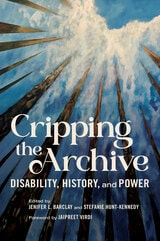
Cripping the Archive
Disability, History, and PowerEdited by Jenifer L. Barclay and Stefanie Hunt-Kennedy Foreword by Jaipreet Virdi
University of Illinois Press, 2025
Jenifer L. Barclay and Stefanie Hunt-Kennedy edit a collection of interdisciplinary essays that consider how and why physical, sensory, intellectual, and psychological disabilities are underrepresented, erased, or distorted in the historical record. The contributors draw on the methodology and practice of cripping to uncover disability in contested archives and explore ways to build inclusive archives accountable to, and centered on, disabled people and disability justice. Throughout, they show ableness informing the politics of the archive as a physical space, a discriminatory record, and a collection of silences.
An essential contribution to research methods and disability justice, Cripping the Archive offers a blueprint for intersectional and interdisciplinary approaches that bridge disability studies, history, and archival studies.
Crisis in Employment
Jane Jerrard
American Library Association, 2008
Critical Approaches to Credit-Bearing Information Literacy Courses
Angela Pashia
Assoc of College & Research Libraries, 2019
Critical Data Storytelling for Libraries
Crafting Ethical Narratives for Advocacy and ImpactKate McDowell
American Library Association, 2025
- the dynamic interrelationships between storyteller, audience, and story which lie at the heart of storytelling;
- ways to mesh library data collection processes with long-term storytelling potential, prioritizing interaction over transaction;
- three time-honored and effective narrative strategies for organizing the informational and emotional content of library data stories, easily adaptable for any situation;
- approaches for emphasizing inclusivity and justice to ensure that library advocates can tell stories that challenge stereotypes, promote equity, and align their efforts with broader ethical and social goals;
- audience attitudes as challenges and opportunities for library data communication; and
- strategies for maintaining open and transparent public communication in the face of rampant misinformation and active disinformation campaigns.
Critical Digital Humanities
The Search for a MethodologyJames E. Dobson
University of Illinois Press, 2019
Critical Information Literacy Applications for All Libraries
Edited by Julie N. Hornick and Lauren Kehoe
American Library Association, 2025
- learn practical approaches for integrating CIL into instruction and praxis regardless of their level of experience;
- gain tools to better engage with the complexities of today's information landscape and empower their communities to do the same;
- be introduced to the theoretical frameworks of CIL through chapters that take a historical look at critical race theory in academic library instruction, CIL and feminist critique, and the intersection of queer pedagogy and CIL;
- discover in-depth profiles of programs happening in various library types, from algorithmic literacy and a targeted wiki-edit-a-thon event to an outreach initiative targeting groups historically excluded from post-secondary education;
- receive guidance on introducing CIL concepts to their peers and coworkers through professional development programs, such as introducing CIL practices into K-12 school culture, a CIL skills instruction program developed by public librarians to serve the everyday needs of information consumers, and a zine-making exercise for practicing reflection that embodies CIL; and
- find ready-to-use lesson plans and outlines, with suggestions on tailoring them to a variety of library types.
Critical Library Leadership
Managing Self and Others in Today's Academic LibraryKristin Henrich
Assoc of College & Research Libraries, 2024
Critical Library Leadership: Managing Self and Others in Today’s Academic Library provides practical, library-specific, hands-on tools that help us shape our approach to leadership and ourselves as leaders. It gives practical strategies for dealing with stress and addressing feelings of insecurity alongside managing the organization from an equity perspective that places people at the forefront. Each section offers a mixture of theory and research, lived experience, and practice that captures many different techniques you can apply to your own journey and organizational context in both formal and informal ways.
Part I: Leader as Self
Section I: Care, Empathy, and Authenticity
Section II: Career Development
Part II: Leader as Role
Section III: Relationships with Others
Section IV: Management Practices
Critical Library Leadership offers a sense of recognition and of community, new ideas for personal and organizational practice, and a renewed appreciation for the immense amount of affective, emotional, and practical labor that is required of each of us as leaders.
Critical Library Pedagogy Handbook Volume One
Essays and Workbooks ActivitiesNicole Pagowsky
Assoc of College & Research Libraries, 2016