Results by title
1488 books match the query 'Media Studies' and 107 start with c
Complacency and Collusion
A Critical Introduction to Business and Financial JournalismKeith J. Butterick
Pluto Press, 2015
Computational Humanities
Jessica Marie Johnson
University of Minnesota Press, 2024
The first book to intervene in debates on computation in the digital humanities
Bringing together leading experts from across North America and Europe, Computational Humanities redirects debates around computation and humanities digital scholarship from dualistic arguments to nuanced discourse centered around theories of knowledge and power. This volume is organized around four questions: Why or why not pursue computational humanities? How do we engage in computational humanities? What can we study using these methods? Who are the stakeholders?
Recent advances in technologies for image and sound processing have expanded computational approaches to cultural forms beyond text, and new forms of data, from listservs and code repositories to tweets and other social media content, have enlivened debates about what counts as digital humanities scholarship. Providing case studies of collaborations between humanities-centered and computation-centered researchers, this volume highlights both opportunities and frictions, showing that data and computation are as much about power, prestige, and precarity as they are about p-values.
Contributors: Mark Algee-Hewitt, Stanford U; David Bamman, U of California, Berkeley; Kaspar Beelen, U of London; Peter Bell, Philipps U of Marburg; Tobias Blanke, U of Amsterdam; Julia Damerow, Arizona State U; Quinn Dombrowski, Stanford U; Crystal Nicole Eddins, U of Pittsburgh; Abraham Gibson, U of Texas at San Antonio; Tassie Gniady; Crystal Hall, Bowdoin College; Vanessa M. Holden, U of Kentucky; David Kloster, Indiana U; Manfred D. Laubichler, Arizona State U; Katherine McDonough, Lancaster U; Barbara McGillivray, King’s College London; Megan Meredith-Lobay, Simon Fraser U; Federico Nanni, Alan Turing Institute; Fabian Offert, U of California, Santa Barbara; Hannah Ringler, Illinois Institute of Technology; Roopika Risam, Dartmouth College; Joshua D. Rothman, U of Alabama; Benjamin M. Schmidt; Lisa Tagliaferri, Rutgers U; Jeffrey Tharsen, U of Chicago; Marieke van Erp, Royal Netherlands Academy of Arts and Sciences; Lee Zickel, Case Western Reserve U.

Computer Game Worlds
Claus Pias
Diaphanes, 2017
With Computer Game Worlds, Claus Pias sets out to answer these questions. Tracing computer games from their earliest forms to the unstoppable commercial and cultural phenomena they have become today, Pias then provides a careful epistemological reconstruction of the process of playing games, both at computers and by computers themselves. The book makes a valuable theoretical contribution to the ongoing discussion about computer games.

Computers, Surveillance, and Privacy
David Lyon and Elia Zureik, Editors
University of Minnesota Press, 1996
Computers, Surveillance, and Privacy was first published in 1996. Minnesota Archive Editions uses digital technology to make long-unavailable books once again accessible, and are published unaltered from the original University of Minnesota Press editions.
From computer networks to grocery store checkout scanners, it is easier and easier for governments, employers, advertisers, and individuals to gather detailed and sophisticated information about each of us. In this important new collection, the authors question the impact of these new technologies of surveillance on our privacy and our culture.
Although surveillance-literally some people "watching over" others-is as old as social relationships themselves, with the advent of the computer age this phenomenon has acquired new and distinctive meanings. Technological advances have made it possible for surveillance to become increasingly global and integrated-both commercial and government-related personal data flows more frequently across national boundaries, and the flow between private and public sectors has increased as well.
Addressing issues of the global integration of surveillance, social control, new information technologies, privacy violation and protection, and workplace surveillance, the contributors to Computers, Surveillance, and Privacy grapple with the ramifications of these concerns for society today. Timely and provocative, this collection will be of vital interest to anyone concerned with resistance to social control and incursions into privacy.
Contributors: Jonathan P. Allen, Colin J. Bennett, Simon G. Davies, Oscar H. Gandy Jr., Calvin C. Gotlieb, Rob Kling, Gary T. Marx, Abbe Mowshowitz, Judith A. Perrolle, Mark Poster, Priscilla M. Regan, James B. Rule.
David Lyon is professor of sociology at Queen's University, Canada. His previous books include The Electronic Eye: The Rise of Surveillance Society (Minnesota, 1994). Elia Zureik is also professor of sociology at Queen's University, Canada, and coedited (with Dianne Hartling) The Social Context of the New Information and Communication Technologies (1987).
Confidence Culture
Shani Orgad and Rosalind Gill
Duke University Press, 2022
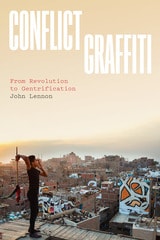
Conflict Graffiti
From Revolution to GentrificationJohn Lennon
University of Chicago Press, 2021
Graffiti makes for messy politics. In film and television, it is often used to create a sense of danger or lawlessness. In bathroom stalls, it is the disembodied expression of gossip, lewdness, or confession. But it is also a resistive tool of protest, making visible the disparate voices and interests that come together to make a movement.
In Conflict Graffiti, John Lennon dives into the many permutations of graffiti in conflict zones—ranging from the protest graffiti of the Black Lives Matter movement in Ferguson and the Tahrir Square demonstrations in Egypt, to the tourist-attraction murals on the Israeli Separation Wall and the street art that has rebranded Detroit and post-Katrina New Orleans. Graffiti has played a crucial role in the revolutionary movements of these locales, but as the conflict subsides a new graffiti and street art scene emerges—often one that ushers in postconflict consumerism, gentrification, militarization, and anesthetized forgetting.
Graffiti has an unstable afterlife, fated to be added to, transformed, overlaid, photographed, reinterpreted, or painted over. But as Lennon concludes, when protest movements change and adapt, graffiti is also uniquely suited to shapeshift with them.
Connect and Divide
The Practice Turn in Media StudiesEdited by Erhard Schüttpelz, Ulrike Bergermann, Monika Dommann, Jeremy Stolow, and Nadine Taha
Diaphanes, 2018
This new anthology takes stock of our empirical and historical understanding of the two-sided nature of media and tracks the recent turn in media studies to examining practice itself. A unique discussion of the intersection of media theory and practice theory, Connect and Divide explores how distributions of knowledge, labor, and power may be hidden in what remains untraceable about media, shedding vital light on the social implications of media theory today.
Constructing the Little House
Gender, Culture, and Laura Ingalls WilderAnn Romines
University of Massachusetts Press, 1997
Ann Romines interweaves personal observation with scholarly analysis to address these questions. Writing from a feminist perspective and drawing on resources of gender studies, cultural studies, and new historicist reading, she examines both the content of the novels and the process of their creation. She explores the relationship between mother and daughter working as collaborative authors and calls into question our assumptions about plot, juvenile fiction, and constructions of gender on the nineteenth-century frontier and in the Depression years when the Little House books were written.
This is a book that will appeal both to scholars and to general readers who might welcome an engaging and accessible companion volume to the Little House novels.
Constructing the Outbreak
Epidemics in Media and Collective MemoryKatherine A. Foss
University of Massachusetts Press, 2020
Constructing the Outbreak demonstrates how news reporting on epidemics communicates more than just information about pathogens; rather, prejudices, political agendas, religious beliefs, and theories of disease also shape the message. Analyzing seven epidemics spanning more than two hundred years—from Boston's smallpox epidemic and Philadelphia's yellow fever epidemic in the eighteenth century to outbreaks of diphtheria, influenza, and typhoid in the early twentieth century—Katherine A. Foss discusses how shifts in journalism and medicine influenced the coverage, preservation, and fictionalization of different disease outbreaks. Each case study highlights facets of this interplay, delving into topics such as colonization, tourism, war, and politics. Through this investigation into what has been preserved and forgotten in the collective memory of disease, Foss sheds light on current health care debates, like vaccine hesitancy.

Consumer Culture
Lury, Celia
Rutgers University Press, 1996
This book is written as a survey for students who are interested in the nature and role of consumer culture in modern societies. Drawing on a wide range of studies and disciplines, Celia Lury examines the rise of consumer culture and the changing relations between the production and consumption of cultural goods. Rejecting the Marxist principle of production as the lone economic determinant in capitalist society, Lury presents consumerism as an equally active player in the free market. Rather than existing as opposites, production and consumerism are seen as complements, feeding off each other in an endless cycle. As the author writes, “the use or appropriation of an object is more often than not both a moment of consumption and production, of undoing and doing, of destruction and construction.”
Lury weaves unique arguments over the expansive nature of consumption, including explanations as to how poorer segments of society do in fact contribute to consumer culture and how a commodity moves beyond its function and assumes a cultural and symbolic meaning. Not only does the author explore the way an individual’s position in social groups structured by class, gender, race and age affects the nature of his or her participation in consumer culture, but also how this culture itself is instrumental in the defining of social and political groups and the forming of an individual’s self-identity.
Clearly written and well illustrated, Consumer Culture is a lively and engaging introduction to a topic which is of growing importance in media and cultural studies and in the sociology of culture. It will enable readers to understand and ultimately to have better control over the means of consumption.

Consumer Identities
Agency, Media and Digital CultureEdited by Candice Roberts and Myles Ethan Lascity
Intellect Books, 2019
Consuming Catastrophe
Mass Culture in America's Decade of DisasterTimothy Recuber
Temple University Press, 2016
Horrified, saddened, and angered: That was the American people’s reaction to the 9/11 attacks, Hurricane Katrina, the Virginia Tech shootings, and the 2008 financial crisis. In Consuming Catastrophe, Timothy Recuber presents a unique and provocative look at how these four very different disasters took a similar path through public consciousness. He explores the myriad ways we engage with and negotiate our feelings about disasters and tragedies—from omnipresent media broadcasts to relief fund efforts and promises to “Never Forget.”
Recuber explains how a specific and “real” kind of emotional connection to the victims becomes a crucial element in the creation, use, and consumption of mass mediation of disasters. He links this to the concept of “empathetic hedonism,” or the desire to understand or feel the suffering of others.
The ineffability of disasters makes them a spectacular and emotional force in contemporary American culture. Consuming Catastrophe provides a lively analysis of the themes and meanings of tragedy and the emotions it engenders in the representation, mediation and consumption of disasters.
Contemporary Black Women Filmmakers and the Art of Resistance
Christina N. Baker
The Ohio State University Press, 2018
Analyzing the cultural texts of filmmakers such as Ava DuVernay, Tanya Hamilton, Kasi Lemmons, Gina Prince-Bythewood, and Dee Rees—and including interviews she conducted with three of the filmmakers—Baker emphasizes the importance of applying an intersectional perspective that centers on the shared experiences of Black women and the role of film as a form of artistic expression and a tool of social resistance.
Contemporary Opera in Flux
Edited by Yayoi U. Everett
University of Michigan Press, 2024
Contemporary Opera in Flux bridges the gaps between expanding literature on opera, theater, new music, postmodern dramaturgy, and posthuman aesthetics, while also confronting larger questions of identity, representation, and narrative agency that are at the forefront of contemporary music scholarship. This collection of essays engages critically with the past out of a conviction that, amid general public perceptions of opera as anachronistic or elitist, contemporary opera has emerged as an artistic incubator for experimentation.
Content Machines
Reading and Writing in the Platform EraSarah Brouillette
Duke University Press, 2026
Contested Ground
The Tunnel and the Struggle over Television News in Cold War AmericaMike Conway
University of Massachusetts Press, 2019
It was not just The Tunnel's subject matter that sparked controversy, but the medium itself. The surprisingly fast ascendance of television news as the country's top choice for information threatened the self-defined supremacy of print journalism and the de facto cooperation of government officials and reporters on Cold War issues. In Contested Ground, Mike Conway argues that the production and reception of television news and documentaries during this period reveals a major upheaval in American news communications.
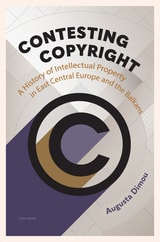
Contesting Copyright
A History of Intellectual Property in East Central Europe and the BalkansAugusta Dimou
Central European University Press, 2026
Context Providers
Conditions of Meaning in Media ArtsMargot Lovejoy, Christiane Paul, Victoria Vesna
Intellect Books, 2011
Context Providers explores the ways in which digital art and culture are challenging and changing the creative process and our ways of constructing meaning. The authors introduce the concept of artists as context providers—people who establish networks of information in a highly collaborative creative process, blurring boundaries between disciplines. Technological change has affected the function of art, the role of the artist, and the way artistic productions are shared, creating a need for flexible information filters as a framework for establishing meaning and identity. Context Providers considers the work of media artists today who are directly engaging the scientific community through collaboration, active dialogue, and creative work that challenges the scientific.
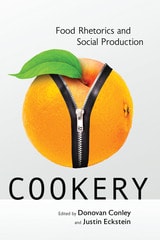
Cookery
Food Rhetorics and Social ProductionEdited by Donovan Conley and Justin Eckstein
University of Alabama Press, 2020
The rhetoric of contemporary food production and consumption with a focus on social boundaries
The rhetoric of food is more than just words about food, and food is more than just edible matter. Cookery: Food Rhetorics and Social Production explores how food mediates both rhetorical influence and material life through the overlapping concepts of invention and production. The classical canon of rhetorical invention entails the process of discovering one’s persuasive appeals, whereas the contemporary landscape of agricultural production touches virtually everyone on the planet. Together, rhetoric and food shape the boundaries of shared living.
The essays in this volume probe the many ways that food informs contemporary social life through its mediation of bodies—human and extra-human alike—in the forms of intoxication, addiction, estrangement, identification, repulsion, and eroticism. Our bodies, in turn, shape the boundaries of food through research, technology, cultural trends, and, of course, by talking about it.
Each chapter explores food’s persuasive nature through a unique prism that includes intoxication, dirt, “food porn,” strange foods, and political “invisibility.” Each case offers new insights about the relations between rhetorical influence and embodied practice through food. As a whole Cookery articulates new ways of viewing food’s powers of persuasion, as well as the inherent role of persuasion in agricultural production.
The purpose of Cookery, then, is to demonstrate the deep rhetoricity of our modern industrial food system through critical examinations of concepts, practices, and tendencies endemic to this system. Food has become an essential topic for discussions concerned with the larger social dynamics of production, distribution, access, reception, consumption, influence, and the fraught question of choice. These questions about food and rhetoric are equally questions about the assumptions, values, and practices of contemporary public life.

Cool Capitalism
Jim McGuigan
Pluto Press, 2009
Thomas Frank coined the term ‘the conquest of cool’. This book shows how this conquest is at the heart of the dynamics of contemporary capitalism.
Jim McGuigan argues that 'cool capitalism' incorporates disaffection into capitalism itself, absorbing rebellion and thereby neutralising opposition to the present system of culture and society.
McGuigan explores a huge variety of cultural examples, from the sleek images of mainstream advertising, to the fringes of artistic production, offering a vigourous critique of our understanding of subversion, resistance and counter-culturalism.
Has capitalism really colonised our planet? McGuigan shows that there is still some space left for rebellion against the seductive power of the free market economy.
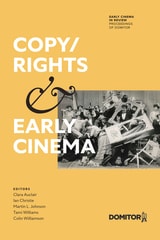
Copy/Rights and Early Cinema
Proceedings of the 17th International Domitor ConferenceEdited by Clara Auclair, Ian Christie, Martin L. Johnson, Tami Williams, and Colin Williamson
Lever Press, 2026
Histories of early cinema often focus on technological, social, and aesthetic developments in the medium. But cinema also posed legal challenges throughout the world and continues to do so in the era of digital media and AI. The methods used to establish and defend copyright varied across national contexts and changed over time, shaping how films were circulated and preserved. This edited volume includes essays based on conference papers given at the 17th Domitor conference and includes case studies from a range of national, historical, and cultural contexts.
The essays in this volume address an array of themes, including copyright and early intermediality, piracy and censorship, international distribution, infamy and defamation, and publicity, privacy, and rights to the image. Although these essays center the first decades of cinema, the rights they address continue to resonate today. Since intellectual property law is constantly struggling to stay abreast of technological innovation, this collection has special relevance in a new era of global production and digital technologies that is as momentous as the invention of cinema. Claiming, defining, and defending rights are returned to the spotlight as AI draws upon the past of cinema to shape its future.

Coralations
Melody Jue
University of Minnesota Press, 2025
A captivating meditation on coral beyond iconic tropical corals
Coralations is a philosophical exploration of the media that come into focus when we shift our attention from the highly recognizable coral of the tropics. Focusing on soft corals and deep-water corals leads to different narratives about climate change and involves different analogies to media. Through thought-provoking analyses of photography, science fiction, visual art, and scientific images, Melody Jue renews our curiosity and broadens our understanding of corals beyond the dominant narratives about their endangerment. Coralations shows how paying attention to particular corals can change what we take for granted.
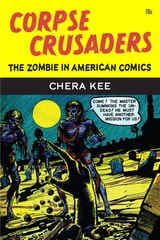
Corpse Crusaders
The Zombie in American ComicsChera Kee
University of Michigan Press, 2024
Using archival research into Golden Age comics and extended analyses of comics from the 1940s to today, Corpse Crusaders explores the profound influence early action/adventure and superheroic generic conventions had on shaping comic book zombies. It takes the reader from the 1940s superhero, the Purple Zombie, through 1950s revenge-from-the-grave zombies, to the 1970s anti-hero, Simon Garth (“The Zombie”) and the gruesome heroes-turned-zombies of Marvel Zombies. In becoming immersed in superheroic logics early on, the zombie in comics became a figure that, unlike the traditional narrative uses of other monsters, actually served to defend the status quo. This continuing trend not only provides insight into the overwhelming influence superheroes have had on the comic book medium, but it also provides a unique opportunity to explore the ways in which zombiism and superheroism parallel each other. Corpse Crusaders explores the ways that truth, justice, and the American way have influenced the undead in comics and turned what is often a rebellious figure into one that works to save the day.

Corridor
Media Architectures in American FictionKate Marshall
University of Minnesota Press, 2013
Corridor offers a series of conceptually provocative readings that illuminate a hidden and surprising relationship between architectural space and modern American fiction. By paying close attention to fictional descriptions of some of modernity’s least remarkable structures, such as plumbing, ductwork, and airshafts, Kate Marshall discovers a rich network of connections between corridors and novels, one that also sheds new light on the nature of modern media.
The corridor is the dominant organizational structure in modern architecture, yet its various functions are taken for granted, and it tends to disappear from view. But, as Marshall shows, even the most banal structures become strangely visible in the noisy communication systems of American fiction. By examining the link between modernist novels and corridors, Marshall demonstrates the ways architectural elements act as media. In a fresh look at the late naturalist fiction of the 1920s, ’30s, and ’40s, she leads the reader through the fetus-clogged sewers of Manhattan Transfer to the corpse-choked furnaces of Native Son and reveals how these invisible spaces have a fascinating history in organizing the structure of modern persons.
Portraying media as not only objects but processes, Marshall develops a new idiom for Americanist literary criticism, one that explains how media studies can inform our understanding of modernist literature.

Cosplay
The Fictional Mode of ExistenceFrenchy Lunning
University of Minnesota Press, 2022
An exploration of cosplay and its relationship with the realms of its global fandom, performance, and the modes of fictional existence
Flourishing far beyond its Japanese roots, cosplay has become an international phenomenon with fervid fans who gather at enormous, worldwide conventions annually. Here, author Frenchy Lunning offers an intimate, sensational tour through cosplay’s past and present, as well as its global lure.
Through a culmination of years of personal research on cosplay, and growing out of Lunning’s wealth of scholarship, conference presentations, and cosplayer interviews, Cosplay is a unique and necessary examination of identity, performance, play, and otaku fandom and culture in relation to contemporary theories. With discussions covering construction, masquerades, and community through performance, Lunning presents cosplay as a dynamic and ever-evolving global practice. She combines the fascinating viewpoints of cosplayers with observational, in-depth research on cosplay history and practice, and a deep dive into critical theory involving the modes of fictional existence, in order to understand its global expansion.
Augmented with beautiful photographs, this is an engrossing, lively read that explores a complicated and often misunderstood history and meditates on how cosplay allows its participants to create and construct meaning and identity.
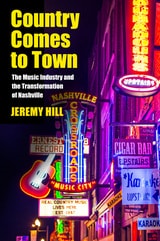
Country Comes to Town
The Music Industry and the Transformation of NashvilleJeremy Hill
University of Massachusetts Press, 2016
Country music evokes a simple, agrarian past, with images of open land and pickup trucks. While some might think of the genre as a repository of nostalgia, popular because it preserves and reveres traditional values, Jeremy Hill argues that country music has found such expansive success because its songs and its people have forcefully addressed social and cultural issues as well as geographic change. Hill demonstrates how the genre and its fans developed a flexible idea of “country,” beyond their rural roots, and how this flexibility allowed fans and music to “come to town,” to move into and within urban spaces, while retaining a country “character.”
To understand how the genre has become the far-reaching commercial phenomenon that it is today, Hill explores how various players within the country music fold have grappled with the notion of place. He shows both how the industry has transformed the city of Nashville and how country music—through song lyrics, imagery associated with the music, and branding—has reshaped ideas about the American landscape and character. As the genre underwent significant change in the last decades of the twentieth century, those who sought to explain its new styles and new locations relied on a traditional theme: “You can take the boy out of the country, but you can't take the country out of the boy.” Hill demonstrates how this idea—that you can still be “country” while no longer living in a rural place—has been used to expand country's commercial appeal and establish a permanent home in the urban space of Nashville.
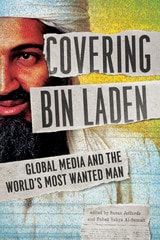
Covering Bin Laden
Global Media and the World's Most Wanted ManEdited by Susan Jeffords and Fahed Yahya Al-Sumait
University of Illinois Press, 2015
In Covering Bin Laden, editors Susan Jeffords and Fahed Yahya Al-Sumait collect perspectives from global scholars exploring a startling premise: that media depictions of Bin Laden not only diverge but often contradict each other, depending on the media provider and format, the place in which the depiction is presented, and the viewer's political and cultural background. The contributors analyze the representations of the many Bin Ladens, ranging from Al Jazeera broadcasts to video games. They examine the media's dominant role in shaping our understanding of terrorists and why/how they should be feared, and they engage with the ways the mosaic of Bin Laden images and narratives have influenced policies and actions around the world.
Contributors include Fahed Al-Sumait, Saranaz Barforoush, Aditi Bhatia, Purnima Bose, Ryan Croken, Simon Ferrari, Andrew Hill, Richard Jackson, Susan Jeffords, Joanna Margueritte-Giecewicz, Noha Mellor, Susan Moeller, Brigitte Nacos, Courtney C. Radsch, and Alexander Spencer.

Cowboys As Cold Warriors
The Western And U S HistoryStanley Corkin
Temple University Press, 2004
Films discussed include: My Darling Clementine, Red River, Duel in the Sun, Pursued, Fort Apache, Broken Arrow, The Gunfighter, High Noon, Shane, The Searchers, Gunfight at the OK Corral, The Magnificent Seven, The Alamo, Lonely Are the Brave, Ride the High Country, and The Man Who Shot Liberty Valance.

Cozy Time
Resistance Through Comfort in Youth(ful) Media and Popular CultureEmily Midkiff
University of Iowa Press, 2027
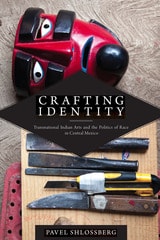
Crafting Identity
Transnational Indian Arts and the Politics of Race in Central MexicoPavel Shlossberg
University of Arizona Press, 2015
The first ethnographic study of its kind, the book examines how indigenous and mestizo mask makers, both popular and elite, view and contest relations of power and inequality through their craft. Using data from his interviews with mask makers, collectors, museum curators, editors, and others, Pavel Shlossberg places the artisans within the larger context of their relationships with the nation-state and Mexican elites, as well as with the production cultures that inform international arts and crafts markets. In exploring the connection of mask making to capitalism, the book examines the symbolic and material pressures brought to bear on Mexican artisans to embody and enact self-racializing stereotypes and the performance of stigmatized indigenous identities.
Shlossberg’s weaving of ethnographic data and cultural theory demystifies the way mask makers ascribe meaning to their practices and illuminates how these practices are influenced by state and cultural institutions. Demonstrating how the practice of mask making negotiates ethnoracial identity with regard to the Mexican state and the United States, Shlossberg shows how it derives meaning, value, and economic worth in the eyes of the state and cultural institutions that mediate between the mask maker and the market.
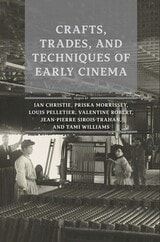
Crafts, Trades, and Techniques of Early Cinema
Ian Christie, Priska Morrissey, Louis Pelletier, Valentine Robert, Jean-Pierre Sirois-Trahan, and Tami Williams
Michigan Publishing Services, 2024
The intermedial approaches deployed in this collection bring into focus the influence of multiple professional worlds and cultural practices on the nascent film medium, as well as the necessary adaptations and transformations required by the latter. This circulatory dynamic concerns people and practices, studied in a non-diffusionist approach taking into account transcultural interactions. Chapters examine the mechanisms of professionalization and identity-building as they relate to professions such as filmmaker or colorist, as well as to more unexpected occupations such as accountant, censor, or chemical engineer.
The notion of technique is broadly defined. Several of the volume’s chapters deal with cameras or special effects, as well as with new historical investigation into mysterious technical devices such as shutters, cue systems or working samples. Going beyond this preoccupation with materiality, the collected studies also approach technique as a human and cultural activity, and thus as a set of gestures, crafts, and expertise. The book more specifically opens up a reflection on the skills of screen performers and on the training that brought the institutionalization of body techniques and film acting. The book further illustrates to an unprecedented extent that the first film workers were frequently women.
Several chapters are dedicated to the unconventional careers of specific film workers, with particular attention being given to the diversity and complexity of professional trajectories. Indeed, this book demonstrates that the invention of cinema was deeply enmeshed with the rise of international networks, which resulted in the standardization of technical practices within corporate and national contexts being ultimately shaped by globalization.
Crime and the Media
The Post-Modern SpectacleEdited by David Kidd-Hewitt and Richard Osborne
Pluto Press, 1996
Real-life crime, crime reconstruction and crime as entertainment are categories that are now so interdependent that the media itself is in danger of confusing the genres as it seeks to profit from their undoubted appeal. This intertextuality is a key theme in this collection. The contributors highlight and theorise the symbiosis that exists between real crime and its representations, from media moral panics, policing the crisis and representing order to the postmodern confusion of crime and spectacle, trial by media and trials on media. As recent debates have shown all too starkly, the media's neutrality in this critical area is ever more problematic.
This is an invaluable introduction to new thinking in a pressing contemporary debate.

Crip Love Onscreen
Representations of Love, Sex, and DisabilitySarah Rainey-Smithback
The Ohio State University Press, 2026
As disability representation increases, though, new possibilities are emerging. Crip Love Onscreen also draws attention to the exceptional through a close reading of screen narratives (such as 50 First Dates,Love and Other Drugs,American Horror Story: Freak Show, and more) that push against neoliberal, heteronormative, and ableist values. Drawing on the work of queer/crip scholars and activists, Rainey-Smithback uncovers glimpses of what Tobin Siebers calls a “sexual culture for disabled people”—a space and way of being that expands sexual access and sexual experience.
Crip Screens
Countering Psychiatric Media TechnologiesOlivia Banner
Duke University Press, 2025

Cripping Girlhood
Anastasia Todd
University of Michigan Press, 2024
By closely examining the ways that disabled girls represent themselves, Anastasia Todd goes beyond a critique of the figure of the privileged, disabled girl subject in the national imagination to explore how disabled girls circulate their own capacious re-envisioning of what it means to be a disabled girl. In analyzing a range of cultural sites, including YouTube, TikTok, documentaries, and GoFundMe campaigns, Todd shows how disabled girls actively upend what we think we know about them and their experience, recasting the meanings ascribed to their bodyminds in their own terms. By analyzing disabled girls’ self-representational practices and cultural productions, Todd shows how disabled girls deftly theorize their experiences of ableism, sexism, racism, and ageism, and cultivate communities online, creating archives of disability knowledge and politicizing other disabled people in the process.
Crisis Vision
Race and the Cultural Production of SurveillanceTom Monahan
Duke University Press, 2022
Critical Communication
A MemoirVincent Mosco
University of Westminster Press, 2025
This beautifully written and deeply personal book is an informative and fascinating read that will be of interest to anyone interested in Critical Media and Communication Studies and the Political Economy of Communication.
Critical Fandom
Representations of Race, Gender, and Sexuality in Fan FictionCara Marta Messina
University of Iowa Press, 2026
Critical Fandom positions fan authors as rhetoricians and fan fiction as an action. Every fan author navigates—implicitly or explicitly—the politics of their fandom, the media they love, their lived experiences, digital technologies, reader expectations, and a larger culture. To better understand critical fans, Cara Marta Messina analyzes Archive of Our Own tagging practices, fan fictions, and interviews from four different fandoms.
Fans of The Legend of Korra celebrate queer relationships while understanding representation is just the first step in the face of systemic homophobia. Game of Thrones fan authors challenge racism and heteronormativity in both the community and the show. In online forums for Black Panther, fans make space for sapphic romances and explore the humanity of Erik Killmonger, ultimately contending with harmful stereotypes of radical Black men. And the Our Flag Means Death fandom demonstrates how a show can flourish when it centers queerness, especially for trans fans. Even in these moments of joy, there’s conflict. Critical Fandom seeks to answer what comes next.
Critical Infrastructure Studies and Digital Humanities
Alan Liu
University of Minnesota Press, 2026
How digital humanities can shape and be shaped by the infrastructures that sustain our world
Critical Infrastructure Studies and Digital Humanities reimagines the digital humanities (DH) through the expanding field of critical infrastructure studies. Featuring voices from around the globe, this volume explores how DH builds on and extends theories and technologies of infrastructure that affect society, culture, and knowledge in different national and regional contexts. Examining DH’s own infrastructural genealogy, the contributors offer readers critical reflections and bold visions for the future as they address issues of environmentalism, decolonization, Indigenous sovereignty, multilingualism, labor justice, feminism, national development, and beyond from a variety of disciplinary perspectives embedded in concrete digital systems. Including innovative “infrastructure manifests,” the essays in this book illuminate how DH can both study and shape the systems that sustain culture, scholarship, and connection.
Contributors: Anne Beaulieu, U of Groningen; Kyle Booten, U of Connecticut; Ann Borda, U of Melbourne; Susan Brown, U of Guelph; Toby Burrows, U of Western Australia; Ashley Caranto Morford, Weber State U; Javier Cha, U of Hong Kong; Jing Chen, Nanjing U; Arianna Ciula, King’s College London; Maya Dodd, FLAME U, Pune, India; Martin Paul Eve, Birkbeck, U of London; Allan Gomez, Philly Community Wireless; Matthew N. Hannah, Purdue U; Matthew Hockenberry, Fordham U; Arun Jacob, U of Toronto; Mike Jones, U of Tasmania; Lucie Kolb, Basel Academy of Art and Design FHNW; Ian M. Miller, St. John’s U, New York; Sylvia K. Miller, Duke U; Sarah Montoya, Mellon Humanities Postdoctoral Fellow; Saumyaa Naidu, independent researcher; Sharika Parmar, FLAME U, Pune, India; Kush Patel, Srishti Manipal Academy of Higher Education, Bengaluru; Miriam Posner, UCLA; Puthiya Purayil Sneha, International Institute of Information Technology, Hyderabad; Paul Spence, King’s College London; Lik Hang Tsui, City U of Hong Kong; Deb Verhoeven, U of Alberta; Miguel Vieira, King’s College London; Devren Washington, Philly Community Wireless; Alex Wermer-Colan, Temple U and Philly Community Wireless; Darren Wershler, Concordia U; Grant Wythoff, Princeton U and Philly Community Wireless.
Retail e-book files for this title are screen-reader friendly with images accompanied by short alt text and/or extended descriptions.
Critique of the Political Economy of the Media
Foundations and ApplicationsManfred Knoche
University of Westminster Press, 2025
It introduces a theoretical framework that engages with important themes including the crisis-ridden structural transformation of the media industry, media economics in the age of digital communications, media concentration, science communication and open access publishing, media technologies, the role of advertising in capitalism, and the contradictions of alternative media in capitalism.
Cultural Citizenship
Cosmopolitanism, Consumerism, and Television in a Neoliberal AgeToby Miller
Temple University Press, 2006
Cultural Crowdfunding
Platform Capitalism, Labour and GlobalizationVincent Rouzé
University of Westminster Press, 2019
This new book analyses the strategies, usages and wider implications of crowdsourcing and crowdfunding platforms in the culture and communication industries that are reshaping economic, organizational and social logics. Platforms are the object of considerable hype with a growing global presence. Relying on individual contributions coordinated by social media to finance cultural production (and carry out promotional tasks) is a significant shift, especially when supported by morphing public policies, supposedly enhancing cultural diversity and accessibility.
The aim of this book is to propose a critical analysis of these phenomena by questioning what follows from decisions to outsource modes of creation and funding to consumers. Drawing on research carried out within the ‘Collab’ programme backed by the French National Research Agency, the book considers how platforms are used to organize cultural labour and/or to control usages, following a logic of suggestion rather than overt injunction. Four key areas are considered: the history of crowdfunding as a system; whose interests crowdfunding may serve; the implications for digital labour and lastly crowdfunding’s interface with globalization and contemporary capitalism. The book concludes with an assessment of claims that crowdfunding can democratize culture.
Cultural Industries in Shanghai
Policy and Planning inside a Global CityEdited by Rong Yueming and Justin O’Connor
Intellect Books, 2018
Cultural Production of Hallyu in the Digital Platform Era
Industry PerspectivesDal Yong Jin
University of Michigan Press, 2025
Addressing the increasing significance of digital platforms, this work examines the transformative roles of over-the-top streaming services—Netflix, Viki, and V Live—video-sharing platforms such as YouTube, and social media platforms such as TikTok and Instagram, and the power relations between content producers, information technology sectors, the government, creative laborers, and audiences in the globalization of Korean culture and media. By developing critical cultural industries studies as a new theoretical framework, Cultural Production of Hallyu in the Digital Platform Era explores the ever-growing Korean Wave phenomenon with the advent of global digital platforms.
Cultural Studies 1983
A Theoretical HistoryStuart Hall
Duke University Press, 2016
Cultural Studies in the Future Tense
Lawrence Grossberg
Duke University Press, 2010
Cultural Studies in the Interregnum
Edited by Robert F. Carley, Anne Donlon, Beenash Jafri, Laura J. Kwak, Eero Laine, SAJ, and Chris Alen Sula
Temple University Press, 2025
Covering queer and feminist studies, critical disability studies, and critical race and ethnic studies, the essays in Cultural Studies in the Interregnum reflect on our shared political pasts and futures. Using examples ranging from media and literature to sex work, policing, and university systems, this exciting volume probes what cultural studies means in moments of social transformation.
Contributors include: Sean Johnson Andrews, C.M. Kaliko Baker, Mary Tuti Baker, James Bliss, Jorge E. Cuéllar, John R. Decker, Brian Dolber, Candace Fujikane, Evyn Lê Espiritu Gandhi, Chris Hall, Rachel Lim, Alexis Pauline Gumbs, Anna Karthika, Manu Karuka, Najwa Mayer, Kyle Mays, Andrew Ó Baoill, Yumi Pak, Therí A. Pickens, Sami Schalk, Leanne Betasamosake Simpson, Tia Trafford, and the editors
Cultural Sutures
Medicine and MediaLester D. Friedman, ed.
Duke University Press, 2004
In this volume, scholars of cinema studies, philosophy, English, sociology, health-care education, women’s studies, bioethics, and other fields demonstrate how the world of medicine engages and permeates the media that surround us. Whether examining the press coverage of the Jack Kevorkian–euthanasia controversy; pondering questions about accessibility, accountability, and professionalism raised by such films as Awakenings, The Doctor, and Lorenzo’s Oil; analyzing the depiction of doctors, patients, and medicine on E.R. and Chicago Hope; or considering the ways in which digital technologies have redefined the medical body, these essays are consistently illuminating and provocative.
Contributors. Arthur Caplan, Tod Chambers, Stephanie Clark-Brown, Marc R. Cohen, Kelly A. Cole, Lucy Fischer, Lester D. Friedman, Joy V. Fuqua, Sander L. Gilman, Norbert Goldfield, Joel Howell, Therese Jones, Timothy Lenoir, Gregory Makoul, Marilyn Chandler McEntyre, Faith McLellan, Jonathan M. Metzl, Christie Milliken, Martin F. Norden, Kirsten Ostherr, Limor Peer, Audrey Shafer, Joseph Turow, Greg VandeKieft, Otto F. Wahl
Culturally Speaking
The Rhetoric of Voice and Identity in a Mediated CultureAmanda Nell Edgar
The Ohio State University Press, 2019
Recent pieces by NPR, the BBC, and Forbes have called attention to the power of voice—positing that “your voice is the secret to getting hired” and that “voice can accelerate or hold back a career.” While it has become clearer that such things as pitch and intonation can be tied to assumptions about one’s gender, race/ethnicity, and class, studying voice as a socially constructed artifact carries with it unique challenges. In response, Culturally Speaking: The Rhetoric of Voice and Identity in a Mediated Culture presents an innovative approach to studying the spoken voice in media, showing how racial and gendered oppression bubble beneath the surface of American culture’s most recognized speaking voices, spreading invisible messages about which kinds of vocal identities are privileged and which kinds should be silenced.
Through her analysis of prominent voices in American culture—including Morgan Freeman, Tina Fey, Barack Obama, Adele, Dave Chappelle, Richard Pryor, and George Lopez—Amanda Nell Edgar argues that voices carry a residue of the particular cultural environments in which they are formed, and that these environments can be traced and analyzed to add a sonic dimension to our understanding of race and gender as rhetorically situated identities—pushing back against the often-unnoticed systems of sound-based discrimination.
Culture War
Affective Cultural Politics, Tepid Nationalism, and Art ActivismCamilla Møhring Reestorff
Intellect Books, 2017
Employing a detailed and critically reflective argument covering social media, television, political campaigns, advertising, and “artivism,” Camilla Møhring Reestorff refuses the traditional distinction between the world of visual culture and the political domain, and she provides multiple tools for understanding the dynamics of contemporary affective cultural politics in a highly mediatized environment.