Results by title
3258 books match the query 'Performing Arts' and 231 start with c
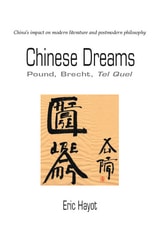
Chinese Dreams
Pound, Brecht, Tel QuelEric Hayot
University of Michigan Press, 2011
China’s profound influence on the avant-garde in the 20th century was nowhere more apparent than in the work of Ezra Pound, Bertolt Brecht, and the writers associated with the Parisian literary journal Tel quel. Chinese Dreams explores the complex, intricate relationship between various “Chinas”—as texts—and the nation/culture known simply as “China”—their context—within the work of these writers. Eric Hayot calls into question the very means of representing otherness in the history of the West and ultimately asks if it might be possible to attend to the political meaning of imagining the other, while still enjoying the pleasures and possibilities of such dreaming. The latest edition of this critically acclaimed book includes a new preface by the author.
“Lucid and accessible . . . an important contribution to the field of East-West comparative studies, Asian studies, and modernism.”
—Comparative Literature Studies
“Instead of trying to decipher the indecipherable ‘China’ in Western literary texts and critical discourses, Hayot chose to show us why and how ‘China’ has remained, and will probably always be, an enchanting, ever-elusive dream. His approach is nuanced and refreshing, his analysis rigorous and illuminating.”
—Michelle Yeh, University of California, Davis
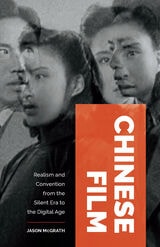
Chinese Film
Realism and Convention from the Silent Era to the Digital AgeJason McGrath
University of Minnesota Press, 2022
A tour de force chronicling the development of realism in Chinese cinema
The history of Chinese cinema is as long and complicated as the tumultuous history of China itself. Be it the silent, the Communist, or the contemporary, each Chinese cinematic era has necessitated its own form in conversation with broader trends in politics and culture.
In Chinese Film, Jason McGrath tells this fascinating story by tracing the varied claims to cinematic realism made by Chinese filmmakers, officials, critics, and scholars. Understanding realism as a historical dynamic that is both enabled and mitigated by aesthetic conventions of the day, he analyzes it across six different types of claims: ontological, perceptual, fictional, social, prescriptive, and apophatic.
Through this method, McGrath makes major claims not just about Chinese cinema but also about realism as an aesthetic form that negotiates between cultural conventions and the ever-evolving real. He comes to envision it as more than just a cinematic question, showing how the struggle for realism is central to the Chinese struggle for modernity itself.
Chinese Theories of Theater and Performance from Confucius to the Present
Edited and Translated by Faye Chunfang Fei
University of Michigan Press, 2002
The writings collected here treat the origins, aesthetic principles, and functions of theater. Some are virtual manuals on playwriting and performance techniques; some describe the practices, conditions, and government policies concerning theatrical performance. Many of the selections forcefully dispute the myth that Chinese theater is valuable in performance but lacking in literature--the fact is that there is an equal, if not more prominent, emphasis on theme and content. What emerges from the writings in Chinese Theories of Theater and Performance from Confucius to the Present is a highly evolved and sophisticated aesthetic.
The texts are enhanced by Faye C. Fei's extensive introductions and annotative notes that provide essential background and contextual information. She has provided accurate and engagingly written translations of the texts, making the majority of them available in English for the first time. The anthology will appeal to teachers and students of theater and performance, artists interested in Chinese theater and arts, and scholars and historians of Asia. Literary critics, aestheticians, philosophers, and social scientists will also find the volume of interest, since Chinese conceptions of the theater and performance are closely connected to China's general outlook on the humanities.
Faye C. Fei is Assistant Professor of Dramatic Arts, Macalester College.
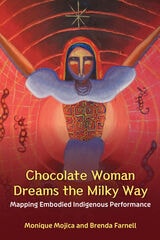
Chocolate Woman Dreams the Milky Way
Mapping Embodied Indigenous PerformanceMonique Mojica and Brenda Farnell
University of Michigan Press, 2023
Co-authored with anthropologist Brenda Farnell, the book challenges the divide between artist and scholar, and addresses the many levels of cultural, disciplinary, and linguistic translations required to achieve this. Placing the complex intellect inherent to Indigenous Knowledges at its center, the book engages Indigenous performance theory, and concepts that link body, land, and story, such as terra nullius/corpus nullius, mapping, pattern literacy, land literacy, and movement literacy. Enhanced by contributions from other artists and scholars, the book challenges Eurocentric ideologies about what counts as “performance” and what is required from an “audience,” as well as long-standing body-mind dualisms.
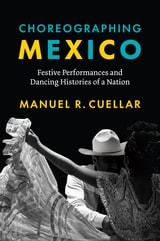
Choreographing Mexico
Festive Performances and Dancing Histories of a NationManuel R. Cuellar
University of Texas Press, 2022
2023 de la Torre Bueno® First Book Award, Dance Studies Association
The impact of folkloric dance and performance on Mexican cultural politics and national identity.
The years between 1910 and 1940 were formative for Mexico, with the ouster of Porfirio Díaz, the subsequent revolution, and the creation of the new state. Amid the upheaval, Mexican dance emerged as a key arena of contestation regarding what it meant to be Mexican. Through an analysis of written, photographic, choreographic, and cinematographic renderings of a festive Mexico, Choreographing Mexico examines how bodies in motion both performed and critiqued the nation.
Manuel Cuellar details the integration of Indigenous and regional dance styles into centennial celebrations, civic festivals, and popular films. Much of the time, this was a top-down affair, with cultural elites seeking to legitimate a hegemonic national character by incorporating traces of indigeneity. Yet dancers also used their moving bodies to challenge the official image of a Mexico full of manly vigor and free from racial and ethnic divisions. At home and abroad, dancers made nuanced articulations of female, Indigenous, Black, and even queer renditions of the nation. Cuellar reminds us of the ongoing political significance of movement and embodied experience, as folklórico maintains an important and still-contested place in Mexican and Mexican American identity today.
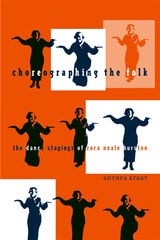
Choreographing the Folk
The Dance Stagings of Zora Neale HurstonAnthea Kraut
University of Minnesota Press, 2008
Recovers an important dimension of the work of the renowned African American artist
While Zora Neale Hurston and her 1937 novel Their Eyes Were Watching God have become widely celebrated, she was also a prolific stage director and choreographer. In the 1930s Hurston produced theatrical concerts that depicted a day in the life of a railroad work camp in Florida and featured a rousing Bahamian Fire Dance as the dramatic finale. In Choreographing the Folk, Anthea Kraut traces the significance and influence of Hurston’s little-known choreographic work.
Hurston’s concerts were concrete illustrations of the “real Negro art theatre” she was eager to establish, and they compellingly demonstrate how she used the arena of performance to advance a nuanced understanding of the black diaspora. Her version of the Fire Dance was staged in a variety of venues during the 1930s. In its multiple representations, Kraut asserts, the dance raised critical issues about ownership, artistry, and authenticity. Choreographing the Folk argues for the significance of Hurston’s choreography, and with perceptiveness, sensitivity, and originality, Kraut illuminates the important and often-contested place of black folk dance in American culture.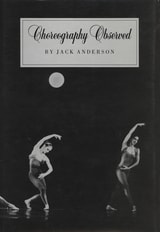
Choreography Observed
Jack Anderson
University of Iowa Press, 1997
In Choreography Observed, Jack Anderson has selected writings that focus most directly on choreographers and choreography in order to illuminate the delights and problems of dance and to reveal the nature of this nonverbal but intensely expressive art form.
His essays and reviews deal with individual choreographers from Bournonville, Petipa, and Fokine to Balanchine, Paul Taylor, Meredith Monk, and Pina Bausch; individual works are also discussed in detail, such as Nijinsky's Afternoon of a Faun,Antony Tudor's Pillar of Fire, Alvin Ailey's Flowers, and Kei Takei's Light. Other pieces focus on the Baroque dance revival, contemporary multimedia dance theatre, choreography for men, the complex relationship between ballet and modern dance, and how—and how not—to revive the classics.
No other book—especially no other selection from the work of a single critic—has dealt with choreography in such an original and focused way. Anderson brings his trained eye and wide experience in the arts to bear on dance while stressing the primacy of the choreographer as auteur. By refusing to get bogged down in highly technical terminology, he makes his insights available to a wide range of readers interested in expanding their understanding of this ever more popular art form.
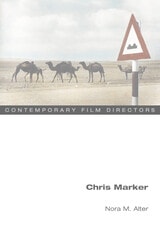
Chris Marker
Nora M. Alter
University of Illinois Press, 2006
The maverick filmmaker's personal and political relationships with film
Best known in the United States for his visionary short film La Jetée, Chris Marker spearheaded the bourgeoning Nouvelle Vague scene in the late 1950s. His distinctive style and use of still images place him among the postwar era's most influential European filmmakers. His fearless political cinema, meanwhile, provided a bold model for other activist filmmakers.
Nora M. Alter investigates the core themes and motivations behind an unpredictable and transnational career that defies easy classification. A photographer, multimedia artist, writer, broadcaster, producer, and organizer, Marker cultivated an artistic dynamism and always-changing identity. ""I am an essayist,"" Marker once said, and his 1953 debut filmic essay The Statues Also Die (with Alain Resnais) exposed the European art market's complicity in atrocities in the former Belgian Congo. Ranging geographically as well as artistically, Marker's travels led to films like the classic Sans Soleil and Sunday in Peking. His decades-long struggle against global injustice involved him with Night and Fog, Le Joli Mai, Far from Vietnam, Le fond du l'air est Rouge, and Prime Time in the Camps.
Insightful and revealing, Chris Marker includes interviews with the notoriously private director.
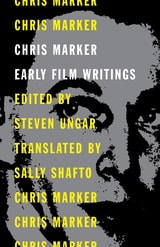
Chris Marker
Early Film WritingsChris Marker
University of Minnesota Press, 2024
Formative writings by French avant-garde filmmaker Chris Marker
It is hard to imagine French cinema without La Jetée (1962), the time-travel short feature by the reclusive French filmmaker Christian François Bouche-Villeneuve, better known as Chris Marker. He not only influenced artists ranging from David Bowie to J. G. Ballard but also inspired the cult film 12 Monkeys. Marker’s influence expanded beyond his own films through his writings for the French monthly Esprit as well as anthologies and newly founded film publications.
This first English translation of Marker’s early writings on film brings together reviews and essays, published between 1948 and 1955, that span the topics of film style, adaptation, and ideology, as well as animation and the debates surrounding 3-D and wide-screen technologies, ranging from late silent-era films to postwar Hollywood’s efforts to contend with the rise of television. Readers will find commentary on Laurence Olivier’s 1944 screen adaptation of Henry V, a scathing review of Robert Montgomery’s Lady in the Lake (1947), critiques of Walt Disney productions, a discussion of the pitfalls of prioritizing commercial success over aesthetic values, and more.
An indispensable resource for cinephiles and scholars alike, these texts document the emergence of Marker’s critical voice and situate him alongside such contemporaries as André Bazin and Eric Rohmer, as well as the future French New Wave figures Jean-Luc Godard and François Truffaut. They show how his remarks on individual films open onto his engagement with films as social and cultural phenomena.
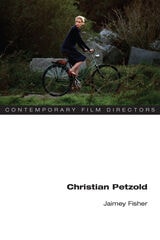
Christian Petzold
Jaimey Fisher
University of Illinois Press, 2013
In the first book-length study on Petzold in English, Jaimey Fisher frames Petzold's cinema at the intersection of international art cinema and sophisticated genre cinema. This approach places his work in the context of global cinema and invites comparisons to the work of directors like Pedro Almodovar and Rainer Werner Fassbinder, who repeatedly deploy and reconfigure genre cinema to their own ends. These generic aspects constitute a cosmopolitan gesture in Petzold's work as he interprets and elaborates on cult genre films and popular genres, including horror, film noir, and melodrama. Fisher explores these popular genres while injecting them with themes like terrorism, globalization, and immigration, central issues for European art cinema. The volume also includes an extended original interview with the director about his work.

Christoph Schlingensief
Art without BordersEdited by Tara Forrest and Anna Teresa Scheer
Intellect Books, 2010
The work of acclaimed German artist Christoph Schlingensief spans three decades and a diverse range of fields, including, film, television, activism, opera, and theatre. Christoph Schlingensief: Art Without Borders is the first book to be published in English on Schlingensief’s groundbreaking, politically engaged body of work. Leading scholars in the field offer a critical assessment of Schlingensief’s hybrid practice, and an interview with Schlingensief himself provides the reader with insight into past and present projects. The book will be an essential resource for artists, curators, students, and academics in the fields of theater and performance studies, film studies, cultural studies, German studies, political activism, and art history.
Cindy Sherman's Office Killer
Another Kind of MonsterDahlia Schweitzer
Intellect Books, 2014
The first book on this neglected piece of an esteemed artist’s oeuvre, Cindy Sherman’s “Office Killer” rescues the film from critical oblivion and situates it next to the artist’s other iconic works.
Cineaste on Film Criticism, Programming, and Preservation in the New Millennium
Edited by Cynthia Lucia and Rahul Hamid
University of Texas Press, 2017
Digital technology and the Internet have revolutionized film criticism, programming, and preservation in deeply paradoxical ways. The Internet allows almost everyone to participate in critical discourse, but many print publications and salaried positions for professional film critics have been eliminated. Digital technologies have broadened access to filmmaking capabilities, as well as making thousands of older films available on DVD and electronically. At the same time, however, fewer older films can be viewed in their original celluloid format, and newer, digitally produced films that have no “material” prototype are threatened by ever-changing servers that render them obsolete and inaccessible.
Cineaste, one of the oldest and most influential publications focusing on film, has investigated these trends through a series of symposia with the top film critics, programmers, and preservationists in the United States and beyond. This volume compiles several of these symposia: “Film Criticism in America Today” (2000), “International Film Criticism Today” (2005), “Film Criticism in the Age of the Internet” (2008), “Film Criticism: The Next Generation” (2013), “The Art of Repertory Film Exhibition and Digital Age Challenges” (2010), and “Film Preservation in the Digital Age” (2011). It also includes interviews with the late, celebrated New Yorker film critic Pauline Kael and the critic John Bloom (“Joe Bob Briggs”), as well as interviews with the programmers/curators Peter von Bagh and Mark Cousins and with the film preservationist George Feltenstein. This authoritative collection of primary-source documents will be essential reading for scholars, students, and film enthusiasts.
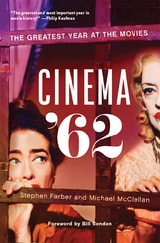
Cinema '62
The Greatest Year at the MoviesStephen Farber
Rutgers University Press, 2024
Lawrence of Arabia, The Miracle Worker, To Kill a Mockingbird, The Manchurian Candidate, Gypsy, Sweet Bird of Youth, The Longest Day, The Music Man, What Ever Happened to Baby Jane, and more.
Most conventional film histories dismiss the early 1960s as a pallid era, a downtime between the heights of the classic studio system and the rise of New Hollywood directors like Scorsese and Altman in the 1970s. It seemed to be a moment when the movie industry was floundering as the popularity of television caused a downturn in cinema attendance. Cinema ’62 challenges these assumptions by making the bold claim that 1962 was a peak year for film, with a high standard of quality that has not been equaled since.
Stephen Farber and Michael McClellan show how 1962 saw great late-period work by classic Hollywood directors like John Ford, Howard Hawks, and John Huston, as well as stars like Bette Davis, James Stewart, Katharine Hepburn, and Barbara Stanwyck. Yet it was also a seminal year for talented young directors like Sidney Lumet, Sam Peckinpah, and Stanley Kubrick, not to mention rising stars like Warren Beatty, Jane Fonda, Robert Redford, Peter O’Toole, and Omar Sharif. Above all, 1962—the year of To Kill a Mockingbird and The Manchurian Candidate—gave cinema attendees the kinds of adult, artistic, and uncompromising visions they would never see on television, including classics from Fellini, Bergman, and Kurosawa. Culminating in an analysis of the year’s Best Picture winner and top-grossing film, Lawrence of Arabia, and the factors that made that magnificent epic possible, Cinema ’62 makes a strong case that the movies peaked in the Kennedy era.
Cinema 1
The Movement-ImageGilles Deleuze
University of Minnesota Press, 1986
Cinema 2
The Time-ImageGilles Deleuze
University of Minnesota Press, 1989
Cinema 2: The Time-Image brings to completion Gilles Deleuze’s work on the theoretical implications of the cinematographic image. In Cinema 1: The Movement-Image, Deleuze proposed a new way to understand narrative cinema, based on Henri Bergson’s notion of the movement-image and C. S. Peirce’s classification of images and signs. In Cinema 2, he explains why, since World War II, time has come to dominate film: the fragment or solitary image, in supplanting narrative cinema’s rational development of events, illustrates this new significance of time.
Deleuze ascribes this shift to the condition of postwar Europe: the situations and spaces “we no longer know how to describe”—buildings deserted but inhabited, cities undergoing demolition or reconstruction—and the new race of characters who emerged from this rubble, mutants, who “saw rather than acted.” Deleuze discusses the films of Rossellini, De Sica, Fellini, Godard, Resnais, Antonioni, Pasolini, Rohmer, Ophuls, and many others, suggesting that contemporary cinema, far from being dead, is only beginning to find new ways to capture time in the image.
Cinema Babel
Translating Global CinemaAbe Mark Nornes
University of Minnesota Press, 2007
The original foreign film—its sights and sounds—is available to all, but the viewer is utterly dependent on a translator and an untold number of technicians who produce the graphic text or disconnected speech through which we must approach the foreign film. A bad translation can ruin a film’s beauty, muddy its plot, and turn any joke sour.
In this wide-ranging work, Abé Mark Nornes examines the relationships between moving-image media and translation and contends that film was a globalized medium from its beginning and that its transnational traffic has been greatly influenced by interpreters. He discusses the translation of film theory, interpretation at festivals and for coproductions, silent era practice, “ talkies,” subtitling, and dubbing.
Nornes—who has written subtitles for Japanese cinema—looks at the ways misprision of theory translations produced stylistic change, how silent era lecturers contributed to the construction of national cinemas, how subtitlers can learn from anime fans, and how ultimately interpreters can be, in his terms, “traders or traitors.”
Abé Mark Nornes is associate professor of Asian languages and cultures and film and video studies at the University of Michigan. He is the author of Japanese Documentary Film (Minnesota, 2003) and Forest of Pressure (Minnesota, 2007).
Cinema Civil Rights
Regulation, Repression, and Race in the Classical Hollywood EraScott, Ellen C
Rutgers University Press, 2015
Cinema Futures
Cain, Abel or Cable?: The Screen Arts in the Digital AgeEdited by Kay Hoffmann
Amsterdam University Press, 1998
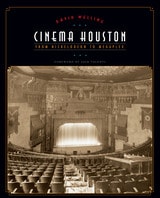
Cinema Houston
From Nickelodeon to MegaplexBy David Welling
University of Texas Press, 2007
Cinema Houston celebrates a vibrant century of movie theatres and moviegoing in Texas's largest city. Illustrated with more than two hundred historical photographs, newspaper clippings, and advertisements, it traces the history of Houston movie theatres from their early twentieth-century beginnings in vaudeville and nickelodeon houses to the opulent downtown theatres built in the 1920s (the Majestic, Metropolitan, Kirby, and Loew's State). It also captures the excitement of the neighborhood theatres of the 1930s and 1940s, including the Alabama, Tower, and River Oaks; the theatres of the 1950s and early 1960s, including the Windsor and its Cinerama roadshows; and the multicinemas and megaplexes that have come to dominate the movie scene since the late 1960s.
While preserving the glories of Houston's lost movie palaces—only a few of these historic theatres still survive—Cinema Houston also vividly re-creates the moviegoing experience, chronicling midnight movie madness, summer nights at the drive-in, and, of course, all those tasty snacks at the concession stand. Sure to appeal to a wide audience, from movie fans to devotees of Houston's architectural history, Cinema Houston captures the bygone era of the city's movie houses, from the lowbrow to the sublime, the hi-tech sound of 70mm Dolby and THX to the crackle of a drive-in speaker on a cool spring evening.
Cinema Illuminating Reality
Media Philosophy through BuddhismVictor Fan
University of Minnesota Press, 2022
A new critical approach to cinema and media based on Buddhism as a philosophical discourse
How can a philosophical discourse generated in Asia help us reframe and renew cinema and media theory? Cinema Illuminating Reality provides a possible way to do this by using Buddhist ideas to examine the intricate relationship between technicity and consciousness in the cinema. The resulting dialogue between Buddhism and Euro-American philosophy is the first of its kind in film and media studies.
Victor Fan examines cinema’s ontology and ontogenetic formation and how such a formational process produces knowledge, political agency, and in-aesthetics. Buddhism allows Fan to deconstruct binary thinking and reimagine media as an ecology, rethinking cinema in relational terms between the human and the machine. Along the way, Fan considers a wide variety of case studies from around the globe, while paying special attention to how contemporary Tibeto-Sinophone filmmakers have adopted relational thinking to detail ways of rebuilding a world that appears to be beyond repair.
From Chinese queer cinema to a reexamination of Japanese master Ozu’s work and its historical reception to Christian Petzold’s 2018 existential thriller Transit, CinemaIlluminating Reality forges a remarkable path between Buddhist studies and cinema studies, casting vital new light on both of these important subjects.

Cinema India
The Visual Culture of Hindi FilmRachel Dwyer and Divia Patel
Rutgers University Press, 2002
The economic influence of advertising in actually determining film content and the dissemination of its imagery are also discussed. Film studies scholars recently have begun to investigate advertising in the film industry and this book makes an important contribution to this emerging subfield in its engagement with Indian cinema and the impact of advertising on the culture at large.
Cinema Novo x 5
Masters of Contemporary Brazilian FilmBy Randal Johnson
University of Texas Press, 1984
With such stunning films as Dona Flor and Her Two Husbands, Bye Bye Brazil, and Pixote, Brazilian cinema achieved both critical acclaim and popular recognition in the 1970s and 1980s, becoming the premier cinema of Latin America and one of the largest film producers in the western world. But the success of Brazilian film at home and abroad came after many years of struggle by filmmakers determined to create a strong film industry in Brazil. At the forefront of this struggle were the filmmakers of Cinema Novo, the internationally acclaimed movement whose flowering in the 1960s marked the birth of modern Brazilian film.
Cinema Novo x 5 places the success of Brazilian cinema in perspective by examining the films of the five leaders of this groundbreaking movement—Andrade, Diegues, Guerra, Rocha, and dos Santos. By exploring the individuality of these masters of contemporary Brazilian film, Randal Johnson reveals the astonishing stylistic and thematic diversity of Cinema Novo. His emphasis is on the films themselves, as well as their makers’ distinctive cinematic vision and views of what cinema should be and is. At the same time, he provides a wealth of valuable background information to enhance readers’ understanding of the historical, cultural, and economic context in which Cinema Novo was born and flourished.
Cinema Today
A Conversation with Thirty-nine Filmmakers from around the WorldOumano, Elena
Rutgers University Press, 2011
Can't spare the time from work or class? Travel expense too great? What? You can't even find such a collaborative event?
Then imagine curling up with a good book, maybe a shot of espresso in hand, and becoming engrossed in the exciting and informative conversation that Elena Oumano has ingeniously crafted from her personal and individual interviews with these artists. Straying far from the usual choppy question-and-answer format, Cinema Today saves you from plowing through another tedious read, in which the same topics and issues are directed to each subject, over and over-an experience that is like being trapped in a revolving door.
Oumano stops that revolving door by following a lively symposium-in-print format, with the filmmakers' words and thoughts grouped together under various key cinema topics. It is as though these experts are speaking to each other and you are their audience--collectively they reflect on and explore issues and concerns of modern filmmaking, from the practical to the aesthetic, including the process, cinematic rhythm and structure, and the many aspects of the media: business, the viewer, and cinema's place in society. Whether you are a movie lover, a serious student of cinema, or simply interested in how we communicate in today's global village through films that so profoundly affect the world, Cinema Today is for you.
Cinema and Landscape
Edited by Graeme Harper and Jonathan Rayner
Intellect Books, 2010
The notion of landscape is a complex one, but it has been central to the art and artistry of the cinema. After all, what is the French New Wave without Paris? What are the films of Sidney Lumet, Woody Allen, Martin Scorsese, and Spike Lee without New York? Cinema and Landscape frames contemporary film landscapes across the world, in an exploration of screen aesthetics and national ideology, film form and cultural geography, cinematic representation and the human environment. Written by well-known cinema scholars, this volume both extends the existing field of film studies and stakes claims to overlapping, contested territories in the humanities and social sciences.
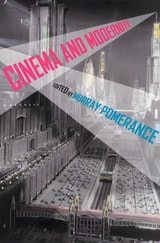
Cinema and Modernity
Pomerance, Murray
Rutgers University Press, 2006
The modern impulse gave us captivating technology and dark anxiety, rampant mobility and a world filled with strangers, the futuristic city and a fragmentation of experience. Motion pictures––the quintessence of modernism––entered into this cultural, technical, and philosophical richness with a vast public appeal and a jarring new vision of what life could be.
In Cinema and Modernity, Murray Pomerance brings together new essays by seventeen leading scholars to explore the complexity of the essential connection between film and modernity. Among the many films considered are Detour, Shock Corridor, The Last Laugh, Experiment in Terror, The Great Dictator, Leave Her to Heaven, The Talented Mr. Ripley, Eyes Wide Shut, Sunrise, The Crowd, The Shape of Things to Come, The War of the Worlds, The Day the Earth Stood Still, Scarlet Street, Shadow of a Doubt, Stella Dallas, The Blue Angel, Sullivan’s Travels, and Catch Me If You Can.
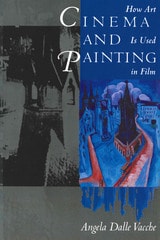
Cinema and Painting
How Art Is Used in FilmBy Angela Dalle Vacche
University of Texas Press, 1996
The visual image is the common denominator of cinema and painting, and indeed many filmmakers have used the imagery of paintings to shape or enrich the meaning of their films. In this discerning new approach to cinema studies, Angela Dalle Vacche discusses how the use of pictorial sources in film enables eight filmmakers to comment on the interplay between the arts, on the dialectic of word and image, on the relationship between artistic creativity and sexual difference, and on the tension between tradition and modernity.
Specifically, Dalle Vacche explores Jean-Luc Godard's iconophobia (Pierrot Le Fou) and Andrei Tarkovsky's iconophilia (Andrei Rubleov), Kenji Mizoguchi's split allegiances between East and West (Five Women around Utamaro), Michelangelo Antonioni's melodramatic sensibility (Red Desert), Eric Rohmer's project to convey interiority through images (The Marquise of O), F. W. Murnau's debt to Romantic landscape painting (Nosferatu), Vincente Minnelli's affinities with American Abstract Expressionism (An American in Paris), and Alain Cavalier's use of still life and the close-up to explore the realms of mysticism and femininity (Thérèse).
While addressing issues of influence and intentionality, Dalle Vacche concludes that intertextuality is central to an appreciation of the dialogical nature of the filmic medium, which, in appropriating or rejecting art history, defines itself in relation to national traditions and broadly shared visual cultures.
Cinema and Social Change in Latin America
Conversations with FilmmakersEdited by Julianne Burton
University of Texas Press, 1986
Since the late 1960s, films from Latin America have won widening audiences in North America and Europe. Until now, no single book has offered an introduction to the diverse personalities and practices that make up this important regional film movement.
In Cinema and Social Change in Latin America, Julianne Burton presents twenty interviews with key figures of Latin American cinema, covering three decades and ranging from Argentina to Mexico. Interviews with pioneers Fernando Birri, Nelson Pereira dos Santos, and Glauber Rocha, renowned feature filmmakers Tomás Gutiérrez Alea and Carlos Diegues, prize-winning documentarists Patricio Guzmán and Helena Solberg-Ladd, among others, endeavor to balance personal achievement against the backdrop of historical, political, social, and economic circumstances that have influenced each director's career. Presented also are conversations that cast light on the related activities of acting, distribution, theory, criticism, and film-based community organizing.
More than their counterparts in other regions of the world, Latin American artists and intellectuals acknowledge the degree to which culture is shaped by history and politics. Since the mid-1950s, a period of rising nationalism and regional consciousness, talented young artists and activists have sought to redefine the uses of the film medium in the Latin American context. Questioning the studio and star systems of the Hollywood industrial model, these innovators have developed new forms, content, and processes of production, distribution, and reception.
The specific approaches and priorities of the New Latin American Cinema are far from monolithic. They vary from realism to expressionism, from observational documentary to elaborate fictional constructs, from "imperfect cinema" to a cinema that emulates the high production values of the developed sectors, from self-reflexive to "transparent" cinematic styles, from highly industrialized modes of production to purely artisanal ones. What does not vary is the commitment to film as a vehicle for social transformation and the expression of national and regional cultural autonomy.
From early alternative cinema efforts in Argentina, Brazil, and Cuba to a contemporary perspective from within the Mexican commercial industry to the emerging cinema and video production from Central America, Cinema and Social Change in Latin America offers the most comprehensive look at Latin American film available today.

Cinema and the Cosmopolitan City
Colonial Encounters in Shanghai, 1900–1930Qiliang He
University of Michigan Press, 2027
In early twentieth-century Shanghai, cinema was more than entertainment—it reshaped the city itself. As movie theaters appealed to city dwellers of all backgrounds, colonial authorities struggled to manage this new public space and introduced new safety rules, censorship, and anti-crime measures. Movie theaters unintentionally brought the unofficial way of racial segregation to an end. Moreover, imported films, though emblematic of Western modernity, paradoxically eroded the myth of Western civilizational superiority. These films revealed social ills in Euro-American societies, exposed Hollywood’s racist depictions of Chinese people, and galvanized anti-imperialist and nationalist sentiments among local audiences.
Cinema and the Cosmopolitan City adopts a “cinema off-screen” approach—stitching together urban history and film studies and foregrounding circulation, consumption, and spatial practice. Qiliang He draws on municipal archives, police records, censorship reports, trade journals, film reviews, and news stories to reconstruct the regulatory regimes imposed by the Shanghai Municipal Council and Shanghai Municipal Police, which was targeting both Bolshevism and “immoral” content. This book reveals how cinema didn’t just reflect modern life—it actively changed urban governance, fueled anticolonial feelings, and linked cosmopolitan culture with rising nationalism in China.
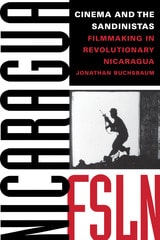
Cinema and the Sandinistas
Filmmaking in Revolutionary NicaraguaBy Jonathan Buchsbaum
University of Texas Press, 2003
Following the Sandinista Revolution in 1979, young bohemian artists rushed to the newly formed Nicaraguan national film institute INCINE to contribute to "the recovery of national identity" through the creation of a national film project. Over the next eleven years, the filmmakers of INCINE produced over seventy films—documentary, fiction, and hybrids—that collectively reveal a unique vision of the Revolution drawn not from official FSLN directives, but from the filmmakers' own cinematic interpretations of the Revolution as they were living it.
This book examines the INCINE film project and assesses its achievements in recovering a Nicaraguan national identity through the creation of a national cinema. Using a wealth of firsthand documentation—the films themselves, interviews with numerous INCINE personnel, and INCINE archival records—Jonathan Buchsbaum follows the evolution of INCINE's project and situates it within the larger historical project of militant, revolutionary filmmaking in Latin America. His research also raises crucial questions about the viability of national cinemas in the face of accelerating globalization and technological changes which reverberate far beyond Nicaragua's experiment in revolutionary filmmaking.
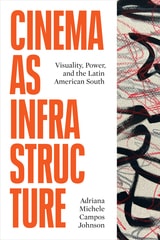
Cinema as Infrastructure
Visuality, Power, and the Latin American SouthAdriana Michele Campos Johnson
University of Texas Press, 2027
Examining the interplay of visuality and infrastructure in Latin American films.
Images do far more than we realize. They do not simply represent or depict; they run our world. Surveillance cameras and drones, medical imaging, social media platforms, market-data visualization––these and other technologies make the image an infrastructure of power, a tool for organizing and governing, impressing labor and extracting value.
Adriana Johnson draws on the medium of film to sensitize us to the logics of visuality as a technology of power. In particular, Latin American cinema presents a key site for both crystallizing and retreating from these logics. Through close readings of Argentine, Paraguayan, and Brazilian movies—including the documentary Bus 174, the dystopian sci-fi The Aerial,and the farcical The Gold Bug—Johnson shows how filmmakers can amplify or attenuate the infrastructural reach of visuality. They also reveal visuality’s otherwise-submerged power, and even engage in something like piracy: hacking into, rerouting, and deconstituting the workings of visual infrastructures. A deeply insightful and theoretically rich account, Cinema as Infrastructure reframes the political stakes of filmmaking in an era when visual forms have become means of production and order.
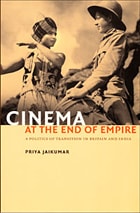
Cinema at the End of Empire
A Politics of Transition in Britain and IndiaPriya Jaikumar
Duke University Press, 2006
In addition to close readings of British and Indian films of the late colonial era, Jaikumar draws on a wealth of historical and archival material, including parliamentary proceedings, state-sponsored investigations into colonial filmmaking, trade journals, and intra- and intergovernmental memos regarding cinema. Her wide-ranging interpretations of British film policies, British initiatives in colonial film markets, and genres such as the Indian mythological film and the British empire melodrama reveal how popular film styles and controversial film regulations in these politically linked territories reconfigured imperial relations. With its innovative examination of the colonial film archive, this richly illustrated book presents a new way to track historical change through cinema.
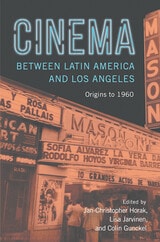
Cinema between Latin America and Los Angeles
Origins to 1960Horak, Jan-Christopher
Rutgers University Press, 2019
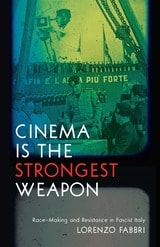
Cinema is the Strongest Weapon
Race-Making and Resistance in Fascist ItalyLorenzo Fabbri
University of Minnesota Press, 2023
A deep dive into Italian cinema under Mussolini’s regime and the filmmakers who used it as a means of antifascist resistance
Looking at Italy’s national film industry under the rule of Benito Mussolini and in the era that followed, Cinema Is the Strongest Weapon examines how cinema was harnessed as a political tool by both the reigning fascist regime and those who sought to resist it. Covering a range of canonical works alongside many of their neglected contemporaries, this book explores film’s mutable relationship to the apparatuses of state power and racial capitalism.
Exploiting realism’s aesthetic, experiential, and affective affordances, Mussolini’s biopolitical project employed cinema to advance an idealized vision of life under fascism and cultivate the basis for a homogenous racial identity. In this book, Lorenzo Fabbri crucially underscores realism’s susceptibility to manipulation from diametrically opposed political perspectives, highlighting the queer, Communist, Jewish, and feminist filmmakers who subverted Mussolini’s notion that “cinema is the regime’s strongest weapon” by developing film narratives and film forms that challenged the prevailing ethno-nationalist ideology.
Focusing on an understudied era of film history and Italian cultural production, Fabbri issues an important recontextualization of Italy’s celebrated neorealist movement and the structural ties it shares with its predecessor. Drawing incisive parallels to contemporary debates around race, whiteness, authoritarianism, and politics, he presents an urgent examination into the broader impact of visual media on culture and society.
Retail e-book files for this title are screen-reader friendly with images accompanied by short alt text and/or extended descriptions.

Cinema of Actuality
Japanese Avant-Garde Filmmaking in the Season of Image PoliticsYuriko Furuhata
Duke University Press, 2013
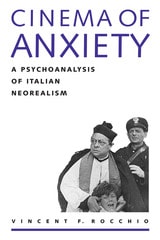
Cinema of Anxiety
A Psychoanalysis of Italian NeorealismBy Vincent F. Rocchio
University of Texas Press, 1999
The "new" realism of Italian cinema after World War II represented and in many ways attempted to contain the turmoil of a society struggling to rid itself of Fascism while fighting off the threat of radical egalitarianism at the same time. In this boldly revisionist book, Vincent F. Rocchio combines Lacanian psychoanalysis with narratology and Marxist critical theory to examine the previously neglected relationship between Neorealist films and the historical spectators they address.
Rocchio builds his analysis around case studies of the films Rome: Open City, Bicycle Thieves, La Terra Trema, Bitter Rice, and Senso. Through the lens of psychoanalysis, he challenges the traditional understanding of Neorealism as a progressive cinema and instead reveals the anxieties it encodes: a society in political turmoil, an economic system in collapse, and a national cinema in ruins; while war, occupation, collaboration, and retaliation remain a part of everyday life.
These case studies demonstrate how Lacanian psychoanalysis can play a key role in analyzing the structure of cinematic discourse and its strategies of containment. As one of the first books outside of feminist film theory to bring the ideas of Lacan to theories of cinema, this book offers innovative methods that reinvigorate film analysis. Clear and detailed insights into both Italian culture and the films under investigation will make this engaging reading for anyone interested in film and cultural studies.
Cinema of Confinement
Thomas J. Connelly
Northwestern University Press, 2019
In this book, Thomas J. Connelly draws on a number of key psychoanalytic concepts from the works of Jacques Lacan, Slavoj Žižek, Joan Copjec, Michel Chion, and Todd McGowan to identify and describe a genre of cinema characterized by spatial confinement. Examining classic films such as Alfred Hitchcock's Rope and Stanley Kubrick's The Shining, as well as current films such as Room, Green Room, and 10 Cloverfield Lane, Connelly shows that the source of enjoyment of confined spaces lies in the viewer's relationship to excess.
Cinema of Confinement offers rich insights into the appeal of constricted filmic spaces at a time when one can easily traverse spatial boundaries within the virtual reality of cyberspace.
Cinema of Crushing Motherhood
A New Feminist CinemaOlivia Landry
University of Illinois Press, 2025
Cinema of Sincerity
Soviet Films and Culture During the ThawViktoria Paranyuk
University of Wisconsin Press, 2025
Using both theory and close readings of specific films produced in the Soviet Union during the Thaw, a period known for its relative political and cultural liberalization, Cinema of Sincerity treats sincerity as both a concept and an aesthetic strategy. Viktoria Paranyuk argues that Soviet cinema’s use of sincerity was a reworking of a trend in global cinema that sought to bridge the gap between reality and the filmed image. This period saw increased accessibility to world cinematic traditions, new voices in criticism, and, above all, the multigenerational effort in filmmaking that developed and thrived in centers outside Moscow. Paranyuk demonstrates how these changes allowed Soviet cinema to renew its visual language and use film as a space for collective self-examination.
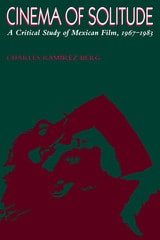
Cinema of Solitude
A Critical Study of Mexican Film, 1967-1983By Charles Ramírez Berg
University of Texas Press, 1992
La crisis, a period of political and economic turmoil in Mexico that began in the late 1960s, spawned a new era in Mexican cinema. Known as el Nuevo Cine (the New Cinema), these films presented alienated characters caught in a painful transition period in which old family, gender, and social roles have ceased to function without being replaced by viable new ones. These are the films explored by Charles Ramírez Berg in Cinema of Solitude, the first book-length critical study of Mexican cinema in English.
Berg discusses the major films and filmmakers of el Nuevo Cine in depth. He analyzes dozens of commercial movies, from popular comedies and adventures to award-winning films. Introductory chapters address the issue of mexicanidad (Mexican national identity) and outline Mexican history, the history of film as popular culture and as a leading national industry, and the ideological dynamics of Mexican cinema.
In thematically arranged chapters, Berg investigates the images of women, men, and social structures portrayed in New Cinema films. He finds that women characters have begun to reject traditional stereotypes for more positive images, while male characters have grown ambiguous and undefined as machismo is abandoned. Other chapters trace the continuing marginalization of Indians in Mexican culture, the changes in male dominance within the family, and the disruptive social and economic effects caused by migration.
For everyone interested in Mexican culture as reflected in its major cinematic productions, as well as students of film theory and national cinemas, this book will be important reading.
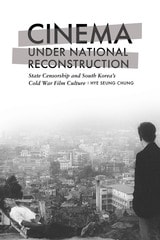
Cinema under National Reconstruction
State Censorship and South Korea’s Cold War Film CultureHye Seung Chung
Rutgers University Press, 2025
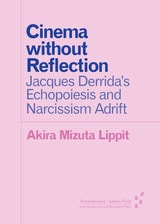
Cinema without Reflection
Jacques Derrida’s Echopoiesis and Narcissim AdriftAkira Mizuta Lippit
University of Minnesota Press, 2016
Cinema without Reflection traces an implicit film theory in Jacques Derrida’s oeuvre, especially in his frequent invocation of the myth of Echo and Narcissus. Derrida’s reflections on the economies of image and sound that reverberate in this story, along with the spectral dialectics of love, mirrors, and poiesis, serve as the basis for a theory of cinema that Derrida perhaps secretly imagined.
Following Derrida’s interventions on Echo and Narcissus across his thought on the visual arts, Akira Mizuta Lippit seeks to return to a theory of cinema adrift in Derrida’s philosophy.
Forerunners is a thought-in-process series of breakthrough digital works. Written between fresh ideas and finished books, Forerunners draws on scholarly work initiated in notable blogs, social media, conference plenaries, journal articles, and the synergy of academic exchange. This is gray literature publishing: where intense thinking, change, and speculation take place in scholarship.
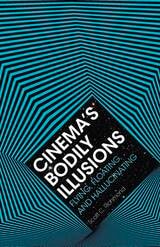
Cinema's Bodily Illusions
Flying, Floating, and HallucinatingScott C. Richmond
University of Minnesota Press, 2016
Do contemporary big-budget blockbuster films like Gravity move something in us that is fundamentally the same as what avant-garde and experimental films have done for more than a century? In a powerful challenge to mainstream film theory, Cinema’s Bodily Illusions demonstrates that this is the case.
Scott C. Richmond bridges genres and periods by focusing, most palpably, on cinema’s power to evoke illusions: feeling like you’re flying through space, experiencing 3D without glasses, or even hallucinating. He argues that cinema is, first and foremost, a technology to modulate perception. He presents a theory of cinema as a proprioceptive technology: cinema becomes art by modulating viewers’ embodied sense of space. It works primarily not at the level of the intellect but at the level of the body. Richmond develops his theory through examples of direct perceptual illusion in cinema: hallucinatory flicker phenomena in Tony Conrad’s The Flicker, eerie depth effects in Marcel Duchamp’s Anémic Cinéma, the illusion of bodily movement through onscreen space in Stanley Kubrick’s 2001, Godfrey Reggio’s Koyaanisqatsi, and Alfonso Cuarón’s Gravity. In doing so he combines insights from Maurice Merleau-Ponty’s phenomenology of perception and James J. Gibson’s ecological approach to perception. The result is his distinctive ecological phenomenology, which allows us to refocus on the cinema’s perceptual, rather than representational, power.
Arguing against modernist habits of mind in film theory and aesthetics, and the attendant proclamations of cinema’s death or irrelevance, Richmond demonstrates that cinema’s proprioceptive aesthetics make it an urgent site of contemporary inquiry.
Cinema's Original Sin
D.W. Griffith, American Racism, and the Rise of Film CulturePaul McEwan
University of Texas Press, 2022
For over a century, cinephiles and film scholars have had to grapple with an ugly artifact that sits at the beginnings of film history. D. W. Griffith’s profoundly racist epic, The Birth of a Nation, inspired controversy and protest at its 1915 release and was defended as both a true history of Reconstruction (although it was based on fiction) and a new achievement in cinematic art. Paul McEwan examines the long and shifting history of its reception, revealing how the film became not just a cinematic landmark but also an influential force in American aesthetics and intellectual life.
In every decade since 1915, filmmakers, museums, academics, programmers, and film fans have had to figure out how to deal with this troublesome object, and their choices have profoundly influenced both film culture and the notion that films can be works of art. Some critics tried to set aside the film’s racism and concentrate on the form, while others tried to relegate that racism safely to the past. McEwan argues that from the earliest film retrospectives in the 1920s to the rise of remix culture in the present day, controversies about this film and its meaning have profoundly shaped our understandings of film, race, and art.
Cinema, Colonialism, Postcolonialism
Perspectives from the French and Francophone WorldsEdited by Dina Sherzer
University of Texas Press, 1996
In this first major study of French colonial and postcolonial cinema, Dina Sherzer compiles essays by some of the foremost scholars on the subject who interrogate and analyze the realities behind the images of the nation's past and present. Through an examination of France and its colonies, multiethnic contemporary France, and cinematic discourses which have been and are being produced about France's colonial past, these authors explore how the images relay underlying assumptions and their relation to historical and political facts. A variety of subjects and viewpoints inform these studies, which cover the entire range of films on that topic.
The authors expound upon the role French and Francophone films are currently playing in reconstructing and imagining France's colonial past. Not only do the essays examine how French cinema has represented the encounter of French citizens with individuals from former colonies during the colonial era; they examine how French cinema has portrayed and has come to terms with the immigration of former colonial subjects to France. In addition, the book features another postcolonial facet by analyzing films of directors from the former colonies who give their own representation of colonialism and presentation of their culture.
This study is a major contribution to postcolonial research. Race, gender, and geography are central themes throughout this book that presents innovative material that contributes to the history of French cinema and emphasizes how cinema participates in and is a part of national culture.
Cinema, Slavery, and Brazilian Nationalism
By Richard A. Gordon
University of Texas Press, 2015
A unique contribution to film studies, Richard Gordon’s Cinema, Slavery, and Brazilian Nationalism is the first full-length book on Brazilian films about slavery. By studying Brazilian films released between 1976 and 2005, Gordon examines how the films both define the national community and influence viewer understandings of Brazilianness. Though the films he examines span decades, they all communicate their revised version of Brazilian national identity through a cinematic strategy with a dual aim: to upset ingrained ways of thinking about Brazil and to persuade those who watch the films to accept a new way of understanding their national community.
By examining patterns in this heterogeneous group of films, Gordon proposes a new way of delineating how these films attempt to communicate with and change the minds of audience members. Gordon outlines five key aspects that each film incorporates, which describe their shared formula for and role in constructing social identity. These elements include the ways in which the films attempt to create links between the past and the viewers’ present and their methods of encouraging viewers to identify with their protagonists, who are often cast as a prototype for the nation. By aligning themselves with this figure, viewers arrive at a definition of their national identity that, while Afrocentric, also promotes racial and ethnic inclusiveness. Gordon’s innovative analysis transcends the context of his work, and his conclusions can be applied to questions of national identity and film across cultures.
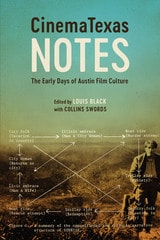
CinemaTexas Notes
The Early Days of Austin Film CultureEdited by Louis Black, with Collins Swords
University of Texas Press, 2018
Austin’s thriving film culture, renowned for international events such as SXSW and the Austin Film Festival, extends back to the early 1970s when students in the Department of Radio-Television-Film at the University of Texas at Austin ran a film programming unit that screened movies for students and the public. Dubbed CinemaTexas, the program offered viewers a wide variety of films—old and new, mainstream, classic, and cult—at a time when finding and watching films after their first run was very difficult and prohibitively expensive. For each film, RTF graduate students wrote program notes that included production details, a sampling of critical reactions, and an original essay that placed the film and its director within context and explained the movie’s historical significance. Over time, CinemaTexas Program Notes became more ambitious and were distributed around the world, including to luminaries such as film critic Pauline Kael.
This anthology gathers a sampling of CinemaTexas Program Notes, organized into four sections: “USA Film History,” “Hollywood Auteurs,” “Cinema-Fist: Renegade Talents,” and “America’s Shadow Cinema.” Many of the note writers have become prominent film studies scholars, as well as leading figures in the film, TV, music, and video game industries. As a collection, CinemaTexas Notes strongly contradicts the notion of an effortlessly formed American film canon, showing instead how local film cultures—whether in Austin, New York, or Europe—have forwarded the development of film studies as a discipline.
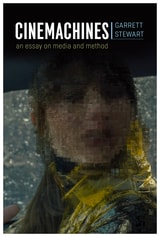
Cinemachines
An Essay on Media and MethodGarrett Stewart
University of Chicago Press, 2020
Engaging in fresh ways with revelatory special effects in the history of cinematic storytelling—from Buster Keaton’s breaching of the film screen in Sherlock Jr. to the pixel disintegration of a remotely projected hologram in Blade Runner 2049—Stewart’s book puts unprecedented emphasis on technique in moving image narrative. Complicating and revising the discourse on historical screen processes, Cinemachines will be crucial reading for anyone interested in the evolution of the movies from a celluloid to a digital medium.
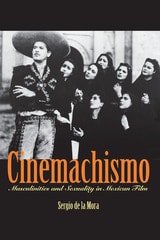
Cinemachismo
Masculinities and Sexuality in Mexican FilmBy Sergio de la Mora
University of Texas Press, 2006
After the modern Mexican state came into being following the Revolution of 1910, hyper-masculine machismo came to be a defining characteristic of "mexicanidad," or Mexican national identity. Virile men (pelados and charros), virtuous prostitutes as mother figures, and minstrel-like gay men were held out as desired and/or abject models not only in governmental rhetoric and propaganda, but also in literature and popular culture, particularly in the cinema. Indeed, cinema provided an especially effective staging ground for the construction of a gendered and sexualized national identity.
In this book, Sergio de la Mora offers the first extended analysis of how Mexican cinema has represented masculinities and sexualities and their relationship to national identity from 1950 to 2004. He focuses on three traditional genres (the revolutionary melodrama, the cabaretera [dancehall] prostitution melodrama, and the musical comedy "buddy movie") and one subgenre (the fichera brothel-cabaret comedy) of classic and contemporary cinema. By concentrating on the changing conventions of these genres, de la Mora reveals how Mexican films have both supported and subverted traditional heterosexual norms of Mexican national identity. In particular, his analyses of Mexican cinematic icons Pedro Infante and Gael García Bernal and of Arturo Ripstein's cult film El lugar sin límites illuminate cinema's role in fostering distinct figurations of masculinity, queer spectatorship, and gay male representations. De la Mora completes this exciting interdisciplinary study with an in-depth look at how the Mexican state brought about structural changes in the film industry between 1989 and 1994 through the work of the Mexican Film Institute (IMCINE), paving the way for a renaissance in the national cinema.
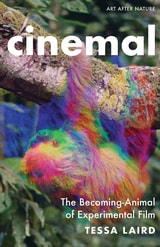
Cinemal
The Becoming-Animal of Experimental FilmTessa Laird
University of Minnesota Press, 2025
A foray through the wilds where experimental films and animals collide
Like the flash of a tropical bird’s iridescent wing, cinema can be furtive and intensely beautiful—and it can leave a viewer craving more. Cinemal is Tessa Laird’s passionate inquiry into the ways that films mimic the majesty, mystery, and movements of animals,her field notes from countless hair-raising encounters with films in their natural habitat.
Part of a growing focus on nonhuman animals in film, Cinemal ventures to the “furry underbelly” of global experimental film practice, focusing on films from New Zealand, Australia, and South America. Laird examines how animals are depicted in film and analyzes the various animal qualities of cinema, like scratching and sniffing, vibrant colors, and voices (barking, howling, or echolocation). Burrowing into the work of filmmakers such as Arthur and Corinne Cantrill, Sriwhana Spong, and Ana Vaz, Laird’s energetic prose embodies the films she discusses, seamlessly combining personal anecdotes with art theory and philosophy to spread a wide sensory buffet.
Lively and optimistic, Laird uses cinematic animal tropes to encourage readers to rethink what it means to be human. She argues that, in a time of ecological collapse, such an impulse is a necessary means of imagining other, healthier ways of being in this world. Connecting us with the more-than-human, Cinemal lures us toward the beastly becomings of film and, ultimately, our own animal natures.
Retail e-book files for this title are screen-reader friendly.