Results by title
1325 books match the query 'Psychology' and 90 start with c
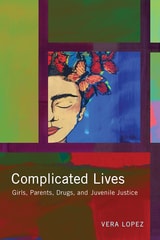
Complicated Lives
Girls, Parents, Drugs, and Juvenile JusticeLopez, Vera
Rutgers University Press, 2017
Complicated Lives focuses on the lives of sixty-five drug-using girls in the juvenile justice system (living in group homes, a residential treatment center, and a youth correctional facility) who grew up in families characterized by parental drug use, violence, and child maltreatment. Vera Lopez situates girls’ relationships with parents who fail to live up to idealized parenting norms and examines how these relationships change over time, and ultimately contribute to the girls’ future drug use and involvement in the justice system.
While Lopez’s subjects express concerns and doubt in their chances for success, Lopez provides an optimistic prescription for reform and improvement of the lives of these young women and presents a number of suggestions ranging from enhanced cultural competency training for all juvenile justice professionals to developing stronger collaborations between youth and adult serving systems and agencies.
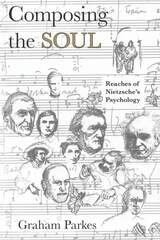
Composing the Soul
Reaches of Nietzsche's PsychologyGraham Parkes
University of Chicago Press, 1994
Composing the Soul is the first study to pay sustained attention to this pronouncement and to examine the contours of Nietzsche's psychology in the context of his life and psychological makeup. Beginning with essays from Nietzsche's youth, Graham Parkes shows the influence of such figures as Goethe, Byron, and Emerson on Nietzsche's formidable and multiple talents. Parkes goes on to chart the development of Nietzsche's psychological ideas in terms of the imagery, drawn from the dialogues of Plato as well as from Nietzsche's own quasi-mystical experiences of nature, in which he spoke of the soul. Finally, Parkes analyzes Nietzsche's most revolutionary idea—that the soul is composed of multiple "drives," or "persons," within the psyche. The task for Nietzsche's psychology, then, was to identify and order these multiple persons within the individual—to compose the soul.
Featuring all new translations of quotations from Nietzsche's writings, Composing the Soul reveals the profundity of Nietzsche's lifelong personal and intellectual struggles to come to grips with the soul. Extremely well-written, this landmark work makes Nietzsche's life and ideas accessible to any reader interested in this much misunderstood thinker.
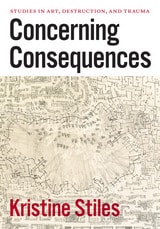
Concerning Consequences
Studies in Art, Destruction, and TraumaKristine Stiles
University of Chicago Press, 2016
The essays in this book focus primarily on performance art and photography. From war and environmental pollution to racism and sexual assault, Stiles analyzes the consequences of trauma as seen in the works of artists like Marina Abramovic, Pope.L, and Chris Burden. Assembling rich intellectual explorations on everything from Paleolithic paintings to the Bible’s patriarchal legacies to documentary images of nuclear explosions, Concerning Consequences explores how art can provide a distinctive means of understanding trauma and promote individual and collective healing.
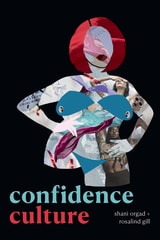
Confidence Culture
Shani Orgad and Rosalind Gill
Duke University Press, 2022

Confronting Theory
The Psychology of Cultural StudiesPhilip Bell
Intellect Books, 2010
Confronting Theory presents a critique of what has come to be known as theory in cross-disciplinary humanities education. Rather than dismissing theory writing as pretentious and abstract, Confronting Theory examines its principal concepts from the perspective of academic psychology and shows that although many of these analyses sound like revolutionary psychological theory, few, if any, have empirical implications that students can evaluate. By considering the educational implications of cultural theory, Confronting Theory will empower students with arguments, not just opinions, about the increasingly idealist and irrelevant anti-realist curricula they confront in their humanities education in today’s universities.
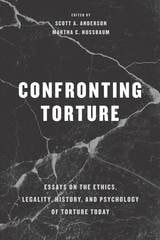
Confronting Torture
Essays on the Ethics, Legality, History, and Psychology of Torture TodayEdited by Scott A. Anderson and Martha C. Nussbaum
University of Chicago Press, 2018
Confronting Torture offers a multidisciplinary investigation of this wrenching topic. Editors Scott A. Anderson and Martha C. Nussbaum bring together a diversity of scholars to grapple with many of torture’s complexities, including: How should we understand the impetus to use torture? Why does torture stand out as a particularly heinous means of war-fighting? Are there any sound justifications for the use of torture? How does torture affect the societies that employ it? And how can we develop ethical or political bulwarks to prevent its use? The essays here resist the temptation to oversimplify torture, drawing together work from scholars in psychology, history, sociology, law, and philosophy, deepening and broadening our grasp of the subject. Now, more than ever, torture is something we must think about; this important book offers a diversity of timely, constructive responses on this resurgent and controversial subject.
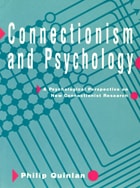
Connectionism and Psychology
A Psychological Perspective on New Connectionist ResearchPhilip T. Quinlan
University of Chicago Press, 1991
Examples of new connectionist models of learning, vision, language and thought are described in detail. Both neurological and psychological considerations are used in assessing its theoretical contributions. The status of the basic predicates like exclusive-OR is examined, the limitations of perceptrons are explained and properties of multi-layer networks are described in terms of many examples of psychological processes. The history of neural networks is discussed from a psychological perspective which examines why certain issues have become important. The book ends with a general critique of the new connectionist approach.
It is clear that new connectionism work provides a distinctive framework for thinking about central questions in cognition and perception. This new textbook provides a clear and useful introduction to its theories and applications.

Conrad’s Models of Mind
Bruce Johnson
University of Minnesota Press, 1971
Conrad's Models of Mind was first published in 1971. Minnesota Archive Editions uses digital technology to make long-unavailable books once again accessible, and are published unaltered from the original University of Minnesota Press editions.
In a new approach to understanding the psychological assumptions that lie behind the creation of a work of fiction, Professor Johnson analyzes a number of Joseph Conrad's novels and short stories, identifying and explaining Conrad's changing conceptions or models of mind. As he points out in his introduction: "Every writer makes assumptions about the nature of the mind, whether they may be elaborate theories, metaphors that seem simple but imply a great deal, downright beliefs, or vague gestalten. And such assumptions color his whole creation, the way his characters think and feel and react, possibly even his choice of subject matter."
The author traces Conrad's steady progression away from deductive psychology, involving such entities as will, passion, ego, or sympathy, toward a flexible, and, for the period, new psychology that had implications for his entire development as a writer.
Professor Johnson finds certain affinities between Conrad's models of mind and those of a number of other writers, among them, Schopenhauer, Sartre, and Pascal. He shows that one aspect of Conrad's psychology was closely allied to the Schopenhauerian concept of will but that when he wrote Lord Jim, Heart of Darkness, and Nostromo Conrad moved toward an existential concept of self-image and self-creation similar to Sartre's psychology in Being and Nothingness. Finally, Professor Johnson examines Conrad's novel The Rescue and shows how hopeless it was for Conrad to return to earlier conceptions of mind after he had explored the new existential models.

Conservation Is Our Government Now
The Politics of Ecology in Papua New GuineaPaige West
Duke University Press, 2006
West reveals how every aspect of the Crater Mountain Wildlife Management Area—including ideas of space, place, environment, and society—was socially produced, created by changing configurations of ideas, actions, and material relations not only in Papua New Guinea but also in other locations around the world. Complicating many of the assumptions about nature, culture, and development underlying contemporary conservation efforts, Conservation Is Our Government Now demonstrates the unique capacity of ethnography to illuminate the relationship between the global and the local, between transnational processes and individual lives.

Console and Classify
The French Psychiatric Profession in the Nineteenth CenturyJan E. Goldstein
University of Chicago Press, 2001
"Goldstein has raised our understanding of the politics of psychiatric professionalization on to a new plane."—Roy Porter, Times Higher Education Supplement
"[A]n historiographical tour de force, quite simply the most insightful work on the subject in English or any other language. . . . [A] work of distinctive originality. . . . It is written with lucidity and elegance, even a certain confident scholarly panache, that make it a pleasure to read."—Toby Gelfand, Social History
"Exhaustively researched, elegantly written, and persuasively argued, Console and Classify is an excellent example of the . . . sociologically informed intellectual history, stimulated by Kuhn and Foucault."—Robert Alun Jones, American Journal of Sociology
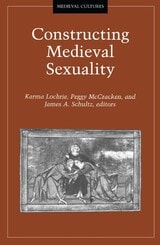
Constructing Medieval Sexuality
Karma Lochrie
University of Minnesota Press, 1997
A groundbreaking examination of sexuality in the Middle Ages.
This collection is the first to be devoted entirely to medieval sexuality informed by current theories of sexuality and gender. It brings together essays from various disciplinary perspectives-literary, theological, philosophical, medical, historical, and art historical-to consider how the Middle Ages defined, regulated, and represented sexual practices and desires.
Always considering sexuality in relation to gender, the body, and identity, the essays explore medieval sexuality as a historical construction produced by and embedded in the cultures and institutions of that period. Examining a range of medieval texts and images, the contributors explore the medieval understanding of sodomy, the historical construction of heterosexuality, the polymorphous erotics of female mysticism, and the intersections of sexuality with race, gender, and religion. This work not only offers new perspectives on the ways in which queer theory might inform our views of sexuality in medieval Europe, but also suggests that medieval constructions of sexuality may offer important contributions to both queer theory and the history of sexuality.These essays, situated in the context of current debates, linger over various definitions of medieval sexuality; they speak to each other in their differences and their similarities to further productive thinking about the sometimes conflicting and always fascinating ways in which the Middle Ages regarded sex and sexuality. Contributors: E. Jane Burns, U of North Carolina; Joan Cadden, U of California, Davis; Michael Camille, U of Chicago; Dyan Elliott, Indiana U; Louise O. Fradenburg, U of California, Santa Barbara; Mark D. Jordan, U of Notre Dame; Steven F. Kruger, CUNY.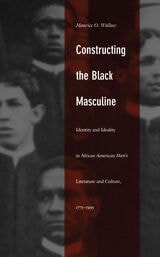
Constructing the Black Masculine
Identity and Ideality in African American Men’s Literature and Culture, 1775–1995Maurice O. Wallace
Duke University Press, 2002
Highlighting their chronic objectification under the gaze of white eyes, Wallace argues that black men suffer a social and representational crisis in being at once seen and unseen, fetish and phantasm, spectacle and shadow in the American racial imagination. Invisible and disregarded on one hand, black men, perceived as potential threats to society, simultaneously face the reality of hypervisibility and perpetual surveillance. Paying significant attention to the sociotechnologies of vision and image production over two centuries, Wallace shows how African American men—as soldiers, Freemasons, and romantic heroes—have sought both to realize the ideal image of the American masculine subject and to deconstruct it in expressive mediums like modern dance, photography, and theatre. Throughout, he draws on the experiences and theories of such notable figures as Frederick Douglass, W. E. B. Du Bois, Booker T. Washington, and James Baldwin.
Contemporary Novelists and the Aesthetics of Twenty-First Century American Life
Alexandra Kingston-Reese
University of Iowa Press, 2020
Contemporary Novelists and the Aesthetics of Twenty-First Century American Life gives us a new way to view contemporary art novels, asking the key question: How do contemporary writers imagine aesthetic experience? Examining the works of some of the most popular names in contemporary fiction and art criticism, including Zadie Smith, Teju Cole, Siri Hustvedt, Ben Lerner, Rachel Kushner, and others, Alexandra Kingston-Reese finds that contemporary art novels are seeking to reconcile the negative feelings of contemporary life through a concerted critical realignment in understanding artistic sensibility, literary form, and the function of the aesthetic.
Kingston-Reese reveals how contemporary writers refract and problematize aesthetic experience, illuminating an uneasiness with failure: firstly, about the failure of aesthetic experiences to solve and save; and secondly, the literary inability to articulate the emotional dissonance caused by aesthetic experiences now.
Contesting Stereotypes and Creating Identities
Social Categories, Social Identities, and Educational ParticipationAndrew J. Fuligni
Russell Sage Foundation, 2007
Continuing Bonds with the Dead
Parental Grief and Nineteenth-Century American AuthorsHarold K. Bush
University of Alabama Press, 2016
Grief transformed into legacy—how loss shaped the soul of American literature.
Harold K. Bush's Continuing Bonds with the Dead examines the profound transfiguration that the death of a child wrought on the literary work of nineteenth-century American writers. Taking as his subjects Harriet Beecher Stowe, Abraham Lincoln, William Dean Howells, Mark Twain, and W. E. B. Du Bois, Bush demonstrates how the death of a child became the defining "before-and-after moment" in their lives as adults and as artists. In narrating their struggles, Bush maps the intense field of creative energy induced by reverberating waves of parental grief and the larger nineteenth-century culture of mortality and grieving.
Bush explores in detail how each of these five writers grappled with and were altered by the loss of a child. He writes, for example, with moving insights about how the famed author of Adventures of Huckleberry Finn found himself adrift on a river of grief when meningitis struck down his daughter, Susy. In his deeply learned exploration of Twain's subsequent work, Bush illuminates how Twain wrote to cope with Susy's death, to make sense of her persistent presence in his life, and possibly to redeem her loss. Passionate and personal, Bush's insightful prose traces the paths of personal transformation each of these emblematic American writers took in order to survive the spiritual trauma of loss.
The savage Civil War was America's shared "before and after moment," the pivot upon which the nation's future swung. Bush's account of these five writers' grief amplifies our understanding of America's evolving, national relationship to mourning from then to the present.

Controlling Anger
The Anthropology of Gisu ViolenceSuzette Heald
Ohio University Press, 1997
Controlling Anger examines the dilemmas facing rural people who live within the broader context of political instability. Following Uganda’s independence from Britain in 1962, the Bagisu men of Southeastern Uganda developed a reputation for extreme violence.
Drawing on a wide range of historical sources including local court records, statistical survey analysis, and intensive fieldwork, Suzette Heald portrays and analyzes the civil violence that grew out of intense land shortage, the marginalization of the Gisu under British rule, and the construction of male gender identity among the Gisu. Now available in a paperback edition with a new preface by the author, Controlling Anger is an important contribution to rural sociology in Africa.

Conversations with Jean Piaget
Jean-Claude Bringuier
University of Chicago Press, 1989
"The tone is one of constant movement from the most ordinary to the most abstruse. There are 14 conversations with 'le Patron,' some in 1969, some in 1975, and several more with co-workers in various fields. . . . In Mr. Bringuier's book, in a pleasant informal way, we see a sophisticated non-scientist exploring Piaget's domain with the master. Some of Piaget's best-known findings about children as explained along the way, but Mr. Bringuier has ways of bringing out the relation of this psychological work to the whole of Piaget's enterprise, and we get a good sense of the man and his work."—Howard E. Gruber, New York Times Book Review

Cooperation Without Trust?
Karen S. Cook
Russell Sage Foundation, 2005
Coping with Loss
A Guide to Death, Grief and Clinical Experiences with Dying PatientsErin Currey
Michigan Publishing Services, 2025
In a cure-focused profession, the death of a patient can often feel like a failure. Yet, every patient will inevitably transition from health to illness, independence to dependence, and life to death. These transitions often mark some of the most meaningful interactions between patients and care providers. Coping with Loss is a self-directed workbook that provides addresses common questions, concerns, and emotional responses to these interactions with dying patients. Each lesson opens with real stories of professional grief that will resonate with healthcare professionals at multiple stages of their careers. Critical topics covered include recognizing the diverse presentations of grief, identifying dying patients, decompressing individually, and debriefing as a team. Significant portions of the text discuss how challenging patient cases impact the formation of professional identity. Ultimately, this workbook provides a place for healthcare providers to reflect on their patient interactions and learn how to support themselves and their healthcare teams through grief.
Cosmopolitan Minds
Literature, Emotion, and the Transnational ImaginationBy Alexa Weik von Mossner
University of Texas Press, 2014
During World War II and the early Cold War period, factors such as race, gender, sexual orientation, or class made a number of American writers feel marginalized in U.S. society. Cosmopolitan Minds focuses on a core of transnational writers—Kay Boyle, Pearl S. Buck, William Gardner Smith, Richard Wright, and Paul Bowles—who found themselves prompted to seek experiences outside of their home country, experiences that profoundly changed their self-understanding and creative imagination as they encountered alternative points of views and cultural practices in Europe, Asia, and Africa.
Alexa Weik von Mossner offers a new perspective on the affective underpinnings of critical and reflexive cosmopolitanism by drawing on theories of emotion and literary imagination from cognitive psychology, philosophy, and cognitive literary studies. She analyzes how physical dislocation, and the sometimes violent shifts in understanding that result from our affective encounters with others, led Boyle, Buck, Smith, Wright, and Bowles to develop new, cosmopolitan solidarities across national, ethnic, and religious boundaries. She also shows how, in their literary texts, these writers employed strategic empathy to provoke strong emotions such as love, sympathy, compassion, fear, anger, guilt, shame, and disgust in their readers in order to challenge their parochial worldviews and practices. Reading these texts as emotionally powerful indictments of institutionalized racism and national violence inside and outside of the United States, Weik von Mossner demonstrates that our emotional engagements with others—real and imagined—are crucially important for the development of transnational and cosmopolitan imaginations.
Cosmopolitan Twain
Edited by Ann M. Ryan and Joseph B. McCullough
University of Missouri Press, 2008

Counseling and Psychological Services for College Student-Athletes
Second EditionMary Jo Loughran
FiT Publishing, 2019
Today's college student-athletes face a wide variety of stressors as they enter the increasingly demanding intercollegiate athletic environment. Counseling and Psychological Services for College Student-Athletes, Second Edition, weaves current research findings, practical examples, and best practices to provide undergraduate and graduate student readers with the necessary tools to effectively and ethically address these issues as future practitioners.
Expert chapter authors use their knowledge and experience to address collegiate student-athlete issues such as mental health, injury, race, gender, sexuality, and socioeconomic background, as well as ethical and professional considerations.
This updated second edition includes a case vignette at the beginning of each chapter to illustrate the key concepts and discussion questions to encourage thoughtful interaction with the material. New chapters have been added on student-athlete topics including developmental considerations, trauma, concussions, and internationality to assist in facilitating positive change in the lives of college student-athletes.
Counseling and the College Program
Papers from the Third Annual Conference of Administrators of College and University Counseling Programs, held at Michigan State College in November 1952Ralph Berdie
University of Minnesota Press, 1954
Counter-cartographies
Neurodivergence and the Errancies of PerformanceLeon J. Hilton
University of Minnesota Press, 2025
How to remake the world with neurodivergence at its heart
What if we embraced neurodivergent ways of being not as deviations to be corrected but as vital ways of inhabiting the world? What new realities might emerge? Bringing a much-needed humanistic perspective to the study of autism and other forms of neurodivergence, Counter-cartographies offers a bold reimagining of neurological difference, moving beyond rigid diagnostic frameworks to uncover more expansive, generative modes of existence.
Engaging the work of Fernand Deligny to trace how modern taxonomies of neurodivergence have hardened over time, Leon J. Hilton questions how these categories might instead serve as tools for remapping the world with neurodivergence at its center. At the heart of Counter-cartographies is an exploration of performance and performativity that reveals how the norm of neurotypical reality is continually reinforced through acts of doing, redoing, and undoing.
Charting the historical shift away from “mind” and toward “brain” and moving fluidly across disciplines—from digital art and documentary cinema to cybernetics and radical mental health movements—Hilton illuminates the deep interconnections between performance, perception, and the historical construction of the “neurotypical.” Through close readings of works by William Pope.L, Mel Baggs, Wu Tsang, and others, Hilton also examines how neurodivergence has been represented, embodied, and materialized in contemporary art and media. Restless, engrossing, and persistently attuned to moments of rupture when the neurotypical order falters, Counter-cartographies charts a path toward a more capacious, imaginative world.
Retail e-book files for this title are screen-reader friendly with images accompanied by short alt text and/or extended descriptions.
Creating Beauty To Cure the Soul
Race and Psychology in the Shaping of Aesthetic SurgerySander L. Gilman
Duke University Press, 1998
In his exploration of the striking parallels between the development of cosmetic surgery and the field of psychiatry, Gilman entertains an array of philosophical and psychological questions that underlie the more practical decisions rountinely made by doctors and potential patients considering these types of surgery. While surveying and incorporating the relevant theories of Sigmund Freud, Alfred Adler, Karl Menninger, Paul Schilder, contemporary feminist critics, and others, Gilman considers the highly unstable nature of cultural notions of health, happiness, and beauty. He reveals how ideas of race and gender structured early understandings of aesthetic surgery in discussions of both the “abnormality” of the Jewish nose and the historical requirement that healthy and virtuous females look “normal,” thereby enabling them to achieve invisibility. Reflecting upon historically widespread prejudices, Gilman describes the persecutions, harrassment, attacks, and even murders that continue to result from bodily difference and he encourages readers to question the cultural assumptions that underlie the increasing acceptability of this surgical form of psychotherapy.
Synthesizing a vast body of related literature and containing a comprehensive bibliography, Creating Beauty to Cure the Soul will appeal to a broad audience, including those interested in the histories of medicine and psychiatry, and in philosophy, cultural studies, Jewish cultural studies, and race and ethnicity.
Creating Mental Illness
Allan V. Horwitz
University of Chicago Press, 2001
"Thought-provoking and important. . .Drawing on and consolidating the ideas of a range of authors, Horwitz challenges the existing use of the term mental illness and the psychiatric ideas and practices on which this usage is based. . . . Horwitz enters this controversial territory with confidence, conviction, and clarity."—Joan Busfield, American Journal of Sociology
"Horwitz properly identifies the financial incentives that urge therapists and drug companies to proliferate psychiatric diagnostic categories. He correctly identifies the stranglehold that psychiatric diagnosis has on research funding in mental health. Above all, he provides a sorely needed counterpoint to the most strident advocates of disease-model psychiatry."—Mark Sullivan, Journal of the American Medical Association
"Horwitz makes at least two major contributions to our understanding of mental disorders. First, he eloquently draws on evidence from the biological and social sciences to create a balanced, integrative approach to the study of mental disorders. Second, in accomplishing the first contribution, he provides a fascinating history of the study and treatment of mental disorders. . . from early asylum work to the rise of modern biological psychiatry."—Debra Umberson, Quarterly Review of Biology

Creating a Human World
A New Psychological and Religious Anthropology In Dialogue with Freud, Heidegger, and KierkegaardErnest Daniel Carrere
University of Scranton Press, 2006
Carrere elucidates the paradoxical spiritual truth that salvation lies not in an escape from humanity, but in embracing it. An interdisciplinary tour de force, this book will appeal to anyone interested in philosophy, psychology, religion, or cultural anthropology.

Crip Love Onscreen
Representations of Love, Sex, and DisabilitySarah Rainey-Smithback
The Ohio State University Press, 2026
As disability representation increases, though, new possibilities are emerging. Crip Love Onscreen also draws attention to the exceptional through a close reading of screen narratives (such as 50 First Dates,Love and Other Drugs,American Horror Story: Freak Show, and more) that push against neoliberal, heteronormative, and ableist values. Drawing on the work of queer/crip scholars and activists, Rainey-Smithback uncovers glimpses of what Tobin Siebers calls a “sexual culture for disabled people”—a space and way of being that expands sexual access and sexual experience.
Crossing
A MemoirDeirdre Nansen McCloskey
University of Chicago Press, 1999
Crossings
Creative Ecologies of CruisingJoão Florêncio
Rutgers University Press, 2025
A creative dialogue between a queer artist and a queer academic reminiscing about and thinking with their cruising experiences, Crossings takes queer sex practices and cultures seriously as ways of knowing and world-making. The result is an erotic hybrid form hovering between scholarship and avant-garde experimentation, between critical manifesto and sex memoir. Here, the voices of each author, merged together in one, invite the reader to inhabit the erotic spacetime between self and other, the familiar and the strange, desire and pleasure, climax and release. That is, the spaces and temporalities of cruising itself.
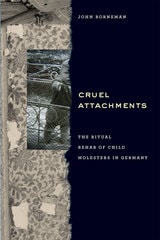
Cruel Attachments
The Ritual Rehab of Child Molesters in GermanyJohn Borneman
University of Chicago Press, 2015
Carefully exploring different cases of the attempt to rehabilitate child sex offenders, Borneman details a secular ritual process aimed not only at preventing future acts of molestation but also at fundamentally transforming the offender, who is ultimately charged with creating an almost entirely new self. Acknowledging the powerful repulsion felt by a public that is often extremely skeptical about the success of rehabilitation, he challenges readers to confront the contemporary contexts and conundrums that lie at the heart of regulating intimacy between children and adults.
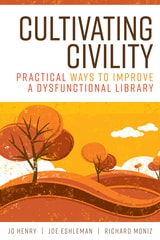
Cultivating Civility
Practical Ways to Improve a Dysfunctional LibraryJo Henry
American Library Association, 2020
Like other workplaces, libraries can sometimes be stressful, with library workers bearing the brunt of such problems as uncivil patrons, poor communication, inadequate leadership, and toxic behaviors by fellow employees. But there’s hope. Following up their acclaimed examination of the dysfunctional library ("should be essential reading for library leaders" raves Journal of the Australian Library and Information Association), here the authors present a book of proactive solutions and guidance culled from their own research, including interviews with library administrators and staff. Sharing valuable insights that will stimulate thought and discussion towards the goal of a healthier and more harmonious workplace, this book
- addresses the subject from four viewpoints—individual, team, leader, and organization—focusing on solutions and practical steps in each area;
- shows how self-reflection and self-awareness can be key starting points for exploring workplace issues;
- offers numerous suggestions for wellness and self-care;
- provides tips for improving interpersonal communication and conversations in ways that prevent silos and span boundaries;
- sheds light on forming and sustaining cohesive library teams, then provides solutions for misaligned teams and dissenters;
- discusses why effectively conveying vision, role modeling, and demonstrating empathy are all crucial behaviors of library leaders;
- shares actions library leaders can take to engage employees in the change process;
- examines how organizational structures can either detract or contribute to a library’s success; and
- details types of training that can be utilized to minimize dysfunction, including training for bias, empathy, conflict management, and diversity.
Filled with beneficial advice on every page, this resource will help libraries be better workplaces for everyone.
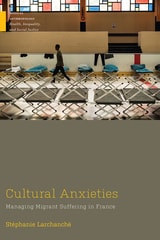
Cultural Anxieties
Managing Migrant Suffering in FranceStéphanie Larchanche
Rutgers University Press, 2020
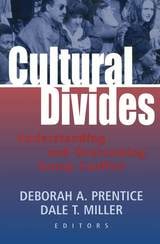
Cultural Divides
Understanding and Overcoming Group ConflictDeborah Prentice
Russell Sage Foundation, 1999
Cultural Persistence
Continuity in Meaning and Moral Responsibility Among the Bearlake AthapaskansScott Rushforth
University of Arizona Press, 1991
Culture
A Problem That Cannot Be SolvedCharles W. Nuckolls
University of Wisconsin Press, 1998
French historian Alexis de Tocqueville observed that the conflict between the ideals of individualism and community defines American culture. In this groundbreaking new work, anthropologist Charles Nuckolls discovers that every culture consists of such paradoxes, thus making culture a problem that cannot be solved. He does, however, find much creative tension in these unresolvable opposites.
Nuckolls presents three fascinating case studies that demonstrate how values often are expressed in the organization of social roles. First he treats the Micronesian Ifaluks’ opposition between cooperation and self-gratification by examining the nature versus nurture debate. Nuckolls then shifts to the values of community and individual adventure by looking at the conflicts in the identities of public figures in Oklahoma. Finally, he investigates the cultural significance in the diagnostic system and practices of psychiatry in the United States. Nuckolls asserts that psychiatry treats genders differently, assigning dependence to women and independence to men and, in some cases, diagnoses the extreme forms of these values as disorders.
Nuckolls elaborates on the theory of culture that he introduced in his previous book, The Cultural Dialectics of Knowledge and Desire, which proposed that the desire to resolve conflicts is central to cultural knowledge. In Culture: A Problem that Cannot Be Solved, Nuckolls restores the neglected social science concept of values, which addresses both knowledge and motivation. As a result, he brings together cognition and psychoanalysis, as well as sociology and psychology, in his study of cultural processes.
Cultures of the Death Drive
Melanie Klein and Modernist MelancholiaEsther Sánchez-Pardo
Duke University Press, 2003
Sánchez-Pardo argues that the troubled political atmosphere leading to both world wars created a melancholia fueled by “cultures of the death drive” and the related specters of object loss—loss of coherent and autonomous selves, of social orders where stability reigned, of metaphysical guarantees, and, in some cases, loss and fragmentation of empire. This melancholia permeated, and even propelled, modernist artistic discourses. Sánchez-Pardo shows how the work of Melanie Klein, the theorist of melancholia par excellence, uniquely illuminates modernist texts, particularly their representations of gender and sexualities. She offers a number of readings—of works by Virginia Woolf, René Magritte, Lytton Strachey, Djuna Barnes, and Countee Cullen—that reveal the problems melancholia posed for verbal and visual communication and the narrative and rhetorical strategies modernist artists derived to either express or overcome them. In her afterword, Sánchez-Pardo explicates the connections between modernist and contemporary melancholia.
A valuable contribution to psychoanalytic theory, gender and sexuality studies, and the study of representation in literature and the visual arts, Cultures of the Death Drive is a necessary resource for those interested in the work of Melanie Klein.
Curating Deviance
Programming the Queer Film CanonMarc Francis
Duke University Press, 2026
Curiosity Studies
A New Ecology of KnowledgePerry Zurn
University of Minnesota Press, 2020
The first English-language collection to establish curiosity studies as a unique field
From science and technology to business and education, curiosity is often taken for granted as an unquestioned good. And yet, few people can define curiosity. Curiosity Studies marshals scholars from more than a dozen fields not only to define curiosity but also to grapple with its ethics as well as its role in technological advancement and global citizenship. While intriguing research on curiosity has occurred in numerous disciplines for decades, no rigorously cross-disciplinary study has existed—until now.
Curiosity Studies stages an interdisciplinary conversation about what curiosity is and what resources it holds for human and ecological flourishing. These engaging essays are integrated into four clusters: scientific inquiry, educational practice, social relations, and transformative power. By exploring curiosity through the practice of scientific inquiry, the contours of human learning, the stakes of social difference, and the potential of radical imagination, these clusters focus and reinvigorate the study of this universal but slippery phenomenon: the desire to know.
Against the assumption that curiosity is neutral, this volume insists that curiosity has a history and a political import and requires precision to define and operationalize. As various fields deepen its analysis, a new ecosystem for knowledge production can flourish, driven by real-world problems and a commitment to solve them in collaboration. By paying particular attention to pedagogy throughout, Curiosity Studies equips us to live critically and creatively in what might be called our new Age of Curiosity.
Contributors: Danielle S. Bassett, U of Pennsylvania; Barbara M. Benedict, Trinity College; Susan Engel, Williams College; Ellen K. Feder, American U; Kristina T. Johnson, Massachusetts Institute of Technology; Narendra Keval; Christina León, Princeton U; Tyson Lewis, U of North Texas; Amy Marvin, U of Oregon; Hilary M. Schor, U of Southern California; Seeta Sistla, Hampshire College; Heather Anne Swanson, Aarhus U.
Cutting and the Pedagogy of Self-Disclosure
Jeffrey Berman
University of Massachusetts Press, 2007
Cutting, a form of self-mutilation, is a growing problem in the United States, especially among adolescent females. It is regarded as self-destructive behavior, yet paradoxically, people who cut themselves generally do not wish to die but to find relief from unbearable psychological pain.
Cutting and the Pedagogy of Self-Disclosure is the first book to explore how college students write about their experiences as cutters. The idea behind the book arose when Patricia Hatch Wallace, a high school English teacher, wrote a reader-response diary for a graduate course taught by Professor Jeffrey Berman in which she revealed for the first time that she had cut herself twenty years earlier. At Berman's suggestion, Wallace wrote her Master's thesis on cutting. Not long after she finished her thesis, two students in Berman's expository writing course revealed their own experiences as cutters. Their disclosures encouraged several students in another writing class to share their own cutting stories with classmates. Realizing that so many students were writing about the same phenomenon, Berman and Wallace decided to write a book about a subject that is rarely discussed inside or outside the classroom.
In Part 1, Wallace discusses clinical and theoretical aspects of cutting and then applies these insights to several memoirs and novels, including Susanna Kaysen's Girl, Interrupted, Caroline Kettlewell's Skin Game, and Patricia McCormick's Cut. The motivation behind Wallace's research was the desire to learn more about herself, and she reads these stories through her own experience as a cutter. In Part 2, Berman focuses on the pedagogical dynamics of cutting: how undergraduate students write about cutting, how their writings affect classmates and teachers, and how students who cut themselves can educate everyone in the classroom about a problem that has personal, psychological, cultural, and educational significance.