Results by title
1095 books match the query 'Rhetoric' and 93 start with c
Composition and Literature
Bridging the GapEdited by Winifred Bryan Horner
University of Chicago Press, 1983
Composition and Rhetoric in Contentious Times
Rachel McCabe
Utah State University Press, 2023
Editors Rachel McCabe and Jennifer Juszkiewicz consider how educators can respond to multiple current crises relating to composition and rhetoric with generosity and cautious optimism; in the process, they address the current concerns about the longevity of the humanities. By engaging with social constructivist, critical race, socioeconomic, and activist pedagogies, each chapter provides an answer to the question, How can our courses help students become stronger writers while contending with current social, environmental, and ethical questions posed by the world around them? The contributors consider this question from numerous perspectives, recognizing the important ways that power and privilege affect our varying means of addressing this question.
Relying on both theory and practice, Composition and Rhetoric in Contentious Times engages the future of composition and rhetoric as a discipline shaped by recent and current global events. This text appeals to early-career writing program administrators, writing center directors, and professional specialists, as well as Advanced Placement high school instructors, graduate students, and faculty teaching graduate-level pedagogy courses.
Composition and the Rhetoric of Science
Engaging the Dominant DiscourseMichael J. Zerbe
Southern Illinois University Press, 2007
Composition in the Age of Austerity
Nancy Welch
Utah State University Press, 2016
In the face of the gradual saturation of US public education by the logics of neoliberalism, educators often find themselves at a loss to respond, let alone resist. Through state defunding and many other “reforms” fueled by austerity politics, a majority of educators are becoming casual labor in US universities while those who hang onto secure employment are pressed to act as self-supporting entrepreneurs or do more with less. Focusing on the discipline of writing studies, this collection addresses the sense of crisis that many educators experience in this age of austerity.
The chapters in this book chronicle how neoliberal political economy shapes writing assessments, curricula, teacher agency, program administration, and funding distribution. Contributors also focus on how neoliberal political economy dictates the direction of scholarship, because the economic and political agenda shaping the terms of work, the methods of delivery, and the ways of valuing and assessing writing also shape the primary concerns and directions of scholarship.
Composition in the Age of Austerity offers critical accounts of how the restructuring of higher education is shaping the daily realities of composition programs. The book documents the effects and implications of the current restructuring, examines how cherished rhetorical ideals actually leave the field unprepared to respond effectively to defunding and corporatizing trends, and establishes points of departure for collective response.
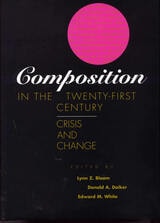
Composition in the Twenty-First Century
Crisis and ChangeEdited by Lynn Z. Bloom, Donald A. Daiker, and Edward M. White
Southern Illinois University Press, 1997
Despite its pervasiveness and its significance, composition has an unstable status within the curriculum. Writing programs and writing faculty are besieged by academic, political, and financial concerns that have not been well understood or addressed.
At many institutions, composition functions paradoxically as both the gateway to academic success and as the gatekeeper, reducing access to academic work and opportunity for those with limited facility in English. Although writing programs are expected to provide services that range from instruction in correct grammar to assisting—or resisting—political correctness, expanding programs and shrinking faculty get caught in the crossfire. The bottom line becomes the firing line as forces outside the classroom determine funding and seek to define what composition should do.
In search of that definition, the contributors ask and answer a series of specific and salient questions: What implications—intellectual, political, and institutional—will forces outside the classroom have on the quality and delivery of composition in the twenty-first century? How will faculty and administrators identify and address these issues? What policies and practices ought we propose for the century to come?
This book features sixteen position papers by distinguished scholars and researchers in composition and rhetoric; most of the papers are followed by invited responses by other notable compositionists. In all, twenty-five contributors approach composition from a wide variety of contemporary perspectives: rhetorical, historical, social, cultural, political, intellectual, economic, structural, administrative, and developmental. They propose solutions applicable to pedagogy, research, graduate training of composition teachers, academic administration, and public and social policy. In a very real sense, then, this is the only book to offer a map to the future of composition.
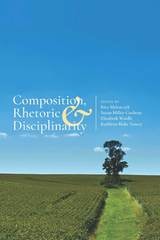
Composition, Rhetoric, and Disciplinarity
Rita Malenczyk
Utah State University Press, 2018
Edited by four nationally recognized leaders of composition scholarship, Composition, Rhetoric, and Disciplinarity asks a fundamental question: can Composition and Rhetoric, as a discipline, continue its historical commitment to pedagogy without sacrificing equal attention to other areas, such as research and theory? In response, contributors to the volume address disagreements about what it means to be called a discipline rather than a profession or a field; elucidate tensions over the defined breadth of Composition and Rhetoric; and consider the roles of research and responsibility as Composition and Rhetoric shifts from field to discipline.
Outlining a field with a complex and unusual formation story, Composition, Rhetoric, and Disciplinarity employs several lenses for understanding disciplinarity—theory, history, labor, and pedagogy—and for teasing out the implications of disciplinarity for students, faculty, institutions, and Composition and Rhetoric itself. Collectively, the chapters speak to the intellectual and embodied history leading to this point; to questions about how disciplinarity is, and might be, understood, especially with regard to Composition and Rhetoric; to the curricular, conceptual, labor, and other sites of tension inherent in thinking about Composition and Rhetoric as a discipline; and to the implications of Composition and Rhetoric’s disciplinarity for the future.
Contributors: Linda Adler-Kassner, Elizabeth H. Boquet, Christiane Donahue, Whitney Douglas, Doug Downs, Heidi Estrem, Kristine Hansen, Doug Hesse, Sandra Jamieson, Neal Lerner, Jennifer Helene Maher, Barry Maid, Jaime Armin Mejía, Carolyn R. Miller, Kelly Myers, Gwendolynne Reid, Liane Robertson, Rochelle Rodrigo, Dawn Shepherd, Kara Taczak
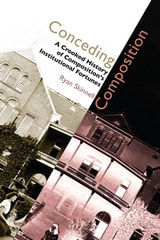
Conceding Composition
A Crooked History of Composition's Institutional FortunesRyan Skinnell
Utah State University Press, 2016
Based on extensive archival research conducted at six American universities and using the specific cases of institutional mission, regional accreditation, and federal funding, this study demonstrates that administrators and faculty have introduced, reformed, maintained, threatened, or eliminated composition as part of negotiations related to nondisciplinary institutional exigencies. Viewing composition from this perspective, author Ryan Skinnell raises new questions about why composition exists in the university, how it exists, and how teachers and scholars might productively reconceive first-year composition in light of its institutional functions.
The book considers the rhetorical, political, organizational, institutional, and promotional options conceding composition opened up for institutions of higher education and considers what the first-year course and the discipline might look like with composition’s transience reimagined not as a barrier but as a consummate institutional value.
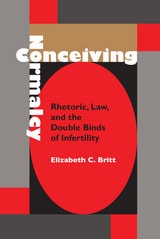
Conceiving Normalcy
Rhetoric, Law, and the Double Binds of InfertilityElizabeth C. Britt
University of Alabama Press, 2001
This ground-breaking rhetorical analysis examines a 1987 Massachusetts law affecting infertility treatment and the cultural context that makes such a law possible
Elizabeth C. Britt uses a Massachusetts statute requiring insurance coverage for infertility as a lens through which the work of rhetoric in complex cultural processes can be better understood. Countering the commonsensical notion that mandatory insurance coverage functions primarily to relieve the problem of infertility, Britt argues instead that the coverage serves to expose its contours.
Britt finds that the mandate, operating as a technology of normalization, helps to identify the abnormal (the infertile) and to create procedures by which the abnormal can be subjected to reform. In its role in normalizing processes, the mandate is more successful when it sustains, rather than resolves, the distinction between the normal and the abnormal. This distinction is achieved in part by the rhetorical mechanism of the double bind. For the middle-class white women who are primarily served by the mandate, these double binds are created both by the desire for success, control, and order and by adherence to medical models that often frustrate these same desires. The resulting double binds help to create and sustain the tension between fertility and infertility, order and discontinuity, control and chaos, success and failure, tensions that are essential for the process of normalization to continue.
Britt uses extensive interviews with women undergoing fertility treatments to provide the foundation for her detailed analysis. While her study focuses on the example of infertility, it is also more broadly a commentary on the power of definition to frame experience, on the burdens and responsibilities of belonging to social collectives, and on the ability of rhetorical criticism to interrogate cultural formations.
Confessions of a Presidential Speechwriter
Craig R. Smith
Michigan State University Press, 2014
Connecting Reading & Writing in Second Language Writing Instruction
Alan Hirvela
University of Michigan Press, 2004
Although the integrated reading-writing model has gained popularity in recent years, many teachers have little more than an intuitive sense of the connections between these skills. As part of the popular Michigan Series on Teaching Multilingual Writers, Connecting Reading and Writing in Second Language Instruction will provide invaluable background knowledge on this issue to ESL teachers in training, as well as teachers who are already practicing.
Connecting Reading & Writing in Second Language Writing Instruction, Second Edition
Alan R. Hirvela
University of Michigan Press, 2016
The new edition features two new chapters. The first is a chapter on assessment because students are now being asked to connect reading and writing in the classroom and on formal assessments like the TOEFL®. The second new chapter is an argument for accounting for transfer elements in the teaching and researching of reading-writing connections.
The goals of this revised volume are to provide: resources for those wishing to pursue reading-writing connections, summaries of the beliefs underlying those connections, ideas for teaching the connections in the classroom, and information about the work others have done to develop this domain of L2 writing.
Considering Students, Teachers, and Writing Assessment, Vol 2
Emerging Theoretical and Pedagogical PracticeDiane Kelly-Riley
University Press of Colorado, 2024
Considering Students, Teachers, and Writing Assessment, Vol. 1
Technical and Political ContextsDiane Kelly-Riley
University Press of Colorado, 2024
Constellating Home
Trans and Queer Asian American RhetoricsV. Jo Hsu
The Ohio State University Press, 2022
Winner of the 2024 Winifred Bryan Horner Outstanding Book Award
Winner of the 2023 NCA Diamond Anniversary Book Award
Winner of the Innovations in Community Writing Book Award from the Conference on Community Writing
Constellating Home: Trans and Queer Asian American Rhetorics explores how race, migration, gender, and disability entwine in conceptions of deserving citizens. V. Jo Hsu explores three archives of trans and queer Asian American (QTAPI) rhetorics, considering a range of texts including oral histories, photography, personal essays, and performance showcases. To demonstrate how QTAPI use personal narrative to critique and revise the conditions of their exclusion, Hsu forwards a critical approach to storytelling, homing, which deliberately engages sites of alienation and belonging. Through a practice of diasporic listening, Hsu tracks confluences among seemingly divergent journeys and locates trans and queer Asian American experiences within broader US and global politics.
The stories at the heart of Constellating Home center the voices of trans and nonbinary people, disabled people, and others often overlooked in conceptions of US citizenry. Hsu’s analyses demonstrate the inextricability of Asian American activism from queer politics, disability activism, and racial justice, and they consider how stories network individual experiences with resonant histories and struggles. Finding unlikely intimacies among individual and communal histories, Constellating Home provides tools for fostering mutual care, revealing harmful social patterns, and orienting shared values and politics.
Constructing Rhetorical Education
Edited by Marie Secor and Davida Charney
Southern Illinois University Press, 1992
In nineteen essays illustrating its many aspects, this book offers an argument for what it takes to construct a complete rhetorical education.
The editors take an approach that is pragmatic and pluralistic, based as it is on the assumptions that a rhetorical education is not limited to teaching freshman composition (or any specific writing course) and that the contexts in which such an education occurs are not limited to classrooms. This thought-provoking volume stresses that while a rhetorical education results in the growth of writing skills, its larger goal is to foster critical thinking.
Contesting the Master Narrative
Essays In Social HistoryJeffrey Cox
University of Iowa Press, 1998
Critically examining past master narratives in light of emerging alternatives, these essayists ask us to reevaluate the stories we tell, the narrative traditions within which they are situated, and the audiences they are designed to persuade. The first essays explore the gendered character of social history rhetoric by exposing alternative, feminist traditions of social scientific and social historical writing. The second section focuses on alternative narrative traditions of historical writing in non-European contexts, specifically India, Japan, and China. And the third group spotlights the rhetorical uses of synthesis in the writings of social historians.
The essays feature the range of narrative possibilities available to historians who have become self-critical about the pervasive use of unexamined master narratives; they show how limited that tradition can be compared with the diverse alternatives derived from, for example, gendered traditions of Latin American travel writers of the nineteenth century, Victorian women's historical writing, or the lively subaltern tradition in Indian social history. Together they argue not for the abandonment of historical materialism or the elimination of all master narratives but for the reinvigoration of social history through the use of new and more persuasive arguments based on alternative narratives.
Contingency, Exploitation, and Solidarity
Labor and Action in English CompositionSeth Kahn
University Press of Colorado, 2017
Composition has been a microcosm of the corporatization of higher education for thirty years, with adjuncts often handling the hard work of writing instruction. We've learned enough to know that change is needed. Influenced by the efforts of organizations such as New Faculty Majority, Faculty Forward, PrecariCorps, and national faculty unions, this collection highlights action, describing efforts that have improved adjunct working conditions in English departments. The editors categorize these efforts into five threads: strategies for self-advocacy; organizing within and across ranks; professionalizing in complex contexts; working for local changes to workload, pay, and material conditions; and protecting gains.
Contributors to this collection include contingent and tenure-line faculty from private, public, and community colleges, as well as writing program administrators and writing center faculty. Their voices address contingency, exploitation, and solidarity in activist terms deriving from institutional realities and cases. Collectively, they offer creative and constructive responses that can enact labor justice and champion the disciplinary energies of all members of our collegial community.
Contributors: Janelle Adsit, Jacob Babb, Chris Blankenship, Rebekah Shultz Colby, Richard Colby, Anicca Cox, Sue Doe, Tracy Donhardt, Dawn Fels, Barbara Heifferon, Desirée M. Holter, Justin Jory, Jeffrey Klausman, Michelle LaFrance, Sarah Layden, Carol Lind, Maria Maisto, Amanda Martin, Mark McBeth, Tim McCormack, Joan Mullin, Dani Nier-Weber, Glenn Moomau, Michael Murphy, Anna K. Nardo, Rolf Norgaard, Courtney Adams Wooten, Lacey Wootton, Allison Laubach Wright
Controversies in Second Language Writing, Second Edition
Dilemmas and Decisions in Research and InstructionChristine Pearson Casanave
University of Michigan Press, 2017
The second edition is a thorough revision with all chapters updated to refer to works written since the first edition was published. A few chapters have been added: one devoted to writing in a digital era (Chapter 3); one devoted to the debates about English as a lingua franca, "translingual literacy practices," and other hybrid uses of English that have been ongoing in the last ten years (Chapter 4); and one giving special attention to issues related to writing from sources and plagiarism (Chapter 6).
As with the first edition, the second edition of Controversies is not a book that will teach readers how to do things. Rather, it is a book designed to help readers think and to wrestle with issues in L2 writing that are not easily resolved by how-to prescriptions.
Controversies in Second Language Writing
Dilemmas and Decisions in Research and InstructionChristine Pearson Casanave
University of Michigan Press, 2003
To counteract some of the debates, Casanave explores the different sides of the arguments and provides examples of how other teachers have dealt with these issues. The book presents novice and seasoned teachers with thought-provoking issues and questions to consider when determining and reflecting on their own teaching strategies and criteria.
Topics discussed include:
contrastive rhetoric
product vs. process
fluency and accuracy
assessment of student work
audience
plagiarism
politics and ideology.
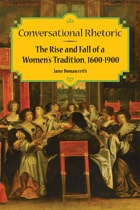
Conversational Rhetoric
The Rise and Fall of a Women's Tradition, 1600-1900Jane Donawerth
Southern Illinois University Press, 2011
Donawerth traces the development of women’s rhetorical theory through the voices of English and American women (and one much-translated French woman) over three centuries. She demonstrates how they cultivated theories of rhetoric centered on conversation that faded once women began writing composition textbooks for mixed-gender audiences in the latter part of the nineteenth century. She recovers and elucidates the importance of the theories in dialogues and defenses of women’s education by Bathsua Makin, Mary Astell, and Madeleine de Scudéry; in conduct books by Hannah More, Lydia Sigourney, and Eliza Farrar; in defenses of women’s preaching by Ellen Stewart, Lucretia Mott, Catherine Booth, and Frances Willard; and in elocution handbooks by Anna Morgan, Hallie Quinn Brown, Genevieve Stebbins, and Emily Bishop. In each genre, Donawerth explores facets of women’s rhetorical theory, such as the recognition of the gendered nature of communication in conduct books, the incorporation of the language of women’s rights in the defenses of women’s preaching, and the adaptation of sentimental culture to the cultivation of women’s bodies as tools of communication in elocution books.
Rather than a linear history, Conversational Rhetoric follows the starts, stops, and starting over in women’s rhetorical theory. It covers a broad range of women’s rhetorical theory in the Anglo-American world and places them in their social, rhetorical, and gendered historical contexts. This study adds women’s rhetorical theory to the rhetorical tradition, advances our understanding of women’s theories and their use of rhetoric, and offers a paradigm for analyzing the differences between men’s and women’s rhetoric from 1600 to 1900.
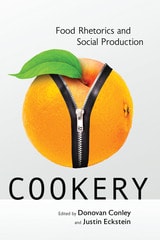
Cookery
Food Rhetorics and Social ProductionEdited by Donovan Conley and Justin Eckstein
University of Alabama Press, 2020
The rhetoric of contemporary food production and consumption with a focus on social boundaries
The rhetoric of food is more than just words about food, and food is more than just edible matter. Cookery: Food Rhetorics and Social Production explores how food mediates both rhetorical influence and material life through the overlapping concepts of invention and production. The classical canon of rhetorical invention entails the process of discovering one’s persuasive appeals, whereas the contemporary landscape of agricultural production touches virtually everyone on the planet. Together, rhetoric and food shape the boundaries of shared living.
The essays in this volume probe the many ways that food informs contemporary social life through its mediation of bodies—human and extra-human alike—in the forms of intoxication, addiction, estrangement, identification, repulsion, and eroticism. Our bodies, in turn, shape the boundaries of food through research, technology, cultural trends, and, of course, by talking about it.
Each chapter explores food’s persuasive nature through a unique prism that includes intoxication, dirt, “food porn,” strange foods, and political “invisibility.” Each case offers new insights about the relations between rhetorical influence and embodied practice through food. As a whole Cookery articulates new ways of viewing food’s powers of persuasion, as well as the inherent role of persuasion in agricultural production.
The purpose of Cookery, then, is to demonstrate the deep rhetoricity of our modern industrial food system through critical examinations of concepts, practices, and tendencies endemic to this system. Food has become an essential topic for discussions concerned with the larger social dynamics of production, distribution, access, reception, consumption, influence, and the fraught question of choice. These questions about food and rhetoric are equally questions about the assumptions, values, and practices of contemporary public life.
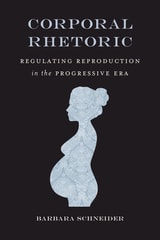
Corporal Rhetoric
Regulating Reproduction in the Progressive EraBarbara Schneider
University of Alabama Press, 2021
Examines public discourse from the Progressive Era over the state’s right to regulate women’s bodies and their reproduction
When Justice Oliver Wendell Holmes determined in 1927 that sterilization was a legitimate means of safeguarding the nation’s health, he was asserting the state’s right to regulate the production of the national body. His opinion represented a culmination of arguments about reproduction and immigration that had been circulating for years but that intensified during the Progressive Era. Arguments about reproductive and immigration practices surged to the foreground, and tectonic shifts in the conceptual schemes and practices of reproduction in the United States followed.
Drawing on feminist historiography and genre studies, Corporal Rhetoric: Regulating Reproduction in the Progressive Era explores the rhetoric of medical research, new technologies, and material practices that shifted the idea of childbirth as an act of God or Nature to a medical procedure enacted by male physicians on the bodies of women made passive by both drugs and discourse. Barbara Schneider considers how efficiency, the hallmark of scientific management, was raised to a cardinal virtue by its inclusions in the powerful mediums of presidential speeches, national educational policies, and eugenics discourse to reclassify babies, long regarded as gifts, as either valuable assets or defective products.
Schneider shows how the legal system drew upon medicine, scientific management, and the emerging discipline of sociology to restrict women’s labor in order to preserve reproductive capacity, categorized by Supreme Court opinions as a public good rather than a private capacity. Throughout, she ties the arguments developed during this era to current debates about mothering rhetorics, reproductive rights, immigration, and conceptions of the nation.
By weaving together medical research reports, clinical practices, case studies, legal opinions and legislative acts, and the epistemology of scientific management, Schneider illuminates the network that women such as Margaret Sanger, Jane Addams, Lillian Gilbreth and multiple others negotiated as they sought to give women room to exercise their reproductive capacity. Through her analysis of the machinery of these discourses and the material uptake of their genres in the daily practices of reproductive bodies, Schneider offers a provisional theory of corporal rhetoric that begins to answer the call for a new material theory of the body.
Cosmopolitan English and Transliteracy
Xiaoye You
Southern Illinois University Press, 2016
Despite the vast number of multilingual speakers in the United States and the pervasive influence of globalization, writing studies in this country is still inextricably linked to a nationalistic, monolingual English ideology. In Cosmopolitan English and Transliteracy, Xiaoye You addresses this issue by proposing that writing studies programs adopt a cosmopolitan perspective. Emphasizing local and global forms of citizenship and identification, You merges a humanistic vision with the rigor of social science, arguing that linguistic and cultural differences can be explored to recover human connections normally severed by geographical and semiotic borders.
You examines several areas of writing affected by globalization. He then turns to the composition classroom, highlighting the challenges and possibilities of crossing cultural boundaries in academic discourse before introducing a pedagogy aimed at fostering American students’ translingual and transcultural sensibilities. Included is a model for training writing teachers in the context of globalization, which aims to help instructors gain practical knowledge about the needs and resources of multilingual writers through communication technologies and cross-cultural partnerships.
By introducing cosmopolitan perspectives into the composition classroom, You challenges traditional assumptions about language, identity, and literacy as they relate to writing studies. Innovative and provocative, Cosmopolitan English and Transliteracy charts a new way forward for writing programs, with a call to focus on global rather than national identity.
CounterStories from the Writing Center
Frankie Condon
Utah State University Press, 2021
Practicing what Derrick Bell has termed “creative truth telling,” these writers are not concerned with individual white women in writing centres but with the social, political, and cultural capital that is the historical birthright of white, straight, cis-gendered women, particularly in writing centre studies. The essays collected in this volume test, defy, and overflow the bounds of traditional academic discourse in the service of powerful testimony, witness, and counterstory.
CounterStories from the Writing Center is a must-read for writing centre directors, scholars, and tutors who are committed to antiracist pedagogy and offers a robust intersectional analysis to those who seek to understand the relationship between the work of writing centres and the problem of racism. Accessible and usable for both graduate and undergraduate students of writing centre theory and practice, this work troubles the field’s commonplaces and offers a rich envisioning of what writing centres materially committed to inclusion and equity might be and do.
Contributors: Dianna Baldwin, Nicole Caswell, Mitzi Ceballos, Romeo Garcia, Neisha-Anne Green, Doug Kern, T. Haltiwanger Morrison, Bernice Olivas, Moira Ozias, Trixie Smith, Willow Trevino
Countermemory
A Rhetoric of ResistanceApril L. O'Brien and James Chase Sanchez
University of Alabama Press, 2025
Investigates the interdisciplinary dimensions of countermemory through a rhetorical lens
Countermemory: A Rhetoric of Resistance by April L. O’Brien and James Chase Sanchez is a groundbreaking monograph that explores the concept of countermemory from an interdisciplinary and rhetorical perspective. The authors define “countermemory” as remembrance that resituates often overlooked or erased narratives of marginalized groups by positioning these memories as equally significant to dominant historical narratives. This work investigates how countermemories emerge in response to public memories, highlighting the tensions and resistance that arise when marginalized voices challenge mainstream historical accounts.
Through a mixed-methodological approach—incorporating site-based analysis, participant observation, textual analysis, and historiography—O’Brien and Sanchez examine countermemory in both physical and digital spaces. From memorial sites and museums to music videos, TV shows, and digital maps, they reveal the various ways countermemory operates and persists. The authors focus particularly on countermemory in the American South, centering on the experiences and histories of Black, Latinx, and Indigenous communities.
Countermemory is essential reading for scholars and students of rhetoric and public memory. The book also offers rich insights to readers who are passionate about addressing issues of racial inequality, people interested in examining their own experiences and the role they can play in promoting social change, and those interested in exploring the ways in which history is constructed and presented, and how marginalized perspectives are often excluded or distorted.
Courting the Abyss
Free Speech and the Liberal TraditionJohn Durham Peters
University of Chicago Press, 2005
A mesmerizing account of the role of public communication in the Anglo-American world, Courting the Abyss shows that liberty's earliest advocates recognized its fraternal relationship with wickedness and evil. While we understand freedom of expression to mean "anything goes," John Durham Peters asks why its advocates so often celebrate a sojourn in hell and the overcoming of suffering. He directs us to such well-known sources as the prose and poetry of John Milton and the political and philosophical theory of John Locke, Adam Smith, John Stuart Mill, and Oliver Wendell Holmes Jr., as well as lesser-known sources such as the theology of Paul of Tarsus. In various ways they all, he shows, envisioned an attitude of self-mastery or self-transcendence as a response to the inevitable dangers of free speech, a troubled legacy that continues to inform ruling norms about knowledge, ethical responsibility, and democracy today.
A world of gigabytes, undiminished religious passion, and relentless scientific discovery calls for a fresh account of liberty that recognizes its risk and its splendor. Instead of celebrating noxious doctrine as proof of society's robustness, Courting the Abyss invites us to rethink public communication today by looking more deeply into the unfathomable mystery of liberty and evil.
Craft Obsession
The Social Rhetorics of BeerJeff Rice
Southern Illinois University Press, 2016
Rice weaves together theories of writing, narrative, new media, and rhetoric with a personal story of his passion for craft beer. He identifies six key elements of social media rhetoric—anecdotes, repetition, aggregation, delivery, sharing, and imagery—and examines how each helps to transform small, personal experiences with craft into a more widespread movement. When shared via social media, craft anecdotes—such as the first time one had a beer—interrupt and repeat one another, building a sense of familiarity and identity among otherwise unconnected people. Aggregation, the practice of joining unlike items into one space, builds on this network identity, establishing a connection to particular brands or locations, both real and virtual. The public releases of craft beers are used to explore the concept of craft delivery, which involves multiple actors across multiple spaces and results in multiple meanings. Finally, Rice highlights how personal sharing operates within the community of craft beer enthusiasts, who share online images of acquiring, trading for, and consuming a wide variety of beers. These shared stories and images, while personal for each individual, reflect the dependence of craft on systems of involvement. Throughout, Rice relates and reflects on his own experience as a craft beer enthusiast and his participation via social media in these systems.
Both an objective scholarly study and an engaging personal narrative about craft beer, Craft Obsession provides valuable insights into digital writing, storytelling, and social media.
Crafting Compositions
Tools for Today's WritersJanet Giannotti
University of Michigan Press, 2004
The textbook features:
"Authentic readings to foster vocabulary development, show successful techniques, and serve as a jumping-off point for free writing.
"A "learning log" in which students write to practice the writing lessons and tips presented.
"A two-track system in which students simultaneously work with the writing of other students as they work on their own compositions.
"Toolbox mini-lessons to review common grammar trouble spots.
This mid-level writing text is appropriate for high school, community college, or university course
Crafting Equality
America's Anglo-African WordCeleste Michelle Condit and John Louis Lucaites
University of Chicago Press, 1993
Drawing upon little studied speeches, newspapers, magazines, and other public discourse, Condit and Lucaites survey the shifting meaning of equality from 1760 to the present as a process of interaction and negotiation among different social groups in American politics and culture. They make a powerful case for the critical role of black Americans in actively shaping what equality has come to mean in our political conversation by chronicling the development of an African-American rhetorical community. The story they tell supports a vision of equality that embraces both heterogeneity and homogeneity as necessary for maintaining the balance between liberty and property.
A compelling revision of an important aspect of America's history, Crafting Equality will interest anyone wanting to better understand the role public discourse plays in affecting the major social and political issues of our times. It will also interest readers concerned with the relationship between politics and culture in America's increasingly multi-cultural society.
Crafting Presence
The American Essay and the Future of Writing StudiesNicole B. Wallack
Utah State University Press, 2016
Wallack analyzes examples drawn primarily from volumes of The Best American Essays to illuminate the most important quality of the essay as a literary form: the writer’s “presence.” She demonstrates how accounting for presence provides a flexible and rigorous heuristic for reading the contexts, formal elements, and purposes of essays. Such readings can help students learn writing principles, practices, and skills for crafting myriad presences rather than a single voice.
Crafting Presence holds serious implications for writing pedagogy by providing new methods to help teachers and students become more insightful and confident readers and writers of essays. At a time when liberal arts education faces significant challenges, this important contribution to literary studies, composition, and creative writing shows how an essay-centered curriculum empowers students to show up in the world as public thinkers who must shape the “knowledge economy” of the twenty-first century.
Creating Conservatism
Postwar Words that Made an American MovementMichael J. Lee
Michigan State University Press, 2014
Creating Contexts
Writing Introductions across GenresChristine B. Feak & John M. Swales
University of Michigan Press, 2011
Research article introductions are central to Creating Contexts: Writing across Genres with the CaRS (creating a research space) model used as a starting point. This volume focuses on introductions for other kinds of texts that are also part of the graduate student writing experience such as course papers and critiques, proposals, and dissertations.
This volume represents a revision and expansion of the material on introductions that appeared in English in Today's Research World.
The material presented in this volume is appropriate for graduate students and others already working in their chosen academic fields. The material has, in fact, been used with each of these groups in both writing courses and writing workshops. We believe that the material would also be suitable for those wishing to pursue a course of self-study. To target these different possible uses, we have included a variety of topics and tasks that we hope will deepen users’ understanding of how to create a writing context for their work. Tasks range from evaluating text commentaries to open-ended questions and have been designed to generate lively classroom or workshop discussion as well as thoughtful consideration by an individual user.
Creative Writing Pedagogies for the Twenty-First Century
Edited by Alexandria Peary and Tom C. Hunley
Southern Illinois University Press, 2015
Drawing primarily from the field of composition studies—a discipline rich with a wide range of established pedagogies—the contributors in this volume build on previous models to present fresh and inventive methods for the teaching of creative writing. Each chapter offers both a theoretical and a historical background for its respective pedagogical ideas, as well as practical applications for use in the classroom. This myriad of methods can be used either as a supplement to the customary workshop model or as stand-alone roadmaps to engage and reinvigorate the creative process for both students and teachers alike.
A fresh and inspiring collection of teaching methods, Creative Writing Pedagogies for the Twenty-First Century combines both conventional and cutting-edge techniques to expand the pedagogical possibilities in creative writing studies.
Critical Academic Writing and Multilingual Students
A. Suresh Canagarajah
University of Michigan Press, 2002
This volume facilitates teacher self-reflection and enables readers to better understand the motivations and pedagogical implications--especially for L2 writing--of a more openly pedagogical approach.
Critical Academic Writing and Multilingual Students explains what it means to commit to an academic pedagogy, in terms of form, self, content, and community--and what it can accomplish in the L2 writing classroom. It's a guide for writing teachers who wish to embark on a journey toward increased critical awareness of the role they play, or potentially could play, in the lives of their students.
Critical Data Storytelling in the Composition Classroom
Angela Laflen
Utah State University Press, 2025
At the heart of Laflen’s approach is critical data storytelling—a practice that equips students with the skills to understand, interpret, and ethically communicate with and about data through various multimodal formats. By teaching students to make informed decisions as data storytellers, Laflen addresses the ethical implications of working with data while offering practical strategies for reading and analyzing data stories. This approach empowers both students and teachers to engage critically with data as a tool for learning and communication. It also highlights how multimodal composition has yet to fully account for the central role of data in shaping contemporary communication and argumentation.
By focusing on the ethical and rhetorical dimensions of data storytelling, Critical Data Storytelling in the Composition Classroompresents a pedagogical approach that prepares students for the challenges of working with data in a rapidly evolving digital landscape. This flexible, adaptable model for teaching critical data literacy is of great interest to writing instructors, scholars in rhetoric and composition, and educators who seek to prepare students for the demands of a data-driven world.
Critical Transitions
Writing and the Question of TransferChris M Anson
University Press of Colorado, 2017
Contributors: Linda Adler-Kassner, Chris M. Anson, Stuart Blythe, Scott Chien-Hsiung Chiu, Irene Clark, Nicolette Mercer Clement, Stacey M. Cozart, Gita DasBender, Christiane Donahue, Dana Lynn Driscoll, Dana R. Ferris, Gwen Gorzelsky, Regina A. McManigell Grijalva, Carol Hayes, Hogan Hayes, Tine Wirenfeldt Jensen, Ed Jones, Ketevan Kupatadze, Jessie L. Moore, Joe Paszek, Donna Qualley, Liane Robertson, Paula Rosinski, Kara Taczak, Elizabeth Wardle, Carl Whithaus, Gitte Wichmann-Hansen, Kathleen Blake Yancey
Critical Understanding
The Powers and Limits of PluralismWayne C. Booth
University of Chicago Press, 1979
Cross-Language Relations in Composition
Edited by Bruce Horner, Min-Zhan Lu, and Paul Kei Matsuda
Southern Illinois University Press, 2010
Cross-Language Relations in Composition brings together the foremost scholars in the fields of composition, second language writing, education, and literacy studies to address the limitations of the tacit English-only policy prevalent in composition pedagogy and research and to suggest changes for the benefit of writing students and instructors throughout the United States. Recognizing the growing linguistic diversity of students and faculty, the ongoing changes in the English language as a result of globalization, and the increasingly blurred categories of native, foreign, and second language English speakers, editors Bruce Horner, Min-Zhan Lu, and Paul Kei Matsuda have compiled a groundbreaking anthology of essays that contest the dominance of English monolingualism in the study and teaching of composition and encourage the pursuit of approaches that embrace multilingualism and cross-language writing as the norm for teaching and research.
The nine chapters comprising part 1 of the collection focus on the origins of the “English only” bias dominating U.S. composition classes and present alternative methods of teaching and research that challenge this monolingualism. In part 2, nine composition teachers and scholars representing a variety of theoretical, institutional, and professional perspectives propose new, compelling, and concrete ways to understand and teach composition to students of a “global,” plural English, a language evolving in a multilingual world.
Drawing on recent theoretical work on genre, complexity, performance and identity, as well as postcolonialism, Cross-Language Relations in Composition offers a radically new approach to composition teaching and research, one that will prove invaluable to all who teach writing in today’s multilingual college classroom.
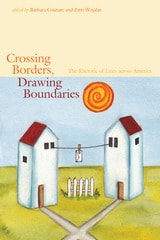
Crossing Borders, Drawing Boundaries
The Rhetoric of Lines across AmericaBarbara Couture
Utah State University Press, 2016
With growing anxiety about American identity fueling debates about the nation’s borders, ethnicities, and languages, Crossing Borders, Drawing Boundaries provides a timely and important rhetorical exploration of divisionary bounds that divide an Us from a Them. The concept of “border” calls for attention, and the authors in this collection respond by describing it, challenging it, confounding it, and, at times, erasing it.
Motivating us to see anew the many lines that unite, divide, and define us, the essays in this volume highlight how discourse at borders and boundaries can create or thwart conditions for establishing identity and admitting difference. Each chapter analyzes how public discourse at the site of physical or metaphorical borders presents or confounds these conditions and, consequently, effective participation—a key criterion for a modern democracy. The settings are various, encompassing vast public spaces such as cities and areas within them; the rhetorical spaces of history books, museum displays, activist events, and media outlets; and the intimate settings of community and classroom conversations.
Crossing Borders, Drawing Boundaries shows how rich communication can be when diverse cultures intersect and create new opportunities for human connection, even while different populations, cultures, age groups, and political parties adopt irreconcilable positions. It will be of interest to scholars in rhetoric and literacy studies and students in rhetorical analysis and public discourse.
Contributors include Andrea Alden, Cori Brewster, Robert Brooke, Randolph Cauthen, Jennifer Clifton, Barbara Couture, Vanessa Cozza, Anita C. Hernández, Roberta J. Herter, Judy Holiday, Elenore Long, José A. Montelongo, Karen P. Peirce, Jonathan P. Rossing, Susan A. Schiller, Christopher Schroeder, Tricia C. Serviss, Mónica Torres, Kathryn Valentine, Victor Villanueva, and Patti Wojahn.
Crossing Divides
Exploring Translingual Writing Pedagogies and ProgramsBruce Horner
Utah State University Press, 2017
Translingualism perceives the boundaries between languages as unstable and permeable; this creates a complex challenge for writing pedagogy. Writers shift actively among rhetorical strategies from multiple languages, sometimes importing lexical or discoursal tropes from one language into another to introduce an effect, solve a problem, or construct an identity. How to accommodate this reality while answering the charge to teach the conventions of one language can be a vexing problem for teachers. Crossing Divides offers diverse perspectives from leading scholars on the design and implementation of translingual writing pedagogies and programs.
The volume is divided into four parts. Part 1 outlines methods of theorizing translinguality in writing and teaching. Part 2 offers three accounts of translingual approaches to the teaching of writing in private and public colleges and universities in China, Korea, and the United States. In Part 3, contributors from four US institutions describe the challenges and strategies involved in designing and implementing a writing curriculum with a translingual approach. Finally, in Part 4, three scholars respond to the case studies and arguments of the preceding chapters and suggest ways in which writing teachers, scholars, and program administrators can develop translingual approaches within their own pedagogical settings.
Illustrated with concrete examples of teachers’ and program directors’ efforts in a variety of settings, as well as nuanced responses to these initiatives from eminent scholars of language difference in writing, Crossing Divides offers groundbreaking insight into translingual writing theory, practice, and reflection.
Contributors: Sara Alvarez, Patricia Bizzell, Suresh Canagarajah, Dylan Dryer, Chris Gallagher, Juan Guerra, Asao B. Inoue, William Lalicker, Thomas Lavelle, Eunjeong Lee, Jerry Lee, Katie Malcolm, Kate Mangelsdorf, Paige Mitchell, Matt Noonan, Shakil Rabbi, Ann Shivers-McNair, Christine M. Tardy
Cultivating Ecologies for Digital Media Work
The Case of English StudiesCatherine C. Braun
Southern Illinois University Press, 2014
Braun’s in-depth study documents English professors and the challenges they face in both career and classroom as they attempt to gain appropriate value for digital teaching and creation within their field, departments, and institutions. Braun proposes that to move English studies into the future, three main questions must be addressed. First, what counts as a text? How should we approach the reading of texts? Finally, how should we approach the production of texts? In addition to reconsidering the nature of texts in English studies, she calls for crucial changes in higher-education institutional procedures themselves, including new methods of evaluating digital scholarship on an even playing field with other forms of work during the processes for promotion and tenure.
With insightful expertise, Braun analyzes how the new age of digital scholarship not only complements the traditional values of the English studies discipline but also offers constructive challenges to old ideas about texts, methods, and knowledge production. Cultivating Ecologies for Digital Media Work is the first volume to offer specific examination of the digital shift’s impact on English studies and provides the scaffold upon which productive conversations about the future of the field and digital pedagogy can be built.
Culturally Speaking
The Rhetoric of Voice and Identity in a Mediated CultureAmanda Nell Edgar
The Ohio State University Press, 2019
Recent pieces by NPR, the BBC, and Forbes have called attention to the power of voice—positing that “your voice is the secret to getting hired” and that “voice can accelerate or hold back a career.” While it has become clearer that such things as pitch and intonation can be tied to assumptions about one’s gender, race/ethnicity, and class, studying voice as a socially constructed artifact carries with it unique challenges. In response, Culturally Speaking: The Rhetoric of Voice and Identity in a Mediated Culture presents an innovative approach to studying the spoken voice in media, showing how racial and gendered oppression bubble beneath the surface of American culture’s most recognized speaking voices, spreading invisible messages about which kinds of vocal identities are privileged and which kinds should be silenced.
Through her analysis of prominent voices in American culture—including Morgan Freeman, Tina Fey, Barack Obama, Adele, Dave Chappelle, Richard Pryor, and George Lopez—Amanda Nell Edgar argues that voices carry a residue of the particular cultural environments in which they are formed, and that these environments can be traced and analyzed to add a sonic dimension to our understanding of race and gender as rhetorically situated identities—pushing back against the often-unnoticed systems of sound-based discrimination.
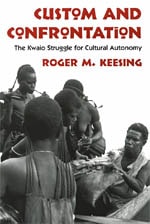
Custom and Confrontation
The Kwaio Struggle for Cultural AutonomyRoger M. Keesing
University of Chicago Press, 1992
"A major contribution to the ethnography and history of Malaita and Melanesia, and to the growing literature on cultural resistance. But above all, his humane and painful analysis of the meeting of peoples living in different worlds and constructing their agendas and moralities on incommensurate—and apparently equally arbitrary—principles, represents a major contribution and challenge to anthropological thought, addressing the basic issue of what it is to be human."—Fredrik Barth