Results by title
22279 books match the query 'Social Science' and 1700 start with c

Companion Spirits
More-Than-Secular Journeys in More-Than-Human WorldsMayanthi L. Fernando
Duke University Press, 2027
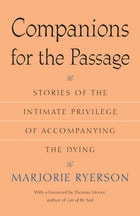
Companions for the Passage
Stories of the Intimate Privilege of Accompanying the DyingMarjorie Ryerson
University of Michigan Press, 2005
Some of the interviewees are religious, some not; some encouraged their loved ones to accept death, others to fight it to the end. There are stories of heroic nurses and of indifferent hospital bureaucracies, of deaths that came too soon, and those that came at the end of a long, rich life. Possessing an affirmative quality that is anything but sentimental, ultimately these stories celebrate the experience of being present at the death of a loved one.
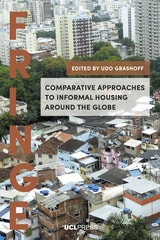
Comparative Approaches to Informal Housing Around the Globe
Edited by Udo Grashoff
University College London, 2020
The contributors to Comparative Approaches to Informal Housing Around the Globe engage with a sweeping variety of topics and contribute specialist knowledge from Africa, Asia, Australia, the Middle East, North and South America, and Eastern and Western Europe. Bringing together such a wide range of authors and subjects demonstrates the power of comparative research to open new perspectives.
Comparative Arawakan Histories
Rethinking Language Family and Culture Area in AmazoniaEdited by Jonathan D. Hill and Fernando Santos-Granero
University of Illinois Press, 2002
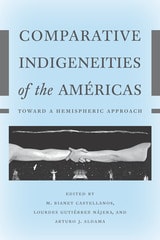
Comparative Indigeneities of the Américas
Toward a Hemispheric ApproachEdited by M. Bianet Castellanos, Lourdes Gutiérrez Nájera, and Arturo J. Aldama
University of Arizona Press, 2012
The effects of colonization on the Indigenous peoples of the Américas over the past 500 years have varied greatly. So too have the forms of resistance, resilience, and sovereignty. In the face of these differences, the contributors to this volume contend that understanding the commonalities in these Indigenous experiences will strengthen resistance to colonial forces still at play. This volume marks a critical moment in bringing together transnational and interdisciplinary scholarship to articulate new ways of pursuing critical Indigenous studies.
Comparative Indigeneities of the Américas highlights intersecting themes such as indigenísmo, mestizaje, migration, displacement, autonomy, sovereignty, borders, spirituality, and healing that have historically shaped the experiences of Native peoples across the Américas. In doing so, it promotes a broader understanding of the relationships between Native communities in the United States and Canada and those in Latin America and the Caribbean and invites a hemispheric understanding of the relationships between Native and mestiza/o peoples.
Through path-breaking approaches to transnational, multidisciplinary scholarship and theory, the chapters in this volume advance understandings of indigeneity in the Américas and lay a strong foundation for further research. This book will appeal to scholars and students in the fields of anthropology, literary and cultural studies, history, Native American and Indigenous studies, women and gender studies, Chicana/o studies, and critical ethnic studies.
Ultimately, this deeply informative and empowering book demonstrates the various ways that Indigenous and mestiza/o peoples resist state and imperial attempts to erase, repress, circumscribe, and assimilate them.

Comparative Media Policy, Regulation and Governance in Europe
Unpacking the Policy CycleEdited by Leen d’Haenens, Helena Sousa, and Josef Trappel
Intellect Books, 2018
Comparative Media Systems
European and Global PerspectivesMiklós Sükösd
Central European University Press, 2010
Comparative Textual Media
Transforming the Humanities in the Postprint EraN. Katherine Hayles
University of Minnesota Press, 2013
For the past few hundred years, Western cultures have relied on print. When writing was accomplished by a quill pen, inkpot, and paper, it was easy to imagine that writing was nothing more than a means by which writers could transfer their thoughts to readers. The proliferation of technical media in the latter half of the twentieth century has revealed that the relationship between writer and reader is not so simple. From telegraphs and typewriters to wire recorders and a sweeping array of digital computing devices, the complexities of communications technology have made mediality a central concern of the twenty-first century.
Despite the attention given to the development of the media landscape, relatively little is being done in our academic institutions to adjust. In Comparative Textual Media, editors N. Katherine Hayles and Jessica Pressman bring together an impressive range of essays from leading scholars to address the issue, among them Matthew Kirschenbaum on archiving in the digital era, Patricia Crain on the connection between a child’s formation of self and the possession of a book, and Mark Marino exploring how to read a digital text not for content but for traces of its underlying code.
Primarily arguing for seeing print as a medium along with the scroll, electronic literature, and computer games, this volume examines the potential transformations if academic departments embraced a media framework. Ultimately, Comparative Textual Media offers new insights that allow us to understand more deeply the implications of the choices we, and our institutions, are making.
Contributors: Stephanie Boluk, Vassar College; Jessica Brantley, Yale U; Patricia Crain, NYU; Adriana de Souza e Silva, North Carolina State U; Johanna Drucker, UCLA; Thomas Fulton, Rutgers U; Lisa Gitelman, New York U; William A. Johnson, Duke U; Matthew G. Kirschenbaum, U of Maryland; Patrick LeMieux; Mark C. Marino, U of Southern California; Rita Raley, U of California, Santa Barbara; John David Zuern, U of Hawai‘i at Mānoa.
Comparing Impossibilities
Selected Essays of Sally Falk MooreSally Falk Moore
HAU, 2016
The essays range from studies of myths of incest and sexuality to those of economic development projects, from South America to Africa. The result is an astonishing assortment of works from one of the most respected legal anthropologists in the field, one who brought together disparate places and ideas in enriching comparisons that showcase the possibilities—and impossibilities—of anthropology.

Comparing Jewish Societies
Todd M. Endelman, Editor
University of Michigan Press, 1997
Comparing Muslim Societies
Knowledge and the State in a World CivilizationJuan R. I. Cole, Editor
University of Michigan Press, 1992
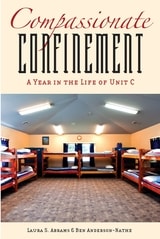
Compassionate Confinement
A Year in the Life of Unit CAbrams, Laura S.
Rutgers University Press, 2013
Received an Honorable Mention for the 2015 Society for Social Work and Research Outstanding Social Work Book Award
To date, knowledge of the everyday world of the juvenile correction institution has been extremely sparse. Compassionate Confinement brings to light the challenges and complexities inherent in the U.S. system of juvenile corrections. Building on over a year of field work at a boys’ residential facility, Laura S. Abrams and Ben Anderson-Nathe provide a context for contemporary institutions and highlight some of the system’s most troubling tensions.
This ethnographic text utilizes narratives, observations, and case examples to illustrate the strain between treatment and correctional paradigms and the mixed messages regarding gender identity and masculinity that the youths are expected to navigate. Within this context, the authors use the boys’ stories to show various and unexpected pathways toward behavior change. While some residents clearly seized opportunities for self-transformation, others manipulated their way toward release, and faced substantial challenges when they returned home.
Compassionate Confinement concludes with recommendations for rehabilitating this notoriously troubled system in light of the experiences of its most vulnerable stakeholders.
Compañeros
Latino Activists in the Face of AIDSJesus Ramirez-Valles
University of Illinois Press, 2011
Compelling Belief
The Culture of American SchoolingStephen Arons
University of Massachusetts Press, 1986

Compendium of General Sociology
Vilfredo Pareto
University of Minnesota Press, 1980
Competence and Character through Life
Edited by Anne Colby, Jacquelyn Boone James, and Daniel Hart
University of Chicago Press, 1998
In this collection, leading psychologists, sociologists, and criminologists highlight the potential for positive development in different domains. By positing the possibility of multiple pathways of development rather than a single universal sequence, the contributors view the individual as potentially advancing in a wide range of interrelated and overlapping competencies. The nine essays in the book cover the years from youth to middle age, and they examine a range of social, political, and moral components of "competence and character" from teenage pregnancy and life-planning skills to voting records and educational attainment in low income households. Unlike comparable studies, this original and comprehensive volume frames issues, events, and longitudinal data through the lens of possibility rather than the pathology of defeat, stressing a positive approach to our conception of human potential.
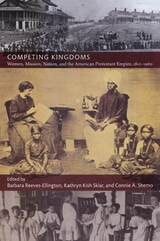
Competing Kingdoms
Women, Mission, Nation, and the American Protestant Empire, 1812–1960Barbara Reeves-Ellington, Kathryn Kish Sklar, and Connie A. Shemo, eds.
Duke University Press, 2010
An international and interdisciplinary group of scholars, the contributors bring under-utilized evidence from U.S. and non-U.S. sources to bear on the study of American women missionaries abroad and at home. Focusing on women from several denominations, they build on the insights of postcolonial scholarship to incorporate the agency of the people among whom missionaries lived. They explore how people in China, the Congo Free State, Egypt, India, Japan, Ndebeleland (colonial Rhodesia), Ottoman Bulgaria, and the Philippines perceived, experienced, and negotiated American cultural expansion. They also consider missionary work among people within the United States who were constructed as foreign, including African Americans, Native Americans, and Chinese immigrants. By presenting multiple cultural perspectives, this important collection challenges simplistic notions about missionary cultural imperialism, revealing the complexity of American missionary attitudes toward race and the ways that ideas of domesticity were reworked and appropriated in various settings. It expands the field of U.S. women’s history into the international arena, increases understanding of the global spread of American culture, and offers new concepts for analyzing the history of American empire.
Contributors: Beth Baron, Betty Bergland, Mary Kupiec Cayton, Derek Chang, Sue Gronewold, Jane Hunter, Sylvia Jacobs, Susan Haskell Khan, Rui Kohiyama, Laura Prieto, Barbara Reeves-Ellington, Mary Renda, Connie A. Shemo, Kathryn Kish Sklar, Ian Tyrrell, Wendy Urban-Mead
Competing Norms
State Regulations and Local Praxis in sub-Saharan AfricaEdited by Mamadou Diawara and Ute Röschenthaler
Campus Verlag, 2016
Competing Responsibilities
The Ethics and Politics of Contemporary LifeSusanna Trnka and Catherine Trundle, editors
Duke University Press, 2017
Contributors
Barry D. Adam, Elizabeth Anne Davis, Filippa Lentzos, Jessica Robbins-Ruszkowski, Nikolas Rose, Rosalind Shaw, Cris Shore, Jessica M. Smith, Susanna Trnka, Catherine Trundle, Jarrett Zigon
Competition and Cooperation
Conversations with Nobelists about Economics and Political ScienceJames Alt
Russell Sage Foundation, 1999
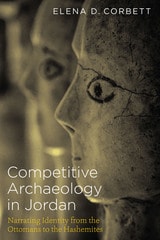
Competitive Archaeology in Jordan
Narrating Identity from the Ottomans to the HashemitesBy Elena D. Corbett
University of Texas Press, 2015
An examination of archaeology in Jordan and Palestine, Competitive Archaeology in Jordan explores how antiquities have been used to build narratives and national identities. Tracing Jordanian history, and the importance of Jerusalem within that history, Corbett analyzes how both foreign and indigenous powers have engaged in a competition over ownership of antiquities and the power to craft history and geography based on archaeological artifacts. She begins with the Ottoman and British Empires—under whose rule the institutions and borders of modern Jordan began to take shape—asking how they used antiquities in varying ways to advance their imperial projects. Corbett continues through the Mandate era and the era of independence of an expanded Hashemite Kingdom, examining how the Hashemites and other factions, both within and beyond Jordan, have tried to define national identity by drawing upon antiquities.
Competitive Archaeology in Jordan traces a complex history through the lens of archaeology’s power as a modern science to create and give value to spaces, artifacts, peoples, narratives, and academic disciplines. It thus considers the role of archaeology in realizing Jordan’s modernity—drawing its map; delineating sacred and secular spaces; validating taxonomies of citizens; justifying legal frameworks and institutions of state; determining logos of the nation for display on stamps, currency, and in museums; and writing history. Framing Jordan’s history in this way, Corbett illustrates the manipulation of archaeology by governments, institutions, and individuals to craft narratives, draw borders, and create national identities.
Complacency and Collusion
A Critical Introduction to Business and Financial JournalismKeith J. Butterick
Pluto Press, 2015

Complaint!
Sara Ahmed
Duke University Press, 2021
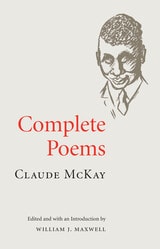
Complete Poems
Claude Mckay. Edited and with an Introduction by William J. Maxwell.
University of Illinois Press, 2003
Containing more than three hundred poems, including nearly a hundred previously unpublished works, this unique collection showcases the intellectual range of Claude McKay (1889-1948), the Jamaican-born poet and novelist whose life and work were marked by restless travel and steadfast social protest. McKay's first poems were composed in rural Jamaican creole and launched his lifelong commitment to representing everyday black culture from the bottom up. Migrating to New York, he reinvigorated the English sonnet and helped spark the Harlem Renaissance with poems such as "If We Must Die." After coming under scrutiny for his communism, he traveled throughout Europe and North Africa for twelve years and returned to Harlem in 1934, having denounced Stalin's Soviet Union. By then, McKay's pristine "violent sonnets" were giving way to confessional lyrics informed by his newfound Catholicism.
McKay's verse eludes easy definition, yet this complete anthology, vividly introduced and carefully annotated by William J. Maxwell, acquaints readers with the full transnational evolution of a major voice in twentieth-century poetry.
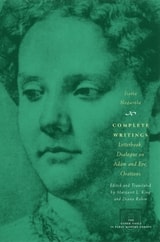
Complete Writings
Letterbook, Dialogue on Adam and Eve, OrationsIsotta Nogarola
University of Chicago Press, 2004
This volume presents English translations of all of Nogarola's extant works and highlights just how daring and original her convictions were. In her letters and orations, Nogarola elegantly synthesized Greco-Roman thought with biblical teachings. And striding across the stage in public, she lectured the Veronese citizenry on everything from history and religion to politics and morality. But the most influential of Nogarola's works was a performance piece, Dialogue on Adam and Eve, in which she discussed the relative sinfulness of Adam and Eve—thereby opening up a centuries-long debate in Europe on gender and the nature of woman and establishing herself as an important figure in Western intellectual history. This book will be a must read for teachers and students of Women's Studies as well as of Renaissance literature and history.
Complete in All Its Parts
Nursing Education at the University of Iowa, 1898-1998Lee Anderson and Kathy Penningroth
University of Michigan Press, 1998
Completing College
Rethinking Institutional ActionVincent Tinto
University of Chicago Press, 2012
Even as the number of students attending college has more than doubled in the past forty years, it is still the case that nearly half of all college students in the United States will not complete their degree within six years. It is clear that much remains to be done toward improving student success. For more than twenty years, Vincent Tinto’s pathbreaking book Leaving College has been recognized as the definitive resource on student retention in higher education. Now, with Completing College, Tinto offers administrators a coherent framework with which to develop and implement programs to promote completion.
Deftly distilling an enormous amount of research, Tinto identifies the essential conditions enabling students to succeed and continue on within institutions. Especially during the early years, he shows that students thrive in settings that pair high expectations for success with structured academic, social, and financial support, provide frequent feedback and assessments of their performance, and promote their active involvement with other students and faculty. And while these conditions may be worked on and met at different institutional levels, Tinto points to the classroom as the center of student education and life, and therefore the primary target for institutional action.
Improving retention rates continues to be among the most widely studied fields in higher education, and Completing College carefully synthesizes the latest research and, most importantly, translates it into practical steps that administrators can take to enhance student success.
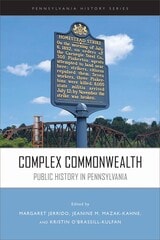
Complex Commonwealth
Public History in PennsylvaniaEdited by Margaret Jerrido, Jeanine M. Mazak-Kahne, and Kristin O'Brassill-Kulfan
Temple University Press, 2027
There are thousands of historic sites across Pennsylvania. The question of whose memories, what histories, and what local heritage deserve preservation has animated historians and communities for centuries. The editors and contributors to Complex Commonwealth provide a collection of accessible essays about public history in Pennsylvania that show how we have commemorated and preserved the state’s material culture, museums, monuments and memorials, parks, archives, libraries, and historic sites over centuries.
Chapters examine the Homestead Steel Strike, the Carlisle Indian School’s Digital Resource Center, and African American cemeteries and burial grounds, among other case studies. The methodologies these public historians use are as diverse as the various histories of labor, gender, religion, and race. It is by shedding light on these underseen histories that Complex Commonwealth affirms the importance of state and regional history to everyday Pennsylvanians.
Complex Commonwealth emphasizes the importance of place and space in shaping how we know what we know about the past and how that collectively shapes our future.
Contributors: Barbara Barksdale, Zachary L. Brodt, Steven Burg, Mary Catherine Foltz, Kelly C. George, James Gerencser, Alexandra Acri Godfrey, Kris Lowrey, Devin C. Manzullo-Thomas, Carol W. Smith, Frank Vitale IV, and the editors
Complex Communities
The Archaeology of Early Iron Age West-Central JordanBenjamin W. Porter
University of Arizona Press, 2013
These settlements emerged during a period of recovery following the political and economic collapse of Bronze Age Mediterranean societies. Scholars have characterized west-central Jordan’s political organization during this time as an incipient Moabite state. Complex Communities argues instead that the settlements were a collection of independent, self-organizing entities. Each community constructed substantial villages with fortifications, practiced both agriculture and pastoralism, and built and stocked storage facilities. From these efforts to produce and store resources, especially food, wealth was generated and wealthier households gained power over their neighbors. However, power was limited by the fact that residents could—and did—leave communities and establish new ones.
Complex Communities reveals that these settlements moved through adaptive cycles as they adjusted to a changing socionatural system. These sustainability-seeking communities have lessons to offer not only the archaeologists studying similar struggles in other locales, but also to contemporary communities facing negative climate change. Readers interested in resilience studies, Near Eastern archaeology, historical ecology, and the archaeology of communities will welcome this volume.
Complex Hunter Gatherers
Evolution Organization of Prehistoric Communities Plateau of Northwestern NAWilliam C Prentiss
University of Utah Press, 2004
The Plateau region of the Pacific Northwest witnessed the emergence, persistence, and decline of a diverse array of hunter-gatherer communities during the course of a past several thousand year period. Consequently, the region contains an archaeological record of groups who lived at times in permanent villages, employed complex resource procurement and processing strategies, participated in wide-ranging trade networks, and maintained social organizations featuring high degrees of social inequality.
Complex Hunter-Gatherers presents a broad synthesis of the archaeology of the Plateau, inclusive of the Columbia and Fraser-Thompson drainages. The contributors seek to further our understanding of the nature of prehistoric social organization, subsistence practices, and lifeways of those living on the Plateau, and to expand upon this foundation to understand the evolution and organization of complex hunter-gatherers in general.
Complex Systems and Archaeology
Bentley, Alexander & Maschner, Herbert
University of Utah Press, 2003
Complexity science transects many fields ranging from physics to economics to biology. Its focus is the study of systems of interacting factors, which has lately been extended to include behavior in human societies. In prehistoric societies, whether these agents are defined at the scale of individuals, groups, households, or villages all agents are connected in such a way that change in the actions of one affects many others.
Complex Systems and Archaeology presents a useful introduction to complexity theory followed by a series of case studies in which human societies and environments are viewed as open systems into and out of which matter or energy can flow. Examples of such systems include the introduction of new crops, the creation of new artifacts, or the flux of products in a market.
This volume will have important implications for how archaeologists understand the dynamics of culture change and how they think about chronological stages, unique events, and the role of human agents.
Complexities
Beyond Nature and NurtureEdited by Susan McKinnon and Sydel Silverman
University of Chicago Press, 2005
Complexities mobilizes experts from several fields of anthropology—cultural , archaeological, linguistic, and biological—to offer a compelling challenge to the resurgence of reductive theories of human biological and social life. This book presents evidence to contest such theories and to provide a multifaceted account of the complexity and variability of the human condition. Charting a course that moves beyond any simple opposition between nature and nurture, Complexities argues that a nonreductive perspective has important implications for how we understand and develop human potential.
Complexities
Social Studies of Knowledge PracticesJohn Law and Annemarie Mol, eds.
Duke University Press, 2002
Individual essays study complexity from a variety of perspectives, addressing market behavior, medical interventions, aeronautical design, the governing of supranational states, ecology, roadbuilding, meteorology, the science of complexity itself, and the psychology of childhood trauma. Other topics include complex wholes (holism) in the sciences, moral complexity in seemingly amoral endeavors, and issues relating to the protection of African elephants. With a focus on such concepts as multiplicity, partial connections, and ebbs and flows, the collection includes narratives from Kenya, Great Britain, Papua New Guinea, the Netherlands, France, and the meetings of the European Commission, written by anthropologists, economists, philosophers, psychologists, sociologists, and scholars of science, technology, and society.
Contributors. Andrew Barry, Steven D. Brown, Michel Callon, Chunglin Kwa, John Law, Nick Lee, Annemarie Mol, Marilyn Strathern, Laurent Thévenot, Charis Thompson
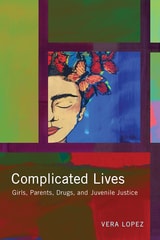
Complicated Lives
Girls, Parents, Drugs, and Juvenile JusticeLopez, Vera
Rutgers University Press, 2017
Complicated Lives focuses on the lives of sixty-five drug-using girls in the juvenile justice system (living in group homes, a residential treatment center, and a youth correctional facility) who grew up in families characterized by parental drug use, violence, and child maltreatment. Vera Lopez situates girls’ relationships with parents who fail to live up to idealized parenting norms and examines how these relationships change over time, and ultimately contribute to the girls’ future drug use and involvement in the justice system.
While Lopez’s subjects express concerns and doubt in their chances for success, Lopez provides an optimistic prescription for reform and improvement of the lives of these young women and presents a number of suggestions ranging from enhanced cultural competency training for all juvenile justice professionals to developing stronger collaborations between youth and adult serving systems and agencies.
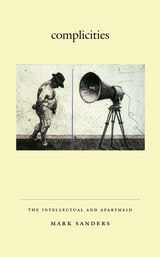
Complicities
The Intellectual and ApartheidMark Sanders
Duke University Press, 2002
Sanders gives detailed analyses of widely divergent thinkers: Afrikaner nationalist poet N. P. van Wyk Louw, Drum writer Bloke Modisane, Xhosa novelist A. C. Jordan, Afrikaner dissident Breyten Breytenbach, and Black Consciousness leader Steve Biko. Drawing on theorists including Derrida, Sartre, and Fanon, and paying particular attention to the linguistic intricacy of the literary and political texts considered, Sanders shows how complicity emerges as a predicament for intellectuals across the ideological and social spectrum. Through discussions of the colonial intellectuals Olive Schreiner and Sol T. Plaatje and of post-apartheid feminist critiques of the Truth and Reconciliation Commission, Complicities reveals how sexual difference joins with race to further complicate issues of collusion.
Complicities sheds new light on the history and literature of twentieth-century South Africa as it weighs into debates about the role of the intellectual in public life.
Composing Capital
Classical Music in the Neoliberal EraMarianna Ritchey
University of Chicago Press, 2019
Composing Capital
Classical Music in the Neoliberal EraMarianna Ritchey
University of Chicago Press, 2019
This is an auto-narrated audiobook edition of this book.
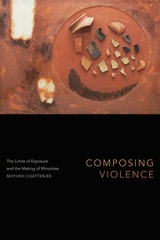
Composing Violence
The Limits of Exposure and the Making of MinoritiesMoyukh Chatterjee
Duke University Press, 2023
Composition and Cornel West
Notes toward a Deep DemocracyKeith Gilyard
Southern Illinois University Press, 2008
Composition and Cornel West: Notes toward a Deep Democracy identifies and explains key aspects of the work of Cornel West—the highly regarded scholar of religion, philosophy, and African American studies—as they relate to composition studies, focusing especially on three rhetorical strategies that West suggests we use in our questioning lives as scholars, teachers, students, and citizens.
In this study, author Keith Gilyard examines the strategies of Socratic Commitment (a relentless examination of received wisdom), Prophetic Witness (an abiding concern with justice and the plight of the oppressed), and Tragicomic Hope (a keep-on-pushing sensibility reflective of the African American freedom struggle). Together, these rhetorical strategies comprise an updated form of cultural criticism that West calls prophetic pragmatism.
This volume, which contains the only interview in which Cornel West directly addresses the field of composition,sketches the development of Cornel West’s theories of philosophy, political science, religion, and cultural studies and restates the link between Deweyan notions of critical intelligence and the notion of critical literacy developed by Ann Berthoff, Ira Shor, and Henry Giroux. Gilyard provides examples from the classroom to illustrate the possibilities of Socratic Commitment as part of composition pedagogy, shows the alignment of Prophetic Witness with traditional aims of critical composition, and in his chapter on Tragicomic Hope, addresses African American expressive culture with an emphasis on music and artists such as Curtis Mayfield, Marvin Gaye, Aretha Franklin, and Kanye West.
The first book to comprehensively connect the ideas of one of America's premier scholars of religion, philosophy and African American studies with composition theory and pedagogy, Composition and Cornel West will be valuable to scholars, teachers, and students interested in race, class, critical literacy, and the teaching of writing.
Compositional Subjects
Enfiguring Asian/American WomenLaura Hyun Yi Kang
Duke University Press, 2002
The book opens by tracking the jagged emergence of “Asian American women” as a distinct social identity over the past three decades. Kang then directs critical attention to how the attempts to compose them as discrete subjects of consciousness, visibility, and action demonstrate a broader, ongoing tension between socially particularized subjects and disciplinary knowledges. In addition to the shifting meanings and alignments of “Asian,” “American,” and “women,” the book examines the discourses, political and economic conditions, and institutional formations that have produced Asian/American women as generic authors, as visibly desirable and desiring bodies, as excludable aliens and admissible citizens of the United States, and as the proper labor for transnational capitalism. In analyzing how these enfigurations are constructed and apprehended through a range of modes including autobiography, cinematography, historiography, photography, and ethnography, Kang directs comparative attention to the very terms of their emergence as Asian/American women in specific disciplines.
Finally, Kang concludes with a detailed examination of selected literary and visual works by Korean women artists located in the United States and Canada, works that creatively and critically contend with the problematics of identification and representation that are explored throughout the book. By underscoring the forceful and contentious struggles that animate all of these compositional gestures, Kang proffers Asian/American women as a vexing and productive figure for cultural, political and epistemological critique.
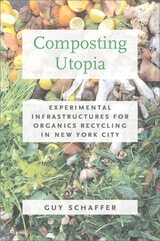
Composting Utopia
Experimental Infrastructures for Organics Recycling in New York CityGuy Schaffer
University of Massachusetts Press, 2023
New Yorkers generate millions of tons of trash annually, which, through the magic of infrastructure and one of the largest waste management systems in the world, disappears from city sidewalks each night. Under pressure from environmentalists, activists, policymakers, and industry, the New York City Department of Sanitation started exploring ways to divert organic material from the waste stream, and in 2013, launched its composting pilot program.
Drawing on three years of ethnographic fieldwork with community composters and microhaulers in New York City, alongside the rollout of the city’s curbside organics collection system, Composting Utopia describes how local, grassroots organizations intervened in the city’s waste system, enacting change and presenting an alternative vision of the composting city. As Guy Shaffer argues, movement-driven infrastructure projects develop new tools for organizing the world, give communities agency over urban design, and promote just sustainability.
Comprehending Columbine
Ralph W Larkin
Temple University Press, 2007
Comprehending Drug Use
Ethnographic Research at the Social MarginsPage, J. Bryan
Rutgers University Press, 2010
Computational Humanities
Jessica Marie Johnson
University of Minnesota Press, 2024
The first book to intervene in debates on computation in the digital humanities
Bringing together leading experts from across North America and Europe, Computational Humanities redirects debates around computation and humanities digital scholarship from dualistic arguments to nuanced discourse centered around theories of knowledge and power. This volume is organized around four questions: Why or why not pursue computational humanities? How do we engage in computational humanities? What can we study using these methods? Who are the stakeholders?
Recent advances in technologies for image and sound processing have expanded computational approaches to cultural forms beyond text, and new forms of data, from listservs and code repositories to tweets and other social media content, have enlivened debates about what counts as digital humanities scholarship. Providing case studies of collaborations between humanities-centered and computation-centered researchers, this volume highlights both opportunities and frictions, showing that data and computation are as much about power, prestige, and precarity as they are about p-values.
Contributors: Mark Algee-Hewitt, Stanford U; David Bamman, U of California, Berkeley; Kaspar Beelen, U of London; Peter Bell, Philipps U of Marburg; Tobias Blanke, U of Amsterdam; Julia Damerow, Arizona State U; Quinn Dombrowski, Stanford U; Crystal Nicole Eddins, U of Pittsburgh; Abraham Gibson, U of Texas at San Antonio; Tassie Gniady; Crystal Hall, Bowdoin College; Vanessa M. Holden, U of Kentucky; David Kloster, Indiana U; Manfred D. Laubichler, Arizona State U; Katherine McDonough, Lancaster U; Barbara McGillivray, King’s College London; Megan Meredith-Lobay, Simon Fraser U; Federico Nanni, Alan Turing Institute; Fabian Offert, U of California, Santa Barbara; Hannah Ringler, Illinois Institute of Technology; Roopika Risam, Dartmouth College; Joshua D. Rothman, U of Alabama; Benjamin M. Schmidt; Lisa Tagliaferri, Rutgers U; Jeffrey Tharsen, U of Chicago; Marieke van Erp, Royal Netherlands Academy of Arts and Sciences; Lee Zickel, Case Western Reserve U.

Computer Game Worlds
Claus Pias
Diaphanes, 2017
With Computer Game Worlds, Claus Pias sets out to answer these questions. Tracing computer games from their earliest forms to the unstoppable commercial and cultural phenomena they have become today, Pias then provides a careful epistemological reconstruction of the process of playing games, both at computers and by computers themselves. The book makes a valuable theoretical contribution to the ongoing discussion about computer games.
Computers, Surveillance, and Privacy
David Lyon and Elia Zureik, Editors
University of Minnesota Press, 1996
Computers, Surveillance, and Privacy was first published in 1996. Minnesota Archive Editions uses digital technology to make long-unavailable books once again accessible, and are published unaltered from the original University of Minnesota Press editions.
From computer networks to grocery store checkout scanners, it is easier and easier for governments, employers, advertisers, and individuals to gather detailed and sophisticated information about each of us. In this important new collection, the authors question the impact of these new technologies of surveillance on our privacy and our culture.
Although surveillance-literally some people "watching over" others-is as old as social relationships themselves, with the advent of the computer age this phenomenon has acquired new and distinctive meanings. Technological advances have made it possible for surveillance to become increasingly global and integrated-both commercial and government-related personal data flows more frequently across national boundaries, and the flow between private and public sectors has increased as well.
Addressing issues of the global integration of surveillance, social control, new information technologies, privacy violation and protection, and workplace surveillance, the contributors to Computers, Surveillance, and Privacy grapple with the ramifications of these concerns for society today. Timely and provocative, this collection will be of vital interest to anyone concerned with resistance to social control and incursions into privacy.
Contributors: Jonathan P. Allen, Colin J. Bennett, Simon G. Davies, Oscar H. Gandy Jr., Calvin C. Gotlieb, Rob Kling, Gary T. Marx, Abbe Mowshowitz, Judith A. Perrolle, Mark Poster, Priscilla M. Regan, James B. Rule.
David Lyon is professor of sociology at Queen's University, Canada. His previous books include The Electronic Eye: The Rise of Surveillance Society (Minnesota, 1994). Elia Zureik is also professor of sociology at Queen's University, Canada, and coedited (with Dianne Hartling) The Social Context of the New Information and Communication Technologies (1987).
Conceiving Cuba
Reproduction, Women, and the State in the Post-Soviet EraAndaya, Elise
Rutgers University Press, 2014
Winner of the Adele E. Clarke Book Award from ReproNetwork
After Cuba’s 1959 revolution, the Castro government sought to instill a new social order. Hoping to achieve a new and egalitarian society, the state invested in policies designed to promote the well-being of women and children. Yet once the Soviet Union fell and Cuba’s economic troubles worsened, these programs began to collapse, with serious results for Cuban families.
Conceiving Cuba offers an intimate look at how, with the island’s political and economic future in question, reproduction has become the subject of heated public debates and agonizing private decisions. Drawing from several years of first-hand observations and interviews, anthropologist Elise Andaya takes us inside Cuba’s households and medical systems. Along the way, she introduces us to the women who wrestle with the difficult question of whether they can afford a child, as well as the doctors who, with only meager resources at their disposal, struggle to balance the needs of their patients with the mandates of the state.
Andaya’s groundbreaking research considers not only how socialist policies have profoundly affected the ways Cuban families imagine the future, but also how the current crisis in reproduction has deeply influenced ordinary Cubans’ views on socialism and the future of the revolution. Casting a sympathetic eye upon a troubled state, Conceiving Cuba gives new life to the notion that the personal is always political.
Conceiving Cultures
Reproducing People and Places on Nuakata, Papua New GuineaShelley Mallett
University of Michigan Press, 2003
Shelley Mallett is Research Fellow at the Key Centre for Women's Health in Society at Melbourne University.

Conceiving Masculinity
Male Infertility, Medicine, and IdentityLiberty Walther Barnes
Temple University Press, 2014
In Conceiving Masculinity, Liberty Walther Barnes puts the world of male infertility under the microscope to examine how culturally pervasive notions of gender shape our understanding of disease, and how disease impacts our personal ideas about gender.
Taking readers inside male infertility clinics, and interviewing doctors and couples dealing with male infertility, Barnes provides a rich account of the social aspects of the confusing and frustrating diagnosis of infertility. She explains why men resist a stigmatizing label like "infertile," and how men with poor fertility redefine for themselves what it means to be manly and masculine in a society that prizes male virility. Conceiving Masculinity also details how and why men embrace medical technologies and treatment for infertility.
Broaching a socially taboo topic, Barnes emphasizes that infertility is not just a women's issue. She shows how gender and disease are socially constructed within social institutions and by individuals.

Conceiving Normalcy
Rhetoric, Law, and the Double Binds of InfertilityElizabeth C. Britt
University of Alabama Press, 2001
This ground-breaking rhetorical analysis examines a 1987 Massachusetts law affecting infertility treatment and the cultural context that makes such a law possible
Elizabeth C. Britt uses a Massachusetts statute requiring insurance coverage for infertility as a lens through which the work of rhetoric in complex cultural processes can be better understood. Countering the commonsensical notion that mandatory insurance coverage functions primarily to relieve the problem of infertility, Britt argues instead that the coverage serves to expose its contours.
Britt finds that the mandate, operating as a technology of normalization, helps to identify the abnormal (the infertile) and to create procedures by which the abnormal can be subjected to reform. In its role in normalizing processes, the mandate is more successful when it sustains, rather than resolves, the distinction between the normal and the abnormal. This distinction is achieved in part by the rhetorical mechanism of the double bind. For the middle-class white women who are primarily served by the mandate, these double binds are created both by the desire for success, control, and order and by adherence to medical models that often frustrate these same desires. The resulting double binds help to create and sustain the tension between fertility and infertility, order and discontinuity, control and chaos, success and failure, tensions that are essential for the process of normalization to continue.
Britt uses extensive interviews with women undergoing fertility treatments to provide the foundation for her detailed analysis. While her study focuses on the example of infertility, it is also more broadly a commentary on the power of definition to frame experience, on the burdens and responsibilities of belonging to social collectives, and on the ability of rhetorical criticism to interrogate cultural formations.