Results by title
21 books match the query 'Aftermath'

A Conjoined Book
Aftermath and Become Tree, Become BirdKarla Kelsey
Omnidawn, 2014
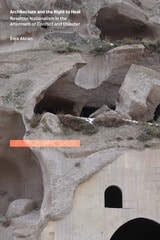
Architecture and the Right to Heal
Resettler Nationalism in the Aftermath of Conflict and DisasterEsra Akcan
Duke University Press, 2025
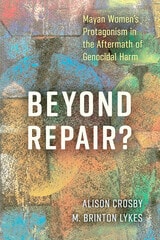
Beyond Repair?
Mayan Women’s Protagonism in the Aftermath of Genocidal HarmAlison Crosby
Rutgers University Press, 2019
Honorable Mention, 2020 CALACS Book Prize
Beyond Repair? explores Mayan women’s agency in the search for redress for harm suffered during the genocidal violence perpetrated by the Guatemalan state in the early 1980s at the height of the thirty-six-year armed conflict. The book draws on eight years of feminist participatory action research conducted with fifty-four Q’eqchi’, Kaqchikel, Chuj, and Mam women who are seeking truth, justice, and reparation for the violence they experienced during the war, and the women’s rights activists, lawyers, psychologists, Mayan rights activists, and researchers who have accompanied them as intermediaries for over a decade. Alison Crosby and M. Brinton Lykes use the concept of “protagonism” to deconstruct dominant psychological discursive constructions of women as “victims,” “survivors,” “selves,” “individuals,” and/or “subjects.” They argue that at different moments Mayan women have been actively engaged as protagonists in constructivist and discursive performances through which they have narrated new, mobile meanings of “Mayan woman,” repositioning themselves at the interstices of multiple communities and in their pursuit of redress for harm suffered.
Coexistence in the Aftermath of Mass Violence
Imagination, Empathy, and ResilienceEdited by Eve Monique Zucker and Laura McGrew
University of Michigan Press, 2020
Coexistence in the Aftermath of Mass Violence demonstrates how imagination, empathy, and resilience contribute to the processes of social repair after ethnic and political violence. Adding to the literature on transitional justice, peacebuilding, and the anthropology of violence and social repair, the authors show how these conceptual pathways--imagination, empathy and resilience--enhance recovery, coexistence and sustainable peace. Coexistence (or reconciliation) is the underlying goal or condition desired after mass violence, enabling survivors to move forward with their lives. Imagination allows these survivors--victims, perpetrators, bystanders--to draw guidance and inspiration from their social and cultural imaginaries, to develop empathy, and to envision a future of peace and coexistence. Resilience emerges through periods of violence and its aftermaths through acts of survival, compassion, modes of rebuilding social worlds, and the establishment of a peaceful society.
Focusing on society at the grass roots level, the authors discuss the myriad and little understood processes of social repair that allow ruptured societies and communities to move toward a peaceful and stable future. The volume also illustrates some of the ways in which imagination, empathy, and resilience may contribute to the prevention of future violence and the authors conclude with a number of practical and policy recommendations. The cases include Cambodia, Rwanda, Sierra Leone, Somaliland, Columbia, the Southern Cone, Iraq, and Bosnia.
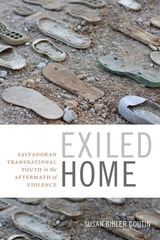
Exiled Home
Salvadoran Transnational Youth in the Aftermath of ViolenceSusan Bibler Coutin
Duke University Press, 2016
In the Aftermath of Genocide
Armenians and Jews in Twentieth-Century FranceMaud S. Mandel
Duke University Press, 2003
In the Aftermath of Genocide reveals that Armenian and Jewish survivors rarely sought to shed the obvious symbols of their ethnic and religious identities. Mandel shows that following the 1915 genocide and the Holocaust, these communities, if anything, seemed increasingly willing to mobilize in their own self-defense and thereby call attention to their distinctiveness. Most Armenian and Jewish survivors were neither prepared to give up their minority status nor willing to migrate to their national homelands of Armenia and Israel. In the Aftermath of Genocide suggests that the consolidation of the nation-state system in twentieth-century Europe led survivors of genocide to fashion identities for themselves as ethnic minorities despite the dangers implicit in that status.
In the Aftermath of Migration
Renegotiating Ancient Identity in Southeastern ArizonaAnna A. Neuzil
University of Arizona Press, 2008
This research explores the social changes that took place in the Safford and Aravaipa valleys during the thirteenth through the fifteenth centuries A.D. as a result of an influx of migrants from the Kayenta and Tusayan regions of northeastern Arizona. Focusing on domestic architecture and ceramics, the author evaluates how migration affects the expression of identity of both migrant and indigenous populations in the Safford and Aravaipa valleys and provides a model for research in other areas where migration played an important role.
Archaeologists interested in the Greater Southwest will find a wealth of information on these little-known valleys that provides contextualization for this important and intriguing time period, and those interested in migration in the ancient past will find a useful case study that goes beyond identifying incidents of migration to understanding its long-lasting implications for both migrants and the local people they impacted.
Just Don't Get Sick
Access to Health Care in the Aftermath of Welfare ReformSeccombe, Karen
Rutgers University Press, 2007
Drawing upon statistical data and in-depth interviews with over five hundred families in Oregon, Karen Seccombe and Kim Hoffman assess the ways in which welfare reform affects the well-being of adults and children who leave the program for work. We hear of asthmatic children whose uninsured but working mothers cannot obtain the preventive medicines to keep them well, and stories of pregnant women receiving little or no prenatal care who end up in emergency rooms with life-threatening conditions.
Representative of poor communities nationwide, the vivid stories recounted here illuminate the critical relationship between health insurance coverage and the ability to transition from welfare to work.
Nothing Like Sunshine
A Story in the Aftermath of the MLK AssassinationBen Kamin
Michigan State University Press, 2010
Rabbi Ben Kamin has written a definitive personal expression about race, coming of age in the 1960s, a forbidden friendship, and his personal love for Dr. Martin Luther King Jr. This is a story that spans a four-decade search for a lost high school chum, a deep misunderstanding, and a coming to terms with an America painfully evolving from the blood of MLK to the promise of Barack Obama.
The book is a remembrance of Kamin's life at Cincinnati's notorious Woodward High School, a microcosm of the 1960s and of America itself, as well as detailing Kamin's search-for Clifton, for America, for the key to understanding what race relations really are in the United States. Simultaneously, it is the story of the emerging rabbi's search for the legacy of his spiritual mentor, Dr. Martin Luther King Jr., taking Kamin from Cincinnati to Cleveland to Memphis to New Orleans and other points, and constantly bringing him home to his friend Clifton and "the heaving hallways" of that high school.

Playing for Keeps
Improvisation in the AftermathDaniel Fischlin and Eric Porter
Duke University Press, 2020
Contributors. Randy DuBurke, Rana El Kadi, Kevin Fellezs, Daniel Fischlin, Kate Galloway, Reem Abdul Hadi, Vijay Iyer, Mark Lomanno, Moshe Morad, Eric Porter, Sara Ramshaw, Matana Roberts, Darci Sprengel, Paul Stapleton, Odeh Turjman, Stephanie Vos

Politicizing Gender
Narrative Strategies in the Aftermath of the French RevolutionKadish, Doris Y
Rutgers University Press, 1991

Post-Catastrophe Film
Cinematic Visions in the Aftermath of DisasterStephen Lee Naish
Intellect Books, 2026
Focusing on the fragile, immediate aftermath of global events, before any new social order or rules for living have formed, Stephen Lee Naish’s latest book introduces an emerging subgenre: post-catastrophe film. Positioned between disaster movies, which depict humanity facing large-scale collapse, and post-apocalyptic films, where new societies and rules have already taken hold, this subgenre captures a unique threshold of survival amid change. Through lively case studies of selected popular films, Naish not only offers close readings of cinematic narratives but also explores deeper themes that emerge in the aftermath of disaster, including the role of artificial intelligence and cyborgs, cosmic survival and colonization, and the tensions between individual isolation and life with others. Ultimately, Naish shows how post-catastrophe films speak to our present reality.
In an age shaped by pandemics, climate crisis, and the uncertainties of postmodernity, cinema persists as a resilient mythmaking machine—mapping scenarios of global destruction while offering anxious viewers ways to envision alternative modes of being before a true “post-catastrophe era” arrives. Written in an engaging style and grounded in accessible examples from popular films, this book appeals to scholars, film enthusiasts, and anyone seeking to better understand our uncertain times.
Post-Crisis Leadership
Resilience, Renewal, and Reinvention in the Aftermath of DisruptionRalph A. Gigliotti
Rutgers University Press, 2025
The Aftermath of War
Jean-Paul Sartre
Seagull Books, 2008
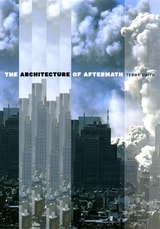
The Architecture of Aftermath
Terry Smith
University of Chicago Press, 2006
But after September 11, Smith asserts, late modern architecture suddenly seemed an indulgence. With close readings of key buildings—including Jørn Utzon’s Sydney Opera House, Minoru Yamasaki’s World Trade Center, Frank Gehry’s Guggenheim Museum Bilbao, and Richard Meier’s Getty Center—Smith traces the growth of the spectacular architecture of modernity and then charts its aftermath in the conditions of contemporaneity. Indeed, Smith focuses on the very culture of aftermath itself, exploring how global politics, clashing cultures, and symbolic warfare have changed the way we experience destination architecture.
Like other artists everywhere, architects are responding to the idea of aftermath by questioning the viability of their forms and the validity of their purposes. With his richly illustrated The Architecture of Aftermath, Smith has done so as well.
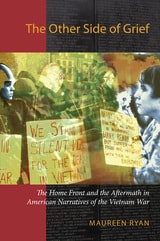
The Other Side of Grief
The Home Front and the Aftermath in American Narratives of the Vietnam WarMaureen Ryan
University of Massachusetts Press, 2008
The lingering aftereffects of the Vietnam War resonate to this day throughout American society: in foreign policy, in attitudes about the military and war generally, and in the contemporary lives of members of the so-called baby boom generation who came of age during the 1960s and early 1970s. While the best-known personal accounts of the war tend to center on the experience of combat, Maureen Ryan's The Other Side of Grief examines the often overlooked narratives—novels, short stories, memoirs, and films—that document the war's impact on the home front.
In analyzing the accounts of Vietnam veterans, women as well as men, Ryan focuses on the process of readjustment, on how the war continued to insinuate itself into their lives, their families, and their communities long after they returned home. She looks at the writings of women whose husbands, lovers, brothers, and sons served in Vietnam and whose own lives were transformed as a result. She also appraises the experiences of the POWs who came to be embraced as the war's only heroes; the ordeal of Vietnamese refugees who fled their “American War” to new lives in the United States; and the influential movement created by those who committed themselves to protesting the war.
The end result of Ryan's investigations is a cogent synthesis of the vast narrative literature generated by the Vietnam War and its aftermath. Together those stories powerfully demonstrate how deeply the legacies of the war penetrated American culture and continue to reverberate still.
Theater, War, and Memory in Crisis
Vichy, Algeria, the AftermathJohn Ireland
University of Michigan Press, 2025
Troubling Freedom
Antigua and the Aftermath of British EmancipationNatasha Lightfoot
Duke University Press, 2016
Unchopping a Tree
Reconciliation in the Aftermath of Political ViolenceErnesto Verdeja
Temple University Press, 2009
Employing a normative theory of reconciliation that differs from prevailing approaches, Verdeja outlines a concept that emphasizes the importance of shared notions of moral respect and tolerance among adversaries in transitional societies. Drawing heavily from cases such as reconciliation efforts in Latin America and Africa—and interviews with people involved in such efforts—Verdeja debates how best to envision reconciliation while remaining realistic about the very significant practical obstacles such efforts face
Unchopping a Tree addresses the core concept of respect across four different social levels—political, institutional, civil society, and interpersonal—to explain the promise and challenges to securing reconciliation and broader social regeneration.
Unrest
Art in the Aftermath of the 1992 Los Angeles RiotsRose Salseda
University of Chicago Press, 2026
The first book to examine the visual art legacy of the 1992 Los Angeles Riots.
On April 29, 1992, a jury’s acquittal of four white Los Angeles police officers who had beaten Rodney King, a Black man, incited five days of intense protests. The 1992 Los Angeles Riots resulted in nearly four thousand fires, over $1 billion in property damage, fourteen thousand arrests, two thousand injuries, and sixty-three deaths. While many scholars have studied the period leading up to and following the riots, few have focused on how contemporary artists reacted to and continued to respond to this traumatic event.
In Unrest, Rose Salseda provides the first major art historical account of the 1992 Los Angeles Riots that chronicles the works of two generations of artists. Closely examining visual art that explores overlooked cross-racial, immigrant, and intergenerational experiences of the events, Salseda provocatively frames unrest as an act of the bereaved that makes visible the unrelenting experiences of injustice. She provides important insights into how we process violence through imagery; how the criminal justice system visualizes race and tolerates racial and xenophobic violence; and how we adapt racialized modes of viewing, normalize violence and oppression, and perhaps unwittingly contribute to these injustices. Ultimately, Unrest highlights how the experience of the 1992 Los Angeles Riots has driven artists to address the King beating and related episodes of racial violence for over thirty years—underscoring unrest as the inability to rest in the face of state-sanctioned violence, which persists to this day.
War by Other Means
Aftermath in Post-Genocide GuatemalaCarlota McAllister and Diane M. Nelson, eds.
Duke University Press, 2013
Contributors consider a wide range of issues confronting present-day Guatemala: returning refugees, land reform, gang violence, neoliberal economic restructuring, indigenous and women's rights, complex race relations, the politics of memory, and the challenges of sustaining hope. From a sweeping account of Guatemalan elites' centuries-long use of violence to suppress dissent to studies of intimate experiences of complicity and contestation in richly drawn localities, War by Other Means provides a nuanced reckoning of the injustices that made genocide possible and the ongoing attempts to overcome them.
Contributors. Santiago Bastos, Jennifer Burrell, Manuela Camus, Matilde González-Izás, Jorge Ramón González Ponciano, Greg Grandin, Paul Kobrak, Deborah T. Levenson, Carlota McAllister, Diane M. Nelson, Elizabeth Oglesby, Luis Solano, Irmalicia Velásquez Nimatuj, Paula Worby