Results by title
28167 books match the query 'History' and 1913 start with c

Colorado State Capitol
History, Politics, PreservationDerek Everett
University Press of Colorado, 2005
In one comprehensive volume historian Derek Everett traces the establishment, planning, construction, and history of Colorado's state capitol - including a discussion on the importance of restoring and preserving the building for current and future generations of Coloradoans.
Colorado University
The Austere YearsJohn W. Horner
University Press of Colorado, 2004
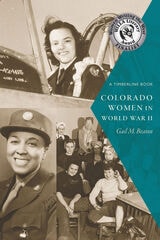
Colorado Women in World War II
Gail M. Beaton
University Press of Colorado, 2023
Four months before the attack on Pearl Harbor on December 7, 1941, Mildred McClellan Melville, a member of the Denver Woman’s Press Club, predicted that war would come for the United States and that its long arm would reach into the lives of all Americans. And reach it did. Colorado women from every corner of the state enlisted in the military, joined the workforce, and volunteered on the home front. As military women, they served as nurses and in hundreds of noncombat positions. In defense plants they riveted steel, made bullets, inspected bombs, operated cranes, and stored projectiles. They hosted USO canteens, nursed in civilian hospitals, donated blood, drove Red Cross vehicles, and led scrap drives; and they processed hundreds of thousands of forms and reports. Whether or not they worked outside the home, they wholeheartedly participated in a kaleidoscope of activities to support the war effort.
In Colorado Women in World War II Gail M. Beaton interweaves nearly eighty oral histories—including interviews, historical studies, newspaper accounts, and organizational records—and historical photographs (many from the interviewees themselves) to shed light on women’s participation in the war, exploring the dangers and triumphs they felt, the nature of their work, and the lasting ways in which the war influenced their lives. Beaton offers a new perspective on World War II—views from field hospitals, small steel companies, ammunition plants, college classrooms, and sugar beet fields—giving a rare look at how the war profoundly transformed the women of this state and will be a compelling new resource for readers, scholars, and students interested in Colorado history and women’s roles in World War II.
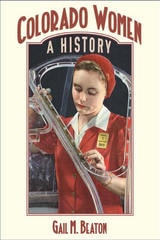
Colorado Women
A HistoryGail M. Beaton
University Press of Colorado, 2012
The experiences of Colorado women differed greatly across economic, ethnic, and racial backgrounds. Marital status, religious affiliation, and sexual orientation colored their worlds and others' perceptions and expectations of them. Each chapter addresses the everyday lives of women in a certain period, placing them in historical context, and is followed by vignettes on women's organizations and notable individuals of the time.
Native American, Hispanic, African American, Asian and Anglo women's stories hail from across the state--from the Eastern Plains to the Front Range to the Western Slope--and in their telling a more complete history of Colorado emerges. Colorado Women makes a significant contribution to the discussion of women's presence in Colorado that will be of interest to historians, students, and the general reader interested in Colorado, women's and western history.
Colorado's Japanese American
B Hosokawa
University Press of Colorado, 2005
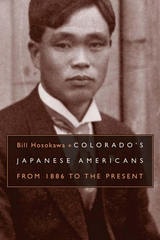
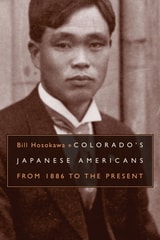
Colorado's Japanese Americans
From 1886 to the PresentBill Hosokawa
University Press of Colorado, 2005
Hosokawa traces personal histories, such as Bob Sakata's journey from internment in a relocation camp to his founding of a prosperous truck farm; the conviction of three sisters for assisting the escape of German POWs; and the years of initiative and determination behind Toshihiro Kizaki's ownership of Sushi Den, a beloved Denver eatery. In addition to personal stories, the author also relates the larger history of the interweave of cultures in Colorado, from the founding of the Navy's Japanese language school at the University of Colorado to the merging of predominantly white and Japanese American congregations at Arvada's Simpson United Methodist Church.
With the author's long view and sharp eye, Colorado's Japanese Americans creates a storied document of lasting legacy about the Issei and Nisei in Colorado.

Colorado
A HistoryDerek Everett
University Press of Colorado, 2026
From prehistoric seas to modern ski slopes, Colorado: A History explores the people, places, conflicts, environments, and ideas that have shaped the state—and the forces that continue to guide it today.
The choices that built Colorado brought both opportunity and devastating consequences. What looked like a triumph from one perspective often represented tragedy from another. Join Dr. Derek Everett on a sweeping journey through time, meeting the Natives and newcomers, the business owners and workers, and the communities and governments that transformed the landscape along the way. Drawing on the latest scholarship, Colorado: A History brings those competing stories together to reveal a state whose past is as complicated, surprising, and unfinished as its future.

Colorado
A History of the Centennial State, Fifth EditionCarl Abbott
University Press of Colorado, 2013
The fifth edition tells of conflicts, shifting alliances, and changing ways of life as Hispanic, European, and African American settlers flooded into a region that was already home to Native Americans. Providing a balanced treatment of the entire state’s history—from Grand Junction to Lamar and from Trinidad to Craig—the authors also reveal how Denver and its surrounding communities developed and gained influence.
While continuing to elucidate the significant impact of mining, agriculture, manufacturing, and tourism on Colorado, this edition broadens and focuses its coverage by consolidating material on Native Americans into one chapter and adding a new chapter on sports history. The authors also expand their discussion of the twentieth century with updated sections on the environment, economy, politics, and recent cultural conflicts. New illustrations, updated statistics, and an extensive bibliography including Internet resources enhance this edition.
Colorado
A History of the Centennial State, Fourth EditionCarl Abbott
University Press of Colorado, 2005
The new edition tells of conflicts, new alliances, and changing ways of life as Hispanic, European, and African American settlers flooded into a region that was already home to Native Americans. Providing balanced coverage of the entire state's history - from Grand Junction to Lamar and from Trinidad to Craig - the authors also reveal how Denver and its surrounding communities developed and gained influence.
While continuing to elucidate the significant impact of mining, agriculture, manufacturing, and tourism on Colorado, this new edition broadens its coverage. The authors expand their discussion of the twentieth century with several new chapters on the economy, politics, and cultural conflicts of recent years. In addition, they address changes in attitudes toward the natural environment as well as the contributions of women, Hispanics, African Americans, and Asian Americans to the state. Dozens of new illustrations, updated statistics, and an extensive bibliography of the most recent research on Colorado history enhance this edition.

Colorado
The Highest StateThomas J. Noel
University Press of Colorado, 1995
In each chapter of this book, you will find some questions, activities, and suggested reading to help you learn more of Colorado's story than we can present here. In these pages. you will discover a high, dry state with rugged natural beauty and an awesome history.

Colorado
The Highest State, Second EditionThomas J. Noel
University Press of Colorado, 2011
Each chapter is followed by questions, suggested activities, recommended reading, a "Did you know?" trivia section, and recommended websites, movies, and other multimedia that highlight the important concepts covered and lead the reader to more information. Additionally, the book is filled with photographs, making Colorado: The Highest State a fantastic text for middle and high school Colorado history courses.

Colorblind Tools
Global Technologies of Racial PowerMarzia Milazzo
Northwestern University Press, 2023
Winner of the 2023 Association for Ethnic Studies Outstanding Book Award
A study of anti-Blackness and white supremacy across four continents demonstrates that colorblindness is neither new nor a subtype of racist ideology, but a constitutive technology of racism
In Colorblind Tools, Marzia Milazzo offers a transnational account of anti-Blackness and white supremacy that pushes against the dominant emphasis on historical change pervading current racial theory. This emphasis on change, she contends, misses critical lessons from the past.
Bringing together a capacious archive of texts on race produced in Brazil, Cuba, Mexico, Panama, the United States, and South Africa from multiple disciplines and genres, Milazzo uncovers transnational continuities in structural racism and white supremacist discourse from the inception of colonial modernity to the present. In the process, she traces the global workings of what she calls colorblind tools: technologies and strategies that at once camouflage and reproduce white domination. Whether examining Rijno van der Riet’s defense of slavery in the Cape Colony, discourses of racial mixture in Latin American eugenics and their reverberations in contemporary scholarship, the pitfalls of white “antiracism,” or Chicana indigenist aesthetics, Milazzo illustrates how white people collectively disavow racism to maintain power across national boundaries, and how anti-Black and colonial logics can be reproduced even in some decolonial literatures. Milazzo’s groundbreaking study proves that colorblindness is not new, nor is it a subtype of racist ideology or a hallmark of our era. It is a constitutive technology of racism—a tool the master cannot do without.
Colored Amazons
Crime, Violence, and Black Women in the City of Brotherly Love, 1880–1910Kali N. Gross
Duke University Press, 2006
Gross draws on prison records, trial transcripts, news accounts, and rare mug shot photographs. Providing an overview of Philadelphia’s black women criminals, she describes the women’s work, housing, and leisure activities and their social position in relation to the city’s native-born whites, European immigrants, and elite and middle-class African Americans. She relates how news accounts exaggerated black female crime, trading in sensationalistic portraits of threatening “colored Amazons,” and she considers criminologists’ interpretations of the women’s criminal acts, interpretations largely based on notions of hereditary criminality. Ultimately, Gross contends that the history of black female criminals is in many ways a history of the rift between the political rhetoric of democracy and the legal and social realities of those marginalized by its shortcomings.
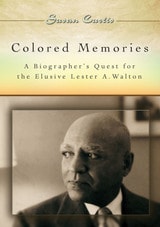
Colored Memories
A Biographer's Quest for the Elusive Lester A. WaltonSusan Curtis
University of Missouri Press, 2008
Lester A. Walton was a well-known public figure in his day. An African American journalist, cultural critic, diplomat, and political activist, he was an adviser to presidents and industrialists in a career that spanned the first six decades of the twentieth century. He was a steadfast champion of democracy and lived to see the passage of major civil rights legislation. But one word best describes Walton today: forgotten.
Exploring the contours of this extraordinary life, Susan Curtis seeks to discover why our collective memory of Walton has failed. In a unique narrative of historical research, she recounts a fifteen-year journey, from the streets of Harlem and “The Ville” in St. Louis to scattered archives and obscure public records, as she uncovers the mysterious circumstances surrounding Walton’s disappearance from national consciousness. And despite numerous roadblocks and dead ends in her quest, she tells how she came to know this emblematic citizen of the American Century in surprising ways.
In this unconventional book—a postmodern ghost story, an unprecedented experiment in life-writing—Curtis shares her discoveries as a researcher. Relating her frustrating search through long-overlooked documents to discover this forgotten man, she offers insight into how America’s obsession with race has made Walton’s story unwelcome. She explores the treachery, duplicity, and archival accidents that transformed a man dedicated to the fulfillment of American democracy into a shadowy figure.
Combining anecdotal memories with the investigative instincts of the historian, Curtis embraces the subjectivity of her research to show that what a society forgets or suppresses is just as important as what it includes in its history. Colored Memories is a highly original work that not only introduces readers to a once-influential figure but also invites us to reconsider how we view, understand, and preserve the past.
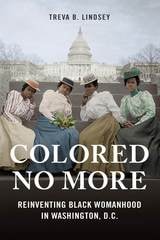
Colored No More
Reinventing Black Womanhood in Washington, D.C.Treva B. Lindsey
University of Illinois Press, 2017
Treva B. Lindsey presents New Negro womanhood as a multidimensional space that included race women, blues women, mothers, white collar professionals, beauticians, fortune tellers, sex workers, same-gender couples, artists, activists, and innovators. Drawing from these differing but interconnected African American women's spaces, Lindsey excavates a multifaceted urban and cultural history of struggle toward a vision of equality that could emerge and sustain itself. Upward mobility to equal citizenship for African American women encompassed challenging racial, gender, class, and sexuality status quos. Lindsey maps the intersection of these challenges and their place at the core of New Negro womanhood.

Colored Property
State Policy and White Racial Politics in Suburban AmericaDavid M. P. Freund
University of Chicago Press, 2007
Coloring Locals
Racial Formation in Katie Chopin's "Youth's Companion" StoriesBonnie James Shaker
University of Iowa Press, 2003
Chopin's canonical status as a feminist rebel and reformer conflicts with the fact that one of her most supportive publishers throughout her life was the Youth's Companion, a juvenile periodical whose thoroughly orthodox “family values” contributed to its success as the longest-running and, at one time, most widely circulating periodical in nineteenth-century America. Not surprisingly, Chopin’s Youth’s Companion stories differ from her canonical texts in that they embrace and advance ideals of orthodox white femininity and masculinity. Rather than viewing these two representations as being at odds with each other, Bonnie Shaker asserts that Chopin's endorsement of conventional gender norms is done in the service of a second political agenda beyond her feminism, one that can help the reader appreciate nuances of identity construction previously misunderstood or overlooked in the body of her work.
Coloring Whiteness
Acts of Critique in Black PerformanceFaedra Chatard Carpenter
University of Michigan Press, 2014
Colors and Textures of Roman North Africa
Essays in Memory of Maureen A. TilleyElizabeth A. Clark
Catholic University of America Press, 2023
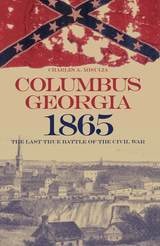
Columbus, Georgia, 1865
The Last True Battle of the Civil WarCharles A. Misulia
University of Alabama Press, 2010
Columbus, Georgia, 1865 is a comprehensive study of the Easter Sunday, April 16, 1865, conflict, which occurred in the dark of night and extended over a mile and half through a series of forts and earthworks and was finally decided in an encounter on a bridge a thousand feet in length. This volume offers the first complete account of this battle, examining and recounting in depth not only the composition and actions of the contending forces, which numbered some three thousand men on each side, but meticulously detailing the effect of the engagement on the city of Columbus and its environs.
Misulia’s study fills in an omission in the grand account of our cataclysmic national struggle and adds a significant chapter to the history of an important regional city. In addition, Misulia takes on the long-vexing question of which encounter should be recognized as the last battle of the Civil War and argues persuasively that Columbus, Georgia, qualifies for this distinction on a number of counts.
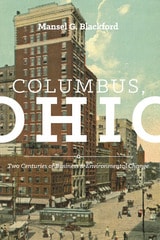
Columbus, Ohio
Two Centuries of Business and Environmental ChangeMansel G. Blackford
The Ohio State University Press, 2016
Precisely because they lived in a midsize, midwestern city, Columbus residents could learn from the earlier experiences of their counterparts in older, larger coastal metropolises, and then go beyond them. Not having large sunk costs in pre-existing water systems, Columbus residents could, for instance, develop new, world-class, state-of-the-art methods for treating water and sewage, steps essential for urban expansion. Columbus, Ohio explores how city residents approached urban challenges—especially economic and environmental ones—and how they solved them.
Columbus, Ohio: Two Centuries of Business and Environmental Change concludes that scholars and policy makers need to pay much more attention to environmental issues in the shaping of cities, and that they need to look more closely at what midwestern metropolises accomplished, as opposed to simply examining coastal cities.
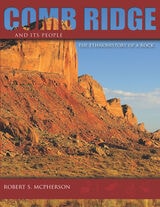
Comb Ridge and Its People
The Ethnohistory of a RockRobert McPherson
Utah State University Press, 2009
West of the Four Corners and east of the Colorado River, in southeastern Utah, a unique one-hundred-mile-long, two-hundred-foot-high, serrated cliff cuts the sky. Whether viewed as barrier wall or sheltering sanctuary, Comb Ridge has helped define life and culture in this region for thousands of years. Today, the area it crosses is still relatively remote, though an important part of a scenic complex of popular tourist destinations that includes Natural Bridges National Monument and Grand Gulch just to the west, Glen Canyon National Recreation Area and Lake Powell a bit farther west, Canyonlands National Park to the north, Hovenweep National Monument to the east, and the San Juan River and Monument Valley to the south. Prehistorically Comb Ridge split an intensively used Ancient Puebloan homeland. It later had similar cultural—both spiritual and practical—significance to Utes, Paiutes, and Navajos and played a crucial role in the history of European American settlement. To tell the story of this rock that is unlike any other rock in the world and the diverse people whose lives it has affected, Robert S. McPherson, author of multiple books on Navajos and on the Four Corners region, draws on the findings of a major, federally funded project to research the cultural history of Comb Ridge. He carries the story forward to contention over present and future uses of Comb Ridge and the spectacular country surrounding it.
The book is the winner of the 2009 Utah Book Award for Nonfiction.
Combat Zoning
Military Land-Use Planning In NevadaDavid Loomis
University of Nevada Press, 1993
Loomis provides a clear and disturbing picture of military land-use planning and how it has affected residents in Nevada. He contends that a lack of citizen participation in the development of land-use plans is a weakness in the planning process and that both the military and the citizenry should take an active role to avoid future conflicts.
Combat in an Age of Terror
The 7th Infantry Regiment in America's Modern Wars, Korea through IraqJohn C. McManus
University of Missouri Press, 2025
In this in-depth history of the 7th, acclaimed combat historian John C. McManus takes readers from cold war campaigns through the global war on terror, chronicling the modern era of the regiment’s amazing history. Covering desperate fights for Korean hills, the struggle for control of steamy Vietnamese villages, and the lightning campaign of Desert Storm, the narrative culminates in the 7th’s toils in the Middle East. More than anything, McManus’s chronicle of the 7th portrays these unremarkable, ordinary individuals as the heart and soul of the United States Army. McManus gives a complete account of their struggles, anguish, fears, sacrifices, triumphs, and pride, providing a compelling glimpse not only of these soldiers’ journey through American history, but of the shaping of our nation as a whole.
Based on nearly a decade of research, from archives to battlefield visits to McManus’s personal interviews with countless 7th Infantry soldiers, and illustrated with maps and sixteen pages of photographs, this book is a definitive and moving story of Americans in combat.
Combating Mountaintop Removal
New Directions in the Fight against Big CoalBryan T. McNeil
University of Illinois Press, 2012
Come Buy, Come Buy
Shopping and the Culture of Consumption in Victorian Women’s WritingKrista Lysack
Ohio University Press, 2008
From the 1860s through the early twentieth century, Great Britain saw the rise of the department store and the institutionalization of a gendered sphere of consumption. Come Buy, Come Buy considers representations of the female shopper in British women’s writing and demonstrates how women’s shopping practices are materialized as forms of narrative, poetic, and cultural inscription, showing how women writers emphasize consumerism as productive of pleasure rather than the condition of seduction or loss. Krista Lysack examines works by Christina Rossetti, Mary Elizabeth Braddon, George Eliot, and Michael Field, as well as the suffragette newspaper Votes for Women, in order to challenge the dominant construction of Victorian femininity as characterized by self-renunciation and the regulation of appetite.
Come Buy, Come Buy considers not only literary works, but also a variety of archival sources (shopping guides, women’s fashion magazines, household management guides, newspapers, and advertisements) and cultural practices (department store shopping, shoplifting and kleptomania, domestic economy, and suffragette shopkeeping). With this wealth of sources, Lysack traces a genealogy of the woman shopper from dissident domestic spender to aesthetic connoisseur, from curious shop-gazer to political radical.

Come Fly with Me
The Rise and Fall of Trans World AirlinesDaniel L. Rust and Alan B. Hoffman
Missouri Historical Society Press, 2023
This book recounts how three larger-than-life personalities—Charles Lindbergh, Howard Hughes, and Carl Icahn—shaped the history of Trans World Airlines (TWA) and determined its fate. It’s the story of how powerful, strong-willed individuals created and ultimately destroyed an American icon that had deep roots in Kansas City and St. Louis, Missouri. Come Fly with Me traces the airline from its origins in the 1920s to the twenty-first century. By using unprecedented access to the entire TWA corporate archives and interviewing key business leaders, the authors have crafted a compelling tale of a corporation, an industry, and an era.
Come In and Hear the Truth
Jazz and Race on 52nd StreetPatrick Burke
University of Chicago Press, 2008
Come In and Hear the Truth uses a range of materials, from classic photographs to original interviews with musicians, to bring the street’s vibrant history to life and to shed new light on the interracial contacts and collaborations it generated.
Comfort and Glory
Two Centuries of American Quilts from the Briscoe CenterBy Katherine Jean Adams
University of Texas Press, 2016
Quilts bear witness to the American experience. With a history that spans the early republic to the present day, this form of textile art can illuminate many areas of American life, such as immigration and settlement, the development of our nation’s textile industry, and the growth of mass media and marketing. In short, each quilt tells a story that is integral to America’s history.
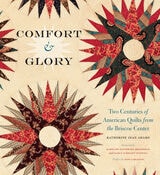
Comfort and Glory introduces an outstanding collection of American quilts and quilt history documentation, the Winedale Quilt Collection at the Briscoe Center for American History at the University of Texas at Austin. This volume showcases 115 quilts—nearly one-quarter of the Winedale Collection—through stunning color photographs (including details) and essays about each quilt’s history and construction. The selections span more than two hundred years of American quiltmaking and represent a broad range of traditional styles and functions. Utility quilts, some worn or faded, join show quilts, needlework masterpieces, and “best” quilts saved for special occasions. Texas quilts, including those made in or brought to Texas during the nineteenth century, constitute a significant number of the selections. Color photographs of related documents and material culture objects from the Briscoe Center’s collections—quilting templates, a painted bride’s box, sheet music, a homespun dress, a brass sewing bird, and political ephemera, among them—enrich the stories of many of the quilts.
Comic Book Women
Characters, Creators, and Culture in the Golden AgeBy Peyton Brunet and Blair Davis; foreword by Trina Robbins
University of Texas Press, 2022
2023 Ray and Pat Browne Best Single Work by One or More Authors in Popular and American Culture, Popular and American Culture Association (PACA) / Popular Culture Association (PCA)
2023 Ray and Pat Browne Best Edited Reference/Primary Source Work in Popular Culture Award (Honorable Mention), Popular and American Culture Association (PACA) / Popular Culture Association (PCA)
2023 Peter C. Rollins Book Award, Southwest Texas Popular Culture and American Culture Associations (SWPACA)
A revisionist history of women's pivotal roles as creators of and characters in comic books.
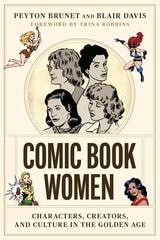
The history of comics has centered almost exclusively on men. Comics historians largely describe the medium as one built by men telling tales about male protagonists, neglecting the many ways in which women fought for legitimacy on the page and in publishers’ studios. Despite this male-dominated focus, women played vital roles in the early history of comics. The story of how comic books were born and how they evolved changes dramatically when women like June Tarpé Mills and Lily Renée are placed at the center rather than at the margins of this history, and when characters such as the Black Cat, Patsy Walker, and Señorita Rio are analyzed.
Comic Book Women offers a feminist history of the golden age of comics, revising our understanding of how numerous genres emerged and upending narratives of how male auteurs built their careers. Considering issues of race, gender, and sexuality, the authors examine crime, horror, jungle, romance, science fiction, superhero, and Western comics to unpack the cultural and industrial consequences of how women were represented across a wide range of titles by publishers like DC, Timely, Fiction House, and others. This revisionist history reclaims the forgotten work done by women in the comics industry and reinserts female creators and characters into the canon of comics history.
Comic China
Representing Common Ground, 1890-1945Wendy Gan
Temple University Press, 2018
Wendy Gan’s Comic China investigates the circumstances and motivations of cross-cultural humor. How do works that trade in laughter shape our understanding of Western discourses about China? Is humor meant to be inclusive or exclusive? Does it protect or challenge the status quo? Gan suggests that the simple, straightforward laugh may actually be a far more intricate negotiation of power relations.
Gan unpacks texts by authors who had little real contact with China as well as writers whose proximity to China influenced their representations. Looking beyond the familiar canon of serious modernist texts and the Yellow Peril classics of popular fiction, Gan analyzes turn-of-the-twentieth-century musical comedies set in the Far East, Ernest Bramah’s chinoiserie-inspired tales, and interwar travel writing. She also considers the comic works of the missionary Arthur Henderson Smith, the former Maritime Customs Officer J.O.P. Bland, and the Shanghai journalist and advertising man Carl Crow.
Though it includes humor that is less than complimentary to the Chinese, Comic China reminds us that laughter is tied to our common humanity. Gan navigates the humor used in comic depictions ultimately to find, not superiority or ridicule, but common ground.

Comic Fascism
Ideology, Catholicism, and Americanism in Italian Children’s PeriodicalsZane Elward
The Ohio State University Press, 2025
Coming Of Age In Buffalo
Youth and Authority in the Postwar EraWilliam Graebner
Temple University Press, 1993
Pegged pants poodle skirts, record hops, rock ‘n’ roll, soda shops: in the interval between the bombing of Hiroshima and the assassination of John F. Kennedy, these were distinguishing marks of the "typical" postwar teenager-if there was a "typical" teenager. In this richly illustrated account of Youth in postwar Buffalo, William Graebner argues that the so-called Youth culture was really a variety of "disparate subcultures, united by age but in conflict over class, race, ethnicity, and gender." Using scrap books, oral histories, school Yearbooks, and material culture, he shows how Buffalo teenagers were products of diverse and often antagonistic subcultures. The innocuous strains of "Rock Around the Clock" muffled the seething gang loyalties and countercultural influence of James Dean, Marlon Brando, and Buffalo’s own "Hound Dog" Lorenz. Racial antipathies once held in check spilled out on Memorial Day, 1956, when white and black Youth clashed on board a take Erie pleasure boat in a "riot" that recast the city’s race relations for decades to come.
While exploring the diversity within Youth subcultures, Graebner examines the ways in which adults—educators, clergy, representatives of the media, and other authorities—sought to contain this generation. The Hi-Teen Club, Buffalo Plan dress code, record hops, graduation ceremonies, film censorship, and restrictions on secret societies and on corner lounging were all forms of social engineering that reinforced social and economic boundaries that were at the heart of the dominant culture. The prevailing adult influence on activities, attitudes, and style served to redirect the "misguided Youth" of the fifties and to obliterate their image from public memory. Although the media still portrays this decade as the golden age of cultural homogeneity, the diversity in musical preferences, hair and clothing styles, and allegiances to disc jockeys suggest the wide diversity of Youth experiences and challenges to adult authority that were part of coming of age in postwar America.
Coming On Strong
Gender and Sexuality in Women's SportSusan K. Cahn
University of Illinois Press, 2015
Coming Out Republican
A History of the Gay RightNeil J. Young
University of Chicago Press, 2024
One of the most maligned, misunderstood, and even mocked constituencies in American politics, gay Republicans regularly face condemnation from both the LGBTQ+ community and their own political party. Yet they’ve been active and influential for decades. Gay conservatives were instrumental, for example, in ending “Don’t Ask, Don’t Tell” and securing the legalization of same-sex marriage—but they also helped lay the groundwork for the rise of Donald Trump.
In Coming Out Republican, political historian and commentator Neil J. Young provides the first comprehensive history of the gay Right. From the 1950s up to the present day, Young excavates the multifarious origins, motivations, and evolutions of LGBTQ+ people who found their way to the institutions and networks of modern conservatism. Many on the gay Right have championed conservative values—like free markets, a strong national defense, and individual liberty—and believed that the Republican Party therefore offered LGBTQ+ people the best pathway to freedom. Meanwhile, that same party has actively and repeatedly demonized them. With his precise and provocative voice, Young details the complicated dynamics of being in—and yet never fully accepted into—the Republican Party.
Coming Out Republican provides striking insight into who LGBTQ+ conservatives are, what they want, and why many of them continue to align with a party whose rank and file largely seem to hate them. As the Republican Party renews its assaults on LGBTQ+ rights, understanding the significant history of the gay Right has never been more critical.
Coming Out Swiss
In Search of Heidi, Chocolate, and My Other LifeAnne Herrmann
University of Wisconsin Press, 2014
In a work that is part memoir, part history and travelogue, Herrmann explores all our Swiss clichés (chocolate, secret bank accounts, Heidi, Nazi gold, neutrality, mountains, Swiss Family Robinson) and also scrutinizes topics that may surprise (the “invention” of the Alps, the English Colony in Davos, Switzerland’s role during World War II, women students at the University of Zurich in the 1870s). She ponders, as well, marks of Swissness that have lost their identity in the diaspora (Sutter Home, Helvetica, Dadaism) and the enduring Swiss American community of New Glarus, Wisconsin. Coming Out Swiss will appeal not just to the Swiss diaspora but also to those drawn to multi-genre writing that blurs boundaries between the personal and the historical.
Coming Out of War
Poetry, Grieving, and the Culture of the World WarsJanis P. Stout
University of Alabama Press, 2005
World War I is widely considered “the Great War” and World War II, “the Good War.” Janis Stout thinks of them as two parts of a whole that continues to engage historians and literary scholars searching for an understanding of both the actual war experiences and the modern culture of grief they embody. In Coming Out of War: Poetry, Grieving, and the Culture of the World Wars Stout argues that poetry, of all the arts, most fully captures and conveys those cultural responses.
While probing the work of such well known war poets as Rupert Brooke, Wilfred Owen, and Randall Jarrell, Stout also highlights the impact of the wars on lesser studied, but equally compelling, sources such as the music of Charles Ives and Cole Porter, Aaron Copland and Irving Berlin. She challenges the commonplace belief that war poetry came only from the battlefield and was written only by men by examining the wartime writings of women poets such as Rose Macaulay, Marianne Moore, Elizabeth Bishop, and Gwendolyn Brooks. She also challenges the assumption that World War II did not produce poetry of distinction by studying the work of John Ciardi, Karl Shapiro, Louis Simpson, Robert Frost, and Wallace Stevens. While emphasizing aesthetic continuity between the wars, Stout stresses that the poetry that emerged from each displays a greater variety than is usually recognized.
A final chapter considers Benjamin Britten’s War Requiem as a culmination and embodiment of the anti-war tradition in 20th-century poetry and music, and speculates on the reasons why, despite their abundance and eloquence, these expressions of grief and opposition to war have effected so little change.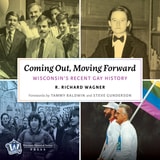
Coming Out, Moving Forward
Wisconsin's Recent Gay HistoryR. Richard Wagner
Wisconsin Historical Society Press, 2020
In this volume, R. Richard Wagner draws on historical research and materials from his extensive personal archive to not only chronicle an important movement, but also to tell the stories of the state’s LGBT pioneers—from legislators and elected officials to activists, businesspeople, and everyday citizens. Coming Out, Moving Forward documents the rich history of Wisconsin’s LGBT individuals and communities as they pushed back against injustice and found ways to live openly and proudly as themselves.
Coming Out, Moving Forward is a continuation to the first volume in this series, We’ve Been Here All Along.
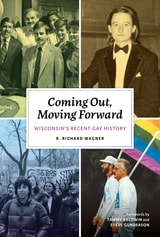
Coming Out, Moving Forward
Wisconsin’s Recent Gay HistoryR. Richard Wagner
Wisconsin Historical Society Press, 2020
In this volume, R. Richard Wagner draws on historical research and materials from his extensive personal archive to not only chronicle an important movement, but also to tell the stories of the state’s LGBT pioneers—from legislators and elected officials to activists, businesspeople, and everyday citizens. Coming Out, Moving Forward documents the rich history of Wisconsin’s LGBT individuals and communities as they pushed back against injustice and found ways to live openly and proudly as themselves.
Coming Out, Moving Forward is a continuation to the first volume in this series, We’ve Been Here All Along.
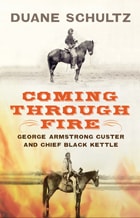
Coming Through Fire
George Armstrong Custer and Chief Black KettleDuane Schultz
Westholme Publishing, 2012
The cold dawn of November 27, 1868, was the moment George Armstrong Custer had longed for ever since the Civil War ended three years before. It was also the moment Black Kettle of the Cheyenne nation had feared ever since he had survived the deadly attack on his people at Sand Creek, Colorado Territory. Custer, who gloried in battle, was no longer the national hero, the celebrity he had been in wartime. He was a forgotten man who had failed in his first Indian campaign the year before. He needed a resounding victory to resurrect the attention he craved, and the sleepy Cheyenne village along the banks of the Washita River—ironically near present-day Cheyenne, Oklahoma—proved irresistible. Custer led his 7th U.S. Cavalry in an early morning charge that wiped out the encampment, killing those who resisted and some of those who fled. Black Kettle’s Cheyenne had signed documents of peace with the U.S. Government as they had done before Sand Creek, but once again that did not protect them. Custer ordered his troops to capture women and children and traveled with these prisoners as a way to shield his column from a retaliatory strike on their way back to their post. Called both a massacre and a battle, the action at the Washita River returned Custer to national prominence as the “greatest Indian fighter of all.”
Coming Through Fire: George Armstrong Custer and Chief Black Kettle tells the converging stories of a Civil War hero and a native warrior who met along the Washita River. Black Kettle had given up fighting—he had “come through the fire”— and made his mark on treaty after treaty to try to save the Cheyenne and their way of life from the encroachments of the U.S. government and white settlers. He watched the government breach the terms of each treaty, yet he continued to work for a compromise, knowing that negotiations were the only way his people could survive. But the flood of wagon trains and settlements, the killing of the great buffalo herds, the new diseases and broken promises, political ambition, naked greed, and continuing restrictions on land, food, and shelter persisted. As the U.S. Army, including Custer, continued to attack and forceably move Indians to reservations despite treaties indicating otherwise, Black Kettle’s dreams of peace were shattered. He ended his life face down in the freezing waters of the Washita River, shot by one of Custer’s troopers. The “greatest Indian fighter” would not survive the Indian Wars either, cut down near the Little Big Horn River, in part for his actions against Black Kettle and the Cheyenne.
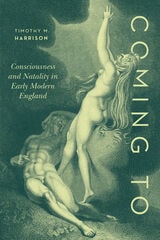
Coming To
Consciousness and Natality in Early Modern EnglandTimothy M. Harrison
University of Chicago Press, 2020

Coming Together
Singapore and the Idea of the EntrepotJeff Khoo
National University of Singapore Press, 2027
Explores the circumstances and elements that make for a successful Southeast Asian entrepôt.
What made modern Singapore and fifteenth-century Malacca so exceptional in their success in trade, and why did so many other attempts fail to coalesce? Coming Together recasts the founding of modern Singapore as the culmination of a long tradition of alliance-building within the “straits and peninsula,” that sliver of maritime Southeast Asia that connects the Indian Ocean with the China Seas. From abortive Franco-Siamese projects in the 1680s, through lonely failure at Poulo Condor and stubborn frustration on the Burmese “Eastern Coast,” to the persistent enterprise of Bugis and Malay rulers during the 1770s and 1780s, Coming Together follows an evolving cast of princes, captains, merchants, and missionaries drawn together by a powerful idea: that the trade of Asia could be concentrated at a single and wildly prosperous place.
Long-neglected French archival materials illuminate events long distorted by colonial historiography, revealing the entrepôt as a transcultural project sustained by tributary diplomacy, treaty-making, and the pragmatic exchange of protection for commercial privilege. The result is a fundamental reinterpretation of the origins of Penang and Singapore—and of the alliance-building that lies at the core of modern Singapore.
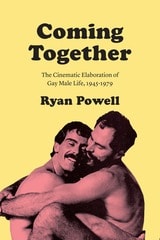
Coming Together
The Cinematic Elaboration of Gay Male Life, 1945-1979Ryan Powell
University of Chicago Press, 2019
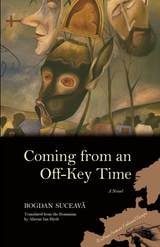
Coming from an Off-Key Time
A NovelBogdan Suceava
Northwestern University Press, 2011
The fall of communism in Eastern Europe in 1989 marked, in one famous formulation, the "end of history." In his apocalyptic novel Coming from an Off-Key Time, Bogdan Suceavă satirizes the events in his native Romania since the violent end of the Ceauşescu regime that fateful year.
Suceavă uses three interrelated narratives to illustrate the destructive power of Romanian society’s most powerful mythologies. He depicts madness of all kinds but especially religious beliefs and their perversion by all manner of outrageous sects. Here horror and humor reside impossibly in the same time and place, and readers experience the vertiginous feeling of living in the middle of a violent historical upheaval.
Even as Coming from an Off-Key Time suggests the influence of such writers as Mikhail Bulgakov, the fantastic satirist of the early Soviet Union, Suceavă engages the complexities of a quickly changing country in search of its bearings and suspicious of its past. Bogdan Suceavă is an associate professor of mathematics at California State University, Fullerton. One of Romanian literature’s most promising and original young writers, he is the author of four novels, two books of short stories, and several collections of poems.
Alistair Ian Blyth’s previous translations include Filip Florian, Little Fingers (2009); Lucian Dan Teodorovici, Our Circus Presents (2009); and Catalin Avramescu’s An Intellectual History of Cannibalism (2009).
Coming of Age with the New Republic, 1938-1950
Merrill D. Peterson
University of Missouri Press, 1999
In this absorbing memoir, Merrill D. Peterson traces his progress from a young Kansas Republican to a "Left Liberal," Democrat by reconstructing how the New Republic singularly influenced his intellectual development and academic career during some of the most turbulent years in American history—the final years of the Great Depression through World War II and the beginnings of the Cold War. Peterson recalls how, as a young man, he was guided to intellectual maturity by such extraordinary individuals as Max Lerner, Archibald MacLeish, Vincent Sheean, Alfred Kazin, Lewis Mumford, and Malcolm Cowley—all contributors to this important magazine. We look back, with Peterson, and see how their views are inextricably reflected in his own developing worldview.
Peterson was introduced to this liberal weekly by one of his teachers during his senior year of high school (1938-1939). For the next ten years, the magazine served as his principal guide to the politics and culture of the times. Now, at seventy-eight years of age, Peterson revisits the magazine that he read so eagerly during those early, impressionable years. With considerable skill and charm, Peterson weaves together the fresh reading, the history of the country during the 1940s, and his own personal history to give us the heart of the book. In addition, he includes brief essays on Vernon L. Parrington, Lewis Mumford, and Max Lerner, the three American writers and intellectuals he believes had the most influence on him.
Peterson discusses several turning points in his young life, but he focuses primarily on his education and the role the magazine played in it. The book concludes when Peterson, with a Ph.D. in the history of American civilization, accepts his first academic appointment, at Brandeis University, and approaches the publication of his first book. Thus, a critical chapter in his life comes to a close.

Coming of Industrial Order
Town and Factory Life in Rural Massachusetts, 1810-1860Jonathan Prude
University of Massachusetts Press, 1999
Coming to Light
American Women Poets in the Twentieth CenturyDiane Wood Middlebrook and Marilyn Yalom, Editors
University of Michigan Press, 1985
Commager on Tocqueville
Henry Steele Commager
University of Missouri Press, 1993
Commager on Tocqueville is Henry Steele Commager's masterful interpretation of Alexis de Tocqueville's Democracy in America. Using Tocqueville's classic as a vehicle for discussing such contemporary issues as the environment, civil rights, and the military-industrial complex, Commager calls for a new vision of American leadership that trascends nationalism.
Command Culture
Officer Education in the U.S. Army and the German Armed Forces, 1901-1940, and the Consequences for World War IIJörg Muth
University of North Texas Press, 2011
Command of the Waters
Iron Triangles, Federal Water Development, and Indian WaterDaniel C. McCool
University of Arizona Press, 1994