Results by title
28167 books match the query 'History' and 1913 start with c
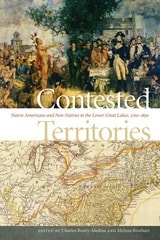
Contested Territories
Native Americans and Non-Natives in the Lower Great Lakes, 1700-1850Charles Beatty-Medina
Michigan State University Press, 2012
A remarkable multifaceted history, Contested Territories examines a region that played an essential role in America's post-revolutionary expansion—the Lower Great Lakes region, once known as the Northwest Territory. As French, English, and finally American settlers moved westward and intersected with Native American communities, the ethnogeography of the region changed drastically, necessitating interactions that were not always peaceful. Using ethnohistorical methodologies, the seven essays presented here explore rapidly changing cultural dynamics in the region and reconstruct in engaging detail the political organization, economy, diplomacy, subsistence methods, religion, and kinship practices in play. With a focus on resistance, changing worldviews, and early forms of self-determination among Native Americans, Contested Territories demonstrates the continuous interplay between actor and agency during an important era in American history.
Contested Views of a Common Past
Revisions of History in Contemporary East AsiaEdited by Steffi Richter
Campus Verlag, 2008

Contested Waters
An Environmental History of the Colorado RiverApril R. Summitt
University Press of Colorado, 2013
-From the conclusion
The Colorado River is a vital resource to urban and agricultural communities across the Southwest, providing water to 30 million people. Contested Waters tells the river's story-a story of conquest, control, division, and depletion.
Beginning in prehistory and continuing into the present day, Contested Waters focuses on three important and often overlooked aspects of the river's use: the role of western water law in its over-allocation, the complexity of power relationships surrounding the river, and the concept of sustainable use and how it has been either ignored or applied in recent times. It is organized in two parts, the first addresses the chronological history of the river and long-term issues, while the second examines in more detail four specific topics: metropolitan perceptions, American Indian water rights, US-Mexico relations over the river, and water marketing issues. Creating a complete picture of the evolution of this crucial yet over-utilized resource, this comprehensive summary will fascinate anyone interested in the Colorado River or the environmental history of the Southwest.
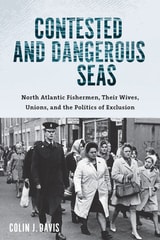
Contested and Dangerous Seas
North Atlantic Fishermen, Their Wives, Unions, and the Politics of ExclusionColin J. Davis
University of Massachusetts Press, 2019
During the 1960s and 1970s, these seafaring workers experienced new hardships. As modern fleets from many nations intensified their hunt for fish, they found themselves in increasing competition for disappearing prey. Colin J. Davis details the unfolding drama as New England and British fishermen and their wives, partners, and families reacted to this competition. Rather than acting as bystanders to these crises, the men and women chronicled in Contested and Dangerous Seas became fierce advocates for the health of the Atlantic Ocean fisheries and for their families' livelihoods.
Contesting Archives
Finding Women in the SourcesEdited by Nupur Chaudhuri, Sherry J. Katz, and Mary Elizabeth Perry
University of Illinois Press, 2010
The contributors of Contesting Archives challenge the assumption that an archive is a neutral, immutable, and a historical repository of information. Instead, these historians view it as a place where decisions are made about whose documents--and therefore whose history--is important. Finding that women's voices and their texts were often obscured or lost altogether, they have developed many new methodologies for creating unique archives and uncovering more evidence by reading documents "against the grain," weaving together many layers of information to reveal complexities and working collectively to reconstruct the lives of women in the past.
Global in scope, this volume demonstrates innovative research on diverse women from the sixteenth century to the present in Spain, Mexico, Tunisia, India, Iran, Poland, Mozambique, and the United States. Addressing gender, race, class, nationalism, transnationalism, and migration, these essays' subjects include indigenous women of colonial Mexico, Muslim slave women, African American women of the early twentieth century, Bengali women activists of pre-independence India, wives and daughters of Qajar rulers in Iran, women industrial workers in communist Poland and socialist Mozambique, and women club owners in modern Las Vegas. A foreword by Antoinette Burton adroitly synthesizes the disparate themes woven throughout the book.
Contributors are Janet Afary, Maryam Ameli-Rezai, Antoinette Burton, Nupur Chaudhuri, Julia Clancy-Smith, Mansoureh Ettehadieh, Malgorzata Fidelis, Joanne L. Goodwin, Kali Nicole Gross, Daniel S. Haworth, Sherry J. Katz, Elham Malekzadeh, Mary Elizabeth Perry, Kathleen Sheldon, Lisa Sousa, and Ula Y. Taylor.

Contesting Copyright
A History of Intellectual Property in East Central Europe and the BalkansAugusta Dimou
Central European University Press, 2026
Contesting Cultural Rhetorics
Public Discourse and Education, 1890-1900Margaret J. Marshall
University of Michigan Press, 1995
Contesting Malayness
Malay Identity Across BoundariesEdited by Timothy P. Barnard
National University of Singapore Press, 2014
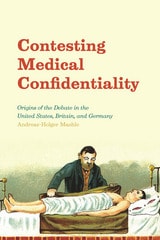
Contesting Medical Confidentiality
Origins of the Debate in the United States, Britain, and GermanyAndreas-Holger Maehle
University of Chicago Press, 2016
In Contesting Medical Confidentiality, Andreas-Holger Maehle travels back to the origins of this increasingly relevant issue. He offers the first comparative analysis of professional and public debates on medical confidentiality in the United States, Britain, and Germany during the late nineteenth and early twentieth centuries, when traditional medical secrecy first came under pressure from demands of disclosure in the name of public health. Maehle structures his study around three representative questions of the time that remain salient today: Do physicians have a privilege to refuse court orders to reveal confidential patient details? Is there a medical duty to report illegal procedures to the authorities? Should doctors breach confidentiality in order to prevent the spread of disease? Considering these debates through a unique historical perspective, Contesting Medical Confidentiality illuminates the ethical issues and potentially grave consequences that continue to stir up public debate.
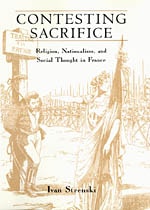
Contesting Sacrifice
Religion, Nationalism, and Social Thought in FranceIvan Strenski
University of Chicago Press, 2002
Strenski suggests that the annihilating spirituality rooted in the Catholic model of Eucharistic sacrifice persuaded the judges in the Dreyfus Case to overlook or play down his possible innocence because a scapegoat was needed to expiate the sins of France and save its army from disgrace. Strenski also suggests that the French army's strategy in World War I, French fascism, and debates over public education and civic morals during the Third Republic all owe much to Catholic theology of sacrifice and Protestant reinterpretations of it. Pointing out that every major theorist of sacrifice is French, including Bataille, Durkheim, Girard, Hubert, and Mauss, Strenski argues that we cannot fully understand their work without first taking into account the deep roots of sacrificial thought in French history.
Contesting Space in Colonial Singapore
Power Relations and the Urban Built EnvironmentBrenda S.A. Yeoh
National University of Singapore Press, 2003
Contesting the Constitution
Congress Debates the Missouri Crisis, 1819-1821William S. Belko
University of Missouri Press, 2021
The larger question with which the legislators grappled were the limits of the Constitution’s provisions granting Congress the authority to affect the institution of slavery—both where it already existed and where it could expand. The issue—what would come to be known as the Missouri Crisis—severely tested the still young republic and, some four decades later, would all but rend it asunder. This timely collection of original essays thoughtfully engages the intersections of history and constitutional law, and is certain to find eager readers among historians, legal scholars, political scientists, as well as many who call Missouri home.
Contributing Authors:
William S. Belko
Christopher Childers
John Eastman
Brook Poston
John R. Van Atta
Contesting the Master Narrative
Essays In Social HistoryJeffrey Cox
University of Iowa Press, 1998
Critically examining past master narratives in light of emerging alternatives, these essayists ask us to reevaluate the stories we tell, the narrative traditions within which they are situated, and the audiences they are designed to persuade. The first essays explore the gendered character of social history rhetoric by exposing alternative, feminist traditions of social scientific and social historical writing. The second section focuses on alternative narrative traditions of historical writing in non-European contexts, specifically India, Japan, and China. And the third group spotlights the rhetorical uses of synthesis in the writings of social historians.
The essays feature the range of narrative possibilities available to historians who have become self-critical about the pervasive use of unexamined master narratives; they show how limited that tradition can be compared with the diverse alternatives derived from, for example, gendered traditions of Latin American travel writers of the nineteenth century, Victorian women's historical writing, or the lively subaltern tradition in Indian social history. Together they argue not for the abandonment of historical materialism or the elimination of all master narratives but for the reinvigoration of social history through the use of new and more persuasive arguments based on alternative narratives.
Contesting the Past, Reconstructing the Nation
American Literature and Culture in the Gilded Age, 1876-1893Benjamin A. Railton
University of Alabama Press, 2007
In this study of Gilded Age literature and culture, Ben Railton proposes that in the years after Reconstruction, America’s identity was often contested through distinct and competing conceptions of the nation’s history. He argues that the United States moved toward unifying and univocal historical narratives in the years between the Centennial and Columbian Expositions, that ongoing social conflict provided sites for complications of those narratives, and that works of historical literature offer some of the most revealing glimpses into the nature of those competing visions.
Gilded Age scholarship often connects the period to the 20th-century American future, but Railton argues that it is just as crucial to see how the era relates to the American past. He closely analyzes the 1876 and 1893 Expositions, finding that many of the period’s central trends, from technology to imperialism, were intimately connected to particular visions of the nation’s history. Railton’s concern is with four key social questions: race, Native Americans, women, and the South. He provides close readings of a number of texts for the ways they highlight these issues. He examines established classics (The Adventures of Huck Finn and The Bostonians); newer additions to the canon (The Conjure Woman, Life Among the Piutes, The Story of Avis); largely forgotten best-sellers (Uncle Remus, The Grandissimes); unrecovered gems (Ploughed Under, Where the Battle Was Fought); and autobiographical works by Douglass and Truth, poems by Harper and Piatt, and short stories by Woolson and Cook.
These readings, while illuminating the authors themselves, contribute to ongoing conversations over historical literature’s definition and value, and a greater understanding of not only American society in the Gilded Age, but also debates on our shared but contested history that remain very much alive in the present.
Contextualizing Israel's Sacred Writings
Ancient Literacy, Orality, and Literary ProductionBrian B. Schmidt
SBL Press, 2015
An essential resource exploring orality and literacy in the pre-Hellenistic southern Levant and the Hebrew Bible
Situated historically between the invention of the alphabet, on the one hand, and the creation of ancient Israel's sacred writings, on the other, is the emergence of literary production in the ancient Levant. In this timely collection of essays by an international cadre of scholars, the dialectic between the oral and the written, the intersection of orality with literacy, and the advent of literary composition are each explored as a prelude to the emergence of biblical writing in ancient Israel. Contributors also examine a range of relevant topics including scripturalization, the compositional dimensions of orality and textuality as they engage biblical poetry, prophecy, and narrative along with their antecedents, and the ultimate autonomy of the written in early Israel. The contributors are James M. Bos, David M. Carr, André Lemaire, Robert D. Miller II, Nadav Na'aman, Raymond F. Person Jr., Frank H. Polak, Christopher A. Rollston, Seth L. Sanders, Joachim Schaper, Brian B. Schmidt, William M. Schniedewind, Elsie Stern, and Jessica Whisenant.
Features
- Addresses questions of literacy and scribal activity in the Levant and Negev
- Articles examine memory, oral tradition, and text criticism
- Discussion of the processes of scripturalization
Continental Crossroads
Remapping U.S.-Mexico Borderlands HistorySamuel Truett and Elliott Young, eds.
Duke University Press, 2004
The U.S.-Mexico borderlands have long supported a web of relationships that transcend the U.S. and Mexican nations. Yet national histories usually overlook these complex connections. Continental Crossroads rediscovers this forgotten terrain, laying the foundations for a new borderlands history at the crossroads of Chicano/a, Latin American, and U.S. history. Drawing on the historiographies and archives of both the U.S. and Mexico, the authors chronicle the transnational processes that bound both nations together between the early nineteenth century and the 1940s, the formative era of borderlands history.
A new generation of borderlands historians examines a wide range of topics in frontier and post-frontier contexts. The contributors explore how ethnic, racial, and gender relations shifted as a former frontier became the borderlands. They look at the rise of new imagined communities and border literary traditions through the eyes of Mexicans, Anglo-Americans, and Indians, and recover transnational border narratives and experiences of African Americans, Chinese, and Europeans. They also show how surveillance and resistance in the borderlands inflected the “body politics” of gender, race, and nation. Native heroine Bárbara Gandiaga, Mexican traveler Ignacio Martínez, Kiowa warrior Sloping Hair, African American colonist William H. Ellis, Chinese merchant Lee Sing, and a diverse cast of politicos and subalterns, gendarmes and patrolmen, and insurrectos and exiles add transnational drama to the formerly divided worlds of Mexican and U.S. history.
Contributors. Grace Peña Delgado, Karl Jacoby, Benjamin Johnson, Louise Pubols, Raúl Ramos, Andrés Reséndez, Bárbara O. Reyes, Alexandra Minna Stern, Samuel Truett, Elliott Young

Continental Drift
From National Characters to Virtual SubjectsEmily Apter
University of Chicago Press, 1999
Among the many topics Apter explores are the fate of national literatures in an increasingly transnational literary climate; the volatile stakes of Albert Camus's life and reputation against the backdrop of Algerian civil strife; the use of literary and theatrical productions to "script" national character for the colonies; belly-dancing and aesthetic theory; and the impact of new media on colonial and postcolonial representation, from tourist photography to the videos of Digital Diaspora.
Continental Drift advances debates not just in postcolonial studies, but also in gender, identity, and cultural studies; ethnography; psychoanalysis; and performance studies.
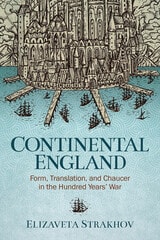
Continental England
Form, Translation, and Chaucer in the Hundred Years’ WarElizaveta Strakhov
The Ohio State University Press, 2022
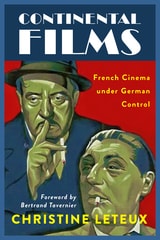
Continental Films
French Cinema under German ControlChristine Leteux
University of Wisconsin Press, 2022
Using recently opened archival documents, including reams of testimony from the épuration (purification) hearings conducted shortly after the war, Christine Leteux has produced the most authoritative and complete history of the company and its impact on the French film industry—both during the war and after. She captures the wide range of responses to the firm from those who were eager to work for a company whose ideology matched their own, to others who reluctantly accepted contracts out of necessity, to those who abhorred the company but felt compelled to participate in order to protect family members from Nazi reprisals. She examines not only the formation and management of Continental Films but also the personalities involved, the fraught and often deadly political circumstances of the period, the critical reception of the films, and many of the more notorious and controversial events.
As Bertrand Tavernier explains in his foreword, Leteux overturns many of the preconceptions and clichés that have come to be associated with Continental Films. Published to rave reviews in French and translated by the author into English, this work shatters expectations and will reinvigorate study of a lesser-known but significant period of French film history.

Contingency Across the Life Sciences
How Accidents Can Be ConsequentialEdited by Alison K McConwell, Roberta L. Millstein, Michael R. Dietrich, and John Beatty
University of Chicago Press, 0
With perspectives from biology, history, and philosophy, an investigation of the meaning and importance of contingency in the life sciences.
Were the outcomes of evolution, humans included, inevitable? In his 1989 book Wonderful Life, Stephen Jay Gould invited his readers to replay “life’s tape”—“You press the rewind button and, making sure you thoroughly erase everything that actually happened, go back to any time and place in the past—say, to the seas of the Burgess Shale. Then let the tape run again.” If the outcomes of evolution truly depend on historical contingencies, you might not get anything at all like the same trajectory—maybe no humans or anything human-like. In the first book of its kind, Contingency Across the Life Sciences brings together scientists, philosophers, and historians to explore when historical contingency really matters for our understanding of the biological past and our place within it.
Using Darwin’s and Gould’s views on chance and contingency as a starting point, the chapters clarify the many different meanings of contingency and show how biologists have moved beyond the tape of life metaphor to find contingency in a range of ecological, evolutionary, and developmental processes, including experiments with contingency in actual populations. The collection ends with a set of reflections on how historical contingency can change the ways we see ourselves as biological and moral agents in a world that could have been otherwise.
Contingency Blues
The Search For Foundations In American CriticismPaul Jay
University of Wisconsin Press, 1997
From Emerson to Rorty, American criticism has grappled in one way or another with the problem of modernity—specifically, how to determine critical and cultural standards in a world where every position seems the product of an interpretation. Part intellectual history, part cultural critique, this provocative book is an effort to shake American thought out of the grip of the nineteenth century—and out of its contingency blues.
Paul Jay focuses his analysis on two strands of American criticism. The first, which includes Richard Poirier and Giles Gunn, has attempted to revive what Jay insists is an anachronistic pragmatism derived from Emerson, James, and Dewey. The second, represented most forcefully by Richard Rorty, tends to reduce American criticism to a metadiscourse about the contingent grounds of knowledge. In chapters on Emerson, Whitman, Santayana, Van Wyck Brooks, Dewey, and Kenneth Burke, Jay examines the historical roots of these two positions, which he argues are marked by recurrent attempts to reconcile transcendentalism and pragmatism. A forceful rejection of both kinds of revisionism, Contingency Blues locates an alternative in the work of the “border studies” critics, those who give our interest in contingency a new, more concrete form by taking a more historical, cultural, and anthropological approach to the invention of literature, subjectivity, community, and culture in a pan-American context.
Contingent Faculty and the Remaking of Higher Education
A Labor HistoryEdited by Eric Fure-Slocum and Claire Goldstene
University of Illinois Press, 2024
In the United States today, almost three-quarters of the people teaching in two- and four-year colleges and universities work as contingent faculty. They share the hardships endemic in the gig economy: lack of job security and health care, professional disrespect, and poverty wages that require them to juggle multiple jobs.
This collection draws on a wide range of perspectives to examine the realities of the contingent faculty system through the lens of labor history. Essayists investigate structural changes that have caused the use of contingent faculty to skyrocket and illuminate how precarity shapes day-to-day experiences in the academic workplace. Other essays delve into the ways contingent faculty engage in collective action and other means to resist austerity measures, improve their working conditions, and instigate reforms in higher education. By challenging contingency, this volume issues a clear call to reclaim higher education’s public purpose.
Interdisciplinary in approach and multifaceted in perspective, Contingent Faculty and the Remaking of Higher Education surveys the adjunct system and its costs.
Contributors: Gwendolyn Alker, Diane Angell, Joe Berry, Sue Doe, Eric Fure-Slocum, Claire Goldstene, Trevor Griffey, Erin Hatton, William A. Herbert, Elizabeth Hohl, Miguel Juárez, Aimee Loiselle, Maria C. Maisto, Anne McLeer, Steven Parfitt, Jiyoon Park, Claire Raymond, Gary Rhoades, Jeff Schuhrke, Elizabeth Tandy Shermer, Steven Shulman, Joseph van der Naald, Anne Wiegard, Naomi R Williams, and Helena Worthen
Contingent Maps
Rethinking Western Women's History and the North American WestEdited by Susan E. Gray and Gayle Gullett
University of Arizona Press, 2014
Contingent Maps demonstrates how employing place as an analytical tool transforms Western women’s history. Gray and Gullett depict place as not only a physical location but as a way of understanding, as the spatial configuration of power relations that are always in flux. As a place and many places, the West is therefore always being constructed. All maps are contingent, as Gray and Gullett’s reading of the articles in this collection attest. Contingent Maps offers histories of Wests ranging from the nineteenth century to the near present. This synthesis of feminist history and geography has the potential to revitalize the field of Western women’s history.
Continually Working
Black Women, Community Intellectualism, and Economic Justice in Postwar MilwaukeeCrystal Marie Moten
Vanderbilt University Press, 2023
Moten emphasizes the ways in which Black women transformed the urban landscape by simultaneously occupying spaces from which they had been historically excluded and creating their own spaces. Black women refused to be marginalized within the historically white and middle‑class Milwaukee Young Women's Christian Association (MYWCA), an association whose mission centered on supporting women in urban areas. Black women forged interracial relationships within this organization and made it, not without much conflict and struggle, one of the most socially progressive organizations in the city. When Black women could not integrate historically white institutions, they created their own. They established financial and educational institutions, such as Pressley School of Beauty Culture, which beautician Mattie Pressley DeWese opened in 1946 as a result of segregation in the beauty training industry. This school served economic, educational, and community development purposes as well as created economic opportunities for Black women. Historically and contemporarily, Milwaukee has been and is still known as one of the most segregated cities in the nation. Black women have always contested urban inequality, by making space for themselves and others on the margins. In so doing, they have transformed both the urban landscape and urban history.
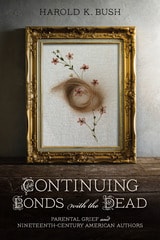
Continuing Bonds with the Dead
Parental Grief and Nineteenth-Century American AuthorsHarold K. Bush
University of Alabama Press, 2016
Grief transformed into legacy—how loss shaped the soul of American literature.
Harold K. Bush's Continuing Bonds with the Dead examines the profound transfiguration that the death of a child wrought on the literary work of nineteenth-century American writers. Taking as his subjects Harriet Beecher Stowe, Abraham Lincoln, William Dean Howells, Mark Twain, and W. E. B. Du Bois, Bush demonstrates how the death of a child became the defining "before-and-after moment" in their lives as adults and as artists. In narrating their struggles, Bush maps the intense field of creative energy induced by reverberating waves of parental grief and the larger nineteenth-century culture of mortality and grieving.
Bush explores in detail how each of these five writers grappled with and were altered by the loss of a child. He writes, for example, with moving insights about how the famed author of Adventures of Huckleberry Finn found himself adrift on a river of grief when meningitis struck down his daughter, Susy. In his deeply learned exploration of Twain's subsequent work, Bush illuminates how Twain wrote to cope with Susy's death, to make sense of her persistent presence in his life, and possibly to redeem her loss. Passionate and personal, Bush's insightful prose traces the paths of personal transformation each of these emblematic American writers took in order to survive the spiritual trauma of loss.
The savage Civil War was America's shared "before and after moment," the pivot upon which the nation's future swung. Bush's account of these five writers' grief amplifies our understanding of America's evolving, national relationship to mourning from then to the present.
Continuing the Reformation
Essays on Modern Religious ThoughtB. A. Gerrish
University of Chicago Press, 1993
Gerrish devotes three essays to each of four topics: Martin Luther and the Reformation; religious belief and the Age of Reason; Friedrich Schleiermacher and the renewal of Protestant theology; and Schleiermacher's disciple Ernst Troeltsch, for whom the theological task was to give a rigorous account of the faith prevailing in a particular religious community at a particular time. Gerrish shows how faith itself has become a primary object of inquiry, not only in the newly emerging philosophy of religion but also in a new style of church theology which no longer assumes that faith rests on immutable dogmas. For Gerrish, the new theology of Protestant liberalism takes for its primary object of inquiry the changing forms of the religious life. This important book will interest scholars of systematic Christian theology, modern intellectual and cultural history, and the history and philosophy of religion.

Continuities in Popular Culture
The Present in the Past and the Past in the Present and FutureEdited by Ray B. Brown and Ronald J. Ambrosetti
University of Wisconsin Press, 1993
Continuity and Change on the United States Courts of Appeals
Donald R. Songer, Reginald S. Sheehan, and Susan B. Haire
University of Michigan Press, 2000
The authors present the first comprehensive examination of the shifting role of the Courts of Appeals, investigating changes over time and presenting the first systematic analyses of those changes. Their work is the first book to utilize the database of the U.S. Courts of Appeals, analyzing over 15,000 cases to examine trends between 1925 and 1988. The book answers questions such as who are the judges? What are their decisional tendencies? What has been the role of region and partisan politics? Who are the litigants? And who has won and who has lost throughout the twentieth century? It is the only current, up-to-date book on the Courts of Appeals and an essential read for all scholars and students interested in American politics and judicial behavior.
Donald R. Songer is Professor of Political Science, University of South Carolina. Reginald S. Sheehan is Associate Professor of Political Science and Director of the Program for Law and Juridical Politics, Michigan State University. Susan B. Haire is Assistant Professor of Political Science, University of Georgia
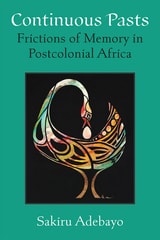
Continuous Pasts
Frictions of Memory in Postcolonial AfricaSakiru Adebayo
University of Michigan Press, 2023
Finalist: Memory Studies Association 2025 First Book Award Shortlist | April 7, 2025
In Continuous Pasts, author Sakiru Adebayo claims that the post-conflict fiction of memory in Africa depicts the intricate ways in which the past is etched on bodies and topographies, resonant in silences and memorials, and continuous even in experiences as well as structures of migration. Adebayo argues that the post-conflict fiction of memory in Africa invites critical deliberations on the continuity of the past within the realm of positionality and the domain of subjectivity—that is to say, the past is not merely present; instead, it survives, lives on, and is mediated through the subject positions of victims, perpetrators, as well as secondary and transgenerational witnesses. The book also argues that post-conflict fiction of memory in Africa shows the unfinished business of the past produces fragile regimes of peace and asynchronous temporalities that challenge progressive historicism. It contends that, in most cases in Africa, the post-conflict present is beset with a tight political economy wherein the scramble for survival trumps the ability to imagine a just future among survivors—and that it is precisely this despairing disposition toward the future that some writers of post-conflict fiction attempt to confront in their works. On the whole, Continuous Pasts shows how post-conflict fictions of memory in Africa recalibrate discourses of futurity, solidarity, responsibility, justice, survival, and reconciliation. It also contends that post-conflict fictions of memory in Africa provide the tools for imagining and theorizing a collective African memory. Each text analyzed in the book provides, in very interesting ways, an imaginative possibility and template for how post-independence African countries can ‘remember together’ using what the author describes as an African transnational memory framework.

Contours Of The Heart
Sunaina Maira
Rutgers University Press, 1998
The anthology challenges undifferentiated, stereotypical images of South Asians in North America, portraying instead the subtleties of their varied, sometimes invisible experiences. It includes fiction, poetry, essays, and photography.
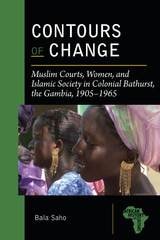
Contours of Change
Muslim Courts, Women, and Islamic Society in Colonial Bathurst, the Gambia, 1905-1965Bala Saho
Michigan State University Press, 2018
Contraband Cultures
Reframing Smuggling across Latin America and the CaribbeanEdited by Jennifer Cearns and Charles Beach
University College London, 2024
Contraband Cultures reframes smuggling activities across Latin America (including the Caribbean) and its diasporas through the lenses of kinship, political movements, economic exchange, and resistance to capitalist state hegemony, countering the popular representations of smuggling in the region as chaotic, lawless, violent, and exotic.
This book includes a broad range of chapters from social science and humanities scholars, and it uses various methodologies, theoretical traditions, and analytic approaches to explore the efficacy and valence of smuggling as a lens to examine personhood, materiality, statehood, and political (dis)connection across Latin America. Its combination of historic documentation and contemporary ethnographic research highlights the development of these cultural practices while grounding them in the capitalist and colonial refashioning of the entire region since the sixteenth century.
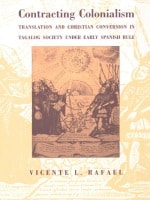
Contracting Colonialism
Translation and Christian Conversion in Tagalog Society Under Early Spanish RuleVicente L. Rafael
Duke University Press, 1993
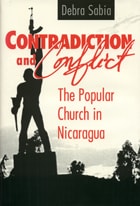
Contradiction and Conflict
The Popular Church in NicaraguaDebra Sabia
University of Alabama Press, 2013
Debra Sabia describes and analyzes the rise, growth, and fragmentation of the popular church and assesses the effect of the Christian base communities on religion, politics, and the nation's social revolutionary experiment.
Contributions to Michigan Archaeology
James E. Fitting, John R. Halsey and H. Martin Wobst
University of Michigan Press, 1968
Contributions to the History of Science
Part I. Robert of Chester's Latin Translation of the Algebra of Al-KhowarizmiWith an introduction, critical notes, and an English version by Louis Charles Karpinski
University of Michigan Press, 1915
Contributions to the History of Science
Part II. Prodromus of Nicolaus Steno's Dissertation Concerning a Solid Enclosed by Process of Nature within a SolidAn English version with an introduction and explanatory notes by John Garrett Winter
University of Michigan Press, 1916

Control and Crisis in Colonial Kenya
The Dialectic of DominationBruce Berman
Ohio University Press, 1990
This history of the political economy of Kenya is the first full length study of the development of the colonial state in Africa.
Professor Berman argues that the colonial state was shaped by the contradictions between maintaining effective political control with limited coercive force and ensuring the profitable articulation of metropolitan and settler capitalism with African societies.
This dialectic of domination resulted in both the uneven transformation of indigenous societies and in the reconstruction of administrative control in the inter-war period.
The study traces the evolution of the colonial state from its skeletal beginnings in the 1890s to the complex bureaucracy of the post-1945 era which managed the growing integration of the colony with international capital. These contradictions led to the political crisis of the Mau Mau emergency in 1952 and to the undermining of the colonial state.
The book is based on extensive primary sources including numerous interviews with Kenyan and British participants. The analysis moves from the micro-level of the relationship of the District Commissioners and the African population to the macro-level of the state and the political economy of colonialism.
Professor Berman uses the case of Kenya to make a sophisticated contribution to the theory of the state and to the understanding of the dynamics of the development of modern African political and economic institutions.
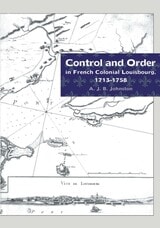
Control and Order in French Colonial Louisbourg, 1713-1758
A.J.B. Johnston
Michigan State University Press, 2001
Control and Order in French Colonial Louisbourg, 1713-1758 is the culmination of nearly a quarter century of research and writing on 18th-century Louisbourg by A. J. B. Johnston. The author uses a multitude of primary archival sources-official correspondence, court records, parish registries, military records, and hundreds of maps and plans-to put together a detailed analysis of a distinctive colonial society. Located on Cape Breton Island (then known as Île Royale), the seaport and stronghold of Louisbourg emerged as one of the most populous and important settlements in all of New France. Its economy was based on fishing and trade, and the society that developed there had little or nothing to do with the fur trade, or the seigneurial regime that characterized the Canadian interior. Johnston traces the evolution of a broad range of controlling measures that were introduced and adapted to achieve an ordered civil and military society at Louisbourg. Town planning, public celebrations, diversity in the population, use of punishments, excessive alcohol consumption, the criminal justice system, and sexual abuse are some of the windows that reveal attempts to control and regulate society. A. J. B. Johnston's Control and Order in French Colonial Louisbourg offers both a broad overview of the colony's evolution across its half-century of existence, and insightful analyses of the ways in which control was integrated into the mechanisms of everyday life.

Control of the Imaginary
Reason and Imagination in Modern TimesLuiz Costa LimaTranslated by Ronald W. SousaIntroduction by Ronald W. SousaAfterword by Jochen Schulte-Sasse
University of Minnesota Press, 1989
Control of the Imaginary was first published in 1989. Minnesota Archive Editions uses digital technology to make long-unavailable books once again accessible, and are published unaltered from the original University of Minnesota Press editions.
In Control of the Imaginary Luiz Costa Lima explains how the distinction between truth and fiction emerged at the beginning of modern times and why, upon its emergence, fiction fell under suspicion. Costa Lima not only describes the continuous relationship between Western notions of reason and subjectivity over a broad time-frame—the Renaissance to the first decade of the twentieth century—but he uses this occasion to reexamine the literary traditions of France, Italy, Spain, Portugal, England, and Germany. The book reconstructs the dominant frames in the European tradition between the Middle Ages and the nineteenth century from the perspective of a Latin American who sees the culture of his native Brazil haunted by unresolved questions from the Northern Hemisphere. Costa Lima manages to synthesize positions from philosophy, anthropology, sociology, psychology, linguistics, and history without separating the theoretical discussion from his historical reconstructions.
The first chapter situates the problem and grounds the emergent distinction between truth and fiction in a very close analysis of one of the first European historians, Fernao Lopes, who sets the tone for the condemnation of fiction in the name of the truth of history and the potential for individual interpretation. Costa Lima pursues these notions through the aesthetic debates of the seventeenth and eighteenth centuries to the writings of the French historian Michelet. He also devotes an illuminating chapter to the invention of the strictures imposed on fiction.
Controlling Anger
The Anthropology of Gisu ViolenceSuzette Heald
Ohio University Press, 1997
Controlling Anger examines the dilemmas facing rural people who live within the broader context of political instability. Following Uganda’s independence from Britain in 1962, the Bagisu men of Southeastern Uganda developed a reputation for extreme violence.
Drawing on a wide range of historical sources including local court records, statistical survey analysis, and intensive fieldwork, Suzette Heald portrays and analyzes the civil violence that grew out of intense land shortage, the marginalization of the Gisu under British rule, and the construction of male gender identity among the Gisu. Now available in a paperback edition with a new preface by the author, Controlling Anger is an important contribution to rural sociology in Africa.
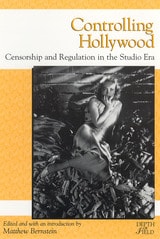
Controlling Hollywood
Censorship and Regulation in the Studio EraBernstein, Matthew
Rutgers University Press, 1999
Controlling Hollywood features ten innovative and accessible essays that examine some of the major turning points, crises, and contradictions affecting the making and showing of Hollywood movies from the 1910s through the early 1970s. The articles included here examine landmark legal cases; various self-regulating agencies and systems in the film industry (from the National Board of Review to the ratings system); and, external to Hollywood, the religious and social interest groups and government bodies that took a strong interest in film entertainment over the decades.
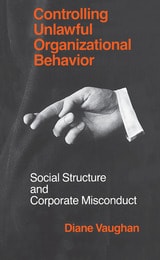
Controlling Unlawful Organizational Behavior
Social Structure and Corporate MisconductDiane Vaughan
University of Chicago Press, 1985
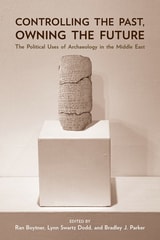
Controlling the Past, Owning the Future
The Political Uses of Archaeology in the Middle EastEdited by Ran Boytner, Lynn Swartz Dodd, and Bradley J. Parker
University of Arizona Press, 2010
The diverse contributions to this volume share a common framework in which the political use of the past is viewed as a process of social discourse. According to this model, political appropriations are seen as acts of social communication designed to accrue benefits to particular groups. Thus the contributors pay special attention to competing social visions and the filters these impose on archaeological data. But they are also attentive to the potential consequences of their own work. Indeed, as the editors remind us, “people’s lives may be affected, sometimes dramatically, because of the material remains that surround them.”
Rounding out this important volume are critiques by two top scholars who summarize and synthesize the preceding chapters.
Controversial Concordats
The Vatican's Relations with Napoleon, Mussolini, and HitlerFrank J. Coppa
Catholic University of America Press, 1999

Convair B-58 Hustler
cold war nuclear bomberNico Braas
Amsterdam University Press, 2023
However, problems occurred during the development process and costs risings went so out of control that the whole project was almost cancelled a few times. Strategic Air Command was initially against ordering the B-58 for service, not only because of its complexity but also since they saw no advantage of a Mach 2 bomber over other types. Despite this the B-58 entered service at S.A.C. in 1960. It would have a relatively short operational career.
Convening Black Intimacy
Christianity, Gender, and Tradition in Early Twentieth-Century South AfricaNatasha Erlank
Ohio University Press, 2022
An unprecedented study of how Christianity reshaped Black South Africans’ ideas about gender, sexuality, marriage, and family during the first half of the twentieth century.
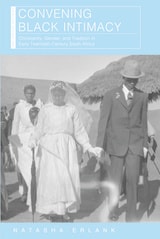
This book demonstrates that the primary affective force in the construction of modern Black intimate life in early twentieth-century South Africa was not the commonly cited influx of migrant workers but rather the spread of Christianity. During the late nineteenth and early twentieth centuries, African converts developed a new conception of intimate life, one that shaped ideas about sexuality, gender roles, and morality.
Although the reshaping of Black intimacy occurred first among educated Africans who aspired to middle-class status, by the 1950s it included all Black Christians—60 percent of the Black South African population. In turn, certain Black traditions and customs were central to the acceptance of sexual modernity, which gained traction because it included practices such as lobola, in which a bridegroom demonstrates his gratitude by transferring property to his bride’s family. While the ways of understanding intimacy that Christianity informed enjoyed broad appeal because they partially aligned with traditional ways, other individuals were drawn to how the new ideas broke with tradition. In either case, Natasha Erlank argues that what Black South Africans regard today as tradition has been unequivocally altered by Christianity.
In asserting the paramount influence of Christianity on unfolding ideas about family, gender, and marriage in Black South Africa, Erlank challenges social historians who have attributed the key factor to be the migrant labor system. Erlank draws from a wide range of sources, including popular Black literature and the Black press, African church and mission archives, and records of the South African law courts, which she argues have been underutilized in histories of South Africa. The book is sure to attract historians and other scholars interested in the history of African Christianity, African families, sexuality, and the social history of law, especially colonial law.
Convent Paradise
Arcangela Tarabotti
Iter Press, 2020
The Other Voice in Early Modern Europe - The Toronto Series volume 73
Convents and the Body Politic in Late Renaissance Venice
Jutta Gisela Sperling
University of Chicago Press, 2000
Sperling explains how women were not allowed to marry beneath their social status while men could, especially if their brides were wealthy. Faced with a shortage of suitable partners, patrician women were forced to offer themselves as "a gift not only to God, but to their fatherland," as Patriarch Giovanni Tiepolo told the Senate of Venice in 1619. Noting the declining birth rate among patrician women, Sperling explores the paradox of a marriage system that preserved the nobility at the price of its physical extinction. And on a more individual level, she tells the fascinating stories of these women. Some became scholars or advocates of women's rights, some took lovers, and others escaped only to survive as servants, prostitutes, or thieves.
Converging on Cannibals
Terrors of Slaving in Atlantic Africa, 1509–1670Jared Staller
Ohio University Press, 2019
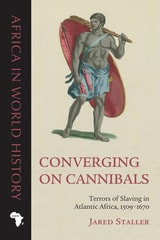
In Converging on Cannibals, Jared Staller demonstrates that one of the most terrifying discourses used during the era of transatlantic slaving—cannibalism—was coproduced by Europeans and Africans. When these people from vastly different cultures first came into contact, they shared a fear of potential cannibals. Some Africans and European slavers allowed these rumors of themselves as man-eaters to stand unchallenged. Using the visual and verbal idioms of cannibalism, people like the Imbangala of Angola rose to power in a brutal world by embodying terror itself.
Beginning in the Kongo in the 1500s, Staller weaves a nuanced narrative of people who chose to live and behave as “jaga,” alleged cannibals and terrorists who lived by raiding and enslaving others, culminating in the violent political machinations of Queen Njinga as she took on the mantle of “Jaga” to establish her power. Ultimately, Staller tells the story of Africans who confronted worlds unknown as cannibals, how they used the concept to order the world around them, and how they were themselves brought to order by a world of commercial slaving that was equally cannibalistic in the human lives it consumed.