Results by title
3071 books match the query 'Business & Economics' and 254 start with c

Chinese State Enterprises
A Regional Property Rights AnalysisDavid Granick
University of Chicago Press, 1990
Chocolate on Trial
Slavery, Politics, and the Ethics of BusinessLowell J. Satre
Ohio University Press, 2005
Chocolate on Trial: Cadbury, Slavery and the Economics of Virtue in Imperial Britain gives a lively and highly readable account of the events surrounding the libel trial in which Cadbury Bros. Ltd. sued the London Standard, following the newspaper's accusation that the firm was hypocritical in its use of slave-grown cocoa. As compelling now as at the turn of the previous century, the issues probed by Lowell J. Satre give invaluable historical background to contemporary issues of business ethics, corporate social responsibility, and globalization. The story Satre tells illuminates what a stubbornly persistent institution slavery was and shows how Cadbury, a company with a well-regarded brand name and logo, endured ethical dilemmas and challenges to its record for social responsibility. Chocolate on Trial brings to life the age-old conflict between economic interests and the value of human life.
Satre illuminates the stubborn persistence of the institution of slavery and shows how Cadbury, a company with a well-regarded brand name from the nineteenth century, faced ethical dilemmas and challenges to its record for social responsibility. Chocolate on Trial brings to life the age-old conflict between economic interests and regard for the dignity of human life.
Choice Over Time
George Loewenstein
Russell Sage Foundation, 1992
Choice-Free Rationality
A Positive Theory of Political BehaviorRobert Grafstein
University of Michigan Press, 1999
Choke Points
Logistics Workers Disrupting the Global Supply ChainEdited by Jake Alimahomed-Wilson and Immanuel Ness
Pluto Press, 2017
This is the global supply chain, and, if the chain is broken, capitalism grinds to a halt. This book looks at case studies across the world to uncover a network of resistance by these workers who, despite their importance, often face vast exploitation and economic violence.
Experiencing first hand wildcat strikes, organised blockades and boycotts, the authors explore a diverse range of case studies, from South China dockworkers to the transformation of the port of Piraeus in Greece, and from the Southern California logistics sector, to dock and logistical workers in Chile and unions in Turkey.

Christmas Trees for Pleasure and Profit
Wray, Robert D
Rutgers University Press, 2008
A perennial bestseller, this illustrated guide covers selecting land, choosing species, planting, harvesting, and managing a plantation. Wray provides guidance for choosing species suitable for the grower's situation, where and how to get planting stock, and how to care for it. The planting process is described in detail, including both hand and machine methods. The book presents useful techniques for protecting the growing trees from weeds, animals, fire, insects, and disease, and offers a full description of shearing or shaping trees to improve their form and densityùkeys to a successful crop.
As the grower's job is not done until the trees are sold, issues of grading, harvesting, advertising, and marketing are examined. A chapter on finances deals with costs, profits, and taxes. From novice to experienced grower, there is something in this book for everyone.
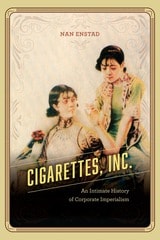
Cigarettes, Inc.
An Intimate History of Corporate ImperialismNan Enstad
University of Chicago Press, 2018
In this startling account of innovation and expansion, Enstad uncovers a corporate network rooted in Jim Crow segregation that stretched between the United States and China and beyond. Cigarettes, Inc. teems with a global cast—from Egyptian, American, and Chinese entrepreneurs to a multiracial set of farmers, merchants, factory workers, marketers, and even baseball players, jazz musicians, and sex workers. Through their stories, Cigarettes, Inc. accounts for the cigarette’s spectacular rise in popularity and in the process offers nothing less than a sweeping reinterpretation of corporate power itself.
Cities and Economic Development
From the Dawn of History to the PresentPaul Bairoch
University of Chicago Press, 1988
In this revised translation of De Jéricho à Mexico, Paul Bairoch seeks the answers to these questions and provides a comprehensive study of the evolution of the city and its relation to economic life. Bairoch examines the development of cities from the dawn of urbanization (Jericho) to the explosive growth of the contemporary Third World city. In particular, he defines the roles of agriculture and industrialization in the rise of cities.
"A hefty history, from the Neolithic onward. It's ambitious in scope and rich in subject, detailing urbanization and, of course, the links between cities and economies. Scholarly, accessible, and significant."—Newsday
"This book offers a path-breaking synthesis of the vast literature on the history of urbanization."—John C. Brown, Journal of Economic Literature
"One leaves this volume with the feeling of positions intelligently argued and related to the existing state of theory and knowledge. One also has the pleasure of reading a book unusually well-written. It will long both be a standard and stimulate new thought on the central issue of urban and economic growth."—Thomas A. Reiner, Annals of the American Academy of Political and Social Science
Cities in the Anthropocene
New Ecology and Urban PoliticsIhnji Jon
Pluto Press, 2021
Climate change is real, and extreme weather events are its physical manifestations. These extreme events affect how we live and work in cities, and subsequently the way we design, plan, and govern them. Taking action ‘for the environment’ is not only a moral imperative; instead, it is activated by our everyday experience in the city.
Based on the author’s site visits and interviews in Darwin (Australia), Tulsa (Oklahoma), Cleveland (Ohio), and Cape Town (South Africa), this book tells the story of how cities can lead a transformative pro-environment politics.
National governments often fail to make binding agreements that bring about radical actions for the environment. This book shows how cities, as local sites of mobilizing a collective, political agenda, can be frontiers for activating the kind of environmental politics that appreciates the role of ‘nature’ in the everyday functioning of our urban life.
Cities in the Urban Age
A DissentRobert A. Beauregard
University of Chicago Press, 2018
For Beauregard, the city is a cauldron for four haunting contradictions. First, cities are equally defined by both their wealth and their poverty. Second, cities are simultaneously environmentally destructive and yet promise sustainability. Third, cities encourage rule by political machines and oligarchies, even as they are essentially democratic and at least nominally open to all. And fourth, city life promotes tolerance among disparate groups, even as the friction among them often erupts into violence. Beauregard offers no simple solutions or proposed remedies for these contradictions; indeed, he doesn’t necessarily hold that they need to be resolved, since they are generative of city life. Without these four tensions, cities wouldn’t be cities. Rather, Beauregard argues that only by recognizing these ambiguities and contradictions can we even begin to understand our moral obligations, as well as the clearest paths toward equality, justice, and peace in urban settings.
Cities on the Beach
Management Issues of Developed Coastal BarriersEdited by Rutherford H. Platt, Sheila G. Pelczarski, and Barbara K. Burbank
University of Chicago Press, 1987
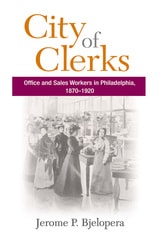
City of Clerks
Office and Sales Workers in Philadelphia, 1870-1920Jerome P. Bjelopera
University of Illinois Press, 2005
Below the middle class managers and professionals yet above the skilled blue-collar workers, sales and office workers occupied an intermediate position in urban America's social structure as the nation industrialized. Jerome P. Bjelopera traces the shifting occupational structures and work choices that facilitated the emergence of a white-collar workforce. His fascinating portrait reveals the lives led by Philadelphia's male and female clerks, both inside and outside the workplace, as they formed their own clubs, affirmed their "whiteness," and challenged sexual norms.
A vivid look at an overlooked but recognizable workforce, City of Clerks reveals how the notion of "white collar" shifted over half a century.
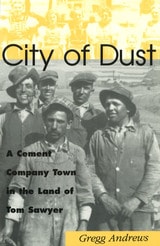
City of Dust
A Cement Company Town in the Land of Tom SawyerGregg Andrews
University of Missouri Press, 2002
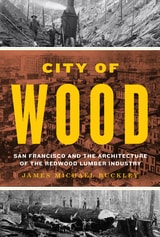
City of Wood
San Francisco and the Architecture of the Redwood Lumber IndustryJames Michael Buckley
University of Texas Press, 2024
2025 John Brinckerhoff Jackson Prize, Association of American Geographers
2025 Abbott Lowell Cummings Award
2025 John Brinckerhoff Jackson Prize, UVA Center for Cultural Landscapes
2026 Hagley Prize in Business History, Hagley Museum and Library
2025 Honorable Mention, PROSE Award, Association of American Publishers (AAP)
California’s 1849 gold rush triggered creation of the “instant city” of San Francisco as a base to exploit the rich natural resources of the American West. City of Wood examines how capitalists and workers logged the state’s vast redwood forests to create the financial capital and construction materials needed to build the regional metropolis of San Francisco. Architectural historian James Michael Buckley investigates the remote forest and its urban core as two poles of a regional “city.” This city consisted of a far-reaching network of spaces, produced as company owners and workers arrayed men and machines to extract resources and create human commodities from the region’s rich natural environment.
Combining labor, urban, industrial, and social history, City of Wood employs a variety of sources—including contemporary newspaper articles, novels, and photographs—to explore the architectural landscape of lumber, from backwoods logging camps and company towns in the woods to busy lumber docks and the homes of workers and owners in San Francisco. By imagining the redwood lumber industry as a single community spread across multiple sites—a “City of Wood”—Buckley demonstrates how capitalist resource extraction links different places along the production value chain. The result is a paradigm shift in architectural history that focuses not just on the evolution of individual building design across time, but also on economic connections that link the center and periphery across space.

Civic Agriculture
Reconnecting Farm, Food, and CommunityThomas A. Lyson
University Press of New England, 2004
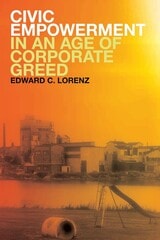
Civic Empowerment in an Age of Corporate Greed
Edward C. Lorenz
Michigan State University Press, 2012
A thought-provoking investigation of an urgent issue facing American communities today, Edward C. Lorenz’s book examines the intersection of corporate irresponsibility and civic engagement. At the heart of this case study is a group of firms responsible for seven of the most contaminated Superfund sites in the United States, the largest food contamination accident in U.S. history, stunning stock and financial manipulations, and a massive shift of jobs off shore. In the face of these egregious environmental, employee, and investor abuses, several communities impacted by these firms organized to confront and combat failures in corporate and bureaucratic leadership, winning notable victories over major financiers, lobbyists, and indifferent or ineffective government agencies. A critical analysis of public and private leadership, business and economic ethics, and civic life, this book concludes with a stirring blueprint for other communities facing similarly overwhelming opposition.
Civic Labors
Scholar Activism and Working-Class StudiesEdited by Dennis Deslippe, Eric Fure-Slocum, and John W. McKerley
University of Illinois Press, 2016

Civilizing Money
Hume, his Monetary Project, and the Scottish EnlightenmentGeorge Caffentzis
Pluto Press, 2021
Taking the Scottish Enlightenment philosopher David Hume as its subject, this book breaks new ground in focusing its lens on a little-studied aspect of Hume’s thinking: his understanding of money.
George Caffentzis makes both an intervention in the field of monetary philosophy and into Marxian conceptions of the relation between philosophy and capitalist development. He vividly charts the ways in which Hume’s philosophy directly informed the project of ‘civilizing’ the people of the Scottish Highlands and pacifying the English proletariat in response to the revolts of both groups at the heart of the empire.
Built on careful historical and philosophical detective work, Civilizing Money offers a stimulating and radical political reading of the ways in which Hume’s fundamental philosophical claims performed concrete political functions.
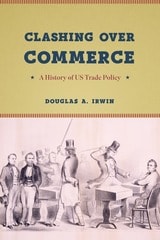
Clashing over Commerce
A History of US Trade PolicyDouglas A. Irwin
University of Chicago Press, 2017
Douglas A. Irwin’s Clashing over Commerce is the most authoritative and comprehensive history of US trade policy to date, offering a clear picture of the various economic and political forces that have shaped it. From the start, trade policy divided the nation—first when Thomas Jefferson declared an embargo on all foreign trade and then when South Carolina threatened to secede from the Union over excessive taxes on imports. The Civil War saw a shift toward protectionism, which then came under constant political attack. Then, controversy over the Smoot-Hawley tariff during the Great Depression led to a policy shift toward freer trade, involving trade agreements that eventually produced the World Trade Organization. Irwin makes sense of this turbulent history by showing how different economic interests tend to be grouped geographically, meaning that every proposed policy change found ready champions and opponents in Congress.
As the Trump administration considers making major changes to US trade policy, Irwin’s sweeping historical perspective helps illuminate the current debate. Deeply researched and rich with insight and detail, Clashing over Commerce provides valuable and enduring insights into US trade policy past and present.
Classics of Social Choice
Iain McLean and Arnold Urken, Editors
University of Michigan Press, 1995
Clean Clothes
A Global Movement to End SweatshopsLiesbeth Sluiter
Pluto Press, 2009
The Clean Clothes Campaign is a worldwide movement that aims to improve the wages and conditions of sweatshop workers. This is the story of their struggle.
Large retailers such as Tesco, Walmart and Carrefour lure shoppers in with prices that seem too good to be true. This book shows that they're too good to be fair. All along the industry's supply chain, workers, often children, are exploited through poverty wages, unpaid overtime and harsh anti-union measures. The campaign urges those in charge of the garment industry's supply lines to protect their workers and treat them fairly.
This dynamic account of direct engagement by concerned consumers is a must read for those that see globalisation differently and want their shopping choices to support the most vulnerable people involved in the clothing industry.

Climate Dependence and Food Problems in Russia, 1900-1990
The Interaction of Climate and Agricultural Policy and Their Effect on Food ProblemsNikolai M. Dronin
Central European University Press, 2006

Climate Games
Experiments on How People Prevent DisasterTalbot M. Andrews, Andrew W. Delton, and Reuben Kline
University of Michigan Press, 2024
Yet real climate change is a complex social dilemma involving the world’s nearly eight billion inhabitants. In the real world, the worst effects of climate change are likely to be felt by developing countries, while most of the decisions will be made by rich, industrialized countries. And while the world as a whole would be better off if all nations reduced their greenhouse gas emissions, any given nation could decide it would be even better off if it continued emitting and let other nations take care of the problem. These disaster experiments test how real people respond to climate change’s unique constellation of challenges and deliver a positive message: People will prevent disaster.
Clipped Coins, Abused Words, and Civil Government
John Locke’s Philosophy of MoneyGeorge Caffentzis
Pluto Press, 2021
This book situates John Locke’s philosophy of knowledge and his political theory within his engagement in British monetary debates of the 17th and 18th century.
Anchored in extensive archival research, George Caffentzis offers the most expansive reading of Locke’s economic thought to date, contextualizing it within the expansion of capitalist accumulation on a world scale and the universality of money as a medium of exchange.
Updated with a new introduction by Paul Rekret, a new foreword by Harry Cleaver and new material by the author, Clipped Coins, Abused Words, and Civil Government continues to make a significant intervention in contemporary debates around the history of capitalism, colonialism and philosophy.

Cochabamba, 1550-1900
Colonialism and Agrarian Transformation in BoliviaBrooke Larson
Duke University Press, 1998
This study of Bolivia uses Cochabamba as a laboratory to examine the long-term transformation of native Andean society into a vibrant Quechua-Spanish-mestizo region of haciendas and smallholdings, towns and villages, peasant markets and migratory networks caught in the web of Spanish imperial politics and economics. Combining economic, social, and ethnohistory, Brooke Larson shows how the contradictions of class and colonialism eventually gave rise to new peasant, artisan, and laboring groups that challenged the evolving structures of colonial domination. Originally published in 1988, this expanded edition includes a new final chapter that explores the book’s implications for understanding the formation of a distinctive peasant political culture in the Cochabamba valleys over the eighteenth and nineteenth centuries.
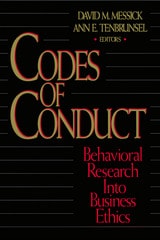
Codes of Conduct
Behavioral Research into Business EthicsDavid M. Messick
Russell Sage Foundation, 1996
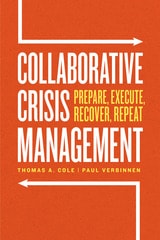
Collaborative Crisis Management
Prepare, Execute, Recover, RepeatThomas A. Cole and Paul Verbinnen
University of Chicago Press, 2022
All organizations face crises from time to time, and at a time when news, information (or misinformation), and rumors can spread quickly, a timely and thoughtful response to a crisis, is critical. In this book, two industry insiders offer a primer on how organizational leadership should prepare for and handle crises. The steps, plans, and cautions they offer show how organizations can deal openly and honestly with challenges while continuing to survive and prosper.
Thomas A. Cole and Paul Verbinnen show how successful crisis management requires a multi-disciplined approach enacted collaboratively under strong leadership. Drawing on many real-world examples, they speak to not only what to do during a crisis, but also the need for preparedness and post-crisis follow-up. The book is organized around a broad range of discrete issues that need to be addressed in managing any crisis and provides the steps required to successfully address each of those issues. The authors urge crisis managers to focus attention equally on four phases of management: prepare, execute, recover, and then repeat (after reflecting on the results of the last crisis) with the next one. The emphasis is on preparation and planning, setting up the procedures, and organizing the teams that will respond to each crisis.
Unlike other crisis books that focus solely on communication, Collaborative Crisis Management goes further and in addition to communication, it discusses both the legal obligations and organizational challenges that accompany a crisis. The result is an indispensable guide for leaders, board members, and business students.
Collaborative Crisis Management
Prepare, Execute, Recover, RepeatThomas A. Cole and Paul Verbinnen
University of Chicago Press, 2022
Two experienced corporate crisis advisors offer a thorough and approachable guide to successful crisis management from anticipation to resolution.
All organizations face crises from time to time, and at a time when news, information (or misinformation), and rumors can spread quickly, a timely and thoughtful response to a crisis, is critical. In this book, two industry insiders offer a primer on how organizational leadership should prepare for and handle crises. The steps, plans, and cautions they offer show how organizations can deal openly and honestly with challenges while continuing to survive and prosper.
Thomas A. Cole and Paul Verbinnen show how successful crisis management requires a multi-disciplined approach enacted collaboratively under strong leadership. Drawing on many real-world examples, they speak to not only what to do during a crisis, but also the need for preparedness and post-crisis follow-up. The book is organized around a broad range of discrete issues that need to be addressed in managing any crisis and provides the steps required to successfully address each of those issues. The authors urge crisis managers to focus attention equally on four phases of management: prepare, execute, recover, and then repeat (after reflecting on the results of the last crisis) with the next one. The emphasis is on preparation and planning, setting up the procedures, and organizing the teams that will respond to each crisis.
Unlike other crisis books that focus solely on communication, Collaborative Crisis Management goes further and in addition to communication, it discusses both the legal obligations and organizational challenges that accompany a crisis. The result is an indispensable guide for leaders, board members, and business students.
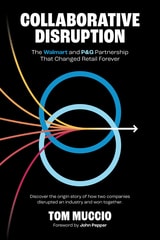
Collaborative Disruption
The Walmart and P&G Partnership That Changed Retail ForeverTom Muccio
Epic Books, 2024
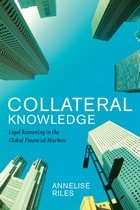
Collateral Knowledge
Legal Reasoning in the Global Financial MarketsAnnelise Riles
University of Chicago Press, 2011
Who are the agents of financial regulation? Is good (or bad) financial governance merely the work of legislators and regulators? Here Annelise Riles argues that financial governance is made not just through top-down laws and policies but also through the daily use of mundane legal techniques such as collateral by a variety of secondary agents, from legal technicians and retail investors to financiers and academics and even computerized trading programs.
Drawing upon her ten years of ethnographic fieldwork in the Japanese derivatives market, Riles explores the uses of collateral in the financial markets as a regulatory device for stabilizing market transactions. How collateral operates, Riles suggests, is paradigmatic of a class of low-profile, mundane, but indispensable activities and practices that are all too often ignored as we think about how markets should work and be governed. Riles seeks to democratize our understanding of legal techniques, and demonstrate how these day-to-day private actions can be reformed to produce more effective forms of market regulation.
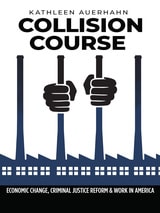
Collision Course
Economic Change, Criminal Justice Reform, and Work in AmericaKathleen Auerhahn
Rutgers University Press, 2022
Recently, a widespread consensus has emerged that the era of “mass incarceration” is at an end, reflected in a declining prison population. Criminal justice reforms such as diversion and problem-solving courts, a renewed focus on reentry, and drug policy reform have as their goal keeping more individuals with justice system involvement out of prisons, in the community and subsequently in the labor force, which lacks the capacity to accommodate these additional would-be workers. This poses significant problems for criminal justice practice, which relies heavily on employment as a signal of offenders’ intentions to live a law-abiding lifestyle. The diminished capacity of the economy to utilize the labor of all who have historically been expected to work presents significant challenges for American society. Work, in the American ethos is the marker of success, masculinity and how one “contributes to society.” What are the consequences of ignoring these converging structural trends? This book examines these potential consequences, the meaning of work in American society, and suggests alternative redistributive and policy solutions to avert the collision course of these economic and criminal justice policy trends.

Colonel Sanders and the American Dream
By Josh Ozersky
University of Texas Press, 2012
From Aunt Jemima and Uncle Ben to the Jolly Green Giant and Ronald McDonald, corporate icons sell billions of dollars’ worth of products. But only one of them was ever a real person—Colonel Sanders of Kentucky Fried Chicken/KFC. From a 1930s roadside café in Corbin, Kentucky, Harland Sanders launched a fried chicken business that now circles the globe, serving “finger lickin’ good” chicken to more than twelve million people every day. But to get there, he had to give up control of his company and even his own image, becoming a mere symbol to people today who don’t know that Colonel Sanders was a very real human being. This book tells his story—the story of a dirt-poor striver with unlimited ambition who personified the American Dream.
Acclaimed cultural historian Josh Ozersky defines the American Dream as being able to transcend your roots and create yourself as you see fit. Harland Sanders did exactly that. Forced at age ten to go to work to help support his widowed mother and sisters, he failed at job after job until he went into business for himself as a gas station/café/motel owner and finally achieved a comfortable, middle-class life. But then the interstate bypassed his business and, at sixty-five, Sanders went broke again. Packing his car with a pressure cooker and his secret blend of eleven herbs and spices, he began peddling the recipe for “Colonel Sanders’ Kentucky Fried Chicken” to small-town diners in exchange for a nickel for each chicken they sold. Ozersky traces the rise of Kentucky Fried Chicken from this unlikely beginning, telling the dramatic story of Sanders’ self-transformation into “The Colonel,” his truculent relationship with KFC management as their often-disregarded goodwill ambassador, and his equally turbulent afterlife as the world’s most recognizable commercial icon.
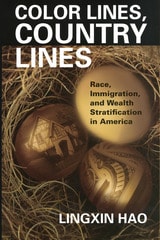
Color Lines, Country Lines
Race, Immigration, and Wealth Stratification in AmericaLingxin Hao
Russell Sage Foundation, 2007

Come Buy, Come Buy
Shopping and the Culture of Consumption in Victorian Women’s WritingKrista Lysack
Ohio University Press, 2008
From the 1860s through the early twentieth century, Great Britain saw the rise of the department store and the institutionalization of a gendered sphere of consumption. Come Buy, Come Buy considers representations of the female shopper in British women’s writing and demonstrates how women’s shopping practices are materialized as forms of narrative, poetic, and cultural inscription, showing how women writers emphasize consumerism as productive of pleasure rather than the condition of seduction or loss. Krista Lysack examines works by Christina Rossetti, Mary Elizabeth Braddon, George Eliot, and Michael Field, as well as the suffragette newspaper Votes for Women, in order to challenge the dominant construction of Victorian femininity as characterized by self-renunciation and the regulation of appetite.
Come Buy, Come Buy considers not only literary works, but also a variety of archival sources (shopping guides, women’s fashion magazines, household management guides, newspapers, and advertisements) and cultural practices (department store shopping, shoplifting and kleptomania, domestic economy, and suffragette shopkeeping). With this wealth of sources, Lysack traces a genealogy of the woman shopper from dissident domestic spender to aesthetic connoisseur, from curious shop-gazer to political radical.
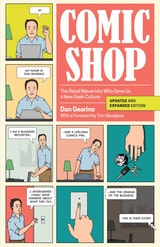
Comic Shop
The Retail Mavericks Who Gave Us a New Geek CultureDan Gearino
Ohio University Press, 2019
The modern comic book shop was born in the early 1970s. Its rise was due in large part to Phil Seuling, the entrepreneur whose direct market model allowed shops to get comics straight from the publishers. Stores could then better customize their offerings and independent publishers could access national distribution. Shops opened up a space for quirky ideas to gain an audience and helped transform small-press series, from Teenage Mutant Ninja Turtles to Bone, into media giants.
Comic Shop is the first book to trace the history of these cultural icons. Dan Gearino brings us from their origins to the present-day, when the rise of digital platforms and a changing retail landscape have the industry at a crossroads. When the book was first published in 2017, Gearino had spent a year with stores around the country, following how they navigated the business. For this updated and expanded paperback edition, he covers the wild retail landscape of 2017 and 2018, a time that was brutal for stores and rich for comics as an art form.
Along the way he interviews pioneers of comics retailing and other important players, including many women; top creators; and those who continue to push the business in new directions. A revised guide to dozens of the most interesting shops around the United States and Canada is a bonus for fans.
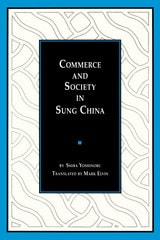
Commerce and Society in Sung China
Shiba Yoshinobu; Translated by Mark Elvin
University of Michigan Press, 1969

Commercial Cinema
The History of the Advertising Film in the United StatesMartin L. Johnson
University of Illinois Press, 2026
An advertising film placed promotional content into movies presented as travelogues, educational shorts, industrial films, or scenes of daily life. Business and government, meanwhile, built systems to distribute the films to unsuspecting audiences in schools, churches, civic groups, and universities. Through experimentation, corporations honed sophisticated tools of persuasion that used moving images to influence the public. What they learned reshaped notions of storytelling, technology, and corporate communication while setting the stage for advertising’s symbiotic relationship with television.
Persuasive and expert, Commercial Cinema illuminates the changing fortunes and eventual fate of a film genre in disguise.
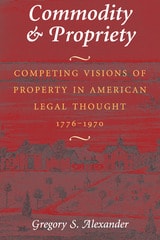
Commodity & Propriety
Competing Visions of Property in American Legal Thought, 1776-1970Gregory S. Alexander
University of Chicago Press, 1997
In demonstrating how the understanding of property as a private basis for the public good has competed with the better-known market-oriented conception, Alexander radically rewrites the history of property, with significant implications for current political debates and recent Supreme Court decisions.
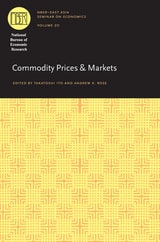
Commodity Prices and Markets
Edited by Takatoshi Ito and Andrew K. Rose
University of Chicago Press, 2011
Fluctuations of commodity prices, most notably of oil, capture considerable attention and have been tied to important economic effects, such as inflation and low rates of economic growth. Commodity Prices and Markets advances our understanding of the consequences of these fluctuations, providing both general analysis and a particular focus on the countries of the Pacific Rim. The volume addresses three distinct subjects: the difficulties in forecasting commodity prices, the effects of exogenous commodity price shocks on the domestic economy, and the relationship between price shocks and monetary policy. The ability to forecast commodity prices is difficult but of great importance to businesses and governments, and this volume will be invaluable to professionals and policy makers interested in the field.
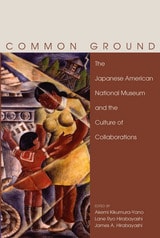
Common Ground
The Japanese American National Museum and the Culture of CollaborationsAkemi Kikumura-Yano
University Press of Colorado, 2005
Current scholarship in museum studies is generally limited to interpretations by scholars and curators. Common Ground brings descriptive data to the intellectual canon and illustrates how museum institutions must be transformed and recreated to suit the needs of the twenty-first century.

Commoning with George Caffentzis and Silvia Federic
Camille Barbagallo, Nicholas Beuret and David Harvie
Pluto Press, 2019
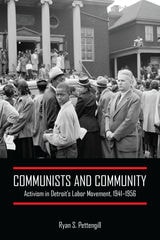
Communists and Community
Activism in Detroit's Labor Movement, 1941-1956Ryan S. Pettengill
Temple University Press, 2020
Communists and Community seeks to reframe the traditional chronology of the Communist Party in the United States as a means to better understand the change that occurred in community activism in the mid-twentieth century. Ryan Pettengill argues that Popular Front activism continued to flourish throughout the war years and into the postwar period. In Detroit, where there was a critical mass of heavy industry, Communist Party activists mobilized support for civil rights and affordable housing, brought attention to police brutality, sought protection for the foreign-born, and led a movement for world peace.
Communists and Community demonstrates that the Communist Party created a social space where activists became effective advocates for the socioeconomic betterment of a multiracial work force. Pettengill uses Detroit as a case study to examine how communist activists and their sympathizers maintained a community to enhance the quality of life for the city’s working class. He investigates the long-term effects of organized labor’s decision to force communists out of the unions and abandon community-based activism. Communists and Community recounts how leftists helped workers, people of color, and other under-represented groups became part of the mainstream citizenry in America.
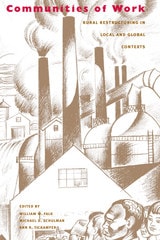
Communities of Work
Rural Restructuring in Local and Global ContextsWilliam W. Falk
Ohio University Press, 2003
The image of rural America portrayed in this illuminating study is one that is vibrant, regionally varied, and sometimes heroic. Communities of Work focuses on the ways in which rural people and places are affected by political, social, and economic forces far outside their control and how they sustain themselves and their communities in response.
Bringing together the two fundamental concepts of community—where the relationships and practices of daily life occur—and work, in which an elementary exchange occurs, Communities of Work bridges several fields of study. Presented here is the contextual and embedded nature of social relations and the complexity involved in understanding them. Through the use of multiple case studies, the authors apply diverse theories and methods in seeking an integrated outcome, one captured by “communities of work.”
Beginning with a description of the broad changes in work and economic activities across the United States, ranging from the Ohio River Valley to a western boomtown, the book shifts its focus to the interplay of work, family, and local networks in time and place. Activities range from fishing in the Mississippi Delta to farming and family life in the Midwest. The authors then highlight how rural people and places respond to extra-local, increasingly global forces in settings as diverse as rural South Carolina and Wisconsin.
A certain communitarian theme runs through Communities of Work. It is about people and communities not merely reacting, but instead responding in ways that reflect their local culture, while being cognizant of the larger world within which they live.

Community over Chaos
An Ecological Perspective on Communication EthicsJames A. Mackin
University of Alabama Press, 1997
This ecology of ethics seeks to balance the needs of the individual and those of the various levels of community.
As James A. Mackin, Jr., shows, both modernism and postmodernism have undermined the traditional foundations for ethics. Using an ecological model, however, Community over Chaos develops a common ground for ethical judgments about communication, thus countering the current theoretical climate of pessimistic cynicism toward the very possibility of ethics.
This theoretical pessimism is not merely an academic problem. The general public is becoming more and more disillusioned about the possibility of ethical communication. We are unable to teach principles of communicative ethics in our primary and secondary schools because we cannot agree on a common ground for those principles. Instead, we teach a narrow form of competence that is concerned primarily with short-term, individual success. Because our communities are built on our communicative practices, our inability to justify communicative ethics must ultimately lead to the disintegration of our communities.
Mackin's ecological model assumes that each of us is a communicative system operating within larger communicative systems that together form our communicative ecosystem. Virtues of the ecological approach are practical wisdom, based in fuzzy logic, and communicative openness and honesty.
Mackin recognizes the importance of both chaos and community in our communicative ecosystems. Chaos, as the source of originality and creativity, can contribute to growth and development; community provides the source of regularity and nurture that makes chaos endurable.
Company Men
The Invention of Shareholder Value and the Splintering of the American EconomySean Delehanty
University of Chicago Press, 2025
How an esoteric economic theory—and its most devout believers—changed the world forever.
In the modern economy, stock price is king. The value of a corporation is measured in how it enriches its shareholders, even when doing so subtracts from long-term growth or social good. Greed, in the last half-century of corporate practice, has become very good. Company Men is a sweeping intellectual history of how shareholder value rose from the lesser-known edges of academic theory to the vanguard of corporate practice.
Historian Sean Delehanty marshals archival resources to reveal how a group of motivated consultants, activist investors, and academic economists successfully branded shareholder value as the antidote to problems of management and economic stagnation in the 1970s. In their success, they created a class of well-heeled managers who executed shareholder-value theory as an everyday practice—and at the expense of most everything else. Delehanty’s history of the modern American corporation is a sobering account of the business regime that would rule the world and produce no shortage of regrets—even amongst those who championed it. Company Men is intellectual history at its most vital, offering a surprising origin story of our economy’s discontents.
Company Towns
Industry Power and the Historical Foundations of Public MistrustElizabeth Mitchell Elder
University of Chicago Press, 2026
Reveals the deep, historical roots of public distrust in former mining areas in the US, shedding new light on the corrosive feedback loops that persist today.
In Company Towns, Elizabeth Mitchell Elder examines the long-lasting political legacies of mining-company dominance in the Midwest and Appalachia. While the economic consequences of deindustrialization are well-known, Elder shifts the focus to a more insidious problem: the political dysfunction that took root long before the mines shut down.
Drawing on historical and administrative data, Elder shows that the coal industry hindered the growth of local government capacity in the places where it was dominant. Mining companies also engaged in outright corruption to shape local governments, practices which local elites then carried forward. When mining companies withdrew, they left behind not just economic decline, but local governments ill-equipped to govern.
These patterns have had enduring consequences for public life. Elder shows how these historical experiences have fueled a broader cynicism toward government, in which citizens expect little from public institutions and doubt the usefulness of elections. Company Towns underscores the consequences of corporate dominance for state capacity, public opinion, and democratic accountability today.
Comparative Law and Economics
Ugo Mattei
University of Michigan Press, 1998
Mattei shows how concepts from economics can be applied to the study of comparative law. He then applies the concepts to several significant problems in comparative law, including the history and sources of law, differences between civil and common law systems, and the reasons for legal change and the movement of law from one country to another. He looks at specific problems in property, contracts, and trust law. Finally he uses the insights he has developed to understand the issues involved in changing law in developing countries and in formerly socialist countries.
This book will be of interest to scholars of law, economics, and development, as well as those interested in transformation in formerly communist states.
Ugo Mattei is Alfred and Hanna Fromm Professor of International and Comparative Law, Hastings College of Law, University of California; and Professor of Civil Law, University of Trento.

Comparative Media Policy, Regulation and Governance in Europe
Unpacking the Policy CycleEdited by Leen d’Haenens, Helena Sousa, and Josef Trappel
Intellect Books, 2018

Comparative Media Systems
European and Global PerspectivesMiklós Sükösd
Central European University Press, 2010