Results by title
2646 books match the query 'History & Criticism' and 189 start with c
City of Screens
Imagining Audiences in Manila's Alternative Film CultureJasmine Nadua Trice
Duke University Press, 2021
Civic Jazz
American Music and Kenneth Burke on the Art of Getting AlongGregory Clark
University of Chicago Press, 2015
Jazz music, Clark argues, demonstrates how this aesthetic rhetoric of identification can bind people together through their shared experience in a common project. While such shared experience does not demand agreement—indeed, it often has an air of competition—it does align people in practical effort and purpose. Similarly, Clark shows, Burke considered Americans inhabitants of a persistently rhetorical situation, in which each must choose constantly to identify with some and separate from others. Thought-provoking and path-breaking, Clark’s harmonic mashup of music and rhetoric will appeal to scholars across disciplines as diverse as political science, performance studies, musicology, and literary criticism.
Claire Denis
Judith Mayne
University of Illinois Press, 2005
Widely regarded as one of the most innovative and passionate filmmakers working in France today, Claire Denis has continued to make beautiful and challenging films since the 1988 release of her first feature, Chocolat. Judith Mayne's comprehensive study traces Denis's career and discusses her major feature films in rich detail.
Born in Paris but raised in West Africa, Denis explores in her films the legacies of French colonialism and the complex relationships between sexuality, gender, and race. From the adult woman who observes her past as a child in Cameroon to the Lithuanian immigrant who arrives in Paris and watches a serial killer to the disgraced French Foreign Legionnaire attempting to make sense of his past, the subjects of Denis's films continually revisit themes of watching, bearing witness, and making contact, as well as displacement, masculinity, and the migratory subject.
Class-Passing
Social Mobility in Film and Popular CultureGwendolyn Audrey Foster
Southern Illinois University Press, 2005
Oprah Winfrey, Donald Trump, Roseanne Barr, Martha Stewart, and Britney Spears typify class-passers—those who claim different socioeconomic classes as their own—asserts Gwendolyn Audrey Foster in Class-Passing: Social Mobility in Film and Popular Culture. According to new rules of social standing in American popular culture, class is no longer defined by wealth, birth, or education. Instead, today’s notion of class reflects a socially constructed and regulated series of performed acts and gestures rooted in the cult of celebrity.
In examining the quest for class mobility, Foster deftly traces class-passing through the landscape of popular films, reality television shows, advertisements, the Internet, and video games. She deconstructs the politics of celebrity, fashion, and conspicuous consumerism and analyzes class-passing as it relates to the American Dream, gender, and marriage.
Class-Passing draws on dozens of examples from popular culture, from old movie classics and contemporary films to print ads and cyberspace, to illustrate how flagrant displays of wealth that were once unacceptable under the old rules of behavior are now flaunted by class-passing celebrities. From the construction worker in Who Wants to Marry a Millionaire? to the privileged socialites Paris Hilton and Nicole Richie of The Simple Life, Foster explores the fantasy of contact between the classes. She also refers to television class-passers from The Apprentice, Queer Eye for the Straight Guy, and Survivor and notable class-passing achievers Warren Buffet, Bill Gates, and P. Diddy.
Class-Passing is a notable examination of the historical, social, and ideological shifts in expressions of class. The first serious book of its kind, Class-Passing is fresh, innovative, and invaluable for students and scholars of film, television, and popular culture.
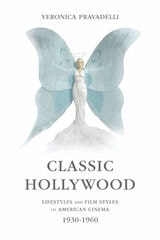
Classic Hollywood
Lifestyles and Film Styles of American Cinema, 1930-1960Veronica Pravadelli
University of Illinois Press, 2015
Pravadelli sets her analysis apart by paying particular attention to the gendered desires and identities exemplified in the films. Availing herself of the significant advances in film theory and modernity studies that have taken place since similar surveys first saw publication, she views Hollywood through strategies as varied as close textural analysis, feminism, psychoanalysis, film style and study of cinematic imagery, revealing the inconsistencies and antithetical traits lurking beneath Classic Hollywood's supposed transparency.
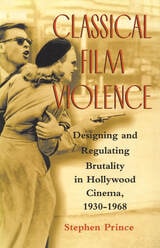
Classical Film Violence
Designing and Regulating Brutality in Hollywood Cinema, 1930-1968Prince, Stephen
Rutgers University Press, 2003
Prince shows that many choices about camera position, editing, and blocking of the action and sound were functional responses by filmmakers to regulatory constraints, necessary for approval from the PCA and then in surviving scrutiny by state and municipal censor boards.
This book is the first stylistic history of American screen violence that is grounded in industry documentation. Using PCA files, Prince traces the negotiations over violence carried out by filmmakers and officials and shows how the outcome left its traces on picture and sound in the films.
Almost everything revealed by this research is contrary to what most have believed about Hollywood and film violence. With chapters such as "Throwing the Extra Punch" and "Cruelty, Sadism, and the Horror Film," this book will become the defining work on classical film violence and its connection to the graphic mayhem of today's movies.
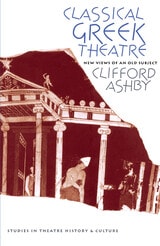
Classical Greek Theatre
New Views of an Old SubjectClifford Ashby
University of Iowa Press, 1998
Many dogmas regarding Greek theatre were established by researchers who lacked experience in the mounting of theatrical productions. In his wide-ranging and provocative study, Clifford Ashby, a theatre historian trained in the practical processes of play production as well as the methods of historical research, takes advantage of his understanding of technical elements to approach his ancient subject from a new perspective. In doing so he challenges many long-held views.
Archaeological and written sources relating to Greek classical theatre are diverse, scattered, and disconnected. Ashby's own (and memorable) fieldwork led him to more than one hundred theatre sites in Greece, southern Italy, Sicily, and Albania and as far into modern Turkey as Hellenic civilization had penetrated. From this extensive research, he draws a number of novel revisionist conclusions on the nature of classical theatre architecture and production.
The original orchestra shape, for example, was a rectangle or trapezoid rather than a circle. The altar sat along the edge of the orchestra, not at its middle. The scene house was originally designed for a performance event that did not use an up center door. The crane and ekkyklema were simple devices, while the periaktoi probably did not exist before the Renaissance. Greek theatres were not built with attention to Vitruvius' injunction against a southern orientation and were probably sun-sited on the basis of seasonal touring. The Greeks arrived at the theatre around mid-morning, not in the cold light of dawn. Only the three-actor rule emerges from this eclectic examination somewhat intact, but with the division of roles reconsidered upon the basis of the actors' performance needs. Ashby also proposes methods that can be employed in future studies of Greek theatre. Final chapters examine the three-actor production of Ion, how one should not approach theatre history, and a shining example of how one should.
Ashby's lengthy hands-on training and his knowledge of theatre history provide a broad understanding of the ways that theatre has operated through the ages as well as an ability to extrapolate from production techniques of other times and places.
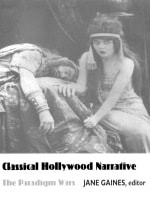
Classical Hollywood Narrative
The Paradigm WarsJane Gaines, ed.
Duke University Press, 1992
Significantly expanded from a special issue of South Atlantic Quarterly (Spring 1989), these essays confront the extent to which formalism has continued to dominate film theory, reexamine the role of melodrama in cinematic development, revise notions of "patriarchal cinema," and assert the importance of television and video to cinema studies. A range of topics are discussed, from the films of D. W. Griffith to sexuality in avant-garde film to television's Dynasty.
Contributors. Rick Altman, Richard Dienst, Jane Feuer, Jane Gaines, Christine Gledhill, Miriam Hansen, Norman N. Holland, Fredric Jameson, Bill Nichols, Janey Staiger, Chris Straayer, John O. Thompson
Classicism of the Twenties
Art, Music, and LiteratureTheodore Ziolkowski
University of Chicago Press, 2014
In Classicism of the Twenties, Theodore Ziolkowski offers a compelling account of that movement. Giving equal attention to music, art, and literature, and focusing in particular on the works of Stravinsky, Picasso, and T. S. Eliot, he shows how the turn to classicism manifested itself. In reaction both to the excesses of neoromanticism and early modernism and to the horrors of World War I—and with respectful detachment—artists, writers, and composers adapted themes and forms from the past and tried to imbue their own works with the values of simplicity and order that epitomized earlier classicisms.
By identifying elements common to all three arts, and carefully situating classicism within the broader sweep of modernist movements, Ziolkowski presents a refreshingly original view of the cultural life of the 1920s.
Climate Trauma
Foreseeing the Future in Dystopian Film and FictionKaplan, E. Ann
Rutgers University Press, 2015
Drawing from recent scholarship that analyzes climate change as a form of “slow violence” that humans are inflicting on the environment, Climate Trauma theorizes that such violence is accompanied by its own psychological condition, what its author terms “Pretraumatic Stress Disorder.” Examining a variety of films that imagine a dystopian future, renowned media scholar E. Ann Kaplan considers how the increasing ubiquity of these works has exacerbated our sense of impending dread. But she also explores ways these films might help us productively engage with our anxieties, giving us a seemingly prophetic glimpse of the terrifying future selves we might still work to avoid becoming.
Examining dystopian classics like Soylent Green alongside more recent examples like The Book of Eli, Climate Trauma also stretches the limits of the genre to include features such as Blindness, The Happening, Take Shelter, and a number of documentaries on climate change. These eclectic texts allow Kaplan to outline the typical blind-spots of the genre, which rarely depicts climate catastrophe from the vantage point of women or minorities. Lucidly synthesizing cutting-edge research in media studies, psychoanalytic theory, and environmental science, Climate Trauma provides us with the tools we need to extract something useful from our nightmares of a catastrophic future.
Clint Eastwood, Actor and Director
New PerspectivesLeonard Engel
University of Utah Press, 2007
The contributors to this volume revisit and examine his career as an actor and director, and are part of a growing critical evaluation of Eastwood's films. A common thread, however, is their respect for his cinematic storytelling. They examine how he put his individual stamp on particular genres, while extending and enriching our understanding of his achievements.
Clocking Out
The Machinery of Life in 1960s Italian CinemaKaren Pinkus
University of Minnesota Press, 2020
An original reflection on Italy’s postwar boom considers potentials for resistance in today’s neoliberal (dis)order
What can 1960s Italian cinema teach us about how to live and work today? Clocking Out challenges readers to think about labor, cinema, and machines as they are intertwined in complex ways in Italian cinema of the early ’60s. Drawing on critical theory and archival research, this book asks what kinds of fractures we might exploit for living otherwise, for resisting traditional narratives, and for anticapitalism.
Italy in the 1960s was a place where the mass-producing factory was the primary mode of understanding what it meant to work, but it was also a time when things might have gone another way. This thinking and living differently appears in the cracks, lapses, or moments of film. Clocking Out is organized into scenes from an obscure 1962 Italian comedy (Renzo e Luciana, from Boccaccio 70). Reconsidering the origins of paradigms such as clocking in and out, “society is a factory,” and the gendered division of labor, Karen Pinkus challenges readers to think through cinema, enabling us to see gaps and breakdowns in the postwar order. She focuses on the Olivetti typewriter company and a little-known film from an Italian anthology movie, thinking with cinema about the power of the Autonomia movement, the refusal to work, and the questions of wages, paternalism, and sexual difference.
Alternating microscopic attention to details and zooming outward, Pinkus examines rituals of production, automation, repetition, and fractures in a narrative of labor that begins in the 1960s and extends to the present—the age of the precariat, right-wing resentment, and nostalgia for an order that was probably never was.
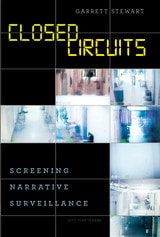
Closed Circuits
Screening Narrative SurveillanceGarrett Stewart
University of Chicago Press, 2015
In Closed Circuits, Garrett Stewart analyzes a broad spectrum of films, from M and Rear Window through The Conversation to Déjà Vu, Source Code, and The Bourne Legacy, in which cinema has articulated—and performed—the drama of inspection’s unreturned look. While mainstays of the thriller, both the act and the technology of surveillance, Stewart argues, speak to something more foundational in the very work of cinema. The shared axis of montage and espionage—with editing designed to draw us in and make us forget the omnipresence of the narrative camera—extends to larger questions about the politics of an oversight regime that is increasingly remote and robotic. To such a global technopticon, one telltale response is a proliferating mode of digitally enhanced “surveillancinema.”
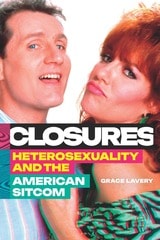
Closures
Heterosexuality and the American SitcomGrace Lavery
Duke University Press, 2024
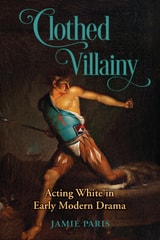
Clothed Villainy
Acting White in Early Modern DramaJamie Paris
University of Alabama Press, 2026
Examines how centuries-old stagecraft shaped modern racial politics—and why the performance of whiteness still commands the spotlight.
From Shakespearean blackface to the alt-right’s khaki-clad protests, Clothed Villainy: Acting White in in Early Modern Drama by Jamie Paris confronts the uncomfortable truths of racial performance across centuries. Paris argues that whiteness is not a fixed identity but a precarious and performative construct—shaped and sustained through actions, appearances, and cultural scripts.
Drawing on critical race theory, performance studies, and Indigenous scholarship, Clothed Villainy traces how racial scripts—whether “playing Black,” “playing Indian,” or especially “playing white”—have been used to uphold white supremacy and erase marginalized identities. By examining the costuming and characterization of white actors portraying Black villains on the early modern stage, Paris reveals how these theatrical traditions continue to echo in contemporary racial politics.
Written with bold clarity and personal insight, this book opens space for reimagining race, history, and identity through a more critical and inclusive lens. Clothed Villainy is essential reading for scholars, students, and anyone seeking to understand the deep-rooted performance of race in society and how we might reimagine it for a more equitable future.
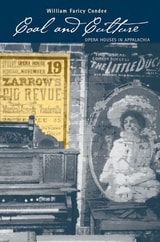
Coal and Culture
Opera Houses in AppalachiaWilliam Faricy Condee
Ohio University Press, 2005
Opera houses were fixtures of Appalachian life from the end of the Civil War through the 1920s. Most towns and cities had at least one opera house during this golden age. Coal mining and railroads brought travelers, money, and change to the region. Many aspects of American life converged in the opera house.
Coal and Culture: Opera Houses in Appalachia is a critical appreciation of the opera house in the coal-mining region of Appalachia from the mid-1860s to the early 1930s. Author William Faricy Condee demonstrates that these were multipurpose facilities that were central to the life of their communities. In the era before radio, movies, television, and malls, these buildings were essential. They housed little, if any, opera, but were used for almost everything else, including traveling theater, concerts, religious events, lectures, commencements, boxing matches, benefits, union meetings, and—if the auditorium had a flat floor—skating and basketball.
The only book on opera houses that stresses their cultural context, Condee’s unique study will interest cultural geographers, scholars of Appalachian studies, and all those who appreciate the gaudy diversity of the American scene.
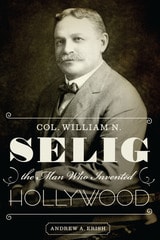
Col. William N. Selig, the Man Who Invented Hollywood
By Andrew A. Erish
University of Texas Press, 2012
All histories of Hollywood are wrong. Why? Two words: Colonel Selig. This early pioneer laid the foundation for the movie industry that we know today. Active from 1896 to 1938, William N. Selig was responsible for an amazing series of firsts, including the first two-reel narrative film and the first two-hour narrative feature made in America; the first American movie serial with cliffhanger endings; the first westerns filmed in the West with real cowboys and Indians; the creation of the jungle-adventure genre; the first horror film in America; the first successful American newsreel (made in partnership with William Randolph Hearst); and the first permanent film studio in Los Angeles. Selig was also among the first to cultivate extensive international exhibition of American films, which created a worldwide audience and contributed to American domination of the medium.
In this book, Andrew Erish delves into the virtually untouched Selig archive at the Academy of Motion Picture Arts and Sciences Library to tell the fascinating story of this unjustly forgotten film pioneer. He traces Selig’s career from his early work as a traveling magician in the Midwest, to his founding of the first movie studio in Los Angeles in 1909, to his landmark series of innovations that still influence the film industry. As Erish recounts the many accomplishments of the man who first recognized that Southern California is the perfect place for moviemaking, he convincingly demonstrates that while others have been credited with inventing Hollywood, Colonel Selig is actually the one who most deserves that honor.
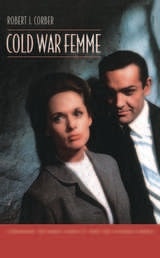
Cold War Femme
Lesbianism, National Identity, and Hollywood CinemaRobert J. Corber
Duke University Press, 2011
Collecting Visible Evidence
Jane Gaines
University of Minnesota Press, 1999
A redefinition of the nature of documentary film.
In documentary studies, the old distinctions between fiction and nonfiction no longer apply, as contemporary film and video artists produce works that defy classification. Coming together to make sense of these developments, the contributors to this book effectively redefine documentary studies. They trace the documentary impulse in the early detective camera, in the reenactment of battle scenes from World War I, and in the telecast of the Nevada A-bomb test in 1952. Other topics include experiments in virtual reality; the crisis of representation in anthropology; and video art and documentary work that challenge the asymmetry of the postcolonial us/them divide.
Contributors: Jenny Cool; Elizabeth Cowie, U of Kent; Faye Ginsburg, New York U; Tom Gunning, U of Chicago; Eithne Johnson; Alexandra Juhasz, Pitzer College; Neil Lerner, Davidson College; Akira Mizuta Lippit, San Francisco State U; Nancy Lutkehaus, USC; James M. Moran; Vivian Sobchack, UCLA; Linda Williams, U of California, Berkeley; Mark Williams, Dartmouth College; Mark J. P. Wolf, Concordia U, Wisconsin.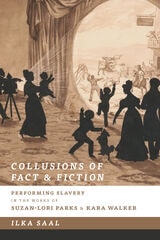
Collusions of Fact and Fiction
Performing Slavery in the Works of Suzan-Lori Parks and Kara WalkerSaal, Ilka
University of Iowa Press, 2021
Saal argues that the attempt to reconstruct or recuperate the experience of African Americans under slavery is no longer at stake in the works of artists growing up in the post–Civil Rights era. Instead, they lay bare the discursive dimension of our contemporary understanding of the past and address the continued impact of its various verbal and visual signs upon contemporary identities. In this manner, Parks and Walker stake out new possibilities for engaging the past and inhabiting the present and future.
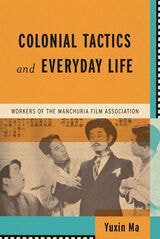
Colonial Tactics and Everyday Life
Workers of the Manchuria Film AssociationYuxin Ma
University of Wisconsin Press, 2023
By focusing on the daily challenges and experiences of the Chinese workers at the corporation, Ma examines how life was actually lived by people navigating between practical and ideological concerns. She illustrates how the inhabitants of Manchukuo navigated social opportunities, economic depression, educational reforms, fascist rule, commercial interests, practical daily needs, and more—and reveals ways in which these conflicting preoccupations sometimes manifested as tension and ambiguity on screen. In the battle between repression and expression, these Chinese actors, directors, writers, and technicians adopted defensive and opportunistic tactics. They did so in colonial spaces, often rejecting modernist representations of Manchukuo in favor of venerating traditional Chinese culture and values. The expertise, skills, and professional networks they developed extended well beyond the occupation into the postwar period, and may individuals reestablished themselves as cinema professionals in the socialist era.
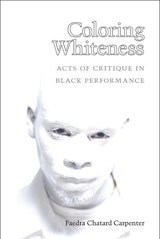
Coloring Whiteness
Acts of Critique in Black PerformanceFaedra Chatard Carpenter
University of Michigan Press, 2014

Columbo
A Rhetoric of Inquiry with Resistant RespondersChristyne Berzsenyi
Intellect Books, 2019
An analysis of the hit television series Columbo and the investigative methods of its eponymous main character.
In the iconic detective show, which aired from 1968 to 2003, Lieutenant Columbo was known for his Socratic method of rhetorical inquiry. Feigning ignorance and employing a barrage of questions about minute details, the detective enacts a persona of “antipotency,” or counter authoritativeness, to affect the villains' underestimation of his attention to inconsistencies, abductive reasoning, and rhetorical efficacy. In his predominantly dialogue-based investigations, Columbo exhausts his suspects by asking a battery of questions concerning all minor details of the case—an aggravating, tedious provocation for the killer trying to maintain innocence.
In this engaging interdisciplinary study, Christyne Berzsenyi explores the character and his influences, dissects his methods of investigation, and assesses the show’s enduring legacy in academia and popular culture. While critical and theoretical, the text is also accessible to interdisciplinary readers, practical in application, and amusing for Columbo buffs.
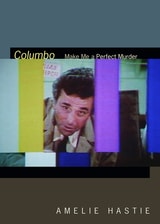
Columbo
Make Me a Perfect MurderAmelie Hastie
Duke University Press, 2024
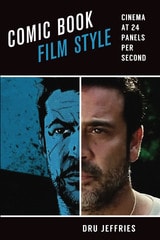
Comic Book Film Style
Cinema at 24 Panels per SecondBy Dru Jeffries
University of Texas Press, 2017
Superhero films and comic book adaptations dominate contemporary Hollywood filmmaking, and it is not just the storylines of these blockbuster spectacles that have been influenced by comics. The comic book medium itself has profoundly influenced how movies look and sound today, as well as how viewers approach them as texts. Comic Book Film Style explores how the unique conventions and formal structure of comic books have had a profound impact on film aesthetics, so that the different representational abilities of comics and film are put on simultaneous display in a cinematic work.
With close readings of films including Batman: The Movie, American Splendor, Superman, Hulk, Spider-Man 2, V for Vendetta, 300, Scott Pilgrim vs. the World, Watchmen, The Losers, and Creepshow, Dru Jeffries offers a new and more cogent definition of the comic book film as a stylistic approach rather than a genre, repositioning the study of comic book films from adaptation and genre studies to formal/stylistic analysis. He discusses how comic book films appropriate comics’ drawn imagery, vandalize the fourth wall with the use of graphic text, dissect the film frame into discrete panels, and treat time as a flexible construct rather than a fixed flow, among other things. This cinematic remediation of comic books’ formal structure and unique visual conventions, Jeffries asserts, fundamentally challenges the classical continuity paradigm and its contemporary variants, placing the comic book film at the forefront of stylistic experimentation in post-classical Hollywood.
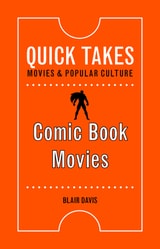
Comic Book Movies
Davis, Blair
Rutgers University Press, 2018
Film scholar Blair Davis also considers how the genre’s visual style is equally important as its weighty themes, and he details how advances in digital effects have allowed filmmakers to incorporate elements of comic book art in innovative ways. As he reveals, comic book movies have inspired just as many innovations to Hollywood’s business model, with film franchises and transmedia storytelling helping to ensure that the genre will continue its reign over popular culture for years to come.
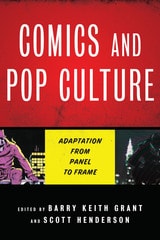
Comics and Pop Culture
Adaptation from Panel to FrameBy Barry Keith Grant and Scott Henderson
University of Texas Press, 2019
It is hard to discuss the current film industry without acknowledging the impact of comic book adaptations, especially considering the blockbuster success of recent superhero movies. Yet transmedial adaptations are part of an evolution that can be traced to the turn of the last century, when comic strips such as “Little Nemo in Slumberland” and “Felix the Cat” were animated for the silver screen. Representing diverse academic fields, including technoculture, film studies, theater, feminist studies, popular culture, and queer studies, Comics and Pop Culture presents more than a dozen perspectives on this rich history and the effects of such adaptations.
Examining current debates and the questions raised by comics adaptations, including those around authorship, style, and textual fidelity, the contributors consider the topic from an array of approaches that take into account representations of sexuality, gender, and race as well as concepts of world-building and cultural appropriation in comics from Modesty Blaise to Black Panther. The result is a fascinating re-imagination of the texts that continue to push the boundaries of panel, frame, and popular culture.
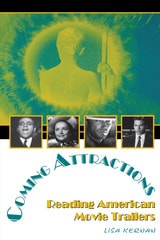
Coming Attractions
Reading American Movie TrailersBy Lisa Kernan
University of Texas Press, 2004
Movie trailers—those previews of coming attractions before the start of a feature film—are routinely praised and reviled by moviegoers and film critics alike: "They give away too much of the movie." "They're better than the films." "They only show the spectacular parts." "They lie." "They're the best part of going to the movies." But whether you love them or hate them, trailers always serve their purpose of offering free samples of a film to influence moviegoing decision-making. Indeed, with their inclusion on videotapes, DVDs, and on the Internet, trailers are more widely seen and influential now than at any time in their history.
Starting from the premise that movie trailers can be considered a film genre, this pioneering book explores the genre's conventions and offers a primer for reading the rhetoric of movie trailers. Lisa Kernan identifies three principal rhetorical strategies that structure trailers: appeals to audience interest in film genres, stories, and/or stars. She also analyzes the trailers for twenty-seven popular Hollywood films from the classical, transitional, and contemporary eras, exploring what the rhetorical appeals within these trailers reveal about Hollywood's changing conceptions of the moviegoing audience. Kernan argues that movie trailers constitute a long-standing hybrid of advertising and cinema and, as such, are precursors to today's heavily commercialized cultural forms in which art and marketing become increasingly indistinguishable.
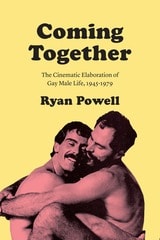
Coming Together
The Cinematic Elaboration of Gay Male Life, 1945-1979Ryan Powell
University of Chicago Press, 2019
Commentaries on the Cantatas of Johann Sebastian Bach
A Selective GuideHans-Joachim Schulze. Translated by James A. Brokaw II
University of Illinois Press, 2024
The University of Illinois Press has paired the volume with a special web-based companion overseen by the translator and hosted by the Illinois Open Publishing Network. This online resource includes Brokaw’s translations of all 225 of Schulze’s essays alongside digital tools for searching, sorting, and bundling the commentaries according to date of composition, position within the liturgical church year sequence, and librettist.
Composing Capital
Classical Music in the Neoliberal EraMarianna Ritchey
University of Chicago Press, 2019
Composing Capital
Classical Music in the Neoliberal EraMarianna Ritchey
University of Chicago Press, 2019
This is an auto-narrated audiobook edition of this book.
Composing Japanese Musical Modernity
Bonnie C. Wade
University of Chicago Press, 2013
Wade examines the short history of the composer in Japanese society, looking at the creative and economic opportunities that have sprung up around them—or that they forged—during Japan’s astonishingly fast modernization. She shows that modernist Japanese composers have not bought into the high modernist concept of the autonomous artist, instead remaining connected to the people. Articulating Japanese modernism in this way, Wade tells a larger story of international musical life, of the spaces in which tradition and modernity are able to meet and, ultimately, where modernity itself has been made.
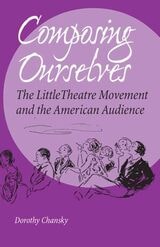
Composing Ourselves
The Little Theatre Movement and the American AudienceDorothy Chansky
Southern Illinois University Press, 2005
When movies replaced theatre as popular entertainment in the years 1910–20, the world of live drama was wide open for reform. American advocates and practitioners founded theatres in a spirit of anticommercialism, seeking to develop an American audience for serious theatre, mounting plays in what would today be called “alternative spaces,” and uniting for the cause an eclectic group of professors, social workers, members of women’s clubs, bohemians, artists, students, and immigrants. This rebellion, called the Little Theatre Movement, also prompted and promoted the college theatre major, the inclusion of theatre pedagogy in K–12 education, prototypes for the nonprofit model, and the notion that theatre is a valuable form of self-expression.
Composing Ourselves: The Little Theatre Movement and the American Audience argues that the movement was a national phenomenon, not just the result of aspirants copying the efforts of the much-storied Provincetown Players, Washington Square Players, Neighborhood Playhouse, and Chicago Little Theatre. Going beyond the familiar histories of the best-known groups, Dorothy Chansky traces the origins of both the ideas and the infrastructures for serious theatre that are ordinary parts of the American cultural landscape today; she also investigates the gender discrimination, racism, and class insensitivity that were embedded in reformers’ ideas of the “universal” and that still trouble the rhetoric of regional, educational, and community theatre.
An important piece of revisionist history, Composing Ourselves shows how theatre reform, in keeping with other Progressive Era activism, took on corporate, conservative society, but did so in ways that were sometimes contradictory. For example, women constituted the majority of ticket buyers and the bulk of unsung labor, yet plays by women were considered inferior. Most reformers were comfortably middle class and sought change that would eliminate the anomie of modernity but not challenge their privileged positions.
Chansky deliberates on antifeminist images of women theatergoers in literature and cartoons and considers the achievements and failures of the Drama League of America, a network of women’s clubs, following up with a case study of the playwright Alice Gerstenberg to point out that theatre history has not fully realized the role of women in the Little Theatre Movement. Even as women were earning the majority of degrees in newly minted theatre programs, their paths were barred to most professional work except teaching. Chansky also considers a blackface production of a play about rural African Americans, which was a step towards sympathetic portrayals of minority characters yet still a reinforcement of white upper- and middle-class perspectives.
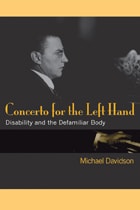
Concerto for the Left Hand
Disability and the Defamiliar BodyMichael Davidson
University of Michigan Press, 2008
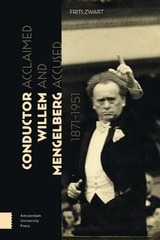
Conductor Willem Mengelberg, 1871-1951
Acclaimed and AccusedFrits Zwart
Amsterdam University Press, 2018
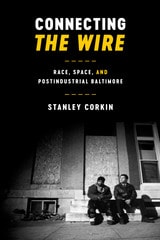
Connecting The Wire
Race, Space, and Postindustrial BaltimoreBy Stanley Corkin
University of Texas Press, 2017
Critically acclaimed as one of the best television shows ever produced, the HBO series The Wire (2002–2008) is a landmark event in television history, offering a raw and dramatically compelling vision of the teeming drug trade and the vitality of life in the abandoned spaces of the postindustrial United States. With a sprawling narrative that dramatizes the intersections of race, urban history, and the neoliberal moment, The Wire offers an intricate critique of a society riven by racism and inequality.
In Connecting The Wire, Stanley Corkin presents the first comprehensive, season-by-season analysis of the entire series. Focusing on the show’s depictions of the built environment of the city of Baltimore and the geographic dimensions of race and class, he analyzes how The Wire’s creator and showrunner, David Simon, uses the show to develop a social vision of its historical moment, as well as a device for critiquing many social “givens.” In The Wire’s gritty portrayals of drug dealers, cops, longshoremen, school officials and students, and members of the judicial system, Corkin maps a web of relationships and forces that define urban social life, and the lives of the urban underclass in particular, in the early twenty-first century. He makes a compelling case that, with its embedded history of race and race relations in the United States, The Wire is perhaps the most sustained and articulate exploration of urban life in contemporary popular culture.
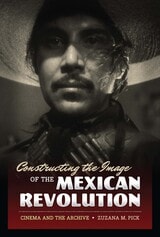
Constructing the Image of the Mexican Revolution
Cinema and the ArchiveBy Zuzana M. Pick
University of Texas Press, 2009
Katherine Singer Kovács Book Award, Society for Cinema and Media Studies, 2011
With a cast ranging from Pancho Villa to Dolores del Río and Tina Modotti, Constructing the Image of the Mexican Revolution demonstrates the crucial role played by Mexican and foreign visual artists in revolutionizing Mexico's twentieth-century national iconography. Investigating the convergence of cinema, photography, painting, and other graphic arts in this process, Zuzana Pick illuminates how the Mexican Revolution's timeline (1910–1917) corresponds with the emergence of media culture and modernity.
Drawing on twelve foundational films from Que Viva Mexico! (1931–1932) to And Starring Pancho Villa as Himself (2003), Pick proposes that cinematic images reflect the image repertoire produced during the revolution, often playing on existing nationalist themes or on folkloric motifs designed for export. Ultimately illustrating the ways in which modernism reinvented existing signifiers of national identity, Constructing the Image of the Mexican Revolution unites historicity, aesthetics, and narrative to enrich our understanding of Mexicanidad.
Contemporary Censorship and Performance, Volume 38
Miriam Felton-Dansky and Tom Sellar, eds.
Duke University Press, 0
The collection includes an essay that explores the function of live performance in recent freedom-of-expression debates, such as those featuring Janet Jackson and Don Imus, and persistent national anxieties about performers’ bodies. The issue also features an international censorship forum that brings together reports of incidents from Burma, Singapore, Germany, Italy, and the United States. A special report from Zimbabwe provides an in-depth look at the repression of oppositional theater by one of Africa’s most dictatorial regimes while another article looks at REwind: A Cantata for Voice, Tape and Testimony, a new musical composition that takes once-silenced voices recorded for South Africa’s Truth and Reconciliation Commission and transforms them into a hymn for a postapartheid nation. The issue also includes the first publication of an inventive new play that is a satirical as well as chilling look at suppression and dissent in post-9/11 America.
Contributors: Howard Barker, Reverend Billy, Catherine Cole, Mike Daisey, Dean Damjanovski, Miriam Felton-Dansky, Jacob Gallagher-Ross, John Houchin, Rabih Mroué, Freddie Rokem, Tom Sellar, Fadi Toufiq, Praise Zenenga
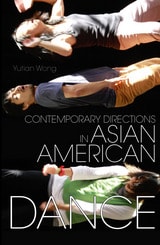
Contemporary Directions in Asian American Dance
Edited by Yutian Wong
University of Wisconsin Press, 2018
The contributors to this volume address such topics as the role of the 1960s Asian American Movement in creating Japanese American taiko groups, and the experience of internment during World War II influencing butoh dance in Canada. Essays about artists such as Jay Hirabayashi, Alvin Tolentino, Shen Wei, Kun-Yang Lin, Yasuko Yokoshi, Eiko & Koma, Sam Kim, Roko Kawai, and Denise Uyehara look closely at the politics of how Asian aesthetics are set into motion and marketed. The volume includes first-person narratives, interviews, ethnography, cultural studies, performance studies, and comparative ethnic studies.
Contemporary Francophone African Plays
An AnthologyJudith G. Miller
Bucknell University Press, 2024
Contemporary Latina/o Theater
Wrighting EthnicityJon D. Rossini
Southern Illinois University Press, 2008
In Contemporary Latina/o Theater, Jon D. Rossini explores the complex relationship between theater and the creation of ethnicity in an unprecedented examination of six Latina/o playwrights and their works: Miguel Piñero, Luis Valdez, Guillermo Reyes, Octavio Solis, José Rivera, and Cherríe Moraga. Rossini exposes how these writers use the genre as a tool to reveal and transform existing preconceptions about their culture. Through “wrighting”—the triplicate process of writing plays, righting misconceptions about ethnic identity, and creating an entirely new way of understanding Latina/o culture—these playwrights directly intervene in current conversations regarding ethnic identity, providing the tools for audiences to reexplore their previously held perspectives outside the theater.
Examining these writers and their works in both cultural and historical contexts, Rossini reveals how playwrights use the liminal space of the stage—an area on the thresholds of both theory and reality—to “wright” new insights into Latina/o identity. They use the limits of the theater itself to offer practical explorations of issues that could otherwise be discussed only in highly theoretical terms.
Rossini traces playwrights’ methods as they address some of the most challenging issues facing contemporary Latinas/os in America: from the struggles for ethnic solidarity and the dangers of a community based in fear, to stereotypes of Latino masculinity and the problematic fusion of ethnicity and politics. Rossini discusses the looming specter of the border in theater, both as a conceptual device and as a literal reality—a crucial subject for modern Latinas/os, given recent legislation and other actions. Throughout, the author draws intriguing comparisons to the cultural limbo in which many Latinas/os find themselves today.
An indispensable volume for anyone interested in drama and ethnic studies, Contemporary Latina/o Theater underscores the power of theatricality in exploring and rethinking ethnicity. Rossini provides the most in-depth analysis of these plays to date, offering a groundbreaking look at the ability of playwrights to correct misconceptions and create fresh perspectives on diversity, culture, and identity in Latina/o America.
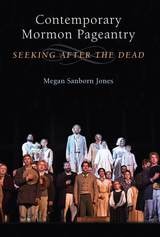
Contemporary Mormon Pageantry
Seeking After the DeadMegan Sanborn Jones
University of Michigan Press, 2018
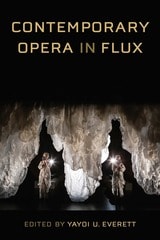
Contemporary Opera in Flux
Edited by Yayoi U. Everett
University of Michigan Press, 2024
Contemporary Opera in Flux bridges the gaps between expanding literature on opera, theater, new music, postmodern dramaturgy, and posthuman aesthetics, while also confronting larger questions of identity, representation, and narrative agency that are at the forefront of contemporary music scholarship. This collection of essays engages critically with the past out of a conviction that, amid general public perceptions of opera as anachronistic or elitist, contemporary opera has emerged as an artistic incubator for experimentation.
Contemporary Plays by African American Women
Ten Complete WorksEdited by Sandra Adell
University of Illinois Press, 2015
Selections: Blue Door, by Tanya Barfield; Levee James, by S. M. Shephard-Massat; Hoodoo Love, by Katori Hall; Carnaval, by Nikkole Salter; Single Black Female, by Lisa B. Thompson; Fabulation, or The Re-Education of Undine, by Lynn Nottage; BlackTop Sky, by Christina Anderson; Voyeurs de Venus, by Lydia Diamond; Fedra, by J. Nicole Brooks; and Uppa Creek: A Modern Anachronistic Parody in the Minstrel Tradition, by Keli Garrett.
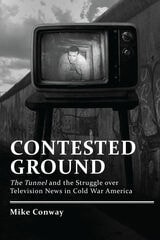
Contested Ground
The Tunnel and the Struggle over Television News in Cold War AmericaMike Conway
University of Massachusetts Press, 2019
It was not just The Tunnel's subject matter that sparked controversy, but the medium itself. The surprisingly fast ascendance of television news as the country's top choice for information threatened the self-defined supremacy of print journalism and the de facto cooperation of government officials and reporters on Cold War issues. In Contested Ground, Mike Conway argues that the production and reception of television news and documentaries during this period reveals a major upheaval in American news communications.
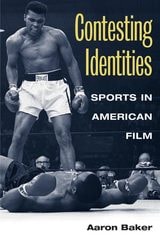
Contesting Identities
Sports in American FilmAaron Baker
University of Illinois Press, 2003
Analysis of race, class and gender in American sports films
Since the earliest days of the silent era, American filmmakers have been drawn to the visual spectacle of sports and their compelling narratives of conflict, triumph, and individual achievement. In Contesting Identities Aaron Baker examines how these cinematic representations of sports and athletes have evolved over time--from The Pinch Hitter and Buster Keaton's College to White Men Can't Jump, Jerry Maguire, and Girlfight. He focuses on how identities have been constructed and transcended in American society since the early twentieth century.Whether depicting team or individual sports, these films return to that most American of themes, the master narrative of self-reliance. Baker shows that even as sports films tackle socially constructed identities like class, race, ethnicity, sexuality, and gender, they ultimately underscore transcendence of these identities through self-reliance.
Looking at films from almost every sporting genre--with a particular focus on movies about boxing, baseball, basketball, and football--Contesting Identities maps the complex cultural landscape depicted in American sports films and the ways in which stories about "subaltern" groups winning acceptance by the mainstream majority can serve to reinforce the values of that majority.
In addition to discussing the genre's recurring dramatic tropes, from the populist prizefighter to the hot-headed rebel to the "manly" female athlete, Baker also looks at the social and cinematic impacts of real-life sports figures from Jackie Robinson and Babe Didrikson Zaharias to Muhammad Ali and Michael Jordan.
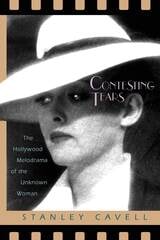
Contesting Tears
The Hollywood Melodrama of the Unknown WomanStanley Cavell
University of Chicago Press, 1996
Cavell provides close readings of four melodramas he finds definitive of the genre: Letter from an Unknown Woman, Gaslight, Now Voyager, and Stella Dallas. The women in these melodramas, like the women in the comedies, demand equality, shared education, and transfiguration, exemplifying for Cavell a moral perfectionism he identifies as Emersonian. But unlike the comedies, which portray a quest for a shared existence of expressiveness and joy, the melodramas trace instead the woman's recognition that in this quest she is isolated. Part of the melodrama concerns the various ways the men in the films (and the audiences of the films) interpret and desire to force the woman's consequent inaccessibility.
"Film is an interest of mine," Stanley Cavell has written, "or say a love, not separate from my interest in, or love of, philosophy." In Contesting Tears Cavell once again brilliantly unites his two loves, using detailed and perceptive musings on melodrama to reflect on philosophical problems of skepticism, psychoanalysis, and perfectionism. As he shows, the fascination and intelligence of such great stars as
Ingrid Bergman, Bette Davis, and Barbara Stanwyck illuminate, as they are illuminated by, the topics and events of these beloved and enduring films.
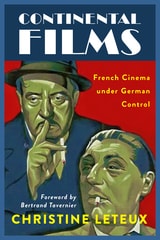
Continental Films
French Cinema under German ControlChristine Leteux
University of Wisconsin Press, 2022
Using recently opened archival documents, including reams of testimony from the épuration (purification) hearings conducted shortly after the war, Christine Leteux has produced the most authoritative and complete history of the company and its impact on the French film industry—both during the war and after. She captures the wide range of responses to the firm from those who were eager to work for a company whose ideology matched their own, to others who reluctantly accepted contracts out of necessity, to those who abhorred the company but felt compelled to participate in order to protect family members from Nazi reprisals. She examines not only the formation and management of Continental Films but also the personalities involved, the fraught and often deadly political circumstances of the period, the critical reception of the films, and many of the more notorious and controversial events.
As Bertrand Tavernier explains in his foreword, Leteux overturns many of the preconceptions and clichés that have come to be associated with Continental Films. Published to rave reviews in French and translated by the author into English, this work shatters expectations and will reinvigorate study of a lesser-known but significant period of French film history.
Contingent Encounters
Improvisation in Music and Everyday LifeDan DiPiero
University of Michigan Press, 2022