Results by title
18 books match the query 'Apologetics'
Against Julian
Saint Augustine
Catholic University of America Press, 1957
Against Marcellus and On Ecclesiastical History
Kelly Eusebius of Caesarea
Catholic University of America Press, 2018
On Ecclesiastical Theology, composed circa 338/339 just before Eusebius’s death, and perhaps in response to the amnesty for deposed bishops enacted by Constantius after the death of Constantine in 377 and the possibility of Marcellus’s return to his see, continues to lay out the criticisms initially put forward in Against Marcellus, again utilizing quotations from Marcellus’s book against Asterius. However, we see in this text a much more systematic explanation of Eusebius’s objections to the various elements of Marcellus’s theology and what he sees as the proper orthodox articulation of those elements.
Long overlooked for statements at odds with later orthodoxy, even written off as heretical because allegedly “semi-Arian,” recent scholarship has demonstrated the tremendous influence these texts had on the Greek theological tradition in the fourth century, especially on the orthodox understanding of the Trinity. In addition to their influence, they are some of the few complete texts that we have from Greek theologians in the immediate period following the Council of Nicea in 325, thus filling a gap in the materials available for research and teaching in this critical phase of theological development.
Ancoratus
Epiphanius of Cyprus
Catholic University of America Press, 2014
Apologetical Works; Octavius
Minucius Tertullian
Catholic University of America Press, 2008
Apologist
Saint John Chrysostom
Catholic University of America Press, 1985
Counsels of Imperfection
Thinking Through Catholic Social TeachingEdward Hadas
Catholic University of America Press, 2021
Dialogue against the Jews
Petrus Alfonsi
Catholic University of America Press, 2006
Dialogue with Trypho (Selections from the Fathers of the Church, Volume 3)
Saint Justin Martyr
Catholic University of America Press, 2003
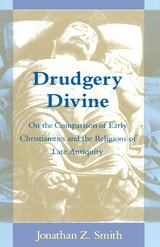
Drudgery Divine
On the Comparison of Early Christianities and the Religions of Late AntiquityJonathan Z. Smith
University of Chicago Press, 1990
"An important book, and certainly one of the most significant in the career of Jonathan Z. Smith, whom one may venture to call the greatest pathologist in the history of religions. As in many precedent cases, Smith follows a standard procedure: he carefully selects his victim, and then dissects with artistic finesse and unequaled acumen. The operation is always necessary, and a deconstructor of Smith's caliber is hard to find."—Ioan P. Coulianu, Journal of Religion
In Reasonable Hope
Philosophical Reflections on Ultimate MeaningPatrick Masterson
Catholic University of America Press, 2021
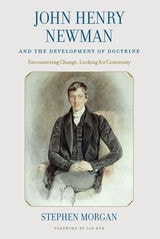
John Henry Newman and the Development of Doctrine
Encountering Change, Looking for ContinuityStephen Morgan
Catholic University of America Press, 2022
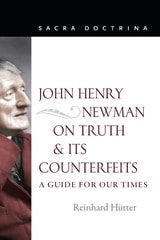
John Henry Newman on Truth and its Counterfeits
A Guide for Our TimesReinhard Hutter
Catholic University of America Press, 2020
Pensees
Blaise Pascal
Catholic University of America Press, 2021
Respectably Catholic and Scientific
Evolution and Birth Control Between the World WarsAlexander Pavuk
Catholic University of America Press, 2021
Science and the Bible
Evidence-Based Christian BeliefTed Burge
Templeton Press, 2005
Does scientific evidence give credence to religious belief? Ted Burge, a highly respected physicist in the United Kingdom, draws on his background in the fields of science and theology to address the issue.
The book begins with an analysis of evidence found in the text of the Bible in different translations, proceeds to an examination of interpretations of the Old and New Testaments, and then looks at evidence from the sciences, including archeological findings, geological mappings, and carbon-dating, alongside data from the arts, hymns, literature, and historians' testimonies.
Evidence is presented on:
•Physical, geological, and biological evolution, and their relation to the Genesis story of creation•Original sin, the origin of death, and the immortality of the soul, as described in Babylonian and other stories, including the Flood and the Tower of Babel
•The Resurrection and Ascension of Jesus, Incarnation and Atonement
•Free will and the nature of love
•Miracles as described in the Bible
•The evolution of belief
•Meditation and prayer as a "conscious interchange of thoughts with God"
Knowledge of science is knowledge of God's creation and often helps to identify some of the things we can say about God, the author points out.
The God Who Would Be Known
Revelations Of Divine Contemporary ScienceJohn Marks Templeton
Templeton Press, 1998
—from the authors
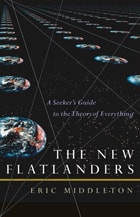
The New Flatlanders
A Seeker's Guide to the Theory of EverythingEric Middleton
Templeton Press, 2007
In The New Flatlanders, teacher, scientist, and chaplain Eric Middleton challenges traditional ways of looking at reality by engaging readers in a "voyage of discovery starting with questions." The book engagingly begins with a discussion group embarking on an exploratory conversation about the nature of the universe and the place of human beings in it. Daunting questions emerge, such as "How can there possibly be a tear or hole in three-dimensional space? And if there is a hole, can something fall through it? Where would it fall to?" In short order, students and teacher are on a quest to develop a "working theory of everything" that takes them from stone circles to quarks, superstrings, quantum theory, the anthropic principle, evolution, consciousness, miracles, chaos, and the spiritual universe.
The key to exploring these questions is finding a language with which to talk about the awe and wonder of today's science alongside the joy of experiencing the spiritual. This is done by interweaving into the discussions the philosophy of "Flatland," a nonreligious entry point to Jesus posited by nineteenth-century clergyman and educator Edwin A. Abbott in his classic parable Flatland: A Romance of Many Dimensions.
The Seven Books of History Against the Pagans
Roy J. Paulus Orosius
Catholic University of America Press, 1964