Results by title
1917 books match the query 'Law' and 180 start with c
Corporal Rhetoric
Regulating Reproduction in the Progressive EraBarbara Schneider
University of Alabama Press, 2021
Examines public discourse from the Progressive Era over the state’s right to regulate women’s bodies and their reproduction
When Justice Oliver Wendell Holmes determined in 1927 that sterilization was a legitimate means of safeguarding the nation’s health, he was asserting the state’s right to regulate the production of the national body. His opinion represented a culmination of arguments about reproduction and immigration that had been circulating for years but that intensified during the Progressive Era. Arguments about reproductive and immigration practices surged to the foreground, and tectonic shifts in the conceptual schemes and practices of reproduction in the United States followed.
Drawing on feminist historiography and genre studies, Corporal Rhetoric: Regulating Reproduction in the Progressive Era explores the rhetoric of medical research, new technologies, and material practices that shifted the idea of childbirth as an act of God or Nature to a medical procedure enacted by male physicians on the bodies of women made passive by both drugs and discourse. Barbara Schneider considers how efficiency, the hallmark of scientific management, was raised to a cardinal virtue by its inclusions in the powerful mediums of presidential speeches, national educational policies, and eugenics discourse to reclassify babies, long regarded as gifts, as either valuable assets or defective products.
Schneider shows how the legal system drew upon medicine, scientific management, and the emerging discipline of sociology to restrict women’s labor in order to preserve reproductive capacity, categorized by Supreme Court opinions as a public good rather than a private capacity. Throughout, she ties the arguments developed during this era to current debates about mothering rhetorics, reproductive rights, immigration, and conceptions of the nation.
By weaving together medical research reports, clinical practices, case studies, legal opinions and legislative acts, and the epistemology of scientific management, Schneider illuminates the network that women such as Margaret Sanger, Jane Addams, Lillian Gilbreth and multiple others negotiated as they sought to give women room to exercise their reproductive capacity. Through her analysis of the machinery of these discourses and the material uptake of their genres in the daily practices of reproductive bodies, Schneider offers a provisional theory of corporal rhetoric that begins to answer the call for a new material theory of the body.
Corporate Bodies and Guilty Minds
The Failure of Corporate Criminal LiabilityWilliam S. Laufer
University of Chicago Press, 2006
In this timely work, William S. Laufer argues that even with recent legal reforms, corporate criminal law continues to be ineffective. As evidence, Laufer considers the failure of courts and legislatures to fashion liability rules that fairly attribute blame for organizations. He analyzes the games that corporations play to deflect criminal responsibility. And he also demonstrates how the exchange of cooperation for prosecutorial leniency and amnesty belies true law enforcement. But none of these factors, according to Laufer, trumps the fact that there is no single constituency or interest group that strongly and consistently advocates the importance and priority of corporate criminal liability. In the absence of a new standard of corporate liability, the power of regulators to keep corporate abuses in check will remain insufficient.
Corporate Social Responsibility?
Human Rights in the New Global EconomyEdited by Charlotte Walker-Said and John D. Kelly
University of Chicago Press, 2015
The book examines the diverse approaches to CSR, with a particular focus on how those approaches are siloed within discrete disciplines such as business, law, the social sciences, and human rights. Bridging these disciplines and addressing and critiquing all the conceptual domains of CSR, the book also explores how CSR silos develop as a function of the competition between different interests. Ultimately, the contributors show that CSR actions across all arenas of power are interdependent, continually in dialogue, and mutually constituted. Organizing a diverse range of viewpoints, this book offers a much-needed synthesis of a crucial element of today’s globalized world and asks how businesses can, through their actions, make it better for everyone.
Corporate Sovereignty
Law and Government under CapitalismJoshua Barkan
University of Minnesota Press, 2013
Refinery explosions. Accounting scandals. Bank meltdowns. All of these catastrophes—and many more—might rightfully be blamed on corporations. In response, advocates have suggested reforms ranging from increased government regulation to corporate codes of conduct to stop corporate abuses. Joshua Barkan writes that these reactions, which view law as a limit on corporations, misunderstand the role of law in fostering corporate power.
In Corporate Sovereignty, Barkan argues that corporate power should be rethought as a mode of political sovereignty. Rather than treating the economic power of corporations as a threat to the political sovereignty of states, Barkan shows that the two are ontologically linked. Situating analysis of U.S., British, and international corporate law alongside careful readings in political and social theory, he demonstrates that the Anglo-American corporation and modern political sovereignty are founded in and bound together through a principle of legally sanctioned immunity from law. The problems that corporate-led globalization present for governments result not from regulatory failures as much as from corporate immunity that is being exported across the globe.
For Barkan, there is a paradox in that corporations, which are legal creations, are given such power that they undermine the sovereignty of states. He notes that while the relationship between states and corporations may appear adversarial, it is in fact a kind of doubling in which state sovereignty and corporate power are both conjoined and in conflict. Our refusal to grapple with the peculiar nature of this doubling means that some of our best efforts to control corporations unwittingly reinvest the sovereign powers they oppose.

Correctional
Ravi Shankar
University of Wisconsin Press, 2021
Shankar’s bold and complex self-portrait—and portrait of America—challenges us to rethink our complicity in the criminal justice system and mental health policies that perpetuate inequity and harm. Correctional dives into the inner workings of his mind and heart, framing his unexpected encounters with law and order through the lenses of race, class, privilege, and his bicultural upbringing as the first and only son of South Indian immigrants. Vignettes from his early life set the scene for his spectacular fall and subsequent struggle to come to terms with his own demons. Many of them, it turns out, are also our own.
Correspondence of Jeremy Bentham Volume 5
January 1794 to December 1797Jeremy Bentham, edited by Alexander Taylor Milne, and series edited by J.H. Burns
University College London, 2017
Correspondence of Jeremy Bentham, Volume 13
July 1828 to June 1832Edited by Philip Schofield, Tim Causer, and Chris Riley
University College London, 2024
The Correspondence of Jeremy Bentham, Volume 13 contains authoritative and fully annotated texts of all known and publishable letters sent both to and from Bentham between 1st July 1828 and his death on 6th June 1832. In addition to 474 letters, the volume contains three memorandums concerning Bentham’s health shortly before his death, his last will and testament, and extracts from both the autobiography and the manuscript diaries of Bentham’s nephew George. Among the letters that have already been published, most are drawn from the edition of The Works of Jeremy Bentham, prepared under the superintendence of Bentham’s literary executor John Bowring. A small number of letters have been reproduced from newspapers and periodicals.
This volume publishes, for the first time, the entire extant correspondence between Bentham and Daniel O’Connell, the Irish Liberator. Other new acquaintances include the barrister and law reformer, Charles Sinclair Cullen, and the Real Property Commissioner, John Tyrrell. Throughout the period, Bentham maintained regular contact with old friends and connections, but he also engaged in sporadic correspondence with such leading figures in government as the Duke of Wellington, Robert Peel, and Henry Brougham. Further afield, Bentham corresponded, amongst others, with the Marquis de La Fayette in France, Edward Livingston in the United States of America, and José Del Valle in Guatemala.
Correspondence of Jeremy Bentham, Volume 1
1752 to 1776Jeremy Bentham, edited by Timothy L. S. Sprigge, and series edited by J.H. Burns
University College London, 2017
Correspondence of Jeremy Bentham, Volume 2
1777 to 1780Jeremy Bentham, edited by Timothy L. S. Sprigge, and series edited by J.H. Burns
University College London, 2017
Correspondence of Jeremy Bentham, Volume 3
January 1781 to October 1788Jeremy Bentham, edited by Ian R. Christie, and series edited by J.H. Burns
University College London, 2017
Correspondence of Jeremy Bentham, Volume 4
October 1788 to December 1793Jeremy Bentham, edited by Alexander Taylor Milne, and general editor John R. Dinwiddy
University College London, 2017

Corruption in Corporate Culture, Volume 21
Randy Martin and Ella Shohat, eds.
Duke University Press, 0
Addressing several recent high-profile scandals, contributors examine both the short- and the long-term ramifications of corporate corruption: the means by which Martha Stewart has been used as an icon and a scapegoat in the ImClone case while broader critical issues have failed to receive the attention they demand; the divisive ways in which the antifeminist Independent Women’s Forum—along with other neocon organizations and pundits—has moved the debate regarding the deregulation of the financial services sector far to the right of the far right; the collapse of Enron and what it means for corporate governance; the global implications of U.S. corporate corruption; the confusion over public and private business transactions in Argentina; the moral panic ensuing from the random violence caused by the Washington, D.C. area snipers precisely as the U.S. was launching a war on Iraq because of its supposed weapons of mass destruction; and the emergence of a new business model and icon, the hiphop mogul.
Contributors. Peter Bratsis, David M. Brennan, Jane Marcus-Delgado, Randy Martin, Nancy Shaw, Ella Shohat, Christopher Holmes Smith, Barbara Spindel, Susan Willis
Cost-Benefit Analysis
Economic, Philosophical, and Legal PerspectivesEdited by Matthew D. Adler and Eric A. Posner
University of Chicago Press, 2001
This new scholarly debate includes not only economists, but also contributors from philosophy, cognitive psychology, legal studies, and public policy who can further illuminate the justification and moral implications of this method and specify alternative measures.
These articles originally appeared in the Journal of Legal Studies.
Contributors:
- Matthew D. Adler - Gary S. Becker
- John Broome - Robert H. Frank
- Robert W. Hahn - Lewis A. Kornhauser
- Martha C. Nussbaum - Eric A. Posner
- Richard A. Posner - Henry S. Richardson
- Amartya Sen - Cass R. Sunstein
- W. Kip Viscusi

Court of Last Resort
Mental Illness and the LawCarol A. B. Warren
University of Chicago Press, 1982
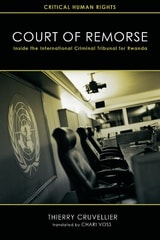
Court of Remorse
Inside the International Criminal Tribunal for RwandaThierry Cruvellier
University of Wisconsin Press, 2010
Fascinated by the Tribunal’s rich complexities, journalist Thierry Cruvellier came back day after day to watch the proceedings, spending more time there than any other outside observer. Gradually he gained the confidence of the victims, defendants, lawyers, and judges. Drawing on interviews with these protagonists and his close observations of their interactions, Cruvellier takes readers inside the courtroom to witness the motivations, mechanisms, and manipulations of justice as it unfolded on the stage of high-stakes, global politics. It is this ground-level view that makes his account so valuable—and so absorbing. A must-read for those who want to understand the dynamics of international criminal tribunals, Court of Remorse reveals both the possibilities and the challenges of prosecuting human rights violations.
Best Books for General Audiences, selected by the American Association for School Libraries and the Public Library Association
Best Books for High Schools, selected by the American Association for School Libraries
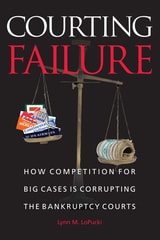
Courting Failure
How Competition for Big Cases Is Corrupting the Bankruptcy CourtsLynn Lopucki
University of Michigan Press, 2006
-Douglas Baird, University of Chicago Law School
"This book is smart, shocking and funny. This story has everything-professional greed, wrecked companies, and embarrassed judges. Insiders are already buzzing."
-Elizabeth Warren, Leo Gottlieb Professor of Law, Harvard Law School
"LoPucki provides a scathing attack on reorganization practice. Courting Failure recounts how lawyers, managers and judges have transformed Chapter 11. It uses empirical data to explore how the interests of the various participants have combined to create a system markedly different from the one envisioned by Congress. LoPucki not only questions the wisdom of these changes but also the free market ideology that supports much of the general regulation of the corporate sector."
-Robert Rasmussen, University of Chicago Law School
A sobering chronicle of our broken bankruptcy-court system, Courting Failure exposes yet another American institution corrupted by greed, avarice, and the thirst for power.
Lynn LoPucki's eye-opening account of the widespread and systematic decay of America's bankruptcy courts is a blockbuster story that has yet to be reported in the media. LoPucki reveals the profound corruption in the U.S. bankruptcy system and how this breakdown has directly led to the major corporate failures of the last decade, including Enron, MCI, WorldCom, and Global Crossing.
LoPucki, one of the nation's leading experts on bankruptcy law, offers a clear and compelling picture of the destructive power of "forum shopping," in which corporations choose courts that offer the most favorable outcome for bankruptcy litigation. The courts, lured by big money and prestige, streamline their requirements and lower their standards to compete for these lucrative cases. The result has been a series of increasingly shoddy reorganizations of major American corporations, proposed by greedy corporate executives and authorized by case-hungry judges.
Courting Justice
Ten New Jersey Cases That Shook the NationEdited by Paul L. Tractenberg with a Foreword by Deborah T. Poritz
Rutgers University Press, 2013
Paul Tractenberg has selected ten of the court’s landmark decisions between 1960 and 2011 to illustrate its extensive involvement in major public issues, and to assess its impact. Each case chapter is authored by a distinguished academic or professional expert, several of whom were deeply involved in the cases’ litigation, enabling them to provide special insights. An overview chapter provides context for the court’s distinctive activity.
Many of the cases are so widely known that they have become part of the national conversation about law and policy. In the Karen Ann Quinlan decision, the court determined the right of privacy extends to refusing life-sustaining treatment. The Baby M case reined in surrogate parenting and focused on the child’s best interests. In the Mount Laurel decision, the court sought to increase affordable housing for low- and moderate-income residents throughout the state. The Megan’s Law case upheld legal regulation of sex offender community notification. A series of decisions known as Abbott/Robinson required the state to fund poor urban school districts at least on par with suburban districts.
Other less well known cases still have great public importance. Henningsen v. Bloomfield Motors reshaped product liability and tort law to protect consumers injured by defective cars; State v. Hunt shielded privacy rights from unwarranted searches beyond federal standards; Lehmann v. Toys ‘R’ Us protected employees from sexual harassment and a hostile work environment; Right to Choose v. Byrne expanded state constitutional abortion rights beyond the federal constitution; and Marini v. Ireland protected low-income tenants against removal from their homes.
For some observers, the New Jersey Supreme Court represents the worst of judicial activism; others laud it for being, in its words, “the designated last-resort guarantor of the Constitution's command.” For Tractenberg, the court’s activism means it tends to find for the less powerful over the more powerful and for the public good against private interests, an approach he applauds.
Courting the Abyss
Free Speech and the Liberal TraditionJohn Durham Peters
University of Chicago Press, 2005
A mesmerizing account of the role of public communication in the Anglo-American world, Courting the Abyss shows that liberty's earliest advocates recognized its fraternal relationship with wickedness and evil. While we understand freedom of expression to mean "anything goes," John Durham Peters asks why its advocates so often celebrate a sojourn in hell and the overcoming of suffering. He directs us to such well-known sources as the prose and poetry of John Milton and the political and philosophical theory of John Locke, Adam Smith, John Stuart Mill, and Oliver Wendell Holmes Jr., as well as lesser-known sources such as the theology of Paul of Tarsus. In various ways they all, he shows, envisioned an attitude of self-mastery or self-transcendence as a response to the inevitable dangers of free speech, a troubled legacy that continues to inform ruling norms about knowledge, ethical responsibility, and democracy today.
A world of gigabytes, undiminished religious passion, and relentless scientific discovery calls for a fresh account of liberty that recognizes its risk and its splendor. Instead of celebrating noxious doctrine as proof of society's robustness, Courting the Abyss invites us to rethink public communication today by looking more deeply into the unfathomable mystery of liberty and evil.
Courting the Community
Legitimacy and Punishment in a Community CourtChristine Zozula
Temple University Press, 2019
Community Courts are designed to handle a city’s low-level offenses and quality-of-life crimes, such as littering, loitering, or public drunkenness. Court advocates maintain that these largely victimless crimes jeopardize the well-being of residents, businesses, and visitors. Whereas traditional courts might dismiss such cases or administer a small fine, community courts aim to meaningfully punish offenders to avoid disorder escalating to apocalyptic decline.
Courting the Community is a fascinating ethnography that goes behind the scenes to explore how quality-of-life discourses are translated into court practices that marry therapeutic and rehabilitative ideas. Christine Zozula shows how residents and businesses participate in meting out justice—such as through community service, treatment, or other sanctions—making it more emotional, less detached, and more legitimate in the eyes of stakeholders. She also examines both “impact panels,” in which offenders, residents, and business owners meet to discuss how quality-of-life crimes negatively impact the neighborhood, as well as strategic neighborhood outreach efforts to update residents on cases and gauge their concerns.
Zozula’s nuanced investigation of community courts can lead us to a deeper understanding of punishment and rehabilitation and, by extension, the current state of the American court system.
Courts and Bureaucracies
Renewing the Rule of Law in Our TimesRobert P. Burns
University of Chicago Press, 2027
A novel meditation on how courts and bureaucracies function today and how they can be made better.
We live in a highly bureaucratic society, so much so that we often don’t even see it. Although we think of bureaucracies and courtrooms as different kinds of institutions, as Robert P. Burns argues in Courts and Bureaucracies, their functions and everyday operations often blur together. Today, courts are being used to address numerous social problems that the government is unable or unwilling to tackle, and consequently, the courts frequently emphasize bureaucratic goals—such as efficiency and social control—over the adjudicatory functions that they are supposed to embody.
Drawing on social theory, philosophy, public administration, and law, Burns clarifies the role of courts in today’s bureaucratic society and considers the distinctive contributions that specifically legal procedures can bring. After exploring the competing first principles of adjudication, Burns then examines our current administrative, civil, and criminal processes and describes new and looming changes to rules and practices that should affect our thinking about the rule of law and the role of the courts.
A broad reassessment—both philosophical and practical—of how criminal, civil, and administrative practices differ from one another and what benefits each bestows, Courts and Bureaucracies offers concrete suggestions for how we can better achieve the ideals already implicit in our judicial traditions and practices.
Courts and Kids
Pursuing Educational Equity through the State CourtsMichael A. Rebell
University of Chicago Press, 2009
Over the past thirty-five years, federal courts have dramatically retreated from actively promoting school desegregation. In the meantime, state courts have taken up the mantle of promoting the vision of educational equity originally articulated in Brown v. Board of Education. Courts and Kids is the first detailed analysis of why the state courts have taken on this active role and how successful their efforts have been.
Since 1973, litigants have challenged the constitutionality of education finance systems in forty-five states on the grounds that they deprive many poor and minority students of adequate access to a sound education. While the plaintiffs have won in the majority of these cases, the decisions are often branded “judicial activism”—a stigma that has reduced their impact. To counter the charge, Michael A. Rebell persuasively defends the courts’ authority and responsibility to pursue the goal of educational equity. He envisions their ideal role as supervisory, and in Courts and Kids he offers innovative recommendations on how the courts can collaborate with the executive and legislative branches to create a truly democratic educational system.
Courts, Jurisdictions, and Law in John Milton and His Contemporaries
Alison A. Chapman
University of Chicago Press, 2020
Surveying Milton’s early pamphlets, divorce tracts, late political tracts, and major prose works in comparison with the writings and cases of some of Milton’s contemporaries—including George Herbert, John Donne, Ben Jonson, and John Bunyan—Chapman reveals the variety and nuance in Milton’s juridical toolkit and his subtle use of competing legal traditions in pursuit of justice.
Courts
A Comparative and Political AnalysisMartin Shapiro
University of Chicago Press, 1981

Crainte de Dieu, Sagesse et Loi
Aspects théologiques à partir de Si 10,19-11,6Katharina Lentz
SBL Press, 2020
Peu d'études spécifiques ont été consacrées à Ben Sira 10,19-11,6. Lentz examine le texte en hébreu, grec, syriaque et latin, en essayant d'identifier les différences majeures entre ces versions et leurs orientations fondamentales respectives. Dans cette péricope, elle révèle trois thèmes importants: la crainte de Dieu, la sagesse et la loi. En prenant comme point de départ le thème de la crainte de Dieu dans le Deutéronome, les Psaumes et les Proverbes, Job et Qoheleth en plus de Ben Sira, Lentz examine la relation de ce thème avec la sagesse et la loi. La relation étroite entre la crainte de Dieu, la sagesse et la loi devrait inciter les spécialistes à se demander si celles-ci ne représentent pas trois aspects de la même réalité.
Few specific studies have been devoted to Ben Sira 10:19-11:6. Lentz examines the text in Hebrew, Greek, Syriac, and Latin, trying to identify the major differences between these versions and their respective fundamental orientations. In this pericope she reveals three important themes: the fear of God, wisdom, and the law. Taking as a point of departure the theme of the fear of God in Deuteronomy, Psalms, and Proverbs, Job, and Qoheleth, in addition to Ben Sira, Lentz examines the relationship of this theme with wisdom and the law. The close relationship between the fear of God, wisdom, and the law should lead scholars to ask if these do not represent three aspects of the same reality.
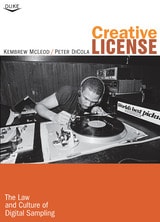
Creative License
The Law and Culture of Digital SamplingKembrew McLeod and Peter DiCola
Duke University Press, 2011
Interviewees include David Byrne, Cee Lo Green, George Clinton, De La Soul, DJ Premier, DJ Qbert, Eclectic Method, El-P, Girl Talk, Matmos, Mix Master Mike, Negativland, Public Enemy, RZA, Clyde Stubblefield, T.S. Monk.
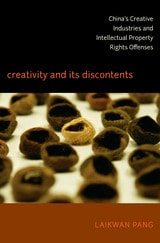
Creativity and Its Discontents
China's Creative Industries and Intellectual Property Rights OffensesLaikwan Pang
Duke University Press, 2012
Crime and Justice, Volume 11
Family ViolenceEdited by Lloyd Ohlin and Michael Tonry
University of Chicago Press Journals, 1990
Crime and Justice, Volume 18
Beyond the Law: Crime in Complex OrganizationsEdited by Michael Tonry and Albert J. Reiss Jr.
University of Chicago Press Journals, 1993

Crime and Justice, Volume 22
An Annual Review of ResearchEdited by Michael Tonry
University of Chicago Press Journals, 1997
Crime and Justice, Volume 23
An Annual Review of ResearchEdited by Michael Tonry
University of Chicago Press Journals, 1998
Crime and Justice, Volume 24
Youth ViolenceEdited by Michael Tonry and Mark H. Moore
University of Chicago Press Journals, 1998
Featuring articles by leading American and European scholars from many fields, Youth Violence provides a reliable, up-to-date, authoritative and comprehensive overview of policy issues and research developments concerning crime and violence among the young.
Crime and Justice, Volume 25
An Annual Review of ResearchEdited by Michael Tonry
University of Chicago Press Journals, 1999
Crime and Justice, Volume 27
A Review of ResearchEdited by Michael Tonry
University of Chicago Press Journals, 2000
Crime and Justice, Volume 28
A Review of ResearchEdited by Michael Tonry
University of Chicago Press Journals, 2001
Volume 28 is a review of recent research on criminal justice issues, with a careful balance of research, theory, and practice.
Contributors:
John Laub and Robert J. Sampson on Desistance From Crime
Norval Morris and Leena Kurki on Supermax Prisons
Richard Harding on Private Prisons
David Boerner and Roxanne Lieb on Sentencing Reform In The Other Washington, 1975-2000
Michael A. Bellesiles on the History Of Firearms Regulation
Grant T. Harris, Tracey A. Skilling, and Marnie E. Rice on Psychopathy And Crime
Daniel Nagin on Costs And Benefits Of Crime Prevention.
Crime and Justice, Volume 29
A Review of ResearchEdited by Michael Tonry
University of Chicago Press Journals, 2002
Volume 29 is a review of recent research on criminal justice issues, with a careful balance of research, theory, and practice.
Crime and Justice, Volume 31
Youth Crime and Youth Justice: Comparative and Cross-national PerspectivesEdited by Michael Tonry and Anthony N. Doob
University of Chicago Press Journals, 2004
Contributors:
Hans-Jörg Albrecht
Anthony Bottoms
James Dignan
Anthony N. Doob
Carl-Gunnar Janson
Josine Junger-Tas
Britta Kyvsgaard
Allison Morris
Julian V. Roberts
Jane B. Sprott
Lode Walgrave
Crime and Justice, Volume 32
A Review of ResearchEdited by Michael Tonry
University of Chicago Press Journals, 2004
Volume 32 covers criminal justice issues, with a careful balance of research, theory, and practice. Topics in this volume include: environmental crime, the effects of wrongful imprisonment, the assessment of macro-level predictors and theories of crime, ethnic differences in intergenerational crime patterns, sentencing guidelines in Minnesota from 1978 to 2003, and the results of five decades of neutralization research.
Contributors:
Heith Copes
Francis T. Cullen
Richard S. Frase
Adrian Grounds
Shadd Maruna
Travis C. Pratt
Aaron S. Routhe
Neal Shover
David J. Smith
Crime and Justice, Volume 34
A Review of ResearchEdited by Michael Tonry
University of Chicago Press Journals, 2006

Crime and Justice, Volume 35
Crime and Justice in the NetherlandsEdited by Michael Tonry and Catrien Bijleveld
University of Chicago Press Journals, 2008
Crime and Justice, Volume 36
Crime, Punishment, and Politics in Comparative PerspectiveEdited by Michael Tonry
University of Chicago Press Journals, 2008
Crime and Justice, Volume 37
A Review of ResearchEdited by Michael Tonry
University of Chicago Press Journals, 2008
Crime and Justice, Volume 38
A Review of ResearchEdited by Michael Tonry
University of Chicago Press Journals, 2009
Since 1979, Crime and Justice has presented an annual review of the latest international research, providing expertise to enhance the work of sociologists, psychologists, criminal lawyers, justice scholars, and political scientists. The series explores a full range of issues concerning crime, its causes, and its cure. Volume 38 covers a range of criminal justice issues, from the effects of parental imprisonment on children to economists and crime.
Crime and Justice, Volume 39
A Review of ResearchEdited by Michael Tonry
University of Chicago Press Journals, 2010
Since 1979 the Crime and Justice series has presented a review of the latest international research, providing expertise to enhance the work of sociologists, psychologists, criminal lawyers, justice scholars, and political scientists. The series explores a full range of issues concerning crime, its causes, and its cure. Volume 39 covers a range of criminal justice issues, including how drug enforcement affects drug prices, the source of racial disparity in imprisonment, rape and attrition in the legal process, and sex offender recidivism. Contributors to this volume include: Brigitte Bouhours, Jonathan P. Caulkins , Aaron Chalfin, Philip J. Cook, , Kathleen Daly, Denise C. Gottfredson, David S. Kirk, John H. Laub, Stephen D. Mastrofski , Chongmin Na, Steven Raphael, Michael D. Reisig, Peter Reuter, Dirk van Zyl Smit, Keith Soothill, Michael Tonry, and James J. Willis.
Crime and Justice, Volume 40
Crime and Justice in ScandinaviaEdited by Michael Tonry and Tapio Lappi-Seppälä
University of Chicago Press Journals, 2012
Since 1979 the Crime and Justice series has presented a review of the latest international research, providing expertise to enhance the work of sociologists, psychologists, criminal lawyers, justice scholars, and political scientists. The series explores a full range of issues concerning crime, its causes, and its cure.
Volume 40, Crime and Justice in Scandinavia, offers the most comprehensive and authoritative look ever available at criminal justice policies, practices, and research in the Nordic countries. Topics range from the history of violence through juvenile delinquency, juvenile justice, and sentencing to controversial contemporary policies on prostitution, victims, and organized crime. Contributors to this volume include Jon-Gunnar Bernburg, Ville Hinkkanen, Cecilie Høigård, Hanns von Hofer, Charlotta Holmström, Janne Kivivuori, Lars Korsell, Tapio Lappi-Seppälä, Paul Larsson, Martti Lehti, Torkild Hovde Lyngstad, Sven-Axel Månsson, Anita Rönneling, Lise-Lotte Rytterbro, Torbjørn Skardhamar, May-Len Skilbrei, and Henrik Tham.
Crime and Justice, Volume 41
Prosecutors and Politics: A Comparative PerspectiveEdited by Michael Tonry
University of Chicago Press Journals, 2012
Prosecutors are powerful figures in any criminal justice system. They decide what crimes to prosecute, whom to pursue, what charges to file, whether to plea bargain, how aggressively to seek a conviction, and what sentence to demand. In the United States, citizens can challenge decisions by police, judges, and corrections officials, but courts keep their hands off the prosecutor. Curiously, in the United States and elsewhere, very little research is available that examines this powerful public role. And there is almost no work that critically compares how prosecutors function in different legal systems, from state to state or across countries. Prosecutors and Politics begins to fill that void.
Police, courts, and prisons are much the same in all developed countries, but prosecutors differ radically. The consequences of these differences are enormous: the United States suffers from low levels of public confidence in the criminal justice system and high levels of incarceration; in much of Western Europe, people report high confidence and support moderate crime control policies; in much of Eastern Europe, people’s perceptions of the law are marked by cynicism and despair. Prosecutors and Politics unpacks these national differences and provides insight into this key area of social control.
Since 1979 the Crime and Justice series has presented a review of the latest international research, providing expertise to enhance the work of sociologists, psychologists, criminal lawyers, justice scholars, and political scientists. The series explores a full range of issues concerning crime, its causes, and its cure.
Crime and Justice, Volume 42
Crime and Justice in America: 1975-2025Edited by Michael Tonry
University of Chicago Press Journals, 2012
For the American criminal justice system, 1975 was a watershed year. Offender rehabilitation and individualized sentencing fell from favor. The partisan politics of “law and order” took over. Among the results four decades later are the world’s harshest punishments and highest imprisonment rate. Policymakers’ interest in what science could tell them plummeted just when scientific work on crime, recidivism, and the justice system began to blossom. Some policy areas—sentencing, gun violence, drugs, youth violence—became evidence-free zones. In others—developmental crime prevention, policing, recidivism studies, evidence mattered. Crime and Justice in America: 1975-2025 tells how policy and knowledge did and did not interact over time and charts prospects for the future. What accounts for the timing of particular issues and research advances? What did science learn or reveal about crime and justice, and how did that knowledge influence policy? Where are we now, and, perhaps even more important, where are we going?
The contributors to this volume, the leading scholars in their fields, bring unsurpassed breadth and depth of knowledge to bear in answering these questions. They include Philip J. Cook, Francis T. Cullen, Jeffrey Fagan, David Farrington, Daniel S. Nagin, Peter Reuter, Lawrence W. Sherman, and Franklin E. Zimring.
For thirty-five years, the Crime and Justice series has provided a platform for the work of sociologists, psychologists, criminal lawyers, justice scholars, and political scientists as it explores the full range of issues concerning crime, its causes, and it remedies.
Crime and Justice, Volume 45
Sentencing Policies and Practices in Western Countries: Comparative and Cross-National PerspectivesEdited by Michael Tonry
University of Chicago Press Journals, 2016
Crime and Justice, Volume 46
Reinventing American Criminal JusticeEdited by Michael Tonry
University of Chicago Press Journals, 2017
Crime and Justice, Volume 47
A Review of ResearchEdited by Michael Tonry
University of Chicago Press Journals, 2018
Crime and Justice, Volume 48
American SentencingEdited by Michael Tonry
University of Chicago Press Journals, 2019
This volume covers what students, scholars, practitioners, and policy makers need to know about how sentencing really works, what a half century’s “reforms” have and have not accomplished, how sentencing processes can be made fairer, and how sentencing outcomes can be made more just. Its writers are among America’s leading scholarly specialists—often the leading specialist—in their fields.
Clearly and accessibly written, American Sentencing is ideal for teaching use in seminars and courses on sentencing, courts, and criminal justice. Its authors’ diverse perspectives shed light on these issues, making it likely the single, most authoritative source of information on the state of sentencing in America today.