Results by title
2817 books match the query 'Nature' and 144 start with c
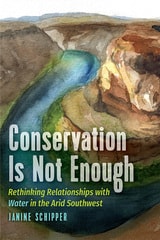
Conservation is not Enough
Rethinking Relationships with Water in the Arid SouthwestJanine Schipper
University of Wyoming Press, 2025
Using an exploratory and qualitative approach, the book draws on more than ninety-five interviews conducted over three years, revealing the complex relationships people have with water in the Southwest, and prominently features the voices of participants, effectively illustrating multiple perspectives and diverse ways of thinking about and relating to water. Schipper highlights various perspectives—including a water manager making conservation decisions, a Hopi elder emphasizing our connection to the water cycle, and a ski instructor reflecting on human-made snow—and interweaves personal experiences and reflections on her own relationship with water and conservation efforts.
Conservation Is Not Enough encourages readers to reflect on their personal connections to water and consider new possibilities, and it also urges readers to think beyond conventional conservation approaches. This book helps to transform the collective approach to water and cultivate fresh ways of engaging with and relating to water and is of great interest to scholars, students, and residents concerned with water issues in the Colorado River Basin.
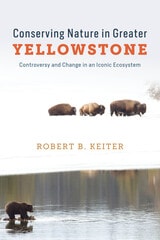
Conserving Nature in Greater Yellowstone
Controversy and Change in an Iconic EcosystemRobert B. Keiter
University of Chicago Press, 2025
For more than 150 years, the Yellowstone region—now widely known as the twenty-three million acre Greater Yellowstone Ecosystem—has played a prominent role in the United States’ nature conservation agenda. In this book, Robert B. Keiter, an award-winning public land law and policy expert, traces the evolution and application of fundamental ecological conservation concepts tied to Yellowstone.
Keiter’s book highlights both the conservation successes and controversies connected with this storied region, which has been enmeshed in change. During the 1980s, leaders in Yellowstone embraced ecosystem management concepts to recover a dwindling grizzly bear population and to support wolf reintroduction. Since then, management policies in the region’s two national parks and adjacent national forests have largely followed suit, prioritizing ecosystem-level conservation over industrial activity. Groundbreaking efforts are currently afoot to protect elk, deer, and pronghorn migration corridors and to maintain the park’s bison population, effectively expanding the scope of regional conservation initiatives. But in the face of explosive human population growth and related development pressures, new efforts must also account for the region’s privately owned lands along with accelerating recreational activities that present quite different problems.
Indeed, the Greater Yellowstone Ecosystem—extending across three states and twenty counties and embracing more than sixteen million acres of federal land as well as private and tribal lands —can only be characterized as a complex, jurisdictionally fragmented landscape. As Keiter makes clear, the quest for common ground among federal land managers, state officials, local communities, conservationists, ranchers, Indigenous tribes, and others is a vital, enduring task.
Exploring both notable conservation accomplishments and the ongoing challenges confronting this special place, Keiter’s book explains the many forces—scientific, political, economic, legal, cultural, climatic, and more—at work driving controversy and change across the region. But more than this, Conserving Nature in Greater Yellowstone shows us that the lessons gleaned from Yellowstone’s expansive nature conservation efforts are profoundly important for both the country and the world.
Conserving Nature in Greater Yellowstone
Controversy and Change in an Iconic EcosystemRobert B. Keiter
University of Chicago Press, 2025
The story of how Yellowstone, established in 1872 as the world’s first national park, has become synonymous with nature conservation—and an examination of today’s challenges to preserve the region’s wilderness heritage.
For more than 150 years, the Yellowstone region—now widely known as the twenty-three million acre Greater Yellowstone Ecosystem—has played a prominent role in the United States’ nature conservation agenda. In this book, Robert B. Keiter, an award-winning public land law and policy expert, traces the evolution and application of fundamental ecological conservation concepts tied to Yellowstone.
Keiter’s book highlights both the conservation successes and controversies connected with this storied region, which has been enmeshed in change. During the 1980s, leaders in Yellowstone embraced ecosystem management concepts to recover a dwindling grizzly bear population and to support wolf reintroduction. Since then, management policies in the region’s two national parks and adjacent national forests have largely followed suit, prioritizing ecosystem-level conservation over industrial activity. Groundbreaking efforts are currently afoot to protect elk, deer, and pronghorn migration corridors and to maintain the park’s bison population, effectively expanding the scope of regional conservation initiatives. But in the face of explosive human population growth and related development pressures, new efforts must also account for the region’s privately owned lands along with accelerating recreational activities that present quite different problems.
Indeed, the Greater Yellowstone Ecosystem—extending across three states and twenty counties and embracing more than sixteen million acres of federal land as well as private and tribal lands —can only be characterized as a complex, jurisdictionally fragmented landscape. As Keiter makes clear, the quest for common ground among federal land managers, state officials, local communities, conservationists, ranchers, Indigenous tribes, and others is a vital, enduring task.
Exploring both notable conservation accomplishments and the ongoing challenges confronting this special place, Keiter’s book explains the many forces—scientific, political, economic, legal, cultural, climatic, and more—at work driving controversy and change across the region. But more than this, Conserving Nature in Greater Yellowstone shows us that the lessons gleaned from Yellowstone’s expansive nature conservation efforts are profoundly important for both the country and the world.
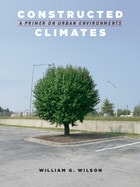
Constructed Climates
A Primer on Urban EnvironmentsWilliam G. Wilson
University of Chicago Press, 2011
As our world becomes increasingly urbanized, an understanding of the context, mechanisms, and consequences of city and suburban environments becomes more critical. Without a sense of what open spaces such as parks and gardens contribute, it’s difficult to argue for their creation and maintenance: in the face of schools needing resources, roads and sewers needing maintenance, and people suffering at the hands of others, why should cities and counties spend scarce dollars planting trees and preserving parks?
In Constructed Climates, ecologist William G. Wilson demonstrates the value of urban green. Focusing specifically on the role of vegetation and trees, Wilson shows the costs and benefits reaped from urban open spaces, from cooler temperatures to better quality ground water—and why it all matters. While Constructed Climates is a work of science, it does not ignore the social component. Wilson looks at low-income areas that have poor vegetation, and shows how enhancing these areas through the planting of community gardens and trees can alleviate social ills. This book will be essential reading for environmentalists and anyone making decisions for the nature and well-being of our cities and citizens.
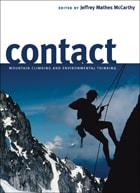
Contact
Mountain Climbing And Environmental ThinkingJeffrey Mccarthy
University of Nevada Press, 2008
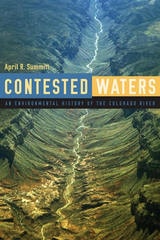
Contested Waters
An Environmental History of the Colorado RiverApril R. Summitt
University Press of Colorado, 2013
-From the conclusion
The Colorado River is a vital resource to urban and agricultural communities across the Southwest, providing water to 30 million people. Contested Waters tells the river's story-a story of conquest, control, division, and depletion.
Beginning in prehistory and continuing into the present day, Contested Waters focuses on three important and often overlooked aspects of the river's use: the role of western water law in its over-allocation, the complexity of power relationships surrounding the river, and the concept of sustainable use and how it has been either ignored or applied in recent times. It is organized in two parts, the first addresses the chronological history of the river and long-term issues, while the second examines in more detail four specific topics: metropolitan perceptions, American Indian water rights, US-Mexico relations over the river, and water marketing issues. Creating a complete picture of the evolution of this crucial yet over-utilized resource, this comprehensive summary will fascinate anyone interested in the Colorado River or the environmental history of the Southwest.
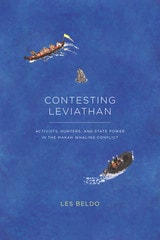
Contesting Leviathan
Activists, Hunters, and State Power in the Makah Whaling ConflictLes Beldo
University of Chicago Press, 2019
In Contesting Leviathan, anthropologist Les Beldo describes the complex judicial and political climate for whale conservation in the United States, and the limits of the current framework in which whales are treated as “large fish” managed by the National Marine Fisheries Service. Emphasizing the moral dimension of the conflict between the Makah, the US government, and antiwhaling activists, Beldo brings to light the lived ethics of human-animal interaction, as well as how different groups claim to speak for the whale—the only silent party in this conflict. A timely and sensitive study of a complicated issue, this book calls into question anthropological expectations regarding who benefits from the exercise of state power in environmental conflicts, especially where indigenous groups are involved. Vividly told and rigorously argued, Contesting Leviathan will appeal to anthropologists, scholars of indigenous culture, animal activists, and any reader interested in the place of animals in contemporary life.
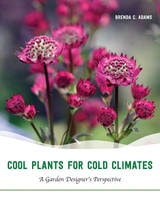
Cool Plants for Cold Climates
A Garden Designer's PerspectiveBrenda C. Adams
University of Alaska Press, 2017
When Adams moved from the warm Southwest to Alaska, she found herself in a different gardening world, with few guides on how to approach this new ecosystem. Now, more than twenty-five years later, she shares the secrets gained from her years of gardening experiments as well as bountiful advice from friends and local nurseries. She explains how to evaluate a plant, balancing its artistic attributes with its more utilitarian ones, as well as how to evaluate your space and soil. Adams then takes you into the nursery, offering guidance on how to pick the best of the best. Finally, she offers a detailed look at a wide variety of wonderful plants, highlighting those that offer overall beauty, are especially easy to care for, and solidly hardy. With more than three hundred vivid pictures of both individual plants and full gardens, Adams proves that there is a bounty of plants, in a rainbow of colors, waiting to brighten up your space.
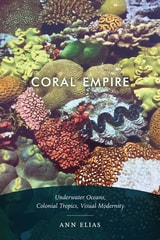
Coral Empire
Underwater Oceans, Colonial Tropics, Visual ModernityAnn Elias
Duke University Press, 2019

Coralations
Melody Jue
University of Minnesota Press, 2025
A captivating meditation on coral beyond iconic tropical corals
Coralations is a philosophical exploration of the media that come into focus when we shift our attention from the highly recognizable coral of the tropics. Focusing on soft corals and deep-water corals leads to different narratives about climate change and involves different analogies to media. Through thought-provoking analyses of photography, science fiction, visual art, and scientific images, Melody Jue renews our curiosity and broadens our understanding of corals beyond the dominant narratives about their endangerment. Coralations shows how paying attention to particular corals can change what we take for granted.
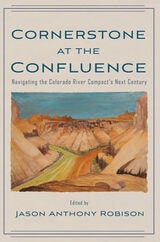
Cornerstone at the Confluence
Navigating the Colorado River Compact's Next CenturyEdited by Jason Anthony Robison
University of Arizona Press, 2022
No fewer than forty million people have come to rely on the Colorado River system in modern times—a river system immersed in an unprecedented, unrelenting megadrought for more than two decades. Attempting to navigate this “new normal,” policymakers are in the midst of negotiating new management rules for the river system, a process coinciding with the compact’s centennial that must be completed by 2026.
Animated by this remarkable confluence of events, Cornerstone at the Confluence leverages the centennial year to reflect on the compact and broader “Law of the River” to envision the future. It is a volume inviting dialogue about how the Colorado River system’s flows should be apportioned given climate change, what should be done about environmental issues such as ecosystem restoration and biodiversity protection, and how long-standing issues of water justice facing Native American communities should be addressed.
In one form or another, all these topics touch on the concept of “equity” embedded within the compact—a concept that tees up what is perhaps the foundational question confronted by Cornerstone at the Confluence: Who should have a seat at the table of Colorado River governance?
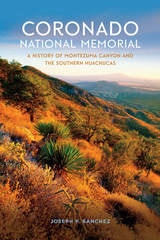
Coronado National Memorial
A History of Montezuma Canyon and the Southern HuachucasJoseph P. Sánchez
University of Nevada Press, 2017
Sánchez is the foremost historian of the area, and he shifts through and decodes a number of key Spanish and English language documents from different archives that tell the story of an historical drama of epic proportions. He combines the regional and the global, starting with the prehistory of the area. He covers Spanish colonial contact, settlement missions, the Mexican Territorial period, land grants, and the ultimate formation of the international border that set the stage for the creation of the Coronado National Memorial in 1952.
Much has been written about southwestern Arizona and northeastern Sonora, and in many ways this book complements those efforts and delivers details about the region’s colorful past.
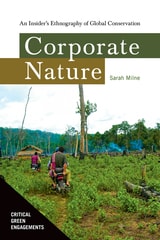
Corporate Nature
An Insider's Ethnography of Global ConservationSarah Milne
University of Arizona Press, 2022
Sarah Milne spent more than a decade working for and observing global conservation projects in Cambodia. During this time, she saw how big environmental NGOs can operate rather like corporations. Their core practice involves rolling out appealing and deceptively simple policy ideas, like Payments for Ecosystem Services (PES). Yet, as policy ideas prove hard to implement, NGOs must also carefully curate evidence from the field to give the impression of success and effectiveness.
In Corporate Nature, Milne delves inside the black box of mainstream global conservation. She reveals how big international NGOs struggle in the face of complexity—especially in settings where corruption and political violence prevail. She uses the case of Conservation International’s work in Cambodia to illustrate how apparently powerful NGOs can stumble in practice: policy ideas are transformed on the ground, while perverse side effects arise, like augmented authoritarian power, illegal logging, and Indigenous dispossession.
The real power of global conservation NGOs is therefore not in their capacity to control what happens in the field but in their capacity to ignore or conceal failings. Milne argues that this produces an undesirable form of socionature, called corporate nature, that values organizational success over diverse knowledges and ethical conduct.
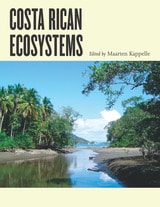
Costa Rican Ecosystems
Edited by Maarten Kappelle
University of Chicago Press, 2016
In Costa Rican Ecosystems, Maarten Kappelle brings together a collection of the world’s foremost experts on Costa Rican ecology—outstanding scientists such as Daniel H. Janzen, Jorge Cortés, Jorge A. Jiménez, Sally P. Horn, Robert O. Lawton, Quírico Jiménez M., Carlos Manuel Rodríguez, Catherine M. Pringle, and Eduardo Carrillo J., among others—to offer the first comprehensive account of the diversity, structure, function, uses, and conservation of Costa Rica’s ecosystems. Featuring a foreword and introductory remarks by two renowned leaders in biodiversity science and ecological conservation, Thomas E. Lovejoy and Rodrigo Gámez Lobo, in addition to chapters highlighting the geology, soils, and climate of Costa Rica, as well as the ecosystems of its terrestrial, freshwater, and marine habitats, and including previously unpublished information on Isla del Coco, this beautiful color-illustrated book will be an essential reference for academic scientists, students, natural history guides, conservationists, educators, park guards, and visitors alike.
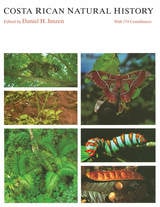
Costa Rican Natural History
Edited by Daniel H. Janzen
University of Chicago Press, 1983
"This is an extraordinary, virtually unique work. . . . The tremendous amount of original, previously unpublished, firsthand information is remarkable."—Peter H. Raven, Director, Missouri Botanical Garden
"An essential resource for anyone interested in tropical biology. . . . It can be used both as an encyclopedia—a source of facts on specific organisms—and as a source of ideas and generalizations about tropical ecology."—Alan P. Smith, Ecology
Costing the Earth?
Perspectives on Sustainable DevelopmentBernd Meyer
Haus Publishing, 2009
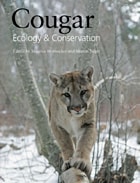
Cougar
Ecology and ConservationEdited by Maurice Hornocker and Sharon Negri
University of Chicago Press, 2009
The cougar is one of the most beautiful, enigmatic, and majestic animals in the Americas. Eliciting reverence for its grace and independent nature, it also triggers fear when it comes into contact with people, pets, and livestock or competes for hunters’ game. Mystery, myth, and misunderstanding surround this remarkable creature.
The cougar’s range once extended from northern Canada to the tip of South America, and from the Pacific to the Atlantic, making it the most widespread animal in the western hemisphere. But overhunting and loss of habitat vastly reduced cougar numbers by the early twentieth century across much of its historical range, and today the cougar faces numerous threats as burgeoning human development encroaches on its remaining habitat.
When Maurice Hornocker began the first long-term study of cougars in the Idaho wilderness in 1964, little was known about this large cat. Its secretive nature and rarity in the landscape made it difficult to study. But his groundbreaking research yielded major insights and was the prelude to further research on this controversial species.
The capstone to Hornocker’s long career studying big cats, Cougar is a powerful and practical resource for scientists, conservationists, and anyone with an interest in large carnivores. He and conservationist Sharon Negri bring together the diverse perspectives of twenty-two distinguished scientists to provide the fullest account of the cougar’s ecology, behavior, and genetics, its role as a top predator, and its conservation needs. This compilation of recent findings, stunning photographs, and firsthand accounts of field research unravels the mysteries of this magnificent animal and emphasizes its importance in healthy ecosystem processes and in our lives.
Count
Valerie Martínez
University of Arizona Press, 2021
With sections that vary between poetry, science, Indigenous storytelling, numerical measurement, and narration, Valerie Martínez’s new work results in an epic panorama infused with the timely urgency of facing an apocalyptic future. This beautiful, tragic, and unusual poem is a testimonial, a warning, and a call to action that will captivate lovers of contemporary poetry and ecopoetry, environmentalists, and climate activists alike. Count skillfully calls on our collective desire to leave a livable world, filled with the potential for healing, as a legacy to the generations of children that come after us.
Counting Sheep
Twenty Ways of Seeing Desert BighornGary Paul Nabhan
University of Arizona Press, 1993
Contributors:
Charles Bowden
David E. Brown
Bill Broyles
Julian Hayden
William T. Hornaday
Paul Krausman
Danny Lopez
Eric Mellink
Mauricio Mixco
Gale Monson
Gary Paul Nabhan
Doug Peacock
Kermit Roosevelt
Harley G. Shaw
Charles Sheldon
Peter Steinhart
Anita Alvarez de Williams
Terry Tempest Williams
Ann Zwinger
Cowboy is a Verb
Notes from a Modern-day RancherRichard Collins
University of Nevada Press, 2019
A born storyteller with a flair for words, Collins breathes life into the geology, history, and interdependency of land, water, and native and introduced plants and animals. He conjures indelible portraits of the hardworking, dedicated people he comes to know. With both humor and humility, he recounts the day-to-day challenges of ranch life such as how to build a productive herd, distribute your cattle evenly across a rough and rocky landscape, and establish a grazing system that allows pastures enough time to recover. He also intimately recounts a battle over the endangered Gila topminnow and how he and his neighbors worked with university range scientists, forest service conservationists, and funding agencies to improve their ranches as well as the ecological health of the Redrock Canyon watershed.
Ranchers who want to stay in the game don’t dominate the landscape; instead, they have to continually study the land and the animals it supports. Collins is a keen observer of both. He demonstrates that patience, resilience, and a common-sense approach to conservation and range management are what counts, combined with an enduring affection for nature, its animals, and the land. Cowboy is a Verb is not a romanticized story of cowboy life on the range, rather it is a complex story of the complicated work involved with being a rancher in the twenty-first-century West.
Crab Wars
A Tale of Horseshoe Crabs, Bioterrorism, and Human HealthWilliam Sargent
University Press of New England, 2006
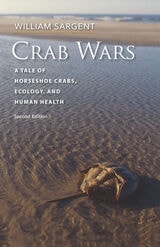
Crab Wars
A Tale of Horseshoe Crabs, Ecology, and Human HealthWilliam Sargent
Brandeis University Press, 2021
Because every drug certified by the FDA must be tested using the horseshoe crab derivative known as Limulus lysate, a multimillion-dollar industry has emerged involving the license to bleed horseshoe crabs and the rights to their breeding grounds. William Sargent presents a thoroughly accessible insider’s guide to the discovery of the lysate test, the exploitation of the horseshoe crab at the hands of multinational pharmaceutical conglomerates, local fishing interests, and the legal and governmental wrangling over the creatures’ ultimate fate. In the end, the story of the horseshoe crab is a sobering reflection on the unintended consequences of scientific progress and the danger of self-regulated industries controlling a limited natural resource. This new edition brings the story up to date as companies race to manufacture alternatives to the horseshoe crab blood, which is now essential for testing vaccines such as those developed to counter COVID-19. However, horseshoe crab populations are still dwindling, with profound implications not only for the future of the crabs themselves but also for the ecosystems that depend on them.
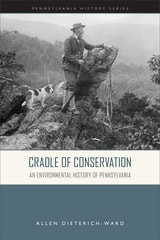
Cradle of Conservation
An Environmental History of PennsylvaniaAllen Dieterich-Ward
Temple University Press, 2024
Cradle of Conservation moves across time and place, from the Haudenosaunee people of the Susquehanna Valley, to the iron furnaces of nineteenth-century Pittsburgh, to the diesel trucks on the twentieth-century Pennsylvania Turnpike. In addition, Dieterich-Ward explores the histories of Philadelphia’s Schuylkill River and the state’s anthracite region and traces the environmental movements and crises that have led to public policy changes in the face of climate change.
Cradle of Conservation deepens our understanding of how Pennsylvanians have conserved and consumed.
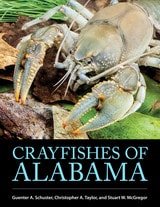
Crayfishes of Alabama
Guenter A. Schuster, Christopher A. Taylor, and Stuart W. McGregor
University of Alabama Press, 2022
A comprehensive assessment of the 99 known species of crayfishes inhabiting the state of Alabama
Crayfishes are common organisms in many freshwater habitats. They are usually the largest invertebrates and often represent the greatest amount of invertebrate biomass in their environments. Identified as a keystone species in many ecological communities, aquatic biologists are fond of saying “they eat everything, and everything eats them.”
Crayfishes—sometimes called crawfishes, crawdads, mudbugs, ditchbugs, yabbies, and flusskrebs—are taxonomically and ecologically a diverse group of aquatic crustaceans. There are more than 600 known species worldwide and North America alone is home to more than 400. As home to 99 documented species, Alabama is a global hotspot for crayfish diversity.
Crayfishes of Alabama is the first comprehensive reference work on the subject and provides the most up-to-date information on the vast range of crayfishes known to reside in Alabama. The authors have collected specimens and data from the state’s major and minor waterways and lakes, as well as specialized habitats such as burrows, caves, roadside ditches, marshes, swamps, and temporary autumnal ponds. This volume represents the most in-depth treatment of crayfishes found in the southeastern United States and offers detailed species accounts including descriptions of morphological characters, color, maximum size, comparative species, distribution and habitat, biology, crayfish associates, and conservation status. The species accounts are accentuated with color photographs, photographic morphological plates, and dot maps showing state and national distributions. A photographic key is provided to guide the identification of all 99 species.
Creating The Countryside
edited by E. Melanie DuPuis and Peter Vandergeest
Temple University Press, 1996
What does it mean to save nature and rural life? Do people know what they are trying to save and what they mean by "save"? As the answers to these questions become more and more unclear, so, too do the concepts of "environment," "wilderness," and "country."
From the abuse of the Amazon rain forest to how Vermont has been marketed as the ideal rural place, this collection looks at what the countryside is, should be, or can be from the perspective of people who are actively involved in such debates. Each contributor examines the underlying tendencies–and subsequent policies–that separate country from city, developed land from wilderness, and human activity from natural processes. The editors argue in their introduction that these dualistic categories limit our ability to think about environmental and rural problems and hamper our ability to formulate practical, realistic, and just solutions.
This book's interpretive approach to the natural world explores why people make artificial distinctions between nature and culture, and how people can create new forms of sustainable development in terms of real problems and real places.
In the series Conflicts in Urban and Regional Development, edited by John R. Logan and Todd Swanstrom.
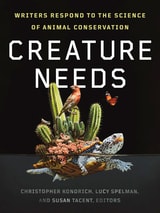
Creature Needs
Writers Respond to the Science of Animal ConservationChristopher Kondrich
University of Minnesota Press, 2024
A kaleidoscopic literary exploration of extinction and conservation, inspired by the latest scientific research
Creature Needs is a polyvocal call to arms about animal extinction and habitat loss that harnesses the power of literature and scientific research to move us, and stir our hearts and minds, toward action and change. A collection of new literary works by prominent writers paired with excerpts from recent scientific articles that inspired and informed them, this innovative anthology engages the collaborative, cross-disciplinary spirit and energy that is necessary to address the impact of humans on all other animals on our planet.
Divided into six sections representing the basic needs for survival—air, food, water, shelter, room to move, and each other—the stories and poems in Creature Needs vividly portray how these essential conditions are under assault through climate change, habitat loss, plastic and industrial pollution, and human intervention in natural landscapes. As the dominant species on Earth, humans not only control access to survival resources but we also overconsume and harm them. Rather than surrender to despair, the writers here believe that we have the power, if we choose, to change course and protect these resources.
A collaboration with the nonprofit organization Creature Conserve, Creature Needs is a path-setting fusion of literary art and scientific research that deepens our understanding of the interdependence between life and habitat, illuminating the stark choices we face to conserve resources and ensure that the basic needs of all species are met.
Contributors: Kazim Ali, Mary-Kim Arnold, Ramona Ausubel, David Baker, Charles Baxter, Aimee Bender, Kimberly Blaeser, Oni Buchanan, Tina Cane, Ching-In Chen, Mónica de la Torre, Tongo Eisen-Martin, Thalia Field, Ben Goldfarb, Annie Hartnett, Sean Hill, Hester Kaplan, Donika Kelly, Robin McLean, Miranda Mellis, Rajiv Mohabir, Kyoko Mori, David Naimon, Craig Santos Perez, Beth Piatote, Rena Priest, Alberto Ríos, Eléna Rivera, Sofia Samatar, Sharma Shields, Eleni Sikelianos, Maggie Smith, Juliana Spahr, Tim Sutton, Jodie Noel Vinson, Asiya Wadud, Claire Wahmanholm, Marco Wilkinson, Jane Wong.
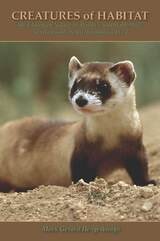
Creatures Of Habitat
The Changing Nature of Wildlife and Wild Places in Utah and the Intermountain WestMark Gerard Hengesbaugh
Utah State University Press, 2001
From flying squirrels on high wooded plateaus to hanging gardens in redrock canyons, the Intermountain West is home to some of the world's rarest and most fascinating animals and plants. Creatures of Habitat details many unique but little-known talents of this region's strange and wonderful wild inhabitants and descibes their connections with native environments. For example, readers will learn about the pronghorn antelope's supercharged cardiovascular system, a brine shrimp-powered shorebird that each year flies nonstop from the Great Salt Lake to Central Argentina, and a rare mustard plant recently discovered on Mount Ogden. Emphasizing how increasing loss and degradation of habitat hinders native species' survival, Mark Gerard Hengesbaugh discusses what is happening to wildlife and wild places and what is being done about it.
Well illustrated, this book has habitat maps, pen-and-ink illustrations, and fifty photos of wildlife and wild places selected by photo editor Dan Miller. Also included are guides to wildlife viewing and lists of Utah species, including those considered sensitive, threatened, or endangered.
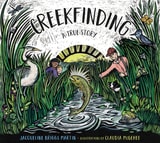
Creekfinding
A True StoryJacqueline Briggs Martin
University of Minnesota Press, 2017
Once upon a time a creek burbled up and tumbled across a prairie valley. It was filled with insects and brook trout that ate them, frogs that chirruped and birds watching for bugs and fish. This is a true story about a man named Mike who went looking for that creek long after it was buried under fields of corn. It is the story of how a creek can be brought back to life, and with it a whole world of nature.
In the words of award-winning author Jacqueline Briggs Martin and the enchanting illustrations by Claudia McGehee, this heartening tale of an ecosystem restored in the Driftless Area of northeast Iowa unfolds in a way that will charm and inform young readers who are drawn to a good mystery, the wonders of nature—and, of course, big earth-moving machines.
Critical Norths
Space, Nature, TheoryEdited by Sarah J. Ray and Kevin Maier
University of Alaska Press, 2017
This book brings together scholars from a range of disciplines to ask key questions about the North and how we’ve conceived it—and how conceiving of it in those terms has caused us to fail the region’s human and nonhuman life. Engaging questions of space, place, indigeneity, identity, nature, the environment, justice, narrative, history, and more, it offers a crucial starting point for an essential rethinking of both the idea and the reality of the North.
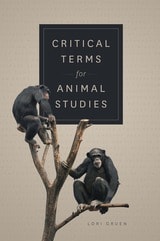
Critical Terms for Animal Studies
Edited by Lori Gruen
University of Chicago Press, 2018
Animal Studies is a rapidly growing interdisciplinary field devoted to examining, understanding, and critically evaluating the complex relationships between humans and
other animals. Scholarship in Animal Studies draws on a variety of methodologies to explore these multi-faceted relationships in order to help us understand the ways in which other animals figure in our lives and we in theirs.
Bringing together the work of a group of internationally distinguished scholars, the contribution in Critical Terms for Animal Studies offers distinct voices and diverse perspectives, exploring significant concepts and asking important questions. How do we take non-human animals seriously, not simply as metaphors for human endeavors, but as subjects themselves? What do we mean by anthropocentrism, captivity, empathy, sanctuary, and vulnerability, and what work do these and other critical terms do in Animal Studies?
An indispensable reference for the field, Critical Terms for Animal Studies not only provides a framework for thinking about animals as subjects of their own experiences, but also serves as a touchstone to help us think differently about our conceptions of what it means to be human, and the impact human activities have on the more than human world.
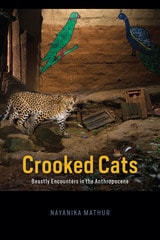
Crooked Cats
Beastly Encounters in the AnthropoceneNayanika Mathur
University of Chicago Press, 2021
There are many theories on why and how a big cat comes to prey on humans, with the ecological collapse emerging as a central explanatory factor. Yet, uncertainty over the precise cause of crookedness persists. Crooked Cats explores in vivid detail the many lived complexities that arise from this absence of certain knowledge to offer startling new insights into both the governance of nonhuman animals and their intimate entanglements with humans. Through creative ethnographic storytelling, Crooked Cats illuminates the Anthropocene in three critical ways: as method, as a way of reframing human-nonhuman relations on the planet, and as a political tool indicating the urgency of academic engagement. Weaving together “beastly tales” spun from encounters with big cats, Mathur deepens our understanding of the causes, consequences, and conceptualization of the climate crisis.
Crossing Great Divides
City and Country in Environmental and Political DisorderJohn D. Fairfield
Temple University Press, 2024
Conventional urban environmental reform has made modern city life possible, but it has done little to limit the despoliation of distant places. Nevertheless, the successes of urban environmental reform remind us of what is possible.
John Fairfield concludes with a case study of Phoenix, Arizona to demonstrate this dysfunctional relationship between city and country while developing a sympathetic critique of the Green New Deal. He suggests how we might bridge the “great divide” as we face the daunting challenges the twenty-first century is pressing upon us.
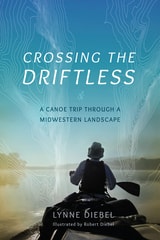
Crossing the Driftless
A Canoe Trip through a Midwestern LandscapeLynne Diebel
University of Wisconsin Press, 2015
Crossing the Driftless is both a traveler’s tale and an exploration of this dramatic environment, following the streams of geologic and human history. Lynne Diebel and her husband, Bob, crossed the Driftless Area by canoe, journeying 359 river miles (and six Mississippi River locks and five portages) from Faribault, Minnesota, where her family has a summer home on Cedar Lake, to their Wisconsin home in Stoughton, one block from the Yahara River. Traveling by river and portage, they paddled downstream on the Cannon and Mississippi rivers and upstream on the Wisconsin River, in the tradition of voyageurs. Lynne tells the story of their trip, but also the stories of the rivers they canoed and the many tributaries whose confluences they passed.
Finalist, Travel, Foreword Reviews IndieFab Book of the Year Awards
Honorable mention, Nonfiction book, Council for Wisconsin Writers
Winner, Recreation/Sports/Travel, Midwest Book Awards
Best books for public & secondary school libraries from university presses, American Library Association
Crow's Range
An Environmental History Of The Sierra NevadaDavid Beesley
University of Nevada Press, 2007
John Muir called it the "Range of Light, the most divinely beautiful of all the mountain chains I’ve ever seen." The Sierra Nevada—a single unbroken mountain range stretching north to south over four hundred miles, best understood as a single ecosystem but embracing a number of environmental communities—has been the site of human activity for millennia. From the efforts of ancient Native Americans to encourage game animals by burning brush to create meadows to the burgeoning resort and residential development of the present, the Sierra has endured, and often suffered from, the efforts of humans to exploit its bountiful resources for their own benefit. Historian David Beesley examines the history of the Sierra Nevada from earliest times, beginning with a comprehensive discussion of the geologic development of the range and its various ecological communities. Using a wide range of sources, including the records of explorers and early settlers, scientific and government documents, and newspaper reports, Beesley offers a lively and informed account of the history, environmental challenges, and political controversies that lie behind the breathtaking scenery of the Sierra. Among the highlights are discussions of the impact of the Gold Rush and later mining efforts, as well as the supporting industries that mining spawned, including logging, grazing, water-resource development, market hunting, urbanization, and transportation; the politics and emotions surrounding the establishment of Yosemite and other state and national parks; the transformation of the Hetch Hetchy into a reservoir and the desertification of the once-lush Owens Valley; the roles of the Forest Service, Park Service, and other regulatory agencies; the consequences of the fateful commitment to wildfire suppression in Sierran forests; and the ever-growing impact of tourism and recreational use. Through Beesley’s wide-ranging discussion, John Muir’s "divinely beautiful" range is revealed in all its natural and economic complexity, a place that at the beginning of the twenty-first century is in grave danger of being loved to death. Available in hardcover and paperback.
Crucible For Survival
Environmental Security and Justice in the Indian Ocean RegionDoyle, Timothy
Rutgers University Press, 2008
Cultivating Crisis
The Human Cost of Pesticides in Latin AmericaBy Douglas L. Murray
University of Texas Press, 1994
Since World War II, the Green Revolution has boosted agricultural production in Latin America and other parts of the Third World, with money, technical assistance, and other forms of aid from United States development agencies. But the Green Revolution came at a high price—massive pesticide dependence that has caused serious socioeconomic and public health problems and widespread environmental damage.
In this study, Douglas Murray draws on ten years of field research to tell the stories of international development strategies, pesticide problems, and agrarian change in Latin America. Interwoven with his considerations of economic and geopolitical dimensions are the human consequences for individual farmers and rural communities.
This highly interdisciplinary study, integrating the perspectives of sociology, ecology, economics, political science, and public health, adds an important voice to the debate on opportunities for and obstacles to more lasting and sustainable development in the Third World. It will be of interest to a wide audience in the social and environmental sciences.
Cultivating the Colonies
Colonial States and their Environmental LegaciesChristina Folke Ax
Ohio University Press, 2011
The essays collected in Cultivating the Colonies demonstrate how the relationship between colonial power and nature revealsthe nature of power. Each essay explores how colonial governments translated ideas about the management of exoticnature and foreign people into practice, and how they literally “got their hands dirty” in the business of empire.
The eleven essays include studies of animal husbandry in the Philippines, farming in Indochina, and indigenous medicine in India. They are global in scope, ranging from the Russian North to Mozambique, examining the consequences of colonialismon nature, including its impact on animals, fisheries, farmlands, medical practices, and even the diets of indigenouspeople.
Cultivating the Colonies establishes beyond all possible doubt the importance of the environment as a locus for studyingthe power of the colonial state.
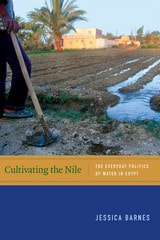
Cultivating the Nile
The Everyday Politics of Water in EgyptJessica Barnes
Duke University Press, 2014
Cultural Sustainabilities
Music, Media, Language, AdvocacyEdited by Timothy J. Cooley
University of Illinois Press, 2019
Culture and Resource Conflict
Why Meanings MatterDouglas L. Medin
Russell Sage Foundation, 2006
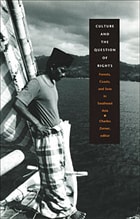
Culture and the Question of Rights
Forests, Coasts, and Seas in Southeast AsiaCharles Zerner, ed.
Duke University Press, 2003
Calling for radical redefinitions of development and ownership and for new understandings of the translation of culture and rights in politically dangerous contexts—natural resource frontiers—this volume links social injustice and the degradation of Southeast Asian environments. Charles Zerner and his colleagues show how geographical areas once viewed as wild and undeveloped are actually cultural artifacts shaped by complex interactions with human societies. Drawing on richly varied sources of evidence and interpretation—from trance dances, court proceedings, tree planting patterns, marine and forest rituals, erotic poems, and codifications of customary law, Culture and the Question of Rights reveals the ironies, complexities, and histories of contemporary communities’ struggles to retain their gardens, forests, fishing territories, and graveyards. The contributors examine how these cultural activities work to both construct and to lay claim to nature. These essays open up new avenues for negotiating indigenous rights against a background of violence, proliferating markets, and global ideas of biodiversity and threatened habitat.
Contributors. Jane Atkinson, Don Brenneis, Stephanie Fried, Nancy Peluso, Marina Roseman, Anna Tsing, Charles Zerner

Curators
Behind the Scenes of Natural History MuseumsLance Grande
University of Chicago Press, 2017
At the heart of it all from the very start have been curators. Yet after three decades as a natural history curator, Lance Grande found that he still had to explain to people what he does. This book is the answer—and, oh, what an answer it is: lively, exciting, up-to-date, it offers a portrait of curators and their research like none we’ve seen, one that conveys the intellectual excitement and the educational and social value of curation. Grande uses the personal story of his own career—most of it spent at Chicago’s storied Field Museum—to structure his account as he explores the value of research and collections, the importance of public engagement, changing ecological and ethical considerations, and the impact of rapidly improving technology. Throughout, we are guided by Grande’s keen sense of mission, of a job where the why is always as important as the what.
This beautifully written and richly illustrated book is a clear-eyed but loving account of natural history museums, their curators, and their ever-expanding roles in the twenty-first century.
Curious Encounters with the Natural World
From Grumpy Spiders to Hidden TigersMichael Jeffords
University of Illinois Press, 2017
Cyperaceae
SedgesRobert H. Mohlenbrock
Southern Illinois University Press, 2005
The first in a series of four illustrated guides to identifying aquatic and standing water plants in the central Midwest, this convenient reference volume covers the 183 species of Cyperaceae. Robert H. Mohlenbrock includes three types of plants: submergents, those that spend their entire lives with their vegetative parts either completely submerged or at least floating on the water’s surface; emergents, which are typically rooted underwater with their vegetative parts standing out of water; and a third category of plants that live most of their lives out of water, but which may live in water at least three months a year.
Mohlenbrock provides descriptions, illustrations, and ways to identify any plant in the sedge family (Cyperaceae) in the states of Kentucky (except for the Cumberland region), Ohio, Indiana, Illinois, Iowa, Missouri, Kansas, and Nebraska. With taxa arranged alphabetically, the volume is well organized and easy to use. In addition, basic synonymy, description, distribution, comments, and line drawings that show the habits and distinguishing features for each plant. Habitat and nomenclatural notes are also listed, as are the official wetland designations given by the U.S. Fish and Wildlife Service.
Cyperaceae is a useful standard reference for state and federal employees who deal with aquatic and wetland plants and environmental conservation and mitigation issues and an essential guide for students and instructors in college and university courses where the identification of aquatic and wetland plants is emphasized.