Results by title
2916 books match the query 'Politics and government' and 214 start with c
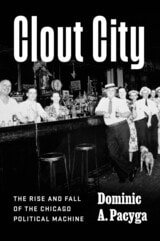
Clout City
The Rise and Fall of the Chicago Political MachineDominic A. Pacyga
University of Chicago Press, 2025
Unearths the religious and cultural roots of a powerful political machine that empowered some everyday Chicagoans but ruled all of the city for decades.
In politics, clout is essential. Too often, it determines whether insider access is granted or denied, favors are given or withheld, and payoffs are made or received. But Chicago clout, as we know it today, is even more potent than that—it’s the absolute currency of a social, cultural, and political order that is self-reinforcing and self-dealing. Or, at least, it was.
In Clout City, award-winning historian Dominic A. Pacyga reveals how cultural, ethnic, and religious forces created this distinctive system—and ultimately led to its collapse. Tracing clout’s origins in the Irish Catholic–dominated working-class neighborhood of Bridgeport, shaped by De La Salle Institute and home to the legendary Daley family, Pacyga shows how communal ties can be a force for good and also the deepest wellspring of corruption. He maps Chicago’s unique politics to its remarkable history, from the Great Fire of 1871 through its rise and decline as an industrial center to its emergence as a global city in the early twenty-first century. With deep research and firsthand experience from a lifetime in the city, Pacyga argues that Chicago’s politics is understood best as a mixture of cultural and religious influences and more worldly pursuits, exploring how both Jewish and Catholic communalism played central roles in the creation and sustenance of the Chicago machine.
Chicago’s politics today aren’t as defined by its distinctive brand of clout. But they are shaped by clout’s decline and the ghost of the machine. Pacyga’s tour of the city’s multilayered past is an indispensable guide to its present and future.
Coca Yes, Cocaine No
How Bolivia's Coca Growers Reshaped DemocracyThomas Grisaffi
Duke University Press, 2019
Cochabamba, 1550-1900
Colonialism and Agrarian Transformation in BoliviaBrooke Larson
Duke University Press, 1998
This study of Bolivia uses Cochabamba as a laboratory to examine the long-term transformation of native Andean society into a vibrant Quechua-Spanish-mestizo region of haciendas and smallholdings, towns and villages, peasant markets and migratory networks caught in the web of Spanish imperial politics and economics. Combining economic, social, and ethnohistory, Brooke Larson shows how the contradictions of class and colonialism eventually gave rise to new peasant, artisan, and laboring groups that challenged the evolving structures of colonial domination. Originally published in 1988, this expanded edition includes a new final chapter that explores the book’s implications for understanding the formation of a distinctive peasant political culture in the Cochabamba valleys over the eighteenth and nineteenth centuries.
Coffee and Conflict in Colombia, 1886-1910
Charles W. Bergquist
Duke University Press, 1978
Cold Anger
A Story of Faith and Power PoliticsMary Beth Rogers
University of North Texas Press, 1990
Cold War Games
Propaganda, the Olympics, and U.S. Foreign PolicyToby C Rider
University of Illinois Press, 2016
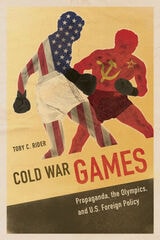
Drawing on newly declassified materials and archives, Toby C. Rider chronicles how the U.S. government used the Olympics to promote democracy and its own policy aims during the tense early phase of the Cold War. Rider shows how the government, though constrained by traditions against interference in the Games, eluded detection by cooperating with private groups, including secretly funded émigré organizations bent on liberating their home countries from Soviet control. At the same time, the United States utilized Olympic host cities as launching pads for hyping the American economic and political system. Behind the scenes, meanwhile, the government attempted clandestine manipulation of the International Olympic Committee. Rider also details the campaigns that sent propaganda materials around the globe as the United States mobilized culture in general, and sports in particular, to fight the communist threat.
Deeply researched and boldly argued, Cold War Games recovers an essential chapter in Olympic and postwar history.
Cold War Puerto Rico
Anti-Communism in Washington’s Caribbean ColonySteve Howell
University of Massachusetts Press, 2026
A gripping history of FBI surveillance, political repression, and the fight for Puerto Rican independence
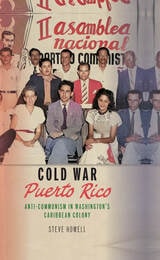
In the 1940s, with the construction of a naval base and a bombing range, Puerto Rico became a major geo-political military outpost for the United States. For a power claiming global leadership in a decolonizing world, however, the archipelago’s colonial condition underscored the dissonance between American democratic rhetoric and its imperial reality. The solution was a deal that, in 1952, gave Puerto Rico a degree of self-government without changing its legal status as an “unincorporated” US territory. The US then publicly claimed Puerto Rico was now more autonomous while using repressive tactics such as FBI surveillance, arrests, destabilization, and other methods developed in Washington to silence activists and political parties pushing for full independence.
In Cold War Puerto Rico, Steve Howell examines how J. Edgar Hoover and the FBI targeted Puerto Rican communists as part of an offensive against pro-independence parties and activists generally. Howell’s US-born father, who fell afoul of Hoover for producing radical cartoons while working in San Juan in the 1940s, remained on the FBI’s watch list long after exiling himself in Britain. His close friends, the Puerto Rican author César Andreu Iglesias and Jane Speed de Andreu, were meanwhile arrested and imprisoned three times during the 1950s. Drawing on a wealth of new sources, including interviews and FBI files, Howell tells their stories along with those of other activists who battled indictment in 1954 under the Smith Act, challenged the jurisdiction of the House Un-American Activities Committee in San Juan in 1959, and revived the Puerto Rican independence movement in the 1960s, despite the FBI deploying the covert tactics of COINTELPRO against them.
Puerto Rico is virtually invisible in histories of what is generally called McCarthyism, yet anti-communist repression was in many ways more intense there than in the mainland US. Now, with Puerto Rico’s future currently hanging in the balance, Howell’s compelling history demonstrates why we need to understand the long enforcement of its colonial status.
Cold War and Decolonisation
Australia's Policy towards Britain's End of Empire in Southeast AsiaAndrea Benvenuti
National University of Singapore Press, 2017
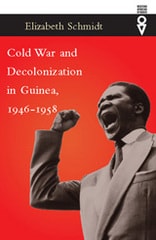
Cold War and Decolonization in Guinea, 1946–1958
Elizabeth Schmidt
Ohio University Press, 2007
In September 1958, Guinea claimed its independence, rejecting a constitution that would have relegated it to junior partnership in the French Community. In all the French empire, Guinea was the only territory to vote “No.” Orchestrating the “No” vote was the Guinean branch of the Rassemblement Démocratique Africain (RDA), an alliance of political parties with affiliates in French West and Equatorial Africa and the United Nations trusts of Togo and Cameroon. Although Guinea’s stance vis-à-vis the 1958 constitution has been recognized as unique, until now the historical roots of this phenomenon have not been adequately explained.
Clearly written and free of jargon, Cold War and Decolonization in Guinea argues that Guinea’s vote for independence was the culmination of a decade-long struggle between local militants and political leaders for control of the political agenda. Since 1950, when RDA representatives in the French parliament severed their ties to the French Communist Party, conservative elements had dominated the RDA. In Guinea, local cadres had opposed the break. Victimized by the administration and sidelined by their own leaders, they quietly rebuilt the party from the base. Leftist militants, their voices muted throughout most of the decade, gained preeminence in 1958, when trade unionists, students, the party’s women’s and youth wings, and other grassroots actors pushed the Guinean RDA to endorse a “No” vote. Thus, Guinea’s rejection of the proposed constitution in favor of immediate independence was not an isolated aberration. Rather, it was the outcome of years of political mobilization by activists who, despite Cold War repression, ultimately pushed the Guinean RDA to the left.
The significance of this highly original book, based on previously unexamined archival records and oral interviews with grassroots activists, extends far beyond its primary subject. In illuminating the Guinean case, Elizabeth Schmidt helps us understand the dynamics of decolonization and its legacy for postindependence nation-building in many parts of the developing world.
Examining Guinean history from the bottom up, Schmidt considers local politics within the larger context of the Cold War, making her book suitable for courses in African history and politics, diplomatic history, and Cold War history.

Collective Action
A Bad Subjects AnthologyEdited by Megan Shaw Prelinger and Joel Schalit
Pluto Press, 2004
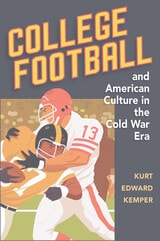
College Football and American Culture in the Cold War Era
Kurt Edward Kemper
University of Illinois Press, 2009
The Cold War era spawned a host of anxieties in American society, and in response, Americans sought cultural institutions that reinforced their sense of national identity and held at bay their nagging insecurities. They saw football as a broad, though varied, embodiment of national values. College teams in particular were thought to exemplify the essence of America: strong men committed to hard work, teamwork, and overcoming pain. Toughness and defiance were primary virtues, and many found in the game an idealized American identity.
In this book, Kurt Kemper charts the steadily increasing investment of American national ideals in the presentation and interpretation of college football, beginning with a survey of the college game during World War II. From the Army-Navy game immediately before Pearl Harbor, through the gradual expansion of bowl games and television coverage, to the public debates over racially integrated teams, college football became ever more a playing field for competing national ideals. Americans utilized football as a cultural mechanism to magnify American distinctiveness in the face of Soviet gains, and they positioned the game as a cultural force that embodied toughness, discipline, self-deprivation, and other values deemed crucial to confront the Soviet challenge.
Americans applied the game in broad strokes to define an American way of life. They debated and interpreted issues such as segregation, free speech, and the role of the academy in the Cold War. College Football and American Culture in the Cold War Era offers a bold new contribution to our understanding of Americans' assumptions and uncertainties regarding the Cold War.
Colonialism Experienced
Vietnamese Writings on Colonialism, 1900-1931Truong Buu Lam
University of Michigan Press, 2000
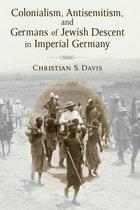
Colonialism, Antisemitism, and Germans of Jewish Descent in Imperial Germany
Christian S. Davis
University of Michigan Press, 2012
Colonialism, Antisemitism, and Germans of Jewish Descent in Imperial Germany examines the relationship between the colonial and antisemitic movements of modern Germany from 1871 to 1918, examining the complicated ways in which German antisemitism and colonialism fed off of and into each other in the decades before the First World War. Author Christian S. Davis studies the significant involvement with and investment in German colonialism by the major antisemitic political parties and extra-parliamentary organizations of the day, while also investigating the prominent participation in the colonial movement of Jews and Germans of Jewish descent and their tense relationship with procolonial antisemites.
Working from the premise that the rise and propagation of racial antisemitism in late-nineteenth-century Germany cannot be separated from the context of colonial empire, Colonialism, Antisemitism, and Germans of Jewish Descent in Imperial Germany is the first work to study the dynamic and evolving interrelationship of the colonial and antisemitic movements of the Kaiserreich era. It shows how individuals and organizations who originated what would later become the ideological core of National Socialism---racial antisemitism---both influenced and perceived the development of a German colonial empire predicated on racial subjugation. It also examines how colonialism affected the contemporaneous German antisemitic movement, dividing it over whether participation in the nationalist project of empire building could furnish patriotic credentials to even Germans of Jewish descent. The book builds upon the recent upsurge of interest among historians of modern Germany in the domestic impact and character of German colonialism, and on the continuing fascination with the racialization of the German sense of self that became so important to German history in the twentieth century.
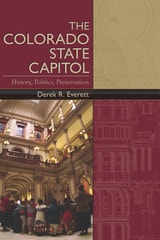
Colorado State Capitol
History, Politics, PreservationDerek Everett
University Press of Colorado, 2005
In one comprehensive volume historian Derek Everett traces the establishment, planning, construction, and history of Colorado's state capitol - including a discussion on the importance of restoring and preserving the building for current and future generations of Coloradoans.
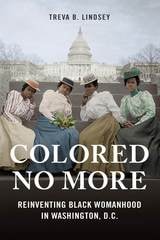
Colored No More
Reinventing Black Womanhood in Washington, D.C.Treva B. Lindsey
University of Illinois Press, 2017
Treva B. Lindsey presents New Negro womanhood as a multidimensional space that included race women, blues women, mothers, white collar professionals, beauticians, fortune tellers, sex workers, same-gender couples, artists, activists, and innovators. Drawing from these differing but interconnected African American women's spaces, Lindsey excavates a multifaceted urban and cultural history of struggle toward a vision of equality that could emerge and sustain itself. Upward mobility to equal citizenship for African American women encompassed challenging racial, gender, class, and sexuality status quos. Lindsey maps the intersection of these challenges and their place at the core of New Negro womanhood.
Colored Property
State Policy and White Racial Politics in Suburban AmericaDavid M. P. Freund
University of Chicago Press, 2007
Commentary In American Life
edited by Murray Friedman
Temple University Press, 2005
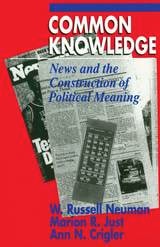
Common Knowledge
News and the Construction of Political MeaningW. Russell Neuman, Marion R. Just, and Ann N. Crigler
University of Chicago Press, 1992
For their study, the authors analyzed coverage of 150 television and newspaper stories on five prominent issues—drugs, AIDS, South African apartheid, the Strategic Defense Initiative, and the stock market crash of October 1987. They tested audience responses of more than 1,600 people, and conducted in-depth interviews with a select sample. What emerges is a surprisingly complex picture of people actively and critically interpreting the news, making sense of even the most abstract issues in terms of their own lives, and finding political meaning in a sophisticated interplay of message, medium, and firsthand experience.
At every turn, Common Knowledge refutes conventional wisdom. It shows that television is far more effective at raising the saliency of issues and promoting learning than is generally assumed; it also undermines the assumed causal connection between newspaper reading and higher levels of political knowledge. Finally, this book gives a deeply responsible and thoroughly fascinating account of how the news is conveyed to us, and how we in turn convey it to others, making meaning of at once so much and so little. For anyone who makes the news—or tries to make anything of it—Common Knowledge promises uncommon wisdom.
Commons and Lords
A Short Anthropology of ParliamentEmma Crewe
Haus Publishing, 2015
Based on fieldwork within both Houses, this volume in the Haus Curiosities series provides a surprising twist in how relationships in each play out. The high social status of peers in the House of Lords gives the impression of hierarchy and, more specifically, patriarchy. In contrast, the House of Commons conjures impressions of equality and fairness between members. But actual observation reveals the opposite: while the House of Lords has an egalitarian and cooperative ethos that is also supportive of female members, the competitive and aggressive House of Commons is a far less comfortable place for women. Offering many surprises and secrets, this book exposes the sheer oddity of the British parliament system.
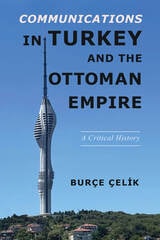
Communications in Turkey and the Ottoman Empire
A Critical HistoryBurçe Çelik
University of Illinois Press, 2023
The history of communications in the Ottoman Empire and Turkey contradicts the widespread belief that communications is a byproduct of modern capitalism and other Western forces. Burçe Çelik uses a decolonial perspective to analyze the historical commodification and militarization of communications and how it affected production and practice for oppressed populations like women, the working class, and ethnic and religious minorities. Moving from the mid-nineteenth century through today, Çelik places networks within the changing geopolitical landscape and the evolution of modern capitalism in relationship to struggles involving a range of social and political actors. Throughout, she challenges Anglo- and Eurocentric assumptions that see the non-West as an ahistorical imitation of, or aberration from, the development of Western communications.
Ambitious and comprehensive, Communications in Turkey and the Ottoman Empire merges political economy with social history to challenge Western-centered assumptions about the origins and development of modern communications.
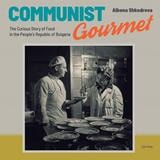
Communist Gourmet
The Curious Story of Food in the People’s Republic of BulgariaAlbena Shkodrova
Central European University Press, 2021
Communist Gourmet presents a lively, detailed account of how the communist regime in Bulgaria determined people’s everyday food experience between 1944 and 1989. It examines the daily routines of acquiring food, cooking it, and eating out at restaurants through the memories of Bulgarians and foreigners, during communism.
In looking back on a wide array of issues and events, Albena Shkodrova attempts to explain the paradoxes of daily existence. She reports human stories that are touching, sometimes dark, but often full of humor and anecdotes from nearly one hundred people: some of them are Bulgarians who were involved in the communist food industry, whether as consumers or employees, while others are visitors from the United States and Western Europe who report culinary highlights and disappointments. The author made use of the national press, officially published cookbooks, Communist Party documents, and other previously unstudied sources.
An appendix containing recipes of dishes typical of the period and an extensive set of archival photographs are special features of the volume.
Compadre Colonialism
Studies in the Philippines under American RuleNorman G. Owen, Editor
University of Michigan Press, 1971
Composing Violence
The Limits of Exposure and the Making of MinoritiesMoyukh Chatterjee
Duke University Press, 2023
Comrade or Brother?
A History of the British Labour MovementMary Davis
Pluto Press, 2009
Critical and iconoclastic, Comrade or Brother? traces the history of the British Labour Movement from its beginnings at the onset of industrialisation through its development within a capitalist society, up to the end of the twentieth-century. Written by a leading activist in the labour movement, the book redresses the balance in much labour history writing. It examines the place of women and the influence of racism and sexism as well as providing a critical analysis of the rival ideologies which played a role in the uneven development of the labour movement.
Concordance
Black Lawmaking in the U.S. Congress from Carter to ObamaKatherine Tate
University of Michigan Press, 2014
During the height of the civil rights movement, Blacks were among the most liberal Americans. Since the 1970s, however, increasing representation in national, state, and local government has brought about a more centrist outlook among Black political leaders.
Focusing on the Congressional Black Caucus (CBC), Katherine Tate studies the ways in which the nation’s most prominent group of Black legislators has developed politically. Organized in 1971, the CBC set out to increase the influence of Black legislators. Indeed, over the past four decades, they have made progress toward the goal of becoming recognized players within Congress. And yet, Tate argues, their incorporation is transforming their policy preferences. Since the Clinton Administration, CBC members—the majority of whom are Democrats—have been less willing to oppose openly congressional party leaders and both Republican and Democratic presidents. Tate documents this transformation with a statistical analysis of Black roll-call votes, using the important Poole-Rosenthal scores from 1977 to 2010. While growing partisanship has affected Congress as a whole, not just minority caucuses, Tate warns that incorporation may mute the independent voice of Black political leaders.
Concordance
Black Lawmaking in the U.S. Congress from Carter to ObamaKatherine Tate
University of Michigan Press, 2020
Focusing on the Congressional Black Caucus (CBC), Katherine Tate studies the ways in which the nation’s most prominent group of Black legislators has developed politically. Organized in 1971, the CBC set out to increase the influence of Black legislators. Indeed, over the past four decades, they have made progress toward the goal of becoming recognized players within Congress. And yet, Tate argues, their incorporation is transforming their policy preferences. Since the Clinton Administration, CBC members—the majority of whom are Democrats—have been less willing to oppose openly congressional party leaders and both Republican and Democratic presidents. Tate documents this transformation with a statistical analysis of Black roll-call votes, using the important Poole-Rosenthal scores from 1977 to 2010. While growing partisanship has affected Congress as a whole, not just minority caucuses, Tate warns that incorporation may mute the independent voice of Black political leaders.
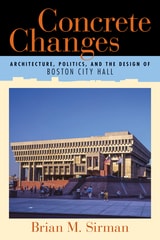
Concrete Changes
Architecture, Politics, and the Design of Boston City HallBrian M. Sirman
University of Massachusetts Press, 2018
And yet Boston City Hall frequently ranks among the country's ugliest buildings. Concrete Changes seeks to answer a common question for contemporary viewers: How did this happen? In a lively narrative filled with big personalities and newspaper accounts, Brian M. Sirman argues that this structure is more than a symbol of Boston's modernization; it acted as a catalyst for political, social, and economic change.
Concubines And Power
Five Hundred Years In A Northern Nigerian PalaceHeidi J. Nast
University of Minnesota Press, 2004
African Studies Association Women’s Caucus’s Aidoo-Snyder Book Prize winner
A Choice Outstanding Academic Title
The monumental palace of Kano, Nigeria, was built circa 1500 and is today inhabited by more than one thousand persons. Historically, its secluded interior housed hundreds of concubines whose role in the politics, economics, and culture of Kano city-state has been largely overlooked. In this pioneering work, Heidi J. Nast demonstrates how human-geographical methods can tell us much about a site like the palace, a place bereft of archaeological work or relevant primary sources.
Drawing on extensive ethnographic work and mapping data, Concubines and Power presents new evidence that palace concubines controlled the production of indigo-dyed cloth centuries before men did. The women were also key players in the assessment and collection of the state's earliest grain taxes, forming a complex and powerful administrative hierarchy that used the taxes for palace community needs. In addition, royal concubines served as representatives of their places of origin, their freeborn children providing the king with additional human capital to cement territorial alliances through marriage.
Social forces undoubtedly shaped and changed concubinage for hundreds of years, but Nast shows how the women’s reach extended far beyond the palace walls to the formation of the state itself.
Confederate Arkansas
The People and Policies of a Frontier State in WartimeMichael B. Dougan
University of Alabama Press, 1990
Confessions of a Presidential Speechwriter
Craig R. Smith
Michigan State University Press, 2014
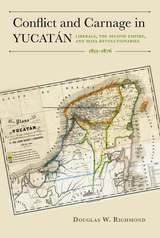
Conflict and Carnage in Yucatán
Liberals, the Second Empire, and Maya Revolutionaries, 1855–1876Douglas W. Richmond
University of Alabama Press, 2015
Synthesizing an extensive and heterogeneous range of sources, Douglas W. Richmond covers three tumultuous political upheavals of this period. First, Mexico’s fledgling republic attempted to impose a liberal ideology at odds with traditional Maya culture on Yucatán; then, the French-backed regime of Emperor Maximilian began to reform Yucatán; and, finally, the republican forces of Benito Juárez restored the liberal hegemony. Many issues spurred resistance to these liberal governments. Instillation of free trade policies, the suppression of civil rights, and persecution of the Roman Catholic Church mobilized white opposition to liberal governors. The Mayas fought the seizure of their communal properties. A long-standing desire for regional autonomy united virtually all Yucatecans. Richmond advances the thought-provoking argument that Yucatán both fared better under Maximilian’s Second Empire than under the liberal republic and would have thrived more had the Second Empire not collapsed.
The most violent and bloody manifestation of these broad conflicts was the Caste War (Guerra de Castas), the longest sustained peasant revolt in Latin American history. Where other scholars have advocated the simplistic position that the war was a Maya uprising designed to reestablish a mythical past civilization, Richmond’s sophisticated recounting of political developments from 1855 to 1876 restores nuance and complexity to this pivotal time in Yucatecan history.
Richmond’s Conflict and Carnage in Yucatán is a welcome addition to scholarship about Mexico and Yucatán as well as about state consolidation, empire, and regionalism.
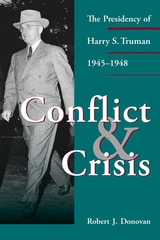
Conflict and Crisis
The Presidency of Harry S. Truman, 1945-1948Robert J. Donovan
University of Missouri Press, 1996
“It was a quiet on the second floor. The vice-president walked solemnly into Mrs. Roosevelt’s sitting room, where she waited, grave and calm. With her was her daughter, Mrs. Anna Roosevelt Boettiger, her husband, Colonel John Boettiger, and Stephan Early. Truman knew at a glance that his premonition had been true. Mrs. Roosevelt came forward directly and put her arm on his shoulder.
‘Harry, the President is dead.’”
Robert J. Donovan’s Conflict and Crisis presents a detailed account of Harry S. Truman’s presidency from 1945-1948.
Conflicted Memory
Military Cultural Interventions and the Human Rights Era in PeruCynthia E. Milton
University of Wisconsin Press, 2018
Milton calls attention to fabrications of our post-truth era but goes further to deeply explore the ways members of the Peruvian military see their past, how they actively commemorate and curate it in the present, and why they do so. Her nuanced approach upends frameworks of memory studies that reduce military and ex-military to a predictable role of outright denial.
Conflicting Counsels to Confuse the Age
A Documentary Study of Political Economy in Qing China, 1644–1840Helen Dunstan
University of Michigan Press, 1996

Confronting Leviathan
Mozambique Since IndependenceMargaret Hall
Ohio University Press, 1997
Confronting Leviathan describes Mozambique’s attempt to construct a socialist society in one African country on the back of an anti-colonial struggle for national independence. In explaining the failure of this effort the authors suggest reasons why the socialist vision of the ruling party, Frelimo, lacked resonance with Mozambican society. They also document in detail South Africa’s attempts to destabilize the country, even to the extent of sponsoring the Renamo insurgents. The dynamics of that insurgency and its roots in Mozambican society are examined as well as the process of negotiation that brought it to a close. Finally the authors analyze the more recent attempt to construct a liberal capitalist society in Mozambique. From their findings it appears that this may prove no easier than the construction of socialism.
Congress Overwhelmed
The Decline in Congressional Capacity and Prospects for ReformEdited by Timothy M. LaPira, Lee Drutman, and Kevin R. Kosar
University of Chicago Press, 2020
The essays in Congress Overwhelmed assess Congress’s declining capacity and explore ways to upgrade it. Some provide broad historical scope. Others evaluate the current decay and investigate how Congress manages despite the obstacles. Collectively, they undertake the most comprehensive, sophisticated appraisal of congressional capacity to date, and they offer a new analytical frame for thinking about—and improving—our underperforming first branch of government.
Congress and the Crisis of the 1850s
Paul Finkelman
Ohio University Press, 2011
During the long decade from 1848 to 1861 America was like a train speeding down the track, without an engineer or brakes. The new territories acquired from Mexico had vastly increased the size of the nation, but debate over their status—and more importantly the status of slavery within them—paralyzed the nation. Southerners gained access to the territories and a draconian fugitive slave law in the Compromise of 1850, but this only exacerbated sectional tensions. Virtually all northerners, even those who supported the law because they believed that it would preserve the union, despised being turned into slave catchers. In 1854, in the Kansas-Nebraska Act, Congress repealed the ban on slavery in the remaining unorganized territories. In 1857, in the Dred Scott case, the Supreme Court held that all bans on slavery in the territories were unconstitutional. Meanwhile, northern whites, free blacks, and fugitive slaves resisted the enforcement of the 1850 fugitive slave law. In Congress members carried weapons and Representative Preston Brooks assaulted Senator Charles Sumner with a cane, nearly killing him. This was the decade of the 1850s and these were the issues Congress grappled with.
This volume of new essays examines many of these issues, helping us better understand the failure of political leadership in the decade that led to the Civil War.
Contributors
Spencer R. Crew
Paul Finkelman
Matthew Glassman
Amy S. Greenberg
Martin J. Hershock
Michael F. Holt
Brooks D. Simpson
Jenny Wahl
Congress and the Emergence of Sectionalism
From the Missouri Compromise to the Age of JacksonPaul Finkelman
Ohio University Press, 2008
Congress and the People’s Contest
The Conduct of the Civil WarPaul Finkelman
Ohio University Press, 2018
Congressional Realignment, 1925-1978
By Barbara Sinclair
University of Texas Press, 1982
Ronald Reagan's election in 1980 brought with it a major shift in the composition of the U.S. Congress for the first time in several decades. The subsequent introduction of an enormous amount of new legislation sparked debate among many political observers that a new coalition was being built in American politics and that a significant change in the issues on the agenda before Congress heralded a Republican realignment.
Barbara Sinclair's study is a major contribution to our understanding of realignment politics in the House of Representatives. It also provides important insight into the changes in American political life in the late twentieth century.
Congressional Realignment poses three basic, related questions: What are the sources of agenda change? What determines congressional voting alignments and alignment change? Under what conditions are the barriers to major policy change overcome? Sinclair's answers are impressive both in their scholarship and in the depth and intelligence of her insights.
Conjuring Crisis
Racism and Civil Rights in a Southern Military CityBaca, George
Rutgers University Press, 2010
In the 1990s at Fort Bragg and Fayetteville, North Carolina, the city's dominant political coalition of white civic and business leaders had lost control of the city council. Amid accusations of racism in the police department, two white council members joined black colleagues in support of the NAACP's demand for an investigation. George Baca's ethnographic research reveals how residents and politicians transformed an ordinary conflict into a "crisis" that raised the specter of chaos and disaster. He explores new territory by focusing on the broader intersection of militarization, urban politics, and civil rights.
Conquest
Sexual Violence and American Indian GenocideAndrea Smith
Duke University Press, 2005
Consensual Policy-making in the Nordic World
Peter Munk Christiansen
University of Wisconsin Press, 2023
The preconditions for these policies are strong civil societies, that is, strong capacities for collective mobilization and collective action among groups, relatively strong unitary states, and high levels of generalized trust. The institutional apparatus of these consensual policies has been labeled corporatism. Scandinavian corporatism has implied consent to a norm of affected interests. Groups that are supposedly affected by state policies have access to the processes leading up to political decision-making and are involved in the implementation of policies. This access often has public commissions or committees charged with preparing political decisions and delivering advice, as well as policy implementation committees.
Corporatist and consensual policymaking come at a price. The exchange between interest groups (in pursuit of policy influence) and state actors (in pursuit of information and political support from groups) tends to be time-consuming and confined to solutions that are accepted by all actors. Corporatist policies are consequently not very conducive to more radical reforms. After the heyday of corporatist policymaking in the 1970s, all the Scandinavian countries have loosened their corporatist structures to pave the way for reforms.
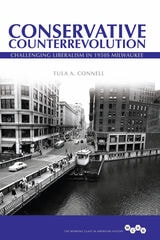
Conservative Counterrevolution
Challenging Liberalism in 1950s MilwaukeeTula A. Connell
University of Illinois Press, 2016
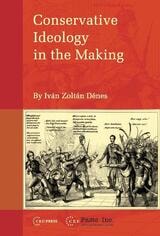
Conservative Ideology in the Making
Ivan Zoltan Denes
Central European University Press, 2009
Conservative Innovators
How States Are Challenging Federal PowerBen Merriman
University of Chicago Press, 2019
Conservative Innovators traces the activity of far-right conservatives in Kansas who have in the past decade used the powers of state-level offices to fight federal regulation on a range of topics from gun control to voting processes to Medicaid. Telling their story, Ben Merriman then expands the scope of the book to look at the tactics used by conservative state governments across the country to resist federal regulations, including coordinated lawsuits by state attorneys general, refusals to accept federal funds and spending mandates, and the creation of programs designed to restrict voting rights. Through this combination of state-initiated lawsuits and new administrative practices, these state officials weakened or halted major parts of the Obama Administration’s healthcare, environmental protection, and immigration agendas and eroded federal voting rights protections. Conservative Innovators argues that American federalism is entering a new, conflict-ridden era that will make state governments more important in American life than they have been at any time in the past century.
Conservative Thought in Twentieth Century Latin America
The Ideas of Laureano GomezJames D. Henderson
Ohio University Press, 1988
Laureano Gómez was president of Colombia in the early 1950s until overthrown by a military coup. He was also, for some fifty years, the leading exponent of Latin American conservatism, a political philosophy with roots in both nineteenth–century politics and religion. Focusing on Gómez, and other prominent conservative politicians, Henderson traces the evolution of Latin American conservatism and demonstrates the scope of its influence throughout the continent.
While much has been written about particular Marxist movements and right–wing regimes in contemporary Latin America, little attention has been devoted, in recent years, to the more moderate political institutions and individuals which dominate twentieth–century Latin America. This first account of Latin American conservatism should be of interest to all students of the history and politics of the region.
Conspiracy Theory in America
By Lance deHaven-Smith
University of Texas Press, 2013
Ever since the Warren Commission concluded that a lone gunman assassinated President John F. Kennedy, people who doubt that finding have been widely dismissed as conspiracy theorists, despite credible evidence that right-wing elements in the CIA, FBI, and Secret Service—and possibly even senior government officials—were also involved. Why has suspicion of criminal wrongdoing at the highest levels of government been rejected out-of-hand as paranoid thinking akin to superstition?
Conspiracy Theory in America investigates how the Founders’ hard-nosed realism about the likelihood of elite political misconduct—articulated in the Declaration of Independence—has been replaced by today’s blanket condemnation of conspiracy beliefs as ludicrous by definition. Lance deHaven-Smith reveals that the term “conspiracy theory” entered the American lexicon of political speech to deflect criticism of the Warren Commission and traces it back to a CIA propaganda campaign to discredit doubters of the commission’s report. He asks tough questions and connects the dots among five decades’ worth of suspicious events, including the assassinations of John and Robert Kennedy, the attempted assassinations of George Wallace and Ronald Reagan, the crimes of Watergate, the Iran-Contra arms-for-hostages deal, the disputed presidential elections of 2000 and 2004, the major defense failure of 9/11, and the subsequent anthrax letter attacks.
Sure to spark intense debate about the truthfulness and trustworthiness of our government, Conspiracy Theory in America offers a powerful reminder that a suspicious, even radically suspicious, attitude toward government is crucial to maintaining our democracy.
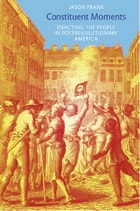
Constituent Moments
Enacting the People in Postrevolutionary AmericaJason Frank
Duke University Press, 2010
Elaborating his theory of constituent moments, Frank focuses on specific historical instances when under-authorized individuals or associations seized the mantle of authority, and, by doing so, changed the inherited rules of authorization and produced new spaces and conditions for political representation. He looks at crowd actions such as parades, riots, and protests; the Democratic-Republican Societies of the 1790s; and the writings of Walt Whitman and Frederick Douglass. Frank demonstrates that the revolutionary establishment of the people is not a solitary event, but rather a series of micropolitical enactments, small dramas of self-authorization that take place in the informal contexts of crowd actions, political oratory, and literature as well as in the more formal settings of constitutional conventions and political associations.
Constitutional Failure
Carl Schmitt in WeimarEllen Kennedy
Duke University Press, 2004
Kennedy reveals how Schmitt’s argument for a strong but neutral state supported the maximization of market freedom at the cost of the political constitution. She argues that the major fault lines of Weimar liberalism—emergency powers, the courts as “defenders of the constitution,” mass mobilization of anti-liberal politics, ethnic-identity politics, a culture of resentment and contested legitimacy—are not exceptions within the liberal-democratic orders of the West, but central to them. Contending that Schmitt’s thought remains vital today because liberal norms are inadequate to the political challenges facing constitutional systems as diverse as those of Eastern Europe and the United States, Kennedy develops a compelling, rigorous argument that unsettles many assumptions about liberalism, democracy, and dictatorship.