Results by title
1668 books match the query 'Popular culture' and 123 start with c

Cross Currents in the International Women’s Movement, 1848–1948
Patricia Ward D'Itri
University of Wisconsin Press, 1999
This study portrays individuals, organizations, and events that contributed to the development of the world movement for women's rights between 1848 and 1948.
Cruel Optimism
Lauren Berlant
Duke University Press, 2011
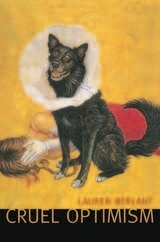
Arguing that the historical present is perceived affectively before it is understood in any other way, Berlant traces affective and aesthetic responses to the dramas of adjustment that unfold amid talk of precarity, contingency, and crisis. She suggests that our stretched-out present is characterized by new modes of temporality, and she explains why trauma theory—with its focus on reactions to the exceptional event that shatters the ordinary—is not useful for understanding the ways that people adjust over time, once crisis itself has become ordinary. Cruel Optimism is a remarkable affective history of the present.
Crunch!
A History of the Great American Potato ChipDirk Burhans
University of Wisconsin Press, 2017
Crunch! also uncovers a dark side of potato chip history, including a federal investigation of the snack food industry in the 1990s following widespread allegations of antitrust activity, illegal buyouts, and predatory pricing. In the wake of these "Great Potato Chip Wars," corporate snack divisions closed and dozens of family-owned companies went bankrupt. Yet, despite consolidation, many small chippers persist into the twenty-first century, as mom-and-pop companies and upstart "boutique" businesses serve both new consumers and markets with strong regional loyalties.
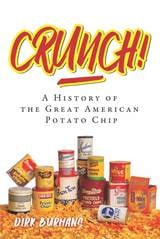
Illustrated with images of early snack food paraphernalia and clever packaging from the glory days of American advertising art, Crunch! is an informative tour of large and small business in America and the vicissitudes of popular tastes.
Cultural China 2020
The Contemporary China Centre ReviewSéagh Kehoe and Gerda Wielander
University of Westminster Press, 2021
Cultural China is a unique annual publication for up-to-date, informed, and accessible commentary about Chinese and Sinophone languages, cultural practices, politics and production, and their critical analysis. It builds on the University of Westminster’s Contemporary China Centre Blog, providing additional reflective introductory pieces to contextualise each of the eight chapters.
The articles in this Review speak to the turbulent year that was 2020 as it unfolded across cultural China. Thematically, they range from celebrity culture, fashion and beauty, to religion and spirituality, via language politics, heritage, and music. Pieces on representations of China in Britain and the Westminster Chinese Visual Arts Project reflect our particular location and home. Many of the articles in this book focus on the People’s Republic of China, but they also draw attention to the multiple Chinese and Sinophone cultural practices that exist within, across, and beyond national borders.
The Review is distinctive in its cultural studies-based approach and contributes a much-needed critical perspective from the Humanities to the study of cultural China. It aims to promote interdisciplinary dialogue and debate about the social, cultural, political, and historical dynamics that inform life in cultural China today, offering academics, activists, practitioners, and politicians a key reference with which to situate current events in and relating to cultural China in a wider context.
Cultural China 2021
The Contemporary China Centre ReviewSéagh Kehoe and Gerda Wielander
University of Westminster Press, 2022
Cultural China is a unique annual publication for up-to-date, informed and accessible commentary about Chinese and Sinophone languages, cultural practices, politics and production, and their critical analysis. It builds on research and perspectives central to the Contemporary China Centre, based at the University of Westminster, and the Contemporary China Centre Blog.
The chapters in this Review speak to the challenging and eventful year that was 2021 as it unfolded across cultural China. Thematically, they range from health and medicine, environment, food, children and parenting via film, red culture and calls to action. Many of the contributions in this edited collection focus on the People’s Republic of China, but they also draw attention to the multiple Chinese and Sinophone cultural practices that exist within, across and beyond national borders.
The Review is distinctive in its cultural studies-based approach and contributes a much-needed critical perspective from the humanities to the study of cultural China. It aims to promote interdisciplinary dialogue and debate about the social, cultural, political and historical dynamics that inform life in cultural China today offering academics, activists, practitioners and politicians a key reference with which to situate current events in and relating to cultural China in a wider context.
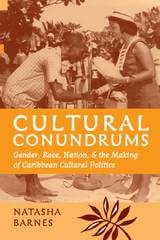
Cultural Conundrums
Gender, Race, Nation, and the Making of Caribbean Cultural PoliticsNatasha Barnes
University of Michigan Press, 2010
Natasha Barnes traces the use of cultural arguments in the making of Caribbean modernity, looking at the cultural performances of the Anglophone Caribbean—cricket, carnival, dancehall, calypso, and beauty pageants—and their major literary portrayals. Barnes historicizes the problematic linkage of culture and nation to argue that Caribbean anticolonialism has given expressive culture a critical place in the region’s identity politics. Her provocative readings of foundational thinkers C. L. R. James and Sylvia Winters will engender discussion and debate among the Caribbean intellectual community. This impressively interdisciplinary study will make important contributions to the fields of Afro-diaspora studies, postcolonial studies, literary studies, performance studies, and sociology.
--Simon Gikandi, Princeton University
Natasha Barnes is Associate Professor of African American Studies and English at the University of Illinois at Chicago.
Cultural Crowdfunding
Platform Capitalism, Labour and GlobalizationVincent Rouzé
University of Westminster Press, 2019
This new book analyses the strategies, usages and wider implications of crowdsourcing and crowdfunding platforms in the culture and communication industries that are reshaping economic, organizational and social logics. Platforms are the object of considerable hype with a growing global presence. Relying on individual contributions coordinated by social media to finance cultural production (and carry out promotional tasks) is a significant shift, especially when supported by morphing public policies, supposedly enhancing cultural diversity and accessibility.
The aim of this book is to propose a critical analysis of these phenomena by questioning what follows from decisions to outsource modes of creation and funding to consumers. Drawing on research carried out within the ‘Collab’ programme backed by the French National Research Agency, the book considers how platforms are used to organize cultural labour and/or to control usages, following a logic of suggestion rather than overt injunction. Four key areas are considered: the history of crowdfunding as a system; whose interests crowdfunding may serve; the implications for digital labour and lastly crowdfunding’s interface with globalization and contemporary capitalism. The book concludes with an assessment of claims that crowdfunding can democratize culture.
Cultural Excursions
Marketing Appetites and Cultural Tastes in Modern AmericaNeil Harris
University of Chicago Press, 1990
The essays fall into three general sections: the first treats the history of cultural institutions, highlighting the role of museums; the second section focuses on some literary, artistic, and entrepreneurial responses to the new mass culture; and the final group of essays explores the social history of art and architecture. Throughout Harris's diverse writings certain themes recur—the redefining of boundaries between high art and popular culture, the relationship between public taste and technological change, and the very notion of what constitutes a shared social experience. Harris's pioneering work has broadened the field of cultural history and encouraged whole new areas of inquiry. Cultural Excursions will be useful for those in American and culture studies, as well as for the general reader trying to make sense of the culture in which we live.
Cultural Pluralism, Identity Politics, and the Law
Austin Sarat and Thomas R. Kearns, Editors
University of Michigan Press, 2001
Cultural Production of Hallyu in the Digital Platform Era
Industry PerspectivesDal Yong Jin
University of Michigan Press, 2025
Addressing the increasing significance of digital platforms, this work examines the transformative roles of over-the-top streaming services—Netflix, Viki, and V Live—video-sharing platforms such as YouTube, and social media platforms such as TikTok and Instagram, and the power relations between content producers, information technology sectors, the government, creative laborers, and audiences in the globalization of Korean culture and media. By developing critical cultural industries studies as a new theoretical framework, Cultural Production of Hallyu in the Digital Platform Era explores the ever-growing Korean Wave phenomenon with the advent of global digital platforms.
Cultural Values and Human Ecology in Southeast Asia
Karl L. Hutterer, A. Terry Rambo, and George Lovelace, Editors
University of Michigan Press, 1981
Culture Club
The Curious History of the Boston AthenaeumKatherine Wolff
University of Massachusetts Press, 2009
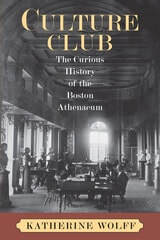
Yet from the outset, Katherine Wolff shows, the Boston Athenaeum was more than a library; it was also a breeding ground for evolving notions of cultural authority and American identity. Though governed by the Boston elite, who promoted it as a way of strengthening their own clout in the city, the early Athenaeum reflected conflicting and at times contradictory aims and motives on the part of its membership. On the one hand, by drawing on European aesthetic models to reinforce an exalted sense of mission, Athenaeum leaders sought to establish themselves as guardians of a nascent American culture. On the other, they struggled to balance their goals with their concerns about an increasingly democratic urban populace. As the Boston Athenaeum opened its doors to women as well as men outside its inner circle, it eventually began to define itself against a more accessible literary institution, the Boston Public Library.
Told through a series of provocative episodes and generously illustrated, Culture Club offers a more complete picture than previously available of the cultural politics behind the making of a quintessentially American institution.
Culture across Borders
Mexican Immigration and Popular CultureEdited by David R. Maciel and María Herrera-Sobek
University of Arizona Press, 1998
Culture of Class
Radio and Cinema in the Making of a Divided Argentina, 1920-1946Matthew B. Karush
Duke University Press, 2012
Culture on Tour
Ethnographies of TravelEdward M. Bruner
University of Chicago Press, 2004
Synthesizing more than twenty years of research in cultural tourism, Culture on Tour analyzes a remarkable variety of tourist productions, ranging from safari excursions in Kenya and dance dramas in Bali to an Abraham Lincoln heritage site in Illinois. Bruner examines each site in all its particularity, taking account of global and local factors, as well as the multiple perspectives of the various actors—the tourists, the producers, the locals, and even the anthropologist himself. The collection will be essential to those in the field as well as to readers interested in globalization and travel.
Cultured States
Youth, Gender, and Modern Style in 1960s Dar es SalaamAndrew Ivaska
Duke University Press, 2011

Cultures of Femininity in Modern Fashion
Ilya Parkins
University of New Hampshire Press, 2011
This transatlantic and truly interdisciplinary collection, with an afterword by distinguished literary scholar Rita Felski, is also notable for its mix of established and emerging scholars. The contributors address diverse aspects of women’s engagement with fashion in modernity, through such topics as Sapphic architecture, tea gowns, secondhand clothing, transnational identity, the coquette, nursing uniforms, and Harlem Renaissance photographs. Cultures of Femininity in Modern Fashion traces a unique and often surprising history of modernity and its entwinement with the gendered phenomenon of fashion.
Cultures of War in Graphic Novels
Violence, Trauma, and MemoryProrokova, Tatiana
Rutgers University Press, 2018
Cultures of War in Graphic Novels examines the representation of small-scale and often less acknowledged conflicts from around the world and throughout history. The contributors look at an array of graphic novels about conflicts such as the Boxer Rebellion (1899-1901), the Irish struggle for national independence (1916-1998), the Falkland War (1982), the Bosnian War (1992-1995), the Rwandan genocide (1994), the Israel-Lebanon War (2006), and the War on Terror (2001-). The book explores the multi-layered relation between the graphic novel as a popular medium and war as a pivotal recurring experience in human history. The focus on largely overlooked small-scale conflicts contributes not only to advance our understanding of graphic novels about war and the cultural aspects of war as reflected in graphic novels, but also our sense of the early twenty-first century, in which popular media and limited conflicts have become closely interrelated.
Cultures of Yusin
South Korea in the 1970sYoungju Ryu, Editor
University of Michigan Press, 2018

Cupcakes, Pinterest, and Ladyporn
Feminized Popular Culture in the Early Twenty-First CenturyEdited by Elana Levine
University of Illinois Press, 2015
Elana Levine brings together writings from feminist critics that chart the current terrain of feminized pop cultural production. Analyzing everything from Fifty Shades of Grey to Pinterest to pregnancy apps, contributors examine the economic, technological, representational, and experiential dimensions of products and phenomena that speak to, and about, the feminine. As these essays show, the imperative of productivity currently permeating feminized pop culture has created a generation of texts that speak as much to women's roles as public and private workers as to an impulse for fantasy or escape.
Incisive and compelling, Cupcakes, Pinterest, and Ladyporn sheds new light on contemporary women's engagement with an array of media forms in the context of postfeminist culture and neoliberalism.
Curators and Culture
The Museum Movement in America, 1740-1870Joel J. Orosz
University of Alabama Press, 1990
Tracing the birth of American museums and the curators who shaped a nation’s cultural identity.
As they formed their pioneer museums, these men were guided not so much by European examples, but rather by the imperatives of the American democratic culture, including the Enlightenment, the simultaneous decline of the respectability and rise of the middle classes, the Age of Egalitarianism, and the advent of professionalism in the sciences. Thus the pre-1870 American museum was neither the frivolous sideshow some critics have imagined, nor the enclave for elitists that others have charged. Instead, the proprietors displayed serious motives and egalitarian aspirations.
The conflicting demands for popular education on the one hand and professionalism on the other were a continuing source of tension in American museums after about 1835, but by 1870 the two claims had synthesized into a rough parity. This synthesis, the "American Compromise," has remained the basic model of museums in America down to the present. Thus, by 1870, the form of the modern American museum as an institution which simultaneously provides popular education and promotes scholarly research was completely developed.

Custer Legends
Lawrence Frost
University of Wisconsin Press, 1981
Customizing the Body
The Art and Culture of TattooingClinton Sanders
Temple University Press, 2008
Originally published in 1989, this ground-breaking ethnographic exploration of tattooing—and the art world surrounding it—covers the history, anthropology and sociology of body modification practices; the occupational experience of the tattooist; the process and social consequences of becoming a tattooed person; and the prospects of "serious" tattooing becoming an accepted art form. Curiously, despite the greater prevalence of tattoos and body modification in today’s society, there is still a stigma of deviance associated with people who get or ink tattoos.
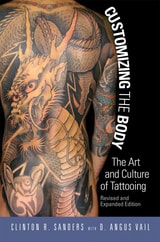
Retaining the core of the original book, this revised and expanded edition offers a new preface by the author and a new chapter focusing on the changes that have occurred in the tattoo world. A section on the new scholarly literature that has emerged, as well as the new modes of body modification that have come into vogue are included along with a new gallery of photographs that shows some splendid examples of contemporary tattoo art. A directory of artists' websites invites readers to discover the range of work being done around the world—from “suits” (full body tattoos) to skulls.