Results by title
1761 books match the query 'Public Policy' and 139 start with c
Cooperatives, Grassroots Development, and Social Change
Experiences from Rural Latin AmericaEdited by Marcela Vásquez-León, Brian J. Burke, and Timothy J. Finan
University of Arizona Press, 0
Cooperatives, Grassroots Development, and Social Change presents examples from Paraguay, Brazil, and Colombia, examining what is necessary for smallholder agricultural cooperatives to support holistic community-based development in peasant communities. Reporting on successes and failures of these cooperative efforts, the contributors offer analyses and strategies for supporting collective grassroots interests. Illustrating how poverty and inequality affect rural people, they reveal how cooperative organizations can support grassroots development strategies while negotiating local contexts of inequality amid the broader context of international markets and global competition.
The contributors explain the key desirable goals from cooperative efforts among smallholder producers. They are to provide access to more secure livelihoods, expand control over basic resources and commodity chains, improve quality of life in rural areas, support community infrastructure, and offer social spaces wherein small farmers can engage politically in transforming their own communities.
The stories in Cooperatives, Grassroots Development, and Social Change reveal immense opportunities and challenges. Although cooperatives have often been framed as alternatives to the global capitalist system, they are neither a panacea nor the hegemonic extension of neoliberal capitalism. Through one of the most thorough cross-country comparisons of cooperatives to date, this volume shows the unfiltered reality of cooperative development in highly stratified societies, with case studies selected specifically because they offer important lessons regarding struggles and strategies for adapting to a changing social, economic, and natural environment.
Contributors:
Luis Barros
Brian J. Burke
Charles Cox
Luis Alberto Cuéllar Gómez
Miguel Ricardo Dávila Ladrón de Guevara
Elisa Echagüe
Timothy J. Finan
Andrés González Aguilera
Sonia Carolina López Cerón
Joana Laura Marinho Nogueira
João Nicédio Alves Nogueira
Jessica Piekielek
María Isabel Ramírez Anaya
Rodrigo F. Rentería-Valencia
Lilliana Andrea Ruiz Marín
Marcela Vásquez-León
Coping with Crisis
Government Reactions to the Great RecessionNancy Bermeo
Russell Sage Foundation, 2013
Cops, Teachers, Counselors
Stories from the Front Lines of Public ServiceSteven Maynard-Moody and Michael Musheno
University of Michigan Press, 2022
The new edition of Cops, Teachers, Counselors furthers the exploration of forces that shape the contours of frontline work. This line of inquiry is at the heart of street-level bureaucracy research, a field of study cutting across disciplines, including public administration, political science, social work, law and society, education, and criminal justice. The oft-cited 2003 edition pioneered a qualitative method of inquiry using workers’ own voices and storytelling about fairness in the delivery of services. This NSF-supported field research reveals the ways workers engage in moral judgments, more than implementing laws and policies, to account for their decisions and actions.
The new edition wraps an expanded framing around the original chapters, while maintaining a lively, approachable presentation style. It takes on a more enriched perspective of legality than the original, while retaining a focus on frontline work as a powerful source of cultural ordering. In addition to examining workers’ stories of encounters, attention is given to the agency of the governed during interactional moments, the power dynamics in play during both interpersonal and group encounters, and patterns of practice that converge across distinctive service domains. The original edition describes two narratives that shape frontline workers’ decisional judgments and the interplay between legality and morality: the state-agent and citizen-agent narratives. This edition adds the knowledge-agent narrative that stresses the importance of professional and field learning to decisional judgments.
The book examines routine encounters of cops, teachers, and counselors with diverse publics when questions of justice and fairness are at play. This new edition speaks to contemporary issues at a time when frontline workers gained broad recognition for their heroic contributions to communities during the Covid 19 pandemic, as well as sustained condemnation for their embodiment of the brutal expression of racialized state power in police actions. The authors conclude with a focus on the significance of place and trust in building social inclusion on the frontlines of public service.
Cores, Peripheries, and Globalization
Peter Hanns Reill
Central European University Press, 2011
Cornerstone at the Confluence
Navigating the Colorado River Compact's Next CenturyEdited by Jason Anthony Robison
University of Arizona Press, 2022
No fewer than forty million people have come to rely on the Colorado River system in modern times—a river system immersed in an unprecedented, unrelenting megadrought for more than two decades. Attempting to navigate this “new normal,” policymakers are in the midst of negotiating new management rules for the river system, a process coinciding with the compact’s centennial that must be completed by 2026.
Animated by this remarkable confluence of events, Cornerstone at the Confluence leverages the centennial year to reflect on the compact and broader “Law of the River” to envision the future. It is a volume inviting dialogue about how the Colorado River system’s flows should be apportioned given climate change, what should be done about environmental issues such as ecosystem restoration and biodiversity protection, and how long-standing issues of water justice facing Native American communities should be addressed.
In one form or another, all these topics touch on the concept of “equity” embedded within the compact—a concept that tees up what is perhaps the foundational question confronted by Cornerstone at the Confluence: Who should have a seat at the table of Colorado River governance?
Corporate Dreams
Big Business in American Democracy from the Great Depression to the Great RecessionHoopes, James
Rutgers University Press, 2011
Public trust in corporations plummeted in the wake of the 2008 financial crisis, when “Lehman Brothers” and “General Motors” became dirty words for many Americans. In Corporate Dreams, James Hoopes argues that Americans still place too much faith in corporations and, especially, in the idea of “values-based leadership” favored by most CEOs. The danger of corporations, he suggests, lies not just in their economic power, but also in how their confused and undemocratic values are infecting Americans’ visions of good governance.
Corporate Dreams proposes that Americans need to radically rethink their relationships with big business and the government. Rather than buying into the corporate notion of “values-based leadership,” we should view corporate leaders with the same healthy suspicion that our democratic political tradition teaches us to view our political leaders. Unfortunately, the trend is moving the other way. Corporate notions of leadership are invading our democratic political culture when it should be the reverse.
To diagnose the cause and find a cure for our toxic attachment to corporate models of leadership, Hoopes goes back to the root of the problem, offering a comprehensive history of corporate culture inAmerica, from the Great Depression to today’s Great Recession. Combining a historian’s careful eye with an insider’s perspective on the business world, this provocative volume tracks changes in government economic policy, changes in public attitudes toward big business, and changes in how corporate executives view themselves.
Whether examining the rise of Leadership Development programs or recounting JFK’s Pyrrhic victory over U.S. Steel, Hoopes tells a compelling story of how America lost its way, ceding authority to the policies and values of corporate culture. But he also shows us how it’s not too late to return to our democratic ideals—and that it’s not too late to restore the American dream.
Corrupt Illinois
Patronage, Cronyism, and CriminalityThomas J. Gradel and Dick Simpson
University of Illinois Press, 2015
In Corrupt Illinois, veteran political observers Thomas J. Gradel and Dick Simpson take aim at business-as-usual. Naming names, the authors lead readers through a gallery of rogues and rotten apples to illustrate how generations of chicanery have undermined faith in, and hope for, honest government. From there, they lay out how to implement institutional reforms that provide accountability and eradicate the favoritism, sweetheart deals, and conflicts of interest corroding our civic life.
Corrupt Illinois lays out a blueprint to transform our politics from a pay-to-play–driven marketplace into what it should be: an instrument of public good.
Counted Out
Same-Sex Relations and Americans' Definitions of FamilyBrian Powell
Russell Sage Foundation, 2011
Countercultural Conservatives
American Evangelicalism from the Postwar Revival to the New Christian RightAxel R. Schäfer
University of Wisconsin Press, 2012
In the mid-twentieth century, far more evangelicals supported such “liberal” causes as peace, social justice, and environmental protection. Only gradually did the conservative evangelical faction win dominance, allying with the Republican Party of Ronald Reagan and, eventually, George W. Bush.
In Countercultural Conservatives Axel Schäfer traces the evolution of a diffuse and pluralistic movement into the political force of the New Christian Right. In forging its complex theological and political identity, evangelicalism did not simply reject the ideas of 1960s counterculture, Schäfer argues. For all their strict Biblicism and uncompromising morality, evangelicals absorbed and extended key aspects of the countercultural worldview.
Carefully examining evangelicalism’s internal dynamics, fissures, and coalitions, this book offers an intriguing reinterpretation of the most important development in American religion and politics since World War II.
Countering Development
Indigenous Modernity and the Moral ImaginationDavid D. Gow
Duke University Press, 2008
Through ethnographic fieldwork conducted annually in Cauca from 1995 through 2002, Gow compares the development plans of the three communities, looking at both the planning processes and the plans themselves. In so doing, he demonstrates that there is no single indigenous approach to development and modernity. He describes differences in how each community defined and employed the concept of culture, how they connected a concern with culture to economic and political reconstruction, and how they sought to assert their own priorities while engaging with the existing development resources at their disposal. Ultimately, Gow argues that the moral vision advanced by the indigenous movement, combined with the growing importance attached to human rights, offers a fruitful way to think about development: less as a process of integration into a rigidly defined modernity than as a critical modernity based on a radical politics of inclusive citizenship.

Court of Last Resort
Mental Illness and the LawCarol A. B. Warren
University of Chicago Press, 1982
Courting Desire
Litigating for Love in North IndiaRama Srinivasan
Rutgers University Press, 2020
Courts Liberalism And Rights
Gay Law And Politics In The United States and CanadaJason Pierceson
Temple University Press, 2005
At a time when most gay and lesbian politics focuses only on the issue of gay marriage, Courts, Liberalism, and Rights guides readers through a nuanced discussion of liberalism, court rulings on sodomy laws and same-sex marriage, and the comparative progress gays and lesbians have made via the courts in Canada.
As debates continue about the ability of courts to affect social change, Jason Pierceson argues that this is possible. He claims that the greatest opportunity for reform via the judiciary exists when a judiciary with broad interpretive powers encounters a political culture that endorses a form of liberalism based on broadly conceived individual rights; not a negative set of rights to be held against the state, but a set of rights that recognizes the inherent dignity and worth of every individual.
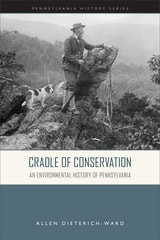
Cradle of Conservation
An Environmental History of PennsylvaniaAllen Dieterich-Ward
Temple University Press, 2024
Cradle of Conservation moves across time and place, from the Haudenosaunee people of the Susquehanna Valley, to the iron furnaces of nineteenth-century Pittsburgh, to the diesel trucks on the twentieth-century Pennsylvania Turnpike. In addition, Dieterich-Ward explores the histories of Philadelphia’s Schuylkill River and the state’s anthracite region and traces the environmental movements and crises that have led to public policy changes in the face of climate change.
Cradle of Conservation deepens our understanding of how Pennsylvanians have conserved and consumed.
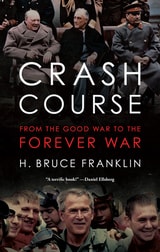
Crash Course
From the Good War to the Forever WarFranklin, H. Bruce
Rutgers University Press, 2024
Now, after fifty years as a renowned cultural historian, Franklin offers a set of hard-learned lessons about modern American history. Crash Course is essential reading for anyone who wonders how America ended up where it is today: with a deeply divided and disillusioned populace, led by a dysfunctional government, and mired in unwinnable wars. It also finds startling parallels between America’s foreign military exploits and the equally brutal tactics used on the home front to crush organized labor, antiwar, and civil rights movements.
More than just a memoir or a history book, Crash Course gives readers a unique firsthand look at the building of the American empire and the damage it has wrought. Shocking and gripping as any thriller, it exposes the endless deception of the American public, and reveals from inside how and why many millions of Americans have been struggling for decades against our own government in a fight for peace and justice.
Creating Citizens
Liberal Arts, Civic Engagement, and the Land-Grant TraditionEdited by Brigitta R. Brunner
University of Alabama Press, 2016
Creating Citizens is a collection of essays about Community and Civic Engagement (CCE) learning at land-grant universities.
In Creating Citizens, professors and administrators at Auburn University’s College of Liberal Arts recount valuable, first-hand experiences teaching Community and Civic Engagement (CCE). They demonstrate that, contrary to many expectations, CCE instruction both complements the mission of liberal arts curricula and powerfully advances the fundamental mission of American land-grand institutions.
The nine essays in Creating Citizens offer structures for incorporating CCE initiatives into university programs, instructional methods and techniques, and numerous case studies and examples undertaken at Auburn University but applicable at any university. Many contributors describe their own rewarding experiences with CCE and emphasize the ways outreach efforts reinvigorate their teaching or research.
Creating Citizens recounts the foundation of land-grant institutions by the Morrill Act of 1862. Their mission is to instruct in agriculture, military science, and mechanics, but these goals augmented rather than replaced an education in the classics, or liberal arts. Land-grant institutions, therefore, have a special calling to provide a broad spectrum of society with an education that not only enriched the personal lives of their students, but the communities they are a part of. Creating Citizens demonstrates the important opportunities CCE instruction represents to any university but are especially close to the heart of the mission of land-grant colleges.
In open societies, the role and mission of public institutions of higher learning that are supported by public subsidies are perennial subjects of interest and debate. Creating Citizens provides valuable insights of interest to educators, education administrators, students, and policy makers involved in the field of higher education.
Creating Worlds Otherwise
Art, Collective Action, and (Post)ExtractivismPaula Serafini
Vanderbilt University Press, 2022
Extractivism has increasingly become the ground on which activists and scholars in Latin America frame the dynamics of ecological devastation, accumulation of wealth, and erosion of rights. These maladies are the direct consequences of long-standing extraction-oriented economies, and more recently from the expansion of the extractive frontier and the implementation of new technologies in the extraction of fossil fuels, mining, and agriculture. But the fields of sociology, political ecology, anthropology, and geography have largely ignored the role of art and cultural practices in studies of extractivism and post-extractivism.
The field of art theory, on the other hand, has offered a number of texts that put forward insightful analyses of artwork addressing extraction, environmental devastation, and the climate crisis. However, an art theory perspective that does not engage firsthand and in depth with collective action remains limited and fails to provide an account of the role, processes, and politics of art in anti- and post-extractivist movements.
Creating Worlds Otherwise examines the narratives that subaltern groups generate around extractivism, and how they develop, communicate, and mobilize these narratives through art and cultural practices. It reports on a six-year project on creative resistance to extractivism in Argentina and builds on long-term engagement working on environmental justice projects and campaigns in Argentina and the UK.
It is an innovative contribution to the fields of Latin American studies, political ecology, cultural studies, and art theory, and addresses pressing questions regarding what post-extractivist worlds might look like as well as how such visions are put into practice.
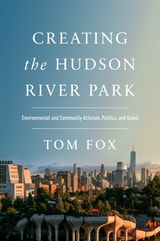
Creating the Hudson River Park
Environmental and Community Activism, Politics, and GreedTom Fox
Rutgers University Press, 2024
The 4-mile-long, 550-acre Hudson River Park is nearing completion and is the largest park built in Manhattan since Central Park opened more than 150 years ago. It has transformed a derelict waterfront, protected the Hudson River estuary, preserved commercial maritime activities, created new recreational opportunities for millions of New Yorkers, enhanced tourism, stimulated redevelopment in adjacent neighborhoods, and set a precedent for waterfront redevelopment. The Park attracts seventeen million visitors annually. Creating the Hudson River Park is a first-person story of how this park came to be. Working together over three decades, community groups, civic and environmental organizations, labor, the real estate and business community, government agencies, and elected officials won a historic victory for environmental preservation, the use and enjoyment of the Hudson River, and urban redevelopment. However, the park is also the embodiment of a troubling trend toward the commercialization of America’s public parks.
After the defeat of the $2.4 billion Westway plan to fill 234 acres of the Hudson in 1985, the stage was set for the revitalization of Manhattan’s West Side waterfront. Between 1986 and 1998 the process focused on the basics like designing an appropriate roadway, removing noncompliant municipal and commercial activities from the waterfront, implementing temporary improvements, developing the Park’s first revenue-producing commercial area at Chelsea Piers, completing the public planning and environmental review processes, and negotiating the 1998 Hudson River Park Act that officially created the Park. From 1999 to 2009 planning and construction were funded with public money and focused on creating active and passive recreation opportunities on the Tribeca, Greenwich Village, Chelsea, and Hell’s Kitchen waterfronts.
However, initial recommendations to secure long term financial support for the Park from the increase in adjacent real estate values that resulted from the Park’s creation were ignored. City and state politicians had other priorities and public funding for the Park dwindled. The recent phase of the project, from 2010 to 2021, focused on “development” both in and adjacent to the Park. Changes in leadership, and new challenges provide an opportunity to return to a transparent public planning process and complete the redevelopment of the waterfront for the remainder of the 21st-century. Fox’s first-person perspective helps to document the history of the Hudson River Park, recognizes those who made it happen and those who made it difficult, and provides lessons that may help private citizens and public servants expand and protect the public parks and natural systems that are so critical to urban well-being.
Creative Politics
Taxes and Public Goods in a Federal SystemGlenn Beamer
University of Michigan Press, 2000
Cries of Crisis
Rethinking the Health Care DebateRobert B. Hackey
University of Nevada Press, 2015
In Cries of Crisis, Robert B. Hackey analyzes media coverage, political speeches, films, and television shows to demonstrate the role that language and symbolism have played in framing the health care debate, shaping policy making, and influencing public perceptions of problems in the health care system. He demonstrates that the idea of crisis now means so many different things to so many different groups that it has ceased to have any shared meaning at all. He argues that the ceaseless talk of “crisis,” without a commonly accepted definition of that term, has actually impeded efforts to diagnose and treat the chronic problems plaguing the American health care system. Instead, he contends, reformers must embrace a new rhetorical strategy that links proposals to improve the system with deeply held American values like equality and fairness.
Crime and Justice, Volume 24
Youth ViolenceEdited by Michael Tonry and Mark H. Moore
University of Chicago Press Journals, 1998
Featuring articles by leading American and European scholars from many fields, Youth Violence provides a reliable, up-to-date, authoritative and comprehensive overview of policy issues and research developments concerning crime and violence among the young.
Crime and Justice, Volume 25
An Annual Review of ResearchEdited by Michael Tonry
University of Chicago Press Journals, 1999
Criminology and Public Policy
Putting Theory to WorkHugh Barlow
Temple University Press, 2009
In applying theories to real world issues—such as reducing crime and violence, prisoner reentry policies, gang behavior, and treatment courts—the contributors take both a macro and micro level approach. They find, too, that it is often difficult to turn theory into practice. Still, the very attempt pushes the criminal justice system toward workable solutions rather than ideological approaches, an orientation the editors believe will lead to greater progress in combating one of our society’s greatest difficulties.
Contributors include: Robert Agnew, Ronald L. Akers, Gordon Bazemore, Ronald V. Clarke, J. Heith Copes, Frank Cullen, Marcus Felson, Marie Griffin, Scott Jacques, David Kauzlarich, Jean McGloin, Steven Messner, Alex Piquero, Nicole Leeper Piquero, Nancy Rodriguez, Richard B. Rosenfeld, Dawn Rothe, Andrea Schoepfer, Neal Shover, Cassia Spohn, Katherine Tellis, Charles Tittle, Richard Wright, and the editors.
Criminology and Public Policy
Putting Theory to WorkScott H. Decker and Kevin A. Wright
Temple University Press, 2018
In the field of criminal justice, public policy is designed to address the problems brought on by criminal behavior and the response to that behavior. However, too often, the theories carefully developed in the academy fail to make their way into programs and policy. The editors and contributors to this second edition of Criminology and Public Policy highlight the recent development of “translational criminology” to address the growing movement in criminology to use the results of criminological research and theory to better inform policy and practice.
The essays in Criminology and Public Policy propose an in-depth look at both theory and practice and how they are integrated across a number of key criminal justice problems—from racial and environmental concerns to gun control and recidivism rates as well as police use of force and mass incarceration. The end result is an essential volume that blends both theory and practice in an effort to address the critical problems in explaining, preventing, responding to, and correcting criminal behavior.
Contributors include: Robert K. Ax, Michelle N. Block, Anthony A. Braga, Rod K. Brunson, Jennifer Carlson, Ronald V. Clarke, Shea Cronin, Megan Denver, Kevin M. Drakulich, Grant Duwe, Amy Farrell, Cheryl Jonson, Charis E. Kubrin, Justin Kurland, Megan Kurlychek, Shannon Magnuson, Daniel P. Mears, Robert D. Morgan, Kathleen Powell, Danielle Rudes, Cassia Spohn, Cody Telep, Natalie Todak, Glenn Trager, Jillian J. Turanovic, Sara Wakefield, Patricia Warren, David Weisburd, Michael D. White, Rob White, Lauren Wilson and the editors
Critical Dialogues of Urban Governance, Development and Activism
London and TorontoEdited by Susannah Bunce, Nicola Livingstone, Loren March, Susan Moore, and Alan Walks
University College London, 2020

Crossing Great Divides
City and Country in Environmental and Political DisorderJohn D. Fairfield
Temple University Press, 2024
Conventional urban environmental reform has made modern city life possible, but it has done little to limit the despoliation of distant places. Nevertheless, the successes of urban environmental reform remind us of what is possible.
John Fairfield concludes with a case study of Phoenix, Arizona to demonstrate this dysfunctional relationship between city and country while developing a sympathetic critique of the Green New Deal. He suggests how we might bridge the “great divide” as we face the daunting challenges the twenty-first century is pressing upon us.
Crucible For Survival
Environmental Security and Justice in the Indian Ocean RegionDoyle, Timothy
Rutgers University Press, 2008
Cruelty as Citizenship
How Migrant Suffering Sustains White DemocracyCristina Beltrán
University of Minnesota Press, 2020
Why are immigrants from Mexico and Latin America such an affectively charged population for political conservatives?
More than a decade before the election of Donald Trump, vitriolic and dehumanizing rhetoric against migrants was already part of the national conversation. Situating the contemporary debate on immigration within America’s history of indigenous dispossession, chattel slavery, the Mexican-American War, and Jim Crow, Cristina Beltrán reveals white supremacy to be white democracy—a participatory practice of racial violence, domination, and exclusion that gave white citizens the right to both wield and exceed the law. Still, Beltrán sees cause for hope in growing movements for migrant and racial justice.
Forerunners is a thought-in-process series of breakthrough digital works. Written between fresh ideas and finished books, Forerunners draws on scholarly work initiated in notable blogs, social media, conference plenaries, journal articles, and the synergy of academic exchange. This is gray literature publishing: where intense thinking, change, and speculation take place in scholarship.
Culinary Mestizaje
Racial Mixing and Foodways across the United StatesEdited by Felipe Hinojosa and Rudy P. Guevarra Jr.
University of Texas Press, 2025
2026 Gold Medal for the Victor Villaseñor Best Latino Focused Nonfiction Book Award – English, Conference on Latin American History (CLAH)
How cross-racial and ethnic communities have created new culinary traditions and food cultures in the United States.
Culinary Mestizaje is about food, cooking, and community, but it’s also about how immigrant labor and racial mixing are transforming established US food cultures from Hawai’i to the coast of Maine, South Philadelphia to the Pacific Northwest. This collection of essays asks what it means that Chamorro cooking is now considered a regional specialty of the Bay Area, and that a fusion like brisket tacos registers as “native” to Houston, while pupusas are the pride of Atlanta.
Combining community scholarly insights, cooking tips, and recipes, the pieces assembled here are interested in how the blending of culinary traditions enables marginalized people to thrive in places fraught with racial tension, anti-immigrant sentiment, and the threat of gentrification. Chefs and entrepreneurs matter in these stories, but so do dishwashers, farm laborers, and immigrants doing the best they can with the ingredients they have. Their best, it turns out, is often delicious and creative, sparking culinary evolutions while maintaining ancestral connections. The result is that cooking under the weight of colonial rule and white supremacy has, in revealing ways, created American food.
Cultivating Livability
Food, Class, and the Urban Future in BengaluruCamille Frazier
University of Minnesota Press, 2024
What urban food networks reveal about middle class livability in times of transformation
In recent years, the concept of “livability” has captured the global imagination, influencing discussions about the implications of climate change on human life and inspiring rankings of “most livable cities” in popular publications. But what really makes for a livable life, and for whom?
Cultivating Livability takes Bengaluru, India, as a case study—a city that is alternately described as India’s most and least livable megacity, where rapid transformation is undergirded by inequalities evident in the food networks connecting peri-urban farmers and the middle-class public. Anthropologist Camille Frazier probes the meaning of “livability” in Bengaluru through ethnographic work among producers and consumers, corporate intermediaries and urban information technology professionals.
Examining the varying efforts to reconfigure processes of food production, distribution, retail, and consumption, she reveals how these intersections are often rooted in and exacerbate ongoing forms of disenfranchisement that privilege some lives at the expense of others.
Cultivating the City
The Long Struggle to Put Land to UseNate Ela
University of Chicago Press, 2027
A story of law and social policy in a place you might not expect: community gardens and urban farms.
Though Chicago is a city of legendary skyscrapers and dense apartment blocks, it is also a city of wide-open tracts of land. This surprising juxtaposition can be viewed as an opportunity, in that available land can become a food source for urban dwellers, especially those experiencing poverty or limited access to grocery stores. But most empty land in Chicago remains empty — why? In Cultivating the City, sociologist and legal scholar Nate Ela examines the history of Chicago’s urban farms and gardens, their promotion as a tool to support the poor and unemployed, and their repeated failure to take root as a permanent part of Chicago’s landscape.
Ela’s fresh take on contemporary urban agriculture features a new perspective on social policy and urban governance. For hundreds of years, social reformers have worked to address poverty and unemployment by letting people use land to grow food. Reformers experimented with the possibilities of property use, including deals to match gardeners with public or private land, proposals to let growers use land without owners’ permission, and the transformation of private land into municipal gardens. By exposing the dynamics of this longstanding but long-overlooked form of social policy in Chicago, Ela offers a new strategy for cultivating cities that are productive, resilient, and just.
Cultural Cleansing and Mass Atrocities
Protecting Cultural Heritage in Armed Conflict ZonesThomas G. Weiss
J. Paul Getty Trust, The, 2020
Cultural Genocide and the Protection of Cultural Heritage
Edward C. Luck
J. Paul Getty Trust, The, 2020
Cultural Heritage Under Siege
Laying the Foundation for a Legal and Political Framework to Protect Cultural Heritage at Risk in Zones of Armed ConflictJames Cuno
J. Paul Getty Trust, The, 2020
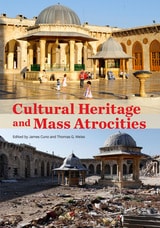
Cultural Heritage and Mass Atrocities
James Cuno
J. Paul Getty Trust, The, 2022
Intentional destruction of cultural heritage has a long history. Contemporary examples include the Bamiyan Buddhas in Afghanistan, mosques in Xinjiang, mausoleums in Timbuktu, and Greco-Roman remains in Syria. Cultural heritage destruction invariably accompanies assaults on civilians, making heritage attacks impossible to disentangle from the mass atrocities of genocide, war crimes, crimes against humanity, and ethnic cleansing. Both seek to eliminate people and the heritage with which they identify.
Cultural Heritage and Mass Atrocities assembles essays by thirty-eight experts from the heritage, social science, humanitarian, legal, and military communities. Focusing on immovable cultural heritage vulnerable to attack, the volume's guiding framework is the Responsibility to Protect (R2P), a United Nations resolution adopted unanimously in 2005 to permit international intervention against crimes of war or genocide. Based on the three pillars of prevent, react, and rebuild, R2P offers today's policymakers a set of existing laws and international norms that can and—as this book argues—must be extended to the protection of cultural heritage. Contributions consider the global value of cultural heritage and document recent attacks on people and sites in China, Guatemala, Iraq, Mali, Sri Lanka and Afghanistan, Syria, and Yemen. Comprehensive sections on vulnerable populations as well as the role of international law and the military offer readers critical insights and point toward research, policy, and action agendas to protect both people and cultural heritage. A concise abstract of each chapter is offered online in Arabic, Chinese, French, Russian, and Spanish to facilitate robust, global dissemination of the strategies and tactics offered in this pathbreaking call to action.
The free online edition of this publication is available at getty.edu/publications/cultural-heritage-mass-atrocities. Also available are free PDF, EPUB, and Kindle/MOBI downloads of the book.
Cultural Politics
edited by Marcy Darnovsky, Barbara Epstein and Richard Flacks
Temple University Press, 1995
Bridging the worlds of activism and academia-social movement theory informed with the real experiences of activists-this volume of accessible essays brings together insights from European New Social Movement theorists, U.S. scholars of social movements, and activists involved in social movements from the 1960s to the 1990s.
Contributors: Alice Echols, Barbara Epstein, Richard A. Cloward, Marcy Darnovsky, Jeffrey Escoffier, Ilene Rose Feinman, Richard Flacks, Cynthia Hamilton, Allen Hunter, L. A. Kauffman, Rebecca E. Klatch, Margit Mayer, Alberto Melucci, Bronislaw Misztal, Osha Neumann, Frances Fox Piven, Craig Reinarman, Roland Roth, Arlene Stein, Mindy Spatt, Andrew Szasz, Noél Sturgeon, Howard Winant.
Curbing Bailouts
Bank Crises and Democratic Accountability in Comparative PerspectiveGuillermo Rosas
University of Michigan Press, 2009
"Rosas's compelling theory and wide-ranging empirical evidence yield a persuasive but surprising conclusion in light of the financial meltdown of 2008–9. In the event of banking crises, not only do elected governments treat taxpayers better and force bankers and their creditors to pay more for their mistakes, but bankers in democracies are more prudent as a consequence . . . essential reading for all interested in the political economy of crisis and in the future of banking regulation."
---Philip Keefer, Lead Economist, Development Research Group, The World Bank
"Rosas convincingly demonstrates how democratic accountability affects the incidence and resolution of banking crises. Combining formal models, case studies, and cutting-edge quantitative methods, Rosas's book represents a model for political economy research."
---William Bernhard, Professor, Department of Political Science, University of Illinois
"When the financial crises of the 1990s hit Asia, Russia, and Latin America, the U.S. scolded them about the moral hazard problems of bailing out the banks. Now, the shoe is on the other foot, with the U.S. struggling to manage an imploding financial sector. Rosas's study of bank bailouts could not be more timely, providing us with both a framework for thinking about the issue and some sobering history of how things go both right and badly wrong. Democratic accountability proves the crucial factor in making sure bailouts are fair, a point that is as relevant for U.S. policy as for an understanding of the emerging markets."
---Stephan Haggard, Krause Professor, Graduate School of International Relations and Pacific Studies, University of California, San Diego
Banking crises threaten the stability and growth of economies around the world. In response, politicians restore banks to solvency by redistributing losses from bank shareholders and depositors to taxpayers, and the burden the citizenry must bear varies from case to case. Whereas some governments stay close to the prescriptions espoused by Sir Walter Bagehot in the nineteenth century that limit the costs shouldered by taxpayers, others engage in generous bank bailouts at great cost to society. What factors determine a government's response?
In this comparative analysis of late-twentieth-century banking crises, Guillermo Rosas identifies political regime type as the determining factor. During a crisis, powerful financial players demand protection of their assets. Rosas maintains that in authoritarian regimes, government officials have little to shield them from such demands and little incentive for rebuffing them, while in democratic regimes, elected officials must weigh these demands against the interests of the voters---that is, the taxpayers. As a result, compared with authoritarian regimes, democratic regimes show a lower propensity toward dramatic, costly bailouts.
Guillermo Rosas is Assistant Professor in the Department of Political Science and Fellow at the Center in Political Economy at Washington University in St. Louis.
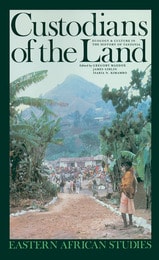
Custodians of the Land
Ecology and Culture in the History of TanzaniaGregory H. Maddox
Ohio University Press, 1995
Farming and pastoral societies inhabit ever-changing environments. This relationship between environment and rural culture, politics and economy in Tanzania is the subject of this volume which will be valuable in reopening debates on Tanzanian history.
In his conclusion, Isaria N. Kimambo, a founding father of Tanzanian history, reflects on the efforts of successive historians to strike a balance between external causes of change and local initiative in their interpretations of Tanzanian history.
He shows that nationalist and Marxist historians of Tanzanian history, understandably preoccupied through the first quarter-century of the country's post-colonial history with the impact of imperialism and capitalism on East Africa, tended to overlook the initiatives taken by rural societies to transform themselves.
Yet there is good reason for historians to think about the causes of change and innovation in the rural communities of Tanzania, because farming and pastoral people have constantly changed as they adjusted to shifting environmental conditions.
Cyclescapes of the Unequal City
Bicycle Infrastructure and Uneven DevelopmentJohn G. Stehlin
University of Minnesota Press, 2019
A critical look at the political economy of urban bicycle infrastructure in the United States
Not long ago, bicycling in the city was considered a radical statement or a last resort, and few cyclists braved the inhospitable streets of most American cities. Today, however, the urban cyclist represents progress and the urban “renaissance.” City leaders now undertake ambitious new bicycle infrastructure plans and bike share schemes to promote the environmental, social, and economic health of the city and its residents. Cyclescapes of the Unequal City contextualizes and critically examines this new wave of bicycling in American cities, exploring how bicycle infrastructure planning has become a key symbol of—and site of conflict over—uneven urban development.
John G. Stehlin traces bicycling’s rise in popularity as a key policy solution for American cities facing the environmental, economic, and social contradictions of the previous century of sprawl. Using in-depth case studies from San Francisco, Philadelphia, and Detroit, he argues that the mission of bicycle advocacy has converged with, and reshaped, the urban growth machine around a model of livable, environmentally friendly, and innovation-based urban capitalism. While advocates envision a more sustainable city for all, the deployment of bicycle infrastructure within the framework of the neoliberal city in many ways intensifies divisions along lines of race, class, and space.
Cyclescapes of the Unequal City speaks to a growing interest in bicycling as an urban economic and environmental strategy, its role in the politics of gentrification, and efforts to build more diverse coalitions of bicycle advocates. Grounding its analysis in both regional political economy and neighborhood-based ethnography, this book ultimately uses the bicycle as a lens to view major shifts in today’s American city.