Results by title
4038 books match the query 'Social aspects' and 308 start with c
Civil War Arkansas
Beyond Battles and LeadersAnne Bailey
University of Arkansas Press, 2000
Civil War Congress and the Creation of Modern America
A Revolution on the Home FrontPaul Finkelman
Ohio University Press, 2018
Most literature on the Civil War focuses on soldiers, battles, and politics. But for every soldier in the United States Army, there were nine civilians at home. The war affected those left on the home front in many ways. Westward expansion and land ownership increased. The draft disrupted families while a shortage of male workers created opportunities for women that were previously unknown.
The war also enlarged the national government in ways unimagined before 1861. The Homestead Act, the Land Grant College Act, civil rights legislation, the use of paper currency, and creation of the Internal Revenue Service to collect taxes to pay for the war all illustrate how the war fundamentally, and permanently, changed the nation.
The essays in this book, drawn from a wide range of historical expertise and approaching the topic from a variety of angles, explore the changes in life at home that led to a revolution in American society and set the stage for the making of modern America.
Contributors: Jean H. Baker, Jenny Bourne, Paul Finkelman, Guy Gugliotta, Daniel W. Stowell, Peter Wallenstein, Jennifer L. Weber.
Civilising Subjects
Metropole and Colony in the English Imagination 1830-1867Catherine Hall
University of Chicago Press, 2002
Hall uses the stories of two groups of Englishmen and -women to explore British self-constructions both in the colonies and at home. In Jamaica, a group of Baptist missionaries hoped to make African-Jamaicans into people like themselves, only to be disappointed when the project proved neither simple nor congenial to the black men and women for whom they hoped to fashion new selves. And in Birmingham, abolitionist enthusiasm dominated the city in the 1830s, but by the 1860s, a harsher racial vocabulary reflected a new perception of the nonwhite subjects of empire as different kinds of men from the "manly citizens" of Birmingham.
This absorbing study of the "racing" of Englishness will be invaluable for imperial and cultural historians.
Civilization without Sexes
Reconstructing Gender in Postwar France, 1917-1927Mary Louise Roberts
University of Chicago Press, 1994
In sources as diverse as parliamentary records, newspaper articles, novels, medical texts, writings on sexology, and vocational literature, Roberts discovers a central question: how to come to terms with rapid economic, social, and cultural change and articulate a new order of social relationships. She examines the role of French trauma concerning the War in legislative efforts to ban propaganda for abortion and contraception, and explains anxieties about the decline of maternity by a crisis in gender relations that linked soldiery, virility, and paternity.
Through these debates, Roberts locates the seeds of actual change. She shows how the willingness to entertain, or simply the need to condemn, nontraditional gender roles created an indecisiveness over female identity that ultimately subverted even the most conservative efforts to return to traditional gender roles and irrevocably altered the social organization of gender in postwar France.
Civilizing Natures
Race, Resources, and Modernity in Colonial South IndiaPhilip, Kavita
Rutgers University Press, 2003
Science was a central pillar of colonialism, but the converse holds true as well: colonialism profoundly shaped the character of nineteenth-century science. Civilizing Natures unravels unexpected relationships between science, technology, and administrative systems in colonial India from the 1850s to the 1930s, deepening our perspective on continuing conflicts over race, resources, and empire.
Botanists, anthropologists, and foresters had their most important sources of data—nature and natives—located at colonial sites. In the hilly, forested regions of Madras Presidency, tribal populations were studied by ethnographers, managed by revenue officials, recruited by plantation contractors, and modernized by missionaries. Racial constructions of nature and modernity helped criminalize and domesticate unruly natives. This is a story about the construction of nature in southern India that is deeply local and irreducibly global.
Through detailed case studies, Kavita Philip shows how race and nature are fundamental to understanding colonial modernities. Through its insightful combination of methodologies from both the humanities and the social sciences, Civilizing Natures complicates our understandings of the relationships between science and religion, pre-modern and civilized, environment and society.
Civilizing the Enemy
German Reconstruction and the Invention of the WestPatrick Thaddeus Jackson
University of Michigan Press, 2006
By examining German reconstruction under the Marshall Plan, author Patrick Jackson shows how the rhetorical invention of a West that included Germany was critical to the emergence of the postwar world order. Civilizing the Enemy convincingly describes how concepts are strategically shaped and given weight in modern international relations, by expertly dissecting the history of "the West" and demonstrating its puzzling persistence in the face of contradictory realities.
"By revisiting the early Cold War by means of some carefully conducted intellectual history, Patrick Jackson expertly dissects the post-1945 meanings of "the West" for Europe's emergent political imaginary. West German reconstruction, the foundation of NATO, and the idealizing of 'Western civilization' all appear in fascinating new light."
--Geoff Eley, University of Michigan
"Western civilization is not given but politically made. In this theoretically sophisticated and politically nuanced book, Patrick Jackson argues that Germany's reintegration into a Western community of nations was greatly facilitated by civilizational discourse. It established a compelling political logic that guided the victorious Allies in their occupation policy. This book is very topical as it engages critically very different, and less successful, contemporary theoretical constructions and political deployments of civilizational discourse."
--Peter J. Katzenstein, Cornell University
"What sets Patrick Jackson's book apart is his attention, on the one hand, to philosophical issues behind the kinds of theoretical claims he makes and, on the other hand, to the methodological implications that follow from those claims. Few scholars are willing and able to do both, and even fewer are as successful as he is in carrying it off. Patrick Jackson is a systematic thinker in a field where theory is all the rage but systematic thinking is in short supply."
--Nicholas Onuf, Florida International University
Patrick Thaddeus Jackson is Assistant Professor of International Relations in American University's School of International Service.

Claiming Individuality
The Cultural Politics of DistinctionEdited by Vered Amit and Noel Dyck
Pluto Press, 2006
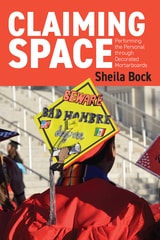
Claiming Space
Performing the Personal through Decorated MortarboardsSheila Bock
Utah State University Press, 2023
Claiming the space of these graduation caps is a popular and widespread way that individuals make their voices heard, or rather seen, in the visual landscape of commencement ceremonies. The forms and meanings of these material displays take shape in relation to broader, ongoing conversations about higher education in the United States, conversations grounded in discourses of belonging, citizenship, and the promises of the American Dream. Integrating observational fieldwork with extensive interviews and surveys, author Sheila Bock highlights the interpretations of individuals participating in this tradition. She also attends to the public framings of this tradition, including how images of mortarboards have grounded online enactments of community through hashtags such as #LatinxGradCaps and #LetTheFeathersFly, as well as what rhetorical framings are employed in news coverage and legal documents in cases where the value of the practice is both called into question and justified.
As university administrators and cultural commentators seek to make sense of the current state of higher education, these forms of material expression offer insight into how students themselves are grappling with higher ed's promises and shortcomings. Claiming Space is a meaningful contribution to folklore, cultural studies, media studies, and education.
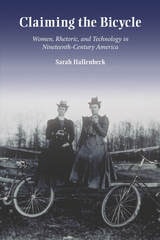
Claiming the Bicycle
Women, Rhetoric, and Technology in Nineteenth-Century AmericaSarah Hallenbeck
Southern Illinois University Press, 2016
Hallenbeck describes the masculine culture of the “Ordinary” bicycle of the 1880s and the ways women helped bring about changes in this culture; asserts that women contributed to bicycle design, helping to produce the more gender-neutral “Safety” bicycle in response to discourse about their needs; and analyzes women writers’ uses of the new venue of popular magazines to shape a “bicycle girl” ethos that prompted new identities for women. The author considers not only how technical documents written by women bicyclists encouraged new riders to understand their activity as transforming gender definitions but also how women used bicycling as a rhetorical resource to influence medical discourse about their bodies.
Making a significant contribution to studies of feminist rhetorical historiography, rhetorical agency, and technical communication, Claiming the Bicycle asserts the utility of a distributed model of rhetorical agency and accounts for the efforts of widely dispersed actors to harness technology in promoting social change.

Clash of Loyalties
A Border County in the Civil WarJOHN W. SHAFFER
West Virginia University Press, 2003
A border county in a border state, Barbour County, West Virginia felt the full terror and tragedy of the Civil War. The wounds of the Civil War cut most bitterly in the border states, that strip of America from Maryland to Kansas, where conflicting loyalties and traditions ripped apart communities, institutions, and families. Barbour County, in the mountainous Northwest of (West) Virginia, is a telling microcosm of the deep divisions which both caused the war and were caused by it. By examining and interpreting long-ignored documents of the times and the personal accounts of the people who were there, Clash of Loyalties offers a startling new view of America's most bitter hour. Nearly half of the military-age men in the county served in the armed forces, almost perfectly divided between the Union and the Confederacy. After West Virginia split with Virginia to rejoin the Union, Confederate soldiers from the regions could not safely visit their homes on furlough, or even send letters to their families. The county's two leading political figures, Samuel Woods and Spencer Dayton, became leaders of the fight for and against secession, dissolved their close personal friendship, and never spoke to one another again. The two factions launched campaigns of terror and intimidation, leading to the burning of several homes, the kidnapping of a sheriff, the murder of a pacifist minister, and the self-imposed exile of many of the county's influential families. The conflicting loyalties crossed nearly all social and economic lines; even the county's slave owners were evenly divided between Union and Confederate sympathies. With a meticulous examination of census and military records, geneologies, period newspapers, tax rolls, eyewitness accounts, and other relevant documents, Clash of Loyalties presents a compelling account of the passion and violence which tore apart Barbour County and the nation.
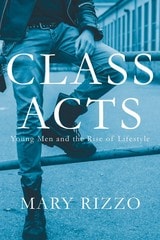
Class Acts
Young Men and the Rise of LifestyleMary Rizzo
University of Nevada Press, 2015
Mary Rizzo traces the development of the concept of lifestyle marketing, showing how marketers disconnected class identity from material reality, focusing instead on a person’s attitudes, opinions, and behaviors. The book includes discussions of the rebel of the 1950s, the hippie of the 1960s, the white suburban hip-hop fan of the 1980s, and the poverty chic of the 1990s. Class Acts illuminates how the concept of “lifestyle,” particularly as expressed through fashion, has disconnected social class from its material reality and diffused social critique into the opportunity to simply buy another identity. The book will appeal to scholars and other readers who are interested in American cultural history, youth culture, fashion, and style.
Class Warfare
Class, Race, and College Admissions in Top-Tier Secondary SchoolsLois Weis, Kristin Cipollone, and Heather Jenkins
University of Chicago Press, 2014
Drawing on deep and sustained contact with students, parents, teachers, and administrators at three iconic secondary schools in the United States, the authors unveil a formidable process of class positioning at the heart of the college admissions process. They detail the ways students and parents exploit every opportunity and employ every bit of cultural, social, and economic capital they can in order to gain admission into a “Most Competitive” or “Highly Competitive Plus” university. Moreover, they show how admissions into these schools—with their attendant rankings—are used to lock in or improve class standing for the next generation. It’s a story of class warfare within a given class, the substrata of which—whether economically, racially, or socially determined—are fiercely negotiated through the college admissions process.
In a historic moment marked by deep economic uncertainty, anxieties over socioeconomic standing are at their highest. Class, as this book shows, must be won, and the collateral damage of this aggressive pursuit may just be education itself, flattened into a mere victory banner.
Classical Hollywood Narrative
The Paradigm WarsJane Gaines, ed.
Duke University Press, 1992
Significantly expanded from a special issue of South Atlantic Quarterly (Spring 1989), these essays confront the extent to which formalism has continued to dominate film theory, reexamine the role of melodrama in cinematic development, revise notions of "patriarchal cinema," and assert the importance of television and video to cinema studies. A range of topics are discussed, from the films of D. W. Griffith to sexuality in avant-garde film to television's Dynasty.
Contributors. Rick Altman, Richard Dienst, Jane Feuer, Jane Gaines, Christine Gledhill, Miriam Hansen, Norman N. Holland, Fredric Jameson, Bill Nichols, Janey Staiger, Chris Straayer, John O. Thompson
Cleansing the Nation
India, the Hindu Modern, and Mediations of GenderRaka Shome
Duke University Press, 2025
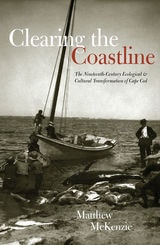
Clearing the Coastline
The Nineteenth-Century Ecological & Cultural Transformations of Cape CodMatthew McKenzie
University Press of New England, 2011
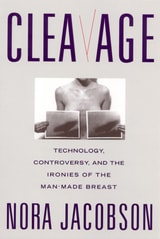
Cleavage
Technology, Controversy, and the Ironies of the Man-Made BreastJacobson, Nora
Rutgers University Press, 1999
Organized both chronologically and thematically, this book examines the history of breast implant technology from 1895 to 1990, including the controversies that erupted in the early 1990s over the safety of the devices and the Food and Drug Administration's regulation of their use. Jacobson examines such topics as politics and bias in medical practice and the role of bureaucracies, corporations, and governments in establishing policy and regulating implant technology.
Clicas
Gender, Sexuality, and Struggle in Latina/o/x Gang Literature and FilmFrank García
University of Texas Press, 2024
2025 First Book Prize Honorable Mention, Cultural Studies Association
How Latina/o/x gang literature and film represent women and gay gang members’ challenges to gendered, sexual, racial, and class oppression.
Clicas examines Latina/o/x literature and film by and/or about gay and women gang members. Through close readings of literature and film, Frank García reimagines the typical narratives describing gang membership and culture, amplifying and complicating critical gang studies in the social sciences and humanities and looking at gangs across racial, ethnic, and national identities. Analyzing how the autobiographical poetry of Ana Castillo presents gang fashion, culture, and violence to the outside world, the effects of women performing female masculinity in the novel Locas, and gay gang members’ experiences of community in the documentary Homeboy, García complicates the dialogue regarding hypermasculine gang cultures. He shows how they are accessible not only to straight men but also to women and gay men who can appropriate them in complicated ways, which can be harming and also, at times, emancipating. Reading gang members as (de)colonial agents who contest the power relations, inequalities, oppressions, and hierarchies of the United States, Clicas considers how women and gay gang members resist materially and psychologically within a milieu shaped by the intersection of race, gender, sexuality, and class.

Climate Games
Experiments on How People Prevent DisasterTalbot M. Andrews, Andrew W. Delton, and Reuben Kline
University of Michigan Press, 2024
Yet real climate change is a complex social dilemma involving the world’s nearly eight billion inhabitants. In the real world, the worst effects of climate change are likely to be felt by developing countries, while most of the decisions will be made by rich, industrialized countries. And while the world as a whole would be better off if all nations reduced their greenhouse gas emissions, any given nation could decide it would be even better off if it continued emitting and let other nations take care of the problem. These disaster experiments test how real people respond to climate change’s unique constellation of challenges and deliver a positive message: People will prevent disaster.
Climatic Media
Transpacific Experiments in Atmospheric ControlYuriko Furuhata
Duke University Press, 2022
Climbing
Hil Malatino
Duke University Press, 2026
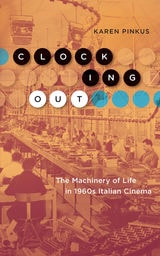
Clocking Out
The Machinery of Life in 1960s Italian CinemaKaren Pinkus
University of Minnesota Press, 2020
An original reflection on Italy’s postwar boom considers potentials for resistance in today’s neoliberal (dis)order
What can 1960s Italian cinema teach us about how to live and work today? Clocking Out challenges readers to think about labor, cinema, and machines as they are intertwined in complex ways in Italian cinema of the early ’60s. Drawing on critical theory and archival research, this book asks what kinds of fractures we might exploit for living otherwise, for resisting traditional narratives, and for anticapitalism.
Italy in the 1960s was a place where the mass-producing factory was the primary mode of understanding what it meant to work, but it was also a time when things might have gone another way. This thinking and living differently appears in the cracks, lapses, or moments of film. Clocking Out is organized into scenes from an obscure 1962 Italian comedy (Renzo e Luciana, from Boccaccio 70). Reconsidering the origins of paradigms such as clocking in and out, “society is a factory,” and the gendered division of labor, Karen Pinkus challenges readers to think through cinema, enabling us to see gaps and breakdowns in the postwar order. She focuses on the Olivetti typewriter company and a little-known film from an Italian anthology movie, thinking with cinema about the power of the Autonomia movement, the refusal to work, and the questions of wages, paternalism, and sexual difference.
Alternating microscopic attention to details and zooming outward, Pinkus examines rituals of production, automation, repetition, and fractures in a narrative of labor that begins in the 1960s and extends to the present—the age of the precariat, right-wing resentment, and nostalgia for an order that was probably never was.

Cloning
A Biologist ReportsRobert Gilmore McKinnell
University of Minnesota Press, 1985
Cloning was first published in 1985. Minnesota Archive Editions uses digital technology to make long-unavailable books once again accessible, and are published unaltered from the original University of Minnesota Press editions.
Cloning has become in recent years a subject of widespread speculation: the word is a source of fear and wonder, the concept a jumping-off point for the fantasies of cartoonists, film producers, and novelists. With this book, cell biologist Robert Gilmore McKinnell provides the first clear scientific explanation of the procedure for general readers.
Cloning is best defined as the asexual reproduction of genetic duplicates. The word clone derives from the Greek word for a twig or a slip, and the first "cloners" were in fact horticulturalists. Early attempts to clone animals culminated in 1952 when biologists reported that they had produced frogs by transplanting genetic material from an embryonic body cell into an egg from which the nucleus had been removed.
In this account, McKinnell traces the historical background of cloning and describes in detail the modern procedure used in the cloning of frogs—the highest animal thus far cloned. He emphasizes that the purpose of cloning is not to produce numerous frogs—or people—but rather to serve as a tool in biological research—to achieve greater understanding of cancer and aging, immunobiology and the differentiation of cells.
McKinnell also deals with questions about potential mammalian clones and examines the social, ethical, and biological problems we face in our considerations about human cloning. He concludes that human clones are not necessary for research purposes and that the diversity achieved with sexual reproduction is far more desirable than the sameness of cloned creatures.
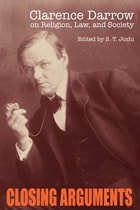
Closing Arguments
Clarence Darrow on Religion, Law, and SocietyClarence Darrow
Ohio University Press, 2005
Clarence Darrow, son of a village undertaker and coffinmaker, rose to become one of America’s greatest attorneys—and surely its most famous. The Ohio native gained renown for his central role in momentous trials, including his 1924 defense of Leopold and Loeb and his defense of Darwinian principles in the 1925 Scopes “Monkey Trial.” Some have traced Darrow’s lifelong campaign against capital punishment to his boyhood terror at seeing a Civil War soldier buried—and no client of Darrow’s was ever executed, not even black men who were accused of murder for killing members of a white mob.
Closing Arguments: Clarence Darrow on Religion, Law, and Society collects, for the first time, Darrow’s thoughts on his three main preoccupations, revealing a carefully conceived philosophy expressed with delightful pungency and clarity. His thoughts on social issues, especially on the dangers of religious fundamentalism, are uncannily prescient. A dry humor infuses his essays, and his reflections on himself and his philosophy reveal a quiet dignity at the core of a man better known for provoking Americans during an era of unprecedented tumult. From the wry “Is the Human Race Getting Anywhere?” to the scornful “Patriotism” and his elegiac summing up, “At Seventy-two,” Darrow’s writing still stimulates, pleases and challenges.
A rebel who always sided intellectually and emotionally with the minority, Darrow remains a figure to contend with sixty-seven years after his death. “Inside every lawyer is the wreck of a poet,” Darrow once said. Closing Arguments demonstrates that, in his case, that statement is true.
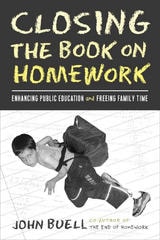
Closing The Book On Homework
Enhancing Public EducationJohn Buell
Temple University Press, 2003
Closures
Heterosexuality and the American SitcomGrace Lavery
Duke University Press, 2024
Clothing and Difference
Embodied Identities in Colonial and Post-Colonial AfricaHildi Hendrickson, ed.
Duke University Press, 1996
Grounded in the insights of anthropology and history and influenced by developments in cultural studies, these essays investigate the relations between the personal and the public, and between ideas about the self and those about the family, gender, and national groups. They explore the bodily and material creation of the changing identities of women, spirits, youths, ancestors, and entrepreneurs through a consideration of topics such as fashion, spirit possession, commodity exchange, hygiene, and mourning.
By taking African societies as its focus, Clothing and Difference demonstrates that factors considered integral to Western social development—heterogeneity, migration, urbanization, transnational exchange, and media representation—have existed elsewhere in different configurations and with different outcomes. With significance for a wide range of fields, including gender studies, cultural studies, art history, performance studies, political science, semiotics, economics, folklore, and fashion and textile analysis/design, this work provides alternative views of the structures underpinning Western systems of commodification, postmodernism, and cultural differentiation.
Contributors. Misty Bastian, Timothy Burke, Hildi Hendrickson, Deborah James, Adeline Masquelier, Elisha Renne, Johanna Schoss, Brad Weiss
Coal in our Veins
A Personal JourneyErin Ann Thomas
Utah State University Press, 2012
In Coal in Our Veins, Erin Thomas employs historical research, autobiography, and journalism to intertwine the history of coal, her ancestors' lives mining coal, and the societal and environmental impacts of the United States' dependency on coal as an energy source. In the first part of her book, she visits Wales, native ground of British coal mining and of her emigrant ancestors. The Thomases' move to the coal region of Utah—where they witnessed the Winter Quarters and Castle Gate mine explosions, two of the worst mining disasters in American history—and the history of coal development in Utah form the second part.
Then Thomas investigates coal mining and communities in West Virginia, near her East Coast home, looking at the Sago Mine collapse and more widespread impacts of mining, including population displacement, mountain top removal, coal dust dispersal, and stream pollution, flooding, and decimation. The book's final part moves from Washington D.C.—and an examination of coal, CO2, and national energy policy—back to Utah, for a tour of a coal mine, and a consideration of the Crandall Canyon mine cave-in, back to Wales and the closing of the oldest operating deep mine in the world and then to a look at energy alternatives, especially wind power, in West Virginia and Pennsylvania.
Cocaine
From Coca Fields to the StreetsEnrique Desmond Arias and Thomas Grisaffi, editors
Duke University Press, 2021
Contributors. Enrique Desmond Arias, Lilian Bobea, Philippe Bourgois, Anthony W. Fontes, Robert Gay, Paul Gootenberg, Romain Le Cour Grandmaison, Thomas Grisaffi, Laurie Kain Hart, Annette Idler, George Karandinos, Fernando Montero, Dennis Rodgers, Taniele Rui, Cyrus Veeser, Autumn Zellers-León
Cochlear Implants
Evolving PerspectivesRaylene Paludneviciene
Gallaudet University Press, 2011
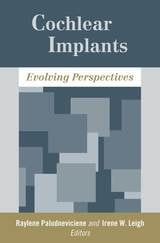
The cochlear implant debate has changed, as evidenced in this cogent collection that presents 13 chapters by 20 experts, including several who communicate through sign language but also utilize cochlear implants. The impetus for this change stems from recognition that both visual and aural input can enhance the education of deaf children.
Divided into four sections, Cochlear Implants: Evolving Perspectives first focuses on the impact of implants in the Deaf community. Chapters in this section examine the issues driving the cochlear implant debate, the ethics of genetic engineering, experiences of implanted adult deaf signers, reflections of deaf mothers who have had their children implanted, and the effects of implants on deaf identity. The second section delves into the mechanics of bimodal processing, including listening strategies that can benefit signing children with cochlear implants. The third section surveys combined aural/visual educational approaches, such as teaching implanted children in an ASL/English bilingual classroom, and applying auditory rehabilitation to a signed communication context.
The final section challenges readers to reframe the debate first by exploring sensory politics, then by envisioning an emerging world that requires the Deaf community to connect with it to secure its future. With this information, readers will reach their own conclusions about cochlear implants and auditory and visual approaches to the mastery of both spoken and signed languages.

Code
From Information Theory to French TheoryBernard Dionysius Geoghegan
Duke University Press, 2022

Codependent Forevermore
The Invention of Self in a Twelve Step GroupLeslie Irvine
University of Chicago Press, 1999
Codependent Forevermore is thus an insider's look at the world of people "in recovery" and the society that produced them. Through extensive interviews with CoDA members, case studies, and the meetings she attended regularly, Irvine develops a galvanizing perspective on contemporary Americans' sense of self. She explores the idea that selfhood is a narrative accomplishment, achieved by people telling stories to themselves and about themselves. She shows how Alex, Paul, Liz, and many others create a sense of self by combining elements of autobiography, culture, and social structure all within the adopted language of psycho-spirituality.
By following the progress and tribulations of CoDA members, Irvine gets to the heart of widespread American conceptions of relationships, selfhood, and community. Amidst the increasingly shrill criticism of the Twelve Step ethos, her reasoned and considered analysis of these groups reveals the sources of both their power and their popularity.

Coffee and Community
Maya Farmers and Fair-Trade MarketsSarah Lyon
University Press of Colorado, 2010
Focusing on La Voz Que Clama en el Desierto-a cooperative in San Juan la Laguna, Guatemala-and its relationships with coffee roasters, importers, and certifiers in the United States, Coffee and Community argues that while fair trade does benefit small coffee-farming communities, it is more flawed than advocates and scholars have acknowledged. However, through detailed ethnographic fieldwork with the farmers and by following the product, fair trade can be understood and modified to be more equitable.
This book will be of interest to students and academics in anthropology, ethnology, Latin American studies, and labor studies, as well as economists, social scientists, policy makers, fair-trade advocates, and anyone interested in globalization and the realities of fair trade. Winner of the Society for Economic Anthropology Book Award

Cold War Femme
Lesbianism, National Identity, and Hollywood CinemaRobert J. Corber
Duke University Press, 2011
Cold War Games
Propaganda, the Olympics, and U.S. Foreign PolicyToby C Rider
University of Illinois Press, 2016
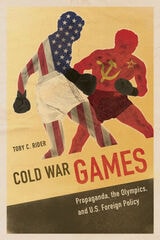
Drawing on newly declassified materials and archives, Toby C. Rider chronicles how the U.S. government used the Olympics to promote democracy and its own policy aims during the tense early phase of the Cold War. Rider shows how the government, though constrained by traditions against interference in the Games, eluded detection by cooperating with private groups, including secretly funded émigré organizations bent on liberating their home countries from Soviet control. At the same time, the United States utilized Olympic host cities as launching pads for hyping the American economic and political system. Behind the scenes, meanwhile, the government attempted clandestine manipulation of the International Olympic Committee. Rider also details the campaigns that sent propaganda materials around the globe as the United States mobilized culture in general, and sports in particular, to fight the communist threat.
Deeply researched and boldly argued, Cold War Games recovers an essential chapter in Olympic and postwar history.
Collaborative Imagination
Earning Activism through Literacy EducationPaul Feigenbaum
Southern Illinois University Press, 2015
Processes of fighting unequal citizenship have historically prioritized literacy education, through which people envision universal first-class citizenship and devise practical methods for enacting this vision. In this important volume, literacy scholar Paul Feigenbaum explores how literacy education can facilitate activism in contemporary contexts in which underserved populations often remain consigned to second-class status despite official guarantees of equal citizenship. By conceiving of education as, in part, a process of understanding and grappling with adaptive and activist rhetorics, Feigenbaum explains, educators can direct people’s imaginations toward activism without running up against the conceptual problems so many scholars associate with critical pedagogy. Over time, this model of education expands people’s imaginations about what it means to be a good citizen, facilitates increased civic participation, and encourages collective destabilization of, rather than adaptation to, the structural inequalities of mainstream civic institutions. Feigenbaum offers detailed analyses of various locations and time periods inside, outside, and across the walls of formal education, including the Citizenship Schools and Freedom Schools rooted in the Civil Rights Movement of the 1950s and 1960s; the Algebra Project, a current practical-literacy network; and the Imagination Federation, a South Florida–based Earth-Literacy network. Considering both the history and the future of community literacy, Collaborative Imagination offers educators a powerful mechanism for promoting activism through their teaching and scholarship, while providing practical ideas for greater civic engagement among students.
Collecting Mexico
Museums, Monuments, and the Creation of National IdentityShelley E. Garrigan
University of Minnesota Press, 2012
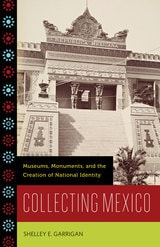
Collecting Mexico centers on the ways in which aesthetics and commercialism intersected in officially sanctioned public collections and displays in late nineteenth-century Mexico. Shelley E. Garrigan approaches questions of origin, citizenry, membership, and difference by reconstructing the lineage of institutionally collected objects around which a modern Mexican identity was negotiated. In doing so, she arrives at a deeper understanding of the ways in which displayed objects become linked with nationalistic meaning and why they exert such persuasive force.
Spanning the Porfiriato period from 1867 to 1910, Collecting Mexico illuminates the creation and institutionalization of a Mexican cultural inheritance. Employing a wide range of examples—including the erection of public monuments, the culture of fine arts, and the representation of Mexico at the Paris World’s Fair of 1889—Garrigan pursues two strands of thought that weave together in surprising ways: national heritage as a transcendental value and patrimony as potential commercial interest.
Collecting Mexico shows that the patterns of institutional collecting reveal how Mexican public collections engendered social meaning. Using extensive archival materials, Garrigan’s close readings of the processes of collection building offer a new vantage point for viewing larger issues of identity, social position, and cultural/capital exchange.
Collective Biologies
Healing Social Ills through Sexual Health Research in MexicoEmily A. Wentzell
Duke University Press, 2021
Collective Memory and the Historical Past
Jeffrey Andrew Barash
University of Chicago Press, 2016
Crucial to Barash’s analysis is a look at the radical transformations that symbolic configurations of collective memory have undergone with the rise of new technologies of mass communication. He provocatively demonstrates how such technologies’ capacity to simulate direct experience—especially via the image—actually makes more palpable collective memory’s limitations and the opacity of the historical past, which always lies beyond the reach of living memory. Thwarting skepticism, however, he eventually looks to literature—specifically writers such as Walter Scott, Marcel Proust, and W. G. Sebald—to uncover subtle nuances of temporality that might offer inconspicuous emblems of a past historical reality.
College in Prison
Reading in an Age of Mass IncarcerationKarpowitz, Daniel
Rutgers University Press, 2017
College in Prison chronicles how, since 2001, Bard College has provided hundreds of incarcerated men and women across the country access to a high-quality liberal arts education. Earning degrees in subjects ranging from Mandarin to advanced mathematics, graduates have, upon release, gone on to rewarding careers and elite graduate and professional programs. Yet this is more than just a story of exceptional individuals triumphing against the odds. It is a study in how the liberal arts can alter the landscape of some of our most important public institutions giving people from all walks of life a chance to enrich their minds and expand their opportunities.
Drawing on fifteen years of experience as a director of and teacher within the Bard Prison Initiative, Daniel Karpowitz tells the story of BPI’s development from a small pilot project to a nationwide network. At the same time, he recounts dramatic scenes from in and around college-in-prison classrooms pinpointing the contested meanings that emerge in moments of highly-charged reading, writing, and public speaking. Through examining the transformative encounter between two characteristically American institutions—the undergraduate college and the modern penitentiary—College in Prison makes a powerful case for why liberal arts education is still vital to the future of democracy in the United States.
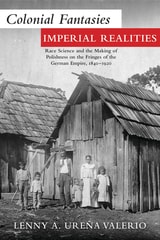
Colonial Fantasies, Imperial Realities
Race Science and the Making of Polishness on the Fringes of the German Empire, 1840–1920Lenny A. Ureña Valerio
Ohio University Press, 2019
In Colonial Fantasies, Imperial Realities, Lenny Ureña Valerio offers a transnational approach to Polish-German relations and nineteenth-century colonial subjectivities. She investigates key cultural dynamics in the history of medicine, colonialism, and migration that bring Germany and Prussian Poland closer to the colonial and postcolonial worlds in Africa and Latin America. She also analyzes how Poles in the German Empire positioned themselves in relation to Germans and native populations in overseas colonies. She thus recasts Polish perspectives and experiences, allowing new insights into identity formation and nationalist movements within the German Empire.
Crucially, Ureña Valerio also studies the medical projects and scientific ideas that traveled from colonies to the German metropole, and vice versa, which were influential not only in the racialization of Slavic populations, but also in bringing scientific conceptions of race to the everydayness of the German Empire. As a whole, Colonial Fantasies, Imperial Realities illuminates nested imperial and colonial relations using sources that range from medical texts and state documents to travel literature and fiction. By studying these scientific and political debates, Ureña Valerio uncovers novel ways to connect medicine, migration, and colonialism and provides an invigorating model for the analysis of Polish history from a global perspective.
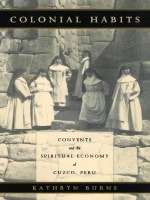
Colonial Habits
Convents and the Spiritual Economy of Cuzco, PeruKathryn Burns
Duke University Press, 1999
Based on unprecedented archival research, Colonial Habits demonstrates how nuns became leading guarantors of their city’s social order by making loans, managing property, containing “unruly” women, and raising girls. Coining the phrase “spiritual economy” to analyze the intricate investments and relationships that enabled Cuzco’s convents and their backers to thrive, Burns explains how, by the late 1700s, this economy had faltered badly, making convents an emblem of decay and a focal point for intense criticism of a failing colonial regime. By the nineteenth century, the nuns had retreated from their previous roles, marginalized in the construction of a new republican order.
Providing insight that can be extended well outside the Andes to the relationships articulated by convents across much of Europe, the Americas, and beyond, Colonial Habits will engage those interested in early modern economics, Latin American studies, women in religion, and the history of gender, class, and race.
Colonial Racial Capitalism
Susan Koshy, Lisa Marie Cacho, Jodi A. Byrd, and Brian Jordan Jefferson, editors
Duke University Press, 2022
Contributors. Joanne Barker, Jodi A. Byrd, Lisa Marie Cacho, Michael Dawson, Iyko Day, Ruth Wilson Gilmore, Alyosha Goldstein, Cheryl I. Harris, Kimberly Kay Hoang, Brian Jordan Jefferson, Susan Koshy, Marisol LeBrón, Jodi Melamed, Laura Pulido
Colonial Transactions
Imaginaries, Bodies, and Histories in GabonFlorence Bernault
Duke University Press, 2019
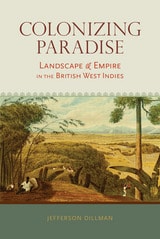
Colonizing Paradise
Landscape and Empire in the British West IndiesJefferson Dillman
University of Alabama Press, 2015
Explores how perceptions and depictions of the physical landscape both reflected and influenced the history of the British colonial Caribbean
In Colonizing Paradise, historian Jefferson Dillman charts the broad spectrum of sentiments that British citizens and travelers held regarding their colonial possessions in the West Indies. Myriad fine degrees of ambivalence separated extreme views of the region as an idyllic archipelago or a nest of Satanic entrapments. Dillman shows the manner in which these authentic or spontaneous depictions of the environment were shaped to form a narrative that undergirded Britain’s economic and political aims in the region.
Because British sentiments in the Caribbean located danger and evil not just in indigenous populations but in Spanish Catholics as well, Dillman’s work begins with the arrival of Spanish explorers and conquistadors. Colonizing Paradise spans the arrival of English ships and continues through the early nineteenth century and the colonial era. Dillman shows how colonial entrepreneurs, travelers, and settlers engaged in a disquieted dialogue with the landscape itself, a dialogue the examination of which sheds fresh light on the culture of the Anglophone colonial Caribbean.
Of particular note are the numerous mythical, metaphorical, and biblical lenses through which Caribbean landscapes were viewed, from early views of the Caribbean landscape as a New World paradise to later depictions of the landscape as a battleground between the forces of Christ and Satan. The ideal of an Edenic landscape persisted, but largely, Dillman argues, as one that needed to be wrested from the forces of darkness, principally through the work of colonization, planting, cataloguing, and a rational ordering of the environment.
Ultimately, although planters and their allies continued to promote pastoral and picturesque views of the Caribbean landscape, the goal of such narratives was to rationalize British rule as well as to mask and obscure emerging West Indian problems such as diseases, slavery, and rebellions. Colonizing Paradise offers much to readers interested in Caribbean, British, and colonial history.

Color Lines, Country Lines
Race, Immigration, and Wealth Stratification in AmericaLingxin Hao
Russell Sage Foundation, 2007
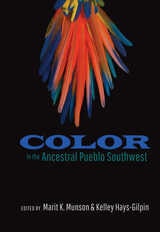
Color in the Ancestral Pueblo Southwest
Edited by Marit K. Munson and Kelley Hays-Gilpin
University of Utah Press, 2019
Beginning with the technical and practical concerns of acquiring pigments and using them to create paints, the authors explore how connections to landscapes and sacred places are embodied by many colorful materials. Contributors examine the development of polychromes and their juxtaposition with black-on-white vessels; document how color was used in rock paintings and architecture; and consider the inherent properties of materials, arguing that shell, minerals, and stone were valued not only for color but for other visual properties as well. The book concludes by considering the technological, economic, social, and ideological factors at play and demonstrates the significant role color played in aesthetic choices.
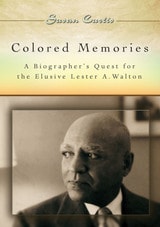
Colored Memories
A Biographer's Quest for the Elusive Lester A. WaltonSusan Curtis
University of Missouri Press, 2008
Lester A. Walton was a well-known public figure in his day. An African American journalist, cultural critic, diplomat, and political activist, he was an adviser to presidents and industrialists in a career that spanned the first six decades of the twentieth century. He was a steadfast champion of democracy and lived to see the passage of major civil rights legislation. But one word best describes Walton today: forgotten.
Exploring the contours of this extraordinary life, Susan Curtis seeks to discover why our collective memory of Walton has failed. In a unique narrative of historical research, she recounts a fifteen-year journey, from the streets of Harlem and “The Ville” in St. Louis to scattered archives and obscure public records, as she uncovers the mysterious circumstances surrounding Walton’s disappearance from national consciousness. And despite numerous roadblocks and dead ends in her quest, she tells how she came to know this emblematic citizen of the American Century in surprising ways.
In this unconventional book—a postmodern ghost story, an unprecedented experiment in life-writing—Curtis shares her discoveries as a researcher. Relating her frustrating search through long-overlooked documents to discover this forgotten man, she offers insight into how America’s obsession with race has made Walton’s story unwelcome. She explores the treachery, duplicity, and archival accidents that transformed a man dedicated to the fulfillment of American democracy into a shadowy figure.
Combining anecdotal memories with the investigative instincts of the historian, Curtis embraces the subjectivity of her research to show that what a society forgets or suppresses is just as important as what it includes in its history. Colored Memories is a highly original work that not only introduces readers to a once-influential figure but also invites us to reconsider how we view, understand, and preserve the past.
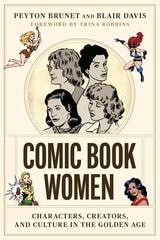
Comic Book Women
Characters, Creators, and Culture in the Golden AgeBy Peyton Brunet and Blair Davis; foreword by Trina Robbins
University of Texas Press, 2022
2023 Ray and Pat Browne Best Single Work by One or More Authors in Popular and American Culture, Popular and American Culture Association (PACA) / Popular Culture Association (PCA)
2023 Ray and Pat Browne Best Edited Reference/Primary Source Work in Popular Culture Award (Honorable Mention), Popular and American Culture Association (PACA) / Popular Culture Association (PCA)
2023 Peter C. Rollins Book Award, Southwest Texas Popular Culture and American Culture Associations (SWPACA)
A revisionist history of women's pivotal roles as creators of and characters in comic books.
The history of comics has centered almost exclusively on men. Comics historians largely describe the medium as one built by men telling tales about male protagonists, neglecting the many ways in which women fought for legitimacy on the page and in publishers’ studios. Despite this male-dominated focus, women played vital roles in the early history of comics. The story of how comic books were born and how they evolved changes dramatically when women like June Tarpé Mills and Lily Renée are placed at the center rather than at the margins of this history, and when characters such as the Black Cat, Patsy Walker, and Señorita Rio are analyzed.
Comic Book Women offers a feminist history of the golden age of comics, revising our understanding of how numerous genres emerged and upending narratives of how male auteurs built their careers. Considering issues of race, gender, and sexuality, the authors examine crime, horror, jungle, romance, science fiction, superhero, and Western comics to unpack the cultural and industrial consequences of how women were represented across a wide range of titles by publishers like DC, Timely, Fiction House, and others. This revisionist history reclaims the forgotten work done by women in the comics industry and reinserts female creators and characters into the canon of comics history.
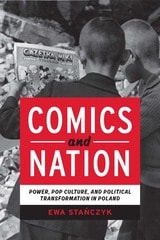
Comics and Nation
Power, Pop Culture, and Political Transformation in PolandEwa Stanczyk
The Ohio State University Press, 2022
Winner, BASEES George Blazyca Award in East European Studies
Comics and Nation offers a fresh perspective on the role of popular culture in the one-hundred-year history of the Polish state, from its foundation in 1918 to the present. Drawing on dozens of press articles, interviews, and readers’ letters, Ewa Stanczyk discusses how journalists, artists, and audiences used comics to probe the boundaries of national culture and scrutinize the established notions of Polishness. Critical moments of Poland’s political transformation ––the establishment of the interwar Polish Republic, the Cold War, the liberalization of the 1970s, the 1989 democratic transition, the turn to memory politics in the 2000s––have all been reflected in the history of Polish comics. Stanczyk offers new insights into how the production of homegrown comics and the influx of foreign works enabled commentators to express their fears, hopes, and disillusionment with political, economic, and cultural changes in Poland and beyond. At its core, Comics and Nation rethinks the impact of popular culture and transnational exchange on Polish nation building, citizenship formation, and the legitimation of power.
Coming Together
The Cinematic Elaboration of Gay Male Life, 1945-1979Ryan Powell
University of Chicago Press, 2019