Results by title
4154 books match the query 'State & Local' and 290 start with c
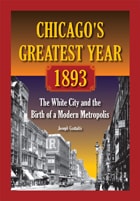
Chicago's Greatest Year, 1893
The White City and the Birth of a Modern MetropolisJoseph Gustaitis
Southern Illinois University Press, 2013
In 1893, the 27.5 million visitors to the Chicago World’s Fair feasted their eyes on the impressive architecture of the White City, lit at night by thousands of electric lights. In addition to marveling at the revolutionary exhibits, most visitors discovered something else: beyond the fair’s 633 acres lay a modern metropolis that rivaled the world’s greatest cities. The Columbian Exposition marked Chicago’s arrival on the world stage, but even without the splendor of the fair, 1893 would still have been Chicago’s greatest year.
An almost endless list of achievements took place in Chicago in 1893. Chicago’s most important skyscraper was completed in 1893, and Frank Lloyd Wright opened his office in the same year. African American physician and Chicagoan Daniel Hale Williams performed one of the first known open-heart surgeries in 1893. Sears and Roebuck was incorporated, and William Wrigley invented Juicy Fruit gum that year. The Field Museum, the Art Institute of Chicago, and the Museum of Science and Industry all started in 1893. The Cubs’ new ballpark opened in this year, and an Austro-Hungarian immigrant began selling hot dogs outside the World’s Fair grounds. His wares became the famous “Chicago hot dog.”
“Cities are not buildings; cities are people,” writes author Joseph Gustaitis. Throughout the book, he brings forgotten pioneers back to the forefront of Chicago’s history, connecting these important people of 1893 with their effects on the city and its institutions today. The facts in this history of a year range from funny to astounding, showcasing innovators, civic leaders, VIPs, and power brokers who made 1893 Chicago about so much more than the fair.

Chicago's North Michigan Avenue
Planning and Development, 1900-1930John W. Stamper
University of Chicago Press, 1991
John W. Stamper traces the complex development of North Michigan Avenue from the 1880s to the 1920s building boom that solidified its character and economic base, describing the initiation of the planning process by private interests to its execution aided by the city's powerful condemnation and taxation proceedings. He focuses on individual buildings constructed on the avenue, including the Renaissance- and Gothic-inspired Wrigley Building, Tribune Tower, and Drake Hotel, and places them within the context of factors governing their construction—property ownership, financing, zoning laws, design theory, and advertising.
Stamper compares this stylistically diverse mixture of low- and high-rise structures with earlier, rejected planning proposals, all of which had prescribed a uniformly designed, European-like avenue of continuous cornice heights, consistent facade widths, and complementary stylistic features. He analyzes the drastically different character the avenue took by 1930, with high-rise towers reaching thirty stories and beyond, in terms of the clash among economic, political, and architectural interests. His argument—that the discrepancies between the rejected plans and reality illustrate the developers' choice of economic return on their investment over aesthetic community—is extended through to the present avenue and the virtual disregard of the urban qualities proposed at its inception. Generously illustrated, with an epilogue condensing the avenue's history between the end of World War II and the present, this is an exhaustive account of an important topic in the history of modern architecture and city planning.
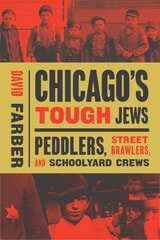
Chicago's Tough Jews
Peddlers, Street Brawlers, and Schoolyard CrewsDavid Farber
University of Chicago Press, 0
The untold story of the immigrant Jewish boys and men who fought back against violent neighborhood gangs in early twentieth-century Chicago.
In Chicago’s Tough Jews, Farber tells the story of how first- and second-generation Jewish immigrants from Eastern Europe fought their ethnic rivals on Chicago’s mean streets. These Jewish immigrants used their fists and, when necessary, bats and pipes to defend themselves and their neighborhoods.
Farber first heard these stories from his grandfather and his grandfather’s cronies. Jewish Chicagoans, he was told, tried to get the city authorities to stop the vicious antisemitic attacks on peddlers, merchants, and school kids. When that failed, they decided to physically fight to claim their place in the city. Farber vividly details these street battles, particularly with Polish and Irish gangs, up into the 1920s. Ultimately, he argues, “Jewish hard men” were part of a larger community-wide self-defense struggle against violent Jew bashers, antisemites, and an indifferent political and legal system.
Today, when questions of antisemitism and Jewish identity are again being fiercely debated across the country, this account of a past generation’s struggles in Chicago presents a thought-provoking recasting of American Jewish history.
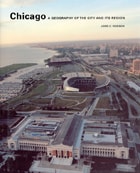
Chicago
A Geography of the City and Its RegionJohn C. Hudson
University of Chicago Press, 2006
Renowned geographer John C. Hudson leaves no aspect unexplored in this ambitious and peerless book. Beginning with an overview of metropolitan Chicago, Hudson describes how the city has served as a model to social scientists and examines its unique neighborhoods and communities from the perspectives of Chicagoans themselves. A thorough description of the physical geography of the region introduces a series of studies in historical geography that consider the origins of the city and its early development through to its present state, paying particular attention to race, ethnicity, and suburbanization, as well as commuting patterns, neighborhood change, and patterns of income distribution. Chicago concludes with a comparison of the balanced geography that prevailed in the early twentieth century with the skewed pattern of sectoral imbalances that exists today.
Supplemented with more than one hundred maps that illustrate the evolution of Chicago over time and sixty-four black-and-white and color photographs that capture iconic images of the city’s landscapes and its people, Chicago beautifully synthesizes the city’s social and economic strata with geographical features to provide an authoritative guide to modern Chicagoland.
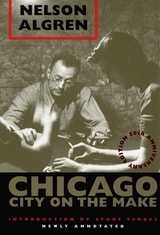
Chicago
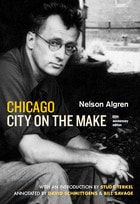
City on the Make: 50th Anniversary Edition, Newly AnnotatedNelson Algren
University of Chicago Press, 2001
"This short, crisp, fighting creed is both a social document and a love poem, a script in which a lover explains his city's recurring ruthlessness and latent power; in which an artist recognizes that these are portents not of death, but of life."—New York Herald Tribune
Nelson Algren (1909-1981) won the National Book Award in 1950 for The Man with the Golden Arm. His other works include Walk on the Wild Side, The Neon Wilderness, and Conversations with Nelson Algren, the last available from the University of Chicago Press. David Schmittgens teaches English at St. Ignatius College Prep in Chicago, Illinois. Bill Savage is a lecturer at Northwestern University and coeditor of the 50th Anniversary Critical Edition of The Man with the Golden Arm.
Chicago
City on the Make: Sixtieth Anniversary EditionNelson Algren
University of Chicago Press, 2011
“Once you’ve become a part of this particular patch, you’ll never love another. Like loving a woman with a broken nose, you may well find lovelier lovelies. But never a lovely so real.”
Ernest Hemingway once said of Nelson Algren’s writing that “you should not read it if you cannot take a punch.” The prose poem, Chicago: City on the Make, filled with language that swings and jabs and stuns, lives up to those words. In this sixtieth anniversary edition, Algren presents 120 years of Chicago history through the lens of its “nobodies nobody knows”: the tramps, hustlers, aging bar fighters, freed death-row inmates, and anonymous working stiffs who prowl its streets.
Upon its original publication in 1951, Algren’s Chicago: City on the Make was scorned by the Chicago Chamber of Commerce and local journalists for its gritty portrayal of the city and its people, one that boldly defied City Hall’s business and tourism initiatives. Yet the book captures the essential dilemma of Chicago: the dynamic tension between the city’s breathtaking beauty and its utter brutality, its boundless human energy and its stifling greed and violence.
The sixtieth anniversary edition features historic Chicago photos and annotations on everything from defunct slang to Chicagoans, famous and obscure, to what the Black Sox scandal was and why it mattered. More accessible than ever, this is, as Studs Terkel says, “the best book about Chicago.”
Chicago
Growth of a MetropolisHarold M. Mayer and Richard C. Wade
University of Chicago Press, 1969
This volume, however, which comprises over 1,000 pictures and 50 maps, tries to do more than show physical development—it attempts to suggest how the city expanded and why it looks the way it does. Because it asks different questions, this book differs markedly from other "pictorial histories" of American cities. Instead of emphasizing society and customs, this volume deals with the physical conditions of life. In place of the conventional interest in "founding fathers" and leading families, it is more concerned with street scenes and ordinary people. Without neglecting downtown, it also reaches into the residential areas and neighborhood shopping centers. Moreover, this volume is concerned with suburbs and "satellite" towns as well as the historic city.
"Chicago: Growth of a Metropolis is an incredible book. Like its subject it is excessive, and nothing succeeds like excess. It is handsomely designed, with a thousand photographs that document the physical growth and the spatial patterns of the city. . . . A dimensionalism comes through that no other city has. Carl Sandburg sang it in his poetry, and the book does more to grasp it . . . than any other book I have seen."—Hugh Newell Jacobson, New Republic
Chicago
With the Chicago Tribune Articles That Inspired ItMaurine Watkins, Edited by Thomas H. Pauly, Foreword by Charles H. Cosgrove
Southern Illinois University Press, 2025
In 1924, the murder trials of Beulah Annan and Belva Gaertner shocked the world, providing the real-life inspiration for Maurine Watkins’s unforgettable characters, Roxie Hart and Velma Kelly. Now, a century later, this reissue of Watkins’s play offers a fresh look at the origins of the story that has since become a household name.
From the silent film Chicago produced by Cecil B. DeMille in 1927 to the 1942 film Roxie Hart starring Ginger Rogers and the Broadway sensation created by Bob Fosse, Fred Ebb, and John Kander, this play has continuously evolved. It even inspired the 2002 Oscar-winning film Chicago starring Renée Zellweger, Catherine Zeta-Jones, and Richard Gere. But until recently, as editor Thomas H. Pauly writes in the book’s introduction, the real-life roots of the story were obscured.
While researching for a book on crime-as-entertainment during the 1920s, Pauly came across Maurine Watkins’s play, which was then out of print. After noticing similarities between the play and a series of articles Watkins penned for the Chicago Tribune prior to the creation of her play, Pauly knew he had stumbled upon a revelation: Watkins’s play was based on real people. His republication of the play, alongside substantial background material and a reprinting of Watkins’s news articles, has become an indispensable starting point for all subsequent interest in Watkins and Chicago, whose subject remains as topical as ever.
This special edition includes a new foreword by Charles H. Cosgrove, author of They Both Reached for the Gun: Beulah Annan, Maurine Watkins, and the Trial That Became Chicago. Cosgrove’s extensive research into the real-life cases provides deeper insight into the world that Watkins portrayed with such satirical brilliance. Additionally, the original editor, Thomas H. Pauly, has contributed a new preface, further enhancing understanding of the play and its inspiration, the thrilling true-crime story that captivated a nation and birthed a cultural phenomenon.
Chicagoland Dream Houses
How a Mid-Century Architecture Competition Reimagined the American HomeSiobhan Moroney
University of Illinois Press, 2024
Chicago’s Art Deco Skyscrapers
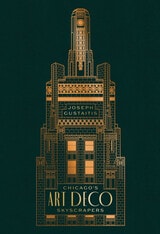
Joseph Gustaitis
University of Chicago Press, 2026
With stunning photography and abundant historical details, this book is a treasure trove that will delight any fan of architecture, Chicago, or the Art Deco era.
Chicago is America’s premier city for both historic and modern architecture. Even so, many of its finest buildings remain little known to visitors and Chicagoans alike. In Chicago’s Art Deco Skyscrapers, Joseph Gustaitis showcases nearly two dozen Art Deco towers that were built during the exhilarating years of the Jazz Age, from 1927 to 1933. These skyscrapers exemplify a state of mind from the time—an optimistic, forward-looking aesthetic that has been called the “last of the total styles,” as well as the first American style that spread across the globe. In the time between the Great War and the Great Depression, cities and their architects embraced industrial modernity and the exciting new possibilities of scale. Exploring places like the Board of Trade Building, the Merchandise Mart, and the Carbide and Carbon tower, Gustaitis tells the stories of their creation, architects and developers, construction and financing, zoning and engineering, and so much more.
With stunning aerial photography by Ian McClellan, this book also includes color photos of the buildings’ features, vintage images, a travel map, and in-depth historical information. Chicago’s Art Deco Skyscrapers is both a guidebook to these remarkable structures and a history of the upbeat era that created them.
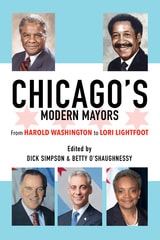
Chicago’s Modern Mayors
From Harold Washington to Lori LightfootEdited by Dick Simpson and Betty O'Shaughnessy
University of Illinois Press, 2024
Chicago’s transformation into a global city began at City Hall. Dick Simpson and Betty O’Shaughnessy edit in-depth analyses of the five mayors that guided the city through this transition beginning with Harold Washington’s 1983 election: Washington, Eugene Sawyer, Richard M. Daley, Rahm Emmanuel, and Lori Lightfoot. Though the respected political science, sociologist, and journalist contributors approach their subjects from distinct perspectives, each essay addresses three essential issues: how and why each mayor won the office; whether the City Council of their time acted as a rubber stamp or independent body; and the ways the unique qualities of each mayor’s administration and accomplishments influenced their legacy.
Filled with expert analysis and valuable insights, Chicago’s Modern Mayors illuminates a time of transition and change and considers the politicians who--for better and worse--shaped the Chicago of today.
Chicana Liberation
Women and Mexican American Politics in Los Angeles, 1945-1981Marisela R. Chávez
University of Illinois Press, 2024
Mexican American women reached across generations to develop a bridging activism that drew on different methods and ideologies to pursue their goals. Marisela R. Chávez uses a wealth of untapped oral histories to reveal the diverse ways activist Mexican American women in Los Angeles claimed their own voices and space while seeking to leverage power. Chávez tells the stories of the people who honed beliefs and practices before the advent of the Chicano movement and the participants in the movement after its launch in the late 1960s. As she shows, Chicanas across generations challenged societal traditions that at first assumed their place on the sidelines and then assigned them second-class status within political structures built on their work. Fueled by a surging pride in their Mexican heritage and indigenous roots, these activists created spaces for themselves that acknowledged their lives as Mexicans and women.
Vivid and compelling, Chicana Liberation reveals the remarkable range of political beliefs and life experiences behind a new activism and feminism shaped by Mexican American women.
Chicana Spiritual Activism
Making Change, Making SoulBrenda Sendejo
University of Arizona Press, 2026
This book explores the profound impact of spiritual activism within the Chicana feminist movement in Texas. It illuminates how a cohort of Texas Chicanas embraced spiritual activism in pursuit of social change during the movement and into the present day.
The book draws on an array of qualitative methodologies—including interviews, autoethnography, testimonio, pláticas, and archival analysis—to develop what the author formulates as “methodologies of the spirit.” Focusing on the lived experiences, histories, and spiritual activism of sixteen Chicanas/Tejanas, Sendejo shows how these trailblazing women confronted the enduring impacts and repercussions of colonial legacies in Texas through their involvement in movement initiatives such as electoral politics through Mujeres Por La Raza, the cultural arts movement, developing Chicana feminist thought, and the establishment of bilingual education and Chicana/o studies programs.
The activists highlighted in the book include well-known figures such as Santa Barraza, Norma E. Cantú, Rosie Castro, Martha P. Cotera, Inés Hernández-Ávila, and others. Through their work, these activists emerged as architects of their own healing and transformation. Simultaneously, they opened avenues for others to embark on similar journeys reshaping religious practices and unearthing and disseminating spiritual, feminist, and ancestral knowledges.
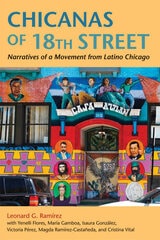
Chicanas of 18th Street
Narratives of a Movement from Latino ChicagoLeonard G. Ramirez
University of Illinois Press, 2011
Chicano Communists and the Struggle for Social Justice
Enrique M. Buelna
University of Arizona Press, 2019
Lesser known is the influence that Communism and socialism had on the early roots of the Chicano Movement, a legacy that continues today. Examining the role of Mexican American working-class and radical labor activism in American history, Enrique M. Buelna focuses on the work of the radical Left, particularly the Communist Party (CP) USA.
Buelna delves into the experiences of Cuarón, in particular, as well as those of his family. He writes about the family’s migration from Mexico; work in the mines in Morenci, Arizona; move to Los Angeles during the Great Depression; service in World War II; and experiences during the Cold War as a background to exploring the experiences of many Mexican Americans during this time period.
The author follows the thread of radical activism and the depth of its influence on Mexican Americans struggling to achieve social justice and equality. The legacy of Cuarón and his comrades is significant to the Chicano Movement and in understanding the development of the labor and civil rights movements in the United States. Their contributions, in particular during the 1960s and 1970s, informed a new generation to demand an end to the Vietnam War and to expose educational inequality, poverty, civil rights abuses, and police brutality.
Chicano San Diego
Cultural Space and the Struggle for JusticeRichard Griswold del Castillo
University of Arizona Press, 2008
In chronologically ordered chapters, scholars discuss how Mexican and Chicana/o people have resisted and accommodated the increasingly Anglo-oriented culture of the region. The book’s early chapters recount the historical origins of San Diego and its development through the mid-nineteenth century, describe the “American colonization” that followed, and include examples of Latino resistance that span the twentieth century—from early workers’ strikes to the United Farm Workers movement of the 1960s. Later chapters trace the Chicana/o Movement in the community and in the arts; the struggle against the gentrification of the barrio; and the growth of community organizing (especially around immigrants’ rights) from the perspective of a community organizer.
To tell this sweeping story, the contributors use a variety of approaches. Testimonios retell individual lives, ethnographies relate the stories of communities, and historical narratives uncover what has previously been ignored or discounted. The result is a unique portrait of a marginalized population that has played an important but neglected role in the development of a major American border city.
Chickasaw Rancher, Revised Edition
Neil R. Johnson
University Press of Colorado, 2001
The Chickasaw Rancher follows Montford T. Johnson's family and friends for the next thirty-two years. Neil R. Johnson describes the work, the ranch parties, cattle rustling, gun fights, tornadoes, the run of 1889, the hard deaths of many along the way, and the rise, fall, and revival of the Chickasaw Nation.
This revised edition of The Chickasaw Rancher, edited by C. Neil Kingsley, Neil R. Johnson's grandson, is the perfect addition to any reader's collection of the history of the American West.
Children of the Struggle and the Ancestors Who Stayed
The Tuskegee Institute High School Class of 1964Edited by Sonjia Parker Redmond and Beatrice J. Adams, Foreword by Fred D. Gray
University of Alabama Press, 2025
WINNER OF THE ANNE B. AND JAMES B. MCMILLAN PRIZE
A powerful collection of firsthand stories from the Tuskegee Institute High School Class of 1964—students who came of age in the crucible of the Civil Rights Movement. Their stories uncover the bold choices of their ancestors who chose to stay and help shape the South.
Children of the Struggle and the Ancestors Who Stayed, edited by Sonjia Parker Redmond and Beatrice J. Adams, brings together twenty-one deeply personal narratives from members of the Tuskegee Institute High School Class of 1964. These students grew up at the heart of the Civil Rights Movement, coming of age during landmark legal battles, community-led voter registration efforts, and the long shadow of Jim Crow.
Graduating in the year of the Civil Rights Act and Freedom Summer, these young people had already helped desegregate Alabama schools. They marched from Selma to Montgomery, mourned the assassination of classmate Sammy Younge Jr., and witnessed firsthand the violent resistance to change that defined the era.
Rather than join the Great Migration northward, many of them followed the lead of their ancestors and chose to stay—becoming educators, organizers, and civic leaders. Their lives reflect a powerful legacy of resistance and renewal, rooted in a deep sense of place and purpose. This collection preserves their voices and honors the generations of Black families who fought for justice not only through protest, but by staying, building, and believing in the promise of the South.
Chinatown Film Culture
The Appearance of Cinema in San Francisco’s Chinese NeighborhoodKim K. Fahlstedt
Rutgers University Press, 2020
Chinese Americans in the Heartland
Migration, Work, and CommunityHuping Ling
Rutgers University Press, 2022
Chippewa Lake
A Community in Search of an IdentityCindy L. Hull
Michigan State University Press, 2012
Chippewa Lake is an idyllic waterfront community in north-central Michigan, popular with retirees and weekenders. The lake is surrounded by a rural farming community, but the area is facing a difficult transition as local demographics shift, and as it transforms from an agriculture-based economy to one that relies on wage labor. As farms have disappeared, local residents have employed a variety of strategies to adapt to a new economic structure. The community, meanwhile, has been indelibly affected by the advent of newcomers and retirees challenging the rural cultural values. An anthropologist with a background in sociology, Cindy L. Hull deftly weaves together oral accounts, historic documents, and participant surveys compiled from her nearly thirty years of living in the area to create a textured portrait of a community in flux.
Chippewa Treaty Rights
The Reserved Rights of Wisconsin's Chippewa Indians in Historical PerspectiveRonald Satz
University of Wisconsin Press, 1996
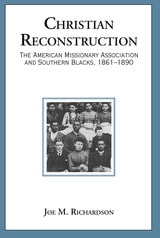
Christian Reconstruction
The American Missionary Association and Southern Blacks, 1861-1890Joe M. Richardson
University of Alabama Press, 2008
"Joe Richardson's Christian Reconstruction is a solid addition to historical scholarship on the work of Yankee missionaries among the freedmen during the Civil War and Reconstruction. . . . Without question, this is the most comprehensive history of the American Missionary Association (AMA), and no one has uncovered as much detailed information on any other Northern aid society. Rich in detail and strongly recommended, the book argues that the AMA struggled to prepare the liberated slaves for civil and political equality by freeing them of the shackles of ignorance, superstition and sin.This book ought to be read by all those interested in Northern educational and social reformers in the Reconstruction South."
--The Journal of American History
"In an extraordinarily balanced study Richardson has synthesized a wealth of sources and research to produce a thoroughly convincing interpretation of the AMA and southern blacks. Besides exploring relations between the two, his main objective has been to assess the AMA's effectiveness in bringing blacks into the American mainstream. Because of his successful labors, we now have a much-needed comprehensive study of that most influential missionary organization. Whether addressing conflicts between the AMA and the US military over the treatment of contrabands, charges of racism among black and white missionaries, or the quality of association colleges, Richardson does not allow his obvious admiration for the AMA to interfere. . . . With bold logic and considerable subtlety Richardson has made an impressive contribution.
--The Journal of Southern History
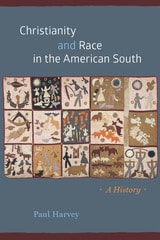
Christianity and Race in the American South
A HistoryPaul Harvey
University of Chicago Press, 2016
Harvey chronicles the diversity and complexity in the intertwined histories of race and religion in the South, dating back to the first days of European settlement. He presents a history rife with strange alliances, unlikely parallels, and far too many tragedies, along the way illustrating that ideas about the role of churches in the South were critically shaped by conflicts over slavery and race that defined southern life more broadly. Race, violence, religion, and southern identity remain a volatile brew, and this book is the persuasive historical examination that is essential to making sense of it.
Christmas in Nevada
Patricia D. Cafferata
University of Nevada Press, 2014
• Includes a story from each of the state’s seventeen counties
• Illustrated with 57 historic photographs, many previously unpublished
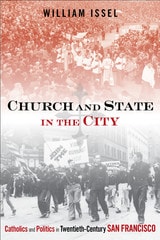
Church and State in the City
Catholics and Politics in Twentieth-Century San FranciscoWilliam Issel
Temple University Press, 2012
Church and State in the City provides the first comprehensive analysis of the city’s long debate about the public interest. Historian William Issel explores the complex ways that the San Francisco Catholic Church—and its lay men and women—developed relationships with the local businesses, unions, other community groups, and city government to shape debates about how to define and implement the common good. Issel’s deeply researched narrative also sheds new light on the city’s socialists, including Communist Party activists—the most important transnational challengers of both capitalism and Catholicism during the twentieth century.
Moreover, Church and State in the City is revisionist in challenging the notion that the history of urban politics and policy can best be understood as the unfolding of a progressive, secular modernization of urban political culture. Issel shows how tussles over the public interest in San Francisco were both distinctive to the city and shaped by its American character.
In the series Urban Life, Landscape, and Policy, edited by Zane L. Miller, David Stradling, and Larry Bennett
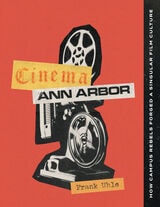
Cinema Ann Arbor
How Campus Rebels Forged a Singular Film CultureFrank Uhle
University of Michigan Press, 2023
Featuring interviews with filmmaker Ken Burns, Oscar-nominated editor Jay Cassidy, producer John Sloss, and more, this masterpiece provides insights into how a Midwestern college town developed a robust underground art film community that inspired those across the country. Variety’s Owen Glieberman says, “Frank Uhle has captured the moment when cinema became, for a new generation, a kind of religion, with its own rituals and sacred texts and a spirit of exploratory mystery that has all but vanished from the culture.”
This is a must-have book for cinema and media aficionados, film archivists, and anyone interested in the cultural history of Ann Arbor.
This book was published in collaboration with Fifth Avenue Press at Ann Arbor District Library. Learn more about their publishing program here. You can also see their collection, including vintage flyers, photos, film schedules, here.
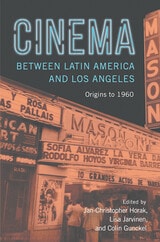
Cinema between Latin America and Los Angeles
Origins to 1960Horak, Jan-Christopher
Rutgers University Press, 2019
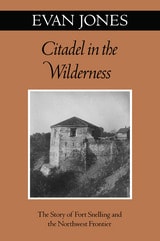
Citadel In The Wilderness
The Story of Fort Snelling and the Northwest FrontierEvan Jones
University of Minnesota Press, 2001
The lively history of this frontier fort.
History/Regional
The lively history of this frontier fort, now back in print!In 1824 Colonel Josiah Snelling erected a stone fortress at the point where the Minnesota and Mississippi rivers merged, on territory secured by Lieutenant Zebulon Pike in a treaty with the Sioux chief Little Crow. Evan Jones describes the intriguing history of Fort Snelling, the Gibraltar of the West, its effect on the Native Americans of the region, and its role in the westward movement.“A story of bitter and complex rivalries. . . . With massive towers and walls capping a limestone cliff, [Fort Snelling] defied attack. But it influenced movements and events hundreds of miles away. The Sioux opposed the Chippewa, the North West Company contended with the Hudson’s Bay outfit, and Astor’s American Fur Company fought them both. . . . This book unfolds a forty-year struggle in the wilderness.” --New York Times Book Review“The author offers here a rollicking tale of high adventure and low shenanigans in and around Fort Snelling. As much the story of the Indians of the region as of the hardy Americans (famous and infamous) who walked inside this fort’s impressive walls, Citadel relays its message of courage and chicanery with a minimum of ‘undying prose’ but a maximum of straightforward and incisive storytelling.” --Library JournalEvan Jones (1915–1996) was born in Le Sueur, Minnesota. A writer of American history and cookbooks, he is the author of The Minnesota (also published in paperback by University of Minnesota Press), Trappers and Mountain Men, Epicurean Delight: The Life and Times of James Beard, and The L. L. Bean Book of New New England Cookery.ISBN 0-8166-3879-9 Paper £10.95 $14.95 256 Pages 23 black-and-white photos 5 3/8 x 8 1/2 MayFesler-Lampert Minnesota Heritage SeriesTranslation Inquiries: Penguin Putnam, Inc.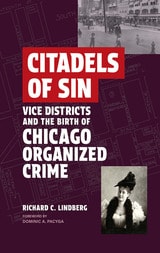
Citadels of Sin
Vice Districts and the Birth of Chicago Organized CrimeRichard C. Lindberg, with a foreword by Dominic A. Pacyga
Southern Illinois University Press, 2026
Revealing Chicago’s underworld before Al Capone
Vice in Chicago did not begin—or end—with Al Capone. In this vividly written narrative, historian Richard C. Lindberg peels back the mythology of Prohibition-era gangsters to reveal a more entrenched, intricate and disturbing system of vice and corruption that took shape decades earlier. Long before the rise of organized crime syndicates, Chicago’s political leaders in league with the criminal classes deliberately created and managed politically-protected segregated vice districts known in Chicago and in other cities as “Levees,” that institutionalized prostitution, graft, and forced sex work in the name of preserving civic order by isolating the vice trade from the citizenry.
Set against the backdrop of the Gilded Age and Progressive Era, Citadels of Sin situates Chicago within a nationwide experiment in regulating prostitution. Reformers, clergy, and municipal officials across the United States believed that confining vice to designated districts would protect respectable neighborhoods and commercial centers. More than fifty such districts emerged nationwide. Instead of curbing crime, however, the Levees became engines of corruption, enriching politicians, police, lawyers, and judges while normalizing exploitation and violence. Lindberg argues that these systems laid the groundwork for modern global human trafficking.
Chicago, with its size and political complexity, supported three major Levees. On the West Side, poverty and endemic corruption devastated local communities. On the North Side, one vice district survived longest, eventually transforming into the fashionable Rush Street nightclub scene. The South Side levee proved most consequential of all, evolving into the organized crime network known as “the Outfit,” whose influence continues to endure.
Lindberg brings the levee era to life through sharp portraits and damning accountability. He exposes how media sensationalism glamorized vice while masking its human cost, and he holds powerful figures—most notably Mayors Carter Harrison Sr. and Jr.—responsible for enabling a system built on bribery, “white slavery,” and coerced sex work. The levees were not accidental byproducts of urban growth; they were carefully managed political machines.
As World War I priorities and urban redevelopment finally dismantled formal vice districts, their activities did not disappear. Instead, they dispersed into neighborhoods, suburbs, and new forms.
By walking readers through the former vice districts as they exist today, Lindberg forges a powerful connection between past and present. In tracing the rise and fall of these districts, he reveals how efforts to impose moral order produced the very exploitation they claimed to prevent—proof that reform, when compromised by politics and greed, can collapse into catastrophe.
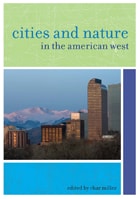
Cities and Nature in the American West
Char Miller
University of Nevada Press, 2010
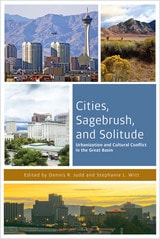
Cities, Sagebrush, and Solitude
Urbanization and Cultural Conflict in the Great BasinDennis R. Judd
University of Nevada Press, 2015
The blooming of cities in a fragile desert region poses a host of environmental challenges. The policies required to manage their impact, however, often collide with an entrenched political culture that has long resisted cooperative or governmental effort. The alchemical mixture of three ingredients--cities, aridity, and a libertarian political outlook--makes the Great Basin a compelling place to study. This book addresses a pressing question: are large cities ultimately sustainable in such a fragile environment?
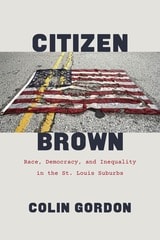
Citizen Brown
Race, Democracy, and Inequality in the St. Louis SuburbsColin Gordon
University of Chicago Press, 2019
Citizen Brown uncovers half a century of private practices and public policies that resulted in bitter inequality and sustained segregation in Ferguson and beyond. Gordon shows how municipal and school district boundaries were pointedly drawn to contain or exclude African Americans and how local policies and services—especially policing, education, and urban renewal—were weaponized to maintain civic separation. He also makes it clear that the outcry that arose in Ferguson was no impulsive outburst but rather an explosion of pent-up rage against long-standing systems of segregation and inequality—of which a police force that viewed citizens not as subjects to serve and protect but as sources of revenue was only the most immediate example. Worse, Citizen Brown illustrates the fact that though the greater St. Louis area provides some extraordinarily clear examples of fraught racial dynamics, in this it is hardly alone among American cities and regions.
Interactive maps and other companion resources to Citizen Brown are available at the book website.
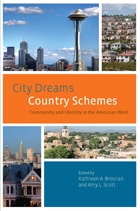
City Dreams, Country Schemes
Community and Identity in the American WestKathleen A. Brosnan
University of Nevada Press, 2011
The American West, from the beginning of Euro-American settlement, has been shaped by diverse ideas about how to utilize physical space and natural environments to create cohesive, sometimes exclusive community identities. When westerners developed their towns, they constructed spaces and cultural identities that reflected alternative understandings of modern urbanity. The essays in City Dreams, Country Schemes utilize an interdisciplinary approach to explore the ways that westerners conceptualized, built, and inhabited urban, suburban, and exurban spaces in the twentieth century.
The contributors examine such topics as the attractions of open space and rural gentrification in shaping urban development; the role of tourism in developing national parks, historical sites, and California's Napa Valley; and the roles of public art, gender, and ethnicity in shaping urban centers. City Dreams, Country Schemes reveals the values and expectations that have shaped the West and the lives of the people who inhabit it.
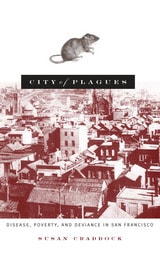
City Of Plagues
Disease, Poverty, And Deviance In San FranciscoSusan Craddock
University of Minnesota Press, 2004
An eye-opening discussion of the ways disease shapes urban society
Disease may not discriminate, but it helps those who do. In this fascinating book, Susan Craddock examines the role of disease and health policy in the construction of race, gender, and class, and in urban development in nineteenth- and twentieth-century San Francisco. An absorbing look at the role of disease and health policy in the construction of race, gender, and class in urban development during nineteenth- and twentieth-century San Francisco. Susan Craddock considers tuberculosis, plague, smallpox, and syphilis as diseases whose devastations were derived in part from their use as political tools and disciplinary mechanisms
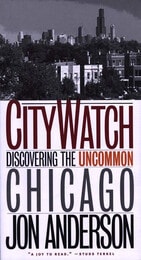
City Watch
Discovering The Uncommon ChicagoJon Anderson
University of Iowa Press, 2000
In forty-five years as one of Chicago's liveliest journalists for Time, Life, and the Chicago Tribune, Jon Anderson has established a reputation for picking up on what someone once called "the beauty of the specific fact." Part "Talk of the Town," part On the Road with Charles Kuralt, Anderson's twice-a-week "City Watch" columns in the Chicago Tribune seek out interesting and unexpected people and places from the everyday life of what the author calls the "most typical American big city." In the process he discovers the joys and triumphs of ordinary people.
Anderson writes with wit and insight about those who find themselves inspired or obsessed with alternative ways of viewing life or getting through the day. Like the man who started with one light pole, then painted all the poles in his southside neighborhood. Or the founder of Cats-Are-Purrsons-Too, a nun who lives with sixty-seven cats. Or the philosopher who, with no financial success, still publishes a newsletter called "The Meaning of Life." After years of hunting down moments of everyday life that have drama and meaning, Anderson offers a book that has curious power, because all of its stories are true.
Drawn from the best of Anderson's columns, City Watch introduces readers to an eclectic mix of social clubs, subcultures, and minor celebrities. From Foraging Friends, a group of penniless ecologists who forage for wild foods in a county forest preserve, to the annual Dumpster Diver fashion show, from the Oakton Elementary School chess team to a group that calls itself Some Chicago Anarchists, readers will discover the characters and events that define Chicago's local color.
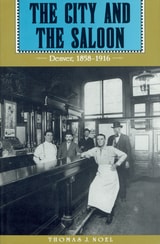
City and the Saloon
Denver, 1858-1916Thomas J. Noel
University Press of Colorado, 1996
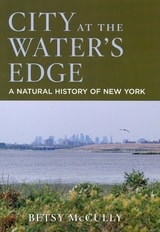
City at the Water's Edge
A Natural History of New YorkMcCully, Betsy
Rutgers University Press, 2007
City at the Water's Edge invites readers to do just that. Betsy McCully, a long-time urban dweller, argues that this city of lights is much more than a human-made metropolis. It has a rich natural history that is every bit as fascinating as the glitzy veneer that has been built atop it. Through twenty years of nature exploration, McCully has come to know New York as part of the Lower Hudson Bioregion-a place of salt marshes and estuaries, sand dunes and barrier islands, glacially sculpted ridges and kettle holes, rivers and streams, woodlands and outwash plains. Here she tells the story of New York that began before the first humans settled in the region twelve thousand years ago, and long before immigrants ever arrived at Ellis Island. The timeline that she recounts is one that extends backward half a billion years; it plumbs the depths of Manhattan's geological history and forecasts a possible future of global warming, with rising seas lapping at the base of the Empire State Building.
Counter to popular views that see the city as a marvel of human ingenuity diametrically opposed to nature, this unique account shows how the region has served as an evolving habitat for a diversity of species, including our own. The author chronicles the growth of the city at the expense of the environment, but leaves the reader with a vision of a future city as a human habitat that is brought into balance with nature.
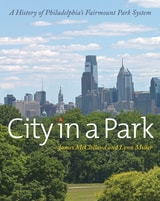
City in a Park
A History of Philadelphia's Fairmount Park SystemLynn Miller
Temple University Press, 2015
Fairmount Park is the municipal park system of Philadelphia, Pennsylvania. It consists of more than one hundred parks, squares, and green spaces totaling about 11,000 acres, and is one of the largest landscaped urban park systems in the world. In City in a Park, James McClelland and Lynn Miller provide an affectionate and comprehensive history of this 200-year-old network of parks.
Originated in the nineteenth century as a civic effort to provide a clean water supply to Philadelphia, Fairmount Park also furnished public pleasure grounds for boat races and hiking, among other activities. Millions travel to the city to view its eighteenth-century villas, attend boat races on the Schuylkill River, hike the Wissahickon Creek, visit the Philadelphia Zoo, hear concerts in summer, stroll the city’s historic squares and the Benjamin Franklin Parkway, and enjoy its enormous collection of public art. Green initiatives flower today; Philadelphia lives amidst its parks.
Filled with nearly 150 gorgeous full-color photographs, City in a Park chronicles the continuing efforts to create what founder William Penn desired: a “greene countrie town.”
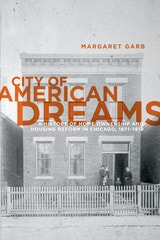
City of American Dreams
A History of Home Ownership and Housing Reform in Chicago, 1871-1919Margaret Garb
University of Chicago Press, 2005
Based on research of real estate markets, housing and health reform, and ordinary homeowners—African American and white, affluent and working class—City of American Dreams provides a richly detailed picture of life in one of America's great urban centers. Garb shows that the pursuit of a single-family house set on a tidy yard, commonly seen as the very essence of the American dream, resulted from clashes of interests and decades of struggle.
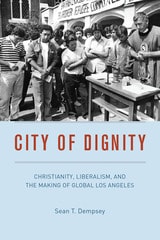
City of Dignity
Christianity, Liberalism, and the Making of Global Los AngelesSean T. Dempsey
University of Chicago Press, 2023
Contemporary Los Angeles is commonly seen as an American bulwark of progressive secular politics, a place that values immigration, equity, diversity, and human rights. But what accounts for the city’s embrace of such staunchly liberal values, which are more hotly contested in other parts of the country? The answer, Sean Dempsey reveals, lies not with those frequent targets of credit and blame—Democrats in Hollywood—but instead with liberal Protestants and other steadfast religious organizations of the postwar era.
As the Religious Right movement emerged in the 1970s, progressive religious activists quietly began promoting an ethical vision that made waves worldwide but saw the largest impact in its place of origin: metropolitan Los Angeles. At the center of this vision lay the concept of human dignity—entwining the integral importance of political and expressive freedom with the moral sanctity of the human condition—which suffused all of the political values that arose from it, whether tolerance, diversity, or equality of opportunity. The work of these religious organizations birthed such phenomena as the Sanctuary Movement—which provided safe haven for refugees fleeing conflict-torn Central America—and advocacy for the homeless, both of which became increasingly fraught issues amid the rising tides of neoliberalism and conservatism. City of Dignity explores how these interwoven spiritual and theological strands found common ground—and made common impacts—in the humanitarian ecosystem of one of America’s largest and most dynamic metro areas.
City of Dignity
Christianity, Liberalism, and the Making of Global Los AngelesSean T. Dempsey
University of Chicago Press, 2023
City of Dignity illuminates how liberal Protestants quietly, yet indelibly, shaped the progressive ethics of postwar Los Angeles.
Contemporary Los Angeles is commonly seen as an American bulwark of progressive secular politics, a place that values immigration, equity, diversity, and human rights. But what accounts for the city’s embrace of such staunchly liberal values, which are more hotly contested in other parts of the country? The answer, Sean Dempsey reveals, lies not with those frequent targets of credit and blame—Democrats in Hollywood—but instead with liberal Protestants and other steadfast religious organizations of the postwar era.
As the Religious Right movement emerged in the 1970s, progressive religious activists quietly began promoting an ethical vision that made waves worldwide but saw the largest impact in its place of origin: metropolitan Los Angeles. At the center of this vision lay the concept of human dignity—entwining the integral importance of political and expressive freedom with the moral sanctity of the human condition—which suffused all of the political values that arose from it, whether tolerance, diversity, or equality of opportunity. The work of these religious organizations birthed such phenomena as the Sanctuary Movement—which provided safe haven for refugees fleeing conflict-torn Central America—and advocacy for the homeless, both of which became increasingly fraught issues amid the rising tides of neoliberalism and conservatism. City of Dignity explores how these interwoven spiritual and theological strands found common ground—and made common impacts—in the humanitarian ecosystem of one of America’s largest and most dynamic metro areas.
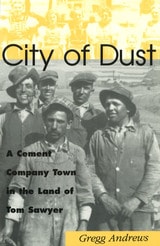
City of Dust
A Cement Company Town in the Land of Tom SawyerGregg Andrews
University of Missouri Press, 2002
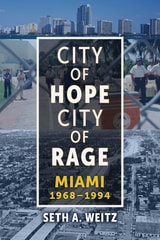
City of Hope, City of Rage
Miami, 1968–1994Weitz, Seth A.
University of Alabama Press, 2024
Examines Miami’s turbulent transformation from a segregated vacation destination to a global, multicultural metropolis
City of Hope, City of Rage gives a fascinating account of three turbulent and transformative decades in the history of Miami. Marked by mass immigration, racially motivated uprisings, economic inequity, rising crime, and social change, Miami’s history from 1968 to 1994 saw the city evolve rapidly from a predominantly white southern city and vacation spot into a global, Hispanic-majority metropolis with an international tourist base. And yet Miami remains highly segregated today.
Exploring beyond the clichés of the Magic City as a bastion of hope for immigrants, a fantasy of beaches and art deco architecture, or a hotbed of drugs and crime, historian Seth A. Weitz reveals the social, political, and cultural shifts that transformed the city. Utilizing archival research and personal stories to reveal the diverse experiences of Miami’s Black, Latinx, Jewish, and LGBTQ+ communities, Weitz explores the struggles for social justice, the rise of the drug trade, and the ongoing fight to mold Miami’s image.
A Miami native, Weitz challenges simplistic narratives about the city, revealing a place defined by hope, rage, and struggle for identity. Illuminating the way Miami is defined and who gets to define it, City of Hope, City of Rage offers a fresh perspective on this vibrant and complex city, making it a valuable resource for anyone interested in Miami’s unique history.
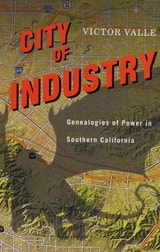
City of Industry
Genealogies of Power in Southern CaliforniaValle, Victor
Rutgers University Press, 2011
Valle investigated an untapped archive of Industry's built landscape, media coverage, and public records, including sealed FBI reports, to uncover a cascading series of scandals. A kaleidoscopic view of the corruption that resulted when local land owners, media barons, and railroads converged to build the city, this suspenseful narrative explores how new governmental technologies and engineering feats propelled the rationality of privatization using their property-owning servants as tools.
Valle's tale of corporate greed begins with the city's founder James M. Stafford and ends with present day corporate heir, Edward Roski Jr., the nation's biggest industrial developerùco-owner of the L.A. Staples Arena and possible future owner of California's next NFL franchise. Not to be forgotten in Valle's captivating story are Latino working class communities living within Los Angeles's distribution corridors, who suffer wealth disparities and exposure to air pollution as a result of diesel-burning trucks, trains, and container ships that bring global trade to their very doorsteps. They are among the many victims of City of Industry.
City of Sisterly and Brotherly Loves
Lesbian and Gay Philadelphia, 1945-1972Marc Stein
University of Chicago Press, 2000
Stein takes us on a tour through Philadelphia's bars, restaurants, bookstores, bathhouses, movie theaters, parks, and parades where lesbian and gay cultures thrived.
We learn about the scientific experts, religious leaders, public officials, and journalists who attacked and ignored same-sex sexualities. And we read about the courageous people who fought back with strategies of everyday resistance and organized political activism.
Stein argues against the idea that a conspiracy of silence surrounded gays and lesbians in the 1940s and 1950s. He shows that same-sex sexualities were regularly discussed in controversies concerning the tennis player Big Bill Tilden, the Walt Whitman Bridge, sex murders and crimes, and police raids. Philadelphians became national leaders in the gay and lesbian movement. They conducted sit-ins at Dewey's restaurant, organized pickets at Independence Hall, edited the movement's most widely circulated publications the Ladder and Drum, and pursued court cases all the way to the U.S. Supreme Court.
Beautifully crafted and exceptionally well-written, Stein's book not only provides a new starting place for thinking about lesbian and gay history but also challenges readers to rethink twentieth-century urban history.
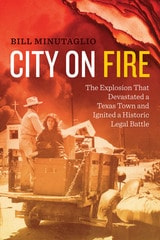
City on Fire
The Explosion that Devastated a Texas Town and Ignited a Historic Legal BattleBy Bill Minutaglio
University of Texas Press, 2014
First published in 2003, City on Fire is a gripping, intimate account of the explosions of two ships loaded with ammonium nitrate fertilizer that demolished Texas City, Texas, in April 1947, in one of the most catastrophic disasters in American history.
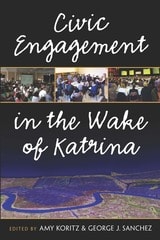
Civic Engagement in the Wake of Katrina
Amy Koritz and George J. Sanchez, editors
University of Michigan Press, 2009
"Civic engagement has been underrated and overlooked. Koritz and Sanchez illuminate the power of what community engagement through art and culture revitalization can do to give voice to the voiceless and a sense of being to those displaced."
---Sonia BasSheva Mañjon, Wesleyan University
"This profound and eloquent collection describes and assesses the new coalitions bringing a city back to life. It's a powerful call to expand our notions of culture, social justice, and engaged scholarship. I'd put this on my 'must read' list."
---Nancy Cantor, Syracuse University
"Civic Engagement in the Wake of Katrina is a rich and compelling text for thinking about universities and the arts amid social crisis. Americans need to hear the voices of colleagues who were caught in Katrina's wake and who responded with commitment, creativity, and skill."
---Peter Levine, CIRCLE (The Center for Information & Research on Civic Learning & Engagement)
This collection of essays documents the ways in which educational institutions and the arts community responded to the devastation wrought by Hurricane Katrina. While firmly rooted in concrete projects, Civic Engagement in the Wake of Katrina also addresses the larger issues raised by committed public scholarship. How can higher education institutions engage with their surrounding communities? What are the pros and cons of "asset-based" and "outreach" models of civic engagement? Is it appropriate for the private sector to play a direct role in promoting civic engagement? How does public scholarship impact traditional standards of academic evaluation? Throughout the volume, this diverse collection of essays paints a remarkably consistent and persuasive account of arts-based initiatives' ability to foster social and civic renewal.
Amy Koritz is Director of the Center for Civic Engagement and Professor of English at Drew University.
George J. Sanchez is Professor of American Studies and Ethnicity and History at the University of Southern California.
Front and rear cover designs, photographs, and satellite imagery processing by Richard Campanella.
digitalculturebooks is an imprint of the University of Michigan Press and the Scholarly Publishing Office of the University of Michigan Library dedicated to publishing innovative and accessible work exploring new media and their impact on society, culture, and scholarly communication. Visit the website at www.digitalculture.org.
Civil Obedience
An Oral History of School Desegregation in Fayetteville, Arkansas, 1954–1965Julianne Lewis Adams
University of Arkansas Press, 1994
While school desegregation generated much noise and some violence elsewhere in the South, the city of Fayetteville, Arkansas confronted the issue and resolved it with a good deal of dignity and grace, becoming the first Southern city to accommodate the Brown decision.
Through this fascinating collection of interviews with those who were involved in the desegregation process—students, teachers, administrators, civic leaders, and members of local groups—we learn of the determination of citizens to obey the law of the land and to see that freedom and equality took priority over their commitment to a school system that patently discriminated against one group of citizens.
In our continuing efforts to create a society in which all races and cultures can coexist, Civil Obedience is a story worthy of our full attention.
Civil Rights in Bakersfield
Segregation and Multiracial Activism in the Central ValleyOliver A. Rosales
University of Texas Press, 2024
2024 Outstanding Book Award, National Association for Ethnic Studies
2025 Honorable Mention, Norris & Carol Hundley Award, Pacific Coast Branch of the American Historical Association
2025 The Ambassador Julian Nava Best Ethnic Studies Book, International Latino Book Awards
A multiracial history of civil rights coalitions beyond the farm worker movement in twentieth-century Bakersfield, California.
In Civil Rights in Bakersfield, Oliver Rosales uncovers the role of the multiracial west in shaping the course of US civil rights history. Focusing on Bakersfield, one of the few sizable cities within California’s Central Valley for much of the twentieth century in a region most commonly known as a bastion of political conservatism, oil, and industrial agriculture, Rosales documents how multiracial coalitions emerged to challenge histories of racial segregation and discrimination. He recounts how the region was home to both the historic farm worker movement, led by César Chávez, Dolores Huerta, and Larry Itliong, and also a robust multiracial civil rights movement beyond the fields. This multiracial push for civil rights reform included struggles for fair housing, school integration, public health, media representation, and greater political representation for Black and Brown communities. In expanding on this history of multiracial activism, Rosales further explores the challenges activists faced in community organizing and how the legacies of coalition building contribute to ongoing activist efforts in the Central Valley of today.