Results by title
2285 books match the query 'Women' and 115 start with c
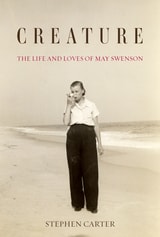
Creature
The Life and Loves of May SwensonCarter, Stephen
Signature Books, 2026
In the summer of 1936, twenty-three-year-old May Swenson boarded a bus heading east out of her Mormon hometown of Logan, Utah. Her destination was New York City, where she had a single goal: become a poet. Creature tells the story of how this small-town woman fought to achieve her dreams in the Depression-era big city, keeping a roof over her head and honing her craft as she pursued romantic relationships with both men and women. After decades of struggle, Swenson became one of mid-century America’s most beloved and prolific poets.
What is it that makes her poetry so extraordinary? How did she see and reveal the world? How did she teach the art of poetry? And how does her work interact with her Mormon roots? Readers will learn the answers to these questions and more in this artfully written biography.
Creature
The Life and Loves of May SwensonCarter, Stephen
Signature Books, 2026
In the summer of 1936, twenty-three-year-old May Swenson boarded a bus heading east out of her Mormon hometown of Logan, Utah. Her destination was New York City, where she had a single goal: become a poet. Creature tells the story of how this small-town woman fought to achieve her dreams in the Depression-era big city, keeping a roof over her head and honing her craft as she pursued romantic relationships with both men and women. After decades of struggle, Swenson became one of mid-century America’s most beloved and prolific poets.
What is it that makes her poetry so extraordinary? How did she see and reveal the world? How did she teach the art of poetry? And how does her work interact with her Mormon roots? Readers will learn the answers to these questions and more in this artfully written biography.
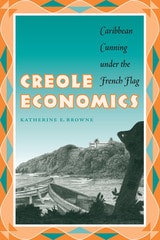
Creole Economics
Caribbean Cunning under the French FlagBy Katherine E. Browne
University of Texas Press, 2004
What do the trickster Rabbit, slave descendants, off-the-books economies, and French citizens have to do with each other? Plenty, says Katherine Browne in her anthropological investigation of the informal economy in the Caribbean island of Martinique. She begins with a question: Why, after more than three hundred years as colonial subjects of France, did the residents of Martinique opt in 1946 to integrate fully with France, the very nation that had enslaved their ancestors? The author suggests that the choice to decline sovereignty reflects the same clear-headed opportunism that defines successful, crafty, and illicit entrepreneurs who work off the books in Martinique today.
Browne draws on a decade of ethnographic fieldwork and interview data from all socioeconomic sectors to question the common understanding of informal economies as culture-free, survival strategies of the poor. Anchoring her own insights to longer historical and literary views, the author shows how adaptations of cunning have been reinforced since the days of plantation slavery. These adaptations occur, not in spite of French economic and political control, but rather because of it. Powered by the "essential tensions" of maintaining French and Creole identities, the practice of creole economics provides both assertion of and refuge from the difficulties of being dark-skinned and French.
This powerful ethnographic study shows how local economic meanings and plural identities help explain work off the books. Like creole language and music, creole economics expresses an irreducibly complex blend of historical, contemporary, and cultural influences.
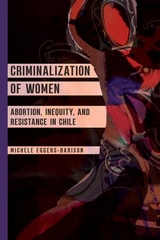
Criminalization of Women
Abortion, Inequity, and Resistance in ChileMichele Eggers-Barison
University of Illinois Press, 2025
Eggers-Barison uncovers the narratives of economically disadvantaged, Indigenous, and immigrant women who broke the Chilean law by terminating a pregnancy. Their stories reveal how laws and policies that regulate and control women’s reproductive lives also construct women as criminals. As Eggers-Barison shows, systems of inequality legitimize and sustain harmful attitudes and practices while creating concrete expressions of discrimination and other forms of violence against women. Their experience with abortion remains hidden within spaces of illegality and only becomes visible due to health or legal consequences. Yet despite the obstacles, women used individual and collective forms of group action to resist anti-abortion laws.
Timely and vivid, Criminalization of Women shows how abortion’s illegality inscribes itself on a woman’s body and reality.
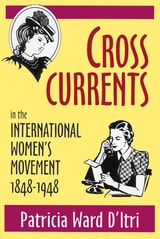
Cross Currents in the International Women’s Movement, 1848–1948
Patricia Ward D'Itri
University of Wisconsin Press, 1999
This study portrays individuals, organizations, and events that contributed to the development of the world movement for women's rights between 1848 and 1948.
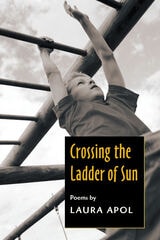
Crossing the Ladder of the Sun
Laura Apol
Michigan State University Press, 2004
In her new collection of poetry, Crossing the Ladder of Sun, Laura Apol explores the ordinary moments of life—watching her daughter, picking blueberries, sharing confidences with friends, arriving and leaving, and driving, always driving—and transforms them into the extraordinary. This book is rich with the lyrical found in what is considered the mundane as it portrays the multiple roles of a woman’s life—mother, daughter, lover, ex-wife, friend. Apol’s highly personal poems reflect a caring and compassion that transcends loneliness and heartache.
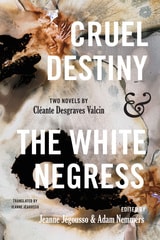
Cruel Destiny and The White Negress
Two Novels by Cléante Desgraves ValcinAdam Nemmers
Rutgers University Press, 2024
Cruel Destiny (1929) tells the tragic love story of Armand and Adeline, drawn together by a magnetic attraction, yet kept apart by a dark family secret. Depicting the heavy expectations placed upon women in Haiti’s elite society, it also explores the troubled and twisted relationships between the Haitians and their former colonial masters, the French.
In The White Negress (1934), a Frenchwoman moves to Haiti and is torn between two very different men, a Black Haitian lawyer, and a white American carpetbagger. Putting a fresh spin on the tired tragic mulatta trope, Valcin reveals the racial prejudices, class tensions, and anti-colonial resentments of an island under American occupation.
Together, these two novels expand our understanding of Caribbean literature, as well as the political struggles and artistic triumphs of Black women in the Americas.
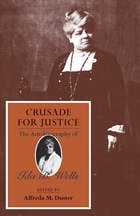
Crusade for Justice
The Autobiography of Ida B. WellsIda B. Wells
University of Chicago Press, 1970
"No student of black history should overlook Crusade for Justice."—William M. Tuttle, Jr., Journal of American History
"Besides being the story of an incredibly courageous and outspoken black woman in the face of innumerable odds, the book is a valuable contribution to the social history of the United States and to the literature of the women's movement as well."—Elizabeth Kolmer, American Quarterly
"[Wells was] a sophisticated fighter whose prose was as thorough as her intellect."—Walter Goodman, New York Times
"An illuminating narrative of a zealous, race-conscious, civic- and church-minded black woman reformer, whose life story is a significant chapter in the history of Negro-White relations."—Thelma D. Perry, Negro History Bulletin
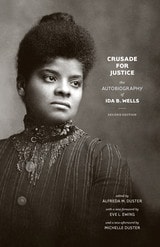
Crusade for Justice
The Autobiography of Ida B. Wells, Second EditionIda B. Wells
University of Chicago Press, 2020
Ida B. Wells is an American icon of truth telling. Born to slaves, she was a pioneer of investigative journalism, a crusader against lynching, and a tireless advocate for suffrage, both for women and for African Americans. She co-founded the NAACP, started the Alpha Suffrage Club in Chicago, and was a leader in the early civil rights movement, working alongside W. E. B. Du Bois, Madam C. J. Walker, Mary Church Terrell, Frederick Douglass, and Susan B. Anthony.
This engaging memoir, originally published 1970, relates Wells’s private life as a mother as well as her public activities as a teacher, lecturer, and journalist in her fight for equality and justice. This updated edition includes a new foreword by Eve L. Ewing, new images, and a new afterword by Ida B. Wells’s great-granddaughter, Michelle Duster.
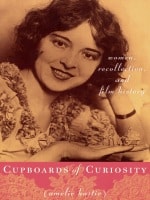
Cupboards of Curiosity
Women, Recollection, and Film HistoryAmelie Hastie
Duke University Press, 2007
Hastie pays particular attention to the actresses Colleen Moore and Louise Brooks and Hollywood’s first female director, Alice Guy-Blaché. From the beginning of her career, Moore worked intently to preserve a lasting place for herself as a Hollywood star, amassing collections of photos, souvenirs, and clippings as well as a dollhouse so elaborate that it drew extensive public attention. Brooks’s short essays reveal how she participated in the creation of her image as Lulu and later emerged as a critic of film stardom. The recovery of Blaché’s role in film history by feminist critics in the 1970s and 1980s was made possible by the existence of the director’s own autobiographical history. Broadening her analytical framework to include contemporary celebrities, Hastie turns to how-to manuals authored by female stars, from Zasu Pitts’s cookbook Candy Hits to Christy Turlington’s Living Yoga. She discusses how these assertions of celebrity expertise in realms seemingly unrelated to film and visual culture allow fans to prolong their experience of stardom.
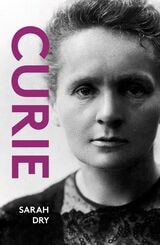
Curie
Sarah Dry
Haus Publishing, 2025
Marie Curie is most famous for her pioneering work in the field of radioactivity and for discovering two new elements, polonium and radium. Curie not only broke scientific barriers but defied the gender expectations of her time amidst a male-dominated scientific community.
This revised edition of Curie, with a new introduction from the author, debunks myths about Curie, rejecting the notion of her as cold and reserved and recasting her as the dynamic and lively woman she truly was. Sarah Dry illuminates Curie’s personal and professional struggles: the demands of motherhood, the public scrutiny she faced, the grief she suffered after the loss of her husband, and her exposure to radiation. Ultimately, Curie emerges as an astonishingly resilient figure whose contributions to science and courage during adversity make her an enduring example, and a woman whose powerful legacy continues to inspire today.
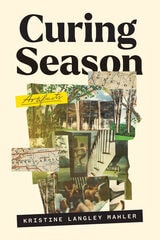
Curing Season
ArtifactsKristine Langley Mahler
West Virginia University Press, 2022
“A lovely and rapturous excavation and examination of the past, a lesson in writing oneself into history when it doesn’t offer you a space.” —Jenny Boully, author of Betwixt-and-Between: Essays on the Writing Life
After spending four years of adolescence in suburban North Carolina, Kristine Langley Mahler, even as an adult, is still buffeted by the cultural differences between her pioneer-like upbringing in Oregon and the settled southern traditions into which she could never assimilate. Collecting evidence of displacement—a graveyard in a mall parking lot, a suburban neighborhood of white kids bused to desegregate public schools in the 1990s, and the death of her best friend—Curing Season is an attempt to understand her failed grasp at belonging.
Mahler’s yearning for acceptance remains buried like a splinter, which she carefully tweezes out in the form of artifacts from her youth. But it isn’t until she encounters a book of local family histories that she takes inhabitation and truth apart, grafting and twisting and imprinting her history on theirs, until even she can no longer tell the difference between their truth and her own. Using inventive essay forms, Mahler pries apart the cracks of exclusion and experiments with the nature of belonging, memory, and place. Curing Season is a coming-of-age memoir for anyone who grew up anywhere but home.
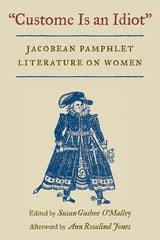
Custome Is an Idiot
JACOBEAN PAMPHLET LITERATURE ON WOMENEdited by Susan Gushee O'Malley
University of Illinois Press, 2004
During the early seventeenth century a fierce debate raged in British intellectual society regarding the role of women, how much is ordained by God, and how much is merely custom. The pamphlets that circulated at the time reveal a great deal about the terms of the debate, and these six constitute a significant body of primary literature, allowing the contending voices to be heard anew.
Included here are two pamphlets about gossips by Samuel Rowlands, William Heale's treatise against wife-beating, Christopher Newstead's argument for the superiority of women, and Hic Mulier and Haec Vir, two pamphlets that address the theme of cross-dressing. Introductions by Susan Gushee O'Malley place each pamphlet in a wider context, and detailed annotations shed light on the individual texts.

Cyborg Fever
Laurie Sheck
Tupelo Press, 2025
In Cyborg Fever, acclaimed writer Laurie Sheck brings us a probing and lyrical philosophical fiction in the spirit of Umberto Eco, Italo Calvino, and Donna Haraway’s Cyborg Manifesto that enacts an incisive and moving exploration into what it means to be human in the age of AI and increasing transhumanism.
Throughout Cyborg Fever, many strange, surprising facts appear: an artist clones a flower from his DNA and the DNA of a petunia, an astronaut plays golf on the moon, a mathematician on a rest cure rethinks the life of Shakespeare, and particles and antiparticles collide at lightning speed beneath the green hills of Switzerland and France. Threaded throughout, one question lingers: in this age of AI and genetic engineering, how can we come to know more fully what it means to love and be human among the wonders and destructions we have wrought on Earth?
At the center of the book is the narrator, Erwin, left as an hours-old infant on the steps of an orphanage where he is named after the renowned physicist Erwin Schrodinger (of the famous Schrodinger’s cat experiment). After a traumatic fall into a year-long fever dream, he experiences many visions that take him into many areas of inquiry including the nature of the universe, bioengineering, medical experimentation, cyborgs, AI, and space and time, and ultimately teaches him the nature of love. Along the way, he develops a friendship with a gentle cyborg who has escaped from a Lab involved in covert medical intervention. Guided by the cyborg and a vision of Funes (of Borges’s iconic story “Funes the Memorious”), Erwin experiences the Information Age and the promises of AI in all its beauty and, ultimately, its terror, as he watches the cyborg he has come to love devolve into an unfeeling information machine.
Throughout, issues of personhood, human attachment, and the dignity of all living beings pervade Erwin’s thinking and leave him with a larger understanding and appreciation of what it means to love.
Cyborgs, Sexuality, and the Undead
The Body in Mexican and Brazilian Speculative FictionM. Elizabeth Ginway
Vanderbilt University Press, 2020
In Cyborgs, Sexuality, and the Undead, M. Elizabeth Ginway examines all these issues from a number of theoretical perspectives, most importantly through the lens of Bolívar Echeverría’s “baroque ethos,” which emphasizes the strategies that subaltern populations may adopt in order to survive and prosper in the face of massive historical and structural disadvantages. Foucault’s concept of biopolitics is developed in discussion with Roberto Esposito’s concept of immunity and Giorgio Agamben’s distinction between “political life” and “bare life.”
This book will be of interest to scholars of speculative fiction, as well as Mexicanists and Brazilianists in history, literary studies, and critical theory.