Results by title
2194 books match the query 'Women's Studies' and 132 start with c

Constituting Workers, Protecting Women
Gender, Law and Labor in the Progressive Era and New Deal YearsJulie Novkov
University of Michigan Press, 0
During the Progressive Era and New Deal, courts often invalidated generalized protective legislation, but frequently upheld measures that limited women's terms and conditions of labor. The book explores the reasoning in such cases that were decided between 1873 and 1937. By analyzing all reported opinion on the state and federal level, as well as materials from the women's movement and briefs filed in the U.S. Supreme Court, the study demonstrates that considerations of cases involving women's measures ultimately came to drive the development of doctrine.
The study combines historical institutionalism and feminism to address constitutional interpretation, showing that an analysis of conflict over the meaning of legal categories provides a deeper understanding of constitutional development. In doing so, it rejects purely political interpretations of the so-called Lochner era, in which the courts invalidated many legislative efforts to ameliorate the worst effects of capitalism. By addressing the dynamic interactions among interested laypersons, attorneys, and judges, it demonstrates that no individuals or institutions have complete control over the generation of constitutional meaning.
Julie Novkov is Assistant Professor of Political Science, University of Oregon
Constructing Inequality
The Fabrication of a Hierarchy of Virtue among the EtoroRaymond C. Kelly
University of Michigan Press, 1993
Constructions of the Classical Body
James I. Porter, Editor
University of Michigan Press, 2002
Classical scholarship has traditionally neglected the prominence of the body in antiquity. Constructions of the Classical Body theorizes that the study of antiquity is necessarily a study of the body, and that attention to this fact can lead to a much-needed shift in the way in which classical studies are approached today. This volume aims to reestablish the relevance of the problem of the body at the perimeters of several different kinds of inquiry, and, in this way, to help open up a field of possibilities for future study. The range covered by the essays in this volume is sweeping: from Corinthian vaseware to Athenian and Roman politics, poetry from Homer to Ovid, medical writers from the Hippocratic corpus to the diary of Aelius Aristides (second century c.e.), philosophy (Seneca, Porphyry), the Greek novel, Christian apocrypha, Ovid's medieval reception, and twentieth century film. This range is a consequence of the multidisciplinarity that any study of the body requires, and it attests to the particular richness of the body in classical antiquity and as an object for study today. The volume illustrates that body is located between traditional borders, not within them; the body dissolves traditional objects of study and joins areas usually kept apart. Retracing the fate of the body is thus a way of rendering antiquity truly strange again -- it allows us to see the past afresh, with open eyes. This volume includes essays by Carlin A. Barton, Anne Carson, Eric Downing, Catherine Edwards, Maud W. Gleason, John Henderson, Ralph Hexter, S. C. Humphreys, Helen King, Leslie Kurke, Robert Lamberton, David S. Potter, Amy Richlin, Giulia Sissa, Maria Wyke, and Froma I. Zeitlin, along with an introduction by James I. Porter. ". . . a superb collection, one that I know will be most welcome not only in the field of classical studies, but in the libraries of all those interested in the history and historicity of the body." --Page duBois, University of California, San Diego
Consuming Motherhood
Taylor, Janelle S
Rutgers University Press, 2004
Consuming Motherhood addresses the provocative question of how motherhood and consumption—as ideologies and as patterns of social action—mutually shape and constitute each other in contemporary North American and European social life. Ideologically, motherhood and consumption are often constructed in opposition to each other, with motherhood standing in as a naturalized social relation that is thought to be uniquely free of the calculating instrumentality that dominates commercial relations. Yet, in social life, motherhood and consumption are inseparable. Whether shopping for children’s clothing or childbirth services, or making decisions about adopting children, becoming a mother (and maternal practice more generally) is deeply influenced by consumption. How can the relationship between motherhood and consumption be revealed, and critically analyzed? Consuming Motherhood brings together a group of sociologists, anthropologists, and religious studies scholars to address this question through carefully grounded ethnographic studies. This insightful book reveals how mothers negotiate the contradictory forces that position them as both immune from and the target of consumerist tendencies in contemporary global society.

Content Machines
Reading and Writing in the Platform EraSarah Brouillette
Duke University Press, 2026
Contentious Lives
Two Argentine Women, Two Protests, and the Quest for RecognitionJavier Auyero
Duke University Press, 2003
Auyero reconstructs Nana’s and Laura’s biographies through oral histories and diaries. Drawing on interviews with many other protesters, newspaper articles, judicial records, government reports, and video footage, he provides sociological and historical context for their stories. The women’s accounts reveal the frustrations of lives overwhelmed by gender domination, the deprivations brought about by hyper-unemployment and the withering of the welfare component of the state, and the achievements and costs of collective action. Balancing attention to large-scale political and economic processes with acknowledgment of the plurality of meanings emanating from personal experiences, Contentious Lives is an insightful, penetrating, and timely contribution to discussions of popular resistance and the combined effects of globalization, neoliberal economic policies, and political corruption in Argentina and elsewhere.
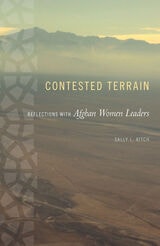
Contested Terrain
Reflections with Afghan Women LeadersSally L Kitch
University of Illinois Press, 2014
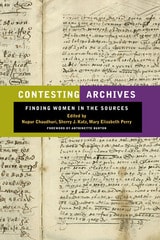
Contesting Archives
Finding Women in the SourcesEdited by Nupur Chaudhuri, Sherry J. Katz, and Mary Elizabeth Perry
University of Illinois Press, 2010
The contributors of Contesting Archives challenge the assumption that an archive is a neutral, immutable, and a historical repository of information. Instead, these historians view it as a place where decisions are made about whose documents--and therefore whose history--is important. Finding that women's voices and their texts were often obscured or lost altogether, they have developed many new methodologies for creating unique archives and uncovering more evidence by reading documents "against the grain," weaving together many layers of information to reveal complexities and working collectively to reconstruct the lives of women in the past.
Global in scope, this volume demonstrates innovative research on diverse women from the sixteenth century to the present in Spain, Mexico, Tunisia, India, Iran, Poland, Mozambique, and the United States. Addressing gender, race, class, nationalism, transnationalism, and migration, these essays' subjects include indigenous women of colonial Mexico, Muslim slave women, African American women of the early twentieth century, Bengali women activists of pre-independence India, wives and daughters of Qajar rulers in Iran, women industrial workers in communist Poland and socialist Mozambique, and women club owners in modern Las Vegas. A foreword by Antoinette Burton adroitly synthesizes the disparate themes woven throughout the book.
Contributors are Janet Afary, Maryam Ameli-Rezai, Antoinette Burton, Nupur Chaudhuri, Julia Clancy-Smith, Mansoureh Ettehadieh, Malgorzata Fidelis, Joanne L. Goodwin, Kali Nicole Gross, Daniel S. Haworth, Sherry J. Katz, Elham Malekzadeh, Mary Elizabeth Perry, Kathleen Sheldon, Lisa Sousa, and Ula Y. Taylor.
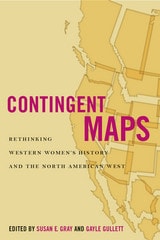
Contingent Maps
Rethinking Western Women's History and the North American WestEdited by Susan E. Gray and Gayle Gullett
University of Arizona Press, 2014
Contingent Maps demonstrates how employing place as an analytical tool transforms Western women’s history. Gray and Gullett depict place as not only a physical location but as a way of understanding, as the spatial configuration of power relations that are always in flux. As a place and many places, the West is therefore always being constructed. All maps are contingent, as Gray and Gullett’s reading of the articles in this collection attest. Contingent Maps offers histories of Wests ranging from the nineteenth century to the near present. This synthesis of feminist history and geography has the potential to revitalize the field of Western women’s history.
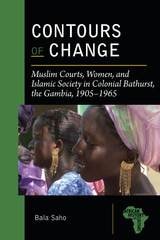
Contours of Change
Muslim Courts, Women, and Islamic Society in Colonial Bathurst, the Gambia, 1905-1965Bala Saho
Michigan State University Press, 2018
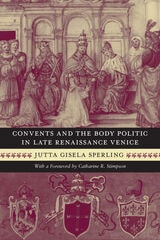
Convents and the Body Politic in Late Renaissance Venice
Jutta Gisela Sperling
University of Chicago Press, 2000
Sperling explains how women were not allowed to marry beneath their social status while men could, especially if their brides were wealthy. Faced with a shortage of suitable partners, patrician women were forced to offer themselves as "a gift not only to God, but to their fatherland," as Patriarch Giovanni Tiepolo told the Senate of Venice in 1619. Noting the declining birth rate among patrician women, Sperling explores the paradox of a marriage system that preserved the nobility at the price of its physical extinction. And on a more individual level, she tells the fascinating stories of these women. Some became scholars or advocates of women's rights, some took lovers, and others escaped only to survive as servants, prostitutes, or thieves.
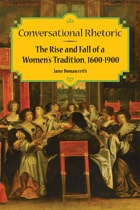
Conversational Rhetoric
The Rise and Fall of a Women's Tradition, 1600-1900Jane Donawerth
Southern Illinois University Press, 2011
Donawerth traces the development of women’s rhetorical theory through the voices of English and American women (and one much-translated French woman) over three centuries. She demonstrates how they cultivated theories of rhetoric centered on conversation that faded once women began writing composition textbooks for mixed-gender audiences in the latter part of the nineteenth century. She recovers and elucidates the importance of the theories in dialogues and defenses of women’s education by Bathsua Makin, Mary Astell, and Madeleine de Scudéry; in conduct books by Hannah More, Lydia Sigourney, and Eliza Farrar; in defenses of women’s preaching by Ellen Stewart, Lucretia Mott, Catherine Booth, and Frances Willard; and in elocution handbooks by Anna Morgan, Hallie Quinn Brown, Genevieve Stebbins, and Emily Bishop. In each genre, Donawerth explores facets of women’s rhetorical theory, such as the recognition of the gendered nature of communication in conduct books, the incorporation of the language of women’s rights in the defenses of women’s preaching, and the adaptation of sentimental culture to the cultivation of women’s bodies as tools of communication in elocution books.
Rather than a linear history, Conversational Rhetoric follows the starts, stops, and starting over in women’s rhetorical theory. It covers a broad range of women’s rhetorical theory in the Anglo-American world and places them in their social, rhetorical, and gendered historical contexts. This study adds women’s rhetorical theory to the rhetorical tradition, advances our understanding of women’s theories and their use of rhetoric, and offers a paradigm for analyzing the differences between men’s and women’s rhetoric from 1600 to 1900.
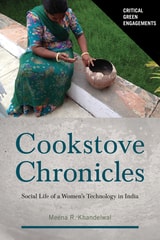
Cookstove Chronicles
Social Life of a Women’s Technology in IndiaMeena R. Khandelwal
University of Arizona Press, 2024
Based on anthropological research in Rajasthan, Cookstove Chronicles argues that the supposedly obsolete chulha persists because it offers women control over the tools needed to feed their families. Their continued use of old stoves alongside the new is not a failure to embrace new technologies but instead a strategy to maximize flexibility and autonomy. The chulha is neither the villain nor hero of this story. It produces particulate matter that harms people’s bodies, leaves soot on utensils and walls, and accelerates glacial melting and atmospheric warming. Yet it also depends on renewable biomass fuel and supports women’s autonomy as a local, do-it-yourself technology.
Meena Khandelwal, a feminist anthropologist, describes her collaboration with engineers, archaeologists, and others. She employs critical social theory and reflections from fieldwork to bring together research from a range of fields, including history, geography, anthropology, energy and environmental studies, public health, and science and technology studies (STS). In so doing she not only demystifies multidisciplinary research but also highlights the messy reality of actual behavior.
Cookstove Chronicles critically examines why, despite extensive development efforts, use of the chulha persists. It offers an important new framework for looking at development, technology, environmental change, and human behavior.
Corporal Rhetoric
Regulating Reproduction in the Progressive EraBarbara Schneider
University of Alabama Press, 2021
Examines public discourse from the Progressive Era over the state’s right to regulate women’s bodies and their reproduction
When Justice Oliver Wendell Holmes determined in 1927 that sterilization was a legitimate means of safeguarding the nation’s health, he was asserting the state’s right to regulate the production of the national body. His opinion represented a culmination of arguments about reproduction and immigration that had been circulating for years but that intensified during the Progressive Era. Arguments about reproductive and immigration practices surged to the foreground, and tectonic shifts in the conceptual schemes and practices of reproduction in the United States followed.
Drawing on feminist historiography and genre studies, Corporal Rhetoric: Regulating Reproduction in the Progressive Era explores the rhetoric of medical research, new technologies, and material practices that shifted the idea of childbirth as an act of God or Nature to a medical procedure enacted by male physicians on the bodies of women made passive by both drugs and discourse. Barbara Schneider considers how efficiency, the hallmark of scientific management, was raised to a cardinal virtue by its inclusions in the powerful mediums of presidential speeches, national educational policies, and eugenics discourse to reclassify babies, long regarded as gifts, as either valuable assets or defective products.
Schneider shows how the legal system drew upon medicine, scientific management, and the emerging discipline of sociology to restrict women’s labor in order to preserve reproductive capacity, categorized by Supreme Court opinions as a public good rather than a private capacity. Throughout, she ties the arguments developed during this era to current debates about mothering rhetorics, reproductive rights, immigration, and conceptions of the nation.
By weaving together medical research reports, clinical practices, case studies, legal opinions and legislative acts, and the epistemology of scientific management, Schneider illuminates the network that women such as Margaret Sanger, Jane Addams, Lillian Gilbreth and multiple others negotiated as they sought to give women room to exercise their reproductive capacity. Through her analysis of the machinery of these discourses and the material uptake of their genres in the daily practices of reproductive bodies, Schneider offers a provisional theory of corporal rhetoric that begins to answer the call for a new material theory of the body.
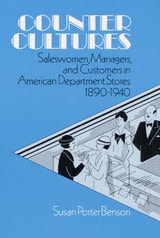
Counter Cultures
Saleswomen, Managers, and Customers in American Department Stores, 1890-1940Susan Porter Benson
University of Illinois Press, 1986
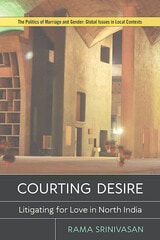
Courting Desire
Litigating for Love in North IndiaRama Srinivasan
Rutgers University Press, 2020

Crack Mothers
Pregnancy, Drugs, and the MediaDrew Humphries
The Ohio State University Press, 1999
Humphries analyzes the public reaction to crack cocaine and the policies instituted to combat it. She shows us that more often than not, policies were generated by the fears that crack mothers were harbingers of even more serious social problems. The media’s construction of the crack mother as a model of depravity is, she argues, a reflection of mainstream desires and fears, not a reflection of truth. Humphries offers a more balanced view of the women who use crack and the policies that have been adopted to stop them.
Humphries does not dwell on the transgressions of crack mothers, nor does she endorse the punitive measures of the drug war policy makers. After ten years of studying a wide range of state policies, she finds that zero tolerance, mandatory sentences, and interdiction have not only failed to reduce drug use but also increased the sense of persecution among the urban poor and contributed to the crisis of overcrowding in courts and prisons. Moreover, she states, before crack mothers became a media spectacle, no one had considered the special needs of women in designing drug treatment programs. Crack Mothers is a timely and important contribution to our growing understanding of maternal health, treatment, and drug use.
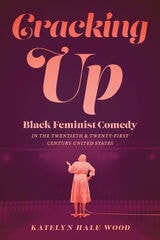
Cracking Up
Black Feminist Comedy in the Twentieth and Twenty-First Century United StatesKatelyn Hale Wood
University of Iowa Press, 2021
Katelyn Hale Wood interprets these artists not as tokens in a white, male-dominated field, but as part of a continuous history of Black feminist performance and presence. Broadly, Cracking Up frames stand-up comedy as an important platform from which to examine citizenship in the United States, articulate Black feminist political thought, and subvert structures of power. Wood also champions comedic performance and theatre history as imperative contexts for advancing historical studies of race, gender, and sexuality. From the comedy routines popular on Black vaudeville circuits to stand-up on contemporary social media platforms, Cracking Up excavates an overlooked history of Black women who have made the art of joke-telling a key part of radical performance and political engagement.
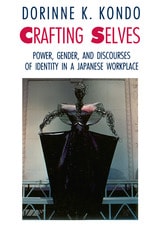
Crafting Selves
Power, Gender, and Discourses of Identity in a Japanese WorkplaceDorinne K. Kondo
University of Chicago Press, 1990
"Kondo's work is significant because she goes beyond disharmony, insisting on complexity. Kondo shows that inequalities are not simply oppressive-they are meaningful ways to establish identities."—Nancy Rosenberger, Journal of Asian Studies
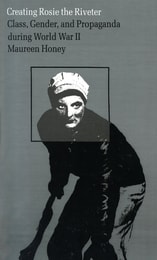
Creating Rosie the Riveter
Class, Gender, and Propaganda during World War IIMaureen Honey
University of Massachusetts Press, 1984

Credit, Fashion, Sex
Economies of Regard in Old Regime FranceClare Haru Crowston
Duke University Press, 2013
Credit economies constituted "economies of regard" in which reputation depended on embodied performances of credibility. Crowston explores the role of fashionable appearances and sexual desire in leveraging credit and reconstructs women's vigorous participation in its gray markets. The scandalous relationship between Queen Marie Antoinette and fashion merchant Rose Bertin epitomizes the vertical loyalties and deep social divides of the credit regime and its increasingly urgent political stakes.
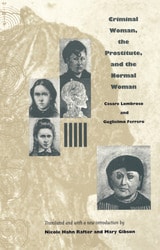
Criminal Woman, the Prostitute, and the Normal Woman
Cesare Lombroso and Guglielmo Ferrero
Duke University Press, 2004
Lombroso’s research took him to police stations, prisons, and madhouses where he studied the tattoos, cranial capacities, and sexual behavior of criminals and prostitutes to establish a female criminal type. Criminal Woman, the Prostitute, and the Normal Woman anticipated today’s theories of genetic criminal behavior. Lombroso used Darwinian evolutionary science to argue that criminal women are far more cunning and dangerous than criminal men. Designed to make his original text accessible to students and scholars alike, this volume includes extensive notes, appendices, a glossary, and more than thirty of Lombroso’s own illustrations. Nicole Hahn Rafter and Mary Gibson’s introduction, locating his theory in social context, offers a significant new interpretation of Lombroso’s place in criminology.
Critical Perspectives in International Studies
Frank P. Harvey and Michael Brecher, Editors
University of Michigan Press, 2002
Critical Terms for the Study of Gender
Edited by Catharine R. Stimpson and Gilbert Herdt
University of Chicago Press, 2014
So write women’s studies pioneer Catharine R. Stimpson and anthropologist Gilbert Herdt in their introduction to Critical Terms for the Study of Gender, laying out the wide-ranging nature of this interdisciplinary and rapidly changing field. The sixth in the series of “Critical Terms” books, this volume provides an indispensable introduction to the study of gender through an exploration of key terms that are a part of everyday discourse in this vital subject.
Following Stimpson and Herdt’s careful account of the evolution of gender studies and its relation to women’s and sexuality studies, the twenty-one essays here cast an appropriately broad net, spanning the study of gender and sexuality across the humanities and social sciences. Written by a distinguished group of scholars, each essay presents students with a history of a given term—from bodies to utopia—and explains the conceptual baggage it carries and the kinds of critical work it can be made to do. The contributors offer incisive discussions of topics ranging from desire, identity, justice, and kinship to love, race, and religion that suggest new directions for the understanding of gender studies. The result is an essential reference addressed to students studying gender in very different disciplinary contexts.
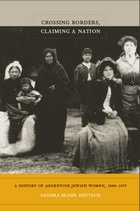
Crossing Borders, Claiming a Nation
A History of Argentine Jewish Women, 1880–1955Sandra McGee Deutsch
Duke University Press, 2010
Drawing on extensive archival research and original oral histories, Deutsch tells the stories of individual women, relating their sentiments and experiences as both insiders and outsiders to state formation, transnationalism, and cultural, political, ethnic, and gender borders in Argentine history. As agricultural pioneers and film stars, human rights activists and teachers, mothers and doctors, Argentine Jewish women led wide-ranging and multifaceted lives. Their community involvement—including building libraries and secular schools, and opposing global fascism in the 1930s and 1940s—directly contributed to the cultural and political lifeblood of a changing Argentina. Despite their marginalization as members of an ethnic minority and as women, Argentine Jewish women formed communal bonds, carved out their own place in society, and ultimately shaped Argentina’s changing pluralistic culture through their creativity and work.
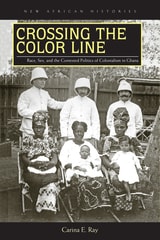
Crossing the Color Line
Race, Sex, and the Contested Politics of Colonialism in GhanaCarina E. Ray
Ohio University Press, 2015
Winner of the 2017 Aidoo-Snyder Book Prize
Winner of the 2016 American Historical Association’s Wesley-Logan Prize in African diaspora
Finalist for the 2016 Fage and Oliver Prize from the African Studies Association of the UK
Interracial sex mattered to the British colonial state in West Africa. In Crossing the Color Line, Carina E. Ray goes beyond this fact to reveal how Ghanaians shaped and defined these powerfully charged relations. The interplay between African and European perspectives and practices, argues Ray, transformed these relationships into key sites for consolidating colonial rule and for contesting its hierarchies of power. With rigorous methodology and innovative analyses, Ray brings Ghana and Britain into a single analytic frame to show how intimate relations between black men and white women in the metropole became deeply entangled with those between black women and white men in the colony in ways that were profoundly consequential.
Based on rich archival evidence and original interviews, the book moves across different registers, shifting from the micropolitics of individual disciplinary cases brought against colonial officers who “kept” local women to transatlantic networks of family, empire, and anticolonial resistance. In this way, Ray cuts to the heart of how interracial sex became a source of colonial anxiety and nationalist agitation during the first half of the twentieth century.
Crossings
"Varied Imagination" and "Living between Languages"Sylvia Molloy
Seagull Books, 2025
In Crossings, Sylvia Molloy embarks on an evocative exploration of the intricate and profound experience of living between languages, cultures, and geographies. A pioneering Argentine writer, fluent in Spanish, English, and French, Molloy inhabited all three languages, shuttling back, forth, and between, aware that each place and each language bring forth a different self.
The short entries that make up “Varied Imagination” and “Living Between Languages”—the two collections gathered in this volume for the first time—revolve around an interrelated set of questions. What makes “home”? Does language make or destabilize a sense of home? How does speaking a language or switching between languages perform one’s place in the world? These vignettes capture the realization that the most seemingly natural things in life—such as home, language, and identity—depend entirely on performance. Each act, each word communicates something, means something, does something to their specific audience; another audience might react quite differently. Molloy wrote, rewrote, edited, and reworked to find the right mix to express the estar entre or “between” that was her life.
In this compelling volume, Molloy’s reflections on the fluidity of identity and the transient nature of home resonate deeply, prompting readers to contemplate the profound connections between language, place, memory, and lived experience.
Cuir Dissidence
Tracing Restorative Criticism and Breaking Bonds with the Mexican CanonFrancesca Dennstedt
Vanderbilt University Press, 2025
Cultivating Health
Los Angeles Women and Public Health ReformKoslow, Jennifer
Rutgers University Press, 2009
Cultivating Health, an interdisciplinary chronicle, details women's impact on remaking health policy, despite the absence of government support. Combining primary source and municipal archival research with comfortable prose, Jennifer Lisa Koslow explores community nursing, housing reform, milk sanitation, childbirth, and the campaign against venereal disease in late nineteenth and early twentieth century Los Angeles. She demonstrates how women implemented health care reform and civic programs while laying the groundwork for a successful transition of responsibility back to government.
Koslow highlights women's home health care and urban policy-changing accomplishments and pays tribute to what would become the model for similar service-based systems in other American centers.

Cupcakes, Pinterest, and Ladyporn
Feminized Popular Culture in the Early Twenty-First CenturyEdited by Elana Levine
University of Illinois Press, 2015
Elana Levine brings together writings from feminist critics that chart the current terrain of feminized pop cultural production. Analyzing everything from Fifty Shades of Grey to Pinterest to pregnancy apps, contributors examine the economic, technological, representational, and experiential dimensions of products and phenomena that speak to, and about, the feminine. As these essays show, the imperative of productivity currently permeating feminized pop culture has created a generation of texts that speak as much to women's roles as public and private workers as to an impulse for fantasy or escape.
Incisive and compelling, Cupcakes, Pinterest, and Ladyporn sheds new light on contemporary women's engagement with an array of media forms in the context of postfeminist culture and neoliberalism.
Curved Thought and Textual Wandering
Gertrude Stein's PostmodernismEllen E. Berry
University of Michigan Press, 1992
Cutting and the Pedagogy of Self-Disclosure
Jeffrey Berman
University of Massachusetts Press, 2007
Cutting, a form of self-mutilation, is a growing problem in the United States, especially among adolescent females. It is regarded as self-destructive behavior, yet paradoxically, people who cut themselves generally do not wish to die but to find relief from unbearable psychological pain.
Cutting and the Pedagogy of Self-Disclosure is the first book to explore how college students write about their experiences as cutters. The idea behind the book arose when Patricia Hatch Wallace, a high school English teacher, wrote a reader-response diary for a graduate course taught by Professor Jeffrey Berman in which she revealed for the first time that she had cut herself twenty years earlier. At Berman's suggestion, Wallace wrote her Master's thesis on cutting. Not long after she finished her thesis, two students in Berman's expository writing course revealed their own experiences as cutters. Their disclosures encouraged several students in another writing class to share their own cutting stories with classmates. Realizing that so many students were writing about the same phenomenon, Berman and Wallace decided to write a book about a subject that is rarely discussed inside or outside the classroom.
In Part 1, Wallace discusses clinical and theoretical aspects of cutting and then applies these insights to several memoirs and novels, including Susanna Kaysen's Girl, Interrupted, Caroline Kettlewell's Skin Game, and Patricia McCormick's Cut. The motivation behind Wallace's research was the desire to learn more about herself, and she reads these stories through her own experience as a cutter. In Part 2, Berman focuses on the pedagogical dynamics of cutting: how undergraduate students write about cutting, how their writings affect classmates and teachers, and how students who cut themselves can educate everyone in the classroom about a problem that has personal, psychological, cultural, and educational significance.