Results by title
22279 books match the query 'Social Science' and 1700 start with c
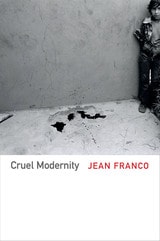
Cruel Modernity
Jean Franco
Duke University Press, 2013
Franco draws on human-rights documents, memoirs, testimonials, novels, and films, as well as photographs and art works, to explore not only cruel acts but the discriminatory thinking that made them possible, their long-term effects, the precariousness of memory, and the pathos of survival.

Cruel and Unusual
Punishment and U.S. CultureBrian Jarvis
Pluto Press, 2004
In the post-Vietnam era, the prison population has increased tenfold and the death penalty has enjoyed a renaissance. Few subjects in contemporary US society provoke as much controversy as punishment. In this context, Cruel and Unusual aims to offer the first comprehensive exploration of the history of punishment as it has been mediated in American culture.
Grounding his analysis in Marxist theory, psychoanalysis and Foucault’s influential work on discipline, Brian Jarvis examines a range of cultural texts, from seventeenth century execution sermons to twenty-first century prison films, to uncover the politics, economics and erotics of punishment.
This wide-ranging and interdisciplinary survey constructs a genealogy of cruelty through close reading of novels by Hawthorne and Melville, fictional accounts of the Rosenberg execution by Coover and Doctorow, slave narratives and prison writings by African Americans and the critically neglected genre of American prison films.
In the process, Cruel and Unusual unmasks a fundamental conflict between legends of liberty in the Land of the Free and the secret, silenced histories of sadomasochistic desire, punishment for profit and social control.
Cruelty as Citizenship
How Migrant Suffering Sustains White DemocracyCristina Beltrán
University of Minnesota Press, 2020
Why are immigrants from Mexico and Latin America such an affectively charged population for political conservatives?
More than a decade before the election of Donald Trump, vitriolic and dehumanizing rhetoric against migrants was already part of the national conversation. Situating the contemporary debate on immigration within America’s history of indigenous dispossession, chattel slavery, the Mexican-American War, and Jim Crow, Cristina Beltrán reveals white supremacy to be white democracy—a participatory practice of racial violence, domination, and exclusion that gave white citizens the right to both wield and exceed the law. Still, Beltrán sees cause for hope in growing movements for migrant and racial justice.
Forerunners is a thought-in-process series of breakthrough digital works. Written between fresh ideas and finished books, Forerunners draws on scholarly work initiated in notable blogs, social media, conference plenaries, journal articles, and the synergy of academic exchange. This is gray literature publishing: where intense thinking, change, and speculation take place in scholarship.
Cruising the Dead River
David Wojnarowicz and New York's Ruined WaterfrontFiona Anderson
University of Chicago Press, 2019
Cruising with Robert Louis Stevenson
Travel, Narrative, and the Colonial BodyOliver S. Buckton
Ohio University Press, 2007
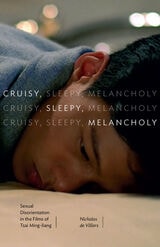
Cruisy, Sleepy, Melancholy
Sexual Disorientation in the Films of Tsai Ming-liangNicholas de Villiers
University of Minnesota Press, 2022
A brilliant approach to the queerness of one of Taiwan’s greatest auteurs
A critical figure in queer Sinophone cinema—and the first director ever commissioned to create a film for the permanent collection of the Louvre—Tsai Ming-liang is a major force in Taiwan cinema and global moving image art. Cruisy, Sleepy, Melancholy offers a fascinating, systematic method for analyzing the queerness of Tsai’s films.
Nicholas de Villiers argues that Tsai expands and revises the notion of queerness by engaging with the sexuality of characters who are migrants, tourists, diasporic, or otherwise displaced. Through their lack of fixed identities, these characters offer a clear challenge to the binary division between heterosexuality and homosexuality, as well as the Orientalist binary division of Asia versus the West. Ultimately, de Villiers explores how Tsai’s films help us understand queerness in terms of spatial, temporal, and sexual disorientation.
Conceiving of Tsai’s cinema as an intertextual network, Cruisy, Sleepy, Melancholy makes an important addition to scholarly work on Tsai in English. It draws on extensive interviews with the director, while also offering a complete reappraisal of Tsai’s body of work. Contributing to queer film theory and the aesthetics of displacement, Cruisy, Sleepy, Melancholy reveals striking connections between sexuality, space, and cinema.
Crumpled Paper Boat
Experiments in Ethnographic WritingAnand Pandian and Stuart McLean, editors
Duke University Press, 2017
A School for Advanced Research Advanced Seminar
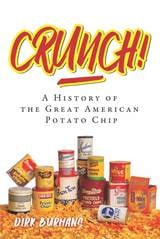
Crunch!
A History of the Great American Potato ChipDirk Burhans
University of Wisconsin Press, 2017
Crunch! also uncovers a dark side of potato chip history, including a federal investigation of the snack food industry in the 1990s following widespread allegations of antitrust activity, illegal buyouts, and predatory pricing. In the wake of these "Great Potato Chip Wars," corporate snack divisions closed and dozens of family-owned companies went bankrupt. Yet, despite consolidation, many small chippers persist into the twenty-first century, as mom-and-pop companies and upstart "boutique" businesses serve both new consumers and markets with strong regional loyalties.
Illustrated with images of early snack food paraphernalia and clever packaging from the glory days of American advertising art, Crunch! is an informative tour of large and small business in America and the vicissitudes of popular tastes.

Crusade for Justice
The Autobiography of Ida B. WellsIda B. Wells
University of Chicago Press, 1970
"No student of black history should overlook Crusade for Justice."—William M. Tuttle, Jr., Journal of American History
"Besides being the story of an incredibly courageous and outspoken black woman in the face of innumerable odds, the book is a valuable contribution to the social history of the United States and to the literature of the women's movement as well."—Elizabeth Kolmer, American Quarterly
"[Wells was] a sophisticated fighter whose prose was as thorough as her intellect."—Walter Goodman, New York Times
"An illuminating narrative of a zealous, race-conscious, civic- and church-minded black woman reformer, whose life story is a significant chapter in the history of Negro-White relations."—Thelma D. Perry, Negro History Bulletin
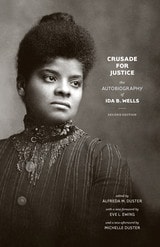
Crusade for Justice
The Autobiography of Ida B. Wells, Second EditionIda B. Wells
University of Chicago Press, 2020
Ida B. Wells is an American icon of truth telling. Born to slaves, she was a pioneer of investigative journalism, a crusader against lynching, and a tireless advocate for suffrage, both for women and for African Americans. She co-founded the NAACP, started the Alpha Suffrage Club in Chicago, and was a leader in the early civil rights movement, working alongside W. E. B. Du Bois, Madam C. J. Walker, Mary Church Terrell, Frederick Douglass, and Susan B. Anthony.
This engaging memoir, originally published 1970, relates Wells’s private life as a mother as well as her public activities as a teacher, lecturer, and journalist in her fight for equality and justice. This updated edition includes a new foreword by Eve L. Ewing, new images, and a new afterword by Ida B. Wells’s great-granddaughter, Michelle Duster.
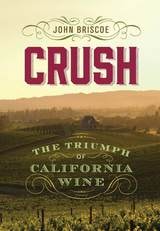
Crush
The Triumph of California WineJohn Briscoe
University of Nevada Press, 2018
Finalist, Northern California Book Awards General Non-Fiction
Look. Smell. Taste. Judge. Crush is the 200-year story of the heady dream that wines as good as the greatest of France could be made in California. A dream dashed four times in merciless succession until it was ultimately realized in a stunning blind tasting in Paris. In that tasting, in the year of America's bicentennial, California wines took their place as the leading wines of the world.
For the first time, Briscoe tells the complete and dramatic story of the ascendancy of California wine in vivid detail. He also profiles the larger story of California itself by looking at it from an entirely innovative perspective, the state seen through its singular wine history.
With dramatic flair and verve, Briscoe not only recounts the history of wine and winemaking in California, he encompasses a multidimensional approach that takes into account an array of social, political, cultural, legal, and winemaking sources. Elements of this history have plot lines that seem scripted by a Sophocles, or Shakespeare. It is a fusion of wine, personal histories, cultural, and socioeconomic aspects.
Crush is the story of how wine from California finally gained its global due. Briscoe recounts wine’s often fickle affair with California, now several centuries old, from the first harvest and vintage, through the four overwhelming catastrophes, to its amazing triumph in Paris.
Cry And Dedication
Carlos Bulosan
Temple University Press, 1995
Cry Rape
The True Story of One Woman's Harrowing Quest for JusticeBill Lueders
University of Wisconsin Press, 2007
Other books have dealt with how police and prosecutors bend and break the law in their zeal to prevail. This one focuses instead on how the gravest injustice can be committed with the best of intentions, and how one woman’s bravery and persistence finally triumphed.
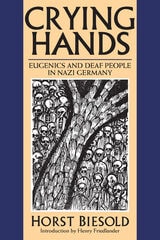
Crying Hands
Eugenics and Deaf People in Nazi GermanyHorst Biesold
Gallaudet University Press, 2003
When the Nazis assumed power in Germany in 1933, they wasted no time in implementing their radical policies, first by securing passage of the Law for the Prevention of Offspring with Hereditary Diseases. Among those designated by this law as “congenitally disabled” were deaf people. Horst Biesold’s newly translated book examines this neglected aspect of Nazi “racial hygiene” through interviews with more than 1,000 deaf survivors of this brutal law that authorized forced sterilizations, abortions, and eventually murder.
Crying Hands meticulously delineates the antecedents of Nazi eugenics, beginning with Social Darwinism (postulated in the mid-nineteenth century) and tracing the various sterilization laws later initiated throughout the world, including many passed and practiced in the United States. This exceptional scholarship is movingly paralleled by the human faces fixed to the numbing statistics, as in story after story those affected recount their irretrievable loss, pain, and misplaced shame imposed upon them by the Nazi regime. Through their stories, told to Biesold in German Sign Language, they have given voice to the countless others who died from the specious science practiced by the Third Reich. And now their own trials have finally been acknowledged.
Crying for Our Elders
African Orphanhood in the Age of HIV and AIDSKristen E. Cheney
University of Chicago Press, 2017
Through ethnographic fieldwork and collaborative research with children in Uganda, Cheney traces how the “best interest” principle that governs children’s’ rights can stigmatize orphans and leave children in the post-antiretroviral era even more vulnerable to exploitation. She details the dramatic effects this has on traditional family support and child protection and stresses child empowerment over pity. Crying for Our Elders advances current discussions on humanitarianism, children’s studies, orphanhood, and kinship. By exploring the unique experience of AIDS orphanhood through the eyes of children, caregivers, and policymakers, Cheney shows that despite the extreme challenges of growing up in the era of HIV/AIDS, the post-ARV generation still holds out hope for the future.
Cuba Represent!
Cuban Arts, State Power, and the Making of New Revolutionary CulturesSujatha Fernandes
Duke University Press, 2006
Combining textual analyses of films, rap songs, and visual artworks; ethnographic material collected in Cuba; and insights into the nation’s history and political economy, Fernandes details the new forms of engagement with official institutions that have opened up as a result of changing relationships between state and society in the post-Soviet period. She demonstrates that in a moment of extreme hardship and uncertainty, the Cuban state has moved to a more permeable model of power. Artists and other members of the public are collaborating with government actors to partially incorporate critical cultural expressions into official discourse. The Cuban leadership has come to recognize the benefits of supporting artists: rappers offer a link to increasingly frustrated black youth in Cuba; visual artists are an important source of international prestige and hard currency; and films help unify Cubans through community discourse about the nation. Cuba Represent! reveals that part of the socialist government’s resilience stems from its ability to absorb oppositional ideas and values.
Cuba
Religion, Social Capital, and DevelopmentAdrian H. Hearn
Duke University Press, 2008
While conducting research, Hearn lived for one year each in two Santería temple-houses: one located in Old Havana and the other in Santiago de Cuba. During those stays he conducted numerous interviews: with the historian of Havana and the conservationist of Santiago de Cuba (officials roughly equivalent to mayors in the United States), acclaimed writers, influential leaders of Afro-Cuban religions, and many citizens involved in community development initiatives. Hearn draws on those interviews, his participant observation in the temple-houses, case studies, and archival research to convey the daily life experiences and motivations of religious practitioners, development workers, and politicians. Using the concept of social capital, he explains the state’s desire to incorporate tightly knit religious groups into its community development projects, and he illuminates a fundamental challenge facing Cuba’s religious communities: how to maintain their spiritual integrity and internal solidarity while participating in state-directed projects.

Cuban Miami
Robert M Levine
Rutgers University Press, 2000
For two centuries, Cuban exiles have found their way to the United States, especially to Florida. But since Castro's victory in 1959, Miami has seen almost one million Cubans arrive by sea and air. The impact on this area has been enormous. Miami---known as the "Exile Capital"---has a greater cultural affinity to Havana and the rest of Latin America than to Tallahassee, Florida's capital.
Cuban Miami is the first analytical, photographic record of Cuban migration to south Florida. Robert M. Levine and Moises Asis have interviewed members of every sector of the Cuban exile community, from the first pioneers to the mass waves in the early 1960s to those who arrived by raft during the late 1990s. In their wide-ranging investigation of Cuban-U.S. history, they touch upon all aspects of Cuban influence: politics, cuisine, music, assimilation, discrimination, and institution buildings. Miami has more Cuban food establishments than the nearby island does. The city has been fertile ground for germinating a unique synthesis of Cuban and Americans are the most prosperous immigrant group in the United States today, this success has come at a price---living in exile can exact a personal toll.
Cuban Miami is a feast for the eyes, including 180 photographs and original cartoons drawn for the book by Jose M. Varela, a well-known member of the Cuban-American community.

Cuban Palimpsests
Jose Quiroga
University of Minnesota Press, 2005
In Cuban Palimpsests, José Quiroga explores the sites, both physical and imaginative, where memory bears upon Cuba’s collective history in ways that illuminate this extended moment of uncertainty. Crossing geographical, political, and cultural borders, Quiroga moves with ease between Cuba, Miami, and New York. He traces generational shifts within the exile community, contrasts Havana’s cultural richness with its economic impoverishment, follows the cloak-and-dagger narratives of revolutionary and counterrevolutionary spy fiction and film, and documents the world’s ongoing fascination with Cuban culture.
From the nostalgic photographs of Walker Evans to the iconic stature of Fidel Castro, from the literary expressions of despair to the beat of Cuban musical rhythms, from the haunting legacy of artist Ana Mendieta to the death of Celia Cruz and the reburial of Che Guevara, Cuban Palimpsests memorializes the ruins of Cuba’s past and offers a powerful meditation on its enigmatic place within the new world order.
José Quiroga is professor and department chair of Spanish and Portuguese at Emory University. He is the author of Understanding Octavio Paz and Tropics of Desire: Interventions from Queer Latino America.
Cuban Underground Hip Hop
Black Thoughts, Black Revolution, Black ModernityBy Tanya L. Saunders
University of Texas Press, 2015
Honorable Mention, Barbara T. Christian Literary Award, Caribbean Studies Association, 2017
In the wake of the 1959 Cuban Revolution, a key state ideology developed: racism was a systemic cultural issue that ceased to exist after the Revolution, and any racism that did persist was a result of contained cases of individual prejudice perpetuated by US influence. Even after the state officially pronounced the end of racism within its borders, social inequalities tied to racism, sexism, and homophobia endured, and, during the economic liberalization of the 1990s, widespread economic disparities began to reemerge.
Cuban Underground Hip Hop focuses on a group of self-described antiracist, revolutionary youth who initiated a social movement (1996–2006) to educate and fight against these inequalities through the use of arts-based political activism intended to spur debate and enact social change. Their “revolution” was manifest in altering individual and collective consciousness by critiquing nearly all aspects of social and economic life tied to colonial legacies. Using over a decade of research and interviews with those directly involved, Tanya L. Saunders traces the history of the movement from its inception and the national and international debates that it spawned to the exodus of these activists/artists from Cuba and the creative vacuum they left behind. Shedding light on identity politics, race, sexuality, and gender in Cuba and the Americas, Cuban Underground Hip Hop is a valuable case study of a social movement that is a part of Cuba’s longer historical process of decolonization.
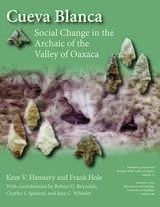
Cueva Blanca
Social Change in the Archaic of the Valley of OaxacaKent V. Flannery and Frank Hole
University of Michigan Press, 2019
Cuir Dissidence
Tracing Restorative Criticism and Breaking Bonds with the Mexican CanonFrancesca Dennstedt
Vanderbilt University Press, 2025
Culinary Colonialism, Caribbean Cookbooks, and Recipes for National Independence
Keja L. Valens
Rutgers University Press, 2024
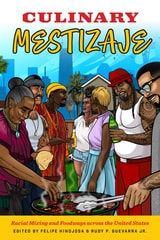
Culinary Mestizaje
Racial Mixing and Foodways across the United StatesEdited by Felipe Hinojosa and Rudy P. Guevarra Jr.
University of Texas Press, 2025
2026 Gold Medal for the Victor Villaseñor Best Latino Focused Nonfiction Book Award – English, Conference on Latin American History (CLAH)
How cross-racial and ethnic communities have created new culinary traditions and food cultures in the United States.
Culinary Mestizaje is about food, cooking, and community, but it’s also about how immigrant labor and racial mixing are transforming established US food cultures from Hawai’i to the coast of Maine, South Philadelphia to the Pacific Northwest. This collection of essays asks what it means that Chamorro cooking is now considered a regional specialty of the Bay Area, and that a fusion like brisket tacos registers as “native” to Houston, while pupusas are the pride of Atlanta.
Combining community scholarly insights, cooking tips, and recipes, the pieces assembled here are interested in how the blending of culinary traditions enables marginalized people to thrive in places fraught with racial tension, anti-immigrant sentiment, and the threat of gentrification. Chefs and entrepreneurs matter in these stories, but so do dishwashers, farm laborers, and immigrants doing the best they can with the ingredients they have. Their best, it turns out, is often delicious and creative, sparking culinary evolutions while maintaining ancestral connections. The result is that cooking under the weight of colonial rule and white supremacy has, in revealing ways, created American food.

Cult Archaeology and Creationism
Understanding Pseudoscientific Beliefs about the PastFrancis B. Harrold
University of Iowa Press, 1995
UFOs and aliens, unexplained mysteries, religious cults, diffusion, creationism. We are all familiar with beliefs about human life that lie outside traditional scientific boundaries. Notions such as these are considered reasonable by vast numbers of us in the Western world, in our modern “technological” and “educated” cultures.
Understanding why this should be so and how we as a society might deal with these widespread pseudoscientific beliefs are the subjects at the heart of this study. The authors—specialists in anthropology, archaeology, sociology, psychology, and history—explore creationism, which claims that there is evidence to support a literal interpretation of the origins of the world and of humanity as narrated in the Book of Genesis, and cult archaeology, which encompasses a wide range of fantastic beliefs about our past.
Cult Archaeology and Creationism contains several essays on the history of pseudoscientific beliefs and their current manifestations as well as the results of a unique research project in which students at five campuses across the country were asked about their beliefs and about such background factors as their school experience and religious faith. This expanded edition also includes two new essays, one on Afrocentrism and another that views cult archaeology and creationism in the 1990s and beyond.
Cultivating Development
An Ethnography of Aid Policy and PracticeDavid Mosse
Pluto Press, 2005
Development agencies and researchers are preoccupied with policy; with exerting influence over policy, linking research to policy and with implementing policy around the world.
But what if development practice is not driven by policy? Suppose that the things that make for 'good policy' - policy that legitimises and mobilises political support - in reality make it impossible to implement?
By focusing in detail on the unfolding activities of a development project in western India over more than ten years, as it falls under different policy regimes, this book takes a close look at the relationship between policy and practice in development.
David Mosse shows how the actions of development workers are shaped by the exigencies of organisations and the need to maintain relationships rather than by policy; but also that development actors work hardest of all to maintain coherent representations of their actions as instances of authorised policy. Raising unfamiliar questions, Mosse provides a rare self-critical reflection on practice, while refusing to endorse current post-modern dismissal of development.
Cultivating Differences
Symbolic Boundaries and the Making of InequalityEdited by Michèle Lamont and Marcel Fournier
University of Chicago Press, 1992
In this pioneering collection of original essays, a group of leading scholars helps set the agenda for the sociology of culture by exploring the factors that push us to segregate and integrate and the institutional arrangements that shape classification systems. Each examines the power of culture to shape our everyday lives as clearly as does economics, and studies the dimensions along which boundaries are frequently drawn.
The essays cover four topic areas: the institutionalization of cultural categories, from morality to popular culture; the exclusionary effects of high culture, from musical tastes to the role of art museums; the role of ethnicity and gender in shaping symbolic boundaries; and the role of democracy in creating inclusion and exclusion.
The contributors are Jeffrey Alexander, Nicola Beisel, Randall Collins, Diana Crane, Paul DiMaggio, Cynthia Fuchs Epstein, Joseph Gusfield, John R. Hall, David Halle, Richard A. Peterson, Albert Simkus, Alan Wolfe, and Vera Zolberg.
Cultivating Environmental Justice
A Literary History of U.S. Garden WritingRobert S. Emmett
University of Massachusetts Press, 2016
Drawing on ecocriticism, environmental history, landscape architecture, and recent work in environmental justice and food studies, Emmett explores how the language of environmental justice emerged in descriptions of gardening across a variety of literary forms. He reveals early egalitarian associations found in garden writing, despite a popular focus on elite sites such as suburban lawns and formal southern gardens. Cultivating Environmental Justice emphasizes the intergenerational work of gardeners and garden writers who, from the 1930s on, asserted increasingly radical socioeconomic and ecological claims to justice. Emmett considers a wide range of texts by authors including Bernard M'Mahon, Scott and Helen Nearing, Katharine S. White, Elizabeth Lawrence, Alice Walker, and Novella Carpenter.
Cultivating Health
Los Angeles Women and Public Health ReformKoslow, Jennifer
Rutgers University Press, 2009
Cultivating Health, an interdisciplinary chronicle, details women's impact on remaking health policy, despite the absence of government support. Combining primary source and municipal archival research with comfortable prose, Jennifer Lisa Koslow explores community nursing, housing reform, milk sanitation, childbirth, and the campaign against venereal disease in late nineteenth and early twentieth century Los Angeles. She demonstrates how women implemented health care reform and civic programs while laying the groundwork for a successful transition of responsibility back to government.
Koslow highlights women's home health care and urban policy-changing accomplishments and pays tribute to what would become the model for similar service-based systems in other American centers.
Cultivating Knowledge
Biotechnology, Sustainability, and the Human Cost of Cotton Capitalism in IndiaAndrew Flachs
University of Arizona Press, 2019
In Cultivating Knowledge anthropologist Andrew Flachs shows how rural farmers come to plant genetically modified or certified organic cotton, sometimes during moments of agrarian crisis. Interweaving ethnographic detail, discussions of ecological knowledge, and deep history, Flachs uncovers the unintended consequences of new technologies, which offer great benefits to some—but at others’ expense. Flachs shows that farmers do not make simple cost-benefit analyses when evaluating new technologies and options. Their evaluation of development is a complex and shifting calculation of social meaning, performance, economics, and personal aspiration. Only by understanding this complicated nexus can we begin to understand sustainable agriculture.
By comparing the experiences of farmers engaged with these mutually exclusive visions for the future of agriculture, Cultivating Knowledge investigates the human responses to global agrarian change. It illuminates the local impact of global changes: the slow, persistent dangers of pesticides, inequalities in rural life, the aspirations of people who grow fibers sent around the world, the place of ecological knowledge in modern agriculture, and even the complex threat of suicide. It all begins with a seed.
Cultivating Livability
Food, Class, and the Urban Future in BengaluruCamille Frazier
University of Minnesota Press, 2024
What urban food networks reveal about middle class livability in times of transformation
In recent years, the concept of “livability” has captured the global imagination, influencing discussions about the implications of climate change on human life and inspiring rankings of “most livable cities” in popular publications. But what really makes for a livable life, and for whom?
Cultivating Livability takes Bengaluru, India, as a case study—a city that is alternately described as India’s most and least livable megacity, where rapid transformation is undergirded by inequalities evident in the food networks connecting peri-urban farmers and the middle-class public. Anthropologist Camille Frazier probes the meaning of “livability” in Bengaluru through ethnographic work among producers and consumers, corporate intermediaries and urban information technology professionals.
Examining the varying efforts to reconfigure processes of food production, distribution, retail, and consumption, she reveals how these intersections are often rooted in and exacerbate ongoing forms of disenfranchisement that privilege some lives at the expense of others.

Cultivating the City
The Long Struggle to Put Land to UseNate Ela
University of Chicago Press, 2027
A story of law and social policy in a place you might not expect: community gardens and urban farms.
Though Chicago is a city of legendary skyscrapers and dense apartment blocks, it is also a city of wide-open tracts of land. This surprising juxtaposition can be viewed as an opportunity, in that available land can become a food source for urban dwellers, especially those experiencing poverty or limited access to grocery stores. But most empty land in Chicago remains empty — why? In Cultivating the City, sociologist and legal scholar Nate Ela examines the history of Chicago’s urban farms and gardens, their promotion as a tool to support the poor and unemployed, and their repeated failure to take root as a permanent part of Chicago’s landscape.
Ela’s fresh take on contemporary urban agriculture features a new perspective on social policy and urban governance. For hundreds of years, social reformers have worked to address poverty and unemployment by letting people use land to grow food. Reformers experimented with the possibilities of property use, including deals to match gardeners with public or private land, proposals to let growers use land without owners’ permission, and the transformation of private land into municipal gardens. By exposing the dynamics of this longstanding but long-overlooked form of social policy in Chicago, Ela offers a new strategy for cultivating cities that are productive, resilient, and just.
Cultivating the Nile
The Everyday Politics of Water in EgyptJessica Barnes
Duke University Press, 2014

Cultivating the Rosebuds
The Education of Women at the Cherokee Female Seminary, 1851-1909Devon A. Mihesuah
University of Illinois Press, 1993
Established by the Cherokee Nation in 1851 in present-day eastern Oklahoma, the nondenominaional Cherokee Female Seminary was one of the most important schools in the history of American Indian education. Devon Mihesuah explores its curriculum, faculty, administration, and educational philosophy.
"[An] important work. . . . It tells the fascinating and occasionally poignant story of the Cherokee Female Seminary, which enrolled its first class of 'Rosebuds,' as the seminarians called themselves, in 1851." --Choice
"I recommend it to any serious student of the Cherokee people." -- Robert J. Conley, author of Mountain Windsong
"Of the many books about Cherokee history, few deal with the issue of acculturation in the post-removal period and none so effectively as Devon Mihesuah's Cultivating the Rosebuds." -- Nancy Shoemaker, Western Historical Quarterly
"Required reading for anyone remotely interested in the history of Native American education." -- David W. Adams, History of Education Quarterly
Cults, Martyrs and Good Samaritans
Religion in Contemporary English Political DiscourseJames Crossley
Pluto Press, 2018
From the paternalistic Christianity used to justify ever-intensifying neoliberalism, to the ethnonationalist and protectionist Christianity of Theresa May and Brexit, to the socialist constructions of Christianity by Jeremy Corbyn and Momentum, Crossley guides us through the love affair between politics and Christianity.. Drawing on interviews with politicians, activists, revolutionaries, and voters on either side of Brexit, Crossley reveals how religion is linked to positions on issues of class, capitalism, and foreign policy, and how it can can often challenge dominant class interests, obfuscate potential causes of unrest, and even justify military intervention.
Cults, Territory, and the Origins of the Greek City-State
François de Polignac
University of Chicago Press, 1995
Combining archaeological and textual evidence, de Polignac argues that the eighth-century settlements that would become the city-states of classical Greece were defined as much by the boundaries of "civilized" space as by its urban centers. The city took shape through what de Polignac calls a "religious bipolarity," the cults operating both to organize social space and to articulate social relationships being not only at the heart of the inhabited area, but on the edges of the territory. Together with the urban cults, these sanctuaries "in the wild" identified the polis and its sphere of influence, giving rise to the concept of the state as a territorial unit distinct from its neighbors. Frontier sanctuaries were therefore often the focus of disputes between emerging communities. But in other instances, in particular in Greece's colonizing expeditions, these outer sanctuaries may have facilitated the relations between the indigenous populations and the settlers of the newly founded cities.
Featuring extensive revisions from the original French publication and an updated bibliography, this book is essential for anyone interested in the history and culture of ancient Greece.
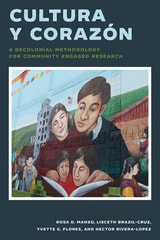
Cultura y Corazón
A Decolonial Methodology for Community Engaged ResearchRosa D. Manzo, Lisceth Brazil-Cruz, Yvette G. Flores, and Hector Rivera-Lopez
University of Arizona Press, 2020
Cultura y Corazón presents case studies from the authors’ work within the fields of education and health. It offers key strategies to working in partnership with marginalized Latinx communities that are grounded in deep respect for the communities’ cultures and lived experiences. This book is intended for students, researchers, and practitioners who want to work with vulnerable populations through a community-based approach that truly respects and integrates culture, values, and funds of knowledge.
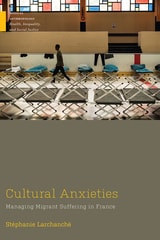
Cultural Anxieties
Managing Migrant Suffering in FranceStéphanie Larchanche
Rutgers University Press, 2020
Cultural China 2020
The Contemporary China Centre ReviewSéagh Kehoe and Gerda Wielander
University of Westminster Press, 2021
Cultural China is a unique annual publication for up-to-date, informed, and accessible commentary about Chinese and Sinophone languages, cultural practices, politics and production, and their critical analysis. It builds on the University of Westminster’s Contemporary China Centre Blog, providing additional reflective introductory pieces to contextualise each of the eight chapters.
The articles in this Review speak to the turbulent year that was 2020 as it unfolded across cultural China. Thematically, they range from celebrity culture, fashion and beauty, to religion and spirituality, via language politics, heritage, and music. Pieces on representations of China in Britain and the Westminster Chinese Visual Arts Project reflect our particular location and home. Many of the articles in this book focus on the People’s Republic of China, but they also draw attention to the multiple Chinese and Sinophone cultural practices that exist within, across, and beyond national borders.
The Review is distinctive in its cultural studies-based approach and contributes a much-needed critical perspective from the Humanities to the study of cultural China. It aims to promote interdisciplinary dialogue and debate about the social, cultural, political, and historical dynamics that inform life in cultural China today, offering academics, activists, practitioners, and politicians a key reference with which to situate current events in and relating to cultural China in a wider context.
Cultural China 2021
The Contemporary China Centre ReviewSéagh Kehoe and Gerda Wielander
University of Westminster Press, 2022
Cultural China is a unique annual publication for up-to-date, informed and accessible commentary about Chinese and Sinophone languages, cultural practices, politics and production, and their critical analysis. It builds on research and perspectives central to the Contemporary China Centre, based at the University of Westminster, and the Contemporary China Centre Blog.
The chapters in this Review speak to the challenging and eventful year that was 2021 as it unfolded across cultural China. Thematically, they range from health and medicine, environment, food, children and parenting via film, red culture and calls to action. Many of the contributions in this edited collection focus on the People’s Republic of China, but they also draw attention to the multiple Chinese and Sinophone cultural practices that exist within, across and beyond national borders.
The Review is distinctive in its cultural studies-based approach and contributes a much-needed critical perspective from the humanities to the study of cultural China. It aims to promote interdisciplinary dialogue and debate about the social, cultural, political and historical dynamics that inform life in cultural China today offering academics, activists, practitioners and politicians a key reference with which to situate current events in and relating to cultural China in a wider context.
Cultural Citizenship
Cosmopolitanism, Consumerism, and Television in a Neoliberal AgeToby Miller
Temple University Press, 2006
Cultural Compass
Martin Manalansan
Temple University Press, 2000
Drawing upon recent theoretical discussions and methodological innovations, the contributors explore the construction and displacement of self, community, and home integral to Asian American cultural journeys in the late twentieth century. Some discuss the unique situation of doing ethnographic work "at home" -- that is researching one's own ethnic group or another group with Asian America. Others draw on rich and diverse field experiences. Whether they are doing homework or fieldwork, contributors reflect on the ways that particular matters of identity -- gender, class, sexuality, ethnicity, age -- play out between researchers and informants. Individual essays and the book as a whole challenge the notion of a monolithic, spatially bounded Asian American community, pointing the way to multiple sites of political struggle, cultural critique, and social change.
Cultural Conceptions
On Reproductive Technologies and the Remaking of LifeValerie Hartouni
University of Minnesota Press, 1997
Cultural Conundrums
Gender, Race, Nation, and the Making of Caribbean Cultural PoliticsNatasha Barnes
University of Michigan Press, 2010
Natasha Barnes traces the use of cultural arguments in the making of Caribbean modernity, looking at the cultural performances of the Anglophone Caribbean—cricket, carnival, dancehall, calypso, and beauty pageants—and their major literary portrayals. Barnes historicizes the problematic linkage of culture and nation to argue that Caribbean anticolonialism has given expressive culture a critical place in the region’s identity politics. Her provocative readings of foundational thinkers C. L. R. James and Sylvia Winters will engender discussion and debate among the Caribbean intellectual community. This impressively interdisciplinary study will make important contributions to the fields of Afro-diaspora studies, postcolonial studies, literary studies, performance studies, and sociology.
--Simon Gikandi, Princeton University
Natasha Barnes is Associate Professor of African American Studies and English at the University of Illinois at Chicago.
Cultural Crowdfunding
Platform Capitalism, Labour and GlobalizationVincent Rouzé
University of Westminster Press, 2019
This new book analyses the strategies, usages and wider implications of crowdsourcing and crowdfunding platforms in the culture and communication industries that are reshaping economic, organizational and social logics. Platforms are the object of considerable hype with a growing global presence. Relying on individual contributions coordinated by social media to finance cultural production (and carry out promotional tasks) is a significant shift, especially when supported by morphing public policies, supposedly enhancing cultural diversity and accessibility.
The aim of this book is to propose a critical analysis of these phenomena by questioning what follows from decisions to outsource modes of creation and funding to consumers. Drawing on research carried out within the ‘Collab’ programme backed by the French National Research Agency, the book considers how platforms are used to organize cultural labour and/or to control usages, following a logic of suggestion rather than overt injunction. Four key areas are considered: the history of crowdfunding as a system; whose interests crowdfunding may serve; the implications for digital labour and lastly crowdfunding’s interface with globalization and contemporary capitalism. The book concludes with an assessment of claims that crowdfunding can democratize culture.
Cultural Divides
Understanding and Overcoming Group ConflictDeborah Prentice
Russell Sage Foundation, 1999

Cultural Erotics in Cuban America
Ricardo L. Ortíz
University of Minnesota Press, 2006
In this wide-ranging work Ortíz argues for the authentically diasporic quality of postrevolutionary, off-island Cuban experience. Highlighting various forms of cultural expression, Cultural Erotics in Cuban America traces underrepresented communities’ responses to the threat of cultural disappearance in an overwhelming and hegemonic U.S. culture. Ortíz shows how the work of Cuban-American writers and artists challenges the heteronormativity of both home and host culture. Focusing on artists who have had an ambivalent, indirect, or nonexistent connection to Miami, he presents close readings of such novelists as Reinaldo Arenas, Roberto G. Fernández, Achy Obejas, and Cristina García, the playwright Eduardo Machado, the poet Rafael Campo, and musical performers Albita Rodríguez and Celia Cruz.
Ortíz charts the legacies of sexism and homophobia in patriarchal Cuban culture, as well as their influence on Cuban-revolutionary and Cuban-exile ideologies. Moving beyond the outdated cultural terms of the Cold War, he looks forward to envision queer futures for Cuban-American culture free from the ties to restrictive—indeed, oppressive—constructions of nation, place, language, and desire.
Ricardo L. Ortíz is associate professor of English at Georgetown University.
Cultural Excursions
Marketing Appetites and Cultural Tastes in Modern AmericaNeil Harris
University of Chicago Press, 1990
The essays fall into three general sections: the first treats the history of cultural institutions, highlighting the role of museums; the second section focuses on some literary, artistic, and entrepreneurial responses to the new mass culture; and the final group of essays explores the social history of art and architecture. Throughout Harris's diverse writings certain themes recur—the redefining of boundaries between high art and popular culture, the relationship between public taste and technological change, and the very notion of what constitutes a shared social experience. Harris's pioneering work has broadened the field of cultural history and encouraged whole new areas of inquiry. Cultural Excursions will be useful for those in American and culture studies, as well as for the general reader trying to make sense of the culture in which we live.
Cultural Forests of the Amazon
A Historical Ecology of People and Their LandscapesWilliam Balee
University of Alabama Press, 2013
Cultural Forests of the Amazon is a comprehensive and diverse account of how indigenous people transformed landscapes and managed resources in the most extensive region of tropical forests in the world.
Cultural Formations Of Postcommunism
Emancipation, Transition, Nation, and WarMichael D. Kennedy
University of Minnesota Press, 2002
A powerful exposition of how culture shapes social and political change.
"Transition" is the name typically given to the time of radical change following the fall of communism, connoting a shift from planned to market economy, from dictatorship to democracy. Transition is also, in Michael Kennedy’s analysis, a culture in its own right-with its own contentions, repressions, and unrealized potentials. By elaborating transition as a culture of power and viewing it in its complex relation to emancipation, nationalism, and war, Kennedy’s book clarifies the transformations of postcommunism as well as, more generally, the ways in which culture articulates social change. This ambitious work is, in effect, a nuanced critical-cultural sociology of change.
Kennedy examines transition culture’s historical foundation by looking at the relationship among perestroika, Poland, and Hungary, and considers its structure and practice in the following decade across fields and nations. His wide-ranging analysis-of the artifacts of transition culture’s proponents, of interviews with providers and recipients of technical assistance in business across Eastern Europe, and of focus groups assessing the successes and failures of social change in Estonia and Ukraine-suggests a transition culture deeply implicated in nationalism. But this association, Kennedy contends, is not necessarily antithetical to transition’s emancipation. By reconsidering transition culture’s relationship to the Wars of Yugoslav Succession and communism’s negotiated collapse in Poland and Hungary, he shows how transition might be reconceived in terms of solidarity, freedom, and peace. Distinguished by its focus on culture, not only within particular nations but in the transnational community organized around transition, this book will help reframe the debate about postcommunist social change.