Results by title
28189 books match the query 'History' and 1914 start with c
Courting the Abyss
Free Speech and the Liberal TraditionJohn Durham Peters
University of Chicago Press, 2005
A mesmerizing account of the role of public communication in the Anglo-American world, Courting the Abyss shows that liberty's earliest advocates recognized its fraternal relationship with wickedness and evil. While we understand freedom of expression to mean "anything goes," John Durham Peters asks why its advocates so often celebrate a sojourn in hell and the overcoming of suffering. He directs us to such well-known sources as the prose and poetry of John Milton and the political and philosophical theory of John Locke, Adam Smith, John Stuart Mill, and Oliver Wendell Holmes Jr., as well as lesser-known sources such as the theology of Paul of Tarsus. In various ways they all, he shows, envisioned an attitude of self-mastery or self-transcendence as a response to the inevitable dangers of free speech, a troubled legacy that continues to inform ruling norms about knowledge, ethical responsibility, and democracy today.
A world of gigabytes, undiminished religious passion, and relentless scientific discovery calls for a fresh account of liberty that recognizes its risk and its splendor. Instead of celebrating noxious doctrine as proof of society's robustness, Courting the Abyss invites us to rethink public communication today by looking more deeply into the unfathomable mystery of liberty and evil.
Courtly Love, the Love of Courtliness, and the History of Sexuality
James A. Schultz
University of Chicago Press, 2006
Courtly love, Schultz finds, was provoked not by the biological and intrinsic factors that play such a large role in our contemporary thinking about sexuality—sex difference or desire—but by extrinsic signs of class: bodies that were visibly noble and behaviors that represented exemplary courtliness. Individuals became “subjects” of courtly love only to the extent that their love took the shape of certain courtly roles such as singer, lady, or knight. They hoped not only for physical union but also for the social distinction that comes from realizing these roles to perfection. To an extraordinary extent, courtly love represented the love of courtliness—the eroticization of noble status and the courtly culture that celebrated noble power and refinement
Courts, Jurisdictions, and Law in John Milton and His Contemporaries
Alison A. Chapman
University of Chicago Press, 2020
Surveying Milton’s early pamphlets, divorce tracts, late political tracts, and major prose works in comparison with the writings and cases of some of Milton’s contemporaries—including George Herbert, John Donne, Ben Jonson, and John Bunyan—Chapman reveals the variety and nuance in Milton’s juridical toolkit and his subtle use of competing legal traditions in pursuit of justice.

Couture and Consensus
Fashion and Politics in Postcolonial ArgentinaRegina A. Root
University of Minnesota Press, 2010
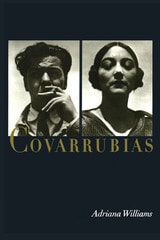
Covarrubias
By Adriana Williams
University of Texas Press, 1994
At the center of an artistic milieu as vital and exciting as the Left Bank of Paris or Greenwich Village, Rosa and Miguel Covarrubias knew almost everyone in the limelight of the 1930s and 1940s—Langston Hughes, Carl Van Vechten, John Huston, Diego Rivera, and Frida Kahlo, to name just a few. As fascinating themselves as any of their friends, the couple together fostered a renaissance of interest in the history and traditional arts of Mexico's indigenous peoples, while amassing an extraordinary collection of art that ranged from pre-Hispanic Olmec and Aztec sculptures to the work of Diego Rivera.
Written by a long-time friend of Rosa, this book presents a sparkling account of the life and times of Rosa and Miguel. Adriana Williams begins with Miguel's birth in 1904 and follows the brilliant early flowering of his artistic career as a renowned caricaturist for Vanity Fair and the New Yorker magazines, his meeting and marriage with Rosa at the height of her New York dancing career, and their many years of professional collaboration on projects ranging from dance to anthropology to painting and art collecting to the development of museums to preserve Mexico's pre-Columbian heritage. Interviewing as many of their friends as possible, Williams fills her narrative with reminiscences that illuminate Miguel's multifaceted talents, Rosa's crucial collaboration in many of his projects, and their often tempestuous relationship.
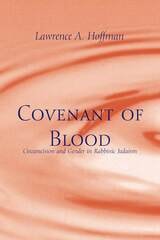
Covenant of Blood
Circumcision and Gender in Rabbinic JudaismLawrence A. Hoffman
University of Chicago Press, 1995
In the rabbinic system, Hoffman argues, circumcision was neither a birth ritual nor the beginning of the human life cycle, but a rite of covenantal initiation into a male "life line." Although the evolution of the rite was shaped by rabbinic debates with early Christianity, the Rabbis shared with the church a view of blood as providing salvation. Hoffman examines the particular significance of circumcision blood, which, in addition to its salvific role, contrasted with menstrual blood to symbolize the gender dichotomy within the rabbinic system. His analysis of the Rabbis' views of circumcision and menstrual blood sheds light on the marginalization of women in rabbinic law. Differentiating official mores about gender from actual practice, Hoffman surveys women's spirituality within rabbinic society and examines the roles mothers played in their sons' circumcisions until the medieval period, when they were finally excluded.
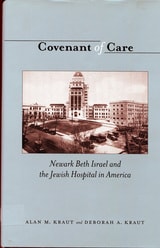
Covenant of Care
Newark Beth Israel and the Jewish Hospital in AmericaKraut, Alan M
Rutgers University Press, 2006
Where were you born? Were you born at the Beth? Many thousands of Americans-Jewish and non-Jewish-were born at a hospital bearing the Star of David and named Beth Israel, Mount Sinai, or Montefiore. In the United States, health care has been bound closely to the religious impulse. Newark Beth Israel Hospital is a distinguished modern medical institution in New Jersey whose history opens a window on American health care, the immigrant experience, and urban life. Alan M. and Deborah A. Kraut tell the story of this important institution, illuminating the broader history of voluntary nonprofit hospitals created under religious auspices initially to serve poor immigrant communities. Like so many Jewish hospitals in the early half of the twentieth century, "the Beth" cared not only for its own community's poor and underprivileged, a responsibility grounded in the Jewish traditions of tzedakah ("justice") and tikkun olam ("to heal the world"), but for all Newarkers.
Since it first opened its doors in 1902, the Beth has been an engine of social change. Jewish women activists and immigrant physicians founded an institution with a nonsectarian admissions policy and a welcome mat for physicians and nurses seeking opportunity denied them by anti-Semitism elsewhere. Research, too, flourished at the Beth. Here dedicated medical detectives did path-breaking research on the Rh blood factor and pacemaker development. When economic shortfalls and the Great Depression threatened the Beth's existence, philanthropic contributions from prominent Newark Jews such as Louis Bamberger and Felix Fuld, the efforts of women volunteers, and, later, income from well-insured patients saved the institution that had become the pride of the Jewish community.
The Krauts tell the Beth Israel story against the backdrop of twentieth-century medical progress, Newark's tumultuous history, and the broader social and demographic changes altering the landscape of American cities. Today, the United States, in the midst of another great wave of immigration, once again faces the question of how to provide newcomers with culturally sensitive and economically accessible medical care. Covenant of Care will inform and inspire all those working to meet these demands, offering a compelling look at the creative ways that voluntary hospitals navigated similar challenges throughout the twentieth century.
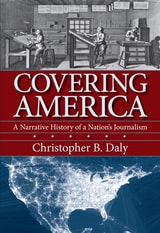
Covering America
A Narrative History of a Nation's JournalismChristopher B. Daly
University of Massachusetts Press, 2018
In this revised and expanded edition, Daly updates his narrative with new stories about legacy media like the New York Times and the Washington Post, and the digital natives like the Huffington Post and Buzzfeed. A new final chapter extends the study of the business crisis facing journalism by examining the "platform revolution" in media, showing how Facebook, Twitter, and other social media are disrupting the traditional systems of delivering journalism to the public. In an era when the factual basis of news is contested and when the government calls journalists "the enemy of the American people" or "the opposition party," Covering America brings history to bear on the vital issues of our times.
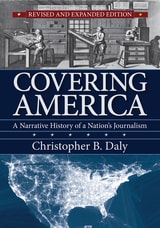
Covering America
A Narrative History of a Nation's JournalismChristopher B. Daly
University of Massachusetts Press, 2018
In this revised and expanded edition, Daly updates his narrative with new stories about legacy media like the New York Times and the Washington Post, and the digital natives like the Huffington Post and Buzzfeed. A new final chapter extends the study of the business crisis facing journalism by examining the "platform revolution" in media, showing how Facebook, Twitter, and other social media are disrupting the traditional systems of delivering journalism to the public. In an era when the factual basis of news is contested and when the government calls journalists "the enemy of the American people" or "the opposition party," Covering America brings history to bear on the vital issues of our times.
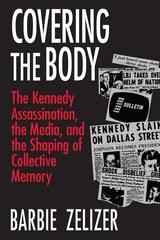
Covering the Body
The Kennedy Assassination, the Media, and the Shaping of Collective MemoryBarbie Zelizer
University of Chicago Press, 1992
Covering the Body (the title refers to the charge given journalists to follow a president) is a powerful reassessment of the media's role in shaping our collective memory of the assassination—at the same time as it used the assassination coverage to legitimize its own role as official interpreter of American reality. Of the more than fifty reporters covering Kennedy in Dallas, no one actually saw the assassination. And faced with a monumentally important story that was continuously breaking, most journalists had no time to verify leads or substantiate reports. Rather, they took discrete moments of their stories and turned them into one coherent narrative, blurring what was and was not "professional" about their coverage.
Through incisive analyses of the many accounts and investigations in the years since the shooting, Zelizer reveals how journalists used the assassination not just to relay the news but to address the issues they saw as central to the profession and to promote themselves as cultural authorities. Indeed, argues Zelizer, these motivations are still alive and are at the core of the controversy surrounding Oliver Stone's movie, JFK.
At its heart, Covering the Body raises serious questions about the role of the media in defining our reality, and shaping our myths and memories. In tracing how journalists attempted to answer questions that still trouble most Americans, Zelizer offers a fascinating analysis of the role of the media as cultural authorities.
Covert Gestures
Crypto-Islamic Literature as Cultural Practice in Early Modern SpainVincent Barletta
University of Minnesota Press, 2005
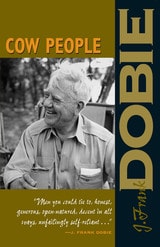
Cow People
By J. Frank Dobie
University of Texas Press, 1981
Cow People records the fading memories of a bygone Texas, the reminiscences of the cow people themselves. These are the Texans of the don't-fence-me-in era, their faces pinched by years of squinting into the desert glare, tanned by the sun and coarsened by the dust of the Chisholm Trail. Their stories are often raucous but just as often quiet as hot plains under a pale Texan sky.
A native Texan, J. Frank Dobie had an inborn knowledge of the men and customs of the trail camps. Cattlemen were as various as the country was big. Ab Blocker was a tall, quiet man who belonged totally to the cattle and the silent plains. But big men often had big lungs. "Shanghai Pierce was the loudest man in the country. He would sit at one end of a day coach and in normal voice hold conversation with some man at the other end of the coach, who of course had to yell, while the train was clanking along. He knew everybody, yelled at everybody he saw."
Texas bred tall men and taller stories. There was Findlay Simpson, who played havoc with fact but whiled away the drivers' long, lonely evenings with his tales. Old Findlay told of a country so wet that it bogged down the shadow of a buzzard, and of cattle that went into hibernation during rugged winters; he once spun yarns for three days straight, outlasting his listeners in a marathon of endurance.
All real cow people—from the cattle drivers to the cattle owners—lived by a simple code based on the individual's integrity. Bothering anyone else's poke or business uninvited was strictly forbidden, and enforcement of this unwritten law was as easy as pulling a trigger. Honesty was taken for granted, and a cowman's name on a check made it negotiable currency.
Yet Texas had its "bad guys"—the crooks, the thieves, even the tightwads. "A world big enough to hold a rattlesnake and a purty woman is big enough for all kinds of people," wrote Dobie. This is the world whose vast and various population the reader will find in Cow People.
Cowards Don't Make History
Orlando Fals Borda and the Origins of Participatory Action ResearchJoanne Rappaport
Duke University Press, 2020
Cowboy Apostle
The Diaries of Anthony W. Ivins, 1875-1932Anthony W. Ivins
Signature Books, 2013
Anthony W. Ivins (1852-1934) migrated to St. George, Utah, at age nine where he later became an influential civic and ecclesiastical leader. He married Elizabeth A. Snow, daughter of apostle Erastus F. Snow. Ivins was a first cousin of Heber J. Grant, and served as his counselor while Grant was LDS president. Ivins filled several Mormon missions to Mexico and presided as the Juarez, Mexico stake president where he performed post-manifesto marriages. He was appointed by the U.S. government as an Indian agent, and was warmly acquainted with Porfirio Diaz, president of Mexico. Involved in politics in St. George, Ivins held aspirations of running as a Democrat for governor of Utah. In 1907, he was ordained an apostle and later advanced to the First Presidency. Tone, as he called himself, was an accomplished horseman who worked with, and invested in, livestock. He was a game-hunting cowboy who became a statesman for both his country and his expanding religious community.
Though in his correspondence Ivins expressed paramount concern for members of his family, he rarely mentions them in his journals. Rather, his diaries chronicle his business and religious observations including meetings with the Quorum of the Twelve and others. He records meetings of the apostles where decisions were made to remove Church leaders from office who had entered into polygamy after 1904, and details the Church’s dealings with the Mexican government to safeguard the Mormon colonists. There are also discussions where doctrinal principles were clarified. For example, in 1912, Ivins reported that President Joseph F. Smith addressed Brigham Young’s Adam God teachings and affirmed that it was “not a doctrine of the Church.” Ivins clearly loved the ruggedness of outdoor life, as evidenced in his passion for hunting, but was also intrigued with the curiosities at the Utah State Fair, the entertaining showmanship of Buffalo Bill, and the refinement of the theater. Tragedy became commonplace as he recorded vigilante-like justice against Indians and Mexicans who were killed for stealing food, and witnessing the execution of John D. Lee, a once favored son of Mormonism. Appendices of Cowboy Apostle include Ivins Record Book of Marriage and an essay by Ivins son, H. Grant Ivins titled “Polygamy in Mexico as Practiced by the Mormon Church, 1895-1905.”
Cowboy Life
Reconstructing an American MythWilliam W. Savage, Jr.
University Press of Colorado, 1993
The central figure in American mythology, the cowboy can be seen everywhere: in films, novels, advertisements, TV, sports, and music. Though his image holds little resemblance to the historical cowboy, it is important because it represents many qualities with which Americans identify, including bravery, honor, chivalry, and individualism.
Accounts by Joseph G. McCoy, Richard Irving Dodge, Charles A. Siringo, and many others detail the daily trials and tribulations of cowboy life on the southern Great Plains-particularly Texas, Indian Territory, and Kansas-from the 1860s to around 1900. And in a new Afterword, editor William W. Savage, Jr. discusses the directions the cowboy myth has taken in the past two decades, as well as the impact the "new Western history" and films such as Lonesome Dove have had on popular culture.
This edition contains a new preface and afterword by the author.
Cowboy in Caracas
A North American's Memoir of Venezuela's Democratic RevolutionCharles Hardy
Northwestern University Press, 2007
No president today is more controversial than Venezuela's Hugo Chávez Frías. Elected in a landslide in 1998, he promised a peaceful revolution. That peaceful dream became a nightmare when Chávez was overthrown in a coup d'état in 2002. Surprisingly, he was brought back to power by his supporters, mostly barrio dwellers, within forty-eight hours. Although Chávez continues to be dogged by controversy, he stays in power because of these supporters who see themselves as active participants in a democratic revolution.
As a former Catholic priest who has lived in Venezuela for the past twenty years and spent eight of those years in a cardboard-and-tin shack in one of Caracas' barrios, Charles Hardy is in a unique position to explain what is taking place. Cowboy in Caracas: A North American's Memoir of Venezuela's Democratic Revolution gives the reader insight into the Venezuelan reality, using an anecdotal presentation drawn from the writer's personal experiences.
Cowboy is a Verb
Notes from a Modern-day RancherRichard Collins
University of Nevada Press, 2019
A born storyteller with a flair for words, Collins breathes life into the geology, history, and interdependency of land, water, and native and introduced plants and animals. He conjures indelible portraits of the hardworking, dedicated people he comes to know. With both humor and humility, he recounts the day-to-day challenges of ranch life such as how to build a productive herd, distribute your cattle evenly across a rough and rocky landscape, and establish a grazing system that allows pastures enough time to recover. He also intimately recounts a battle over the endangered Gila topminnow and how he and his neighbors worked with university range scientists, forest service conservationists, and funding agencies to improve their ranches as well as the ecological health of the Redrock Canyon watershed.
Ranchers who want to stay in the game don’t dominate the landscape; instead, they have to continually study the land and the animals it supports. Collins is a keen observer of both. He demonstrates that patience, resilience, and a common-sense approach to conservation and range management are what counts, combined with an enduring affection for nature, its animals, and the land. Cowboy is a Verb is not a romanticized story of cowboy life on the range, rather it is a complex story of the complicated work involved with being a rancher in the twenty-first-century West.

Cowboying
a tough job in a hard landJames H Beckstead
University of Utah Press, 1991
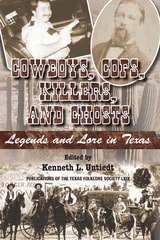
Cowboys, Cops, Killers, and Ghosts
Legends and Lore in TexasKenneth L. Untiedt
University of North Texas Press, 2013

Cowgirls of the Rodeo
Pioneer Professional AthletesMary Lou LeCompte
University of Illinois Press, 1993
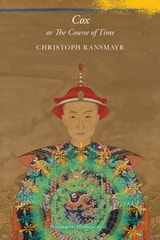
Cox
or, The Course of TimeChristoph Ransmayr
Seagull Books, 2020
The world’s most powerful man, Qiánlóng, emperor of China, invites the famous eighteenth-century clockmaker Alister Cox to his court in Beijing. There, in the heart of the Forbidden City, the Englishman and his assistants are to build machines that mark the passing of time as a child or a condemned man might experience it and that capture the many shades of happiness, suffering, love, and loss that come with that passing.
Mystified by the rituals of a rigidly hierarchical society dominated by an unimaginably wealthy, god-like ruler, Cox musters all his expertise and ingenuity to satisfy the emperor’s desires. Finally, Qiánlóng, also known by the moniker Lord of Time, requests the construction of a clock capable of measuring eternity—a perpetuum mobile. Seizing this chance to realize a long-held dream and honor the memory of his late beloved daughter, yet conscious of the impossibility of his task, Cox sets to work. As the court is suspended in a never-ending summer, festering with evil gossip about the monster these foreigners are creating, the Englishmen wonder if they will ever escape from their gilded cage. More than a meeting of two men, one isolated by power, the other by grief, this is an exploration of mortality and a virtuoso demonstration that storytelling alone can truly conquer time.
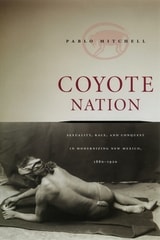
Coyote Nation
Sexuality, Race, and Conquest in Modernizing New Mexico, 1880-1920Pablo Mitchell
University of Chicago Press, 2005
Coyote Nation considers these questions as it explores how New Mexicans evaluated and categorized racial identities through bodily practices. Where ethnic groups were numerous and—in the wake of miscegenation—often difficult to discern, the ways one dressed, bathed, spoke, gestured, or even stood were largely instrumental in conveying one's race. Even such practices as cutting one's hair, shopping, drinking alcohol, or embalming a deceased loved one could inextricably link a person to a very specific racial identity.
A fascinating history of an extraordinarily plural and polyglot region, Coyote Nation will be of value to historians of race and ethnicity in American culture.
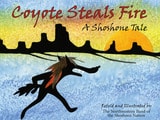
Coyote Steals Fire
A Shoshone TaleNorthwestern Band of the Shoshone Nation
Utah State University Press, 2005
"Coyote was tired of being cold," says this traditional Shoshone tale about the arrival of fire in the northern Wasatch region.
Members of the Northwestern Band of the Shoshone Nation developed the concept for this retelling in collaboration with book arts teacher Tamara Zollinger. Together, they wrote and illustrated the book.
Bright watercolor-and-salt techniques provide a winning background to the hand-cut silhouettes of the characters. The lively, humorous story about Coyote and his friends is complemented perfectly by later pages written by Northwestern Shoshone elders on the historical background and cultural heritage of the Shoshone nation.
An audio CD with the voice of Helen Timbimboo telling the story in Shoshone and singing two traditional songs makes this book not only good entertainment but an important historical document, too.
Coyotes and Culture
Essays from Old MalibuClaire McEachern
University of Nevada Press, 2025
This unique collection of essays offers a gripping exploration of the precarious beauty and peril of California’s iconic coastline. Through essays blending personal narrative, cultural analysis, and history, author Claire McEachern takes us behind the scenes of surf and celebrities to paint a vivid portrait of life on the edge —both literally and metaphorically. From the rugged Santa Monica Mountains to the shimmering Pacific, this work captures the paradoxes of Old Malibu: a place of luxury and risk, natural splendor and ecological vulnerability.
As an East Coast academic married to a fifth-generation Californian cowboy, McEachern brings a wry yet tender lens to the modern American story, delving into what happens to love and community in a land of both devastating wildfires and extravagant wildflowers. Her reflections weave together questions of beauty, resilience, and humanity’s uneasy relationship with nature, creating an unforgettable narrative of place and survival. Readers drawn to the drama of human stories set against larger cultural and environmental forces will find this book both thought-provoking and deeply moving.
Crabgrass Catholicism
How Suburbanization Transformed Faith and Politics in Postwar AmericaStephen M. Koeth
University of Chicago Press, 2025
The 1960s in America were a time of revolt against the stifling conformism embodied in the sprawling, uniform suburbs of the 1950s. Typically, the reforms of the Catholic Church’s Second Vatican Council, which aimed to make the Church more modern and accessible, are seen as one result of that broader cultural liberalization. Yet in Crabgrass Catholicism, Stephen M. Koeth demonstrates that the liberalization of the Church was instead the product of the mass suburbanization that began some fifteen years earlier. Koeth argues that postwar suburbanization revolutionized the Catholic parish, the relationship between clergy and laity, conceptions of parochial education, and Catholic participation in US politics, and thereby was a significant factor in the religious disaffiliation that only accelerated in subsequent decades.
A novel exploration of the role of Catholics in postwar suburbanization, Crabgrass Catholicism will be of particular interest to urban historians, scholars of American Catholicism and religious studies, and Catholic clergy and laity.
Cracked Sidewalks and French Pastry
The Wit and Wisdom of Al McGuireTom Kertscher
University of Wisconsin Press, 2002
Al McGuire was the Mark Twain of college basketball. Never was there a figure in the game so quoted and so quotable, on sports and on the human condition. This book collects more than a hundred of McGuire’s most colorful quotations, plus photographs from his life and career, in a tribute that is funny, poignant, and brimming with his streetwise sagacity.
McGuire, a brash and fiery New Yorker who grew up working in his parents’ saloon, played a rough and tumble game of basketball at St. John’s University and briefly in the NBA before entering the coaching ranks. He reached the pinnacle of his profession and gained national fame at Marquette University in Milwaukee, where in thirteen seasons he compiled a 295-80 record, appeared in nine NCAA tournaments, and won eighty-one home games in a row. He was a fine coach who cared deeply about his players and was beloved by his teams and fans alike, but his flamboyance and his mouth sometimes got him into trouble. The end of his coaching career captivated the nation: McGuire wept on the bench as his Marquette Warriors won the national title.
McGuire then began a ground-breaking career in network broadcasting, adding a zest and unconventionality that the college game had never seen. His sometimes bizarre and always entertaining commentary kept viewers tuned in even after the outcome of a lopsided game was a foregone conclusion. When Al McGuire died of leukemia in 2001, the sports world lost a true original.
Cracker Culture
Celtic Ways in the Old SouthGrady McWhiney
University of Alabama Press, 1989
Cracker Culture is a provocative study of social life in the Old South that probes the origin of cultural differences between the South and the North throughout American history.
Among Scotch-Irish settlers the term “Cracker” initially designated a person who boasted, but in American usage the word has come to designate poor whites. McWhiney uses the term to define culture rather than to signify an economic condition. Although all poor whites were Crackers, not all Crackers were poor whites; both, however, were Southerners.
The author insists that Southerners and Northerners were never alike. American colonists who settled south and west of Pennsylvania during the 17th and 18th centuries were mainly from the “Celtic fringe” of the British Isles. The culture that these people retained in the New World accounts in considerable measure for the difference between them and the Yankees of New England, most of whom originated in the lowlands of the southeastern half of the island of Britain. From their solid base in the southern backcountry, Celts and their “Cracker” descendants swept westward throughout the antebellum period until they had established themselves and their practices across the Old South. Basic among those practices that determined their traditional folkways, values, norms, and attitudes was the herding of livestock on the open range, in contrast to the mixed agriculture that was the norm both in southeastern Britain and in New England. The Celts brought to the Old South leisurely ways that fostered idleness and gaiety. Like their Celtic ancestors, Southerners were characteristically violent; they scorned pacifism; they considered fights and duels honorable and consistently ignored laws designed to control their actions. In addition, family and kinship were much more important in Celtic Britain and the antebellum South than in England and the Northern United States. Fundamental differences between Southerners and Northerners shaped the course of antebellum American history; their conflict in the 1860s was not so much brother against brother as culture against culture.
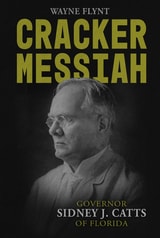
Cracker Messiah
Governor Sidney J. Catts of FloridaWayne Flynt
University of Alabama Press, 1977
The definitive biography of Sidney J. Catts—Florida’s fiery governor who fused pulpit rhetoric with populist politics in the early twentieth century.
Cracker Messiah by Wayne Flynt is a riveting portrait of Sidney J. Catts, one of the most controversial figures in Southern political history. Catts rose from Baptist pulpits and Chautauqua stages to Florida’s governor’s mansion in 1916, riding a wave of rural populism, prohibition fervor, and anti-Catholic rhetoric. His fiery oratory and outsider persona electrified “Florida crackers” at a time when industrial and urban forces were reshaping the South. Yet Catts was more than a demagogue. His administration championed progressive reforms—good roads, penal improvements, vocational education, and even women’s political participation—while his career oscillated between idealism and opportunism.
Wayne Flynt’s meticulously documented biography illuminates this complicated politician, tracing Catts’s battles with the Democratic establishment, his failed Senate bid, and his later flirtations with gambling and real estate during Florida’s boom years. Drawing on interviews, archival sources, and legislative records, Cracker Messiah illuminates the tensions between nativism and reform, faith and hypocrisy, populism and progressivism in the early twentieth-century South. This new edition will appeal to readers of Southern history, political biography, and Progressive Era studies, as well as anyone interested in the roots of American populism and the enduring complexities of cultural and political identity in the Deep South.

Cracking the Einstein Code
Relativity and the Birth of Black Hole PhysicsFulvio Melia
University of Chicago Press, 2009
Albert Einstein’s theory of general relativity describes the effect of gravitation on the shape of space and the flow of time. But for more than four decades after its publication, the theory remained largely a curiosity for scientists; however accurate it seemed, Einstein’s mathematical code—represented by six interlocking equations—was one of the most difficult to crack in all of science. That is, until a twenty-nine-year-old Cambridge graduate solved the great riddle in 1963. Roy Kerr’s solution emerged coincidentally with the discovery of black holes that same year and provided fertile testing ground—at long last—for general relativity. Today, scientists routinely cite the Kerr solution, but even among specialists, few know the story of how Kerr cracked Einstein’s code.
Fulvio Melia here offers an eyewitness account of the events leading up to Kerr’s great discovery. Cracking the Einstein Code vividly describes how luminaries such as Karl Schwarzschild, David Hilbert, and Emmy Noether set the stage for the Kerr solution; how Kerr came to make his breakthrough; and how scientists such as Roger Penrose, Kip Thorne, and Stephen Hawking used the accomplishment to refine and expand modern astronomy and physics. Today more than 300 million supermassive black holes are suspected of anchoring their host galaxies across the cosmos, and the Kerr solution is what astronomers and astrophysicists use to describe much of their behavior.
By unmasking the history behind the search for a real world solution to Einstein’s field equations, Melia offers a first-hand account of an important but untold story. Sometimes dramatic, often exhilarating, but always attuned to the human element, Cracking the Einstein Code is ultimately a showcase of how important science gets done.
Cracks in the Iron Closet
Travels in Gay and Lesbian RussiaDavid Tuller
University of Chicago Press, 1997
"Tuller's observant reporting and personal experiences make for absorbing reading: the human comedy rendered in unexpected ways."—New Yorker
"Anyone who thinks San Francisco is the world capital of sexual polymorphism should read this book."—Adam Goodheart, Washington Post
"[This book is] is profoundly moving."—Jim Van Buskirk, San Francisco Chronicle

Cracks in the Wall
Beyond Apartheid in Palestine/IsraelBen White
Pluto Press, 2018
But while the situation on the ground is bleak, Ben White argues that there are widening cracks in Israel's traditional pillars of support. Opposition to Israeli policies and even critiques of Zionism are growing in Jewish communities, as well as amongst Western progressives. The election of Donald Trump has served as a catalyst for these processes, including the transformation of Israel from a partisan issue into one that divides the US establishment. Meanwhile, the Palestinian-led boycott campaign is gathering momentum, prompting a desperate backlash by Israel and its allies.
With sharp analysis, Ben White says now is the time to plot a course that avoids the mistakes of the past - a way forward beyond apartheid in Palestine. The solution is not partition and ethnic separation, but equality and self-determination - for all.
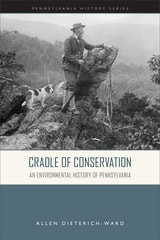
Cradle of Conservation
An Environmental History of PennsylvaniaAllen Dieterich-Ward
Temple University Press, 2024
Cradle of Conservation moves across time and place, from the Haudenosaunee people of the Susquehanna Valley, to the iron furnaces of nineteenth-century Pittsburgh, to the diesel trucks on the twentieth-century Pennsylvania Turnpike. In addition, Dieterich-Ward explores the histories of Philadelphia’s Schuylkill River and the state’s anthracite region and traces the environmental movements and crises that have led to public policy changes in the face of climate change.
Cradle of Conservation deepens our understanding of how Pennsylvanians have conserved and consumed.
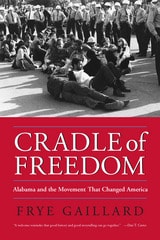
Cradle of Freedom
Alabama and the Movement That Changed AmericaFrye Gaillard
University of Alabama Press, 2006
Cradle of Freedom puts a human face on the story of the black American struggle for equality in Alabama during the 1960s.
While exceptional leaders such as Martin Luther King Jr., Rosa Parks, Fred Shuttlesworth, Ralph Abernathy, John Lewis, and others rose up from the ranks and carved their places in history, the burden of the movement was not carried by them alone. It was fueled by the commitment and hard work of thousands of everyday people who decided that the time had come to take a stand.
Cradle of Freedom is tied to the chronology of pivotal events occurring in Alabama the Montgomery bus boycott, the Freedom Rides, the Letter from the Birmingham Jail, the bombing of the 16th Street Baptist Church, Bloody Sunday, and the Black Power movement in the Black Belt. Gaillard artfully interweaves fresh stories of ordinary people with the familiar ones of the civil rights icons. We learn about the ministers and lawyers, both black and white, who aided the movement in distinct ways at key points. We meet Vernon Johns, King's predecessor at the Dexter Avenue Baptist Church in Montgomery, who first suggested boycotting the buses and who wrote later, "It is a heart strangely un-Christian that cannot thrill with joy when the least of men begin to pull in the direction of the stars." We hear from John Hulett who tells how terror of lynching forced him down into ditches whenever headlights appeared on a night road. We see the Edmund Pettus Bridge beatings from the perspective of marcher JoAnne Bland, who was only a child at the time. We learn of E. D. Nixon, a Pullman porter who helped organize the bus boycott and who later choked with emotion when, for the first time in his life, a white man extended his hand in greeting to him on a public street.
How these ordinary people rose to the challenges of an unfair system with a will and determination that changed their times forever is a fascinating and extraordinary story that Gaillard tells with his hallmark talent. Cradle of Freedom unfolds with the dramatic flow of a novel, yet it is based on meticulous research. With authority and grace, Gaillard explains how the southern state deemed the cradle of the Confederacy became with great struggle, some loss, and much hope the cradle of freedom.
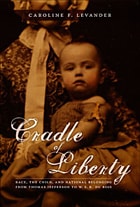
Cradle of Liberty
Race, the Child, and National Belonging from Thomas Jefferson to W. E. B. Du BoisCaroline F. Levander
Duke University Press, 2006
Reading texts by John Adams, Thomas Paine, Harriet Beecher Stowe, Augusta J. Evans, Mark Twain, Pauline Hopkins, William James, José Martí, W. E. B. Du Bois, and others, Levander traces the child as it figures in writing about several defining events for the United States. Among these are the Revolutionary War, the US-Mexican War, the Civil War, and the US expulsion of Spain from the Caribbean and Cuba. She charts how the child crystallized the concept of self—a self who could affiliate with the nation—in the early national period, and then follows the child through the rise of a school of American psychology and the period of imperialism. Demonstrating that textual representations of the child have been a potent force in shaping public opinion about race, slavery, exceptionalism, and imperialism, Cradle of Liberty shows how a powerful racial logic pervades structures of liberal democracy in the United States.
Craft and the Kingly Ideal
Art, Trade, and PowerBy Mary W. Helms
University of Texas Press, 1993
In ancient Mediterranean cultures, diamonds were thought to endow their owners with invincibility. In contemporary United States culture, a foreign-made luxury car is believed to give its owner status and prestige. Where do these beliefs come from?
In this study of craft production and long-distance trade in traditional, nonindustrial societies, Mary W. Helms explores the power attributed to objects that either are produced by skilled artisans and/or come from "afar." She argues that fine artisanship and long-distance trade, both of which are more available to powerful elites than to ordinary people, are means of creating or acquiring tangible objects that embody intangible powers and energies from the cosmological realms of gods, ancestors, or heroes. Through the objects, these qualities become available to human society and confer honor and power on their possessors.
Helms’ novel approach equates trade with artistry and emphasizes acquisition rather than distribution. She rejects the classic Western separation between economics and aesthetics and offers a new paradigm for understanding traditional societies that will be of interest to all anthropologists and archaeologists.
Craft of Old-Master Drawings
James Watrous
University of Wisconsin Press, 1967
A comprehensive study of the techniques of drawing, this is both a historical work, covering the period from the late Middle Ages to the present, and a useful manual for contemporary artists. It presents the old masters’ techniques by means of a thorough study of the historical and written evidence of the tools and materials used. The author also includes a series of workshop procedures he has developed with which the contemporary artist may produce the equivalents of the techniques of earlier draughtsmen. This book comprises a body of knowledge that is essential to students of art history, curators, collectors and artists, and is a significant addition to the literature on drawing.
In addition to his scholarly investigation of earlier practices, the author identifies materials and processes used by such important artists as Rembrandt, Van Gogh, Romney, Picasso, Michelangelo, Watteau, Holbein, Tiepolo, and Delacroix. For the artist interested in reproducing the effects achieved by these and many other acknowledged masters, there are full discussions and specific directions concerning the making of inks, styluses, reed and quill pens, fabricated chalks, and instructions for preparing grounds for metalpoint drawings. At every step, the discussion is supplemented with illustrations from laboratory experiments and from drawings by both old and contemporary artists. Of the more than sixty illustrations included, thirty-six are reproductions of master works, and among the others there are microphotographic enlargements of detail showing the differences in density and texture produced by various tools on different papers or grounds. Thus, as a collection of master drawings, the book is worthy of the art lover’s library; as a technical study, it is an indispensable aid to the art student and practicing artist.
Crafting America
Artists and Objects, 1940 to TodayJen Padgett
University of Arkansas Press, 2020
Craft is a diverse, democratic art form practiced by Americans of every gender, age, ethnicity, and class. Crafting America traces this expansive range of skilled making in a variety of forms, from ceramics and wood to performance costume and community-based practice. In exploring the intertwining of craft and American experience, this volume reveals how artists leverage their craft to realize the values of life, liberty, and the pursuit of happiness.
Accompanying an exhibition of the same title organized by Crystal Bridges Museum of American Art, Crafting America features contributions from scholars that illuminate craft’s relationship to ritual and memory, personal independence, abstraction, and Native American histories. The richly illustrated catalog section—with more than a hundred color images accompanied by lively commentary—presents a vivid picture of American craft over the past eight decades, offering fresh insights on the relationships between objects.
Building upon recent advances in craft scholarship and encouraging more inclusive narratives, Crafting America presents a bold statement on the vital role of craft within the broader context of American art and identity.
Crafting Equality
America's Anglo-African WordCeleste Michelle Condit and John Louis Lucaites
University of Chicago Press, 1993
Drawing upon little studied speeches, newspapers, magazines, and other public discourse, Condit and Lucaites survey the shifting meaning of equality from 1760 to the present as a process of interaction and negotiation among different social groups in American politics and culture. They make a powerful case for the critical role of black Americans in actively shaping what equality has come to mean in our political conversation by chronicling the development of an African-American rhetorical community. The story they tell supports a vision of equality that embraces both heterogeneity and homogeneity as necessary for maintaining the balance between liberty and property.
A compelling revision of an important aspect of America's history, Crafting Equality will interest anyone wanting to better understand the role public discourse plays in affecting the major social and political issues of our times. It will also interest readers concerned with the relationship between politics and culture in America's increasingly multi-cultural society.
Crafting Medicine
Artisans, Knowledge, and the Common Man in Hieronymus Brunschwig's Books on Surgery and DistillationTillmann Taape
University of Chicago Press, 2025
Between 1497 and 1512, Hieronymus Brunschwig (ca. 1450–ca. 1530), an obscure craftsman from Strasbourg, wrote books on surgery and pharmacy that transformed medical expertise, how it was codified in print, and how it was communicated to new audiences. Brunschwig was an unlikely author. He apprenticed as a surgeon in the local guild and dispensed medicines from his own shop. But he was remarkably well-read in surgery, alchemy, and medical theory, even if he lacked a university education. His unique authorial voice spoke to the healing practices of craftsmen and common people in a down-to-earth German dialect.
Crafting Medicine, by Tillmann Taape, is the first in-depth study of Brunschwig and his works. In it, Taape argues that Brunschwig’s writings shaped a nascent tradition of vernacular medicine. Brunschwig’s books represent a key moment in the history of medical print, for they conveyed medical expertise to a new readership of nonacademic practitioners, who became a key audience for a flood of vernacular medical publications during the sixteenth century. Using Brunschwig’s books as a unique window into the past, Crafting Medicine beautifully reconstructs the world of science inhabited by Brunschwig, his fellow craftsmen, his translators, and his readers.
Crafting Mexico
Intellectuals, Artisans, and the State after the RevolutionRick A. López
Duke University Press, 2010
Crafting Prehispanic Maya Kinship
Bradley E. Ensor
University of Alabama Press, 2013
By contextualizing classes and their kinship behavior within the overall political economy, Crafting Prehispanic Maya Kinship provides an example of how archaeology can help to explain the formation of disparate classes and kinship patterns within an ancient state-level society.
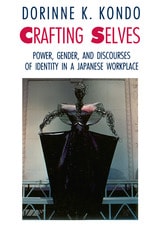
Crafting Selves
Power, Gender, and Discourses of Identity in a Japanese WorkplaceDorinne K. Kondo
University of Chicago Press, 1990
"Kondo's work is significant because she goes beyond disharmony, insisting on complexity. Kondo shows that inequalities are not simply oppressive-they are meaningful ways to establish identities."—Nancy Rosenberger, Journal of Asian Studies
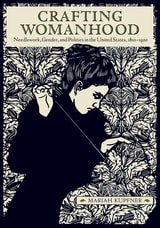
Crafting Womanhood
Needlework, Gender, and Politics in the United States, 1810-1920Mariah Kupfner
University of Delaware Press, 2027
Decorative needlework was a key medium through which American women constructed femininity and its relationship to public and political concerns in the nineteenth and early twentieth centuries. Through samplers, needlecases, lace coats, silk sofas, cotton scraps, banners, and other textile things, scholars can see the ways in which women and girls related to education, property-holding, slavery and freedom, labor, and women’s right to vote. Needlework’s durable association with “traditional” notions about womanhood made it a potent resource through which to make gender in expansive and meaningful ways that had profound public, political implications as educational opportunities for girls and women were expanding, and the antislavery and women's suffrage movements were growing. Indeed, needlework's very conventionality and relationship to the past made it a useful tool for crafting womanhood anew.
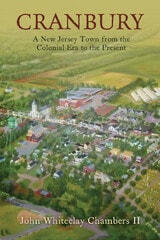
Cranbury
A New Jersey Town from the Colonial Era to the PresentChambers, John Whiteclay
Rutgers University Press, 2012
Winner of the 2013 Award of Merit by the American Association for State and Local History Leadership in History awards committee
Winner of the 2013 New Jersey Studies Academic Alliance, Author Awards, Non-fiction Popular Category
One of the oldest towns in New Jersey, Cranbury has a long and noteworthy history that is in part distinctive and in part broadly representative of larger themes in the development of the state and the nation. In this beautifully illustrated book sponsored by Cranbury Landmarks, Inc., historian John Whiteclay Chambers II links the narrative of this remarkable place to contemporary debates about suburbanization and land-use planning.
Founded in 1697 and soon featuring an inn, a gristmill, and a church, the village prospered due to its strategic location on important transportation routes between New York and Philadelphia and its fertile, productive farmland. David Brainerd, a famous and controversial young missionary, came there to preach to the Lenape Indians. In 1778, George Washington and his army stayed there on their way to the Battle of Monmouth. In the nineteenth century, roadways, railroads, and turnpikes spurred the town’s commerce and agriculture. Yet unlike many old agricultural centers transformed by suburbanization in the twentieth century, Cranbury has retained its picturesque, small-town image and much of its charm.
Cranbury has the feel of a well-preserved nineteenth-century village, remarkable for its intact and cohesive domestic and commercial architecture—a status recognized when it was placed on the State and National Registers of Historic Places. In the last several decades, an active citizenry has innovatively linked the historic preservation of the town center with the maintenance of adjoining farmland, stream corridors, and wildlife habitats. How Cranbury preserved much of its character while accommodating economic growth provides a central theme in this book. Preserving the best of the past while astutely meeting the challenges of the present, Cranbury’s history offers an inspiration for active civic participation, a model for enlightened development, and an engaging American story.
A project of Cranbury Landmarks, Inc.
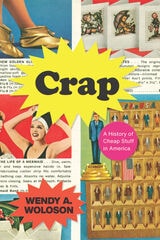
Crap
A History of Cheap Stuff in AmericaWendy A. Woloson
University of Chicago Press, 2020
In Crap: A History of Cheap Stuff in America, Wendy A. Woloson takes seriously the history of objects that are often cynically-made and easy to dismiss: things not made to last; things we don't really need; things we often don't even really want. Woloson does not mock these ordinary, everyday possessions but seeks to understand them as a way to understand aspects of ourselves, socially, culturally, and economically: Why do we—as individuals and as a culture—possess these things? Where do they come from? Why do we want them? And what is the true cost of owning them?
Woloson tells the history of crap from the late eighteenth century up through today, exploring its many categories: gadgets, knickknacks, novelty goods, mass-produced collectibles, giftware, variety store merchandise. As Woloson shows, not all crap is crappy in the same way—bric-a-brac is crappy in a different way from, say, advertising giveaways, which are differently crappy from commemorative plates. Taking on the full brilliant and depressing array of crappy material goods, the book explores the overlooked corners of the American market and mindset, revealing the complexity of our relationship with commodity culture over time.
By studying crap rather than finely made material objects, Woloson shows us a new way to truly understand ourselves, our national character, and our collective psyche. For all its problems, and despite its disposability, our crap is us.
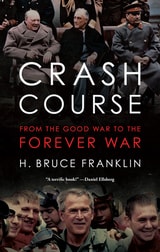
Crash Course
From the Good War to the Forever WarFranklin, H. Bruce
Rutgers University Press, 2024
Now, after fifty years as a renowned cultural historian, Franklin offers a set of hard-learned lessons about modern American history. Crash Course is essential reading for anyone who wonders how America ended up where it is today: with a deeply divided and disillusioned populace, led by a dysfunctional government, and mired in unwinnable wars. It also finds startling parallels between America’s foreign military exploits and the equally brutal tactics used on the home front to crush organized labor, antiwar, and civil rights movements.
More than just a memoir or a history book, Crash Course gives readers a unique firsthand look at the building of the American empire and the damage it has wrought. Shocking and gripping as any thriller, it exposes the endless deception of the American public, and reveals from inside how and why many millions of Americans have been struggling for decades against our own government in a fight for peace and justice.
Crash
Cinema and the Politics of Speed and StasisKaren Beckman
Duke University Press, 2010
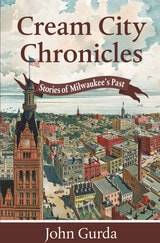
Cream City Chronicles
Stories of Milwaukee’s PastJohn Gurda
Wisconsin Historical Society Press, 2016
Creating American Civilization
A Genealogy of American Literature as an Academic DisciplineDavid Shumway
University of Minnesota Press, 1994
“Shumway has written a penetrating and provocative account of the making of American civilization as an academic field.”
Gerald GraffUniversity of ChicagoDavid R. Shumway contends that American literature is the product of study - the deliberate invention of a discipline seeking to define the character and legitimate the existence of a specifically American civilization. He traces the various reconstitutions of American literature by examining the discipline’s practices and techniques, discourses and structures, paradigms and unstated assumptions.This genealogy begins around 1890, when American literature as defined by institutions outside the academy, such as magazines and publishing houses, acquired much of the ideology it would display in later phases, including sexism, racism, and class bias. Singular in its treatment of American literary study as a discipline rather than as criticism and in its insistence on the cultural and political work carried on by this discipline, Creating American Civilization will engage literary theorists and historians as well as individuals with an interest in American literature.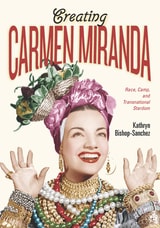
Creating Carmen Miranda
Race, Camp, and Transnational StardomKathryn Bishop-Sanchez
Vanderbilt University Press, 2016
This final performance in many ways exemplified the power of Carmen Miranda. The actress, singer, and dancer pursued a relentless mission to demonstrate the provocative theatrical force of her cultural roots in Brazil. Armed with bare-midriff dresses, platform shoes, and her iconic fruit-basket headdresses, Miranda stole the show in films like That Night in Rio and The Gang's All Here. For American film audiences, her life was an example of the exoticism of a mysterious, sensual South America. For Brazilian and Latin American audiences, she was an icon. For the gay community, she became a work of art personified and a symbol of courage and charisma.
In Creating Carmen Miranda, Kathryn Bishop-Sanchez takes the reader through the myriad methods Miranda consciously used to shape her performance of race, gender, and camp culture, all to further her journey down the road to becoming a legend.