Results by title
16 books match the query 'Socialists'
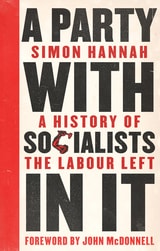
A Party with Socialists in It
A History of the Labour LeftSimon Hannah
Pluto Press, 2018
A Party with Socialists in It addresses those questions and more, telling the story of the Labour Party from its origins to today, showing how at every turn it has struggled with the tension between the rights and demands of workers and a more centrist position. As Jeremy Corbyn’s leadership attempts to revitalize the party after the initial success of the Blair years turned into disappointment and disenchantment, this clear-eyed history could not be more timely.

A Party with Socialists in It
A History of the Labour LeftSimon
Pluto Press, 2022
A smart and succinct history of the Labour left
*A Guardian Book of the Day*
The defeat of socialist firebrand Jeremy Corbyn as Labour Leader in 2019 confirmed Tony Benn's famous retort 'the Labour party has never been a socialist party, although there have always been socialists in it.'
For over a hundred years, the British Labour Party has been a bastion for working-class organization and struggle. However, has it ever truly been on the side of the workers? Where do its interests really lie? And can we rely on it to provide a barrier against right-wing forces?
Simon Hannah's smart and succinct history of the Labour left guides us through the twists and turns of the party, from the Bevanite movement and the celebrated government of Clement Attlee, through the emergence of a New Left in the 1970s and the Blairism of the 1990s, to Corbyn's defeat and his replacement by Keir Starmer.
This new edition is updated throughout, with a new final chapter and conclusion bringing the story up to date.

Adolphe Gouhenant
French Revolutionary, Utopian Leader, and Texas Frontier PhotographerPaula Selzer
University of North Texas Press, 2019
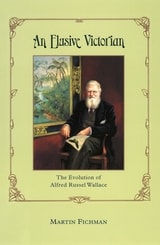
An Elusive Victorian
The Evolution of Alfred Russel WallaceMartin Fichman
University of Chicago Press, 2003
Fichman examines not only Wallace's scientific work as an evolutionary theorist and field naturalist but also his philosophical concerns, his involvement with theism, and his commitment to land nationalization and other sociopolitical reforms such as women's rights. As Fichman shows, Wallace worked throughout his life to integrate these humanistic and scientific interests. His goal: the development of an evolutionary cosmology, a unified vision of humanity's place in nature and society that he hoped would ensure the dignity of all individuals.
To reveal the many aspects of this compelling figure, Fichman not only reexamines Wallace's published works, but also probes the contents of his lesser known writings, unpublished correspondence, and copious annotations in books from his personal library. Rather than consider Wallace's science as distinct from his sociopolitical commitments, An Elusive Victorian assumes a mutually beneficial relationship between the two, one which shaped Wallace into one of the most memorable characters of his time. Fully situating Wallace's wide-ranging work in its historical and cultural context, Fichman's innovative and insightful account will interest historians of science, religion, and Victorian culture as well as biologists.
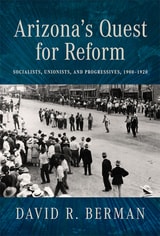
Arizona’s Quest for Reform
Socialists, Unionists, and Progressives, 1900–1920David R. Berman
University of Arizona Press, 2026
In Arizona’s Quest for Reform, David R. Berman traces the rise and fall of a dynamic coalition of socialists, labor activists, and progressive Democrats led by the influential Governor George Hunt as they pursued sweeping reforms in a rapidly changing state. From the fight for workers’ rights and women’s suffrage to the use of the initiative process and the role of radical newspapers, Berman brings to life the people and movements that shaped Arizona’s early political identity.
Drawing on extensive primary sources and organized in a clear chronological structure, Berman’s study reveals the tensions, alliances, and dramatic events that defined Arizona’s reform efforts between 1900 and 1920. The book explores the impact of powerful mining interests, railroad companies, and labor unions, while also examining the racialization of Mexican miners and their evolving role in the labor movement. Through vivid storytelling and rigorous scholarship, Berman uncovers the complexities of political change in a state straddling the transition from territory to statehood.
This landmark work will appeal to scholars of western history, labor studies, and political science, as well as general readers interested in Arizona’s unique place in the national Progressive movement. Arizona’s Quest for Reform not only deepens our understanding of the past but also offers timely insights into the enduring challenges of coalition building, grassroots activism, and political reform. It is a vital contribution to the study of Arizona and the American West.

Caliban's Freedom
The Early Political Thought of C.L.R. JamesAnthony Bogues
Pluto Press, 1997
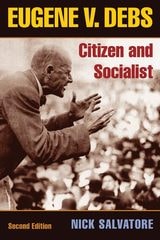
Eugene V. Debs
Citizen and SocialistNick Salvatore
University of Illinois Press, 2007
Eugene Debs (1855-1926) is regarded by many as American history's premier labor advocate. He was the leader of the Socialist party, five-time Socialist candidate for president, outspoken on the rights of all workers, and a persistent defender of America's democratic traditions.
Nick Salvatore's acclaimed biography offers a major reevaluation of Debs, the movements he launched, and his belief in American Socialism as an extension of the nation's democratic traditions. He also shows the relationship between Debs's public image and his private life as child, sibling, husband, and lover. Salvatore's Debs--weaknesses intact--emerges as a complex man, frustrated and angered by the glaring inequities of a new economic order, and willing to risk his freedom to preserve the essence of democratic society.
Friends of Alice Wheeldon
Sheila Rowbotham
Pluto Press, 1986
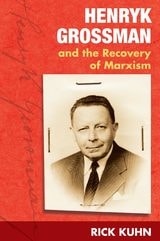
Henryk Grossman and the Recovery of Marxism
Rick Kuhn
University of Illinois Press, 2006
Rick Kuhn’s Henryk Grossman and the Recovery of Marxism is the definitive study of the life and work of this renowned economist, activist, and intellectual. As a young man, Grossman joined the socialist movement and participated in Jewish workers' strikes and demonstrations, as well as in boycotts against employers and the Austro-Hungarian state. He moved to Vienna, but was driven back to Poland by the Austrian state's racist citizenship policies. A member of the illegal Polish Communist Party, Grossman was frequently arrested and jailed, finally leaving Poland for a post at the Institute for Social Research in Frankfurt am Main, which gave rise to the famous 'Frankfurt School'.
Grossman published his best known work in Frankfurt, including studies of Marx's method in Capital and theories of economic crisis that remain influential today. In tracing Grossman's experiences, from Kraków to New York, and offering a detailed account of his ideas, the biography provides an intimate account of key events in twentieth century history, including the politicization of east European Jewry, the World Wars, the rise of Stalinism and Nazism, and the cold war.
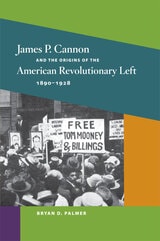
James P. Cannon and the Origins of the American Revolutionary Left, 1890-1928
Bryan D. Palmer
University of Illinois Press, 2010
Johann Most
Life of a RadicalTom Goyens
University of Illinois Press, 2025
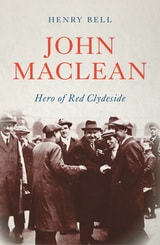
John Maclean
Hero of Red ClydesideHenry Bell
Pluto Press, 2018
Feared by the government, adored by workers, celebrated by Lenin and Trotsky. The head of British Military Intelligence called John Maclean (1879–1923) “the most dangerous man in Britain.”
This new biography explores the events that shaped the life of a momentous man—from the Great War and the Great Unrest to the Rent Strike and the Russian Revolution. It examines his work as an organizer and educator, his imprisonment and hunger strike, and his rise to the position of Britain’s most famous revolutionary. At a moment when radical politics is drawing renewed attention and support, Maclean’s example of activism and commitment is as timely as ever.

Life in the Writings of Storm Jameson
A BiographyElizabeth Maslen
Northwestern University Press, 2014
Margaret Storm Jameson (1891–1986) is primarily known as a compelling essayist; her stature as a novelist and champion of the dispossessed is largely forgotten. In Life in the Writings of Storm Jameson, Elizabeth Maslen reveals a figure who held her own beside fellow British women writers, including Virginia Woolf; anticipated the Angry Young Women, such as Doris Lessing; and was an early champion of such European writers as Arthur Koestler and Czesław Miłosz. Jameson was a complex character whose politics were grounded in social justice; she was passionately antifascist—her novel In the Second Year (1936) raised the alarm about Nazism—but always wary of communism. An eloquent polemicist, Jameson was, as president of the British P.E.N. during the 1930s and 1940s, of invaluable assistance to refugee writers. Elizabeth Maslen’s biography introduces a true twentieth century hedgehog, whose essays and subtly experimental fiction were admired in Europe and the States.
Lithuanian Social Democracy in Perspective, 1893-1914
Leonas Sabaliunas
Duke University Press, 1990
But Sabaliunas also considers such partners and rivals as the Jewish Bund, the Polish Socialist Party, the Social Democracy of the Kingdom of Poland and Lithuania, and the Russian Social Democratic Labor Party. He focuses on the appearance of socialist parties at the local level, the politics of assertive behavior during the Russian Revolution of 1905–1906, the nature of interparty relations, and efforts to promote party unity. In particular, he investigates the projected relationship between Russia and its subject nationalities—a cardinal concern today as the Baltic peoples attempt to distance themselves from their Russian neighbors.
Sabaliunas clarifies current massive Lithuanian opposition to Moscow and to its version of socialism. He stresses that in Lithuania the socialist movement from the beginning not only sought solutions to social and economic problems but also addressed issues of ethnic and national interest, especially the question of national sovereignty.
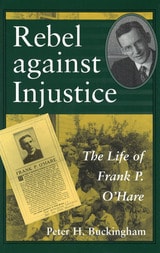
Rebel against Injustice
The Life of Frank P. O'HarePeter H. Buckingham
University of Missouri Press, 1996
Rebel against Injustice, a carefully crafted biography of Frank P. O'Hare (1877-1960), socialist, political activist, editor, and husband of prominent radical Kate Richards O'Hare, is the first study of a much-neglected but important figure of the American Left whose contributions are often referred to, in passing, in many other works.
Abandoned by his father at the age of four, O'Hare grew up in the Kerry Patch slum of St. Louis. Although he began his career in business, O'Hare turned to socialism with the sublime dream of bringing about a better world. While attending a school for Socialist organizers, he met Kate Richards, and the young couple forged a personal and professional partnership. Settling in Oklahoma, the O'Hares helped build a strong grassroots movement through grueling lecture tours and colorful camp meetings. In 1911, Frank, his wife, and their four children moved to St. Louis, where they transformed the National Rip-Saw into a popular Socialist monthly magazine. It was there that Frank found his niche as a Socialist impresario, editing the writings and arranging the tours of his "stars," Kate O'Hare and Eugene Debs.
A series of calamities, including the breakup of his marriage, brought Frank O'Hare near the edge of despair in the mid-1920s. Divorcing and remarrying, he made a new life in St. Louis. Plunging back into radical activism, he worked for the Federated Press syndicate. During the last twenty years of his life, O'Hare wrote for the St. Louis Post-Dispatch, worked as a business consultant, and continued his involvement as a community activist in St. Louis. Although Frank O'Hare has long been dismissed as a lost soul without Kate Richards O'Hare, Rebel against Injustice shows that he continued to be a presence in St. Louis and never stopped his fight against injustice. In 1958, a Teamster newspaper referred to O'Hare as "one of the truly great men of St. Louis--possibly the ONLY one."
Based upon a close study of the largely untapped Frank P. O'Hare papers, this well-written biography will enlighten readers about the organizational choices behind the success of American Socialism, while shedding new light on the lives and activities of many prominent American radicals.
Rosa Luxemburg and the Struggle for Democratic Renewal
Jon Nixon
Pluto Press, 2018