Results by title
1993 books match the query 'Latin America' and 175 start with c
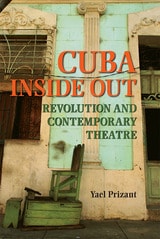
Cuba Inside Out
Revolution and Contemporary TheatreYael Prizant
Southern Illinois University Press, 2014
The collapse of the Soviet Union in 1989 drastically altered life in Cuba. Theatre artists were faced with new economic and social realities that changed their day-to-day experiences and ways of looking at the world beyond the island. The Cuban Revolution’s resistance to and intersections with globalization, modernity, emigration and privilege are central to the performances examined in this study. The first book-length study in English of Cuban and Cuban American plays, Cuba Inside Out provides a framework for understanding texts and performances that support, challenge, and transgress boundaries of exile and nationalism. Prizant reveals the intricacies of how revolution is staged theatrically, socially, and politically on the island and in the Cuban diaspora. This close examination of seven plays written since 1985 seeks to alter how U.S. audiences perceive Cuba, its circumstances, and its theatre.

Cuba Under Castro
Ambassadorial ReflectionsDavid Brighty, Andrew Palmer, Philip McLean, and David Ridgway
University of London Press, 2004
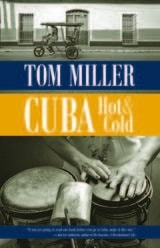
Cuba, Hot and Cold
Tom Miller
University of Arizona Press, 2017
A brilliant raconteur and expert on Cuba, Miller is full of enthralling behind-the-scenes stories. His subjects include one of the world’s most resourceful master instrument makers, the famous photo of Che Guevara, and the explosion of the USS Maine. A veteran of the underground press of the 1960s, Miller describes the day Cuba’s State Security detained him for distributing copies of the United Nations Human Rights Declaration of 1948 and explains how the dollar has become the currency of necessity. His warm reminiscences explain the complexities of life in Cuba.
Since his first visit to the island thirty years ago, Miller has shown us the real people of Havana and the countryside, the Castros and their government, and the protesters and their rigor. His first book on Cuba, Trading with the Enemy, brought readers into the “Special Period,” Fidel’s name for the country’s period of economic free fall. Cuba, Hot and Cold brings us up to date, providing intimate and authentic glimpses of day-to-day life.
Cuban Cinema
Michael Chanan
University of Minnesota Press, 2004

Cuban Miami
Robert M Levine
Rutgers University Press, 2000
For two centuries, Cuban exiles have found their way to the United States, especially to Florida. But since Castro's victory in 1959, Miami has seen almost one million Cubans arrive by sea and air. The impact on this area has been enormous. Miami---known as the "Exile Capital"---has a greater cultural affinity to Havana and the rest of Latin America than to Tallahassee, Florida's capital.
Cuban Miami is the first analytical, photographic record of Cuban migration to south Florida. Robert M. Levine and Moises Asis have interviewed members of every sector of the Cuban exile community, from the first pioneers to the mass waves in the early 1960s to those who arrived by raft during the late 1990s. In their wide-ranging investigation of Cuban-U.S. history, they touch upon all aspects of Cuban influence: politics, cuisine, music, assimilation, discrimination, and institution buildings. Miami has more Cuban food establishments than the nearby island does. The city has been fertile ground for germinating a unique synthesis of Cuban and Americans are the most prosperous immigrant group in the United States today, this success has come at a price---living in exile can exact a personal toll.
Cuban Miami is a feast for the eyes, including 180 photographs and original cartoons drawn for the book by Jose M. Varela, a well-known member of the Cuban-American community.
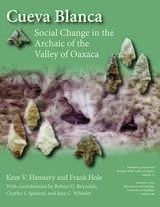
Cueva Blanca
Social Change in the Archaic of the Valley of OaxacaKent V. Flannery and Frank Hole
University of Michigan Press, 2019
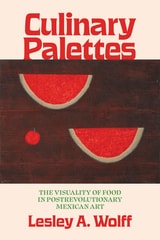
Culinary Palettes
The Visuality of Food in Postrevolutionary Mexican ArtLesley A. Wolff
University of Texas Press, 2025
2026 Mejor libro Humanidades, Mexico Section of the Latin American Studies Association
2026 Honorable Mention, First Book Prize, Cultural Studies Association
2025 Excellence in Scholarly Research and Publication Award, SECAC (formerly the Southeastern College Art Conference)
How the visual culture of food, cookery, and consumption played a central role in the making of postrevolutionary Mexico.
Postrevolutionary Mexico City was a site of anxious nation-building, as rampant modernization converged and clashed with the nation’s growing nostalgia for its pre-Columbian heritage. During this volatile period, food became a meaningful symbol for a Mexican citizenry seeking new modes of national participation.
Culinary Palettes explores how the artistic invocation of food cultures became an arena in which to negotiate the political entanglements of postrevolutionary Mexico. Lesley Wolff casts a nuanced eye on the work of visual artists such as Tina Modotti, Carlos González, and Rufino Tamayo, who nurtured the symbolic and performative power of iconic foods such as pulque, mole poblano, and watermelon. Through analysis of a wide array of visual evidence, including paintings, architecture, vintage postcards, menus, and cookbooks, Culinary Palettes demonstrates how these artists positioned their work within a broad visual landscape that relied upon the power of Mexican foodways in the urban and national imagination. In the studios of modernists, Wolff argues, artistic production, foodways, and Indigeneity proved to be mutually constitutive—and at times weaponized—agents in articulating competing claims to a new nationhood.
Cultivating Coffee
The Farmers of Carazo, Nicaragua, 1880–1930Julie A. Charlip
Ohio University Press, 2002
Many scholars of Latin America have argued that the introduction of coffee forced most people to become landless proletarians toiling on large plantations. Cultivating Coffee tells a different story: small and medium-sized growers in Nicaragua were a vital part of the economy, constituting the majority of the farmers and holding most of the land.
Alongside these small commercial farmers was a group of subsistence farmers, created by the state’s commitment to supplying municipal lands to communities. These subsistence growers became the workforce for their coffee-growing neighbors, providing harvest labor three months a year. Mostly illiterate, perhaps largely indigenous, they nonetheless learned the functioning of the new political and economic systems and used them to acquire individual plots of land.
Julie Charlip’s Cultivating Coffee joins the growing scholarship on rural Latin America that demonstrates the complexity of the processes of transition to expanded export agriculture in the nineteenth and twentieth centuries, emphasizing the agency of actors at all levels of society. It also sheds new light on the controversy surrounding landholding in Nicaragua during the Sandinista revolution.
Cultivating Crisis
The Human Cost of Pesticides in Latin AmericaBy Douglas L. Murray
University of Texas Press, 1994
Since World War II, the Green Revolution has boosted agricultural production in Latin America and other parts of the Third World, with money, technical assistance, and other forms of aid from United States development agencies. But the Green Revolution came at a high price—massive pesticide dependence that has caused serious socioeconomic and public health problems and widespread environmental damage.
In this study, Douglas Murray draws on ten years of field research to tell the stories of international development strategies, pesticide problems, and agrarian change in Latin America. Interwoven with his considerations of economic and geopolitical dimensions are the human consequences for individual farmers and rural communities.
This highly interdisciplinary study, integrating the perspectives of sociology, ecology, economics, political science, and public health, adds an important voice to the debate on opportunities for and obstacles to more lasting and sustainable development in the Third World. It will be of interest to a wide audience in the social and environmental sciences.
Cultural Agency in the Americas
Doris Sommer, ed.
Duke University Press, 2006
Based in North and South America, scholars from fields including anthropology, performance studies, history, literature, and communications studies explore specific variations of cultural agency across Latin America. Contributors reflect, for example, on the paradoxical programming and reception of a state-controlled Cuban radio station that connects listeners at home and abroad; on the intricacies of indigenous protests in Brazil; and the formulation of cultural policies in cosmopolitan Mexico City. One contributor notes that trauma theory targets individual victims when it should address collective memory as it is worked through in performance and ritual; another examines how Mapuche leaders in Argentina perceived the pitfalls of ethnic essentialism and developed new ways to intervene in local government. Whether suggesting modes of cultural agency, tracking exemplary instances of it, or cautioning against potential missteps, the essays in this book encourage attentiveness to, and the multiplication of, the many extraordinary instantiations of cultural resourcefulness and creativity throughout Latin America and beyond.
Contributors. Arturo Arias, Claudia Briones, Néstor García Canclini, Denise Corte, Juan Carlos Godenzzi, Charles R. Hale, Ariana Hernández-Reguant, Claudio Lomnitz, Jesús Martín Barbero, J. Lorand Matory, Rosamel Millamán, Diane M. Nelson, Mary Louise Pratt, Alcida Rita Ramos, Doris Sommer, Diana Taylor, Santiago Villaveces
Cultural Capital
Mountain Zapotec Migrant Associations in Mexico CityLane Ryo Hirabayashi
University of Arizona Press, 1993
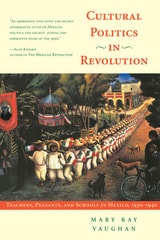
Cultural Politics in Revolution
Teachers, Peasants, and Schools in Mexico, 1930-1940Mary Kay Vaughan
University of Arizona Press, 1997
To show the significance of this facet of the Revolution, Mary Kay Vaughan analyzes the educational effort of the state during the 1930s, locating it within the broader sweep of Mexican history to illustrate how the government sought to nationalize and modernize rural society. Vaughan focuses on activities in rural schools, where central state policy makers, teachers, and people of the countryside came together to forge a national culture. She examines the cultural politics of schooling in four rural societies in the states of Sonora and Puebla that are representative of the peasant societies in revolutionary Mexico, and she shows how the state's program of socialist education became an arena for intense negotiations over power, culture, knowledge, rights, and gender practices. The real cultural revolution, Vaughan observes, lay not in the state's efforts at socialist education but in the dialogue between state and society that took place around this program. In the 1930s, rural communities carved out a space to preserve their local identities while the state succeeded in nurturing a multi-ethnic nationalism based on its promise of social justice and development.
Vaughan brings to her analysis a comparative understanding of peasant politics and educational history, extensive interviews, and a detailed examination of national, regional, and local archives to create an evocative and informative study of Mexican politics and society during modern Mexico's formative years. Cultural Politics in Revolution clearly shows that only by expanding the social arena in which culture was constructed and contested can we understand the Mexican Revolution's real achievements.
Cultural Worlds of the Jesuits in Colonial Latin America
Edited by Linda Newson
University of London Press, 2020
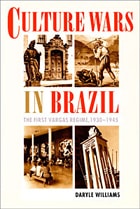
Culture Wars in Brazil
The First Vargas Regime, 1930–1945Daryle Williams
Duke University Press, 2001
Williams draws on a rich selection of textual, pictorial, and architectural sources in his exploration of the dynamic nature of educational film and radio, historical preservation, museum management, painting, public architecture, and national delegations organized for international expositions during the unsettled era in which modern Brazil’s cultural canon took definitive form. In his close reading of the tensions surrounding official policies of cultural management, Williams both updates the research of the pioneer generation of North American Brazilianists, who examined the politics of state building during the Vargas era, and engages today’s generation of Brazilianists, who locate the construction of national identity of modern Brazil in the Vargas era.
By integrating Brazil into a growing body of literature on the cultural dimensions of nations and nationalism, Culture Wars in Brazil will be important reading for students and scholars of Latin American history, state formation, modernist art and architecture, and cultural studies.
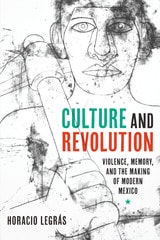
Culture and Revolution
Violence, Memory, and the Making of Modern MexicoBy Horacio Legrás
University of Texas Press, 2017
In the twenty years of postrevolutionary rule in Mexico, the war remained fresh in the minds of those who participated in it, while the enigmas of the revolution remained obscured. Demonstrating how textuality helped to define the revolution, Culture and Revolution examines dozens of seemingly ahistorical artifacts to reveal the radical social shifts that emerged in the war’s aftermath.
Presented thematically, this expansive work explores radical changes that resulted from postrevolution culture, including new internal migrations; a collective imagining of the future; popular biographical narratives, such as that of the life of Frida Kahlo; and attempts to create a national history that united indigenous and creole elite society through literature and architecture. While cultural production in early twentieth-century Mexico has been well researched, a survey of the common roles and shared tasks within the various forms of expression has, until now, been unavailable. Examining a vast array of productions, including popular festivities, urban events, life stories, photographs, murals, literature, and scientific discourse (including fields as diverse as anthropology and philology), Horacio Legrás shows how these expressions absorbed the idiosyncratic traits of the revolutionary movement.
Tracing the formation of modern Mexico during the 1920s and 1930s, Legrás also demonstrates that the proliferation of artifacts—extending from poetry and film production to labor organization and political apparatuses—gave unprecedented visibility to previously marginalized populations, who ensured that no revolutionary faction would unilaterally shape Mexico’s historical process during these formative years.
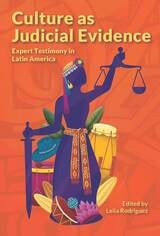
Culture as Judicial Evidence
Expert Testimony in Latin AmericaEdited by Leila Rodriguez
University of Minnesota Press, 2020
Culture as Judicial Evidence in Latin America summarizes the current state of this work in six countries: Mexico, Costa Rica, Peru, Chile, Colombia, and Uruguay, and lays out the challenges and dilemmas involved in the creation and use of cultural expert testimony. Organized into three sections, the book advances a framework for the use of cultural evidence, and presents readers with nine case studies based on trials in six individual countries. These countries have implemented legal reform, constitutional amendments and the adoption of international legislation to create the legal frameworks that enable this new form of legal evidence to be admissible in Latin American courts. The contributing authors are cultural anthropologists with vast experience researching the impact of cultural expert witness testimony. A forward-looking final section examines the dilemmas and challenges of this work that remain to be solved.
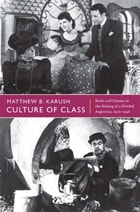
Culture of Class
Radio and Cinema in the Making of a Divided Argentina, 1920-1946Matthew B. Karush
Duke University Press, 2012
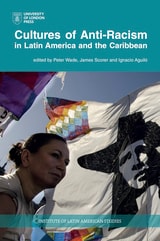
Cultures of Anti-Racism in Latin America and the Caribbean
Edited by Peter Wade, James Scorer, and Ignacio Aguiló
University of London Press, 2019
Cumbe Reborn
An Andean Ethnography of HistoryJoanne Rappaport
University of Chicago Press, 1993
Joanne Rappaport examines the Cumbales' reappropriation of history and the resulting reinvention of tradition. She explores the ways in which personal memories are interpreted in nonverbal expression, such as ritual and material culture, as well as in oral and written communication. This novel approach to historical consciousness is grounded on a unique combination of historical and ethnographical analysis.
Cumbe Reborn makes a significant contribution both to our understanding of ethnic militancy in the Americas and to the broader methodological discussion of non-western historical consciousness under colonial domination. It will attract a wide audience of anthropologists, historians, specialists in Andean ethnohistory and Latin American studies and literature, and folklore specialists interested in subaltern discourse.
Cumbia!
Scenes of a Migrant Latin American Music GenreHéctor Fernández L Hoeste and Pablo Vila, eds.
Duke University Press, 2013
Contributors. Cristian Alarcón, Jorge Arévalo Mateus, Leonardo D'Amico, Héctor Fernández L'Hoeste, Alejandro L. Madrid, Kathryn Metz, José Juan Olvera Gudiño, Cathy Ragland, Pablo Semán, Joshua Tucker, Matthew J. Van Hoose, Pablo Vila
Cycles of Conflict, Centuries of Change
Crisis, Reform, and Revolution in MexicoElisa Servín, Leticia Reina, and John Tutino, eds.
Duke University Press, 2007
Leading Mexicanists—historians and social scientists from Mexico, the United States, and Europe—examine the three fin-de-siècle eras of crisis. They focus on the role of the country’s communities in advocating change from the eighteenth century to the present. They compare Mexico’s revolutions of 1810 and 1910 and consider whether there might be a twenty-first-century recurrence or whether a globalizing, urbanizing, and democratizing world has so changed Mexico that revolution is improbable. Reflecting on the political changes and social challenges of the late twentieth century, the contributors ask if a democratic transition is possible and, if so, whether it is sufficient to address twenty-first-century demands for participation and justice.
Contributors. Antonio Annino, Guillermo de la Peña, François-Xavier Guerra, Friedrich Katz, Alan Knight, Lorenzo Meyer, Leticia Reina, Enrique Semo, Elisa Servín, John Tutino, Eric Van Young
Cycles of Time and Meaning in the Mexican Books of Fate
By Elizabeth Hill Boone
University of Texas Press, 2007
In communities throughout precontact Mesoamerica, calendar priests and diviners relied on pictographic almanacs to predict the fate of newborns, to guide people in choosing marriage partners and auspicious wedding dates, to know when to plant and harvest crops, and to be successful in many of life's activities. As the Spanish colonized Mesoamerica in the sixteenth century, they made a determined effort to destroy these books, in which the Aztec and neighboring peoples recorded their understanding of the invisible world of the sacred calendar and the cosmic forces and supernaturals that adhered to time. Today, only a few of these divinatory codices survive. Visually complex, esoteric, and strikingly beautiful, painted books such as the famous Codex Borgia and Codex Borbonicus still serve as portals into the ancient Mexican calendrical systems and the cycles of time and meaning they encode.
In this comprehensive study, Elizabeth Hill Boone analyzes the entire extant corpus of Mexican divinatory codices and offers a masterful explanation of the genre as a whole. She introduces the sacred, divinatory calendar and the calendar priests and diviners who owned and used the books. Boone then explains the graphic vocabulary of the calendar and its prophetic forces and describes the organizing principles that structure the codices. She shows how they form almanacs that either offer general purpose guidance or focus topically on specific aspects of life, such as birth, marriage, agriculture and rain, travel, and the forces of the planet Venus. Boone also tackles two major areas of controversy—the great narrative passage in the Codex Borgia, which she freshly interprets as a cosmic narrative of creation, and the disputed origins of the codices, which, she argues, grew out of a single religious and divinatory system.
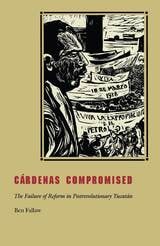
Cárdenas Compromised
The Failure of Reform in Postrevolutionary YucatánBen Fallaw
Duke University Press, 2001
For historical, geographical, and ethnic reasons, Yucatán was the center of large-scale land reform after the Mexican Revolution. A long-standing revolutionary tradition, combined with a harsh division between a powerful white minority and a poor, Maya-speaking majority, made the region the perfect site for Cárdenas to experiment by launching an ambitious top-down project to mobilize the rural poor along ethnic and class lines. The regime encouraged rural peasants to form collectives, hacienda workers to unionize, and urban laborers to strike. It also attempted to mobilize young people and women, to challenge Yucatán’s traditional, patriarchal social structure, to reach out to Mayan communities, and to democratize the political process. Although the project ultimately failed, political dialogue over Cárdenas’s efforts continues. Rejecting both revisionist (anti-Cárdenas) and neopopulist (pro-Cárdenas) interpretations, Fallaw overturns the notion that the state allowed no room for the agency of local actors. By focusing on historical connections across class, political, and regional lines, Fallaw transforms ideas on Cardenismo that have long been accepted not only in Yucatán but throughout Mexico.
This book will appeal to scholars of Mexican history and of Latin American state formation, as well as to sociologists and political scientists interested in modern Mexico.
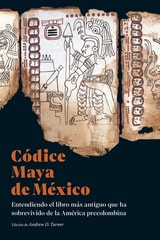
Códice Maya de México
Entendiendo el libro más antiguo que ha sobrevivido de la América precolombinaAndrew D. Turner
J. Paul Getty Trust, The, 0
Los antiguos escribas mayas registraban profecías y observaciones astronómicas en las páginas de libros pintados. Aunque la mayoría se perdieron por el desgaste del paso del tiempo o porque fueron destruidos, se sabía que tres códices mayas prehispánicos habían sobrevivido. Sin embargo, en la década de 1960 apareció en México, en circunstancias misteriosas, un cuarto libro diferente a los demás. Después de cincuenta años de debate sobre su autenticidad, investigaciones recientes con análisis científicos e histórico-artísticos de vanguardia, determinaron que el Códice Maya de México (antes conocido como Códice Grolier) es, de hecho, el libro más antiguo del continente americano: al menos doscientos años más antiguo que los demás.
Este volumen ofrece una introducción multifacética a la creación, el descubrimiento, la interpretación y la autenticación científica del Códice Maya de México. Además, un facsímil a todo color y una guía de la iconografía página por página hacen que un amplio público pueda acceder al códice. Otros temas incluyen los usos y la importancia de los libros sagrados en Mesoamérica, el papel de la astronomía en las antiguas sociedades mayas y la continua relevancia del códice para las comunidades mayas contemporáneas.
La publicación de este volumen acompaña la exposición que se exhibirá en el J. Paul Getty Museum ubicado en el Getty Center del 18 de octubre de 2022 al 15 de enero de 2023.
An in-depth exploration of the history, authentication, and modern relevance of Códice Maya de México, the oldest surviving book of the Americas.
Ancient Maya scribes recorded prophecies and astronomical observations on the pages of painted books. Although most were lost to decay or destruction, three pre-Hispanic Maya codices were known to have survived, when, in the 1960s, a fourth book that differed from the others appeared in Mexico under mysterious circumstances. After fifty years of debate over its authenticity, recent investigations using cutting-edge scientific and art historical analyses determined that Códice Maya de México (formerly known as Grolier Codex) is in fact the oldest surviving book of the Americas, predating all others by at least two hundred years.
This volume provides a multifaceted introduction to the creation, discovery, interpretation, and scientific authentication of Códice Maya de México. In addition, a full-color facsimile and a page-by-page guide to the iconography make the codex accessible to a wide audience. Additional topics include the uses and importance of sacred books in Mesoamerica, the role of astronomy in ancient Maya societies, and the codex's continued relevance to contemporary Maya communities.
This volume is published to accompany an exhibition on view at the J. Paul Getty Museum at the Getty Center from October 18, 2022, to January 15, 2023.
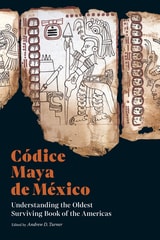
Códice Maya de México
Understanding the Oldest Surviving Book of the AmericasAndrew D. Turner
J. Paul Getty Trust, The, 2022
Ancient Maya scribes recorded prophecies and astronomical observations on the pages of painted books. Although most were lost to decay or destruction, three pre-Hispanic Maya codices were known to have survived, when, in the 1960s, a fourth book that differed from the others appeared in Mexico under mysterious circumstances. After fifty years of debate over its authenticity, recent investigations using cutting-edge scientific and art historical analyses determined that Códice Maya de México (formerly known as Grolier Codex) is in fact the oldest surviving book of the Americas, predating all others by at least two hundred years.
This volume provides a multifaceted introduction to the creation, discovery, interpretation, and scientific authentication of Códice Maya de México. In addition, a full-color facsimile and a page-by-page guide to the iconography make the codex accessible to a wide audience. Additional topics include the uses and importance of sacred books in Mesoamerica, the role of astronomy in ancient Maya societies, and the codex's continued relevance to contemporary Maya communities.
This volume is published to accompany an exhibition on view at the J. Paul Getty Museum at the Getty Center from October 18, 2022, to January 15, 2023.