Results by title
3785 books match the query 'Poetry' and 202 start with c
Congenial Souls
Reading Chaucer from Medieval to PostmodernStephanie Trigg
University of Minnesota Press, 2001
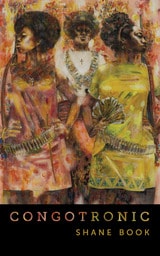
Congotronic
Shane Book
University of Iowa Press, 2014
Harnessing techniques of the cinematic and audio arts, Book’s poems splice, sample, collage, and jump-cut language from an array of sources, including slave narratives, Western philosophy, hip hop lyrics, and the diaries of plantation owners. In fusing disparate texts, each poem in this collection attempts to create a community in language. Thus, at its core, the project is utopic—or more precisely, to borrow from Duke Ellington—the project is “blutopic.”
The book’s anchoring series contains an apocryphal narrative grounded in the journey of the Middle Passage and an older mythic history from the West African epic of Sundiata. Here elements of Afrofuturism coagulate with an R&B grin as social forces challenge a sense of personhood, prompting free-jazz inflected conversations between the pieces of a shattered, polyvocal self.
Here is a world poet of the Sonic Global South sheathed in a Northern Hemispheric glow suit, high “on Coltrane, on Zeus” but also on the old and new schools of Descartes, M.I.A., Cecil Taylor, Gilbert Ryle, Freud, and Jay Z, among others—or as one poem puts it, the “aural truths.”
Conserving Walt Whitman's Fame
Selections from Horace Traubel's Conservator, 1890-1919Schmidgall, Gary
University of Iowa Press, 2006
Consolation Miracle
Chad Davidson
Southern Illinois University Press, 2003
Consolation Miracle is a book of visceral, image-driven poems that search for the miraculous in the seemingly ordinary. This collection fashions art out of artless objects as a consolation, or perhaps compensation, for their smallness. Yawns and pears, cockroaches and crows resonate against historically conflated backdrops, while our own hands seem suddenly strange as they hide themselves in our pockets, balance a burning cigarette between two fingers, or grip the gun that shot Lincoln. Other poems address the destruction of empire, the end of old Hollywood, and the hyperbolic fizzling out of entire centuries. Here, consolation miracles are rarely the ones sought after, yet they radiate in their neglect. Davidson’s poems help us understand the inner life of cows, imagine the plight of a banished Kama Sutra illustrator, speculate about Cleopatra’s lingerie. With a title borrowed from Gabriel García Márquez, Consolation Miracle contains a magical realism for the twenty-first century.
Constituent and Pattern in Poetry
By Archibald A. Hill
University of Texas Press, 1976
Constituent and Pattern in Poetry is a collection of essays on literature and language. It is built on the assumption that works of literature have existence in the real world and that they may be analyzed in a fashion that is not totally subjective. Using models derived from structural linguistics, Archibald A. Hill presents a number of theoretical contributions to the study of poetry, as well as new ways of looking at specific poems. The book as a whole provides an overview of the tools and ideas Hill has developed for analyzing works of literature, and it is the first time the essays have been gathered together in one volume.
The book is divided into three sections: Definition of Literature and Study of Its Patterns, Types of Meaning and Imagery, and Principles for Interpreting Meaning. Each section opens with a theoretical essay, followed by three essays that work analytically with specific poets and poems using the methods defined in the first. In his examination of such poets as Hopkins, Browning, Milton, Blake, Keats, and Dickinson, Hill uses such proposals as the law of least lexical contribution and maximal contextual contribution; the hypothesis that, when possible meanings occur together in a cluster, they support each other; and the idea that it is sometimes possible to recover underlying language sequences from which the author has departed for identifiable reasons. By applying these suppositions to the study of particular poems, Hill shows how the reader may arrive at statements about the relative artistic merit of works of literature.
Constructing German Walt Whitman
Walter Grunzweig
University of Iowa Press, 1994
Contemporaries and Snobs
Laura Riding
University of Alabama Press, 2014
A new edition of Laura Riding's landmark 1928 poetry manifesto
Laura Riding’s Contemporaries and Snobs is one of modernism’s most audacious and overlooked manifestos, a book that drew a sharp line through the literary world of the late 1920s that is still visible today. In it, Riding dismantles the pretensions of the “snobs”—critics and poet-professionals who sought to codify modern poetry into systems—and champions the “contemporaries,” those who practiced poetry as an eccentric, individual act of creativity.
In eight incisive essays, Riding takes readers on a tour of the literary scene of her day, exposing how the institutionalization of modernism threatened to clog the wellsprings of poetic originality. With ferocious wit, she critiques the philosophical dogmas of T. S. Eliot, Allen Tate, and the critical machinery of The Criterion, while elevating Gertrude Stein as the figurehead of a radical alternative, a “barbaric” poetics rooted in linguistic freshness. Riding’s defense of the poet as person, her skepticism toward impersonality, and her insistence on poetry’s autonomy from systems of thought anticipate later feminist and avant-garde critiques, making this volume a cornerstone for rethinking modernist traditions. In an era when debates about authenticity, individuality, and the institutional pressures on art feel more urgent than ever, Contemporaries and Snobs offers a counter-history, a reminder that poetry thrives not in conformity but in idiosyncrasy. Riding’s voice, imperious yet visionary, speaks directly to contemporary concerns about creative freedom and the commodification of literature.
Nearing the centenary of its first publication, Contemporaries and Snobs will interest scholars of modernism and literary criticism, readers of Gertrude Stein and experimental poetics, feminist critics and theorists of authorship, and readers fascinated by the intellectual battles that shaped twentieth-century poetry.
Contemporary Korean Poetry
Won Ko
University of Iowa Press, 1970
The boundaries of poetry in English are expanded with Contemporary Korean Poetry, the first major scholarly anthology introducing twentieth century Korean poetry in English. In translating 181 poems by 140 poets, Ko Won manages to capture the feeling and mood of the original work, retaining the intended simplicity for effect.
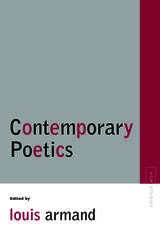
Contemporary Poetics
Louis Armand
Northwestern University Press, 2007
Charles Bernstein's Swiftian satire of generative poetics and the textual apparatus, together with Marjorie Perloff's critical-historical treatment of "writing after" Bernstein and other proponents of language poetry, provides an itinerary of contemporary poetics in terms of both theory and practice. The other essays consider "precursors," recognizable figures within the histories or prehistories of contemporary poetics, from Kafka and Joyce to Wallace Stevens and Kathy Acker; "conjunctions," in which more strictly theoretical and poetical texts enact a concerted engagement with rhetoric, prosody, and the vicissitudes of "intelligibility"; "cursors," which points to the open possibilities of invention, from Augusto de Campos's "concrete poetics" to the "codework" of Alan Sondheim; and "transpositions," defining the limits of poetic invention by way of technology.
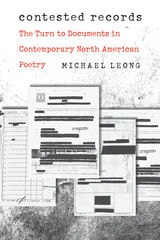
Contested Records
The Turn to Documents in Contemporary North American PoetryMichael Leong
University of Iowa Press, 2020
Why have so many contemporary poets turned to source material, from newspapers to governmental records, as inspiration for their poetry? How can citational poems offer a means of social engagement? Contested Records analyzes how some of the most well-known twenty-first century North American poets work with fraught documents. Whether it’s the legal paperwork detailing the murder of 132 African captives, state transcriptions of the last words of death row inmates, or testimony from miners and rescue workers about a fatal mine disaster, author Michael Leong reveals that much of the power of contemporary poetry rests in its potential to select, adapt, evaluate, and extend public documentation.
Examining the use of documents in the works of Kenneth Goldsmith, Vanessa Place, Amiri Baraka, Claudia Rankine, M. NourbeSe Philip, and others, Leong reveals how official records can evoke a wide range of emotions—from hatred to veneration, from indifference to empathy, from desire to disgust. He looks at techniques such as collage, plagiarism, re-reporting, and textual outsourcing, and evaluates some of the most loved—and reviled—contemporary North American poems. Ultimately, Leong finds that if bureaucracy and documentation have the power to police and traumatize through the exercise of state power, then so, too, can document-based poetry function as an unofficial, counterhegemonic, and popular practice that authenticates marginalized experiences at the fringes of our cultural memory.
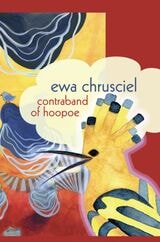
Contraband of Hoopoe
Ewa Chrusciel
Omnidawn, 2014
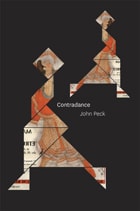
Contradance
John Peck
University of Chicago Press, 2011
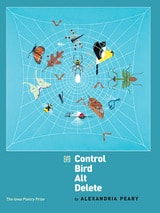
Control Bird Alt Delete
Alexandria Peary
University of Iowa Press, 2014
In Control Bird Alt Delete, the reader is invited to explore strange landscapes: some based on the ruins of New England and others following the architectural prints of the unconscious. The reader walks through woods filled with cellar holes, rock walls, and lilac bushes, and is made to think of people gone missing. Robert Frost meets Times Square. Nature intrudes in unexpected ways on domestic settings—and vice versa—domestic and industrial settings appear in bits inside the pastoral. Birds, one-dimensional but strangely wise, flit back and forth and rebelliously tape up their songs. The senses are thoroughly blended, leading to strange combinations and sensory experiences, to states of mindfulness and blizzard distraction.
All the while, the unconscious threatens to intrude, with its underlined places, its trap doors inside ordinary conversations, the mazes it hangs up like “welcome home” banners next to people’s mouths while they speak. The reader follows the first-person I through mazes, office spaces, and coils of highway traffic, hoping for some redemption, some sort of answer to all the deletion.
Controlling the Silver
Lorna Goodison
University of Illinois Press, 2004
Conversations with Scottish Poets
Marco Fazzini
Aberdeen University Press, 2015
Conversations with Shotetsu
Translated by Robert H. Brower; With an Introduction and Notes by Steven D. Carter
University of Michigan Press, 1992

Corinne or Italy
Edited by Avriel H Goldberger
Rutgers University Press, 1987
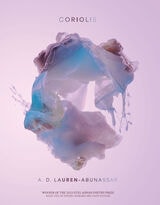
Coriolis
A.D. Lauren-Abunassar
University of Arkansas Press, 2023
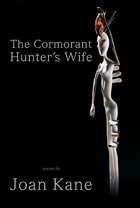
Cormorant Hunter's Wife
Joan Kane
University of Alaska Press, 2012
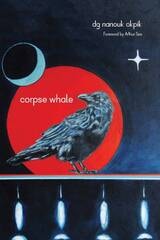
Corpse Whale
dg nanouk okpik; Foreword by Arthur Sze
University of Arizona Press, 2012
A self-proclaimed “vessel in which stories are told from time immemorial,” poet dg nanouk okpik seamlessly melds both traditional and contemporary narrative, setting her apart from her peers. The result is a collection of poems that are steeped in the perspective of an Inuit of the twenty-first century—a perspective that is fresh, vibrant, and rarely seen in contemporary poetics.
Fearless in her craft, okpik brings an experimental, yet poignant, hybrid aesthetic to her first book, making it truly one of a kind. “It takes all of us seeing, hearing, touching, tasting, and smelling to be one,” she says, embodying these words in her work. Every sense is amplified as the poems, carefully arranged, pull the reader into their worlds. While each poem stands on its own, they flow together throughout the collection into a single cohesive body.
The book quickly sets up its own rhythms, moving the reader through interior and exterior landscapes, dark and light, and other spaces both ecological and spiritual. These narrative, and often visionary, poems let the lives of animal species and the power of natural processes weave into the human psyche, and vice versa.
Okpik’s descriptive rhythms ground the reader in movement and music that transcend everyday logic and open up our hearts to the richness of meaning available in the interior and exterior worlds.
Corriendo bajo la lluvia / Running Back Through the Rain
Poesia Escogida / Selected Poems 1982-1998Raúl Barrientos
Swan Isle Press, 2002
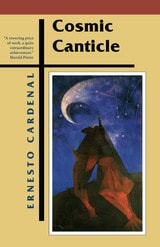
Cosmic Canticle
Ernesto Cardenal
Northwestern University Press, 2002
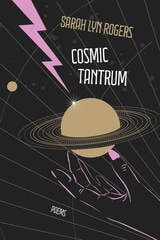
Cosmic Tantrum
PoemsSarah Lyn Rogers
Northwestern University Press, 2025
A debut full-length poetry collection from Sarah Lyn Rogers rewriting girlhood and summoning mischief
Sarah Lyn Rogers’s debut full-length collection is a tragicomic exploration of codependent and transactional relationships: economies of shame, gifts as debts, businesses run like families, and families run like businesses. What transgressions and abuses do we believe are acceptable fees for safety or love, and who upholds these myths? The poems in Cosmic Tantrum examine how our most intimate relationships shape the way we move through the wider world—and what happens when we reject the stories we’ve inherited about our worth.
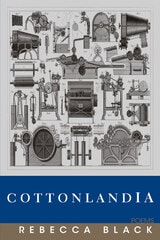
Cottonlandia
Rebecca Black
University of Massachusetts Press, 2005
The poems in Rebecca Black's first volume, Cottonlandia, move through myth and landscape, beginning in the deep South's “shimmer and tar” and ending in the “soot and orange dolor” of the California desert. Cottonlandia conjures a proto-continent where fashionable golems pose for antique photographs and nineteenth-century naturalists wander into the melee of the civil rights struggle in the South.
By turns haunting and comic, Black's poems describe the archaeology of the apocalypse. Countesses leave behind poisonous snapshots, lovers examine their shapes in the mirror, and Seminoles return for skeletons arranged illegally in exhibits, even as floods force antebellum coffins to rise.
In the title poem, reproduced on this page, the lines of a spiritual splinter and circle through a loose narrative, evoking the delirium of class and race in the author's Georgia hometown. Throughout the volume, poems quarrel with primal forces, threading the needle of historical oblivion with a dark, intelligent, and incantatory voice.
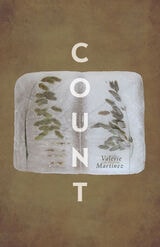
Count
Valerie Martínez
University of Arizona Press, 2021
With sections that vary between poetry, science, Indigenous storytelling, numerical measurement, and narration, Valerie Martínez’s new work results in an epic panorama infused with the timely urgency of facing an apocalyptic future. This beautiful, tragic, and unusual poem is a testimonial, a warning, and a call to action that will captivate lovers of contemporary poetry and ecopoetry, environmentalists, and climate activists alike. Count skillfully calls on our collective desire to leave a livable world, filled with the potential for healing, as a legacy to the generations of children that come after us.
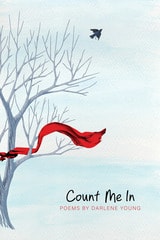
Count Me In
Young, Darlene
Signature Books, 2024
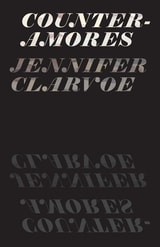
Counter-Amores
Jennifer Clarvoe
University of Chicago Press, 2011
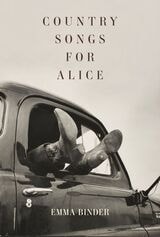
Country Songs for Alice
Emma Binder
Tupelo Press, 2024
In Country Songs for Alice, a nonbinary, queer narrator passes through the crucible of love, romance, and heartbreak against the backdrop of rural America—a landscape which offers luminous belonging, even as the hazards of homophobia, loneliness, and isolation loom large. Part roadtrip, part mixtape, these poems are explorations of love, music, romance, pageantry, loneliness, and belonging in the rural places and small towns that seem to preclude queer culture. Country Songs for Alice not only tells the story of a relationship and its dissolution but reclaims country western imagery and aesthetics for a queer audience, dousing the narrator’s experience in the language of cowboys, horses, rodeos, trucks, and desert skies.
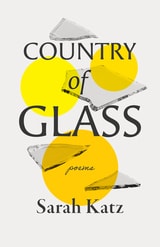
Country of Glass
PoemsSarah Katz
Gallaudet University Press, 2022

Covenant
Alan Shapiro
University of Chicago Press, 1991
"At forty-years-old and already the author of four superbly written books of poems, Shapiro has produced a work of such authority and originality that he has permanently enlarged my hopes and expectations for contemporary poetry. His risk-loving swiftness of perception and his affinity for stories that up-end convention and taboo have enabled him to reclaim, for poets of my generation, areas of feeling and linguistic virtuosity that originated with William Carlos Williams, Elizabeth Bishop, J. V. Cunningham, and Ivor Winters. It is hard for me to see how an ideal anthologist of the future will be able to include their names without gratefully including his."—Tom Sleigh, Boston Phoenix
Covenant of Justice
Prayers, Poems, and Meditations from Women of Reform JudaismWomen of Reform Judaism
Central Conference of American Rabbis, 2025
Copublished with Women of Reform Judaism

Cowboy Park
Eduardo Martínez-Leyva
University of Wisconsin Press, 2024
The detainment and deportation of Martínez-Leyva’s brother grounds this exquisite collection in the all-too-common familial tragedy of political violence and discrimination. Martínez-Leyva honors the people, language, culture, and traditions that shaped him, revealing the indignities, large and small, experienced by a community that is too often misrepresented and maligned. “My voice was the only thing keeping us warm,” he writes, and the warmth from this striking debut collection is beautiful to behold.

Cowboy Poets and Cowboy Poetry
Edited by David Stanley and Elaine Thatcher
University of Illinois Press, 2000
Centered around six areas of focus, from historical background to biographical profiles to creative process, Cowboy Poets and Cowboy Poetry approaches the tradition of occupational folk poetry from a variety of perspectives. Contributors trace its history as an extension of the Homeric tradition of storytelling in verse and discuss such topics as the way a text evolves in retelling, how it becomes linked to a tune, and how poetic content fuses with form to generate narrative tension and humor.
Personal and telling portraits of cowboy poets and reciters--including D. J. O'Malley, Henry Herbert Knibbs, and a number of contemporary cowboy poets--illuminate the creative process through which individual poets work within a long community tradition, while comparative studies examine poetry by women, Mexican-American vaqueros, loggers, Argentine gauchos, and Australian bush poets.
Cowboy Poets and Cowboy Poetry offers the first in-depth examination of a distinctive and community-based tradition rich with larger-than-life heroes, vivid occupational language, humor, and unblinking encounters with birth, death, nature, and animals. Throughout, the collection shows that cowboy poetry interweaves two thematic strands: a fierce defense of an endangered way of life and a dynamic celebration of organic wholeness, camaraderie, and individualism.
Cracks in the Invisible
PoemsStephen Kampa
Ohio University Press, 2011
Stephen Kampa’s poems are witty and restless in their pursuit of an intelligent modern faith. They range from a four-line satire of office inspirational posters to a lengthy meditation on the silence of God. The poems also revel in the prosodic possibilities of English’shigh and low registers: a twenty–one line homageto Lord Byron that turns on three rhymes (one of which is “eisegesis”); a sestina whose end words include “sentimental,” “Marseilles,” and “Martian;” sapphics on the death of Ray Charles; and intricately modulated stanzas on the 1931 Spanish–language movie version of Dracula.
Despite the metaphysical seriousness, there is alwaysan undercurrent of stylistic levity — a panoply of puns, comic rhymes, and loving misquotations of canonical literature — that suggests comedy and tragedy are inextricably bound in human experience.

Cream of Kohlrabi
Floyd Skloot
Tupelo Press, 2011
Creance; or, Comest Thou Cosmic Nazarite
PoemsAndrew E. Colarusso
Northwestern University Press, 2019
Creature
Michael Dumanis
Four Way Books, 0
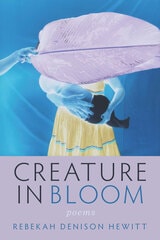
Creature in Bloom
Rebekah Denison Hewitt
University of Wisconsin Press, 2026
It is rare to find a collection so grounded in the manifold meanings of motherhood—in all its anxiety, ambivalence, and joy. From the aches and fears of pregnancy, through the pain and relief of childbirth, to the perplexing questions and worries of parenting, Rebekah Denison Hewitt grapples with what it is to make a human (and to sometimes lose one), “the baby a creature / in bloom / the mother / a lotus eater.”
Closing with the counsel “Do not be afraid. / Rinse your heart out. Proceed,” these poems give readers many reasons to fear—health issues, genetic deformities, postpartum depression, gun violence, and car accidents. Yet always lurking underneath are light, optimism, and a stubborn willingness to soldier on. Exploring the stories, myths, and personal histories that shape the experience of modern motherhood, Creature in Bloom expands the conversation around what it means to be a mother.
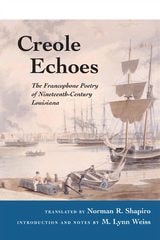
Creole Echoes
The Francophone Poetry of Nineteenth-Century LouisianaTranslated by Norman R. Shapiro
University of Illinois Press, 2003
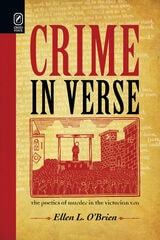
Crime in Verse
The Poetics of Murder in the Victorian EraEllen L. O’Brien
The Ohio State University Press, 2008
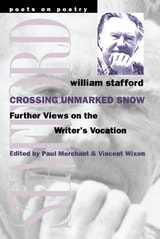
Crossing Unmarked Snow
Further Views on the Writer's VocationWilliam Stafford
University of Michigan Press, 1998
--William Stafford
A plain-spoken but eminently effective poet, the late William Stafford (1914-1993) has managed to shape part of the mainstream of American poetry by distancing himself from its trends and politics. Though his work has always inspired controversy, he was widely admired by students and poetry lovers as well as his own peers. His fascination with the process of writing joined with his love of the land and his faith in the teaching power of nature to produce a unique poetic voice in the last third of the twentieth century.
Crossing Unmarked Snow continues--in the tradition of Stafford's well-loved collections Writing the Australian Crawl and You Must Revise Your Life-- collecting prose and poetry on the writer's profession. The book includes reviews and reflections on poets from Theodore Roethke to Carolyn Forche, from May Sarton to Philip Levine; conversations on the making of poems; and a selection of Stafford's own poetry. The book also includes a section on the art of teaching, featuring interviews, writing exercises, and essays on the writer's vocation.
William Stafford authored more than thirty-five books of poetry and prose during his lifetime, including the highly acclaimed Writing the Australian Crawl: Views on the Writer's Vocation and You Must Revise Your Life.
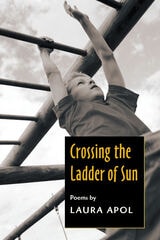
Crossing the Ladder of the Sun
Laura Apol
Michigan State University Press, 2004
In her new collection of poetry, Crossing the Ladder of Sun, Laura Apol explores the ordinary moments of life—watching her daughter, picking blueberries, sharing confidences with friends, arriving and leaving, and driving, always driving—and transforms them into the extraordinary. This book is rich with the lyrical found in what is considered the mundane as it portrays the multiple roles of a woman’s life—mother, daughter, lover, ex-wife, friend. Apol’s highly personal poems reflect a caring and compassion that transcends loneliness and heartache.
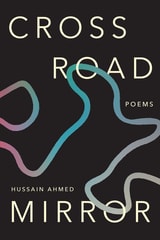
Crossroad Mirror
PoemsHussain Ahmed
Northwestern University Press, 2026
War and its reverberations propel people across the Nigerian landscape in Hussain Ahmed’s third collection
In Crossroad Mirror many poems begin after sundown—in quiet moments when the bounds between the past and the present, the living and the dead, blur. War and its aftershocks often form the backdrop for these scenes, though Ahmed’s verse rarely brings us to the battlefield itself. Instead, we hear the stories of refugees, civilian casualties, and ordinary soldiers trying to make sense of their circumstances. “There’s no vocabulary in the army—for grief, or death,” writes Ahmed. “Each door you exit, leads to another parade ground.” A group of soldiers wait out a rainstorm—and the war—together in a tent. Their families linger by the radio and listen for news. The “missing” loom as large as the dead.
Tracing the threads of migration that war so often catalyzes, Crossroad Mirror takes us from grassland to cornfield to coastline and explores the role storytelling and spirituality play in leaving and grieving.
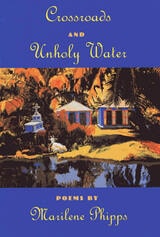
Crossroads and Unholy Water
Marilene Phipps
Southern Illinois University Press, 2000
Marilene Phipps’s poetry invites the reader to share sharp slices of Caribbean experience: Haiti is both stage and backdrop for people who move in various strata of the social scheme and through the three stages of life, in lieu of answers to the Sphinx’s riddle. Through voices, nostalgic and tender, denouncing and shrill, we journey to a mythologizing Caribbean land populated with people whose dramatic intensity and fights for life are turned into sometimes funny, sometimes disquieting, and always richly evocative, palpable poetry.

Cry Sower
Whitney Koo
University of Utah Press, 2027
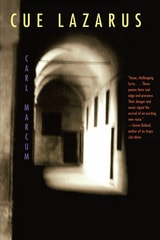
Cue Lazarus
Carl Marcum
University of Arizona Press, 2001
In this collection of poetry by Carl Marcum, a young man traces his rise to consciousness, his coming of age in the Southwest as a medio, an individual of mixed race. Displaying his Hispanic heritage as fact, emblem, and music in his poems, Marcum balances hip humor with larger themes of loss and reinvention to paint a work of seriousness and imagination, wrestling sense from the giddy rush of experience. The lead poem, "Cue Lazarus," conveys the sense of loss that permeates the collection, revisiting time the author spent with a friend he now knows will die. It sets the tone for the explorations to follow as the poet haunts his past: death, traumatic experience, the uneasiness that comes from being unable to forestall tragedy, all combine to create a sense of paradox, that he who endures becomes a ghost compelled to haunt his own life.
As poetry becomes a subtle game of language, experience is refigured as an array of possibilities; Marcum finds meaning and epiphany through close observation as he revels in images of constant motion and sustained search. Here is a suite in celebration of Chevys ("That Camaro ran nearly on machismo alone") and a prayer for breakfast ("I'd like to renounce the salt and pepper shakers / of this life. But the eggs are here / twelve lines into this poem / and getting cold"). He dreams of himself as Pancho Villa, "my poetry at the end of a pistol," and invokes the spirits of poets past, "beggars on the media of Limbo, holding shabby signs: WILL WORK FOR TRUTH."
Ultimately, Cue Lazarus is about resurrection—of the spirit, of a life, of an identity. It marks the emergence of a vital new voice that, in baring his soul, reveals lessons as old as time.
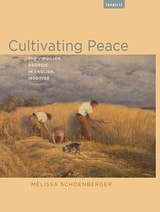
Cultivating Peace
The Virgilian Georgic in English, 1650-1750Schoenberger, Melissa
Bucknell University Press, 2019
Published by Bucknell University Press. Distributed worldwide by Rutgers University Press.
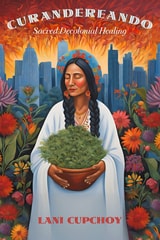
Curandereando
Sacred Decolonial HealingLani Cupchoy
University of Arizona Press, 2026
Curandereando: Sacred Decolonial Healing reclaims curanderismo as a living and revolutionary practice of ancestral wisdom, resilience, and renewal. Blending poetry, Spanglish storytelling, oral histories, and testimonios, this hybrid work illuminates healing as both a sacred tradition and a decolonial act of resistance.
The book traces curanderismo’s survival under colonial oppression, its adaptations across diasporas, and its vital role in addressing contemporary struggles for ecological balance, cultural survival, and social justice. By centering diverse healers and community voices, it resists folkloric portrayals and instead presents curanderismo as an evolving practice deeply relevant to today’s crises.
Accessible yet scholarly, Curandereando bridges sacred traditions with academic discourse, challenging Western medical dominance while offering holistic frameworks grounded in ancestral knowledge. This book is an essential resource for Chicana/o and Latina/o studies, ethnic studies, Indigenous studies, gender and sexuality studies, and environmental justice. It will also resonate with community healers, educators, and readers seeking decolonial approaches to wellness, spirituality, and cultural renewal.
Curator of Ephemera at the New Museum for Archaic Media
Heid E. Erdrich
Michigan State University Press, 2017
Curiosities
William Matthews
University of Michigan Press, 1989