Results by title
3064 books match the query 'Social conditions' and 253 start with c
Comparative Indigeneities of the Américas
Toward a Hemispheric ApproachEdited by M. Bianet Castellanos, Lourdes Gutiérrez Nájera, and Arturo J. Aldama
University of Arizona Press, 2012
The effects of colonization on the Indigenous peoples of the Américas over the past 500 years have varied greatly. So too have the forms of resistance, resilience, and sovereignty. In the face of these differences, the contributors to this volume contend that understanding the commonalities in these Indigenous experiences will strengthen resistance to colonial forces still at play. This volume marks a critical moment in bringing together transnational and interdisciplinary scholarship to articulate new ways of pursuing critical Indigenous studies.
Comparative Indigeneities of the Américas highlights intersecting themes such as indigenísmo, mestizaje, migration, displacement, autonomy, sovereignty, borders, spirituality, and healing that have historically shaped the experiences of Native peoples across the Américas. In doing so, it promotes a broader understanding of the relationships between Native communities in the United States and Canada and those in Latin America and the Caribbean and invites a hemispheric understanding of the relationships between Native and mestiza/o peoples.
Through path-breaking approaches to transnational, multidisciplinary scholarship and theory, the chapters in this volume advance understandings of indigeneity in the Américas and lay a strong foundation for further research. This book will appeal to scholars and students in the fields of anthropology, literary and cultural studies, history, Native American and Indigenous studies, women and gender studies, Chicana/o studies, and critical ethnic studies.
Ultimately, this deeply informative and empowering book demonstrates the various ways that Indigenous and mestiza/o peoples resist state and imperial attempts to erase, repress, circumscribe, and assimilate them.

Comparing Jewish Societies
Todd M. Endelman, Editor
University of Michigan Press, 1997

Compelled to Act
Histories of Women's Activism in Western CanadaSarah Carter
University of Manitoba Press, 2020
Complicated Lives
Girls, Parents, Drugs, and Juvenile JusticeLopez, Vera
Rutgers University Press, 2017
Complicated Lives focuses on the lives of sixty-five drug-using girls in the juvenile justice system (living in group homes, a residential treatment center, and a youth correctional facility) who grew up in families characterized by parental drug use, violence, and child maltreatment. Vera Lopez situates girls’ relationships with parents who fail to live up to idealized parenting norms and examines how these relationships change over time, and ultimately contribute to the girls’ future drug use and involvement in the justice system.
While Lopez’s subjects express concerns and doubt in their chances for success, Lopez provides an optimistic prescription for reform and improvement of the lives of these young women and presents a number of suggestions ranging from enhanced cultural competency training for all juvenile justice professionals to developing stronger collaborations between youth and adult serving systems and agencies.
Compositional Subjects
Enfiguring Asian/American WomenLaura Hyun Yi Kang
Duke University Press, 2002
The book opens by tracking the jagged emergence of “Asian American women” as a distinct social identity over the past three decades. Kang then directs critical attention to how the attempts to compose them as discrete subjects of consciousness, visibility, and action demonstrate a broader, ongoing tension between socially particularized subjects and disciplinary knowledges. In addition to the shifting meanings and alignments of “Asian,” “American,” and “women,” the book examines the discourses, political and economic conditions, and institutional formations that have produced Asian/American women as generic authors, as visibly desirable and desiring bodies, as excludable aliens and admissible citizens of the United States, and as the proper labor for transnational capitalism. In analyzing how these enfigurations are constructed and apprehended through a range of modes including autobiography, cinematography, historiography, photography, and ethnography, Kang directs comparative attention to the very terms of their emergence as Asian/American women in specific disciplines.
Finally, Kang concludes with a detailed examination of selected literary and visual works by Korean women artists located in the United States and Canada, works that creatively and critically contend with the problematics of identification and representation that are explored throughout the book. By underscoring the forceful and contentious struggles that animate all of these compositional gestures, Kang proffers Asian/American women as a vexing and productive figure for cultural, political and epistemological critique.
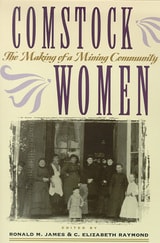
Comstock Women
The Making Of A Mining CommunityRonald M. James
University of Nevada Press, 1997

Concentration Camps on the Home Front
Japanese Americans in the House of Jim CrowJohn Howard
University of Chicago Press, 2008
While the basic facts of Japanese-American incarceration are well known, John Howard’s extensive research gives voice to those whose stories have been forgotten or ignored. He highlights the roles of women, first-generation immigrants, and those who forcefully resisted their incarceration by speaking out against dangerous working conditions and white racism. In addition to this overlooked history of dissent, Howard also exposes the government’s aggressive campaign to Americanize the inmates and even convert them to Christianity. After the war ended, this movement culminated in the dispersal of the prisoners across the nation in a calculated effort to break up ethnic enclaves.
Howard’s re-creation of life in the camps is powerful, provocative, and disturbing. Concentration Camps on the Home Front rewrites a notorious chapter in American history—a shameful story that nonetheless speaks to the strength of human resilience in the face of even the most grievous injustices.
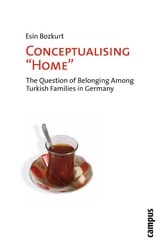
Conceptualising "Home"
The Question of Belonging among Turkish Families in GermanyEsin Bozkurt
Campus Verlag, 2009
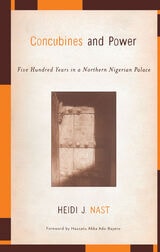
Concubines And Power
Five Hundred Years In A Northern Nigerian PalaceHeidi J. Nast
University of Minnesota Press, 2004
African Studies Association Women’s Caucus’s Aidoo-Snyder Book Prize winner
A Choice Outstanding Academic Title
The monumental palace of Kano, Nigeria, was built circa 1500 and is today inhabited by more than one thousand persons. Historically, its secluded interior housed hundreds of concubines whose role in the politics, economics, and culture of Kano city-state has been largely overlooked. In this pioneering work, Heidi J. Nast demonstrates how human-geographical methods can tell us much about a site like the palace, a place bereft of archaeological work or relevant primary sources.
Drawing on extensive ethnographic work and mapping data, Concubines and Power presents new evidence that palace concubines controlled the production of indigo-dyed cloth centuries before men did. The women were also key players in the assessment and collection of the state's earliest grain taxes, forming a complex and powerful administrative hierarchy that used the taxes for palace community needs. In addition, royal concubines served as representatives of their places of origin, their freeborn children providing the king with additional human capital to cement territorial alliances through marriage.
Social forces undoubtedly shaped and changed concubinage for hundreds of years, but Nast shows how the women’s reach extended far beyond the palace walls to the formation of the state itself.
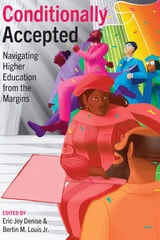
Conditionally Accepted
Navigating Higher Education from the MarginsEdited by Eric Joy Denise and Bertin M. Louis, Jr.
University of Texas Press, 2024
A collection of essays that provides advice and strategies for BIPOC scholars on how to survive, thrive, and resist in academic institutions.
Conditionally Accepted builds upon an eponymous blog on InsideHigherEd.com, which is now a decade-old national platform for BIPOC academics in the United States. Bringing together perspectives from academics of color on navigating intersecting forms of injustice in the academy, each chapter offers situated knowledge about experiencing—and resisting—marginalization in academia. Contextualized within existing scholarship, these personal narratives speak to institutional betrayals while highlighting agency and sharing stories of surviving on treacherous terrain. Covering topics from professional development to the emptiness of diversity, equity, and inclusion efforts, and redefining what it means to be an academic in our contemporary moment, this edited collection directly confronts issues of systemic exclusion, discrimination, harassment, microaggressions, tokenism, and surveillance. Letting marginalized scholars know they are not alone, Conditionally Accepted offers concrete wisdom for readers seeking to navigate and transform oppressive academic institutions.

Confederate Bushwhacker
Mark Twain in the Shadow of the Civil WarJerome Loving
University Press of New England, 2013
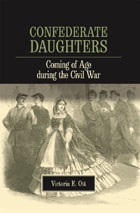
Confederate Daughters
Coming of Age during the Civil WarVictoria E. Ott
Southern Illinois University Press, 2008
Confederate Daughters: Coming of Age during the Civil War explores gender, age, and Confederate identity by examining the lives of teenage daughters of Southern slaveholding, secessionist families. These young women clung tenaciously to the gender ideals that upheld marriage and motherhood as the fulfillment of female duty and to the racial order of the slaveholding South, an institution that defined their status and afforded them material privileges. Author Victoria E. Ott discusses how the loyalty of young Southern women to the fledgling nation, born out of a conservative movement to preserve the status quo, brought them into new areas of work, new types of civic activism, and new rituals of courtship during the Civil War.
Social norms for daughters of the elite, their preparation for their roles as Southern women, and their material and emotional connections to the slaveholding class changed drastically during the Civil War. When differences between the North and South proved irreconcilable, Southern daughters demonstrated extraordinary agency in seeking to protect their futures as wives, mothers, and slaveholders.
From a position of young womanhood and privilege, they threw their support behind the movement to create a Confederate identity, which was in turn shaped by their participation in the secession movement and the war effort. Their political engagement is evident from their knowledge of military battles, and was expressed through their clothing, social activities, relationships with peers, and interactions with Union soldiers.
Confederate Daughters also reveals how these young women, in an effort to sustain their families throughout the war, adjusted to new domestic duties, confronting the loss of slaves and other financial hardships by seeking paid work outside their homes.
Drawing on their personal and published recollections of the war, slavery, and the Old South, Ott argues that young women created a unique female identity different from that of older Southern women, the Confederate bellehood. This transformative female identity was an important aspect of the Lost Cause mythology—the version of the conflict that focused on Southern nationalism—and bridged the cultural gap between the antebellum and postbellum periods.
Augmented by twelve illustrations, this book offers a generational understanding of the transitional nature of wartime and its effects on women’s self-perceptions. Confederate Daughters identifies the experiences of these teenage daughters as making a significant contribution to the new woman in the New South.
Confronting Colonial Legacies
A History of Chicana/o Indigeneities and Transnational ActivismJosé Luis Serrano Nájera
University of Arizona Press, 2026
This work offers a groundbreaking account of how Chicana/o activists have engaged in sustained efforts to reclaim Indigenous identity through political struggle, cultural expression, and transnational solidarity.
Author José Luis Serrano Nájera takes an in-depth look at the history of Chicana/o indigeneity, starting with the Chicana/o Movement of the 1960s and 1970s and through twenty-first century transnational activism and solidarity movements. Serrano Nájera reveals how claims to indigeneity were rooted in reciprocal relationships with Indigenous communities and driven by a shared commitment to decolonization. Through chapters on visual and performing arts, ceremony, education, and grassroots organizing, this book challenges reductive narratives of cultural appropriation and instead foregrounds the complex and historically grounded nature of Chicana/o indigeneity.
Drawing on extensive archival research, Serrano Nájera demonstrates how Chicana/o indigeneity has contributed to broader Indigenous rights movements, including efforts that culminated in the 2007 United Nations Declaration on the Rights of Indigenous Peoples. This work highlights the intercontinental dimensions of Chicana/o activism and offers a vital source for scholars and students in Chicana/o studies, Indigenous studies, ethnic studies, history, and political science. Confronting Colonial Legacies is a compelling call to rethink the politics of identity, sovereignty, and solidarity across the Americas.
Confronting Historical Paradigms
Peasants, Labor, And The Capitalist World SystemFrederick Cooper
University of Wisconsin Press, 1993
Confronting Historical Paradigms argues that confrontation with major paradigms of world history has marked the fields of African and Latin American history during the last quarter-century, and that the process has dramatically restructured historical and theoretical understanding of peasantries, labor, and the capitalist world system. Moreover, it maintains, the intellectual reverberations within and across the African and Latin American fields constitute a challenging and underappreciated counterpoint to laments that contemporary historical knowledge has suffered a splintering so extreme that it undermines larger dialogue and meaning.
The authors, in their substantive essays, synthesize, order, and evaluate the significance of the enormous resonating literatures that have come to exist for Africa and Latin America on the themes of the capitalist world system, labor, and peasantries. They historicize these literatures by analyzing an entire cycle of critical dialogue and confrontation with historical paradigms and the professional upheavals that accompanied them. They review the initial confrontations with frameworks of historical knowledge that erupted in the 1960s and the early 1970s; the emergence of new “dissident” paradigms; the outpouring of subsequent scholarship on peasants, labor, and capitalism that began to unravel the newly proposed paradigms by the 1980s and 1990s; and the outlines of the new interpretive frameworks that tended to displace both the “traditional” and “early dissident” paradigms. They also suggest possible outlines of a new cycle of “Third World” confrontations with paradigm, anchored in themes such as gender and ethnicity.
Confronting Historical Paradigms employs a historicized awareness of intellectual networks, conversations, and history–theory dialogues. The result is a critical analysis and synthetic presentation of substantive advances that have preoccupied scholarship on Africa and Latin America in recent decades and a powerful challenge to notions that “new” fields of history have ended up destroying intellectual coherence and community.
Congo's Dancers
Women and Work in KinshasaLesley Nicole Braun
University of Wisconsin Press, 2023
In Congo’s Dancers, Lesley Nicole Braun uses the prism of the Congolese danseuse to examine the politics of control and the ways in which notions of visibility, virtue, and socio-economic opportunity are interlinked in this urban African context. The work of the danseuse highlights the fact that public visibility is necessary to build the social networks required for economic independence, even as this visibility invites social opprobrium for women. The concert dancer therefore exemplifies many of the challenges that women face in Kinshasa as they navigate the public sphere, and she illustrates the gendered differences of local patronage politics that shape public morality. As an ethnographer, Braun had unusual access to the world she documents, having been invited to participate as a concert dancer herself.
Conjured Bodies
Queer Racialization in Contemporary LatinidadLaura Grappo
University of Texas Press, 2022
2022 Honorable Mention, John Leo & Dana Heller Award for Best Single Work, Anthology, Multi-Authored, or Edited Book in LGBTQ Studies, Popular Culture Association (PCA)
2023 Honorable Mention, Outstanding Book, Latinx Studies Section of Latin American Studies Association (LASA)
2024 Honorable Mention — Best LGBTQ+ Themed Book, Empowering Latino Futures’ International Latino Book Awards
This study argues that powerful authorities and institutions exploit the ambiguity of Latinidad in ways that obscure inequalities in the United States.
Is Latinidad a racial or an ethnic designation? Both? Neither? The increasing recognition of diversity within Latinx communities and the well-known story of shifting census designations have cast doubt on the idea that Latinidad is a race, akin to white or Black. And the mainstream media constantly cover the “browning” of the United States, as though the racial character of Latinidad were self-evident.
Many scholars have argued that the uncertainty surrounding Latinidad is emancipatory: by queering race—by upsetting assumptions about categories of human difference—Latinidad destabilizes the architecture of oppression. But Laura Grappo is less sanguine. She draws on case studies including the San Antonio Four (Latinas who were wrongfully accused of child sex abuse); the football star Aaron Hernandez’s incarceration and suicide; Lorena Bobbitt, the headline-grabbing Ecuadorian domestic-abuse survivor; and controversies over the racial identities of public Latinx figures to show how media institutions and state authorities deploy the ambiguities of Latinidad in ways that mystify the sources of Latinx political and economic disadvantage. With Latinidad always in a state of flux, it is all too easy for the powerful to conjure whatever phantoms serve their interests.
Connected Communities
Networks, Identity, and Social Change in the Ancient Cibola WorldMatthew A. Peeples
University of Arizona Press, 2018
In Connected Communities, Matthew A. Peeples examines a period of dramatic social and political transformation in the ancient Cibola region (ca. A.D. 1150–1325). He analyzes archaeological data generated during a century of research through the lens of new and original social theories and methods focused on exploring identity, social networks, and social transformation. In so doing, he demonstrates the value of comparative, synthetic analysis.
The book addresses some of the oldest enduring questions in archaeology: How do large-scale social identities form? How do they change? How can we study such processes using material remains? Peeples approaches these questions using a new set of methods and models from the broader comparative social sciences (relational sociology and social networks) to track the trajectories of social groups in terms of both networks of interactions (relations) and expressions of similarity or difference (categories). He argues that archaeological research has too often conflated these different kinds of social identity and that this has hindered efforts to understand the drivers of social change.
In his strikingly original approach, Peeples combines massive amounts of new data and comparative explorations of contemporary social movements to provide new insights into how social identities formed and changed during this key period.

Connective Tissue
Factory Accidents and Reconstructive Plastic Surgery in South IndiaLily N. Shapiro
Rutgers University Press, 2025
Connective Tissue revisits scholarship on factory labor by analyzing the accident as constitutive of the experience of work itself, and it refines existing conversations about the body, trauma, and care by introducing an analysis informed by theories of labor and production. Author Lily N. Shapiro argues that care does not happen in spite of or on the margins of capitalism, but rather that capitalism happens in and through care and caring relations. These experiences are intersected by identities of caste, class, and gender, and entangled in state discourse about labor rights, welfare, and industrial law.
Connexions
Histories of Race and Sex in North AmericaEdited by Jennifer Brier, Jim Downs, and Jennifer L. Morgan
University of Illinois Press, 2016
Conquest
Sexual Violence and American Indian GenocideAndrea Smith
Duke University Press, 2005

Conservation Is Our Government Now
The Politics of Ecology in Papua New GuineaPaige West
Duke University Press, 2006
West reveals how every aspect of the Crater Mountain Wildlife Management Area—including ideas of space, place, environment, and society—was socially produced, created by changing configurations of ideas, actions, and material relations not only in Papua New Guinea but also in other locations around the world. Complicating many of the assumptions about nature, culture, and development underlying contemporary conservation efforts, Conservation Is Our Government Now demonstrates the unique capacity of ethnography to illuminate the relationship between the global and the local, between transnational processes and individual lives.
Conservative Ideology in the Making
Ivan Zoltan Denes
Central European University Press, 2009
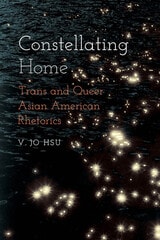
Constellating Home
Trans and Queer Asian American RhetoricsV. Jo Hsu
The Ohio State University Press, 2022
Winner of the 2024 Winifred Bryan Horner Outstanding Book Award
Winner of the 2023 NCA Diamond Anniversary Book Award
Winner of the Innovations in Community Writing Book Award from the Conference on Community Writing
Constellating Home: Trans and Queer Asian American Rhetorics explores how race, migration, gender, and disability entwine in conceptions of deserving citizens. V. Jo Hsu explores three archives of trans and queer Asian American (QTAPI) rhetorics, considering a range of texts including oral histories, photography, personal essays, and performance showcases. To demonstrate how QTAPI use personal narrative to critique and revise the conditions of their exclusion, Hsu forwards a critical approach to storytelling, homing, which deliberately engages sites of alienation and belonging. Through a practice of diasporic listening, Hsu tracks confluences among seemingly divergent journeys and locates trans and queer Asian American experiences within broader US and global politics.
The stories at the heart of Constellating Home center the voices of trans and nonbinary people, disabled people, and others often overlooked in conceptions of US citizenry. Hsu’s analyses demonstrate the inextricability of Asian American activism from queer politics, disability activism, and racial justice, and they consider how stories network individual experiences with resonant histories and struggles. Finding unlikely intimacies among individual and communal histories, Constellating Home provides tools for fostering mutual care, revealing harmful social patterns, and orienting shared values and politics.
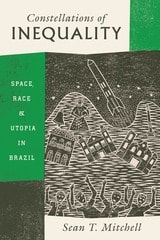
Constellations of Inequality
Space, Race, and Utopia in BrazilSean T. Mitchell
University of Chicago Press, 2017
In 1982, the Brazilian Air Force arrived on the Alcântara peninsula to build a state-of-the-art satellite launch facility. They displaced some 1,500 Afro-Brazilians from coastal land to inadequate inland villages, leaving many more threatened with displacement. Completed in 1990, this vast undertaking in one of Brazil’s poorest regions has provoked decades of conflict and controversy.
Constellations of Inequality tells this story of technological aspiration and the stark dynamics of inequality it laid bare. Sean T. Mitchell analyzes conflicts over land, ethnoracial identity, mobilization among descendants of escaped slaves, military-civilian competition in the launch program, and international intrigue. Throughout, he illuminates Brazil’s changing politics of inequality and examines how such inequality is made, reproduced, and challenged. How people conceptualize and act on the unequal conditions in which they find themselves, he shows, is as much a cultural and historical matter as a material one. Deftly broadening our understanding of race, technology, development, and political consciousness on local, national, and global levels, Constellations of Inequality paints a portrait of contemporary Brazil that will interest a broad spectrum of readers.
Constructing Citizenship
Transnational Workers and Revolution on the Mexico-Guatemala Border, 1880--1950Catherine A. Nolan-Ferrell
University of Arizona Press, 2012
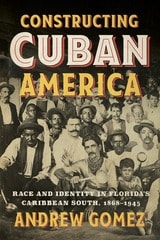
Constructing Cuban America
Race and Identity in Florida's Caribbean South, 1868–1945Andrew Gomez
University of Texas Press, 2024
How Black and white Cubans navigated issues of race, politics, and identity during the post-Civil War and early Jim Crow eras in South Florida.
On July 4, 1876, during the centennial celebration of US independence, the city of Key West was different from other cities. In some of post–Civil War Florida, Black residents were hindered from participating in 4th of July festivities, but Key West's celebration, “led by a Cuban revolutionary mayor working in concert with a city council composed of Afro-Bahamians, Cubans, African Americans, and Anglos,” represented a profound exercise in interracial democracy amid the Radical Reconstruction era.
Constructing Cuban America examines the first Cuban American communities in South Florida—Key West and Tampa—and how race played a central role in shaping the experiences of white and Black Cubans. Andrew Gomez argues that factors such as the Cuban independence movement and Radical Reconstruction produced interracial communities of Cubans that worked alongside African Americans and Afro-Bahamians in Florida, yielding several successes in interracial democratic representation, even as they continued to wrestle with elements of racial separatism within the Cuban community. But the conclusion of the Cuban War of Independence and early Jim Crow laws led to a fracture in the Cuban-American community. In the process, both Black and white Cubans posited distinct visions of Cuban-American identity.
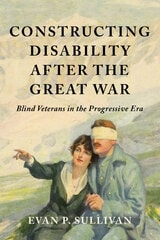
Constructing Disability after the Great War
Blind Veterans in the Progressive EraEvan P. Sullivan
University of Illinois Press, 2024
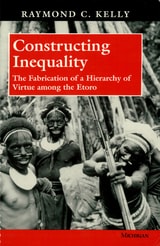
Constructing Inequality
The Fabrication of a Hierarchy of Virtue among the EtoroRaymond C. Kelly
University of Michigan Press, 1993
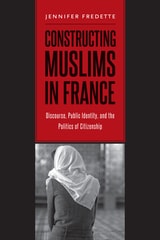
Constructing Muslims in France
Discourse, Public Identity, and the Politics of CitizenshipJennifer Fredette
Temple University Press, 2014
Constructing the Political Spectacle
Murray Edelman
University of Chicago Press, 1988
Consuming Work
Youth Labor in AmericaYasemin Besen-Cassino
Temple University Press, 2014
Consumption and Violence
Radical Protest in Cold-War West GermanyAlexander Sedlmaier
University of Michigan Press, 2014
Contemporary Asian American Communities
Intersections And Divergencesedited by Linda Trinh Võ and Rick Bonus
Temple University Press, 2002
Contemporary Chinese America
Immigration, Ethnicity, and Community TransformationMin Zhou, foreword by Alejandro Portes
Temple University Press, 2009
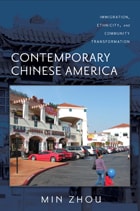
Contemporary Chinese America is the most comprehensive sociological investigation of the experiences of Chinese immigrants to the United States—and of their offspring—in the late twentieth and early twenty-first centuries. The author, Min Zhou, is a well-known sociologist of the Chinese American experience. In this volume, she collects her original research on a range of subjects, including the causes and consequences of emigration from China, demographic trends of Chinese Americans, patterns of residential mobility in the U.S., Chinese American "ethnoburbs," immigrant entrepreneurship, ethnic enclave economies, gender and work, Chinese language media, Chinese schools, and intergenerational relations. The concluding chapter, "Rethinking Assimilation," ponders the future for Chinese Americans. Also included are an extensive bibliography and a list of recommended documentary films.
While the book is particularly well-suited for college courses in Chinese American studies, ethnic studies, Asian studies, and immigration studies, it will interest anyone who wants to more fully understand the lived experience of contemporary Chinese Americans.

Contemporary Northern Irish Society
An IntroductionColin Coulter
Pluto Press, 1999
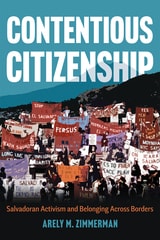
Contentious Citizenship
Salvadoran Activism and Belonging Across BordersArely M. Zimmerman
University of Arizona Press, 2026
Drawing on nearly fifty interviews with activists who fled El Salvador, Zimmerman traces how political refugees carried with them strategies of resistance and community organizing that shaped social justice movements in the United States. The book addresses the political turmoil and grassroots mobilizations in El Salvador, the sanctuary movement of the 1980s, contemporary activism, and the impact of women’s strategies and forms of resistance.
Essential reading for scholars and students of migration, Central American studies, and political movements, Contentious Citizenship is a bold intervention into contemporary debates on identity, legality, and resistance. Zimmerman’s work honors the ingenuity and resilience of Salvadoran activists and invites readers to consider what it means to belong.
Contested Terrain
Reflections with Afghan Women LeadersSally L Kitch
University of Illinois Press, 2014
Continental Crossroads
Remapping U.S.-Mexico Borderlands HistorySamuel Truett and Elliott Young, eds.
Duke University Press, 2004
The U.S.-Mexico borderlands have long supported a web of relationships that transcend the U.S. and Mexican nations. Yet national histories usually overlook these complex connections. Continental Crossroads rediscovers this forgotten terrain, laying the foundations for a new borderlands history at the crossroads of Chicano/a, Latin American, and U.S. history. Drawing on the historiographies and archives of both the U.S. and Mexico, the authors chronicle the transnational processes that bound both nations together between the early nineteenth century and the 1940s, the formative era of borderlands history.
A new generation of borderlands historians examines a wide range of topics in frontier and post-frontier contexts. The contributors explore how ethnic, racial, and gender relations shifted as a former frontier became the borderlands. They look at the rise of new imagined communities and border literary traditions through the eyes of Mexicans, Anglo-Americans, and Indians, and recover transnational border narratives and experiences of African Americans, Chinese, and Europeans. They also show how surveillance and resistance in the borderlands inflected the “body politics” of gender, race, and nation. Native heroine Bárbara Gandiaga, Mexican traveler Ignacio Martínez, Kiowa warrior Sloping Hair, African American colonist William H. Ellis, Chinese merchant Lee Sing, and a diverse cast of politicos and subalterns, gendarmes and patrolmen, and insurrectos and exiles add transnational drama to the formerly divided worlds of Mexican and U.S. history.
Contributors. Grace Peña Delgado, Karl Jacoby, Benjamin Johnson, Louise Pubols, Raúl Ramos, Andrés Reséndez, Bárbara O. Reyes, Alexandra Minna Stern, Samuel Truett, Elliott Young
Continental Shifts
Migration, Representation, and the Struggle for Justice in Latin(o) AmericaBy John D. "Rio" Riofrio
University of Texas Press, 2015
Applying a broad geographical approach to comparative Latino literary and cultural studies, Continental Shifts illuminates how the discursive treatment of Latinos changed dramatically following the enactment of NAFTA—a shift exacerbated by 9/11. While previous studies of immigrant representation have focused on single regions (the US/Mexico border in particular), specific genres (literature vs. political rhetoric), or individual groups, Continental Shifts unites these disparate discussions in a provocative, in-depth examination.
Bringing together a wide range of groups and genres, this intercultural study explores novels by Latin American and Latino writers, a border film by Tommy Lee Jones and Guillermo Arriaga, “viral” videos of political speeches, popular television programming (particularly shows that feature incarceration and public shaming), and user-generated YouTube videos. These cultural products reveal the complexity of Latino representations in contemporary discourse. While tropes of Latino migrants as threatening, diseased foreign bodies date back to the nineteenth century, Continental Shifts marks the more pernicious, recent images of Latino laborers (legal and not) in a variety of contemporary media. Using vivid examples, John Riofrio demonstrates the connections between rhetorical and ideological violence and the physical and psychological violence that has more intensely plagued Latino communities in recent decades. Culminating with a consideration of the “American” identity, this eye-opening work ultimately probes the nation’s ongoing struggle to uphold democratic ideals amid dehumanizing multiethnic tension.
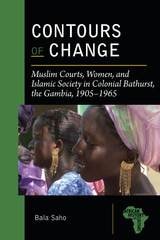
Contours of Change
Muslim Courts, Women, and Islamic Society in Colonial Bathurst, the Gambia, 1905-1965Bala Saho
Michigan State University Press, 2018

Control and Order in French Colonial Louisbourg, 1713-1758
A.J.B. Johnston
Michigan State University Press, 2001
Control and Order in French Colonial Louisbourg, 1713-1758 is the culmination of nearly a quarter century of research and writing on 18th-century Louisbourg by A. J. B. Johnston. The author uses a multitude of primary archival sources-official correspondence, court records, parish registries, military records, and hundreds of maps and plans-to put together a detailed analysis of a distinctive colonial society. Located on Cape Breton Island (then known as Île Royale), the seaport and stronghold of Louisbourg emerged as one of the most populous and important settlements in all of New France. Its economy was based on fishing and trade, and the society that developed there had little or nothing to do with the fur trade, or the seigneurial regime that characterized the Canadian interior. Johnston traces the evolution of a broad range of controlling measures that were introduced and adapted to achieve an ordered civil and military society at Louisbourg. Town planning, public celebrations, diversity in the population, use of punishments, excessive alcohol consumption, the criminal justice system, and sexual abuse are some of the windows that reveal attempts to control and regulate society. A. J. B. Johnston's Control and Order in French Colonial Louisbourg offers both a broad overview of the colony's evolution across its half-century of existence, and insightful analyses of the ways in which control was integrated into the mechanisms of everyday life.
Control and Subversion
Gender Relations in TajikistanColette Harris
Pluto Press, 2004
Control and Subversion investigates the relationship of gender to the inner workings of social control, such as exposing ways in which Tajik society threatens men’s masculinity, thereby bringing them to force family members into conformity, irrespective of the suffering this may cause. It examines how masculine and feminine gender characteristics influence personal relationships and explores gender relations at their most intimate – from the secret musings of adolescent girls, through the painful experiences of young men, to the trauma of sexual initiation. Although largely concentrating on contemporary life, the book also discusses historical materials and Soviet influence on Tajik society. Control and Subversion is essential reading for anyone interested in Central Asia, Muslim societies, the lives of Muslim women, or gender in a Muslim context.

Controlling Anger
The Anthropology of Gisu ViolenceSuzette Heald
Ohio University Press, 1997
Controlling Anger examines the dilemmas facing rural people who live within the broader context of political instability. Following Uganda’s independence from Britain in 1962, the Bagisu men of Southeastern Uganda developed a reputation for extreme violence.
Drawing on a wide range of historical sources including local court records, statistical survey analysis, and intensive fieldwork, Suzette Heald portrays and analyzes the civil violence that grew out of intense land shortage, the marginalization of the Gisu under British rule, and the construction of male gender identity among the Gisu. Now available in a paperback edition with a new preface by the author, Controlling Anger is an important contribution to rural sociology in Africa.
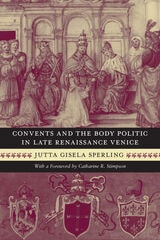
Convents and the Body Politic in Late Renaissance Venice
Jutta Gisela Sperling
University of Chicago Press, 2000
Sperling explains how women were not allowed to marry beneath their social status while men could, especially if their brides were wealthy. Faced with a shortage of suitable partners, patrician women were forced to offer themselves as "a gift not only to God, but to their fatherland," as Patriarch Giovanni Tiepolo told the Senate of Venice in 1619. Noting the declining birth rate among patrician women, Sperling explores the paradox of a marriage system that preserved the nobility at the price of its physical extinction. And on a more individual level, she tells the fascinating stories of these women. Some became scholars or advocates of women's rights, some took lovers, and others escaped only to survive as servants, prostitutes, or thieves.

Conversations Across Our America
Talking About Immigration and the Latinoization of the United StatesBy Louis G. Mendoza
University of Texas Press, 2012
In the summer of 2007, Louis G. Mendoza set off on a bicycle trip across the United States with the intention of conducting a series of interviews along the way. Wanting to move beyond the media’s limited portrayal of immigration as a conflict between newcomers and “citizens,” he began speaking with people from all walks of life about their views on Latino immigration. From the tremendous number of oral histories Mendoza amassed, the resulting collection offers conversations with forty-three different people who speak of how they came to be here and why they made the journey. They touch upon how Latino immigration is changing in this country, and how this country is being changed by Latinoization. Interviewees reflect upon the concerns and fears they’ve encountered about the transformation of the national culture, and they relate their own experiences of living and working as “other” in the United States.
Mendoza’s collection is unique in its vastness. His subjects are from big cities and small towns. They are male and female, young and old, affluent and impoverished. Many are political, striving to change the situation of Latina/os in this country, but others are “everyday people,” reflecting upon their lives in this country and on the lives they left behind. Mendoza’s inclusion of this broad swath of voices begins to reflect the diverse nature of Latino immigration in the United States today.

Convict Cowboys
The Untold History of the Texas Prison RodeoMitchel P. Roth
University of North Texas Press, 2016
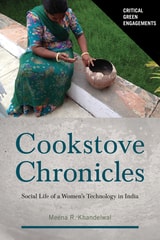
Cookstove Chronicles
Social Life of a Women’s Technology in IndiaMeena R. Khandelwal
University of Arizona Press, 2024
Based on anthropological research in Rajasthan, Cookstove Chronicles argues that the supposedly obsolete chulha persists because it offers women control over the tools needed to feed their families. Their continued use of old stoves alongside the new is not a failure to embrace new technologies but instead a strategy to maximize flexibility and autonomy. The chulha is neither the villain nor hero of this story. It produces particulate matter that harms people’s bodies, leaves soot on utensils and walls, and accelerates glacial melting and atmospheric warming. Yet it also depends on renewable biomass fuel and supports women’s autonomy as a local, do-it-yourself technology.
Meena Khandelwal, a feminist anthropologist, describes her collaboration with engineers, archaeologists, and others. She employs critical social theory and reflections from fieldwork to bring together research from a range of fields, including history, geography, anthropology, energy and environmental studies, public health, and science and technology studies (STS). In so doing she not only demystifies multidisciplinary research but also highlights the messy reality of actual behavior.
Cookstove Chronicles critically examines why, despite extensive development efforts, use of the chulha persists. It offers an important new framework for looking at development, technology, environmental change, and human behavior.
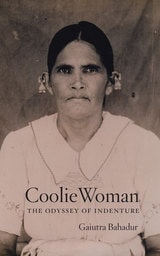
Coolie Woman
The Odyssey of IndentureGaiutra Bahadur
University of Chicago Press, 2013
Shunned by society, and sometimes in mortal danger, many coolie women were either runaways, widows, or outcasts. Many of them left husbands and families behind to migrate alone in epic sea voyages—traumatic “middle passages”—only to face a life of hard labor, dismal living conditions, and, especially, sexual exploitation. As Bahadur explains, however, it is precisely their sexuality that makes coolie women stand out as figures in history. Greatly outnumbered by men, they were able to use sex with their overseers to gain various advantages, an act that often incited fatal retaliations from coolie men and sometimes larger uprisings of laborers against their overlords. Complex and unpredictable, sex was nevertheless a powerful tool.
Examining this and many other facets of these remarkable women’s lives, Coolie Woman is a meditation on survival, a gripping story of a double diaspora—from India to the West Indies in one century, Guyana to the United States in the next—that is at once a search for one’s roots and an exploration of gender and power, peril and opportunity.
Cooperation and Community
Economy and Society in OaxacaBy Jeffrey H. Cohen
University of Texas Press, 2000
In the villages and small towns of Oaxaca, Mexico, as in much of rural Latin America, cooperation among neighbors is essential for personal and community survival. It can take many forms, from godparenting to sponsoring fiestas, holding civic offices, or exchanging agricultural or other kinds of labor. This book examines the ways in which the people of Santa Ana del Valle practice these traditional cooperative and reciprocal relationships and also invent new relationships to respond to global forces of social and economic change at work within their community.
Based on fieldwork he conducted in this Zapotec-speaking community between 1992 and 1996, Jeffrey Cohen describes continuities in the Santañeros' practices of cooperation, as well as changes resulting from transnational migration, tourism, increasing educational opportunities, and improved communications. His nuanced portrayal of the benefits and burdens of cooperation is buttressed by the words of many villagers who explain why and how they participate-or not-in reciprocal family and community networks. This rich ethnographic material offers a working definition of community created in and through cooperative relationships.
Coping With Poverty
The Social Contexts of Neighborhood, Work, and Family in the African-American CommunitySheldon Danziger and Ann Chih Lin, Editors
University of Michigan Press, 2000