Results by title
1927 books match the query 'Technology & Engineering' and 164 start with c

Cultivating Coffee
The Farmers of Carazo, Nicaragua, 1880–1930Julie A. Charlip
Ohio University Press, 2002
Many scholars of Latin America have argued that the introduction of coffee forced most people to become landless proletarians toiling on large plantations. Cultivating Coffee tells a different story: small and medium-sized growers in Nicaragua were a vital part of the economy, constituting the majority of the farmers and holding most of the land.
Alongside these small commercial farmers was a group of subsistence farmers, created by the state’s commitment to supplying municipal lands to communities. These subsistence growers became the workforce for their coffee-growing neighbors, providing harvest labor three months a year. Mostly illiterate, perhaps largely indigenous, they nonetheless learned the functioning of the new political and economic systems and used them to acquire individual plots of land.
Julie Charlip’s Cultivating Coffee joins the growing scholarship on rural Latin America that demonstrates the complexity of the processes of transition to expanded export agriculture in the nineteenth and twentieth centuries, emphasizing the agency of actors at all levels of society. It also sheds new light on the controversy surrounding landholding in Nicaragua during the Sandinista revolution.

Cultivating Machines
The Use and Maintenance of Technology in Midwestern Agriculture, 1845–1900James Rick
Ohio University Press, 0
How farmers shaped the development of agricultural machinery
Throughout the second half of the nineteenth century, farmers in the midwestern United States and in Ontario began adopting new agricultural machines: threshers, reapers, and drills for more efficient production of grains, as well as sewing and washing machines for more efficient production within the farm household. By using, maintaining, and altering these machines within the natural and social contexts of their farms, rural people produced new technological systems of industrial agriculture. They also struggled with machine manufacturers and their agents for control of those systems—both individually and through farmers’ organizations. Cultivating Machines contributes to historiographies of capitalism, technology, and agriculture as it demonstrates the importance of everyday know-how and informed tinkering to the mechanization of grain agriculture.
In this study, James Rick moves from the middle decades of the nineteenth century, and the introduction of horse-powered machines, to the end of the century, when mechanized technologies became indispensable and central parts of farms themselves. Ultimately, large-scale wheat production, the increased complexity of machines, the need for replacement parts, and the efforts of manufacturers and their agents to assert themselves as authorities over industrial agriculture diminished the technological independence of farming people.

Cultures in Orbit
Satellites and the TelevisualLisa Parks
Duke University Press, 2005
Roaming across the disciplines of media studies, geography, and science and technology studies, Parks examines uses of satellites by broadcasters, military officials, archaeologists, and astronomers. She looks at Our World, a live intercontinental television program that reached five hundred million viewers in 1967, and Imparja tv, an Aboriginal satellite tv network in Australia. Turning to satellites’ remote-sensing capabilities, she explores the U.S. military’s production of satellite images of the war in Bosnia as well as archaeologists’ use of satellites in the excavation of Cleopatra’s palace in Alexandria, Egypt. Parks’s reflections on how Western fantasies of control are implicated in the Hubble telescope’s views of outer space point to a broader concern: that while satellite uses promise a “global village,” they also cut and divide the planet in ways that extend the hegemony of the post-industrial West. In focusing on such contradictions, Parks highlights how satellites cross paths with cultural politics and social struggles.

Curating Conception
Race and Reproduction in South AfricaTessa Moll
Rutgers University Press, 2026
South Africa’s private fertility clinics promise hope: expert care, measurable success rates, and the possibility of long-desired children. While seemingly insulated from the legacies of apartheid and the stark inequalities of the present, these clinics operate within a society still shaped by racial stratification and uneven access to care. But what happens once patients step through the clinic doors? Based on fieldwork conducted over a decade, Curating Conception offers the first book-length study of IVF in sub-Saharan Africa. Tessa Moll turns to the polished, private clinics of Cape Town and Johannesburg to show how racial hierarchies are quietly sustained through everyday decisions—about donor selection, embryo grading, success statistics, and patient eligibility—that shape ideas of legitimate parenthood and belonging in the post-apartheid era. Introducing the concept of curating, Moll shows how medical authority, patient desire, and enduring social orders work together to shape which reproductive futures are seen as natural and desirable. In doing so, Curating Conception demonstrates how racial imaginaries—and the normalization of whiteness as the default family form—are woven into the intimate and technological processes of IVF. Blending vivid storytelling with careful analysis, it invites readers to rethink fertility care not simply as a technology of hope, but as a powerful site where history, inequality, and aspiration converge.

Curiosity
How Science Became Interested in EverythingPhilip Ball
University of Chicago Press, 2013

Cyber Security for Microgrids
Subham Sahoo
The Institution of Engineering and Technology, 2022

Cyber-Physical System Design with Sensor Networking Technologies
Sherali Zeadally
The Institution of Engineering and Technology, 2016

Cyber-Physical-Social Systems and Constructs in Electric Power Engineering
Siddharth Suryanarayanan
The Institution of Engineering and Technology, 2016
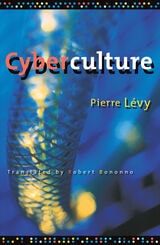
Cyberculture
Pierre Levy
University of Minnesota Press, 2001
A clear explanation and provocative look at the impact of new technologies on world society.
Needing guidance and seeking insight, the Council of Europe approached Pierre Lévy, one of the world’s most important and well-respected theorists of digital culture, for a report on the state (and, frankly, the nature) of cyberspace. The result is this extraordinary document, a perfectly lucid and accessible description of cyberspace—from infrastructure to practical applications-along with an inspired, far-reaching exploration of its ramifications. A window on the digital world for the technologically timid, the book also offers a brilliant vision of the philosophical and social realities and possibilities of cyberspace for the adept and novice alike.
In an overview, Lévy discusses the distinguishing features of cyberspace and cyberculture from anthropological, philosophical, cultural, and sociological points of view. An optimist about the future potential of cyberspace, he eloquently argues that technology—and specifically the infrastructure of cyberspace, the Internet—can have a transformative effect on global society. Some of the issues he takes up are new art forms; changes in relationships to knowledge, education, and training; the preservation of linguistic and cultural differences; the emergence and implications of collective intelligence; the problems of social exclusion; and the impact of new technology on the city and democracy in general. In considerable detail, Lévy describes the ways in which cyberspace will help promote the growth of democracy, primarily through the participation of individuals or groups. His analysis is enlivened by his own personal impressions of cyberculture—garnered from bulletin boards, mailing lists, virtual reality demonstrations, and simulations. Immediate in its details, visionary in its scope, deeply informed yet free of unnecessary technical language, Cyberculture is the book we require in our digital age.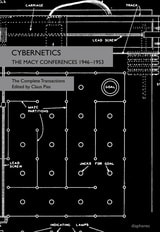
Cybernetics
The Macy Conferences 1946-1953. The Complete TransactionsEdited by Claus Pias
Diaphanes, 2016
This book contains the complete transcripts of all ten Macy conferences and the guidelines for the conference proceedings. These transcripts are supplemented with an introduction by Claus Pias that charts the significance of the Macy conferences to the history of science.
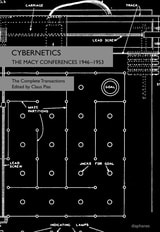
Cybernetics
The Macy Conferences 1946-1953. The Complete TransactionsEdited by Claus Pias
Diaphanes, 2025
This book contains the complete transcripts of all ten Macy conferences and the guidelines for the conference proceedings. These transcripts are supplemented with an introduction by Claus Pias that charts the significance of the Macy conferences to the history of science.

Cybersecurity in Emerging Healthcare Systems
Agbotiname Lucky Imoize
The Institution of Engineering and Technology, 2024

Cybersecurity in Transport Systems
Martin Hawley
The Institution of Engineering and Technology, 2022
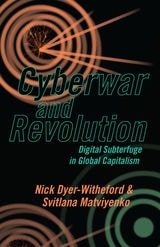
Cyberwar and Revolution
Digital Subterfuge in Global CapitalismNick Dyer-Witheford
University of Minnesota Press, 2019
Uncovering the class conflicts, geopolitical dynamics, and aggressive capitalism propelling the militarization of the internet
Global surveillance, computational propaganda, online espionage, virtual recruiting, massive data breaches, hacked nuclear centrifuges and power grids—concerns about cyberwar have been mounting, rising to a fever pitch after the alleged Russian hacking of the U.S. presidential election and the Cambridge Analytica scandal. Although cyberwar is widely discussed, few accounts undertake a deep, critical view of its roots and consequences.
Analyzing the new militarization of the internet, Cyberwar and Revolution argues that digital warfare is not a bug in the logic of global capitalism but rather a feature of its chaotic, disorderly unconscious. Urgently confronting the concept of cyberwar through the lens of both Marxist critical theory and psychoanalysis, Nick Dyer-Witheford and Svitlana Matviyenko provide a wide-ranging examination of the class conflicts and geopolitical dynamics propelling war across digital networks.
Investigating the subjectivities that cyberwar mobilizes, exploits, and bewilders, and revealing how it permeates the fabric of everyday life and implicates us all in its design, this book also highlights the critical importance of the emergent resistance to this digital militarism—hacktivism, digital worker dissent, and off-the-grid activism—for effecting different, better futures.