Results by title
2728 books match the query 'Education' and 242 start with c
Creating a Vigorous Online Course
A Step-by-Step GuideBerlin Fang
Bridwell Press, 2026
Creating a Vigorous Online Course by Berlin Fang is a comprehensive, step-by-step guide for educators looking to build meaningful, engaging, and structurally sound online learning experiences. Drawing on decades of instructional design expertise and educational research, Fang bridges the gap between conceptual pedagogy and real-world teaching practices. The book is uniquely structured to walk educators through the entire course creation process—from planning and tool selection to assessment design, interaction strategies, and multimedia integration.
Unlike many overly technical or abstract resources, this book offers platform-agnostic guidance enriched with clear tasks, practical tips, checklists, and real examples. It emphasizes principles such as granularity, modular design, reusability, accessibility, and equivalence to in-person learning—all while respecting instructors' time and creativity.
Fang’s conversational tone and thoughtful analogies (like course design as translation or architecture) make complex ideas approachable, and his deep respect for both teachers and students is evident throughout. Whether you're teaching fully online, hybrid, HyFlex, or simply looking to digitize parts of your course, this book provides actionable strategies to craft student-centered experiences without sacrificing academic rigor.
An invaluable companion for K-12 educators, higher ed faculty, and instructional designers alike, Creating a Vigorous Online Course transforms course design from a technical burden into an empowering, iterative, and creative endeavor.
Creating the Big Ten
Courage, Corruption, and CommercializationWinton U Solberg
University of Illinois Press, 2018
Winton U. Solberg explores the relationship between higher education and collegiate football in the Big Ten's first fifty years. This formative era saw debates over eligibility and amateurism roil the sport. In particular, faculty concerned with academics clashed with coaches, university presidents, and others who played to win. Solberg follows the conference's successful early efforts to put the best interests of institutions and athletes first. Yet, as he shows, commercial concerns undid such work after World War I as sports increasingly eclipsed academics. By the 1940s, the Big Ten's impact on American sports was undeniable. It had shaped the development of intercollegiate athletics and college football nationwide while serving as a model for other athletic conferences.
Creating the College Man
American Mass Magazines and Middle-Class Manhood, 1890–1915Daniel A. Clark
University of Wisconsin Press, 2010
In Creating the College Man Daniel A. Clark argues that the dominant mass media of the era—popular magazines such as Cosmopolitan and the Saturday Evening Post—played an integral role in shaping the immediate and long-term goals of this select group of men. In editorials, articles, fiction, and advertising, magazines depicted the college man as simultaneously cultured and scientific, genteel and athletic, polished and tough. Such depictions underscored the college experience in powerful and attractive ways that neatly united the incongruous strains of American manhood and linked a college education to corporate success.

Creative Communities
Regional Inclusion and the ArtsEdited by Janet McDonald and Robert Mason
Intellect Books, 2015

Creativity and Academic Activism
Instituting Cultural StudiesMeaghan Morris and Mette Hjort, eds.
Duke University Press, 0
This book also investigates the impact of managerialism, marketization, and globalization on university cultures, asking what critical cultural scholarship can do in such increasingly adversarial conditions. Experiments in Asian universities are emphasized as exemplary of what can or could be achieved in other contexts of globalized university policy.
Contributors. Tony Bennett, Stephen Ching-Kiu Chan, Kuan-Hsing Chen, Douglas Crimp, Dai Jinhua, John Nguyet Erni, Mette Hjort, Josephine Ho, Koichi Iwabuchi, Meaghan Morris, Tejaswini Niranjana, Wang Xiaoming, Audrey Yue
Creativity and Academic Activism
Instituting Cultural StudiesMeaghan Morris and Mette Hjort, eds.
Duke University Press, 0
This book also investigates the impact of managerialism, marketization, and globalization on university cultures, asking what critical cultural scholarship can do in such increasingly adversarial conditions. Experiments in Asian universities are emphasized as exemplary of what can or could be achieved in other contexts of globalized university policy.
Contributors. Tony Bennett, Stephen Ching-Kiu Chan, Kuan-Hsing Chen, Douglas Crimp, Dai Jinhua, John Nguyet Erni, Mette Hjort, Josephine Ho, Koichi Iwabuchi, Meaghan Morris, Tejaswini Niranjana, Wang Xiaoming, Audrey Yue
Creativity in Education
International PerspectivesEdited by Nicole Brown, Amanda Ince, and Karen Ramlackhan
University College London, 2024
Creativity has become a buzzword across all disciplines in education, from early years through to higher education. Although the meaning of creativity might depend on its cultural context, it is impossible to ignore the applicability and relevance of creativity as an educational tool, philosophical framework, and pedagogical approach.
This collection explores the case studies of ground-breaking work undertaken internationally to support and develop learners with, and for, creativity. The chapters are based on empirical research, which provides the scholarly framework for reconceptualizing creativity in the country-specific context of each study. Each case study is supplemented by critical, reflective, and analytical responses from contributors from different countries, which provide a dialogue for educators into how methods and approaches from a certain context can be transferred, translated, and contextually mediated for different environments.
Creativity in Education thus provides practical insights for application in a wide range of educational settings, as well as philosophical approaches to teacher education, leadership for learning, and creativity as a universal phenomenon.
Creativity in the Classroom
Case Studies in Using the Arts in Teaching and Learning in Higher EducationEdited by Paul McIntosh and Digby Warren
Intellect Books, 2013
Crip Spacetime
Access, Failure, and Accountability in Academic LifeMargaret Price
Duke University Press, 2024
Crisis Leadership in Higher Education
Theory and PracticeRalph A. Gigliotti
Rutgers University Press, 2020
Crisis in Higher Education
A Plan to Save Small Liberal Arts Colleges in AmericaJeffrey R. Docking
Michigan State University Press, 2014
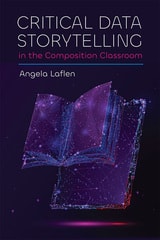
Critical Data Storytelling in the Composition Classroom
Angela Laflen
Utah State University Press, 2025
At the heart of Laflen’s approach is critical data storytelling—a practice that equips students with the skills to understand, interpret, and ethically communicate with and about data through various multimodal formats. By teaching students to make informed decisions as data storytellers, Laflen addresses the ethical implications of working with data while offering practical strategies for reading and analyzing data stories. This approach empowers both students and teachers to engage critically with data as a tool for learning and communication. It also highlights how multimodal composition has yet to fully account for the central role of data in shaping contemporary communication and argumentation.
By focusing on the ethical and rhetorical dimensions of data storytelling, Critical Data Storytelling in the Composition Classroompresents a pedagogical approach that prepares students for the challenges of working with data in a rapidly evolving digital landscape. This flexible, adaptable model for teaching critical data literacy is of great interest to writing instructors, scholars in rhetoric and composition, and educators who seek to prepare students for the demands of a data-driven world.
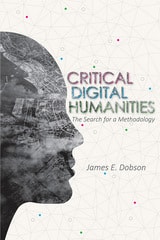
Critical Digital Humanities
The Search for a MethodologyJames E. Dobson
University of Illinois Press, 2019
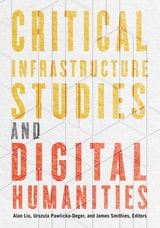
Critical Infrastructure Studies and Digital Humanities
Alan Liu
University of Minnesota Press, 2026
How digital humanities can shape and be shaped by the infrastructures that sustain our world
Critical Infrastructure Studies and Digital Humanities reimagines the digital humanities (DH) through the expanding field of critical infrastructure studies. Featuring voices from around the globe, this volume explores how DH builds on and extends theories and technologies of infrastructure that affect society, culture, and knowledge in different national and regional contexts. Examining DH’s own infrastructural genealogy, the contributors offer readers critical reflections and bold visions for the future as they address issues of environmentalism, decolonization, Indigenous sovereignty, multilingualism, labor justice, feminism, national development, and beyond from a variety of disciplinary perspectives embedded in concrete digital systems. Including innovative “infrastructure manifests,” the essays in this book illuminate how DH can both study and shape the systems that sustain culture, scholarship, and connection.
Contributors: Anne Beaulieu, U of Groningen; Kyle Booten, U of Connecticut; Ann Borda, U of Melbourne; Susan Brown, U of Guelph; Toby Burrows, U of Western Australia; Ashley Caranto Morford, Weber State U; Javier Cha, U of Hong Kong; Jing Chen, Nanjing U; Arianna Ciula, King’s College London; Maya Dodd, FLAME U, Pune, India; Martin Paul Eve, Birkbeck, U of London; Allan Gomez, Philly Community Wireless; Matthew N. Hannah, Purdue U; Matthew Hockenberry, Fordham U; Arun Jacob, U of Toronto; Mike Jones, U of Tasmania; Lucie Kolb, Basel Academy of Art and Design FHNW; Ian M. Miller, St. John’s U, New York; Sylvia K. Miller, Duke U; Sarah Montoya, Mellon Humanities Postdoctoral Fellow; Saumyaa Naidu, independent researcher; Sharika Parmar, FLAME U, Pune, India; Kush Patel, Srishti Manipal Academy of Higher Education, Bengaluru; Miriam Posner, UCLA; Puthiya Purayil Sneha, International Institute of Information Technology, Hyderabad; Paul Spence, King’s College London; Lik Hang Tsui, City U of Hong Kong; Deb Verhoeven, U of Alberta; Miguel Vieira, King’s College London; Devren Washington, Philly Community Wireless; Alex Wermer-Colan, Temple U and Philly Community Wireless; Darren Wershler, Concordia U; Grant Wythoff, Princeton U and Philly Community Wireless.
Retail e-book files for this title are screen-reader friendly with images accompanied by short alt text and/or extended descriptions.
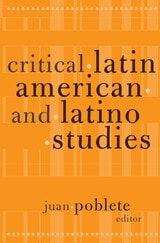
Critical Latin American And Latino Studies
Juan Poblete
University of Minnesota Press, 2003
Situates these dynamic disciplines within debates around globalization
This book brings together some of the most prominent scholars working across the spectrum of Latin American and Latino studies to explore their changing intellectual undertaking in relation to global processes of change. Critical Latin American and Latino Studies identifies the challenges and possibilities of more politically engaged and theoretically critical modes of scholarly practice.
One objective is to provide a brief critical history of the study of various Latin American cultures—Latino, Chicano, Puerto Rican, among others. But these essays also serve to assess the roles of ethnic and area studies in light of changing scholarly trends, from emphases on gender and sexuality to a focus on postcoloniality and globalization. The result is an important contribution to current debates on the conditions of contemporary knowledge production. Contributors: Tomás Almaguer, San Francisco State U; Frances R. Aparicio, U of Illinois, Chicago; John Beverley, U of Pittsburgh; Angie Chabram-Dernersesian, U of California, Davis; Román de la Campa, SUNY, Stony Brook; Juan Flores, Hunter College and CUNY; Walter D. Mignolo, Duke U; Giorgio Perissinotto, U of California, Santa Barbara; Kirsten Silva Gruesz, U of California, Santa Cruz; Stefano Varese, U of California, Davis; George Yúdice, NYU; Juan Zevallos Aguilar, Villanova U.
Critical Perspectives on Academic Writing
The politics and Practices of Writing Development in UK Higher EducationEdited by Ayanna Prevatt-Goldstein and David Mallows
University College London, 2026
This volume addresses the most pressing issues in higher education today, such as inclusion, academic integrity, and generative AI.
This timely collection explores the politics and practices of academic writing development in UK higher education. The volume addresses issues of access, equity, and generative AI in the context of student writing, to consider what makes writing academic, why it matters, and how we can change the field for the better.
Critical Perspectives on Latino Education in Massachusetts
Lorna Rivera and Melissa Colón, editors
University of Massachusetts Press, 2025
In Massachusetts, the Latino population increased by 475 percent between 1980 and 2017, marking a dramatic growth. This diverse ethnic community of Puerto Ricans, Dominicans, Salvadoreans, Colombians, Brazilians, and more also contains a wide range of cultures, immigration and migration experiences, languages, and socio-political backgrounds. However, there are numerous commonalities involving education. Recent research at the Mauricio Gastón Institute for Latino Community Development and Policy reveals that Latino students in Massachusetts are more likely to attend public schools, in communities with significant academic achievement and opportunity gaps as well as other challenges, from food scarcity to higher rates of unemployment. At the same time, the state-wide shift to standards-based education has had a disproportionately negative impact on Latino students, who already feel the effects of politically motivated anti-immigrant policies and laws that limit bilingual education.
This collection of essays, from those working inside the classroom as well as researchers taking a broader look at policy, addresses the array of issues facing Latino students in Massachusetts. These perspectives paint a complex picture of the educational experience for Latinos, and offer expert suggestions for improving classrooms, school environments, and ultimate educational outcomes for an important growing demographic in the Commonwealth.
In addition to editors Lorna Rivera and Melissa Colón, this volume’s contributors include Almudena G. Abeyta, Nasteho Ali, Cristina Araujo Brinkerhoff, Michael Berardino, Alex Briesacher, Thomas Conroy, Judenie Dabel, Liya Escalera, Luis Enrique Esquivel, Deyja Enriquez, Isahiah Erilus, Nyal Fuentes, Jazmin Rubi Flete Gomez, Manuel Frau-Ramos, Kimberly A. S. Howard, Patricia Krueger-Henney, Steven Lue, Mary Jo Marion, Timothy E. Murphy, Cecilia Nardi, Laurie Occhipinti, Alexandra Oliver-Davila, Chong Myung Park, Angelica Rodriquez, Marta T. Rosa, Diana Santiago, Melissa Sargent, Ester Shapiro, V. Scott H. Solberg, Fabián Torres-Ardila, Ashley Torres Carrasquillo, Paul Trunfio, Carmen N. Veloria, and Heilam Xie.
Critical Studies in Art and Design Education
Edited by Richard Hickman
Intellect Books, 2005
Rod Taylor, who has done much to promote and develop critical studies in the UK, provides us with examples of classroom practice and gives us his more recent thoughts on fundamental issues – "universal themes" in art – and gives examples of how both primary and secondary schools might develop their teaching of art through attending to themes such as "identity," "myth," and "environments" to help "re-animate the practical curriculum."
Although some of the discussion in this book centres on or arises from the English National curriculum, the issues are more global, and relevant to anyone involved in developing or delivering art curricula in schools. An American perspective is given in papers by George Geahigan and Paul Duncum. Geahigan outlines an approach to teaching about visual form which begins with students' personal responses and is developed through structured instruction. In Duncum’s vision of ‘visual culture art education’ sites such as theme parks and shopping malls are the focus of students' critical attention in schools; Nick Stanley gives a lucid account of just such an enterprise, giving practical examples of ways to engage students with this particular form of visual pleasure.
This publication serves to highlight some of the more pressing issues of concern to art and design teachers in two aspects. Firstly it seeks to contextualise the development of critical studies, discussing its place in the general curriculum – possibly as a discrete subject – and secondly it examines different approaches to its teaching.
Critical Studies in Indian Grammarians I
The Theory of Homogeneity (Savar?ya)Madhav M. Deshpande
University of Michigan Press, 1975
Critical Teaching and Everyday Life
Ira Shor
University of Chicago Press, 1987
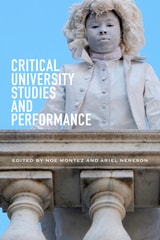
Critical University Studies and Performance
Edited by Noe Montez and Ariel Nereson
Vanderbilt University Press, 2026
Critical University Studies and Performance explores how we contend with issues of power, race, class, and gender in higher education, specifically as they relate to the complexities of theater and performance studies programs. In what ways might the fields of theater, performance, and dance studies, as they operate in institutions of higher education, support hegemonic logics as well as model reparative practices, given their perhaps unique disciplinary relationships to staging representation and their shared emphasis on embodiment as a practical and theoretical area of engagement?
Montez and Nereson bring together scholars with a diverse range of career experiences and embodied positions inside of higher learning in order to deepen the field’s theoretical inquiry using an ethnic studies framework. By participating in the interdisciplinary discourse of critical university studies, the volume aims to explore how to conduct ethical research that critiques the university while remaining mindful of our always contingent place within it. The contributors examine the ways the university commodifies minoritarian knowledge, tokenizes the arts, and reproduces inequality. This book offers strategic ways to build liberatory communities and revolutionary networks among students and faculty alike in order to envision futures within and beyond the academy.
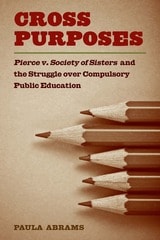
Cross Purposes
Pierce v. Society of Sisters and the Struggle over Compulsory Public EducationPaula Abrams
University of Michigan Press, 2009
"A definitive study of an extremely important, though curiously neglected, Supreme Court decision, Pierce v. Society of Sisters."
---Robert O'Neil, Professor of Law Emeritus, University of Virginia School of Law
---Richard W. Garnett, Professor of Law and Associate Dean, Notre Dame Law School
"A well-written, well-researched blend of law, politics, and history."
---Joan DelFattore, Professor of English and Legal Studies, University of Delaware
In 1922, the people of Oregon passed legislation requiring all children to attend public schools. For the nativists and progressives who had campaigned for the Oregon School Bill, it marked the first victory in a national campaign to homogenize education---and ultimately the populace. Private schools, both secular and religious, vowed to challenge the law. The Catholic Church, the largest provider of private education in the country and the primary target of the Ku Klux Klan campaign, stepped forward to lead the fight all the way to the U.S. Supreme Court.
In Pierce v. Society of Sisters (1925), the court declared the Oregon School Bill unconstitutional and ruled that parents have the right to determine how their children should be educated. Since then, Pierce has provided a precedent in many cases pitting parents against the state.
Paula Abrams is Professor of Constitutional Law at Lewis & Clark Law School.
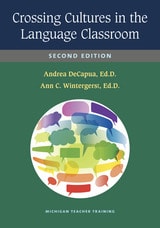
Crossing Cultures in the Language Classroom, Second Edition
Andrea DeCapua, Ed.D., and Ann C. Wintergerst, Ed.D.
University of Michigan Press, 2016
Teachers are often in the forefront of today’s cross-cultural contact, whether in the language classroom or in the K–12 or university/college classroom, but they are not always prepared to handle the various issues that can arise in terms of cross-cultural communication. The intent of this book is to make education in cross-cultural awareness accessible to a broad range of teachers working in a variety of educational settings.
Crossing Cultures in the Language Classroom attempts to balance theory and practice for pre-service and in-service teachers in general education programs or in ESL/EFL, bilingual, and foreign language teacher training programs, as well as cross-cultural awareness workshops. This book is unique in that it combines theory with a wide range of experiential activities and projects designed to actively engage users in the process of understanding different aspects of cross-cultural awareness. The goals of the book are to help readers:
- expand cultural awareness of one’s own culture and that of others
- achieve a deeper understanding of what culture is and the relationship between culture and language
- acquire the ability to observe behaviors in order to draw conclusions based on observation rather than preconceptions
- understand and implement observations of cultural similarities and differences
- develop an attitude of tolerance toward cultural differences and move away from the “single story.”
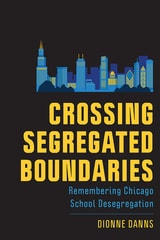
Crossing Segregated Boundaries
Remembering Chicago School DesegregationDionne Danns
Rutgers University Press, 2021
Crossing the Yard
Thirty Years as a Prison VolunteerRichard Shelton
University of Arizona Press, 2007
Richard Shelton was a young English professor in 1970 when a convict named Charles Schmid—a serial killer dubbed the “Pied Piper of Tucson” in national magazines—shared his brooding verse. But for Shelton, the novelty of meeting a death-row monster became a thirty-year commitment to helping prisoners express themselves. Shelton began organizing creative writing workshops behind bars, and in this gritty memoir he offers up a chronicle of reaching out to forgotten men and women—and of creativity blossoming in a repressive environment. He tells of published students such as Paul Ashley, Greg Forker, Ken Lamberton, and Jimmy Santiago Baca who have made names for themselves through their writing instead of their crimes. Shelton also recounts the bittersweet triumph of seeing work published by men who later met with agonizing deaths, and the despair of seeing the creative strides of inmates broken by politically motivated transfers to private prisons. And his memoir bristles with hard-edged experiences, ranging from inside knowledge of prison breaks to a workshop conducted while a riot raged outside a barricaded door. Reflecting on his decision to tutor Schmid, Shelton sees that the choice “has led me through bloody tragedies and terrible disappointments to a better understanding of what it means to be human.”
Crossing the Yard is a rare story of professional fulfillment—and a testament to the transformative power of writing.
Crowding Out Latinos
Marco Portales
Temple University Press, 2000
As bandidos or gigolos, drug users or unwed mothers, Latinos continue to figure in the public consciousness primarily as undesirables. Despite decades of effort by Spanish-speaking Americans to improve their image in the United States, Mexican Americans and other resident Latinos are still largely perceived by other Americans as poverty-stricken immigrants and second-class citizens. Accordingly, the great majority of Latino citizens receive substandard educations, equipping them for substandard jobs in substandard living environments.
The lives of Mexican Americans and other Latinos, Portales contends, can best be illuminated by looking at the history of Chicanos and particularly Chicano literature, which dramatizes the impact of education and the media on Latinos. Like Irish literature, Chicano literature has sought to articulate and to establish itself as a postcolonial voice that has struggles for national attention. Through psychological and sociopolitical representations, Chicano writers have variously used anger, indifference, fear, accommodation, and other conflicting emotions and attitudes to express how it feels to be seen as an immigrant or a foreigner in one's own country.
Portales looks at four Chicano literary works -- Americo Paredes' George Washington Gomez, Anthony Quinn's The Original Sin, Sandra Cisnero's House on Mango Street, and Ana Castillo's Massacre of the Dreamers -- to focus attention on social issues that impede the progress of Latinos. By doing so, he hopes to engage both Latino and non-Latino Americans in an overdue dialogue about the power of education and the media to form perceptions that can either empower or repress Latino citizens.
Cuban Youth and Revolutionary Values
Educating the New Socialist CitizenBy Denise F. Blum
University of Texas Press, 2011
Drawing on extensive fieldwork in Havana's secondary schools, Cuban Youth and Revolutionary Values is a remarkable ethnography, charting the government's attempts to transform a future generation of citizens. While Cuba's high literacy rate is often lauded, the little-known dropout rates among teenagers receive less scrutiny. In vivid, succinct reporting, educational anthropologist Denise Blum now shares her findings regarding this overlooked aspect of the Castro legacy.
Despite the fact that primary-school enrollment rates exceed those of the United States, the reverse is true for the crucial years between elementary school and college. After providing a history of Fidel Castro's educational revolution begun in 1953, Denise Blum delivers a close examination of the effects of the program, which was designed to produce a society motivated by benevolence rather than materialism. Exploring pioneering pedagogy, the notion of civic education, and the rural components of the program, Cuban Youth and Revolutionary Values brims with surprising findings about one of the most intriguing social experiments in recent history.
Cubans in Angola
South-South Cooperation and Transfer of Knowledge, 1976–1991Christine Hatzky
University of Wisconsin Press, 2015
Cultivating Ecologies for Digital Media Work
The Case of English StudiesCatherine C. Braun
Southern Illinois University Press, 2014
Braun’s in-depth study documents English professors and the challenges they face in both career and classroom as they attempt to gain appropriate value for digital teaching and creation within their field, departments, and institutions. Braun proposes that to move English studies into the future, three main questions must be addressed. First, what counts as a text? How should we approach the reading of texts? Finally, how should we approach the production of texts? In addition to reconsidering the nature of texts in English studies, she calls for crucial changes in higher-education institutional procedures themselves, including new methods of evaluating digital scholarship on an even playing field with other forms of work during the processes for promotion and tenure.
With insightful expertise, Braun analyzes how the new age of digital scholarship not only complements the traditional values of the English studies discipline but also offers constructive challenges to old ideas about texts, methods, and knowledge production. Cultivating Ecologies for Digital Media Work is the first volume to offer specific examination of the digital shift’s impact on English studies and provides the scaffold upon which productive conversations about the future of the field and digital pedagogy can be built.
Cultivating the Good Student
Fostering the Moral Virtues of the Intellectual LifeDouglas LeBlanc
Catholic University of America Press, 2026

Cultivating the Rosebuds
The Education of Women at the Cherokee Female Seminary, 1851-1909Devon A. Mihesuah
University of Illinois Press, 1993
Established by the Cherokee Nation in 1851 in present-day eastern Oklahoma, the nondenominaional Cherokee Female Seminary was one of the most important schools in the history of American Indian education. Devon Mihesuah explores its curriculum, faculty, administration, and educational philosophy.
"[An] important work. . . . It tells the fascinating and occasionally poignant story of the Cherokee Female Seminary, which enrolled its first class of 'Rosebuds,' as the seminarians called themselves, in 1851." --Choice
"I recommend it to any serious student of the Cherokee people." -- Robert J. Conley, author of Mountain Windsong
"Of the many books about Cherokee history, few deal with the issue of acculturation in the post-removal period and none so effectively as Devon Mihesuah's Cultivating the Rosebuds." -- Nancy Shoemaker, Western Historical Quarterly
"Required reading for anyone remotely interested in the history of Native American education." -- David W. Adams, History of Education Quarterly
Culture Myths
Applying Second Language Research to Classroom TeachingAndrea DeCapua
University of Michigan Press, 2018
A goal of this book is to help readers strike a balance between minimizing cultural differences and assuming similarities across cultures on one hand, and exoticizing other cultures or accentuating surface differences on the other.
The myths about culture as it relates to the classroom that are explored in this book are:
- We are all human beings, so how different can we really be?
- The goal of education is to develop each individual’s potential.
- Focusing on conversational skills in the classroom is overrated.
- Not looking at the teacher shows disrespect.
- How something is said is not as important as what is said.
- Everyone knows what a good instructional environment is.
- By the time students get to middle or high school, they know how to be a student.

Culture Wars
School and Society in the Conservative RestorationIra Shor
University of Chicago Press, 1992
"An outstanding work of educational theory and history."—John Coatsworth, University of Chicago
Culture Work
Folklore for the Public GoodTim Frandy and B. Marcus Cederström
University of Wisconsin Press, 2022
Thematically arranged chapters embody the interconnected aspects of culture work, from amplifying local voices to galvanizing community from within, from preservation of cultural knowledge to its creative repurposing for a desired future. These inventive projects provide concrete examples and accessible theory grounded in practice, encourage readers to embark on their own public culture work, and create new forward-looking inspiration for community leaders and scholars in the field.
Culture and Content in French
Frameworks for Innovative CurriculaAurélie Chevant-Aksoy
Lever Press, 2022
Culture of Empire
American Writers, Mexico, and Mexican Immigrants, 1880–1930By Gilbert G. González
University of Texas Press, 2003
A history of the Chicano community cannot be complete without taking into account the United States' domination of the Mexican economy beginning in the late nineteenth and early twentieth centuries, writes Gilbert G. González. For that economic conquest inspired U.S. writers to create a "culture of empire" that legitimated American dominance by portraying Mexicans and Mexican immigrants as childlike "peons" in need of foreign tutelage, incapable of modernizing without Americanizing, that is, submitting to the control of U.S. capital. So powerful was and is the culture of empire that its messages about Mexicans shaped U.S. public policy, particularly in education, throughout the twentieth century and even into the twenty-first.
In this stimulating history, Gilbert G. González traces the development of the culture of empire and its effects on U.S. attitudes and policies toward Mexican immigrants. Following a discussion of the United States' economic conquest of the Mexican economy, González examines several hundred pieces of writing by American missionaries, diplomats, business people, journalists, academics, travelers, and others who together created the stereotype of the Mexican peon and the perception of a "Mexican problem." He then fully and insightfully discusses how this misinformation has shaped decades of U.S. public policy toward Mexican immigrants and the Chicano (now Latino) community, especially in terms of the way university training of school superintendents, teachers, and counselors drew on this literature in forming the educational practices that have long been applied to the Mexican immigrant community.
Curators and Culture
The Museum Movement in America, 1740-1870Joel J. Orosz
University of Alabama Press, 1990
Tracing the birth of American museums and the curators who shaped a nation’s cultural identity.
As they formed their pioneer museums, these men were guided not so much by European examples, but rather by the imperatives of the American democratic culture, including the Enlightenment, the simultaneous decline of the respectability and rise of the middle classes, the Age of Egalitarianism, and the advent of professionalism in the sciences. Thus the pre-1870 American museum was neither the frivolous sideshow some critics have imagined, nor the enclave for elitists that others have charged. Instead, the proprietors displayed serious motives and egalitarian aspirations.
The conflicting demands for popular education on the one hand and professionalism on the other were a continuing source of tension in American museums after about 1835, but by 1870 the two claims had synthesized into a rough parity. This synthesis, the "American Compromise," has remained the basic model of museums in America down to the present. Thus, by 1870, the form of the modern American museum as an institution which simultaneously provides popular education and promotes scholarly research was completely developed.
Curiosity Studies
A New Ecology of KnowledgePerry Zurn
University of Minnesota Press, 2020
The first English-language collection to establish curiosity studies as a unique field
From science and technology to business and education, curiosity is often taken for granted as an unquestioned good. And yet, few people can define curiosity. Curiosity Studies marshals scholars from more than a dozen fields not only to define curiosity but also to grapple with its ethics as well as its role in technological advancement and global citizenship. While intriguing research on curiosity has occurred in numerous disciplines for decades, no rigorously cross-disciplinary study has existed—until now.
Curiosity Studies stages an interdisciplinary conversation about what curiosity is and what resources it holds for human and ecological flourishing. These engaging essays are integrated into four clusters: scientific inquiry, educational practice, social relations, and transformative power. By exploring curiosity through the practice of scientific inquiry, the contours of human learning, the stakes of social difference, and the potential of radical imagination, these clusters focus and reinvigorate the study of this universal but slippery phenomenon: the desire to know.
Against the assumption that curiosity is neutral, this volume insists that curiosity has a history and a political import and requires precision to define and operationalize. As various fields deepen its analysis, a new ecosystem for knowledge production can flourish, driven by real-world problems and a commitment to solve them in collaboration. By paying particular attention to pedagogy throughout, Curiosity Studies equips us to live critically and creatively in what might be called our new Age of Curiosity.
Contributors: Danielle S. Bassett, U of Pennsylvania; Barbara M. Benedict, Trinity College; Susan Engel, Williams College; Ellen K. Feder, American U; Kristina T. Johnson, Massachusetts Institute of Technology; Narendra Keval; Christina León, Princeton U; Tyson Lewis, U of North Texas; Amy Marvin, U of Oregon; Hilary M. Schor, U of Southern California; Seeta Sistla, Hampshire College; Heather Anne Swanson, Aarhus U.

Curricular Problems in Science at the College Level
Palmer O. Johnson
University of Minnesota Press, 1930
Curricular Problems in Science at the College Level was first published in 1930. Minnesota Archive Editions uses digital technology to make long-unavailable books once again accessible, and are published unaltered from the original University of Minnesota Press editions.
Curriculum as Conversation
Transforming Traditions of Teaching and LearningArthur N. Applebee
University of Chicago Press, 1996
“Applebee's central point, the need to teach 'knowledge in context,' is absolutely crucial for the hopes of any reformed curriculum. His experience and knowledge give his voice an authority that makes many of the current proposals on both the left and right seem shallow by comparison.”—Gerald Graff, University of Chicago
Curriculum or Craftsmanship
Elementary School Teachers in a Bureaucratic SystemHarry L. Gracey
University of Chicago Press, 1972
The majority of teachers are "production" oriented. They believe that their job is to see that the children in their charge complete as much of the standardized grade level curriculum as possible during the school year. They do achieve some success in preparing children for life in a society where bureaucracy is the dominant form of social organization.
The other significant type of teaching orientation is that of the "craftsmen." These instructors see their goal as the development of each individual's learning potential, with the curriculum built upon the specific needs and interests of each child. Bureaucratic school structures do nothing to promote this kind of teaching.
Any ideas that are at variance with the school's organizational structure will fail. The craftsman teachers do not have the time to communicate the standardized programs desired by the school board and also to make use of their own individualistic techniques. Further, the continued use of the former cancels the effects of the craftsman approach.
In delineating his conclusions, Professor Gracey includes his observations on the community and educational setting of the study, the two types of teachers, the administration, the parents, and the children's response to educational organization.
This study is unique in approaching its educational subject matter from a sociological point of view; Professor Gracey intended it as a study of behavior in organizations. It should also serve educational goals, however, and will therefore interest educators and concerned citizens as well as sociologists.
Cutting and the Pedagogy of Self-Disclosure
Jeffrey Berman
University of Massachusetts Press, 2007
Cutting, a form of self-mutilation, is a growing problem in the United States, especially among adolescent females. It is regarded as self-destructive behavior, yet paradoxically, people who cut themselves generally do not wish to die but to find relief from unbearable psychological pain.
Cutting and the Pedagogy of Self-Disclosure is the first book to explore how college students write about their experiences as cutters. The idea behind the book arose when Patricia Hatch Wallace, a high school English teacher, wrote a reader-response diary for a graduate course taught by Professor Jeffrey Berman in which she revealed for the first time that she had cut herself twenty years earlier. At Berman's suggestion, Wallace wrote her Master's thesis on cutting. Not long after she finished her thesis, two students in Berman's expository writing course revealed their own experiences as cutters. Their disclosures encouraged several students in another writing class to share their own cutting stories with classmates. Realizing that so many students were writing about the same phenomenon, Berman and Wallace decided to write a book about a subject that is rarely discussed inside or outside the classroom.
In Part 1, Wallace discusses clinical and theoretical aspects of cutting and then applies these insights to several memoirs and novels, including Susanna Kaysen's Girl, Interrupted, Caroline Kettlewell's Skin Game, and Patricia McCormick's Cut. The motivation behind Wallace's research was the desire to learn more about herself, and she reads these stories through her own experience as a cutter. In Part 2, Berman focuses on the pedagogical dynamics of cutting: how undergraduate students write about cutting, how their writings affect classmates and teachers, and how students who cut themselves can educate everyone in the classroom about a problem that has personal, psychological, cultural, and educational significance.