Results by title
8128 books match the query 'Literary Criticism' and 523 start with c
Classics Beyond the Pleasure Principle
Edited by Paul Allen Miller and Mario Telò
The Ohio State University Press, 2026
Contributors:
Karen Bassi, Martin Devecka, Micaela Janan, Hagi Kenaan, Vered Lev Kenaan, Sara Lindheim, Paul Allen Miller, Helen Morales, Jay Oliver, Victoria Rimell, Mario Telò
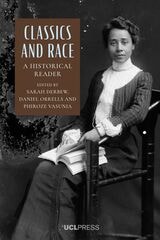
Classics and Race
A Historical ReaderEdited by Sarah Derbew, Daniel Orrells, and Phiroze Vasunia
University College London, 2025
Spanning centuries and continents, Classics and Race follows the entangled histories of classical studies and racial thought to show how ancient texts have been used to shape and justify ideas about race. This essential collection presents historical primary sources from the late medieval period to the mid-twentieth century, each paired with insightful essays by leading scholars who unpack their significance in shaping both racist and anti-racist ideologies.
Moving chronologically, the volume explores classical humanism in the Renaissance, the discipline’s ties to the transatlantic slave trade, and the global intersections of race and antiquity across Africa, Asia, the Caribbean, Europe, and North America. Rather than treating Classics as a neutral intellectual pursuit, this work demonstrates how the field has long been entangled in broader struggles over identity and power. More relevant than ever, Classics and Race offers a vital historical foundation for ongoing debates about the role of antiquity in shaping modern racial discourse.
Classroom Commentaries
Teaching the Poetria nova across Medieval and Renaissance EuropeMarjorie Curry Woods
The Ohio State University Press, 2009
Claude McKay
A Black Poet's Struggle for IdentityTyrone Tillery
University of Massachusetts Press, 1992
The 1920s witnessed an extraordinary flowering of literary and artistic creativity among African Americans. Critics hailed the emergence of a “New Negro,” who took pride in the Black race and its African heritage, and whose writings exposed and attacked discrimination, explored Black folk culture, and strove to create a unique African-American literature. Yet for all its vitality, the cultural movement best known as the Harlem Renaissance was fraught with tensions: between the ideal of Africa and the reality of America; between the lure of a romanticized rural past and the demands of an alien urban present; between the need to affirm the uniqueness of Black culture and the desire to achieve acceptance by the majority white culture. Perhaps more than any other Harlem Renaissance figure, Claude McKay embodied these contradictory impulses.
The paradox of Claude McKay cannot be reduced to any simple formula. He was at once an enfant terrible who took pride in the Negro's cultural heritage and an intellectual who strove for acceptance in predominantly white circles. He was a radical intent on transforming his adopted county who nevertheless left the United States temporarily for the Soviet Union. Yet these tensions, as this book strives to show, cannot simply be ascribed to personal or psychological problems; ultimately, they were rooted in the ambiguous social and cultural position of the Black artist and political radical of the early twentieth century.
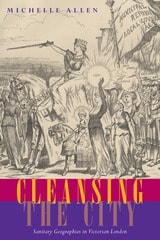
Cleansing the City
Sanitary Geographies in Victorian LondonMichelle Allen
Ohio University Press, 2008
From the novels of Charles Dickens and George Gissing to anonymous magazine articles and pamphlets, resistance to reform found expression in the nostalgic appreciation of a threatened urban landscape and anxiety about domestic autonomy in an era of networked sanitary services. Cleansing the City emphasizes the disruptions and disorientation occasioned by purification—a process we are generally inclined to see as positive. By recovering these sometimes oppositional, sometimes ambivalent responses, Michelle Allen elevates a significant undercurrent of Victorian thought into the mainstream and thus provides insight into the contested nature of sanitary modernization.
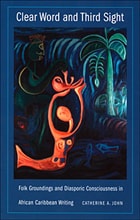
Clear Word and Third Sight
Folk Groundings and Diasporic Consciousness in African Caribbean WritingCatherine A. John
Duke University Press, 2003
Contesting popular discourses about what constitutes culture and maintaining that neglected strains in negritude discourse provide a crucial philosophical perspective on the connections between folk practices, cultural memory, and collective consciousness, John examines the diasporic principles in the work of the negritude writers Léon Damas, Aimé Césaire, and Léopold Senghor. She traces the manifestations and reworkings of their ideas in Afro-Caribbean writing from the eastern and French Caribbean, as well as the Caribbean diaspora in the United States. The authors she discusses include Jamaica Kincaid, Earl Lovelace, Simone Schwarz-Bart, Audre Lorde, Paule Marshall, and Edouard Glissant, among others. John argues that by incorporating what she calls folk groundings—such as poems, folktales, proverbs, and songs—into their work, Afro-Caribbean writers invoke a psychospiritual consciousness which combines old and new strategies for addressing the ongoing postcolonial struggle.
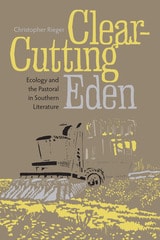
Clear-Cutting Eden
Ecology and the Pastoral in Southern LiteratureChristopher Rieger
University of Alabama Press, 2009
Examines how Southern literary depictions of the natural world were influenced by the historical, social, and ecological changes of the 1930s and 1940s
Rieger studies the ways that nature is conceived of and portrayed by four prominent Southern writers of the era: Erskine Caldwell, Marjorie Kinnan Rawlings, Zora Neale Hurston, and William Faulkner. Specifically, he argues that these writers created new versions of an old literary mode—the pastoral—in response to the destabilizing effects of the Great Depression, the rise of Southern modernism, and the mechanization of agricultural jobs.
Mass deforestation, soil erosion, urban development, and depleted soil fertility are issues that come to the fore in the works of these writers. In response, each author depicts a network model of nature, where humans are part of the natural world, rather than separate, over, or above it, as in the garden pastorals of the Old South, thus significantly revising the pastoral mode proffered by antebellum and Reconstruction-era writers.
Each writer, Rieger finds, infuses the pastoral mode with continuing relevance, creating new versions that fit his or her ideological positions on issues of race, class, and gender. Despite the ways these authors represent nature and humankind’s place in it, they all illustrate the idea that the natural environment is more than just a passive background against which the substance of life, or fiction, is played out.
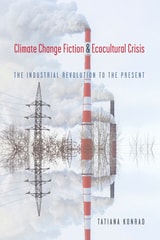
Climate Change Fiction and Ecocultural Crisis
The Industrial Revolution to the PresentTatiana Konrad
University of Nevada Press, 2024
Focusing on a diverse range of issues, including fossil fuels, cheap energy, the intricacies of human–more-than-human relationships, and postcolonial geographies, Konrad illustrates how cli-fi transcends mere storytelling. The genre ultimately emerges as an important means to forecast, imagine, and contemplate climatic events.
The book invites a broadening of the environmental humanities discourse, asking readers not only to deepen their understanding of the current climate crisis, but also to consider how cli-fi culture can be viewed as an effective method to address climate change.
Climate Lyricism
Min Hyoung Song
Duke University Press, 2022
Climate and the Making of Worlds
Toward a Geohistorical PoeticsTobias Menely
University of Chicago Press, 2021
In this book, Tobias Menely develops a materialist ecocriticism, tracking the imprint of the planetary across a long literary history of poetic rewritings and critical readings which continually engage with the climate as a condition of human world making. Menely’s central archive is English poetry written between John Milton’s Paradise Lost (1667) and Charlotte Smith’s “Beachy Head” (1807)—a momentous century and a half during which Britain, emerging from a crisis intensified by the Little Ice Age, established the largest empire in world history and instigated the Industrial Revolution. Incorporating new sciences into ancient literary genres, these ambitious poems aspired to encompass what the eighteenth-century author James Thomson called the “system . . . entire.” Thus they offer a unique record of geohistory, Britain’s epochal transition from an agrarian society, buffeted by climate shocks, to a modern coal-powered nation. Climate and the Making of Worlds is a bracing and sophisticated contribution to ecocriticism, the energy humanities, and the prehistory of the Anthropocene.
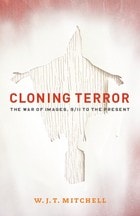
Cloning Terror
The War of Images, 9/11 to the PresentW. J. T. Mitchell
University of Chicago Press, 2010
The phrase “War on Terror” has quietly been retired from official usage, but it persists in the American psyche, and our understanding of it is hardly complete. Nor will it be, W. J. T Mitchell argues, without a grasp of the images that it spawned, and that spawned it.
Exploring the role of verbal and visual images in the War on Terror, Mitchell finds a conflict whose shaky metaphoric and imaginary conception has created its own reality. At the same time, Mitchell locates in the concept of clones and cloning an anxiety about new forms of image-making that has amplified the political effects of the War on Terror. Cloning and terror, he argues, share an uncanny structural resemblance, shuttling back and forth between imaginary and real, metaphoric and literal manifestations. In Mitchell’s startling analysis, cloning terror emerges as the inevitable metaphor for the way in which the War on Terror has not only helped recruit more fighters to the jihadist cause but undermined the American constitution with “faith-based” foreign and domestic policies.
Bringing together the hooded prisoners of Abu Ghraib with the cloned stormtroopers of the Star Wars saga, Mitchell draws attention to the figures of faceless anonymity that stalk the ever-shifting and unlocatable “fronts” of the War on Terror. A striking new investigation of the role of images from our foremost scholar of iconology, Cloning Terror will expand our understanding of the visual legacy of a new kind of war and reframe our understanding of contemporary biopower and biopolitics.

Close Encounters
Film, Feminism, and Science FicitonConstance Penley, Elisabeth Lyon, Lynn Spigel, and Janet Bergstrom, Editors
University of Minnesota Press, 1991
Close Encounters was first published in 1991. Minnesota Archive Editions uses digital technology to make long-unavailable books once again accessible, and are published unaltered from the original University of Minnesota Press editions.
Offers new critical approaches to science fiction as represented in film, television, fan culture, and other non-literary media. Addresses the way conventional notions of sexual difference are reworked by science fiction film. Includes the complete script of Peter Wollen's 1987 film Friendship's Death.
Contributors: Raymond Bellour, Janet Bergstrom, Roger Dadoun, Harvey R. Greenberg, M.D., Henry Jenkins III, Enno Patalas, Constance Penley, Vivian Sobchak, Lynn Spigel, and Peter Wollen.
Close Reading
The ReaderFrank Lentricchia and Andrew DuBois, eds.
Duke University Press, 2003
From a 1938 essay by John Crowe Ransom through the work of contemporary scholars, Close Reading highlights the interplay between critics—the ways they respond to and are influenced by others’ works. To facilitate comparisons of methodology, the collection includes discussions of the same primary texts by scholars using different critical approaches. The essays focus on Hamlet, “Lycidas,” “The Rape of the Lock,” Ulysses, Invisible Man, Beloved, Jane Austen, John Keats, and Wallace Stevens and reveal not only what the contributors are reading, but also how they are reading.
Frank Lentricchia and Andrew DuBois’s collection is an essential tool for teaching the history and practice of close reading.
Contributors. Houston A. Baker Jr., Roland Barthes, Homi Bhabha, R. P. Blackmur, Cleanth Brooks, Kenneth Burke, Paul de Man, Andrew DuBois, Stanley Fish, Catherine Gallagher, Sandra Gilbert, Stephen Greenblatt, Susan Gubar, Fredric Jameson, Murray Krieger, Frank Lentricchia, Franco Moretti, John Crowe Ransom, Eve Kosofsky Sedgwick, Helen Vendler
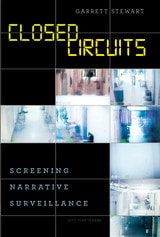
Closed Circuits
Screening Narrative SurveillanceGarrett Stewart
University of Chicago Press, 2015
In Closed Circuits, Garrett Stewart analyzes a broad spectrum of films, from M and Rear Window through The Conversation to Déjà Vu, Source Code, and The Bourne Legacy, in which cinema has articulated—and performed—the drama of inspection’s unreturned look. While mainstays of the thriller, both the act and the technology of surveillance, Stewart argues, speak to something more foundational in the very work of cinema. The shared axis of montage and espionage—with editing designed to draw us in and make us forget the omnipresence of the narrative camera—extends to larger questions about the politics of an oversight regime that is increasingly remote and robotic. To such a global technopticon, one telltale response is a proliferating mode of digitally enhanced “surveillancinema.”
Closed Encounters
Literary Politics and Public CultureJeffrey Wallen
University of Minnesota Press, 1998
Closed Encounters was first published in 1998. Minnesota Archive Editions uses digital technology to make long-unavailable books once again accessible, and are published unaltered from the original University of Minnesota Press editions.
It's committed. It's political. It's socially engaged. It's academic criticism in the nineties. But what does it achieve? In a provocative and fair-minded look at current critical practices and the future of the academy, Jeffrey Wallen draws a disturbing picture of public intellectuals in search of a public and cultural critics unable to enter a dialogue with others.
Wallen argues that literary politics is no substitute for debate on genuine political issues. Taking up several of the most influential critics of recent years-Edward Said, Eve Kosofsky Sedgwick, Michael Bérubé, Gerald Graff, Richard Rorty, Stanley Fish, and many others-Wallen asks: Can their desire to persuade an audience beyond the classroom be fulfilled? And can cultural critics realize their ambitious social and institutional goals for change? In a work that is neither of the Left nor of the Right, but likely to unsettle both, Wallen argues that literary criticism actually undermines the prospects for the dialogue it calls out for.
In addition, Wallen argues that the institutionalization of critiques of truth and difference-critiques that appear to liberate us by revealing that knowledge and values are constructed, and can therefore be transformed-often leads to a further constraining of thought and narrowing of outlooks. In his analysis of the administration of conflict, Wallen describes the troubled state of academic freedom and points to a shift from the institutional protection of dissenting views to the institutional protection from views one finds unpleasant.
Yet the prospects are not bleak: Wallen emphasizes that academic critics continue to play a crucial role in crafting what we expect from discussion. In this spirit, Closed Encounters lays the groundwork for fashioning a truly public, socially engaged criticism.
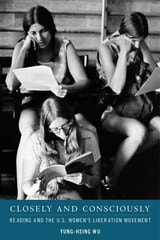
Closely and Consciously
Reading and the US Women's Liberation MovementYung-Hsing Wu
University of Massachusetts Press, 2024
The significant archive of writing that came out of the women’s liberation movement in the United States, from 1965 to 1980, speaks to the value activists placed on reading as an act that is at once personal and yet also about the collective good. Yung-Hsing Wu examines the importance of reading—personal, professional, vocational, aesthetic, and always political—and how the act itself brought a host of women, each with their own history with the movement, into relation, and into a belief in that relation. The value given to reading can be seen in the ways feminists pursued media representation; in consciousness-raising (CR) groups including shared reading in their meetings; in women opening bookstores, developing newsletters, establishing journals, and starting presses; and in corporate publishers pursuing feminist fiction.
Closely and Consciously crisscrosses distinct print spheres, including newsletters and periodicals produced by feminist cells and consciousness-raising groups, feminist presses seeking to articulate their visions for women’s writing, the emergence of feminist literary criticism in first-time monographs and newly established journals, personal and editorial correspondence, press records, and the publishing histories of bestsellers that testified to the increasingly broad popularity of women’s writing. Uniting all these disparate activists and media outlets, and providing crucial relationality, was reading. With a mix of close readings and archival research, Wu unpacks and interprets this central act of reading and why it matters during a crucial moment of feminist history.
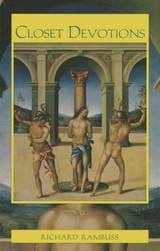
Closet Devotions
Richard Rambuss
Duke University Press, 1998
Through startling rereadings of works ranging from the devotional verse of the metaphysical poets (Donne, Herbert, Crashaw, and Traherne) to photographer Andres Serrano’s controversial “Piss Christ,” from Renaissance religious iconography to contemporary gay porn, Rambuss uncovers the highly charged erotic imagery that suffuses religious devotional art and literature. And he explores one of Christian culture’s most guarded (and literal) closets—the prayer closet itself, a privileged space where the vectors of same-sex desire can travel privately between the worshiper and his or her God.
Elegantly written and theoretically astute, Closet Devotions illuminates the ways in which sacred Christian devotion is homoeroticized, a phenomenon that until now has gone unexplored in current scholarship on religion, the body, and its passions. This book will attract readers across a wide array of disciplines, including gay and lesbian studies, literary theory and criticism, Renaissance studies, and religion.

Closet Writing/Gay Reading
The Case of Melville's PierreJames Creech
University of Chicago Press, 1994
In Closet Writing/Gay Reading, Creech shows how a literary critic can be receptive to implicit and closeted sexual content. Forcefully advocating a tactic of identification and projection in literary analysis, he lends renewed currency to the kind of "sentimental" response to literature that continental theory—particularly deconstruction—has sought to discredit.
In the second half of his book, Creech sets out to analyze what he considers the exemplary novel of the nineteenth-century closet, Melville's Pierre, or: The Ambiguities. By approaching Pierre as the gay man Melville longed to have as its reader, Creech is able to decipher the novel's "encrypted erotics" and to reveal that Melville's apparent tale of incest is actually a homosexual novel in disguise. The closeted "address" to queer-sensitive readers that Pierre disseminates finally receives a critical reading that strives to be explicit, shareable, and public.
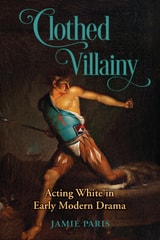
Clothed Villainy
Acting White in Early Modern DramaJamie Paris
University of Alabama Press, 2026
Examines how centuries-old stagecraft shaped modern racial politics—and why the performance of whiteness still commands the spotlight.
From Shakespearean blackface to the alt-right’s khaki-clad protests, Clothed Villainy: Acting White in in Early Modern Drama by Jamie Paris confronts the uncomfortable truths of racial performance across centuries. Paris argues that whiteness is not a fixed identity but a precarious and performative construct—shaped and sustained through actions, appearances, and cultural scripts.
Drawing on critical race theory, performance studies, and Indigenous scholarship, Clothed Villainy traces how racial scripts—whether “playing Black,” “playing Indian,” or especially “playing white”—have been used to uphold white supremacy and erase marginalized identities. By examining the costuming and characterization of white actors portraying Black villains on the early modern stage, Paris reveals how these theatrical traditions continue to echo in contemporary racial politics.
Written with bold clarity and personal insight, this book opens space for reimagining race, history, and identity through a more critical and inclusive lens. Clothed Villainy is essential reading for scholars, students, and anyone seeking to understand the deep-rooted performance of race in society and how we might reimagine it for a more equitable future.
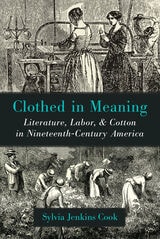
Clothed in Meaning
Literature, Labor, and Cotton in Nineteenth-Century AmericaSylvia Jenkins Cook
University of Michigan Press, 2020
Cloth and clothing provide potent tropes not only for physical but also for intellectual forms of self-expression. Drawing on sources ranging from fugitive slave narratives, newspapers, manifestos, and mill workers’ magazines to fiction, poetry, and autobiographies, Clothed in Meaning examines the significant part played by mill workers and formerly enslaved people, many of whom still worked picking cotton, in this revolution of literary self-expression. They created a new literature from their palpable daily intimacy with cotton, cloth, and clothing, as well as from their encounters with grimly innovative modes of work. In the materials of their labor they discovered vivid tropes for formulating their ideas and an exotic and expert language for articulating them. The harsh conditions of their work helped foster in their writing a trenchant irony toward the demeaning reduction of human beings to “hands” whose minds were unworthy of interest. Ultimately, Clothed in Meaning provides an essential examination of the intimate connections between oppression and luxury as recorded in the many different voices of nineteenth-century labor.
Clowns in the Burying Ground
The Grateful Dead, Literature, and the Limits of PhilosophyChristopher K. Coffman
Duke University Press, 2026
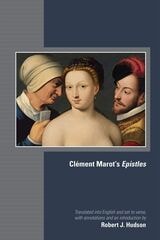
Clément Marot's Epistles
Clément Marot
Arizona Center for Medieval and Renaissance Studies, 2021
Clément Marot (1496–1544), a royal poet in Renaissance France who ushered in new verse forms and renewed existing ones, stands as one of the most important literary voices of the first half of the sixteenth century. Clément Marot’s Epistles represents a first attempt to offer a sustained English-language translation and critical edition of what is widely considered his most personal, historically relevant, and crowning verse form. Aiming for integrality and poetic precision, the volume translates and sets to verse all seventy-four of Marot’s epistles, employing the same meter and rhyme scheme used by the poet in the original compositions. Likewise focused on capturing Marot’s poetic voice, thus maintaining idiomatic and literary integrity, the resulting translation is an attempt to relate the playfulness and pathos of Marot’s verse, rendering it accessible to an anglophone public.
Beyond the more traditional verse epistles included in the primary base text, Marot’s authorized complete works from 1538, the volume also offers translations of the introductory prose epistles penned by Marot for his Adolescence clémentine of 1532 and the 1538 edition (Lyon, Dolet), as well as the coq-à-l’âne and other versified satirical epistles, the “artificial epistle” retelling of a popular medieval romance, and more. A robust critical apparatus includes ample footnotes, an extensive introduction, illustrations, a bibliography, a chronological table, and a concordance with the principal modern French-language editions of Marot’s epistles.
The book should appeal to English-speaking historians and literary scholars alike, as well as to poetry lovers, who will appreciate a new acquaintance with this distinctive voice from poetry’s past.
Codes of Conduct
Race, Ethics, and the Color of Our CharacterHolloway, Karla F. C.
Rutgers University Press, 1995
In Codes of Conduct, Karla Holloway meditates on the dynamics of race and ethnicity as they are negotiated in the realms of power. Her uniquely insightful and intelligent analysis guides us in a fresh way through Anita Hill’s interrogation, the assault on Tawana Brawley, the mass murders of Atlanta’s children, the schisms between the personal and public domains of her life as a black professor, and––in a moving epilogue––the story of her son’s difficulties growing up as a young black male in contemporary society. Its three main sections: “The Body Politic,” “Language, Thought, and Culture,” and “The Moral Lives of Children,” relate these issues to the visual power of the black and female body, the aesthetic resonance and racialized drama of language, and our children’s precarious habits of surviving. Throughout, Holloway questions the consequences in African-American community life of citizenship that is meted out sparingly when one’s ethnicity is colored.
This is a book of a culture’s stories––from literature, public life, contemporary and historical events, aesthetic expression, and popular culture––all located within the common ground of African-American ethnicity. Holloway writes with a passion, urgency, and wit that carry the reader swiftly through each chapter. The book should take its place among those other important contemporary works that speak to the future relationships between whites and blacks in this country.
Cognition of the Literary Work of Art
Roman Ingarden
Northwestern University Press, 1973
Cognitive Fictions
Joseph Tabbi
University of Minnesota Press, 2002
The first comprehensive look at the effect of new technologies on contemporary American fiction
Bringing together cognitive science and literary analysis to map a new "media ecology," Cognitive Fictions limns an evolutionary process in which literature must find its place in an artificial environment partly produced and thoroughly mediated by technological means. Joseph Tabbi provides a penetrating account of a developing consciousness emerging from the struggle between print and electronic systems of communication.
Central to Tabbi’s work is the relation between the arrangement of communicating "modules" that cognitive science uses to describe the human mind and the arrangement of visual, verbal, and aural media in our technological culture. He looks at particular literary works by Thomas Pynchon, Richard Powers, David Markson, Lynne Tillman, Paul Auster, and others as both inscriptions of thought consistent with distributed cognitive models, and as self-creations out of the media environment. The first close reading of contemporary American writing in the light of systems theory and cognitive science, Cognitive Fictions makes needed sense of how the moment-by-moment operations of human thought find narrative form in a world increasingly defined by competing and often incompatible representations.
Cognitive Literary Studies
Current Themes and New DirectionsEdited by Isabel Jaén and Julien Jacques Simon
University of Texas Press, 2012
In the first decade of the twenty-first century, our understanding of the cognition of literature was transformed by scientific discoveries, such as the mirror neuron system and its role in empathy. Addressing questions such as why we care so deeply about fictional characters, what brain activities are sparked when we read literature, and how literary works and scholarship can inform the cognitive sciences, this book surveys the exciting recent developments in the field of cognitive literary studies and includes contributions from leading scholars in both the humanities and the sciences.
Beginning with an overview of the evolution of literary studies, the editors trace the recent shift from poststructuralism and its relativism to a growing interdisciplinary interest in the empirical realm of neuroscience. In illuminating essays that examine the cognitive processes at work when we experience fictional worlds, with findings on the brain’s creativity sites, this collection also explores the impact of literature on self and society, ending with a discussion on the present and future of the psychology of fiction. Contributors include Literature and the Brain author Norman N. Holland, on the neuroscience of metafiction reflected in Don Quixote; clinical psychologist Aaron Mishara on the neurology of self in the hypnagogic (between waking and sleeping) state and its manifestations in Kafka’s stories; and literary scholar Brad Sullivan’s exploration of Romantic poetry as a didactic tool, applying David Hartley’s eighteenth-century theories of sensory experience.
Coining for Capital
Movies, Marketing, and the Transformation of ChildhoodKapur, Jyotsna
Rutgers University Press, 2005
Since the 1980s, a peculiar paradox has evolved in American film. Hollywood’s children have grown up, and the adults are looking and behaving more and more like children. In popular films such as Harry Potter, Toy Story, Pocahantas, Home Alone, and Jumanji, it is the children who are clever, savvy, and self-sufficient while the adults are often portrayed as bumbling and ineffective.
Is this transformation of children into "little adults" an invention of Hollywood or a product of changing cultural definitions more broadly? In Coining for Capital, Jyostna Kapur explores the evolution of the concept of childhood from its portrayal in the eighteenth century as a pure, innocent, and idyllic state—the opposite of adulthood—to its expression today as a mere variation of adulthood, complete with characteristics of sophistication, temptation, and corruption. Kapur argues that this change in definition is not a media effect, but rather a structural feature of a deeply consumer-driven society.
Providing a new and timely perspective on the current widespread alarm over the loss of childhood, Coining for Capital concludes that our present moment is in fact one of hope and despair. As children are fortunately shedding false definitions of proscribed innocence both in film and in life, they must now also learn to navigate a deeply inequitable, antagonistic, and consumer-driven society of which they are both a part and a target.
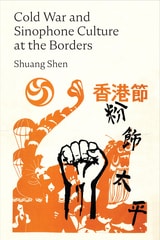
Cold War and Sinophone Culture at the Borders
Shuang Shen
University of Michigan Press, 2027
Cold War and Sinophone Culture at the Borders examines Sinophone literary and cultural production in relation to the politics of the global Cold War and decolonization in Hong Kong, Singapore, and Malaysia. As we reckon with the historical and contemporary geopolitical standoffs in the Cold War–divided territories, Shuang Shen draws attention to the diasporic communities outside Chinese sovereign territories and shows that these supposedly peripheral locations were in fact significant cultural and political hot spots.
Shen demonstrates how Cold War borders exerted geo-power over strategic hot spots, organized global flows of populations and cultures, hardened the boundaries of aesthetic debates, and managed interracial relationships and plurilingual exchange. The multifold bordering effect in turn complicates the common perception of the border as a mechanism of territorial division. Cold War and Sinophone Culture at the Borders proposes that a critical examination of borders—not just territorial divisions, but also social, political, and aesthetic boundaries––can tap into different structures of power without needing to incorporate them into a single binary framework of the metropole versus colony.
Cold Warriors
Manliness on Trial in the Rhetoric of the WestSuzanne Clark
Southern Illinois University Press, 2000
Cold Warriors: Manliness on Trial in the Rhetoric of the West returns to familiar cultural forces—the West, anticommunism, and manliness—to show how they combined to suppress dissent and dominate the unruliness of literature in the name of a national identity after World War II. Few realize how much the domination of a “white male” American literary canon was a product not of long history, but of the Cold War. Suzanne Clark describes here how the Cold War excluded women writers on several levels, together with others—African American, Native American, poor, men as well as women—who were ignored in the struggle over white male identity.
Clark first shows how defining national/individual/American identity in the Cold War involved a brand new configuration of cultural history. At the same time, it called upon the nostalgia for the old discourses of the West (the national manliness asserted by Theodore Roosevelt) to claim that there was and always had been only one real American identity.
By subverting the claims of a national identity, Clark finds, many male writers risked falling outside the boundaries not only of public rhetoric but also of the literary world: men as different from one another as the determinedly masculine Ernest Hemingway and the antiheroic storyteller of the everyday, Bernard Malamud. Equally vocal and contentious, Cold War women writers were unwilling to be silenced, as Clark demonstrates in her discussion of the work of Mari Sandoz and Ursula Le Guin.
The book concludes with a discussion of how the silencing of gender, race, and class in Cold War writing maintained its discipline until the eruptions of the sixties. By questioning the identity politics of manliness in the Cold War context of persecution and trial, Clark finds that the involvement of men in identity politics set the stage for our subsequent cultural history.
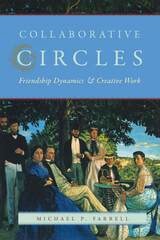
Collaborative Circles
Friendship Dynamics and Creative WorkMichael P. Farrell
University of Chicago Press, 2001
In a unique study that will become a rich source of ideas for professionals and anyone interested in fostering creative work in the arts and sciences, Michael P. Farrell looks at the group dynamics in six collaborative circles: the French Impressionists; Sigmund Freud and his friends; C. S. Lewis, J. R. R. Tolkien, and the Inklings; social reformers Elizabeth Cady Stanton and Susan B. Anthony; the Fugitive poets; and the writers Joseph Conrad and Ford Maddox Ford. He demonstrates how the unusual interactions in these collaborative circles drew out the creativity in each member. Farrell also presents vivid narrative accounts of the roles played by the members of each circle. He considers how working in such circles sustains the motivation of each member to do creative work; how collaborative circles shape the individual styles of the persons within them; how leadership roles and interpersonal relationships change as circles develop; and why some circles flourish while others flounder.
Collaborative Dickens
Authorship and Victorian Christmas PeriodicalsMelisa Klimaszewski
Ohio University Press, 2019
From 1850 to 1867, Charles Dickens produced special issues (called “numbers”) of his journals Household Words and All the Year Round, which were released shortly before Christmas each year. In Collaborative Dickens, Melisa Klimaszewski undertakes the first comprehensive study of these Christmas numbers. She argues for a revised understanding of Dickens as an editor who, rather than ceaselessly bullying his contributors, sometimes accommodated contrary views and depended upon multivocal narratives for his own success.
Klimaszewski uncovers connections among and between the stories in each Christmas collection. She thus reveals ongoing conversations between the works of Dickens and his collaborators on topics important to the Victorians, including race, empire, supernatural hauntings, marriage, disability, and criminality. Stories from Wilkie Collins, Elizabeth Gaskell, and understudied women writers such as Amelia B. Edwards and Adelaide Anne Procter interact provocatively with Dickens’s writing. By restoring links between stories from as many as nine different writers in a given year, Klimaszewski demonstrates that a respect for the Christmas numbers’ plural authorship and intertextuality results in a new view of the complexities of collaboration in the Victorian periodical press and a new appreciation for some of the most popular texts Dickens published.
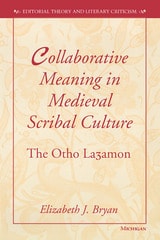
Collaborative Meaning in Medieval Scribal Culture
The Otho La3amonElizabeth J. Bryan
University of Michigan Press, 1999
In Collaborative Meaning in Medieval Scribal Culture, Bryan compares examples from the British Library Cotton Otho C.xiii manuscript of La3amon's Brut, the early thirteenth-century verse history that translated King Arthur into English for the first time. She discovers cultural attitudes that valued communal aspects of manuscript texts--for example, a view of the physical book as connecting all who read or even held it to each other.
The study is divided into two parts. Part one presents Early Middle English concepts of "enjoining" texts and explores the theoretical and methodological challenges they pose to present-day readers of scribally-produced texts. Part two conducts a detailed study of the multiple interpretations built into the manuscript text. Illustrations of manuscript pages accompany analysis, and the reader is invited to engage in interpreting the manuscript text.
Collaborative Meaning in Medieval Scribal Culture will be of interest to students and specialists in medieval chronicle histories, Middle English, Arthurian literature, and literary and textual theory.
Elizabeth J. Bryan is Associate Professor of English, Brown University.
Collected Prose
James Wright
University of Michigan Press, 1983
Collected Prose
Robert Hayden
University of Michigan Press, 1984
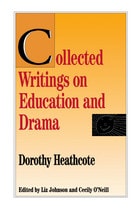
Collected Writings on Education and Drama
Dorothy Heathcote
Northwestern University Press, 1984
In this lively collection of essays and talks from 1967-80, Heathcote shares the findings of her groundbreaking work in the application of theater techniques and play to classroom teaching. She provides a time-tested philosophy on the value of dramatic activity in breaking down barriers and overcoming inertia. Her insistence that teachers must step down from their pedestals and immerse themselves in the possibility of the moment makes for magical and challenging reading.
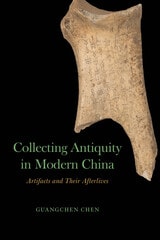
Collecting Antiquity in Modern China
Artifacts and Their AfterlivesGuangchen Chen
University of Chicago Press, 2026
In this book, Guangchen Chen argues that discerning collectors used antiquities to upend dominant discourses on history and cultural memory in twentieth-century China. Examining four categories of ancient artifacts—“carving” (oracle bones), “rubbing” (imprints of inscriptions and books), “brushing” (calligraphy), and “weaving” (textiles and costumes)—Chen explains how their modern (re)emergences changed our understanding of the relationship between tradition and modernity, textuality and materiality, and the very meaning of “Chineseness.”
Chen considers intellectuals such as Wang Yirong, Liu E, Luo Zhenyu, Wang Guowei, and Chen Mengjia, who played a pivotal role in the oracle bones’ modern reception. He also looks to major literary figures including Lu Xun, whose engagements with textual remnants of the past inspired his critique of Chinese culture; Guo Moruo, whose work on the calligraphic masterpiece Lantingxu contributed to the cultural-political climate that sparked the Cultural Revolution; Shi Zhecun, whose interest in inscriptions on ancient stelae helped him to hold fast to intellectual integrity in the face of political pressure; and Shen Congwen, whose obsession with ancient textiles saved him from committing suicide after his writing fell out of favor. These antiquarians used their collections as a strategy to synchronize historical time and to challenge two dominant yet contrasting ideologies in modern China: a regressive idealization of antiquity and an unquestioning trust in linear progress. During this turbulent period, long-lost artifacts came to function as omens, warnings, and revelations from another time, generating new meanings that were uniquely relevant to the present.
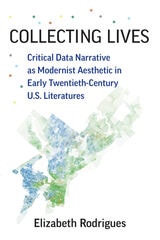
Collecting Lives
Critical Data Narrative as Modernist Aesthetic in Early Twentieth-Century U.S. LiteraturesElizabeth Rodrigues
University of Michigan Press, 2022
On a near-daily basis, data is being used to narrate our lives. Categorizing algorithms draw from amassed personal data to assign narrative destinies to individuals at crucial junctures, simultaneously predicting and shaping the paths of our lives. Data is commonly assumed to bring us closer to objectivity, but the narrative paths these algorithms assign seem, more often than not, to replicate biases about who an individual is and could become.
While the social effects of such algorithmic logics seem new and newly urgent to consider, Collecting Lives looks to the late nineteenth and early twentieth century US to provide an instructive prehistory to the underlying question of the relationship between data, life, and narrative. Rodrigues contextualizes the application of data collection to human selfhood in the late nineteenth and early twentieth century US in order to uncover a modernist aesthetic of data that offers an alternative to the algorithmic logic pervading our sense of data’s revelatory potential. Examining the work of W. E. B. Du Bois, Henry Adams, Gertrude Stein, and Ida B. Wells-Barnett, Rodrigues asks how each of these authors draw from their work in sociology, history, psychology, and journalism to formulate a critical data aesthetic as they attempt to answer questions of identity around race, gender, and nation both in their research and their life writing. These data-driven modernists not only tell different life stories with data, they tell life stories differently because of data.
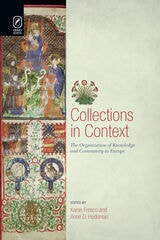
Collections in Context
The Organization of Knowledge and Community in EuropeEdited by Karen Fresco and Anne D. Hedeman
The Ohio State University Press, 2011
The fourteen essays that comprise Collections in Context: The Organization of Knowledge and Community in Europe interrogate questions posed by French, Flemish, English, and Italian collections of all sorts—libraries as a whole, anthologies and miscellanies assembled within a single manuscript or printed book, and even illustrated ivory boxes.
With essays by a wide array of international scholars, Collections in Context demonstrates that the very act of collecting inevitably imposes some kind of relationship among what might otherwise be naively thought of as disparate elements and simultaneously exposes something about the community that created and used the collection. Thus, Collections in Context offers unusual insights into how collecting both produced knowledge and built community in early modern Europe.
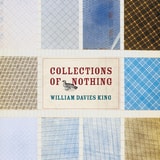
Collections of Nothing
William Davies King
University of Chicago Press, 2008
Nearly everyone collects something, even those who don’t think of themselves as collectors. William Davies King, on the other hand, has devoted decades to collecting nothing—and a lot of it. With Collections of Nothing, he takes a hard look at this habitual hoarding to see what truths it can reveal about the impulse to accumulate.
Part memoir, part reflection on the mania of acquisition, Collections of Nothing begins with the stamp collection that King was given as a boy. In the following years, rather than rarity or pedigree, he found himself searching out the lowly and the lost, the cast-off and the undesired: objects that, merely by gathering and retaining them, he could imbue with meaning, even value. As he relates the story of his burgeoning collections, King also offers a fascinating meditation on the human urge to collect. This wry, funny, even touching appreciation and dissection of the collector’s art as seen through the life of a most unusual specimen will appeal to anyone who has ever felt the unappeasable power of that acquisitive fever.
"What makes this book, bred of a midlife crisis, extraordinary is the way King weaves his autobiography into the account of his collection, deftly demonstrating that the two stories are essentially one. . . . His hard-won self-awareness gives his disclosures an intensity that will likely resonate with all readers, even those whose collections of nothing contain nothing at all."—New Yorker
"King's extraordinary book is a memoir served up on the backs of all things he collects. . . . His story starts out sounding odd and singular—who is this guy?—but by the end, you recognize yourself in a lot of what he does."—Julia Keller, Chicago Tribune
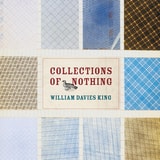
Collections of Nothing
William Davies King
University of Chicago Press, 2008
Nearly everyone collects something, even those who don’t think of themselves as collectors. William Davies King, on the other hand, has devoted decades to collecting nothing—and a lot of it. With Collections of Nothing, he takes a hard look at this habitual hoarding to see what truths it can reveal about the impulse to accumulate.
Part memoir, part reflection on the mania of acquisition, Collections of Nothing begins with the stamp collection that King was given as a boy. In the following years, rather than rarity or pedigree, he found himself searching out the lowly and the lost, the cast-off and the undesired: objects that, merely by gathering and retaining them, he could imbue with meaning, even value. As he relates the story of his burgeoning collections, King also offers a fascinating meditation on the human urge to collect. This wry, funny, even touching appreciation and dissection of the collector’s art as seen through the life of a most unusual specimen will appeal to anyone who has ever felt the unappeasable power of that acquisitive fever.
"What makes this book, bred of a midlife crisis, extraordinary is the way King weaves his autobiography into the account of his collection, deftly demonstrating that the two stories are essentially one. . . . His hard-won self-awareness gives his disclosures an intensity that will likely resonate with all readers, even those whose collections of nothing contain nothing at all."—New Yorker
"King's extraordinary book is a memoir served up on the backs of all things he collects. . . . His story starts out sounding odd and singular—who is this guy?—but by the end, you recognize yourself in a lot of what he does."—Julia Keller, Chicago Tribune
Collisions With History
Latin American Fiction and Social Science from “El Boom” to the New World OrderFrederick M. Nunn
Ohio University Press, 2001
Latin American intellectuals have traditionally debated their region’s history, never with so much agreement as in the fiction, commentary, and scholarship of the late twentieth century. Collisions with History shows how “fictional histories” of discovery and conquest, independence and early nationhood, and the recent authoritarian past were purposeful revisionist collisions with received national versions. These collisions occurred only because of El Boom, thus making Latin America’s greatest literary movement a historical phenomenon as well. Frederick M. Nunn discusses the cataclysmic view of history conveyed in Boom novels and examines the thought and self-perception of selected authors whose political activism enhanced the appeal of their works—historical and otherwise: Alejo Carpentier, Carlos Fuentes, Gabriel García Márquez, and Augusto Roa Bastos; Julio Cortázar, Isabel Allende, Mario Vargas Llosa, and Darcy Ribeiro.
Collisions with History demonstrates how their commentary on history, literature, politics, and international affairs reveals a conscious sense of purpose. From between the lines of their nonfiction emerges a consensus that outside forces have defined as well as controlled Latin America’s history.
Professor Nunn also suggests that, with novelists now no longer very interested in colliding with history, it may fall to social scientists to speak for what remains of the region’s past in the New World Order.
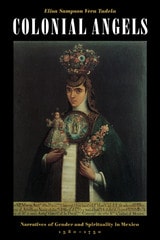
Colonial Angels
Narratives of Gender and Spirituality in Mexico, 1580-1750By Elisa Sampson Vera Tudela
University of Texas Press, 2000
Spain's attempt to establish a "New Spain" in Mexico never fully succeeded, for Spanish institutions and cultural practices inevitably mutated as they came in contact with indigenous American outlooks and ways of life. This original, interdisciplinary book explores how writing by and about colonial religious women participated in this transformation, as it illuminates the role that gender played in imposing the Spanish empire in Mexico.
The author argues that the New World context necessitated the creation of a new kind of writing. Drawing on previously unpublished writings by and about nuns in the convents of Mexico City, she investigates such topics as the relationship between hagiography and travel narratives, male visions of the feminine that emerge from the reworking of a nun's letters to her confessor into a hagiography, the discourse surrounding a convent's trial for heresy by the Inquisition, and the reports of Spanish priests who ministered to noble Indian women. This research rounds out colonial Mexican history by revealing how tensions between Spain and its colonies played out in the local, daily lives of women.
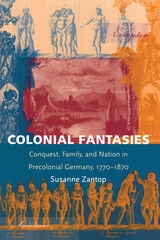
Colonial Fantasies
Conquest, Family, and Nation in Precolonial Germany, 1770-1870Susanne Zantop
Duke University Press, 1997
From as early as the sixteenth century, Germans preoccupied themselves with an imaginary drive for colonial conquest and possession that eventually grew into a collective obsession. Zantop illustrates the gendered character of Germany’s colonial imagination through critical readings of popular novels, plays, and travel literature that imagine sexual conquest and surrender in colonial territory—or love and blissful domestic relations between colonizer and colonized. She looks at scientific articles, philosophical essays, and political pamphlets that helped create a racist colonial discourse and demonstrates that from its earliest manifestations, the German colonial imagination contained ideas about a specifically German national identity, different from, if not superior to, most others.
Colonial Itineraries of Contemporary Mexico
Literary and Cultural InquiriesEdited by Oswaldo Estrada and Anna M. Nogar
University of Arizona Press, 2014
Through a transformative interdisciplinary lens, this book studies the ultra-contemporary chronicles of Carlos Monsiváis, the poetry of Carmen Boullosa and Luis Felipe Fabre, and the novels of Enrique Serna, Héctor de Mauleón, Mónica Lavín, and Pablo Soler Frost, among others. The book also pays close attention to a good sample of recent children’s literature that revisit Mexico’s colonia. It includes the transatlantic perspective of Spanish novelist Inma Chacón, and a detailed analysis of the strategies employed by Laura Esquivel in the creation of a best seller. Other chapters are devoted to the study of transnational film productions, a play by Flavio González Mello, and a set of novels set in the nineteenth-century colonia that problematize static notions of both personal and national identity within specific cultural palimpsests. Taken together, these incisive readings open broader conversations about Mexican coloniality as it continues well into the twenty-first century.
Colonial Legacies in Chicana/o Literature and Culture
Looking Through the KaleidoscopeVanessa Fonseca-Chávez
University of Arizona Press, 2020
Vanessa Fonseca-Chávez traces how Spanish colonial texts reflect the motivation for colonial domination. She argues that layers of U.S. colonialism complicate how Chicana/o literary scholars think about Chicana/o literary and cultural production. She brings into view the experiences of Chicana/o communities that have long-standing ties to the U.S. Southwest but whose cultural heritage is tied through colonialism to multiple nations, including Spain, Mexico, and the United States.
While the legacies of Chicana/o literature simultaneously uphold and challenge colonial constructs, the metaphor of the kaleidoscope makes visible the rupturing of these colonial fragments via political and social urgencies. This book challenges readers to consider the possibilities of shifting our perspectives to reflect on stories told and untold and to advocate for the inclusion of fragmented and peripheral pieces within the kaleidoscope for more complex understandings of individual and collective subjectivities.
This book is intended for readers interested in how colonial legacies are performed in the U.S. Southwest, particularly in the context of New Mexico, Texas, and Arizona. Readers will relate to the book’s personal narrative thread that provides a path to understanding fragmented identities.
Colonial Power, Colonial Texts
India in the Modern British NovelM. Keith Booker
University of Michigan Press, 1997
Colonialism and Race in Luso-Hispanic Literature
Jerome C. Branche
University of Missouri Press, 2006
Colonization, Violence, and Narration in White South African Writing
André Brink, Breyten Breytenbach, and J. M. CoetzeeRosemary Jane Jolly
Ohio University Press, 1995
The representation of pain and suffering in narrative form is an ongoing ethical issue in contemporary South African literature. Can violence be represented without sensationalistic effects, or, alternatively, without effects that tend to be conservative because they place the reader in a position of superiority over the victim or the perpetrator?
Jolly looks at three primary South African authors—André Brink, Breyten Breytenbach, and J. M. Coetzee—to consider violence in the context of apartheid and colonialism and their inherent patriarchies.
Jolly also discusses the violence attendant upon the act of narration in the broader context of critiques of Kafka, Freud, Hegel, the postcolonial critics Jan Mohamed and Bhabha, and feminists such as Susan Suleiman.
Colorblind Tools
Global Technologies of Racial PowerMarzia Milazzo
Northwestern University Press, 2023
Winner of the 2023 Association for Ethnic Studies Outstanding Book Award
A study of anti-Blackness and white supremacy across four continents demonstrates that colorblindness is neither new nor a subtype of racist ideology, but a constitutive technology of racism
In Colorblind Tools, Marzia Milazzo offers a transnational account of anti-Blackness and white supremacy that pushes against the dominant emphasis on historical change pervading current racial theory. This emphasis on change, she contends, misses critical lessons from the past.
Bringing together a capacious archive of texts on race produced in Brazil, Cuba, Mexico, Panama, the United States, and South Africa from multiple disciplines and genres, Milazzo uncovers transnational continuities in structural racism and white supremacist discourse from the inception of colonial modernity to the present. In the process, she traces the global workings of what she calls colorblind tools: technologies and strategies that at once camouflage and reproduce white domination. Whether examining Rijno van der Riet’s defense of slavery in the Cape Colony, discourses of racial mixture in Latin American eugenics and their reverberations in contemporary scholarship, the pitfalls of white “antiracism,” or Chicana indigenist aesthetics, Milazzo illustrates how white people collectively disavow racism to maintain power across national boundaries, and how anti-Black and colonial logics can be reproduced even in some decolonial literatures. Milazzo’s groundbreaking study proves that colorblindness is not new, nor is it a subtype of racist ideology or a hallmark of our era. It is a constitutive technology of racism—a tool the master cannot do without.
Coloring Locals
Racial Formation in Katie Chopin's "Youth's Companion" StoriesBonnie James Shaker
University of Iowa Press, 2003
Chopin's canonical status as a feminist rebel and reformer conflicts with the fact that one of her most supportive publishers throughout her life was the Youth's Companion, a juvenile periodical whose thoroughly orthodox “family values” contributed to its success as the longest-running and, at one time, most widely circulating periodical in nineteenth-century America. Not surprisingly, Chopin’s Youth’s Companion stories differ from her canonical texts in that they embrace and advance ideals of orthodox white femininity and masculinity. Rather than viewing these two representations as being at odds with each other, Bonnie Shaker asserts that Chopin's endorsement of conventional gender norms is done in the service of a second political agenda beyond her feminism, one that can help the reader appreciate nuances of identity construction previously misunderstood or overlooked in the body of her work.