Results by title
4917 books match the query 'Philosophy' and 256 start with c
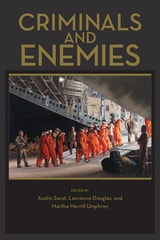
Criminals and Enemies
Austin Sarat
University of Massachusetts Press, 2019
The editors' introduction situates criminals and enemies in a theoretical context, focusing on the work of Thomas Hobbes and Carl Schmitt, while other essays consider topics ranging from Germany's denazification project to South Africa's pre- and post-apartheid legal regime to the complicating factors introduced by the war on terror. In addition to the editors, the contributors include Stephen Clingman, Jennifer Daskal, Sara Kendall, Devin Pendas, and Annette Weinke.
Crises of the Sentence
Jan Mieszkowski
University of Chicago Press, 2019
To understand what is at stake in thinking—or not thinking—about the sentence, Jan Mieszkowski looks at the difficulties confronting nineteenth- and twentieth-century authors when they try to explain what a sentence is and what it can do. From Romantic debates about the power of the stand-alone sentence, to the realist obsession with precision and revision, to modernist experiments with ungovernable forms, Mieszkowski explores the hidden allegiances behind our ever-changing stylistic ideals. By showing how an investment in superior writing has always been an ethical and a political as well as an aesthetic commitment, Crises of the Sentence offers a new perspective on our love-hate relationship with this fundamental compositional category.
Crisis and Conversion in Apuleius' Metamorphoses
Nancy Shumate
University of Michigan Press, 1996
Shumate draws on a wide range of literary and nonliterary representations of conversion in order to establish a useful theoretical framework. The Metamorphoses is exposed as a text anticipating later narratives in its concern with world-building, with the narrator's subjective reality, and with the invocation and critique of religious experience.
Crisis and Conversion in Apuleius' "Metamorphoses" will be of interest to classicists and scholars of Silver Latin and of the increasingly popular ancient novel, as well as to students of psychology and the sociology of religious experience.
Nancy Shumate is Associate Professor of Classical Languages and Literatures, Smith College.
Crisis of European Sciences and Transcendental Phenomenology
Edmund Husserl
Northwestern University Press, 1970
Husserl provides not only a history of philosophy but a philosophy of history. As he says in Part I, "The genuine spiritual struggles of European humanity as such take the form of struggles between the philosophies, that is, between the skeptical philosophies--or nonphilosophies, which retain the word but not the task—and the actual and still vital philosophies. But the vitality of the latter consists in the fact that they are struggling for their true and genuine meaning and thus for the meaning of a genuine humanity."
Critical Environments
Postmodern Theory and the Pragmatics of the “Outside”Cary Wolfe
University of Minnesota Press, 1998
Argues for a pragmatist orientation for postmodern theory.
Taking up the problem that has stalled contemporary theory—its treatment of the object of knowledge, the “outside,” as nothing but what a particular discourse makes of it—this book suggests a solution: a reinvigorated, posthumanist form of pragmatism.
Author Cary Wolfe investigates three of the most significant strains of postmodern theory (pragmatism, systems theory, and poststructuralism) and shows how each confronts the specter of an “outside” not wholly constituted by discourses, language games, and interpretive communities. He then assesses these confrontations in light of an essentially pragmatic view of theory, one that constantly asks what practical and material difference it makes, and to whom, how these issues are negotiated. Wolfe concludes by comparing the pragmatist view of the relation of theory to politics with important work in contemporary post-Marxism. In arguing for a pragmatist orientation for postmodern theory, Wolfe deploys continental critical theory to avoid the nativism and “American exceptionalism” that has traditionally accompanied pragmatist philosophy. Unique in its collation of major theorists rarely considered together, Critical Environments incorporates detailed discussions of the work of Richard Rorty, Walter Benn Michaels, Stanley Cavell, Humberto Maturana, Francisco Varela, Niklas Luhmann, Michel Foucault, Gilles Deleuze, Fredric Jameson, and others, and ranges across fields from feminist philosophy of science to the theory of ideology. Wolfe draws on recent work in systems theory to articulate a properly postmodern pragmatism. In doing so, he offers American readers a detailed introduction to systems theory, which he situates and critiques in the broader context of philosophical pragmatism, the theory of democratic social antagonism, and materialist theories of ideology, knowledge, and power. An answer to the widespread charge of relativism leveled against postmodern theory, his work will enhance and inspire new kinds of critical thought.
Critical Essays
Volume 2: 1949–1951Georges Bataille
Seagull Books, 2024
In the aftermath of World War II, French thinker and writer Georges Bataille forged a singular path through the moral and political impasses of his age. In 1946, animated by “a need to live events in an increasingly conscious way,” and to reject any compartmentalization of intellectual life, Bataille founded the journal Critique. Continuing the publication of his postwar writings, this second book in a three-volume collection of Bataille’s work collects his essays and reviews from the years 1949 to 1951.
In this period of intellectual isolation and intense reflection, Bataille developed and refined his genealogy of morality through a sustained reflection on the fate of the sacred in the modern world. He offered a critique of the limits of existing morality, especially in its denial of excess, while sketching the lineaments of a new hyper-morality. Bataille’s wide-ranging reflections are true to the intellectual mission of Critique, which he founded as a space open to the broadest considerations of the present. As well as discussing significant figures like Samuel Beckett, André Gide, and René Char, Bataille also offers fascinating reflections on American politics, Nazism, existentialism, materialism, and play.
The connecting thread in these diverse essays remains Bataille’s concern with the extremes of human experience and the possibilities of transcending the limits of societies founded on utility and restraint. His writings remain a provocative incitement to rethink the boundaries we impose on expression and existence.
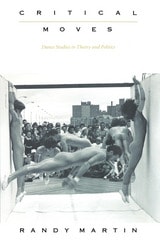
Critical Moves
Dance Studies in Theory and PoliticsRandy Martin
Duke University Press, 1998
From experimental and concert dance to more popular expressions, Martin engages a range of performances and demonstrates how a critical reflection on dance helps promote fluency in the language of mobilization that political theory alludes to yet rarely speaks. He explores how Bill T. Jones’s Last Supper at Uncle Tom’s Cabin/The Promised Land defies attempts to separate social ideas from aesthetic concerns and celebrates multiculturalism in the face of a singular national culture; he studies the choreography in rapper Ice Cube’s video “Wicked,” which confronts racialized depictions of violent crime; and he discusses how racial difference is negotiated by analyzing a hip hop aerobics class in a nonblack environment.
Revealing how mastery of modern dance technique teaches an individual body to express cultural difference and display its intrinsic diversity, Critical Moves concludes with a reflection on the contribution dance studies can make to other fields within cultural studies and social sciences. As such it becomes an occasion to rethink the terms of history and agency, multiculturalism and nationalism, identity and political economy. This book will appeal not only to scholars and practitioners of dance, but also to a wide cross-section of people concerned with the study of political theory and the history of social movements.
Critical Patriots
The Contested Declaration of Independence and the Political Thought of James Fennimore Cooper, Herman Melville, and Walt WhitmanJohn Alvis
St. Augustine's Press, 2026

Critical Practices in Post-Franco Spain
Silvia L. Lopez, Jenaro Talens, and Dario Villanueva, Editors
University of Minnesota Press, 1994
Critical Practices in Post-Franco Spain was first published in 1994. Minnesota Archive Editions uses digital technology to make long-unavailable books once again accessible, and are published unaltered from the original University of Minnesota Press editions.
This volume offers a sample of Spanish critical work in literary theory and cultural studies. Like all critical histories, Spain's is political: Philology dominated the critical scene during the Franco years, and after Franco, this hegemony has been contested by semiotics, poststructuralism, psychoanalysis, and feminisms. Without trying to represent all the theoretical projects presently underway in Spanish criticism, this book opens a window on the vast field of new critical practices in Spain and provides a general picture of influential theoretical currents.
The essays collected here range widely in topic and style, and they reflect a new generation's preoccupation with critical problems that go beyond the field of literary studies. The authors focus on new discourse in various print and electronic media, on the discursive construction of the museum space, and on literary theory as it confronts issues of translation, subjectivity, writing, and narratology.Silvia López is assistant professor of Spanish at Carlton Collegea doctoral candidate in the departments of cultural studies and comparative literature at the University of Minnesota. Jenaro Talens is professor of Hispanic literature and comparative literature at the University of Geneva. He is the author of The Branded Eye: Buñuel's Un Chien Andalou, (Minnesota 1993). Darío Villanueva is professor of theory of literature at the University of Santiago de Compostela, Spain.
Critical Race Theory 2Nd Ed
Richard Delgado
Temple University Press, 1999
This edition contains treatment of all the topics covered in the first edition, along with provocative and probing questions for discussion and detailed suggestions for additional reading, all of which set this fine volume apart from the field. In addition, this edition contains five new substantive units -- crime, critical race practice, intergroup tensions and alliances, gay/lesbian issues, and transcending the black-white binary paradigm of race. In each of these areas, groundbreaking scholarship by the movement's founding figures as well as the brightest new stars provides immediate entre to current trends and developments in critical civil rights thought.
Critical Race Theory
The Cutting EdgeRichard Delgado
Temple University Press, 2013
The contributions, from a stellar roster of established and emerging scholars, address new topics, such as intersectionality and black men on the "down low." Essays also confront much-discussed issues of discrimination, workplace dynamics, affirmative action, and sexual politics. Also new to this volume are updated section introductions, author notes, questions for discussion, and reading lists for each unit. The volume also covers the spread of the movement to other disciplines such as education.
Offering a comprehensive and stimulating snapshot of current race jurisprudence and thought, this new edition of Critical Race Theory is essential for those interested in law, the multiculturalism movement, political science, education, and critical thought.
Critical Terms for Animal Studies
Edited by Lori Gruen
University of Chicago Press, 2018
Animal Studies is a rapidly growing interdisciplinary field devoted to examining, understanding, and critically evaluating the complex relationships between humans and
other animals. Scholarship in Animal Studies draws on a variety of methodologies to explore these multi-faceted relationships in order to help us understand the ways in which other animals figure in our lives and we in theirs.
Bringing together the work of a group of internationally distinguished scholars, the contribution in Critical Terms for Animal Studies offers distinct voices and diverse perspectives, exploring significant concepts and asking important questions. How do we take non-human animals seriously, not simply as metaphors for human endeavors, but as subjects themselves? What do we mean by anthropocentrism, captivity, empathy, sanctuary, and vulnerability, and what work do these and other critical terms do in Animal Studies?
An indispensable reference for the field, Critical Terms for Animal Studies not only provides a framework for thinking about animals as subjects of their own experiences, but also serves as a touchstone to help us think differently about our conceptions of what it means to be human, and the impact human activities have on the more than human world.
Critical Terms for Media Studies
Edited by W. J. T. Mitchell and Mark B. N. Hansen
University of Chicago Press, 2010
Communications, philosophy, film and video, digital culture: media studies straddles an astounding array of fields and disciplines and produces a vocabulary that is in equal parts rigorous and intuitive. Critical Terms for Media Studies defines, and at times, redefines, what this new and hybrid area aims to do, illuminating the key concepts behind its liveliest debates and most dynamic topics.
Part of a larger conversation that engages culture, technology, and politics, this exciting collection of essays explores our most critical language for dealing with the qualities and modes of contemporary media. Edited by two outstanding scholars in the field, W. J. T. Mitchell and Mark B. N. Hansen, the volume features works by a team of distinguished contributors. These essays, commissioned expressly for this volume, are organized into three interrelated groups: “Aesthetics” engages with terms that describe sensory experiences and judgments, “Technology” offers entry into a broad array of technological concepts, and “Society” opens up language describing the systems that allow a medium to function.
A compelling reference work for our media landscape, Critical Terms for Media Studies will engage and deepen any reader’s knowledge of one of our most important new fields.
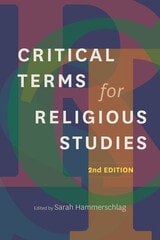
Critical Terms for Religious Studies, Second Edition
Edited by Sarah Hammerschlag
University of Chicago Press, 2025
First published nearly thirty years ago, Critical Terms for Religious Studies proved a vital resource for an emerging interdisciplinary conversation. We still use much of the same language in the study of religion, but fresh concerns have both changed the meaning of terms and given rise to new terms altogether. This edition consists of twenty-three entirely new essays that offer students and scholars alike the tools to historicize and evaluate the shifting role of familiar and emerging critical terms in religious studies.
These are “critical terms” both because they are important in our cultural moment and because thinking through them reveals how religions are embedded in and shaped by material, social, economic, and political forces. A shared conviction unites contributors from a range of traditions and methodologies: a recognition that our world is saturated by the persistence of religious traditions as shape-shifting (not static or transcendent) forces of authority, as powerful today as ever before.
Critical Terms for the Study of Buddhism
Edited by Donald S. Lopez Jr.
University of Chicago Press, 2005
This volume provides a unique introduction to Buddhism by examining categories essential for a nuanced understanding of its traditions. Each of the fifteen essays here shows students how a fundamental term—from art to word—illuminates the practice of Buddhism, both in traditional Buddhist societies and in the realms of modernity. Apart from Buddha, the list of terms in this collection deliberately includes none that are intrinsic to the religion. Instead, the contributors explore terms that are important for many fields and that invite interdisciplinary reflection. Through incisive discussions of topics ranging from practice, power, and pedagogy to ritual, history, sex, and death, the authors offer new directions for the understanding of Buddhism, taking constructive and sometimes polemical positions in an effort both to demonstrate the shortcomings of assumptions about the religion and the potential power of revisionary approaches.
Following the tradition of Critical Terms for Religious Studies, this volume is not only an invaluable resource for the classroom but one that belongs on the short list of essential books for anyone seriously interested in Buddhism and Asian religions.
Critical Theory and Performance
Revised and Enlarged EditionJanelle G. Reinelt and Joseph R. Roach, Editors
University of Michigan Press, 2007
Critical Theory and Performance presents a broad range of critical and theoretical methods and applies them to contemporary and historical performance genres—from stage plays, dance-dramas, performance art, cabaret, stand-up comedy, and jazz to circus, street theater, and shamanistic ritual. As the first comprehensive introduction to critical theory’s rich and diverse contributions to the study of drama, theater, and performance, the book has been highly influential for more than a decade in providing fertile ground for academic investigations in the lively field of performance studies.
This updated and expanded edition presents nineteen new essays by the field’s leading scholars and practitioners as well as new critical introductions by editors Janelle G. Reinelt and Joseph R. Roach. Reflecting recent trends in performance studies, this revised edition now includes discussions of critical race theory, postcolonial studies, gender and sexualities, and mediatized cultures. The resulting volume is a unique and indispensable tool for critics, teachers, and students that paves the way for future scholarship.
Janelle G. Reinelt is Professor of Theatre and Performance at the University of Warwick. Reinelt and Roach
Joseph R. Roach is Charles C. and Dorathea S. Dilley Professor of Theater and English at Yale University.
Critical Theory of Communication
New Readings of Lukács, Adorno, Marcuse, Honneth and Habermas in the Age of the InternetChristian Fuchs
University of Westminster Press, 2016
Critical Theory of Communication offers a vital set of new insights on how communication operates in the age of information, digital media and social media, arguing that we need to transcend the communication theory of Habermas by establishing a dialectical and cultural-materialist critical theory of communication.
It is the first title in a major new book series 'Critical Digital and Social Media Studies' published by the University of Westminster Press.

Critical Theory to Structuralism
Philosophy, Politics, and the Human SciencesEdited by David Ingram
University of Chicago Press, 2010
From Kant to Kierkegaard, from Hegel to Heidegger, continental philosophers have indelibly shaped the trajectory of Western thought since the eighteenth century. Although much has been written about these monumental thinkers, students and scholars lack a definitive guide to the entire scope of the continental tradition. The most comprehensive reference work to date, this eight-volume History of Continental Philosophy will both encapsulate the subject and reorient our understanding of it. Beginning with an overview of Kant’s philosophy and its initial reception, the History traces the evolution of continental philosophy through major figures as well as movements such as existentialism, phenomenology, hermeneutics, and poststructuralism. The final volume outlines the current state of the field, bringing the work of both historical and modern thinkers to bear on such contemporary topics as feminism, globalization, and the environment. Throughout, the volumes examine important philosophical figures and developments in their historical, political, and cultural contexts.
The first reference of its kind, A History of Continental Philosophy has been written and edited by internationally recognized experts with a commitment to explaining complex thinkers, texts, and movements in rigorous yet jargon-free essays suitable for both undergraduates and seasoned specialists. These volumes also elucidate ongoing debates about the nature of continental and analytic philosophy, surveying the distinctive, sometimes overlapping characteristics and approaches of each tradition. Featuring helpful overviews of major topics and plotting road maps to their underlying contexts, A History of Continental Philosophy is destined to be the resource of first and last resort for students and scholars alike.
Critique Of Cynical Reason
Peter Sloterdijk
University of Minnesota Press, 1988
In 1983, two centuries after the publication of Kant's Critique of Pure Reason, another philosophical treatise-polemical in nature, with a title that conscious and disrespectfully alludes to the earlier work —appeared in West Germany. Pete Sloterdijk's Critique of Cynical Reason stirred both critical acclaim and consternation and attracted a wide readership, especially among those who had come of age in the 1960s. Sloterdijk finds cynicism the dominant mode in contemporary culture in personal and institutional settings; his book is less a history of the impulse than. an investigation of its role in the postmodern 1970s and 1980s, among those whose earlier hopes for social change had crumbled and faded away. Sloterdijk thus brings into cultural and political discourse an issue which, though central to the mood of a generation, has remained submerged throughout the current debate about modernity and postmodernity.
With Adorno and Horkeimer's Dialectic of Enlightenment as his primary jumping-off point, Sloterdijk also draws upon, and contends with, the poststructuralist concepts of Deleuze and Guattari. He defines cynicism as enlightened false consciousness—a sensibility "well off and miserable at the same time," able to function in the workaday world yet assailed by doubt and paralysis; and, as counterstrategy, proposes the kynicism of antiquity—the sensuality and loud, satiric laughter of Diogenes. Above all, Sloterdijk is determined to resist the amnesia inherent in cynicism. The twentieth-century German historical experience lies behind his work, which closes with a brilliant essay on the Weimar Republic —the fourteen years between a lost war and Hitler's ascent to power, and a time when the cynical mode first achieved cultural dominance.
Critique and the Digital
Edited by Erich Hörl, Nelly Y. Pinkrah, and Lotte Warnsholdt
Diaphanes, 2020
Critique of Black Reason
Achille Mbembe
Duke University Press, 2017
Critique of Freedom
The Central Problem of ModernityOtfried Höffe
University of Chicago Press, 2020
Neither rejecting nor defending freedom and modernity, he instead explores both from a Kantian point of view, looking closely at the facets of freedom’s role and the fundamental position it has taken at the heart of modern life. Expanding beyond traditional philosophy, Critique of Freedom develops the building blocks of a critical theory of technology, environmental protection, economics, politics, medicine, and education. With a sophisticated yet straightforward style, Höffe draws on a range of disciplines in order to clearly distinguish and appreciate the many meanings of freedom and the indispensable role they play in liberal society.
Critique
The Stakes of FormEdited by Sami Khatib, Holger Kuhn, Oona Lochner, Isabel Mehl, and Beate Söntgen
Diaphanes, 2020
Cross-Level Inference
Christopher H. Achen and W. Phillips Shively
University of Chicago Press, 1995
Experts in statistical analysis of aggregate data, Christopher H. Achen and W. Philips Shively contend that cross-level inference makes unusually strong demands on substantive knowledge, so that no one method, such as Goodman's ecological regression, will fit all situations. Criticizing Goodman's model and some recent attempts to replace it, the authors argue for a range of alternate techniques, including estensions of cross-tabular, regression analysis, and unobservable variable estimators.
Crossing the Postmodern Divide
Albert Borgmann
University of Chicago Press, 1993
"[This] thoughtful book is the first remotely realistic map out of the post modern labyrinth."—Joseph Coates, The Chicago Tribune
"Rather astoundingly large-minded vision of the nature of humanity, civilization and science."—Kirkus Reviews
Crossings
Nietzsche and the Space of TragedyJohn Sallis
University of Chicago Press, 1991
The Birth of Tragedy is a rethinking of art at the
limit of metaphysics. His close reading focuses on the
complexity of the Apollinian/Dionysian dyad and on the
crossing of these basic art impulses in tragedy.
"Sallis effectively calls into question some commonly
accepted and simplistic ideas about Nietzsche's early
thinking and its debt to Schopenhauer, and proposes
alternatives that are worth considering."—Richard
Schacht, Times Literary Supplement
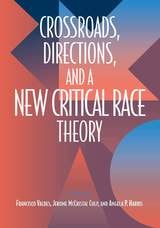
Crossroads, Directions and A New Critical Race Theory
edited by Francisco Valdes, Jerome McCristal Culp and Angela P. Harris
Temple University Press, 2002
But what is Critical Race Theory? How did it develop? Where does it stand now? Where should it go in the future? In this volume, thirty-one CRT scholars present their views on the ideas and methods of CRT, its role in academia and in the culture at large, and its past, present, and future.
Critical race theorists assert that both the procedures and the substance of American law are structured to maintain white privilege. The neutrality and objectivity of the law are not just unattainable ideals; they are harmful actions that obscure the law's role in protecting white supremacy. This notion—so obvious to some, so unthinkable to others—has stimulated and divided legal thinking in this country and, increasingly, abroad.
The essays in Crossroads, Directions, and a New Critical Race Theory—all original—address this notion in a variety of helpful and exciting ways. They use analysis, personal experience, historical narrative, and many other techniques to explain the importance of looking critically at how race permeates our national consciousness.

Crédit et débit
Alexander Kluge and Joseph Vogl
Diaphanes, 2013
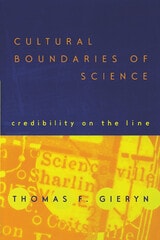
Cultural Boundaries of Science
Credibility on the LineThomas F. Gieryn
University of Chicago Press, 1998
Gieryn looks at episodes of boundary-work: Was phrenology good science? How about cold fusion? Is social science really scientific? Is organic farming? After centuries of disputes like these, Gieryn finds no stable criteria that absolutely distinguish science from non-science. Science remains a pliable cultural space, flexibly reshaped to claim credibility for some beliefs while denying it to others. In a timely epilogue, Gieryn finds this same controversy at the heart of the raging "science wars."
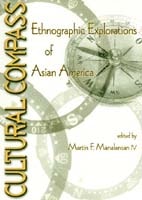
Cultural Compass
Martin Manalansan
Temple University Press, 2000
Drawing upon recent theoretical discussions and methodological innovations, the contributors explore the construction and displacement of self, community, and home integral to Asian American cultural journeys in the late twentieth century. Some discuss the unique situation of doing ethnographic work "at home" -- that is researching one's own ethnic group or another group with Asian America. Others draw on rich and diverse field experiences. Whether they are doing homework or fieldwork, contributors reflect on the ways that particular matters of identity -- gender, class, sexuality, ethnicity, age -- play out between researchers and informants. Individual essays and the book as a whole challenge the notion of a monolithic, spatially bounded Asian American community, pointing the way to multiple sites of political struggle, cultural critique, and social change.

Cultural Conservatism, Political Liberalism
From Criticism to Cultural StudiesJames Seaton
University of Michigan Press, 1996
Chapters on Lionel Trilling, H. L. Mencken and Irving Babbitt, Ralph Ellison, Dwight Macdonald, Diana Trilling, and Edmund Wilson affirm the continuing pertinence of their work to today's concerns. Seaton then turns to the careers of Leslie Fiedler and Susan Sontag to explore the impact of the cultural radicalism of the sixties on literary criticism. Subsequent chapters analyze the successes and failures of contemporary cultural studies through the writings of Richard Rorty, Edward Said, Stanley Fish and Fredric Jameson.
Separately, these chapters provide provocative readings of the individual critics; together they make a case for the tradition exemplified by these critics as an alternative to contemporary cultural studies. The issues the book discusses extend beyond literary criticism and the academic world to the political-religious- cultural conflicts of today's culture wars.
"These lively, closely argued essays explain very clearly what the issues are, how they arose, and why they are important." --Christopher Lasch
"A forceful argument about the relationship between literary studies and politics that will add something important to the vigorous, and often fierce, discussion of the canon, the politics of literature, and educational reform."--William Cain, Wellesley College
James Seaton is Professor of English, Michigan State University. He is co-editor, with William K. Buckley, of Beyond Cheering and Bashing: New Perspectives on the Closing of the American Mind.
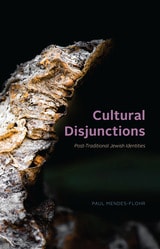
Cultural Disjunctions
Post-Traditional Jewish IdentitiesPaul Mendes-Flohr
University of Chicago Press, 2021
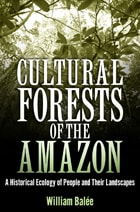
Cultural Forests of the Amazon
A Historical Ecology of People and Their LandscapesWilliam Balee
University of Alabama Press, 2013
Cultural Forests of the Amazon is a comprehensive and diverse account of how indigenous people transformed landscapes and managed resources in the most extensive region of tropical forests in the world.
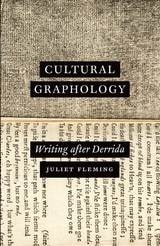
Cultural Graphology
Writing after DerridaJuliet Fleming
University of Chicago Press, 2016
Fleming shows that the single most important lesson to survive from Derrida’s early work is that we do not know what writing is. Channeling Derrida’s thought into places it has not been seen before, she examines printed errors, spaces, and ornaments (topics that have hitherto been marginal to our accounts of print culture) and excavates the long-forgotten reading practice of cutting printed books. Proposing radical deformations to the meanings of fundamental and apparently simple terms such as “error,” “letter,” “surface,” and “cut,” Fleming opens up exciting new pathways into our understanding of writing all told.
Cultural Histories of the Material World
Peter N. Miller, Editor
University of Michigan Press, 2013
All across the humanities fields there is a new interest in materials and materiality. This is the first book to capture and study the “material turn” in the humanities from all its varied perspectives. Cultural Histories of the Material World brings together top scholars from all these different fields—from Art History, Anthropology, Archaeology, Classics, Folklore, History, History of Science, Literature, Philosophy—to offer their vision of what cultural history of the material world looks like and attempt to show how attention to materiality can contribute to a more precise historical understanding of specific times, places, ways, and means. The result is a spectacular kaleidoscope of future possibilities and new perspectives.
Cultural Literacy and the Idea of General Education
Edited by Ian Westbury and Alan C. Purves
University of Chicago Press, 1987
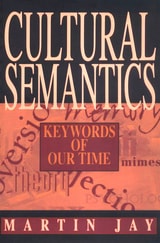
Cultural Semantics
Keywords of Our TimeMartin Jay
University of Massachusetts Press, 1998
A selection of Martin Jay's recent writings on contemporary thought and culture, this is a book about ideas that matter—and about why ideas matter. Borrowing from Flaubert's notion of a dictionary of “received ideas” and Raymond Williams's explorations of the “keywords” of the modern age, Jay investigates some of the central concepts by which we currently organize our thoughts and lives. His topics range from “theory” and “experience” to the meaning of “multiculturalism” and the dynamics of cultural “subversion.” Among the thinkers he engages are Bataille and Foucault, Adorno and Lacoue-Labarthe, Walter Benjamin, Christa Wolf, and Jean-François Lyotard.
By looking closely at what “words do and perform,” Jay makes us aware of the extent to which the language we use mediates and shapes our experience. By helping to distance us from much that we now take for granted, he makes it difficult for us to remain comfortably certain about what we think we know.
Elegantly written and richly insightful, this is a work of cultural criticism and intellectual analysis of the first order.
Cultural Struggles
Performance, Ethnography, PraxisDwight Conquergood
University of Michigan Press, 2013
The late Dwight Conquergood’s research has inspired an entire generation of scholars invested in performance as a meaningful paradigm to understand human interaction, especially between structures of power and the disenfranchised. Conquergood’s research laid the groundwork for others to engage issues of ethics in ethnographic research, performance as a meaningful paradigm for ethnography, and case studies that demonstrated the dissolution of theory/practice binaries.Cultural Struggles is the first gathering of Conquergood’s work in a single volume, tracing the evolution of one scholar’s thinking across a career of scholarship, teaching, and activism, and also the first collection of its kind to bring together theory, method, and complete case studies.
The collection begins with an illuminating introduction by E. Patrick Johnson and ends with commentary by other scholars (Micaela di Leonardo, Judith Hamera, Shannon Jackson, D. Soyini Madison, Lisa Merrill, Della Pollock, and Joseph Roach), engaging aspects of Conquergood’s work and providing insight into how that work has withstood the test of time, as scholars still draw on his research to inform their current interests and methods.
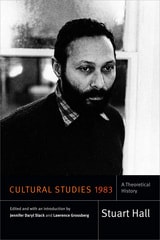
Cultural Studies 1983
A Theoretical HistoryStuart Hall
Duke University Press, 2016
Culture and Enchantment
Mark A. Schneider
University of Chicago Press, 1993
For interpretive disciplines, Schneider suggests, meaning often behaves behaves as mysteriously as the apparitions pursued by centuries ago by natural philosophers. He demonstrates this using two case studies from anthropology: Clifford Geertz's description of Balinese cockfights and Yoruba statuary, and Claude Levi-Strauss's analyses of myths. These provide a basis for actively engaging disputes over the meaning and interpretation of culture.
Culture and Enchantment will appeal to an interdisciplinary audience in anthropology, sociology, history, history and sociology of science, culture studies, and literary theory. Schneider's provocative arguments will make this book a fulcrum in the continuing debate over the nature and prospects of cultural inquiry.
Culture and Human Nature
Theoretical Papers of Melford E. SpiroMelford E. Spiro
University of Chicago Press, 1987
This volume of Spiro's major theoretical writings concentrates on theories of culture and human nature, functional analysis, and religion. Spiro argues that important dimensions of the human family are the same everywhere and that a theory of human nature is both possible and necessary. He discusses religious beliefs, analyzing not only their structures but also the ways such beliefs are held and the meanings attributed to them. This analysis, Spiro shows, can be done most successfully by means of a theory of the human family, of infant and child development and socialization, of panhuman unconscious processes, and of universal psychodynamic constellations such as the Oedipus complex.
Culture and Power
The Sociology of Pierre BourdieuDavid Swartz
University of Chicago Press, 1997
David Swartz focuses on a central theme in Bourdieu's work—the complex relationship between culture and power—and explains that sociology for Bourdieu is a mode of political intervention. Swartz clarifies Bourdieu's difficult concepts, noting where they have been misinterpreted by critics and where they have fallen short in resolving important analytical issues. The book also shows how Bourdieu has synthesized his theory of practices and symbolic power from Durkheim, Marx, and Weber, and how his work was influenced by Sartre, Levi-Strauss, and Althusser.
Culture and Power is the first book to offer both a sympathetic and critical examination of Bourdieu's work and it will be invaluable to social scientists as well as to a broader audience in the humanities.
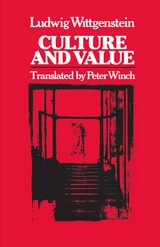
Culture and Value
Ludwig Wittgenstein
University of Chicago Press, 1980
Throughout his life, Ludwig Wittgenstein reliably set down his thoughts in notebooks. This volume offers a selection of the most interesting and important of the remarks from those notebooks that deal with matters other than technical philosophical issues. In these pages, Wittgenstein reflects on religion, the work of philosophy, genius, music, architecture, and much more. Peter Winch's translation of Wittgenstein's remarks on culture and value presents all entries chronologically, with the German text alongside the English and a subject index for reference.

Culture and Well-Being
Anthropological Approaches to Freedom and Political EthicsAlberto Corsin Jimenez
Pluto Press, 2008
This book takes a critical look at the notion of well-being by examining what well-being means, or could mean, to people living in a number of different regions including Sudan, Nepal, Papua New Guinea, India, Sierra Leone, and the UK.
The contributors take issue with some of the assumptions behind Western concepts of well-being. They explore what characterizes a "good life" and how this idea has been affected by globalization and neoliberalism.
The book makes a major contribution to social theory by presenting new analytical models that make sense of the changing shapes of people's life and ethical values.
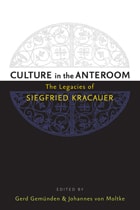
Culture in the Anteroom
The Legacies of Siegfried KracauerEdited by Gerd Gemünden and Johannes von Moltke
University of Michigan Press, 2012
Culture in the Anteroom introduces an English-speaking readership to the full range of Siegfried Kracauer's work as novelist, architect, journalist, sociologist, historian, exile critic, and theorist of visual culture. This interdisciplinary anthology---including pieces from Miriam Bratu Hansen, Andreas Huyssen, Noah Isenberg, Lutz Koepnick, Eric Rentschler, and Heide Schlüpmann---brings together literary and film scholars, historians and art historians, sociologists, and architects to address the scope and current relevance of a body of work dedicated to investigating all aspects of modernism and modernity. The contributors approach Kracauer's writings from a variety of angles, some by placing them in dialogue with his contemporaries in Weimar Germany and the New York Intellectuals of the 1940s and '50s; others by exploring relatively unknown facets of Kracauer's oeuvre by considering his contributions to architectural history, the history of radio as well as other new media, and museum and exhibition culture.
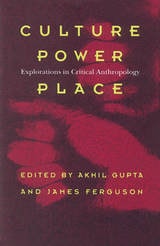
Culture, Power, Place
Explorations in Critical AnthropologyAkhil Gupta and James Ferguson, eds.
Duke University Press, 1997
This collection of both new and well-known essays begins by critically exploring the concepts of locality and community; first, as they have had an impact on contemporary global understandings of displacement and mobility, and, second, as they have had a part in defining identity and subjectivity itself. With sites of discussion ranging from a democratic Spain to a Puerto Rican barrio in North Philadelphia, from Burundian Hutu refugees in Tanzania to Asian landscapes in rural California, from the silk factories of Hangzhou to the long-sought-after home of the Palestinians, these essays examine the interplay between changing schemes of categorization and the discourses of difference on which these concepts are based. The effect of the placeless mass media on our understanding of place—and the forces that make certain identities viable in the world and others not—are also discussed, as are the intertwining of place-making, identity, and resistance as they interact with the meaning and consumption of signs. Finally, this volume offers a self-reflective look at the social and political location of anthropologists in relation to the questions of culture, power, and place—the effect of their participation in what was once seen as their descriptions of these constructions. Contesting the classical idea of culture as the shared, the agreed upon, and the orderly, Culture, Power, Place is an important intervention in the disciplines of anthropology and cultural studies.
Contributors. George E. Bisharat, John Borneman, Rosemary J. Coombe, Mary M. Crain, James Ferguson, Akhil Gupta, Kristin Koptiuch, Karen Leonard, Richard Maddox, Lisa H. Malkki, John Durham Peters, Lisa Rofel
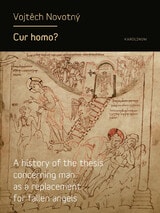
Cur homo?
A History of the Thesis of Man as a Replacement for Fallen AngelsVojtech Novotný
Karolinum Press, 2014
First introduced by St. Augustine and developed by other church fathers, the concept truly flourished in the twelfth century, when it was decided that man is an “original” being, created for its own sake, for whom God created the world. Vojtech Novotný goes on to trace the idea as it gradually faded over the centuries and, more recently, has been revived in the fields of modern philosophical thought.
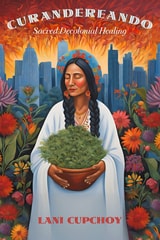
Curandereando
Sacred Decolonial HealingLani Cupchoy
University of Arizona Press, 2026
Curandereando: Sacred Decolonial Healing reclaims curanderismo as a living and revolutionary practice of ancestral wisdom, resilience, and renewal. Blending poetry, Spanglish storytelling, oral histories, and testimonios, this hybrid work illuminates healing as both a sacred tradition and a decolonial act of resistance.
The book traces curanderismo’s survival under colonial oppression, its adaptations across diasporas, and its vital role in addressing contemporary struggles for ecological balance, cultural survival, and social justice. By centering diverse healers and community voices, it resists folkloric portrayals and instead presents curanderismo as an evolving practice deeply relevant to today’s crises.
Accessible yet scholarly, Curandereando bridges sacred traditions with academic discourse, challenging Western medical dominance while offering holistic frameworks grounded in ancestral knowledge. This book is an essential resource for Chicana/o and Latina/o studies, ethnic studies, Indigenous studies, gender and sexuality studies, and environmental justice. It will also resonate with community healers, educators, and readers seeking decolonial approaches to wellness, spirituality, and cultural renewal.
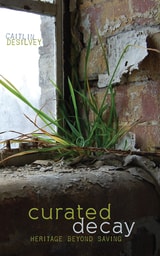
Curated Decay
Heritage beyond SavingCaitlin DeSilvey
University of Minnesota Press, 2017
Transporting readers from derelict homesteads to imperiled harbors, postindustrial ruins to Cold War test sites, Curated Decay presents an unparalleled provocation to conventional thinking on the conservation of cultural heritage. Caitlin DeSilvey proposes rethinking the care of certain vulnerable sites in terms of ecology and entropy, and explains how we must adopt an ethical stance that allows us to collaborate with—rather than defend against—natural processes.
Curated Decay chronicles DeSilvey’s travels to places where experiments in curated ruination and creative collapse are under way, or under consideration. It uses case studies from the United States, Europe, and elsewhere to explore how objects and structures produce meaning not only in their preservation and persistence, but also in their decay and disintegration. Through accessible and engaging discussion of specific places and their stories, it traces how cultural memory is generated in encounters with ephemeral artifacts and architectures.
An interdisciplinary reframing of the concept of the ruin that combines historical and philosophical depth with attentive storytelling, Curated Decay represents the first attempt to apply new theories of materiality and ecology to the concerns of critical heritage studies.
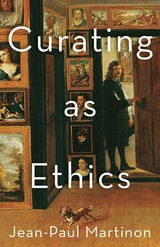
Curating As Ethics
Jean-Paul Martinon
University of Minnesota Press, 2020
A new ethics for the global practice of curating
Today, everyone is a curator. What was once considered a hallowed expertise is now a commonplace and global activity. Can this new worldwide activity be ethical and, if yes, how? This book argues that curating can be more than just selecting, organizing, and presenting information in galleries or online. Curating can also constitute an ethics, one of acquiring, arranging, and distributing an always conjectural knowledge about the world.
Curating as Ethics is primarily philosophical in scope, evading normative approaches to ethics in favor of an intuitive ethics that operates at the threshold of thought and action. It explores the work of authors as diverse as Heidegger, Spinoza, Meillassoux, Mudimbe, Chalier, and Kofman. Jean-Paul Martinon begins with the fabric of these ethics: how it stems from matter, how it addresses death, how it apprehends interhuman relationships. In the second part he establishes the ground on which the ethics is based, the things that make up the curatorial—for example, the textual and visual evidence or the digital medium. The final part focuses on the activity of curating as such—sharing, caring, preparing, dispensing, and so on.
With its invigorating new approach to curatorial studies, Curating as Ethics moves beyond the field of museum and exhibition studies to provide an ethics for anyone engaged in this highly visible activity, including those using social media as a curatorial endeavor, and shows how philosophy and curating can work together to articulate the world today.